Interactive Story Game AI: Choice Consequences Tracker Built In
2026-09-17
Jenova lets you play an interactive story game with choice consequences tracker built into every conversation — characters remember what you said, alliances shift, and later scenes change because of earlier calls. In September 2026, that is the difference between a branching menu and a world that actually keeps score. While most “choices matter” titles still funnel you back onto a single spine, this AI platform treats your decisions as durable story state across romance sims, mystery houses, and strategy campaigns.
✅ Persistent memory that carries decisions across sessions, not just a single sitting ✅ Dedicated story worlds — campus romance, horror mansions, vampire courts, and empires ✅ A design partner for mapping branches, locks, and payoffs before you write a word ✅ The same story state on web, iOS, and Android
To understand why this matters, look at how interactive fiction actually fails players — and why a tracker is not a gimmick. It is the difference between planning a life in a fictional world and pressing buttons in a cutscene.
Quick Answer: What Is an Interactive Story Game with Choice Consequences Tracker?
An interactive story game with choice consequences tracker is a narrative experience that records player decisions and uses that ledger to change later scenes, relationships, and endings. The tracker is the memory layer — not a scoreboard for “good” and “evil,” but a running account of who you helped, what you admitted, and which doors you closed.
Key capabilities:
- Persistent choice memory so a lie, favor, or betrayal can surface hours later
- Branching social worlds such as College Life, where friendships and fallout unfold from what you actually did
- Long-horizon strategy in Civilization, where alliances, wars, and rival ambitions keep moving after you act
- Tools to design your own trees — locks, reconvergence points, and consequence ledgers — instead of hoping a general chatbot will remember chapter two
Why Most Branching Stories Feel Like They Don't Count
Interactive fiction is no longer a niche hobby. The [global interactive fiction market was valued at $6.4 billion in 2025](https://dataintelo.com/report/interactive-fiction-market) and is projected to reach $14.8 billion by 2034. Over 1.4 billion people already engage with some form of interactive narrative. Players know the promise: you choose, the world answers.
But accessing a story that keeps those answers is frustratingly difficult:
- Dialogue wheels that rejoin the same cutscene no matter what you pick
- On-screen flags (“someone will remember that”) with no later proof
- Save files that forget tone, debts, and secrets between sessions
- Creator tools that explode into unmaintainable branch maps
- Replay that exists to collect endings, not to honor a coherent life in the world
$6.4 billion — Interactive fiction market size in 2025, with gaming still the largest application slice
Cosmetic Choices That Rejoin the Same Path
A branching narrative splits when you decide — then, too often, quietly merges. Designers call this reconvergence, and used well it keeps production possible. Used carelessly, it trains players to stop planning. Research on interactive storytelling in games treats true branching as the player’s ability to change the course of events, not merely the flavor text of a cutscene. If every road returns to the same parking lot, the choice was costume.
Flags Without a Ledger
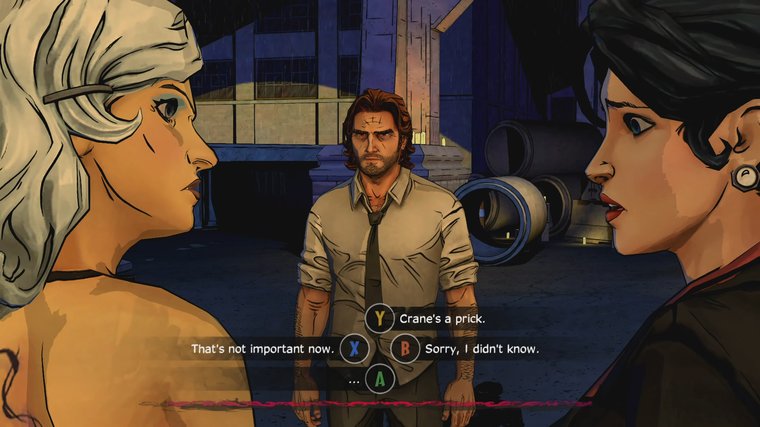
Telltale-style UI made “this will be remembered” famous. A Game Developer critique of choice-as-metric argues that flashing a reminder can flatten nuance into a morality counter. Players still want evidence. If the tracker never changes a later conversation, the flag was marketing. A real interactive story game with choice consequences tracker shows the debt in the next scene — a colder greeting, a locked room, an ally who will not vouch for you.
Saves That Forget You Overnight
Frictional Games has argued that the real wound is not “missing content.” It is a broken mental model. You planned as if a hurt companion would still exist in the world. When the game cannot simulate that, planning dies — and with it, the feeling of play. Session-only memory creates the same break: yesterday you were a traitor; today the story greets you as a stranger.
Branch Explosion When You Try to Build One
Writers who open Twine or a flowchart tool discover why studios reconverge. Every honest fork multiplies scenes. Interactive fiction structures can be elegant, but they are still labor. AI has lowered some of that cost — production costs for narrative experiences fell an estimated 45% between 2022 and 2025 as generative engines matured — yet a model that cannot hold state will happily invent a new continuity every reply. That is not a tracker. That is amnesia with better prose.
Replay as Chore, Not Discovery
David Cage’s flowchart in Detroit: Become Human made missed nodes visible so players could hunt “real consequences.” The impulse is honest. The failure mode is treating story like a completion checklist. A durable ledger should make this playthrough feel specific, not guilt you into a New Game+ spreadsheet.
This is exactly what Jenova was built for.
The Jenova Solution
Jenova does not hand you a single scripted tree and a sticker that says your choice mattered. It gives you story agents with persistent memory, unlimited conversation history, and worlds that keep running after you look away. You pick a setting. You speak in natural language. The agent holds the consequence ledger — who you sided with, what you searched, which secret you burned — and writes the next scene against that record.
| Traditional Approach | Jenova |
|---|---|
| Timed dialogue wheel, then a merge back to one cutscene | Open conversation whose details can return later as plot |
| “They will remember that” toast with no follow-through | Persistent memory across sessions, devices, and chapters |
| Finite authored flowchart you exhaust in two weekends | Ongoing worlds plus custom agents you can brief yourself |
| Separate notes app to track your own canon | The story itself is the tracker |
Romance and Social Stories That Keep Social Debt
Campus and island romances fail when everyone resets to flirty default. College Life is built so friendships, heartbreak, and status unfold from your choices — covering for a roommate, ghosting a friend, picking a side in a public fight. Love Island runs the same logic in a pressure-cooker villa: couplings and rejections are not weekly recaps, they are outcomes of what you said when it was costly. Vesper Court pushes the ledger into dark romance — a forgotten arrival, a court that hunts weakness, nights that do not rewind.
Mystery and Horror That Remember What You Touched
A mansion crawl is only interactive if the house notices. The Mansion drops you into rooms that hide secrets; pry a drawer, lie to a portrait, leave a door unlatched, and the next hour should not pretend you were careful. The Asylum sends you in as an investigator after something already went wrong. Ward by ward, the hidden story should depend on which files you read and who you trusted — not on a single “good ending” flag.
Strategy Worlds Where Rivals Do Not Wait
Civilization-scale stories need a tracker that thinks in campaigns, not punchlines. Civilization lets you choose an era, rule a nation, and live with rivals who pursue their own ambitions. Break a treaty for grain and you should meet that reputation at the next border. This is consequence as systems, which is what narrative-design writing on planning says players actually use when they feel they are playing.
Build the Tree, Not Just Play It
If you are here to author an interactive story game with choice consequences tracker, Game Designer Assistant is the workbench: branching logic, documentation, systems analysis, and genre craft without pretending a mood board is a design bible. Pair it with Comic Creator when the story must be sequential art, or Manga Creator when panel flow and long-form continuity are the product. Film Screenwriter and Webtoon Creator cover the same problem in script and vertical-scroll form: structure first, then the moments that only work if earlier choices still exist.
While Telltale-style adventures excel at cinematic prompting, they are still finite, authored graphs. A general chatbot can improvise a scene and then drop the continuity. Jenova specializes in agents that keep state — multi-model, persistent memory, optional private knowledge bases — so the tracker is the story engine, not a subtitle.
Specialized AI Agents for Interactive Story Games
If you want a single playable world tonight, start in-game. If you want to ship your own tree, start with design. These agents sit on that spectrum.
College Life — Social Consequences You Cannot Undo in the Menu
The campus story is an open-world romance with emergent social dynamics. That only works if the tracker is petty in the best way: who saw you, who you defended, which rumor you fed.
- Relationships that drift from specific incidents, not a hidden affection meter you grind
- Scenes that reuse your own wording and excuses
- A tone that can turn on you when you play both sides
The Mansion — Exploration Where Curiosity Is a Plot Point
Waking with no memory is a classic hook. It becomes an interactive story when the house is a database of your trespasses. Try the mansion mystery if you want locked rooms, unreliable spaces, and a finale that depends on what you dared to open.
- Environmental clues that stay “known” once found
- Risk in lingering versus fleeing
- Escape and truth as competing endings, not a single corridor
Civilization — A Ledger Measured in Years
If dialogue wheels feel small, rule something that can hate you for a generation. This historical sandbox is for players who want wars, alliances, and domestic bargains to remain on the books.
- Rivals with independent goals, not wait-for-player scripts
- Diplomatic memory that outlasts one speech
- Strategy and story in the same decision
Game Designer Assistant — The Tracker as a Design Document
Play is one job. Building a branch map that will not collapse is another. Game Designer Assistant helps you specify gates, fail states, reconvergence, and player-facing feedback so “choices matter” is a testable claim.
- Systems analysis before you write ten endings you cannot support
- Documentation you can hand to artists and writers
- Genre-aware advice across narrative adventure, sim, and RPG hybrids
Vesper Court and The Asylum — Tone-Locked Worlds
Vesper Court is night-by-night vampire intrigue; the asylum investigation is institutional horror. Both punish generic roleplay. The tracker should remember whether you were devout, reckless, or complicit — because those worlds only feel expensive when they refuse to forget.
- The Asylum: ward-level secrets and investigator fallibility
- Vesper Court: desire and politics on the same consequence chain
- Either: a reason to stay in one continuity instead of rerolling tone every message
Try Jenova free — no credit card required.
How It Works
Step 1: Pick a World, Not a Blank Chat
Open Jenova and start a story agent whose premise already implies a ledger — a campus, a mansion, a court, an empire. You are not prompting “write fiction.” You are entering a state machine that happens to speak in scenes.
"Start College Life in week three of fall semester. I already lied to my RA last night. Keep that lie consistent, and let it cost me socially."
Step 2: Make Decisions in Natural Language
There is no three-button wheel unless you want one. Say what you do, what you withhold, and what you are willing to risk. Specificity is what the tracker stores.
"I help the injured stranger, but I search his bag after he passes out. I will own that if someone asks."
Step 3: Demand Proof in a Later Scene
A tracker you never test is a diary. Jump time. Change rooms. Bring in another character. Ask the story to use a prior fact without you restating it. If the world cannot, you chose the wrong engine.
"Two days later, the person I refused to help is in the dean’s office. Do not reset their opinion of me."
Step 4: Continue on Your Phone Without Resetting Canon
Mobile already accounts for about 41.2% of interactive fiction revenue because these stories fit stolen minutes. Jenova keeps feature parity across web, iOS, and Android, with history that does not depend on one device. Resume the same campaign on a commute; the ledger should already know you.
Step 5: If You Are Building, Specify the Graph
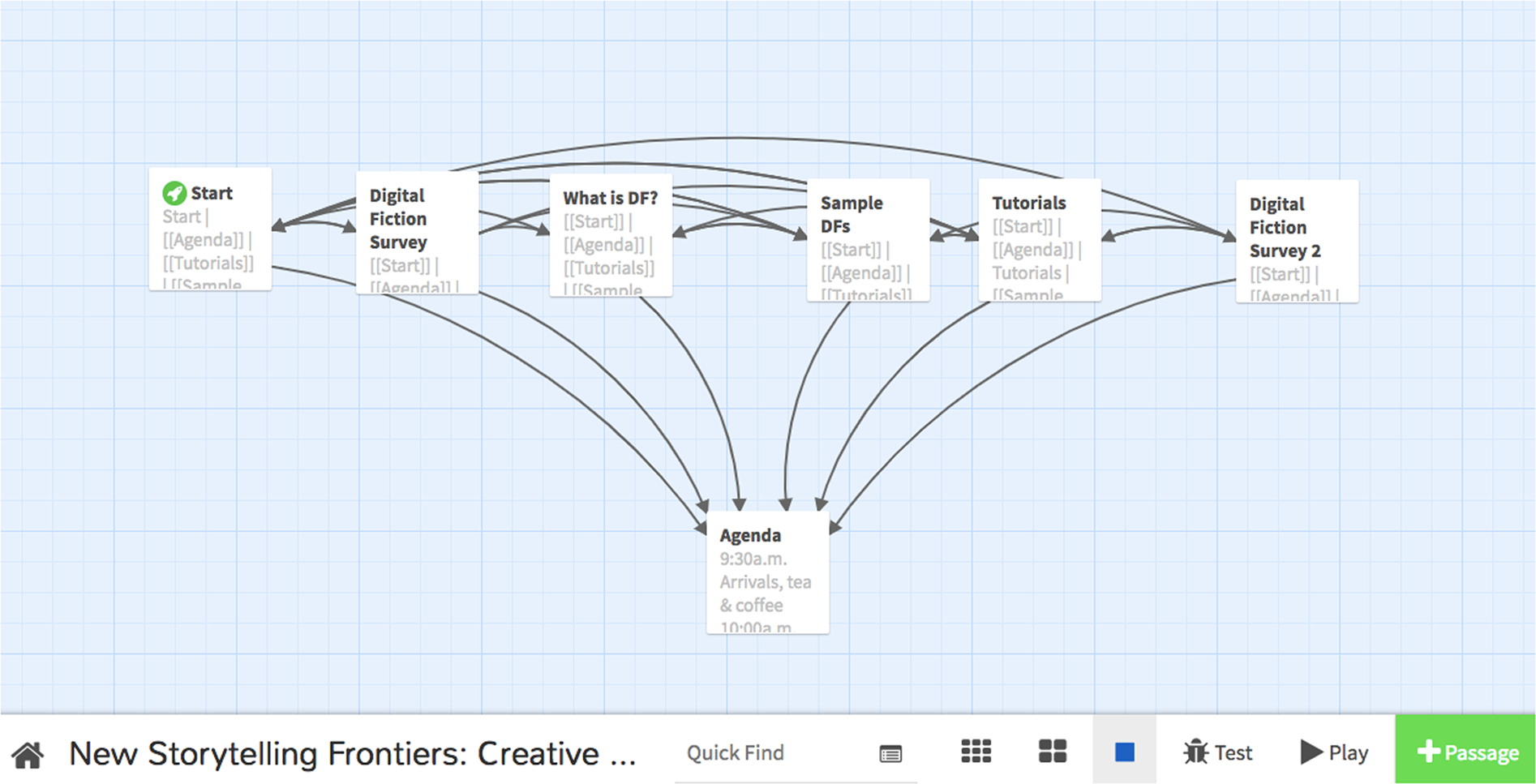
Hand your design partner the structure the second image in this article represents: nodes, reconvergence, and a central state everyone must pass through. Require a consequence table, not just flavor.
"Design a mystery with six investigation nodes that all reconverge at a midnight agenda scene. Accusing the gardener in node two must lock the greenhouse ending. Give me the lock list."
Results & Use Cases
📊 The Campus Lie That Will Not Stay Buried
- Scenario: You cover for a roommate at a party, then need that person as an ally when a rumor hits your own door.
- Traditional Approach: A visual novel flag flips “RoommateTrust +1,” then both of you recite the same midgame speech regardless of how the lie was told.
- College Life: The excuse you invented is the excuse the story keeps. If you were sloppy, the RA has details. If you were loyal, the roommate owes you — and may still betray you for their own tracker.
Benefits:
- Social debt you can plan around
- Dialogue that reuses your actual story
- Replay that feels like a different semester, not a skipped CG
💼 An Empire That Collects Your Treaties
- Scenario: You seize a port city to feed a famine, knowing a neighbor claimed it by marriage.
- Traditional Approach: A 40-hour 4X campaign plus a wiki, because the narrative DLC does not read your diplomacy log.
- Civilization: The famine, the marriage claim, and the occupation sit in one memory. The next envoy does not need a briefing from you.
Benefits:
- Strategy and story share a database
- Rivals act on old grievances
- Long sessions remain coherent
📱 A Mansion Run on the Train Home
- Scenario: Twenty minutes, headphones, one wing of a house you do not trust.
- Traditional Approach: Console narrative adventures that pause poorly and hide critical tells in a flowchart you will check on a wiki at your desk.
- The mansion investigation: You search a study, pocket a key, and close the app. Tomorrow the house still knows which key is missing.
Benefits:
- True mobile continuity, not a cloud save of a linear episode
- Short sessions that still compound
- Horror that depends on your curiosity, not a jump-scare reel
🎯 A Studio That Needs a Ledger Before Art
- Scenario: An indie team wants a “choices matter” pitch without writing 400 dead-end pages.
- Traditional Approach: A Twine snarl nobody can QA, then silent reconvergence to hit a ship date.
- Game Designer Assistant: You get a node map, lock list, and test plan. Film Screenwriter can turn surviving nodes into scenes; comic and webtoon agents handle the pages that only exist on one path.
Benefits:
- Consequence design as documentation
- Fewer fake branches
- A tracker you can explain to players without a tooltip lie
Enterprise and education already treat interactive scenarios as more than toys: employees trained through interactive fiction simulations have shown 28% higher knowledge retention than conventional video modules. The same mechanic — decide, then live with it — is what players are asking games to honor.
FAQ
What is an interactive story game with choice consequences tracker?
It is a narrative game that stores your decisions as state and reads that state when it writes the next scene. The tracker can be a relationship map, a list of discovered clues, a diplomatic history, or all three. If later content cannot change when the ledger changes, you have flavor choices, not a tracker.
Is Jenova free to play these stories?
Yes. Jenova has a free tier with core features and limited usage, then paid plans if you need more volume, custom model selection, or higher caps. You can start a story agent without a credit card and decide whether the memory layer is worth upgrading once a campaign is actually in motion.
How is this different from Telltale games or Detroit: Become Human?
Those productions are authored cinematic graphs — often brilliant ones — with explicit prompts and, in some cases, end-of-chapter flowcharts. Jenova story agents are conversational worlds with persistent memory. You are not limited to three buttons, and you are not finished when you have lit up every node. You are in a continuity that can keep going.
Do my choices actually change the ending?
They change the path you are on: who will help, what is known, which rooms and bargains remain available. Some structures still reconverge, as all sustainable interactive fiction must. The test is local truth — a character who should be angry is angry — not a promise of eight equally produced finales.
Can I build my own branching game with a tracker?
Yes. Use Game Designer Assistant to specify nodes, locks, and reconvergence, then write playable loops with story agents or script-focused partners. AI narrative tools have already cut a large share of production cost; they still need you to define what the ledger is allowed to remember.
Does an interactive story game with choice consequences tracker work on mobile?
Jenova is built for web, iOS, and Android with synced settings and full conversation history. That matches how the category is already consumed: mobile led interactive fiction revenue at about 41.2% in 2025. A tracker that dies when you leave Wi-Fi is not a tracker.
Play Stories That Remember the Choice
Most branching games ask you to care, then quietly discard the evidence. An interactive story game with choice consequences tracker does the opposite: it keeps the lie, the mercy, the occupation, the unlocked drawer, and it writes forward from there.
Jenova is where that ledger lives — in College Life’s social fallout, in a mansion that notices your hands, in an empire that collects treaties, and in a design agent that refuses to call a merge a twist. If you want choices you can plan around, stop collecting endings and start keeping state.
Explore the full story library at Jenova.
For Developers: Every story agent in this article is available programmatically via the Jenova API — integrate branching narrative, persistent choice memory, and custom story agents into your application with a single API call. Full documentation →