Interactive Quest Story AI: Shape Quests With Your Choices
2026-09-09
Roleplay Game Master helps you play an interactive quest story by running a living campaign that remembers every choice, NPC, and consequence. While boxed games and visual novels lock you into a handful of scripted branches, this AI provides an open quest that reacts as you play. In September 2026, that gap — canned dialogue versus a story that is actually yours — is why so many “choices matter” promises still feel hollow.
✅ Unlimited campaign memory that keeps characters, clues, and grudges consistent
✅ Quests that branch from your decisions, not a preset flowchart
✅ Any genre or stakes — mountain-lookout mysteries, dungeon raids, investigation jobs
✅ Full play on web, iOS, and Android, including voice input
To understand why this matters, let’s examine the gap between the promise of player-driven quests and the scripted paths most stories still deliver.
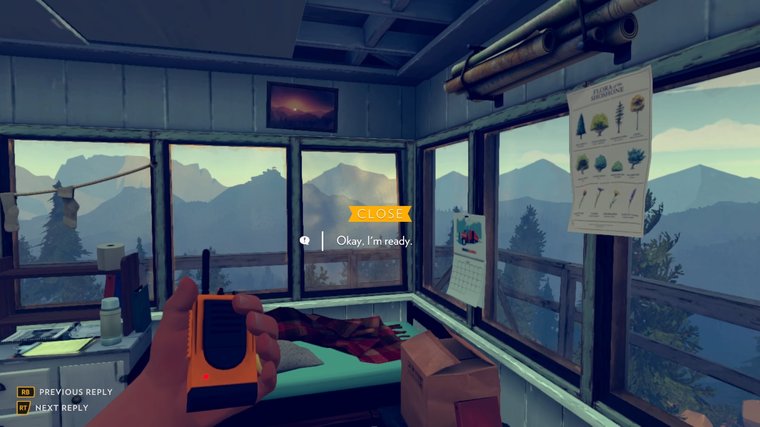
Quick Answer: What Is an Interactive Quest Story?
An interactive quest story is a goal-driven narrative you play, not just read — your dialogue, routes, and tactics change the mission, the NPCs, and the ending. Roleplay Game Master runs that loop as a dedicated game master: you set the world, take actions, and the quest log updates around you.
Key capabilities:
- Persistent memory across sessions, so yesterday’s lie still matters today
- Open quest design — side jobs, failed objectives, and unexpected alliances
- Character-consistent NPCs with motives, not one-shot chat replies
- Instant start in any setting, with no rulebook, dice set, or human GM required
Why Most Interactive Quest Stories Still Feel Scripted
Players do not just want more plot. They want agency: the sense that a decision aligned with their values actually moved the world. Designers have known this for years — player agency is what turns a story into a personal experience, and storytelling is one of the core drivers of player engagement alongside mechanics and progression.
The appetite is commercial, not just artistic. The global online adventure games market is valued at USD 15 billion, and adjacent forms keep pulling readers toward playable structure. LitRPG’s rise shows audiences chasing quest structure, progression, and world immersion inside fiction. Visual novels, meanwhile, are built around players influencing character development and plot direction.
But getting a true interactive quest story — not a decorated corridor — is still frustratingly difficult:
- Pre-written games sell “choices matter,” then reconverge on the same set pieces
- Human game masters are scarce, expensive, and not available at 11 p.m. on a Tuesday
- Branching scripts explode in cost: every extra decision doubles writing and testing load
- Generic chatbots forget the quest, break character, and stall the mission
Research on narrative games is blunt about the difference players feel. There are meaningful choices and inconsequential ones, and audiences detect when a dialogue wheel is cosmetic. Scholarly work on choice in modern narrative games keeps returning to the same design tension: studios want the marketing of agency without the production cost of real branches.
Meaningful vs. inconsequential — Players distinguish choices that rewrite the story from choices that only change a line of dialogue
That is why so many beloved “choice” games still play like films with extra buttons. Analyses of Telltale-style design note that major plot points often stay fixed even when the conversation sparkles. Lists of standout choice-based stories — The Witcher 3, Mass Effect 2, The Walking Dead — are famous because genuine divergence is still rare enough to celebrate.
Engagement research adds a practical sting. Retention without engagement is a hollow metric: logging in is not the same as caring. High engagement, by contrast, is a strong predictor of players coming back. If the quest does not react, people bounce — no matter how pretty the lookout tower is.
This is exactly what Roleplay Game Master was built for.
Why Roleplay Game Master
Roleplay Game Master is not a dialogue tree with a chatbot skin. It is a dedicated game master for interactive quest stories: it holds the world state, plays every NPC, tracks the mission, and keeps pressure on your objective while still letting you wander off the map.
You bring the premise. It brings continuity. Say you are a fire lookout on a remote ridge, radio in hand, waiting for the next job. Or you are a hired blade walking a forest path after a village quest, choosing whether to press an ally about a feast, a hospital, or a rumor you were not meant to hear. The tool does not wait for you to pick A, B, or C. It waits for you to do something.
| Traditional Approach | Roleplay Game Master |
|---|---|
| Finite dialogue trees and reconverging plots | Quests that replot around what you actually did |
| Need a human GM, schedule, and rulebook | Start a full campaign in one message |
| Visual-novel rails with a handful of endings | Ongoing memory — grudges, clues, and debts persist |
| Generic chat that forgets the mission | Character-consistent NPCs and a living quest log |
| Replay means watching the other taped ending | Replay means a different job, tone, or failure path |
A quest log that remembers you
The failure mode of most AI story chat is amnesia. An NPC who feared you yesterday greets you like a stranger. A clue you buried in a drawer vanishes. Roleplay Game Master is built for the opposite: unlimited conversation memory and stable character behavior, so a campaign can run for weeks without the world resetting.
That is not flavor. It is the mechanic that makes a quest possible. A quest is a chain of promises — go here, don’t tell them that, bring this back before nightfall. If the chain breaks, you do not have interactivity. You have a new random scene.
Choices that change the job, not just the line
Cosmetic choices feel busy and mean nothing. Here, refusing a contract can starve a town. Warning a rival can burn your safehouse. Sleeping through a radio call can let a fire jump the ridge. The game master will play the consequences instead of politely herding you back to the “correct” cutscene.
You can be cautious, chaotic, kind, or ruthless. The story does not need you to be the writer’s protagonist. It needs you to be accountable.
Any world, any job
Because the campaign is not pre-authored as a single graph, you are not stuck in one licensed setting. Run a quiet observational mystery. Run a dungeon crawl with inventory and wounds. Run a political investigation where the “combat” is a hearing. Shift from grounded survival to high fantasy mid-week if you want a palette cleanser — the same GM, a new brief.
Prompts that start the engine
You do not need special syntax. Speak like a player sitting down at a table:
"You are my GM. I am a fire lookout on day four of the season. My supervisor radios in at dusk. Give me the landscape, the weather, and the first job — then wait for my reply. Do not decide for me."
"Start a street-level investigation in a harbor city. I am a debt courier, not a hero. Track clues, NPC motives, and my cash. If I ignore a lead, let it go cold."
"Continue yesterday’s campaign. I lied to Yang’s sister about the hospital. She invited me to a welcoming feast anyway. Play her warmth as a test, not as forgiveness."
Related Agents You'll Also Find Useful
If you want a ready-made mystery instead of a blank campaign, or you are designing quests for a game of your own, these pair naturally with an interactive quest story habit.
The Mansion
You wake in a mansion with no memory of how you arrived. Every room hides secrets; every shadow could be your last. It is the interactive quest story in locked-room form — explore, question, and decide whether you are hunting the truth or becoming part of it.
- Room-by-room investigation with escalating dread
- Clue-driven progress rather than a linear tour
- Multiple ways to press for answers — or to fail quietly
The Asylum
You are an investigator sent to a shuttered psychiatric institution, and something has already gone wrong. If your favorite quests are ward maps, missing files, and NPCs who might be witnesses or threats, this is the tighter, darker cousin of an open campaign.
- Institutional mystery with a strong investigation frame
- Secrets gated behind exploration and conversation
- A story that rewards careful notes and suspicion
Game Designer Assistant
Playing quests often turns into wanting to build them. This is the design partner for systems, documentation, and genre craft — useful when you have just lived through a branching job and now want to specify one for a tabletop module, a visual novel, or a production pitch.
- Brainstorming and systems analysis across genres
- Quest structure, documentation, and concept support
- Practical craft for platforms and regional markets
Try Roleplay Game Master free — no credit card required.
How It Works
You do not install a ruleset. You start a session, state the brief, and play. The AI game master handles narration, NPCs, timing, and fallout.
Step 1: Brief the campaign Name the setting, your role, the tone, and what “winning” the first quest would even mean. Specificity is fuel: a lookout tower in dry lightning season plays differently from a royal courier with three hours until the gates close.
"Grounded mystery, no magic. I am the new lookout. Radio-only contact with my supervisor. First quest: find out why the south slope crew missed two check-ins."
Step 2: Take a real action, not a menu pick Move, search, lie, wait, or radio back. Write what your character does. The GM should narrate outcome and new pressure — then stop, so you still own the next beat.
"I keep the radio on but I don’t answer yet. I scan the tree line with binoculars and tell you exactly what I see."
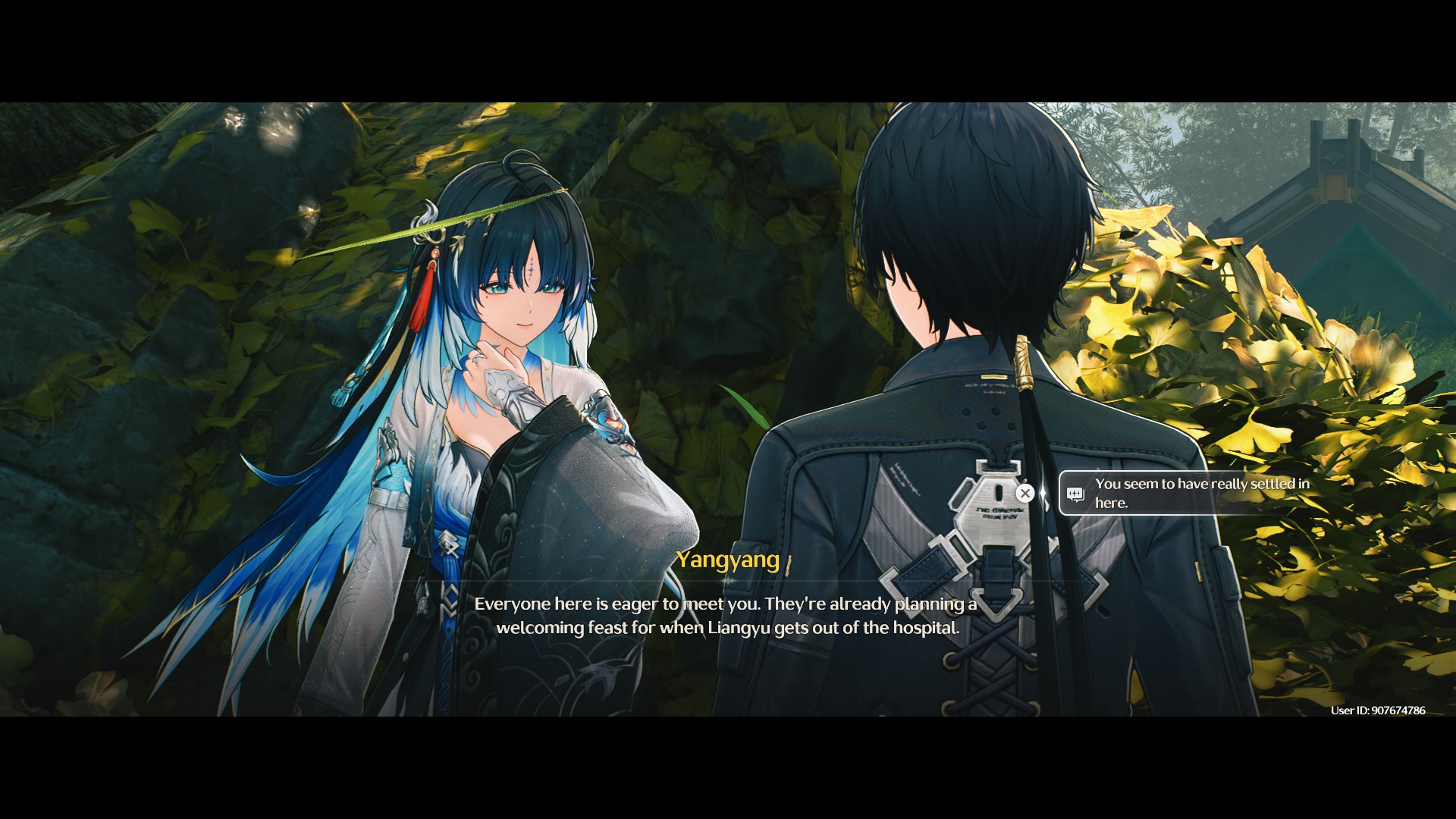
Step 3: Talk like the job is still live Post-quest conversation is where most games go limp. Here it should still be play. A companion who says the village is planning a feast is handing you social terrain — gratitude, suspicion, obligation, or an opening to ask about the person in the hospital.
"I don’t take the feast at face value. I ask who is organizing it, who isn’t invited, and what they think I did to deserve a welcome."
Step 4: Continue across days without recapping the universe Open the same campaign later. Refer to prior events in shorthand. Persistent memory is the point: you should not have to paste a wiki of your own plot into every message.
"Same campaign. It’s two days later. My ribs are still taped from the ridge fall. Don’t reset the NPCs."
Step 5: Steer difficulty and focus when you need to If the GM is too generous, say so. If you want inventory tracking, clocks, or fail-forward injuries, add them as table rules. You remain the player; you can also be the producer.
"Be a strict GM. Track ammo, fatigue, and reputation in a short status block after each scene. If I bluff and fail, let the room turn."
Results & Use Cases
🗺️ Solo fantasy campaign without a scheduling spreadsheet
Scenario: You want a 12-session wilderness quest — escort a cart, bargain with a river town, decide whether the “bandits” are conscripts.
Traditional Approach: Find a human GM, align five calendars, or replay a CRPG whose side quests you already know by heart.
Roleplay Game Master: One prompt sets the map and the job. Your bargains stick. The town that you shorted on grain does not sell you horses next week.
- Play in 20-minute bursts or three-hour dives
- Failure stays in the world instead of reloading a save
- Tone control: mythic, gritty, or dryly funny without switching products
🔍 A lookout-tower mystery that runs on observation
Scenario: You want Firewatch-like pressure: isolation, radio intimacy, a landscape that is itself a puzzle, and a supervisor who may not be telling you everything.
Traditional Approach: Replay a finished walking sim, or write the mystery yourself and then try to be surprised by it.
Roleplay Game Master: You get the job, the weather, and the next radio call. What you report — and what you withhold — becomes the plot. For a more enclosed cousin of this loop, The Mansion turns the same investigative instinct inward, room by room.
- Environmental clues before combat
- Dialogue that is a tool, not a cutscene skip button
- A mystery you cannot spoil with a wiki because it did not exist until you played
📱 Mobile quests between stops
Scenario: You have a bus ride and a half-finished harbor investigation on your phone.
Traditional Approach: Console RPGs that need a two-hour window, or mobile titles that replace story with energy timers.
Roleplay Game Master: Full feature parity on iOS and Android, plus speech-to-text if you would rather talk the scene than type it. Send one voice line — “I follow the courier, not the feast” — and read the fallout before your stop.
- Session memory means the commute is a chapter, not a reset
- No party required
- Easy to keep a second, lighter campaign for late nights
🎯 Prototype a quest for a game you are actually shipping
Scenario: You are designing a post-mission NPC conversation — the player saved a town, and the companion is already planning a welcome the player may not want.
Traditional Approach: Write one golden path, guess at branches, and discover in playtest that nobody says the line you wrote.
Game Designer Assistant, used after a live session, turns what just happened at the table into systems notes: flags, fail states, and why that feast scene worked. You play the quest first, then specify it — instead of speccing in a vacuum.
- Find the interesting decision by playing it
- Capture flags (who lived, who was told, who is still in hospital)
- Translate a good improvisation into a design doc
FAQ
What is an interactive quest story?
An interactive quest story is a goal-driven narrative you play in the first person of a role: there is a job, opposition, and a world that changes when you act. Unlike a linear novel, the mission can fail, reroute, or grow extra objectives. Unlike a pure sandbox chat, the story keeps an objective in view so scenes add up to a campaign instead of a mood board.
Is Roleplay Game Master free?
Yes. You can start on the free tier with all core features and limited monthly usage — no credit card required. If you run long campaigns every day, paid plans raise the usage ceiling (Plus starts at $20/month for 30× free usage). Usage resets on your billing date, with no daily drip caps.
How is an AI interactive quest story different from a visual novel or Telltale-style game?
Visual novels and many choice-based games are authored graphs: beautiful, replayable, and bounded. An AI game master does not ship a complete graph. It simulates a table. You can attempt actions the writer never listed, and the campaign can continue past a “credits” moment. The tradeoff is production polish — you get range and memory, not pre-acted cutscenes.
Can I play an interactive quest story on mobile?
Yes. Play on the web, iPhone, or Android with the same campaign memory and settings. Speech-to-text is available if you want to play hands-free. A lookout-tower radio scene or a post-quest conversation is well suited to short mobile sessions because a single reply can be a full move.
Do my choices actually change the quest?
They should, and you can instruct the GM to be strict about it. Ask for status blocks, clocks, and irreversible flags (“the sister knows you lied”). If a scene reconverges too neatly, say so in character-neutral table talk: “Do not protect the plot. If I skip the feast, the town’s opinion drops.” That instruction is part of play.
Can I use this to design quests, not just play them?
Yes. Play a scenario to feel where the decision actually sits, then move to Game Designer Assistant to turn that session into structure — beats, flags, and documentation. For boxed mystery experiences with a fixed premise, The Asylum and The Mansion are ready-to-enter investigations rather than blank campaigns.
Conclusion
Most interactive quest stories still ask you to perform agency inside someone else’s flowchart. The form people actually want is simpler and harder: a job, a world that keeps score, and NPCs who remember what you did after the cutscene would have ended.
Roleplay Game Master is built for that loop — persistent memory, open actions, and campaigns you can pick up on your phone or at a desk. Whether you want a ridge-top radio mystery, a forest conversation that is still a quest, or a long fantasy job that cannot be wiki-spoiled, you can start with one brief and play until the consequences land.
Try Roleplay Game Master now. Explore more at Jenova.
For Developers: Roleplay Game Master is available programmatically via the Jenova API — integrate adaptive interactive quest stories into your application with a single API call. Full documentation →