How to Make Character AI: Build Custom AI Characters That Think, Talk, and Remember (May 2026)
2026-05-05
The character is everything. Not the model. Not the interface. Not the token count. The character — the personality, the voice, the memory, the values, the way it responds when you say something unexpected — is the difference between an AI tool you use once and an AI presence you return to every day.
That's why the AI character space has exploded. Character.AI alone reached 45 million active users and $50 million in revenue in 2025](https://www.businessofapps.com/data/character-ai-statistics/), with over 18 million chatbot personalities created on the platform. The broader AI avatar market was valued at [$9.78 billion in 2025 and is projected to reach $118.55 billion by 2034](https://medium.com/predict/the-booming-ai-avatar-market-4f7f2fea2c52). And the digital human avatar market is forecasted to grow from [$11.03 billion in 2026 to $47.11 billion by 2035. People don't just want AI that answers questions. They want AI that is someone — a tutor with patience, a writing partner with taste, a game master with a flair for the dramatic.
Yet most guides on how to make character AI focus on one narrow slice: either the visual design, or the chatbot personality, or the technical fine-tuning — never the full picture. On Jenova, building a custom AI character means defining personality, voice, knowledge, memory, and behavior in a single integrated environment — and deploying it as a fully functional agent that anyone can interact with, powered by frontier models like GPT-5.4, Claude Opus 4.6, and Gemini 3.1 Pro Preview.
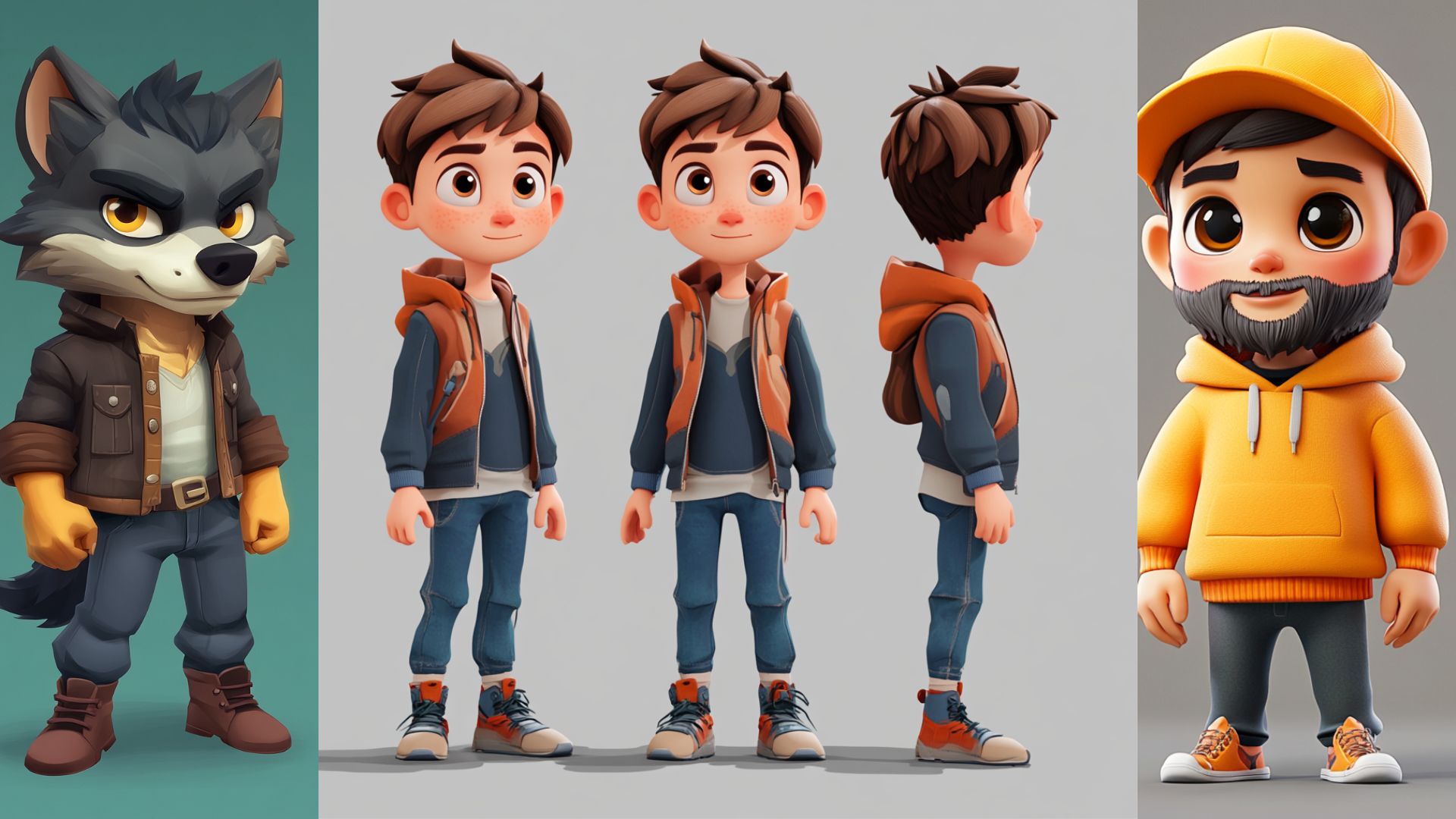
Quick Answer: What Does "Make Character AI" Mean?
Making character AI means designing an AI agent with a defined personality, voice, knowledge base, behavioral rules, and persistent memory — so it responds consistently as a distinct character rather than a generic chatbot.
- Personality architecture — define traits, values, tone, backstory, and communication style that shape every response
- Persistent memory — the best platforms track character knowledge and user interactions across sessions, like custom agents on Jenova
- Knowledge embedding — attach documents, lore, expertise, and reference materials that the character draws on
- Multi-model flexibility — choose which AI model powers your character's intelligence, switching between strengths for different needs
The Problem: Why Most AI Characters Feel Hollow
The demand for custom AI characters has never been higher — but the tools available to build them still force creators into painful tradeoffs. Here's where things consistently break down:
🧠 Memory That Resets Every Conversation
Character.AI had 45 million active users in 2025, but users consistently report the same frustration: characters forget everything between sessions.
You spend an hour building rapport with an AI character — teaching it your name, your preferences, your shared context — and the next conversation starts from zero. The character doesn't remember who you are, what you discussed, or the personality nuances it developed through interaction. As O-mega's 2026 guide notes, "AI will remember not just facts, but conversational style preferences" is still listed as a future trend — meaning most platforms haven't solved it yet.
🤖 Personality That Drifts or Disappears
A research study cited by O-mega found that even major models show distinct personality defaults — GPT-4 tends toward "very agreeable and helpful" while Claude is "more methodical and cautious." When you build a character on top of these models without robust guardrails, the character's personality drifts toward the underlying model's defaults over the course of a conversation. Your sardonic detective starts sounding helpful. Your stern mentor starts apologizing. The character you designed evaporates, replaced by the model's factory settings.
🔒 Platform Restrictions That Limit Character Design
Character.AI's popularity led to legal suits and content controversies, which prompted the platform to add "more guardrails and removing a lot of bots flagged by the community." The result: creators who want to build nuanced, complex, or mature characters — a war-hardened commander, a morally ambiguous villain, a therapist who addresses real emotional pain — find their characters silently sanitized or outright blocked. The platform optimizes for safety at the expense of creative depth.
⚙️ Tools That Fragment the Character Across Platforms
Building a complete AI character in 2026 typically requires multiple disconnected tools: one for personality prompting (ChatGPT), another for voice synthesis (ElevenLabs), a third for visual avatar creation (Synthesia or D-ID), a fourth for hosting conversations (Character.AI or SillyTavern). Each tool has different memory systems, different content policies, and different interfaces. The character exists as fragments scattered across platforms — never as a coherent whole.
💸 Technical Barriers and Cost Walls
Running a fully multi-modal AI character "needs thousands of tokens per hour, requiring careful optimization and big infrastructure" — O-mega's 2026 guide
Open-source approaches (ComfyUI, SillyTavern with custom models, fine-tuning pipelines) offer maximum control but demand significant technical expertise. QuestStudio's 2026 comparison noted that even "consistency-first tools" require understanding LoRA training, reference-based workflows, and node-graph pipelines. Meanwhile, commercial platforms like Character.AI offer simplicity but strip away the creative control that makes characters genuinely distinctive.
The Jenova Approach: Build Character AI That Actually Works
This is exactly what Jenova was built for.
Where most platforms force you to choose between simplicity and depth, Jenova lets you build custom AI characters with full personality architecture, persistent memory, document-based knowledge, and multi-model intelligence — all in a single environment, with no code required. And when you don't want to build from scratch, Jenova's existing agent library offers dozens of pre-built characters with deep domain expertise that you can use immediately or customize further.
| Challenge | Typical Character AI Platforms | Custom Characters on Jenova |
|---|---|---|
| Memory | Session-limited; resets between conversations | Persistent cross-session memory; remembers user interactions and character context indefinitely |
| Personality consistency | Drifts toward model defaults over time | Custom instructions lock personality, tone, values, and behavioral rules across every interaction |
| Model intelligence | Single fixed model | GPT-5.4, Claude Opus 4.6, Gemini 3.1 Pro Preview, and more — choose per character or per conversation |
| Knowledge embedding | Limited or manual context re-entry | Attach documents, lore, expertise, and reference materials directly to the character |
| Creative freedom | Aggressive content filters; silent sanitization | Genuine creative latitude for complex, nuanced, morally layered characters |
| Tool integration | None or basic | Connected tools via MCP — Google, Scholar, Maps, Gmail, Calendar, and more |
| Technical barrier | High (fine-tuning, APIs, node graphs) or oversimplified | No-code character builder; create and deploy in minutes |
| Cost to start | Free with severe limits or $10–25/month | Free tier with all core features — no credit card required |
How Custom Character AI Works on Jenova
Define Personality as Architecture. Every custom agent on Jenova starts with a character sheet — not just a name and a tagline, but a complete personality specification: tone, values, communication style, expertise domains, behavioral rules, response patterns, and boundaries. As O-mega's guide recommends, "Document these choices in detail. This 'character sheet' will guide technical implementation." On Jenova, that character sheet is the implementation — no separate coding step required.
Attach Knowledge That Shapes Expertise. Upload documents, reference materials, rulebooks, lore, research papers, or style guides directly to your character. A history tutor character can reference primary sources. A fantasy game master can draw on a 200-page world bible. A legal advisor character can cite specific regulations. The character doesn't just sound knowledgeable — it is knowledgeable, grounded in the materials you provide.
Persistent Memory Across Every Session. Your character remembers who it's talking to, what was discussed last week, and the relationship dynamics that have developed over time. Close the conversation, return a month later, and the character picks up where it left off — with full awareness of the shared history. This is the feature Character.AI's 45 million users have been asking for, and the feature most platforms still can't deliver.
Multi-Model Intelligence Behind the Character. Different characters benefit from different AI models. A creative writing partner might perform best on Claude Opus 4.6 for its literary sensitivity. A rapid-fire quiz character might excel on GPT-5.4 for its speed and trope awareness. A research-heavy character might leverage Gemini 3.1 Pro Preview for its massive context handling. On Jenova, users can switch models per conversation — the character's personality stays consistent while the underlying intelligence adapts.
Featured Agents: Pre-Built Characters With Deep Expertise
Not every character needs to be built from scratch. Jenova's agent library includes dozens of purpose-built AI characters — each with defined personality, domain expertise, and behavioral architecture. Here are characters that demonstrate what "well-made character AI" looks like in practice:
Roleplay Game Master
A master storyteller character with unlimited memory, dynamic world-building, and the ability to maintain dozens of NPCs with distinct personalities across hundreds of sessions. The gold standard for interactive character AI.
- Tracks every character, location, and plot thread across unlimited sessions
- Maintains distinct NPC voices, motivations, and behavioral patterns
- Adapts world events based on user choices in real time
Personal Therapist
A 24/7 mental health partner character built with warmth, clinical precision, and evidence-based guidance. Demonstrates how character AI can combine emotional intelligence with professional expertise.
- Empathetic, non-judgmental communication style
- Evidence-based therapeutic frameworks (CBT, DBT, ACT)
- Persistent memory for tracking emotional patterns across sessions
Creative Fiction Writer
A storytelling partner character that adapts to your voice, remembers your entire manuscript, and provides editorial-grade feedback — demonstrating how character AI can serve as a sustained creative collaborator.
- Learns and maintains your prose style across projects
- Tracks characters, subplots, and world rules indefinitely
- Three-mode workflow: Planning, Writing, Critique
Interview Coach
A character that plays the role of interviewer — behavioral, case, technical, or executive — with realistic pressure, follow-up questions, and actionable feedback. Shows how character AI can simulate high-stakes human interactions.
- Adapts difficulty and style to match target company and role
- Provides specific, actionable feedback after each mock interview
- Tracks improvement across multiple practice sessions
SAT/ACT Tutor
An adaptive coaching character that identifies knowledge gaps, adjusts difficulty in real time, and maintains a patient, encouraging teaching persona — showing how character AI transforms education.
- Persistent memory tracks student progress across weeks of study
- Adjusts difficulty and teaching approach based on performance patterns
- Consistent encouraging personality that builds student confidence
How It Works: Step-by-Step Guide to Making Character AI
Step 1: Define Your Character's Core Identity
Before touching any tool, write your character's personality profile. O-mega's 2026 guide recommends treating this "like designing a fictional character" — and it's right. Document everything:
"Name: Professor Elara Nightwood. Age: 58. Former astrophysicist turned science communicator. She speaks with precision but warmth — every explanation is an invitation, never a lecture. She uses analogies from cooking and gardening to explain quantum mechanics. She's patient with genuine confusion and gently firm with laziness. She never dumbs things down — she builds bridges up. Her weakness: she over-explains when she's excited, and she can't resist a tangent about the history of any concept she mentions."
The more specific the personality architecture, the more consistent the character. Vague descriptions ("friendly and helpful") produce generic characters. Precise descriptions produce memorable ones.
Step 2: Write the System Instructions
On Jenova, navigate to custom agent creation and translate your character profile into system instructions — the behavioral rules the AI follows in every interaction.
"You are Professor Elara Nightwood, a 58-year-old former astrophysicist and science communicator. You explain complex topics through analogies from everyday life — cooking, gardening, architecture. You never condescend. You ask what the user already understands before explaining. You treat every question as worthy of a thoughtful answer. When you're excited about a topic, you go on tangents about its history — but you always circle back. You use precise scientific terminology alongside your analogies, never sacrificing accuracy for accessibility. If a user is wrong, you say so kindly but clearly — 'That's a common intuition, but here's what actually happens...'"
Step 3: Attach Knowledge and Reference Materials
Upload documents that ground your character's expertise. For Professor Nightwood:
- Lecture notes on quantum mechanics, cosmology, and astrophysics
- A style guide with her preferred analogies and vocabulary
- A list of her "signature tangents" — historical anecdotes she returns to
- Reference papers she'd cite when challenged on claims
The character draws on these materials in real time, producing responses grounded in actual knowledge rather than generic model outputs.
Step 4: Configure Behavioral Rules and Boundaries
Define what your character will and won't do:
"Never break character. Never refer to yourself as an AI or a language model — you are Professor Nightwood. If asked a question outside your expertise (legal advice, medical diagnosis), acknowledge it gracefully: 'That's outside my wheelhouse — I'd point you to someone who lives and breathes that field.' If a user is rude, respond with the quiet dignity of someone who has been heckled at public lectures for thirty years."
Step 5: Test With Adversarial Conversations
Before deploying, test your character against difficult scenarios:
- Ask it a question it shouldn't know the answer to — does it admit the gap gracefully?
- Challenge its expertise — does it defend its position without becoming defensive?
- Try to make it break character — does it stay in persona under pressure?
- Have a long conversation — does the personality drift toward generic helpfulness by message twenty?
"Professor Nightwood, I think quantum mechanics is just made up. Scientists don't actually understand it, they just pretend."
A well-built character responds in character: with patience, specificity, and the particular flavor of the personality you designed — not with a generic AI disclaimer.
Step 6: Deploy and Iterate
Launch your character on Jenova. Share it with others. Collect feedback. Observe where the personality holds and where it drifts. Refine the system instructions based on real interactions. The best AI characters aren't built once — they're developed over time, the same way a novelist develops a recurring character across a series.
Results & Use Cases
📖 The Writer Who Built a Brainstorming Partner
Scenario: A novelist wants an AI character that functions as a writing partner — not a generic chatbot, but a specific creative personality with strong opinions about prose style, narrative structure, and character development.
Traditional approach: Use ChatGPT and pretend it's a writing partner. Watch it agree with everything, praise every draft, and produce feedback that sounds supportive but changes nothing.
With a custom character on Jenova: Build a character named "Marcus" — a blunt, exacting editor who trained at The Paris Review. He hates adverbs, loves subtext, and won't let a scene pass without asking "What does the reader know that the character doesn't?" The novelist iterates on the character's instructions until Marcus consistently provides the kind of feedback that actually improves the manuscript. Pair him with the Creative Fiction Writer for drafting sessions where Marcus's editorial voice shapes the prose in real time.
💼 The Business That Built a Brand Ambassador
Scenario: A D2C skincare brand wants an AI character that answers customer questions in the brand's voice — warm, science-forward, never salesy, with deep knowledge of ingredients and formulations.
Traditional approach: Deploy a generic customer-service chatbot. Watch it produce corporate-sounding responses that could belong to any brand in any industry.
With a custom character on Jenova: Build "Dr. Lina" — a cosmetic chemist character with the brand's product database attached as knowledge documents. She explains ingredients the way a knowledgeable friend would — specific, honest, occasionally opinionated. She remembers returning customers' skin concerns across sessions. She recommends products based on actual formulation knowledge, not marketing copy.
📱 The Educator Who Built a History Tutor
Scenario: A high school teacher wants students to practice historical analysis by conversing with AI characters who embody different historical perspectives.
Traditional approach: Have students query ChatGPT about "what would a Roman senator think about democracy." Receive a generic, encyclopedia-style response with no personality or historical specificity.
With custom characters on Jenova: Build three characters — a Roman senator, a medieval merchant, and an Enlightenment philosopher — each with detailed personality profiles, historical knowledge documents, and period-appropriate communication styles. Students debate across perspectives. The characters maintain consistent viewpoints, reference specific historical events from their attached knowledge bases, and challenge students' assumptions in character. Pair with the Homework Assistant for structured assignments based on the conversations.
🎮 The Game Designer Who Built Interactive NPCs
Scenario: A solo indie developer needs five distinct NPC characters for a narrative game prototype — each with unique personality, backstory, and conversational behavior.
Traditional approach: Write branching dialogue trees manually. Each NPC gets 50–100 pre-written responses. Players exhaust the content in minutes.
With custom characters on Jenova: Build each NPC as a separate custom agent with detailed personality architecture, knowledge about the game world (attached as documents), and relationship rules governing how they interact with the player. The tavern keeper is gossipy and unreliable. The guard captain is honorable but naive. The merchant is calculating and perceptive. Each character responds dynamically to any player input while staying rigorously in persona — with persistent memory tracking the player's choices across sessions. Use the Roleplay Game Master to orchestrate multi-NPC scenes.
📊 The Content Creator Who Built a Recurring Character
Scenario: A YouTube creator wants a recurring AI character — "Professor Chaos" — who co-hosts their science debunking videos with a specific comedic voice and running gags.
Traditional approach: Write the character's dialogue manually for each video. Spend hours maintaining voice consistency across episodes.
With a custom character on Jenova: Build Professor Chaos with a detailed personality profile, a list of recurring jokes and catchphrases, knowledge about common scientific misconceptions, and instructions for his specific brand of humor (dry, deadpan, with a tendency to get personally offended by bad science). Generate his dialogue for each video through conversation. The character's persistent memory tracks running gags across episodes — a joke planted in episode 3 pays off in episode 17 without manual tracking.
FAQ
How do I make character AI for free?
On Jenova, you can create custom AI characters for free — define personality, attach knowledge documents, configure behavioral rules, and deploy. The free tier includes all core features with limited usage. No credit card required. Paid plans starting at $20/month increase usage limits significantly.
What's the difference between Character.AI and making your own character AI?
Character.AI is a platform where you create conversational characters within their ecosystem — 18 million personalities have been built there. However, it uses a single proprietary model, has limited memory persistence, and applies content restrictions that limit character depth. Building your own character AI on Jenova gives you multi-model access (GPT-5.4, Claude Opus 4.6, Gemini 3.1 Pro Preview), persistent cross-session memory, document-based knowledge, tool integration, and full creative control over personality and content.
Do I need coding skills to make character AI?
No. Jenova's custom agent builder requires no code — you define personality through natural language instructions, upload knowledge documents, and configure behavior through a straightforward interface. For creators who want deeper technical control, O-mega's guide covers advanced techniques like fine-tuning and prompt engineering, but these are optional, not required.
How do I keep my AI character's personality consistent?
Three factors determine consistency: specificity of instructions (vague personalities drift; precise ones hold), persistent memory (session-limited tools lose personality context), and model quality (frontier models follow complex personality instructions more reliably). On Jenova, detailed custom instructions lock your character's personality across every interaction, and persistent memory ensures the character develops coherently over time rather than resetting.
Can I make character AI that remembers past conversations?
Yes — this is one of Jenova's core capabilities. Custom characters on Jenova maintain persistent memory across unlimited sessions, tracking both character-level context (personality, knowledge, behavioral patterns) and user-level context (previous conversations, stated preferences, relationship dynamics). Most competing platforms, including Character.AI, still reset between sessions.
What's the best AI model for character AI?
Different models serve different character types. O-mega's research found that GPT-4 trends "very agreeable and helpful" while Claude is "more methodical and cautious." On Jenova, you're not locked to one model — Claude Opus 4.6 excels for emotionally nuanced characters, GPT-5.4 for fast-paced conversational characters, and Gemini 3.1 Pro Preview for knowledge-heavy characters managing complex information. Switch models per conversation to match the character's needs.
Conclusion
Making character AI isn't about choosing the right tool — it's about designing the right person. The personality architecture, the knowledge foundation, the memory persistence, the behavioral rules, the voice consistency across hundreds of interactions — these are the elements that separate a character people remember from a chatbot people tolerate.
Most platforms force you to sacrifice depth for simplicity or accessibility for control. Jenova gives you both — a no-code character builder powered by GPT-5.4, Claude Opus 4.6, and Gemini 3.1 Pro Preview, with persistent memory that tracks every detail across unlimited sessions, document-based knowledge that grounds your character in real expertise, and the creative latitude to build characters as complex, nuanced, and distinctive as the stories they inhabit.
Start building your first character AI free — no credit card required. Explore the full agent library at Jenova.