How to Fix AI Character Forgetting Context: Stop Context Rot
2026-09-17
If your AI character forgets your name, the plot twist, or last night’s promise, the model is not being careless — it ran out of working memory. Companion apps still dump early turns once the window fills. In September 2026, Jenova is how to fix AI character forgetting context: unlimited chat history, persistent memory across sessions, and specialist agents that treat personality, lore, and open promises as state — not flavor text that evaporates at logout.
- Persistent memory that retains character facts, plot flags, and preferences between sessions
- Roleplay, language, and story agents built for long-running consistency
- Custom agents with private knowledge bases for lorebooks and character sheets
- The same character on web, iOS, and Android without pasting a recap
To understand why this matters, look at what actually happens inside a context window. Characters do not wake up amnesiac because they are poorly written. They forget because the harness ran out of tokens, compacted the wrong details, or never stored the relationship outside the chat. Fixing it means changing the memory system, not nagging the bot to try harder.
Quick Answer: What Is AI Character Forgetting Context?
AI character forgetting context is when a chatbot drops names, plot, and personality because the conversation outgrew its context window. The model is not storing a life — it is rereading a limited prompt.
Key capabilities that actually fix it:
- Persistent, cross-session memory instead of a sliding chat window
- Structured character state (relationships, inventory, plot, voice)
- Knowledge bases for lore that should not compete with the last ten messages
- Dedicated agents such as Roleplay Game Master that are built for unlimited memory and character consistency
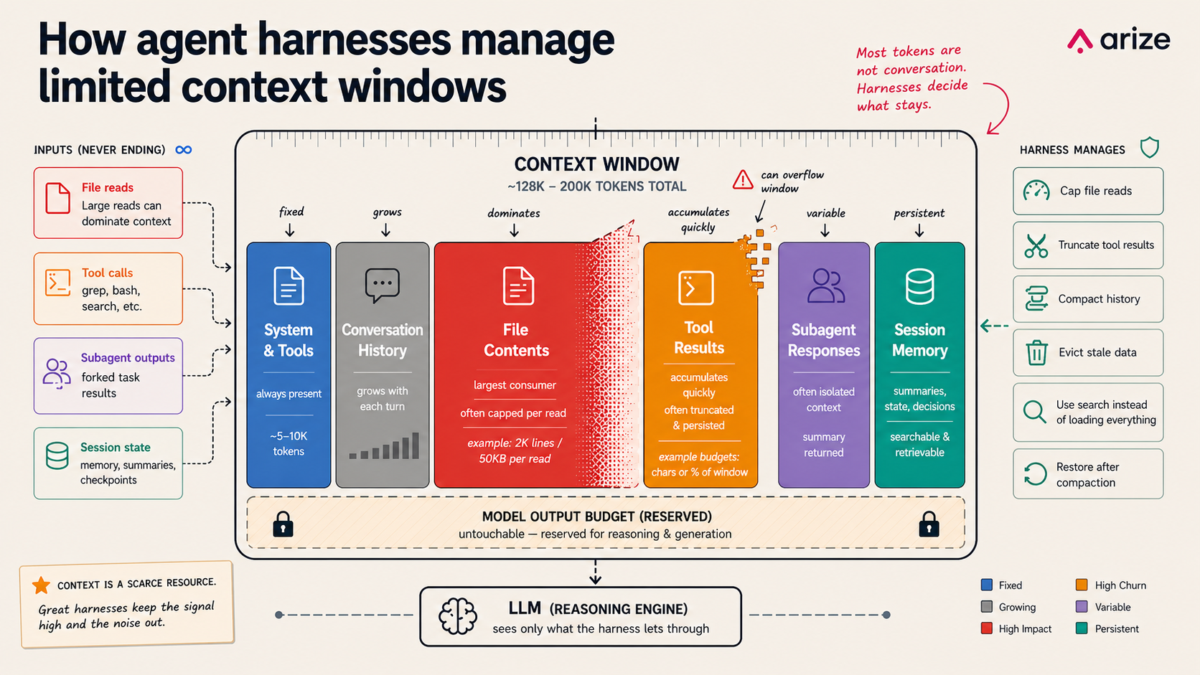
Why AI Characters Forget Mid-Story
Most “memory loss” is not a personality bug. By default, large language models are stateless — each request starts from scratch unless the product stores and reloads the right state. Context is often the only thing the model “remembers” about you in that moment. If the name, the scar, and the betrayal are not in the tokens that get sent, they do not exist.
Companion apps make this worse because their windows are small. Character.AI-style products typically run on a fixed window of roughly 8,000–9,000 tokens. On Janitor-style stacks, JLLM holds about 8K–9K tokens and can drop early messages after 25–30 turns. That is a few scenes, not a campaign.
8,000–9,000 tokens — Typical companion-app context window before older turns fall out
25–30 turns — Point at which some character models start dropping early messages
A bigger window delays the crash. It does not write a memory policy. Oracle’s guidance on long conversations is blunt: a larger context window gives you more room, not a decision about what should survive. IBM researchers also note that when a text sequence doubles in length, an LLM needs about four times the memory and compute, and that models prefer information at the start or end of a long prompt over details buried in the middle.
But keeping a character coherent is frustratingly difficult:
- The context window fills with fluff, tool dumps, and repeated greetings
- Older canon falls out, so the bot invents a new backstory
- Summaries compress the plot and quietly change the facts
- New chats wipe identity even when the “same” character card is loaded
- There is no separate store for stable facts versus this scene’s banter
The context window is a desk, not a biography
Everything shares one budget: system instructions, character card, your messages, the bot’s replies, retrieved lore, and any reserved output space. Janitor’s own docs call this overflow “context rot” — quality degrades before the product throws a clean error. Working memory can overload on relatively small inputs, well before the advertised window is full.
That is why a character can quote your name in scene one, then ask who you are in scene four. The early turns were evicted. The harness kept the latest flirting and dropped the oath.
Context rot is a signal-to-noise failure
More is not better inside memory fields. A novel-length character wiki stuffed into every turn crowds out the last fight, the current outfit, and the promise you just made. Vague lines such as “complex and emotional” waste tokens; concrete flags such as “owes the user a life debt; left arm is splinted” survive.
Users already treat this as a known failure mode, not a rare glitch —
. Features like lorebooks and persistent memory modules exist because raw chat history does not.Summaries drift; new chats amputate the person
Summarization helps compress older dialogue, but summaries omit details, merge ideas, or drift. If your only “memory” is a paragraph the model wrote about itself, a scar becomes a tattoo, a rivalry becomes a romance, and a dead NPC walks back in.
Starting a fresh thread is worse. Short-term memory resets when the conversation ends. Rolling context by hand — copy the summary, paste it into a new chat — is the workaround
. That is not a character. That is a backup ritual.Generic chatbots have no character state
A general-purpose model can imitate a voice for a page. It does not keep a ledger of who you are to them, what they are carrying, or which secrets are still secret. Without structured memory, “she would never say that” is a hope, not a constraint.
This is exactly what Jenova was built for.
The Jenova Solution
Jenova treats a character as a long-running agent with state, not a one-shot scene. Unlimited chat history and persistent cross-session memory mean the same agent can recall your name, the fight in the parking lot, and the unfinished bargain weeks later. You can use a prebuilt roleplay or language agent, or create a custom character with instructions, a preferred model, and a private knowledge base of sheets, lore, and house rules.
While Character.AI-style apps keep only a few thousand tokens of recent chat, this platform specializes in memory that outlives the window: what to store, what to retrieve, and what the model is allowed to see.
| Traditional approach | Jenova |
|---|---|
| Sliding window; older canon falls out | Unlimited history plus persistent cross-session memory |
| Lorebook crammed into every prompt | Knowledge base retrieved when relevant, not stuffed by default |
| Recap pasted into a new chat | Same character thread across sessions and devices |
| One generic chatbot doing every voice | Custom instructions, model choice, and specialist agents |
| Summary that quietly rewrites the plot | Structured facts you can query and correct |
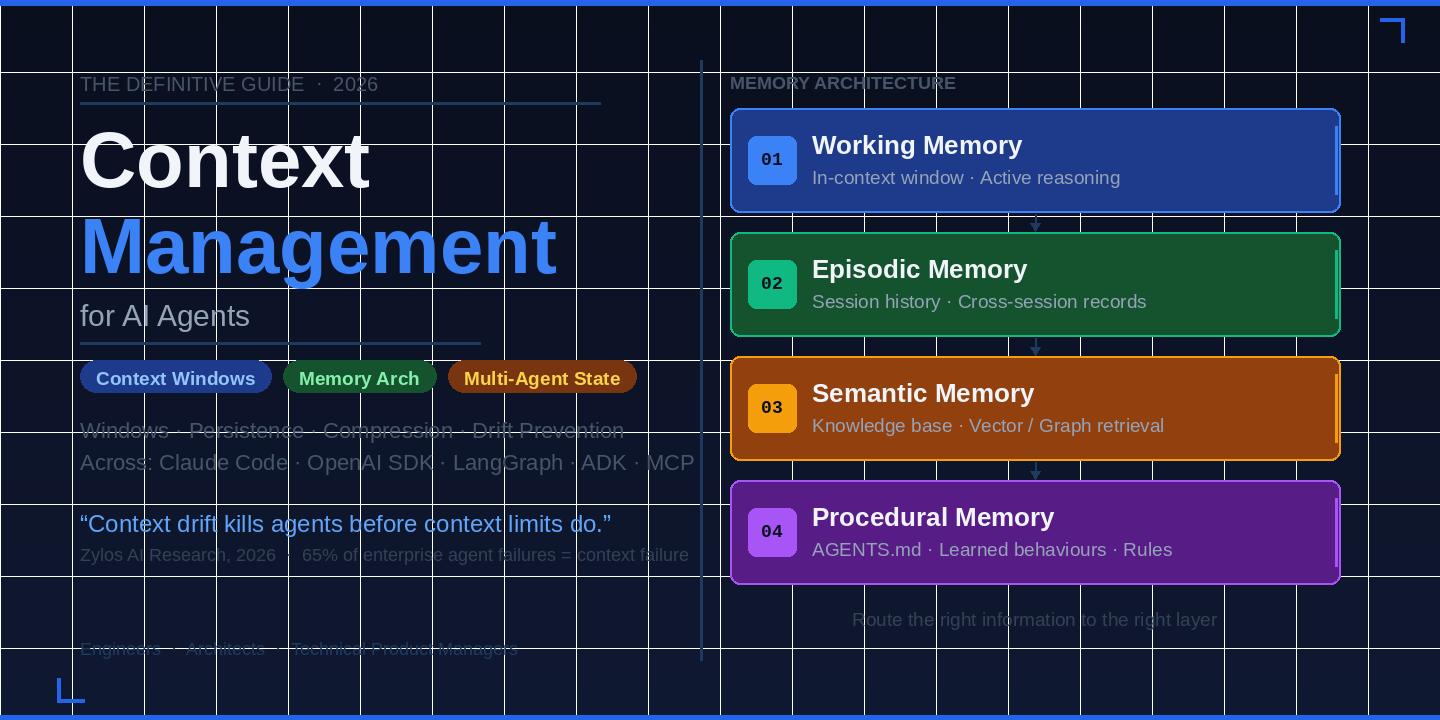
That diagram is the real fix. The reliable pattern for long conversations is hybrid layered memory: recent turns for the current scene, episodic records for what already happened, semantic retrieval for lore, and procedural rules for how the character behaves. A memory manager — not a bigger prompt — decides what enters the window.
Working memory for the scene you are in
The live window should hold the last beats, not the entire wiki. Cap noisy input. Prefer search over loading every file. Leave room for the model to actually reply. That is how you stop tool results and file dumps from crowding out the relationship.
Episodic memory for what already happened
Episodic memory stores important events, outcomes, and prior attempts. “We already tried the locked east wing. The brass key failed. The diary named the attic.” That is how a mystery in The Mansion stays a single story instead of a new amnesia each login.
Semantic memory for lore that should not rot
Character bibles, maps, item tables, and style guides belong in a knowledge base, not in the last user message. Vector retrieval is for meaning (“what did we decide about the duke?”) when you do not repeat the original wording. Similarity is not the same as relevance, so stable facts still need a structured home.
Procedural memory for voice and rules
Instructions are how you encode “never break character,” “do not invent loot,” and “use short, present-tense stage directions.” That is the AGENTS.md layer: learned behavior, not a scene. Pair it with multi-model access so you can change the GM’s prose model without wiping the save.
Specialized AI Agents for Character Continuity
Ready-made agents already assume the character must stay themselves. Use them as-is, or steal their structure when you brief a custom companion.
Roleplay Game Master
Roleplay Game Master is built for immersive roleplay with unlimited memory and perfect character consistency. If your search is literally how to fix AI character forgetting context in a long story, start here rather than in a generic chat.
- Same NPC voice across sessions, not a new improvisation each night
- Complete creative freedom without resetting the world to get more tokens
- A single thread you can query for inventory, relationships, and open plots
Learn Russian Through Roleplay
Learn Russian Through Roleplay is a language mentor that advertises unlimited memory and perfect character consistency — the same failure mode, different stakes. If the barista forgets you ordered in the familiar form yesterday, the grammar lesson collapses.
- Character stays in-world so vocabulary sticks to scenes
- Corrections that remember your recurring mistakes
- Immersion that does not reboot to “Hello, my name is…”
The Mansion
The Mansion only works if clues persist. You wake with no memory; the house must not share that amnesia. Keys, documents, and which wings you already searched are the character’s context.
- Clue inventory instead of a fading scroll
- Room lore that does not contradict last session
- Escape routes that depend on items you actually found
Personal Secretary
Personal Secretary is the non-fiction version of the same problem: calendar, travel, and logistics with deep personal context. A secretary who forgets your constraints is as broken as a knight who forgets the vow.
- Preferences and recurring logistics that survive the week
- Proactive coordination instead of re-briefing every Monday
- Continuity across professional and personal threads
Personal Therapist
Personal Therapist needs conversational continuity, not a new stranger every session. Use it for supportive dialogue that remembers themes you already named — and keep clinical decisions with licensed humans.
- Session-to-session recall of goals you set
- Honest accountability that does not lose the thread
- A consistent voice instead of a reset greeting
Children’s Book Creator
Children's Book Creator fails the moment the fox changes species on page six. Character consistency here is visual and narrative: the same cast, the same voice, spread after spread.
- Cast bibles that persist through a whole book
- Art and read-aloud text that stay on-model
- Continuity you can audit page by page
Try Jenova free — no credit card required.
How It Works
Step 1: Stop using a generic chat as a person
Open the platform and pick a specialist, or create a custom agent whose only job is this character. State that memory is a rule, not a vibe. A dedicated Roleplay Game Master already assumes unlimited memory; a blank chatbot does not.
"You are Elena, a cartographer who never breaks character. Track relationship with me, map fragments found, injuries, and open promises. Never invent items or events I did not play."
Step 2: Write a structured character bible, not a novel
Keep memory like post-it notes: short, specific, one tense. Put stable facts in instructions or a knowledge base. Leave the live window for the current scene.
"Environment: rain, dock warehouse. Relationship: rivals with an unpaid life debt. Plot: hunting the missing ledger. Inventory: brass key, splinted left arm. Past: she lied about the fire."
Step 3: Attach lore instead of pasting it every turn
Upload maps, item tables, or chapter notes to a private knowledge base. Semantic memory should be retrieved when the scene needs it. That is how Manga Creator keeps a serialized cast consistent, and how a language run in Learn English Through Roleplay can reuse the same café, landlord, and running joke.
"Use the attached lore bible as canon. If a retrieved note conflicts with the structured inventory or last logged event, the structured state wins."
Step 4: Force the ledger to update in the fiction
After every meaningful change, ask for a state block: inventory, relationships, plot flags. Prompting periodic summaries is how long chats stay coherent — but keep the summary as a checkpoint, not the only source of truth.
"OOC: pause roleplay. List impactful events since the tavern fight, relationship changes, and current inventory. Then continue in character from the alley."
Step 5: Leave and return without a recap ritual
Close the phone. Next session, do not paste a wiki. Query the campaign like a database that speaks in-world. Long-term memory is what lets an agent resume a task instead of greeting you as a stranger.
"What do you remember about my left arm, the brass key, and the promise you made on the dock? Continue from there. Do not reset."
Results & Use Cases
🎭 Long-running roleplay that does not reboot the romance
- Scenario: You are 80 scenes into a rivals-to-allies story. She still owes you a life debt. The warehouse ledger is half-decoded.
- Traditional Approach: The bot asks your name, forgets the debt, and flirts as if scene one never happened. You paste a 2,000-word recap and watch it get ignored by message ten.
- Jenova: The same Roleplay Game Master thread still holds the debt, the injury, and the unread pages. You play the next consequence, not a reboot.
- Relationship flags behave like quest state
- Voice stays in character because instructions never left the agent
- You correct one wrong fact instead of rebuilding the person
🏯 Language character who remembers your mistakes
- Scenario: You practice Japanese as a night-shift convenience store clerk. Yesterday you mixed speech levels with a regular customer.
- Traditional Approach: Today the tutor is a new stranger. The social landmine is gone. The vocab list resets to greetings.
- Learn Japanese Through Roleplay: The regular walks in remembering the slight. The lesson is the repair, not another self-introduction.
- Grammar anchored to a continuing scene
- Character consistency that makes honorifics matter
- No “new chat for more memory” tax
📱 Five minutes on the train, same save file
- Scenario: You found a brass key at lunch. You have a commute, not a desktop session.
- Traditional Approach: Notes are in another app. Starting the phone chat creates a twin character who never found the key.
- The platform: Open the same agent on iOS or Android. Ask what is in your hands and which door the diary implicated. Feature parity means the inventory is not a desktop-only wiki.
- Synced memory across devices
- Short sessions that still change the board
- No export-import ritual to keep canon
🏰 Mystery where clues are context
- Scenario: Ward notes, a missing patient file, and a palmed key only matter if they still exist tomorrow.
- Traditional Approach: The AI “helpfully” invents a new key because the first one fell out of the window.
- The Mansion: Rooms, documents, and failed attempts stay in episodic memory. You cannot unlock a door with loot the ledger does not show.
- Clues gate later rooms
- Failed attempts are remembered, so you do not loop
- The amnesia is yours, not the game’s
📅 Real-life continuity, not just fiction
- Scenario: You told your assistant you cannot fly out before 8 p.m. on Thursdays, then asked it to plan a client dinner.
- Traditional Approach: It books a 5 p.m. taxi because the constraint lived in a dead thread.
- Personal Secretary: Deep personal context is the product. The constraint is state, so the plan respects it.
- Preferences persist without re-briefing
- Logistics compound instead of resetting
- The same architecture that saves a knight saves a calendar
🎬 Cast that survives serialization
- Scenario: You are outlining a 60-episode vertical drama. The lead’s tell is a cracked phone case. Episode 12 cannot replace it with a necklace.
- Traditional Approach: Each outlining chat invents a new prop. Continuity dies in the writers’ room.
- Microdrama Screenwriter plus a knowledge-base bible: the tell is semantic memory. Later episodes retrieve it instead of hallucinating wardrobe.
- Recurring props and reveals stay canonical
- Character voice does not drift across a season
- Interview Coach uses the same persistence when your story must match the resume you already locked
FAQ
How do you fix AI character forgetting context without starting over?
Keep one agent thread, move stable facts into instructions and a knowledge base, and log state after every change. Then stop stuffing the live window with the entire wiki. Jenova already stores unlimited history and persistent memory, so you query the character instead of pasting a recap into a new chat.
Is Jenova free for long character chats?
Yes. The free tier includes core features with limited usage, so you can test whether a character still knows you after you close the tab. Plus starts at $20/month for more usage and custom model selection; higher tiers raise the monthly allowance. Usage resets on your billing date with no daily caps.
How is this different from Character.AI or a generic dungeon-master chat?
Those products are still bound to a small rolling context window. A generic model will describe a beautiful memory and then lose it. Jenova agents keep conversation history and cross-session memory, accept a private lore bible, and let you forbid invented facts. The difference is architecture, not nicer prose.
Can a roleplay agent keep inventory, pronouns, and plot flags straight?
Yes — if you make those rules explicit. Roleplay Game Master is designed for unlimited memory and character consistency. Add a structured block (relationship, inventory, plot, injuries) and tell the agent the structured block wins over any retrieved summary. That is the same discipline Janitor-style memory templates recommend, with storage that actually persists.
Does this work on mobile?
It does. Web, iOS, and Android share feature parity and synced settings, so the same character state is available on a phone. That is what makes a five-minute “what do you remember / continue from the alley” session possible without exporting notes.
Will the AI still invent details or drop lore?
No system is immune to a vague prompt. The reliable pattern is: require a state block after changes, forbid adding facts that were not established, attach a knowledge base for canon, and challenge errors against the last logged ledger rather than opening a new chat. Layered memory still needs a manager that prefers structured decisions over stale summaries.
Conclusion
How to fix AI character forgetting context is not a clever jailbreak. It is a memory architecture: a bounded scene window, episodic events that actually happened, semantic lore you retrieve on purpose, and procedural rules that keep the voice stable. Paper recaps and generic chatbots both drop that state.
Run the story in Roleplay Game Master, keep language characters consistent, or brief a custom companion that will not “meet you” again every Thursday. College Life and K-Pop Producer only feel alive if last week’s insult is still on the board.
Explore the full agent library at Jenova.
For Developers: Persistent character memory — history, knowledge bases, and custom instructions that stop context rot — is available programmatically via the Jenova API — integrate long-running character state into your application with a single API call. Full documentation →