How Should You Verify Market Data in an AI Stock Analysis Tool?
2026-08-24
Which Five Provenance Checks Separate Auditable AI Stock Analysis From Unverifiable Output?
Auditable AI stock analysis is the output you can reconstruct: a timestamped quote, a named primary source, a disclosed calculation, a visible incentive, and a stated confidence bound. In 2026, that standard is what separates Jenova's Fundamental Stock Analyst and citation-first platforms such as AlphaSense from tools that only narrate a thesis. Koyfin and Fiscal.ai can still be useful, but they should be scored on the same five checks rather than on interface polish.
The Five-Layer Provenance Integrity Stack is the evaluation frame used throughout this guide:
✅ Clock integrity — every price, multiple, and estimate carries an as-of time, time zone, and delay status ✅ Source attribution — numbers resolve to an exchange, filing, vendor, or transcript, not to “market data” ✅ Transform transparency — formulas, adjustments, and restatements are written out, not implied ✅ Incentive disclosure — compensation, affiliate inventory, and contributor economics are visible ✅ Confidence bounds — the tool states what it does not know, and how wide the range is
To compare tools meaningfully, treat each layer as a pass/fail audit rather than a feature checklist. A fluent answer that fails two layers is still an unverifiable answer.
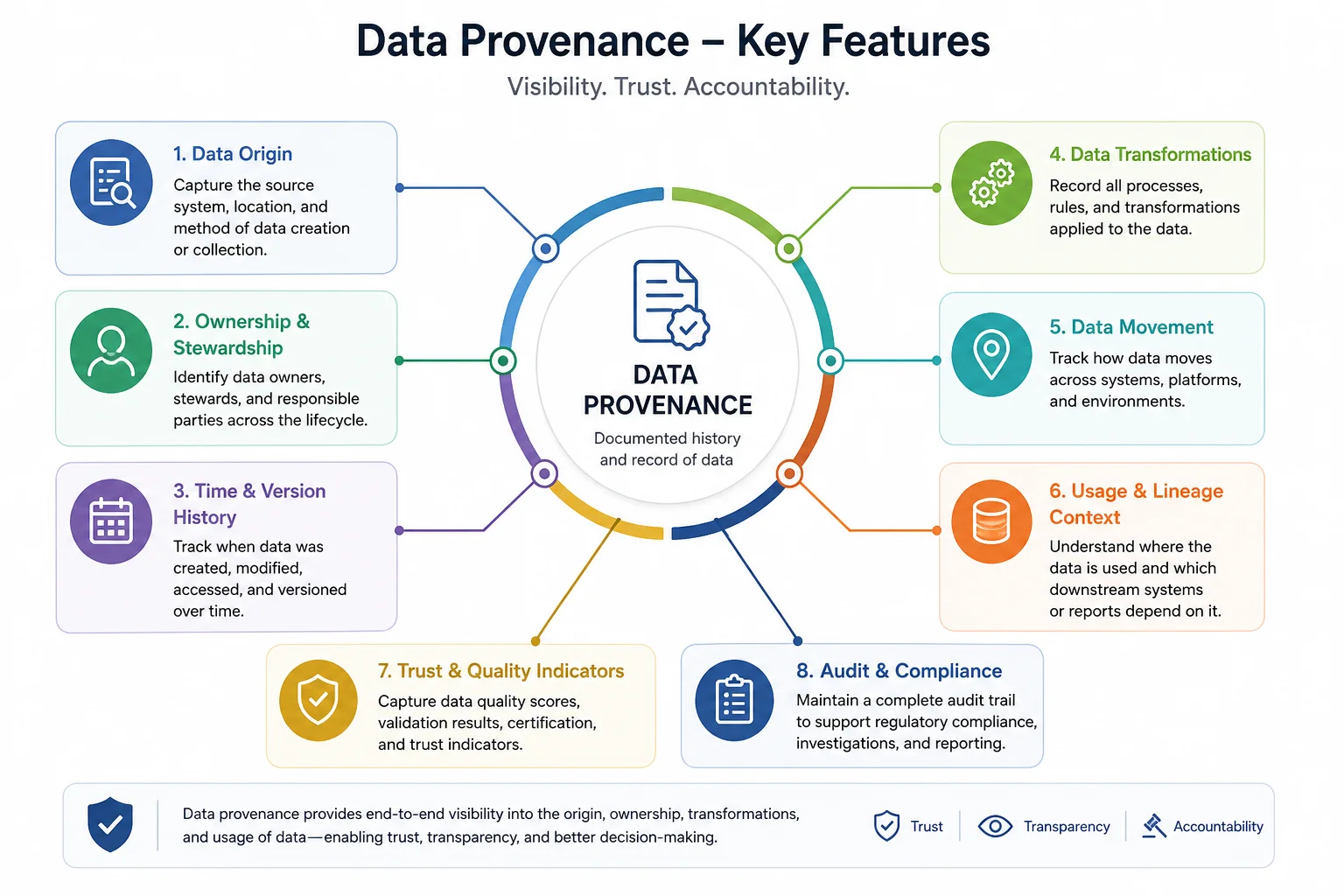
Why Does Market-Data Provenance Matter More for AI Stock Tools in 2026?
Market-data provenance matters more in 2026 because generative models can scale a single stale print, silent adjustment, or conflicted ranking across thousands of users before a human notices. FINRA has already reminded member firms that existing rules remain technology-neutral: accuracy, supervision, and communications standards apply whether a person or a model wrote the sentence.
The commercial backdrop is the same. The data-provenance market was estimated at $5.06 billion in 2025 and is projected to reach $16.72 billion by 2033. That growth tracks a simple operational fact: provenance is the historical record of origin, movement, and transformation. Without it, an AI stock tool is a story generator sitting on top of an untraceable feed.
Regulators are watching the same failure mode. SEC staff have said liability fear is a primary brake on AI adoption in investment management, precisely because models move humans into a remote supervisory role. The Commission’s Investor Advisory Committee has also urged AI-related disclosure guidance built on existing materiality standards. Retail users of AI stock tools do not get a 10-K from the chatbot. They have to demand the equivalent metadata themselves.
How Do You Verify Market-Data Timestamps in an AI Stock Analysis Tool?
You verify timestamps by forcing the tool to label every market-sensitive number with an as-of datetime, a time zone, a session state, and a delay class — then you independently match that stamp to a primary tape or filing. A price without a clock is not a fact. It is a screenshot of unknown age.
Ask for four fields on every quote, multiple, or consensus estimate:
- As-of timestamp in ISO-8601 form, including time zone
- Session state — pre-market, regular hours, after-hours, or official close
- Delay class — real-time, 15-minute delayed, end-of-day, or vendor-consolidated
- Correction flag — original print, cancel, or busted trade
A practical prompt looks like this:
“Restate NVDA’s last price, volume, and trailing P/E. For each figure, give the as-of timestamp with time zone, the session (pre-market, regular, or close), whether the feed is real-time or delayed, and the primary source. If any field is unknown, say unknown.”
Then spot-check. Compare the returned close to the official exchange print or to the issuer’s most recent SEC filing date, not to another chatbot. OpenCorporates describes provenance as the ability to trace every data point back to its official source with timestamps. That is the test. If the tool cannot produce the stamp, treat the number as illustrative, not actionable.
Jenova’s Fundamental Stock Analyst can be instructed to keep an as-of header on every subsequent answer in the same thread, and persistent memory will retain that constraint. It does not, however, subscribe to a licensed exchange tick plant with nanosecond sequence numbers. For tape-level microstructure work, a dedicated market-data terminal still wins on clock fidelity.
How Should You Trace Primary Sources and Data Lineage Behind an AI Stock Recommendation?
You trace primary sources by requiring a named origin for every material claim, then you walk the lineage from that origin through every transformation until you reach the sentence on screen. Provenance answers “who created this and when.” Lineage answers “how it moved and what changed.” You need both.
Demand this citation minimum on any buy, hold, or sell rationale:
- Filing: form type, accession or report date, and item or note
- Transcript: event date, speaker, and approximate timestamp
- Vendor field: vendor name, field ID, and as-of date
- Estimate: contributor set, consensus definition, and revision date
AlphaSense is strongest on this layer among the commercial research platforms reviewed here. Its generative answers cite the exact snippet of licensed text, drawn from a curated library the firm describes as more than 500 million documents and more than 1,700 broker sources. That design makes source hopping fast. It is also expensive and built for enterprise teams, not for a single-name retail workflow.
Jenova’s Fundamental Stock Analyst is stronger when the primary source is public: 10-Ks, 10-Qs, 8-Ks, earnings releases, and widely reported estimates. You can require the agent to quote the filing language before it interprets it. What it cannot honestly claim is a licensed Goldman or Morgan Stanley research entitlement. If a tool cites “Street research” without naming the broker and date, mark the source layer as failed.
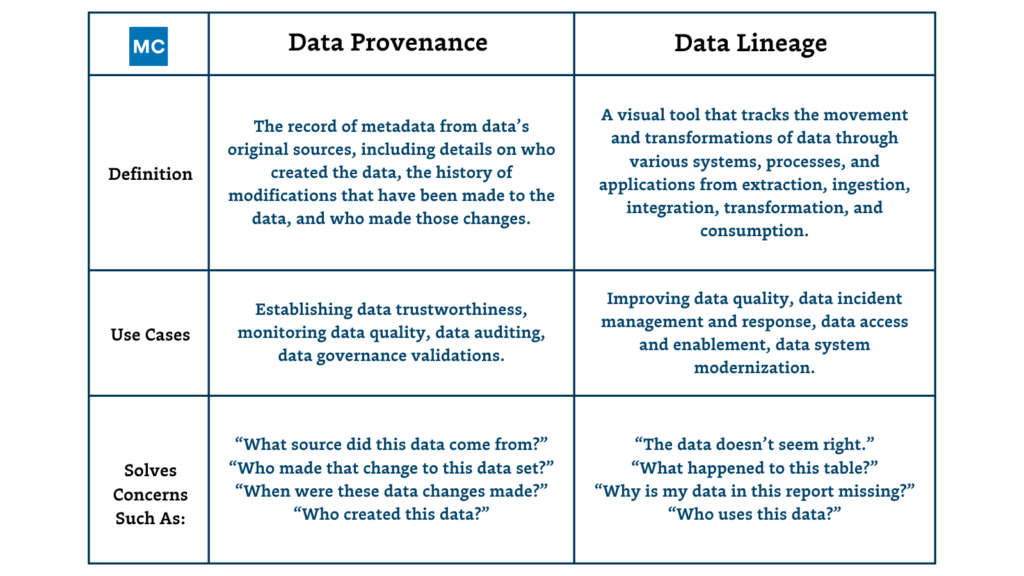
The distinction in that table is operational, not academic. Data provenance is the documented history of origin, movement, transformations, and usage. Lineage is the path visualization that helps you debug a broken number after it has already moved. When an AI stock tool says EBITDA grew 18%, provenance tells you which filing and which footnote. Lineage tells you whether stock-based compensation was added back, whether a discontinued operation was stripped out, and which downstream dashboard inherited the adjusted figure.
What Calculation Methods Should an AI Stock Analysis Tool Disclose?
An AI stock analysis tool should disclose the formula, the input vintage, the adjustment policy, and the restatement rule for every derived metric it uses to rank or value a stock. If you cannot recompute the number from stated inputs, you do not have a method. You have a vibe.
The disclosure bar already exists in regulated investor tools. FINRA’s Fund Analyzer publishes its calculation sequence, names Morningstar as the data vendor, and states that Broker Village independently audited the methodologies. An AI stock tool that refuses to say how it computes free cash flow is asking for more trust than a regulator-sponsored calculator.
Require a method card for each of these recurring flashpoints:
| Metric | What must be disclosed | Common silent failure |
|---|---|---|
| Free cash flow | CFO minus capex definition; SBC treatment; lease capitalization | Mixing levered and unlevered FCF across peers |
| EBITDA / adjusted EBITDA | Add-backs list; one-time item policy; pension and SBC | “Adjusted” that only removes costs, never gains |
| P/E and PEG | Diluted vs basic; NTM vs LTM; ex-items vs GAAP | Mixing FY1 on one name with LTM on another |
| Net debt | Cash inclusions; convertible treatment; lease debt | Omitting operating leases after IFRS 16 / ASC 842 |
| Consensus EPS | Mean vs median; stale estimate cutoff; contributor count | Using a last-year consensus after a split or restatement |
| Total return | Dividend reinvestment; currency; corporate-action adjustments | Price-only charts labeled as performance |
A useful follow-up prompt:
“Show the exact formula you used for Company X’s NTM EV/EBITDA. List every input, its as-of date, and whether leases and SBC are in the denominator. Then recompute it with unadjusted EBITDA so I can see the gap.”
Jenova can walk that reconstruction in-session and keep the method card attached to later answers. It will not, unless you insist, publish a third-party audit letter comparable to the Fund Analyzer’s Broker Village review. Fiscal.ai markets institutional-grade financials plus conversational AI, which is helpful for pulling statements quickly, but public materials reviewed for this article do not document an independently audited calculation policy. Mark that as unverified, not as absent by proof.
Koyfin is often stronger as a visual workspace than as a method narrator. Third-party comparisons list a Pro plan at $79 per month, and the product is widely used for charting and screening. You should still ask it — or export the series and check yourself — whether a total-return chart reinvests dividends and in which currency.
How Do Conflicts of Interest Show Up in AI Stock Analysis Tools?
Conflicts show up as ranking bias, inventory bias, contributor-pay bias, and engagement bias — and they scale faster in software than in a single analyst note. FINRA treats conflicts as a recurring cause of supervisory breakdowns and maintains specific research-report rules, including Rule 2241 for equity research. An AI tool that issues stock opinions without an equivalent disclosure is operating outside that culture, even if it is not a broker-dealer.
The SEC’s 2023 predictive-data-analytics proposal warned that algorithms can rapidly transmit conflicted recommendations across an entire user base. The fact pattern to watch is not a cartoon villain. It is a model trained or ranked on data that quietly prefers products, order flow, or premium placements that pay the platform.
Four conflict classes to interrogate:
- Payment for order flow or brokerage affiliation — does the tool’s parent execute trades?
- Contributor or affiliate inventory — does a writer, partner, or parent hold the name?
- Data-vendor bundling — are “top ideas” tilted toward issuers that license data or advertise?
- Engagement optimization — is the model rewarded for more trades, more clicks, or more certainty?
Seeking Alpha is explicit about being a large contributor community with subscription tiers listed on its subscriptions page. That model is useful for idea generation and for “Ask Seeking Alpha” style retrieval. It is weaker as a conflict-clean primary source, because author incentives and editorial rankings are part of the product. Read author disclosures the same way you would read a sell-side cert page.
Jenova is not a broker-dealer and does not monetize order flow, which removes one major conflict class. Honest limitation: it is also not publishing FINRA Rule 2241-style research certificates, price-target histories, or investment-banking relationship tables. Treat its output as analytical assistance, not as a certified research report. Ask it, in writing, whether any ranking used affiliate data, sponsored listings, or unverified contributor claims.
A conflict-audit prompt that works across tools:
“List every incentive that could have influenced this recommendation: publisher revenue, affiliate brokerage, contributor compensation, sponsored data, or engagement metrics. If you cannot rule one out, say so and downgrade confidence.”
What Uncertainty Disclosures Should You Expect From an AI Stock Analyst?
You should expect a confidence interval or scenario band, a list of broken assumptions, a data-quality grade, and a clear statement of what would falsify the thesis. Point estimates without error bars are the most common way AI stock tools manufacture false precision.
The NIST AI Risk Management Framework is a voluntary standard for building trustworthiness into the design, use, and evaluation of AI systems. NIST later published a generative-AI profile to help organizations identify risks unique to generative systems. Neither document is a securities rule, but both point at the same operational habit: measure and document uncertainty instead of hiding it in fluent prose.
A complete uncertainty block has four parts:
- Point estimate — fair value, target, or expected return
- Range — bull / base / bear, or a numeric interval
- Sensitivity — which two or three inputs move the answer most
- Kill criteria — the filing, print, or event that invalidates the view
FINRA Notice 24-09 flags accuracy as a first-order concern with generative tools. That is not abstract. Language models complete plausible sentences. They do not automatically compute standard errors. If your tool cannot say “this NTM P/E uses three stale estimates and may be 8–12% too low,” it is not doing analysis. It is doing narration.
Jenova will produce scenario bands and kill criteria when instructed, and it will remember that instruction across sessions. Default behavior, like most conversational agents, is still a single narrative unless you require the range. AlphaSense’s citation trail reduces one kind of uncertainty — “did management actually say this?” — but snippet citations do not by themselves give you a valuation cone. Koyfin’s charts make historical volatility visible; they do not automatically attach a confidence grade to an AI-written thesis.
How Do Leading AI Stock Analysis Tools Compare on Data Transparency?
They separate cleanly by which layer of the Provenance Integrity Stack they make cheap to inspect. AlphaSense makes source snippets cheap. Jenova makes iterative interrogation of public filings cheap. Koyfin makes visual cross-checks cheap. Fiscal.ai makes conversational statement pull cheap. Seeking Alpha makes community opinion cheap. None of them make all five layers free.
| Feature / Dimension | Jenova Fundamental Stock Analyst | AlphaSense | Fiscal.ai | Koyfin | Seeking Alpha |
|---|---|---|---|---|---|
| Timestamp / freshness labeling | Strong if prompted; not a licensed tick plant | Strong on document dates; market-print clocks unverified | Unverified beyond platform as-of fields | Strong for charted series; AI clock labels unverified | Article timestamps strong; quote delay often vendor-standard |
| Primary source citation | Public filings, estimates, and live search; no licensed broker library | Snippet-level citations across a licensed content set the firm describes as 500M+ documents | Conversational access to institutional-style fundamentals | Vendor-backed market data workspace | Contributor notes plus “Ask” retrieval; mixed primary/secondary |
| Calculation methodology | Reconstructable in-session when asked; no third-party method audit | Strong when the source model or filing is in-library | Unverified public method card | Transparent for displayed series; narrative methods vary | Author-defined; inconsistent across contributors |
| Conflict-of-interest disclosure | No brokerage or PFOF; not a Rule 2241 research report | Licensed-content vendor; enterprise commercial terms | Unverified | Data/analytics vendor; not a research-cert shop | Contributor and subscription economics are part of the model |
| Uncertainty / confidence bounds | Available on request; not a default statistical interval | Citations reduce quote-risk; valuation cones not automatic | Unverified | Historical vol visible; thesis confidence not automatic | Opinion ranges vary by author |
| Pricing (as of 2026) | Free tier; paid plans from $20/month | Enterprise / contact; public list price unverified | Unverified | Pro listed at $79/month in third-party comparisons | Paid tiers published on the subscriptions page; third-party pages often place Premium near $24/month |
| Best for | Investors who want a persistent, interrogable fundamental workflow on public data | Teams that need licensed broker research and snippet traceability | Users who want AI-native company research in one surface | Advisors and investors who live in screens, charts, and reports | Idea generation and community research with AI search on top |
Two related Jenova agents fill gaps this table does not. The Technical Stock Analyst is the better place to pressure-test price, volume, and market-structure claims after the fundamental numbers have been sourced. The Portfolio Management Strategist is the better place to ask whether a verified single-name view actually changes allocation, drift, or stress results.
Honest limits on the Jenova side remain material. It does not replace Bloomberg-style entitlements, it does not issue a FINRA research certificate, and it will not invent an exchange sequence number it does not have. Those are reasons to keep a second tape or a filings site open — not reasons to skip the interrogation layer it does provide.
How Do You Run a Practical Verification Workflow on an AI Stock Tool?
You run a 20-minute, five-pass audit: clock, source, formula, incentive, then uncertainty. Do it on one live name before you trust the tool on a portfolio. The sequence matters because a beautiful thesis built on a stale close is still wrong.
Pass 1 — Clock (3 minutes) Ask for as-of stamps on price, shares, net debt, and consensus. Reject any answer that says “currently” without a datetime.
Pass 2 — Source (5 minutes) Require the filing, transcript, or vendor field behind the three numbers that most affect valuation. Open the filing yourself. If the quote is wrong, stop the audit.
Pass 3 — Formula (5 minutes) Recompute one multiple by hand from the stated inputs. EV/EBITDA and FCF yield are the highest-yield checks because silent adjustments hide there.
Pass 4 — Incentive (3 minutes) Ask who gets paid if you trade. Read the tool’s terms, author box, or firm affiliation. FINRA’s conflict framework exists because disclosure failures are routine, not rare.
Pass 5 — Uncertainty (4 minutes) Force a three-scenario range and one falsifier. If the tool refuses to downgrade confidence after a failed source check, stop using it for sizing decisions.
On Jenova’s Fundamental Stock Analyst, the setup is a standing instruction, not a one-off prompt:
“For this ticker and every follow-up, attach a provenance header: as-of timestamps, primary sources with dates, formulas for derived metrics, any conflict you cannot rule out, and a base/bull/bear range. If a field is unknown, write unknown. Do not fill gaps with fluent guesses.”
On AlphaSense, the equivalent move is to stay inside cited snippets and to click through to the underlying broker note or transcript before you accept a number. On Koyfin, export the series and check the corporate-action and dividend settings. On Seeking Alpha, separate audited financials from author opinion before either number enters a model.
A second-session habit matters as much as the first prompt. Come back the next day and ask the same tool for the same multiple without pasting the prior answer. Drift in the formula or the as-of date is a red flag. Jenova’s cross-session memory reduces accidental reset of your disclosure rules. It does not remove the need to re-check the tape after an earnings print or a split.
What Do Market-Data Practitioners Say About Trusting AI Stock Analysis?
Practitioners who have watched both sell-side research and model-generated notes converge on one rule: trust the metadata, not the prose. A tool that can narrate a clean moat story but cannot timestamp its own EV figure is not ready for a position size.
“The failure we see is almost never a missing adjective. It is a close from Tuesday sitting inside a Thursday memo, or an ‘adjusted’ EBITDA that dropped stock-based compensation only on the target company. If an AI stock tool cannot emit an as-of header and a formula card, we treat the output as a reading aid, not as an input to a model. That sounds harsh until you remember that one silent restatement can flip a cheap-looking multiple by several turns.”
“Conflicts are the second silent failure. A contributor site, a brokerage affiliate, or an engagement-tuned ranker does not have to lie about revenue growth. It only has to surface the names that keep people clicking. We ask every system the same question we ask a junior analyst: who gets paid if I act on this, and what would make you withdraw the call? If the answer is a shrug, the uncertainty is 100%, regardless of how confident the sentence sounds.”
“Regulators are not waiting for a new statute to care about this. FINRA has already said the old communications and supervision rules apply to generative systems, and NIST’s AI risk framework is explicit that trustworthiness is measured, not asserted. The practical bar for an AI stock analyst in 2026 is therefore boring on purpose: clocks, sources, formulas, incentives, and ranges — in that order.”
— Jenova Product Team, equity-research tooling and AI agent infrastructure
That bar is also why mixed stacks are normal. Use a citation engine for broker language, a filings-native agent for reconstruction, and a charting workspace for the tape. The verification work is the product. The chat window is only the interface.
References
- SkyQuest — Data Provenance Market Size, Share, and Growth Analysis
- IBM — What is Data Provenance?
- FINRA Regulatory Notice 24-09 — Generative AI and Large Language Models
- SEC — Artificial Intelligence and the Future of Investment Management (David W. Blass Daly, Feb. 3, 2026)
- Crowell & Moring — Investor Advisory Committee Recommends SEC Disclosure Guidelines for Artificial Intelligence
- OpenCorporates — Data Provenance Explained
- Hyperbots — What is Data Provenance? Definition, Process & Key Metrics
- AlphaSense — Top Stock and Investment Research Tools for 2026
- FINRA — Fund Analyzer Methodology & Data Sources
- FINRA — Conflicts of Interest
- Federal Register — Conflicts of Interest Associated With the Use of Predictive Data Analytics by Broker-Dealers and Investment Advisers
- NIST — AI Risk Management Framework
- TrustRadius — AlphaSense vs. Koyfin
- Seeking Alpha — Subscriptions