How Does Jenova's AI Roleplay Game Master Run a Campaign?
2026-09-09
Which Layers of Play Separate a Campaign-Capable AI From a Story Chatbot?
A campaign-capable AI is not a chatbot that continues a scene. It is a stack of play layers — persistent world state, consistent characters, open improvisation, and player steering — and Roleplay Game Master is built around those layers, while tools such as AI Dungeon, Friends & Fables, NovelAI, and AI Realm each emphasize a different mix of story, rules, or multiplayer.
In 2026, AI dungeon masters sit in a crowded category that also includes map generators, character builders, and campaign outline tools. The products that hold a campaign together are the ones that still know who cheated you, what you promised, and which faction is still hunting you after you close the tab.
Key factors that separate campaign play from one-shot story chat:
✅ State persistence — quests, debts, maps of who knows what, and unresolved hooks survive across sessions, not just inside one context window.
✅ Character consistency — NPCs keep motives, voices, and prior deals instead of resetting to generic archetypes.
✅ Improvisation range — the narrator can answer actions no module writer anticipated, which is the core job of a human game master (GM).
✅ Player steering — tone, stakes, pacing, and content boundaries can be revised mid-campaign without restarting the world.
✅ Engine honesty — some tools enforce dice and grids; others narrate consequences. Mixing those up is how campaigns feel either railroaded or weightless.
To compare these tools usefully, it helps to treat “running a campaign” as a set of GM jobs rather than as a single chat feature.
Why Are Players Turning to AI Game Masters for Tabletop Campaigns?
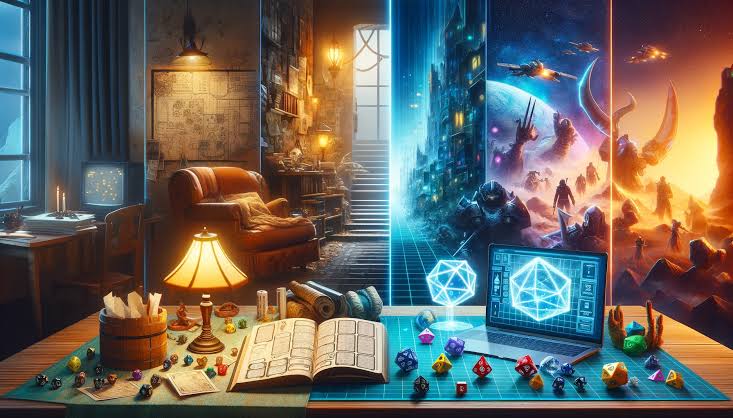
Players are turning to AI game masters because the bottleneck in tabletop role-playing is rarely interest. It is the unpaid labor of finding a GM, aligning calendars, and preparing a world that may never reach the table.
A conventional session still follows a simple loop: the GM describes a situation, players declare actions, and dice or rules determine success or failure before the GM narrates the result. That loop is easy to love and hard to schedule. Behind it sits invisible prep — NPC rosters, encounter plans, maps, puzzles, and contingency notes — that a human GM may spend hours assembling for a single night.
Researchers have argued that measuring what players actually experience at the table can help GMs improve later sessions. AI tools entered that gap as always-on narrators: they cannot reproduce the social table, but they can remove the wait for one.
Community discussion in 2026 already treats AI GMs as a live category, from
to veterans noting that AI GMs, campaign managers, and adventure generators look inevitable. The useful question is no longer whether an AI can talk like a tavernkeeper. It is whether it can run the next twelve sessions without dropping the plot.What Should You Look for in an AI That Runs a Full Campaign?
You should evaluate an AI campaign runner on five dimensions — state, character, improvisation, narrative control, and engine fidelity — rather than on prose quality alone. That SCENE frame (State, Character, Improvisation, Narrative control, Engine fidelity) is the difference between a fun hour and a campaign that still exists in March.
State persistence. A campaign is a ledger. Who is alive, who is allied, which rumor is true, and which door you already kicked in must survive the gap between sessions. Tools that keep that ledger in platform memory behave differently from tools that ask you to maintain a lore bible.
Character consistency. The GM’s job is to play everyone who is not the player character. If the same merchant forgets a debt or changes personality, the world stops feeling like a place.
Improvisation. Published modules and video-game dialogue trees eventually run out of branches. A campaign runner has to absorb the plan-breaking action — bribing the guard with a song, skipping the dungeon, accusing the quest-giver — and keep continuity.
Narrative control. Good AI GMs take direction on tone and difficulty. A grimdark failure-has-costs table is a different product from a wish-fulfillment sandbox, even if both use the same model family.
Engine fidelity. Some players want System Reference Document (SRD) 5e combat, initiative, and hit points enforced by code. Others want fiction-first play where the “roll” is flavor. Neither is wrong; pretending they are the same tool is.
Price and access matter, but they are downstream of SCENE. A cheap session that forgets your patron is more expensive than a limited-usage agent that still knows the name of your dead horse.
How Does Jenova's Roleplay Game Master Compare to AI Dungeon, Friends & Fables, and NovelAI?
Jenova’s Roleplay Game Master is strongest for long-form original worlds that must remember themselves, while AI Dungeon is stronger for freeform scenario hopping, Friends & Fables is stronger for multiplayer 5e-style tables, and NovelAI is stronger as a prose co-writer than as a GM. AI Realm sits between chat play and light tabletop flavor, with sheets and dice but model-led rules.
As of 2026, independent roundups still split this market into story engines and game engines. AI Dungeon remains a freeform adventure platform with an ongoing free tier, not a rules engine. Friends & Fables runs 5e SRD-inspired campaigns with an AI GM named Franz, including a free plan of 25 turns per day and paid plans listed from $19.95 to $39.95 a month. NovelAI is a long-form fiction tool with Lorebook control, encrypted stories, and plans from $10 to $25 a month after a one-time 50-action trial. AI Realm offers 5e-inspired solo chat with an interactive sheet, clickable dice, a free tier of about 30 messages a day, and paid plans from $7.99 to $49.99.
| Feature / Dimension | AI Dungeon | Roleplay Game Master | Friends & Fables | NovelAI | AI Realm |
|---|---|---|---|---|---|
| Memory model | Player-assisted; long adventures still drift | Unlimited persistent memory across sessions | Retrieval-based; can drift on long campaigns | Manual Lorebook and author notes | Notes-based; documentation warns memory is not infallible |
| Rules and dice | None enforced | Narrative adjudication; no dedicated 5e rules engine | 5e SRD-inspired; combat reported off by default during a 2026 rework | None; writing tool, not a GM | Model-led sheet and dice; combat can wobble |
| Multiplayer | Limited | Solo-first campaign play | Up to 3 players on free, up to 6 on top tier; friends play under the host | No | Solo-focused |
| Genre flexibility | Total genre freedom and a large scenario library | Any setting, tone, or homebrew world you describe | 5e-style campaign structure | Any fiction the writer wants | 5e SRD-inspired solo adventures |
| Image generation | Paid credits, per 2026 comparisons | Not a built-in art studio | Image studio on credits | Built-in anime-style generator | Built into the core product |
| Pricing (as of 2026) | Ongoing free tier; paid memberships add models, context, and credits | Free tier with limited monthly usage; paid from $20/month | 25 turns/day free; $19.95–$39.95/month | Trial only, then $10–$25/month | ~30 messages/day free; $7.99–$49.99/month |
| Best for | Freeform “do/say” adventures | Long original campaigns that must keep continuity | Playing 5e-style games with friends | Private long-form prose and lore writing | Casual solo sessions with sheet-and-dice flavor |
Roleplay Game Master
Testing the agent as a campaign runner shows a clear design bet: remember everything, stay in character, and let the player shove the plot off the rails. Unlimited chat history and persistent memory mean the tavernkeeper from session three can still collect on a debt in session thirty. Multi-model access on paid tiers lets you match narration style to tone, which matters when grimdark and high-romance need different prose.
The honest limitation is mechanical. It does not ship a virtual tabletop grid, an initiative tracker, or a coded 5e combat engine. If your table’s fun is tactical positioning on a map, a purpose-built 5e platform will feel more like “game” and less like “novel with consequences.”
AI Dungeon
AI Dungeon is still the closest like-for-like for players who want to type an action and watch a world improvise. It uses do, say, and story inputs, keeps a large scenario library, and offers a real ongoing free tier. That accessibility is a genuine strength.
It is also a storytelling engine. There are no enforced character sheets or combat mechanics, and long adventures still require player attention to memory. If you need the stolen crown to stay stolen without extra bookkeeping, that gap shows up fast.
Friends & Fables
Friends & Fables is the option to weigh when the missing ingredient is other people. Campaigns support multiple players, worldbuilding tools, battlemaps, and structured lore dumps that the AI GM can draw on. For groups that already live in a shared chat culture, that is a different product category than solo narrative play.
The tradeoff is maturity and combat. The platform has been in early access, combat encounters were off by default while the system was reworked, and memory is retrieval-based. Multiplayer convenience does not automatically equal long-campaign reliability.
NovelAI
NovelAI is often compared with AI GMs and then misunderstood. It is excellent at continuing prose in your style, storing world facts in a Lorebook, and generating images, with stories encrypted on the host’s servers. Writers who want control of every sentence are not wrong to stay there.
It was not trying to be a game master. There are no character sheets, hit points, or dice the system enforces, no multiplayer, and no ongoing free tier after the 50-action trial. You remain the memory keeper. That is a feature for authors and a second job for campaign players.
AI Realm
AI Realm is the middle step for someone leaving pure prose and not yet wanting a full virtual table. You build a character on an interactive sheet, roll by clicking dice, and play in a chat window with bundled image generation. Onboarding is fast, and the cheapest paid entry in that 2026 comparison is lower than several competitors.
Rules still run through the language model. Combat can wobble, long campaigns reward keeping your own notes, and the product’s own documentation is frank that memory is not infallible. Treat it as a solo session tool, not as an archival campaign database.
Generic chat models remain the baseline many people try first. ChatGPT and Claude are accessible and flexible, but they lack dedicated rules tracking and campaign persistence. They are strong for a one-night outline and weak as a living world.
How Does Persistent Memory Keep NPCs and Plot Threads Intact?
Persistent memory keeps a campaign intact by storing identity, prior events, and open threads as first-class state, so the narrator does not have to rediscover your world every session. In the Roleplay Game Master, that is the load-bearing feature: unlimited history plus cross-session memory, rather than a manual lore document you update after every scene.
This is the failure mode players report in generic chatbots and in several adventure apps. Long AI adventures drift when the player is the memory keeper, whether that keeper is a Lorebook, a pinboard of notes, or a hope that the context window is large enough. A merchant who forgets a bribe is not a small bug. It is a continuity break that teaches you the world is disposable.
Examining SCENE in practice, memory has to hold more than names. It has to hold asymmetric knowledge: the guard who did not see the murder, the patron who thinks you are loyal, the rumor that is false but spreading. When those facts persist, later improvisation has something to push against.
The limitation is not mystical. Memory does not replace a character sheet you care about, and it does not invent a battle map. Players who want engine-enforced hit points still need either house rules spoken aloud or a different class of product. What memory does buy is the thing campaigns actually die without: a past.
How Does an AI Game Master Adjudicate Choices Without a Published Module?
An AI game master adjudicates by taking a declared action, applying the campaign’s stated physics and stakes, and narrating a consequence that the world will remember. It is doing the same job a human GM does when players leave the outline, which experienced GMs treat as inevitable rather than as a rules failure.
Traditional prep assumes you can predict the flow: NPC stats, planned fights, dungeon maps, puzzles. Players still surprise the GM. A generative narrator’s advantage is that it does not run out of unwritten rooms. Its risk is the opposite of a railroad: saying yes so often that failure loses meaning.
That is why steering belongs in adjudication, not only in setup. You can set terms the way you would brief a human GM:
"Run this as low-magic grimdark. Failure should have permanent consequences, and I do not want the world bending in my favor."
"Escalate the encounter. Add two more hostiles and let the enemy commander act tactically instead of charging."
Tools with coded rules handle a narrower version of this problem. Some 2026 AI dungeon masters advertise full Dungeons & Dragons 5e engines, initiative, and persistent campaign memory. Others put dice on screen while the language model still interprets the ruling. Roleplay Game Master is in the fiction-first camp: it will honor a requested dice ritual if you ask, but it will not independently enforce an SRD combat chapter.
Use that honestly. If you want a module’s balance math, a rules engine is the better referee. If you want a living city that reacts when you ignore the main quest, open adjudication is the point.
How Do You Start and Steer a Campaign With an AI Roleplay Game Master?
You start by defining world and tone, putting a character in a situation with teeth, then playing in plain language and correcting course when the pacing slips. Most AI campaign tools follow that same shape; they differ in how much bookkeeping they hand back to you.
For Roleplay Game Master, a first session can look like this:
- Open the agent at jenova.ai/a/roleplay-game-master and state genre, tone, magic level, and hard boundaries.
- Give the protagonist enough motive to cause trouble, not a novel-length backstory.
- Play the opening scene in ordinary sentences. Describe what you do, what you watch, and what you refuse.
- Steer when needed: skip time, raise stakes, cut a combat, or freeze a fact into canon.
- Stop anywhere. Persistent memory is the recap.
Setup prompts that produce a campaign instead of generic fantasy:
"High fantasy with heavy political intrigue. Three warring noble houses in a coastal city-state. Magic is rare and legally restricted. I want dialogue-heavy scenes and very little dungeon crawling."
"I'm playing Kessa Vaelin, a disgraced house-guard turned informant. Chaotic neutral, sharp tongue, in debt to a smuggling ring. Start me being summoned by the person I owe."
In-scene play should sound like a table, not like prompt engineering:
"I don't take the offered coin. I ask him who else he's approached about this job, and I watch his hands while he answers."
Mid-campaign steering is part of the loop:
"Skip ahead three weeks. Kessa has been working for the house. Open on the moment she realizes she's been set up."
For AI Dungeon, the equivalent start is picking or writing a scenario, then using do/say/story actions. That loop is excellent for genre hopping and weak at enforcing a sheet. For NovelAI, the equivalent start is stocking a Lorebook before you write. The fiction quality can be high, but you are still the archivist.
Practical habits that transfer across tools:
- Keep a one-page character sheet even if the AI stores memory. It is your debug reference when a number matters.
- State content boundaries in session zero language, then repeat them if a scene slides.
- Ask the GM to recap known facts before a time skip. Continuity is easier to lock than to repair.
- Use short mobile scenes as first-class sessions. Roleplay Game Master runs with feature parity on web, iOS, and Android, including speech-to-text for hands-free action declarations.
The free tier includes limited monthly usage. Paid plans start at $20/month with 30× the free usage allowance, which matters more for daily campaign play than for a single one-shot.
When Does an AI Game Master Fall Short of a Human Table?
An AI game master falls short whenever the product you wanted was other people, a shared physical ritual, or a referee whose rules knowledge is independent of prose. It is a strong substitute for solo play, concept testing, and DM prep. It is a weak substitute for a Friday night group.
Tabletop veterans have been making that distinction for years. Some designers talk about chatbots as tools that make the table run smoother rather than as replacements for authors or GMs. That framing still holds. An AI can voice six NPCs. It cannot pass snacks, read the room when a joke landed badly, or hold a campaign together through a friend’s bad week.
Roleplay Game Master inherits the category’s structural limits:
- No coded 5e combat engine. Tactical players will feel the missing grid.
- Solo-first. There is no Friends & Fables-style six-seat table built into the agent.
- No native map or miniature studio. You still need a separate map tool if the table expects battlemaps.
- Usage caps on the free tier. A binge campaign burns allowance faster than a weekly human game burns social capital.
- Improvisation can be too agreeable unless you explicitly demand failure, scarcity, and NPC willpower.
Human tables fail in complementary ways: cancelled sessions, forgotten NPCs, and prep burnout. Evaluating player experience is still an open research problem even for flesh-and-blood GMs. The practical split in 2026 is hybrid. Use the AI when the alternative is not playing. Use the human table when the alternative is a better social night.
What Do Experienced Game Masters Say About AI-Run Campaigns?
Experienced GMs tend to judge AI campaign tools by continuity and pushback, not by how pretty the opening tavern is. A narrator that cannot remember a slight, and cannot let you lose, is not running a campaign. It is generating scenes.
"The campaigns that survive past session five are almost never the ones with the most ornate first paragraph. They are the ones where the innkeeper’s cousin still exists, the stolen ring is still stolen, and an offhand joke in session two has become a rumor the city believes. If your AI cannot hold those facts without a second spreadsheet, you do not have a game master. You have a writing partner who blinks."
"The other failure we see is the friend-DM problem. Players ask for grimdark, then the narrator sandbags every consequence because agreeable prose is the default. You have to brief stakes the way you would brief a guest GM: what can be destroyed, who will not be impressed, and where ‘no’ is a legal ruling. Tools that accept that brief, and still improvise when the party skips the dungeon, are the ones worth keeping open for months."
"Use AI where the hobby is leaking time. Prep an NPC voice. Stress-test a city. Play the character concept you will never get to run at the monthly table. Then bring the good parts back to humans. The job of a campaign engine is to make more play exist, not to win an argument about whether dice need a soul."
— Jenova Product Team, narrative-agent designers working on persistent-memory roleplay systems
Which Related Tools Help You Design Worlds Around an AI Campaign?
The most useful companion to a freeform AI GM is a systems-and-documentation partner when you start homebrewing rules, factions, or a setting you might later take to a human table. On Jenova, that counterpart is Game Designer Assistant, which is built for brainstorming, systems analysis, and design docs rather than for playing the session itself.
That split matches how the broader 2026 toolkit is organized. Guides now separate AI dungeon masters from map generators, character creators, campaign outline tools, and art tools. Mixing those jobs in one chat is possible. Keeping them separate is how you avoid a campaign that is vivid, inconsistent, and mechanically mushy at the same time.
If you do not want to worldbuild at all, a scenario-locked game is a different answer than a sandbox GM. The Mansion is an example of a bounded mystery: you wake with no memory, every room hides information, and the shape of play is escape and revelation rather than an infinite hinterland. Use that when you want a closed story. Use Roleplay Game Master when you want a world that should still be there after a three-month gap.
A clean division of labor looks like this:
- Roleplay Game Master — run the living campaign, hold continuity, voice the cast.
- Game Designer Assistant — balance a homebrew class, write faction logic, document the rules you wish the table used.
- A dedicated map or VTT tool — only if tactical maps are part of your fun.
- A human table — when the session’s real mechanic is friendship.
That is how an AI roleplay game master actually runs a campaign in 2026: not by replacing every hobby tool, but by doing the GM’s hardest recurring jobs on demand — remembering the world, answering the unplanned move, and being free at 2 a.m. when no one else can meet.
References
- AI Dungeon Master — DnD AI Tools: The Complete Guide for 2026
- United States Patent and Trademark Office — Tabletop role-playing game (rules, statistics, and dice)
- RPGamer — The Saving Throw: Tabletop RPG Primer
- ResearchGate — The Challenge of Evaluating Player Experience in Tabletop Role-Playing Games
- EN World — RPG Evolution: Hasbro’s AI Plans
- Dungeons Deep — The Best NovelAI Alternatives for AI RPG and Interactive Storytelling in 2026
- D&D Beyond — System Reference Document (SRD 5.2)
- RPGnet — Chatbots for RPGs and the tabletop running smoother