How Do Multiplayer AI Group Chats Work, and What Are They Good For?
2026-09-30
What Makes Shared AI Conversations Fundamentally Different From Solo AI Chat?
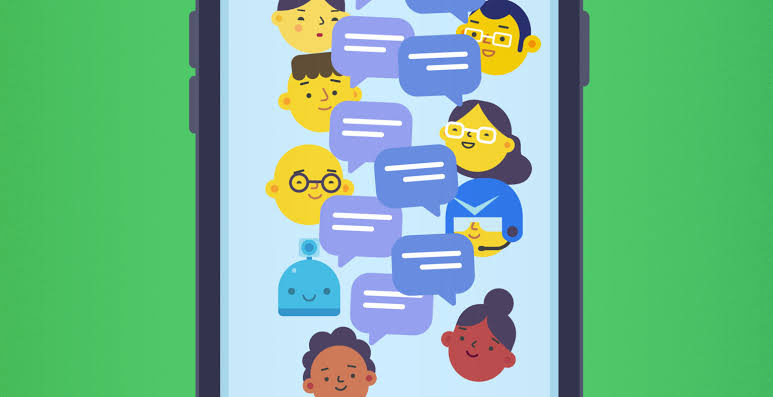
The fundamental difference is structural: multiplayer AI group chats put multiple people and a specialized AI agent into a single persistent conversation where everyone — including the AI — shares the same context, history, and working memory. Instead of each person maintaining a private chat and manually relaying the AI's outputs, a group chat gives every participant access to the full thread of what's been discussed, decided, and created.
Key factors that separate multiplayer AI from the standard single-user experience:
✅ Shared context eliminates retelling — the AI sees every participant's contributions, so no one has to summarize what someone else already explained ✅ Multiple perspectives in one thread — the AI synthesizes input from people with different expertise, roles, or viewpoints rather than operating on one person's framing ✅ Persistent group memory — the conversation retains context across sessions, so ongoing projects don't reset every time someone reopens the chat ✅ Specialized agents serve the whole group — instead of a generic assistant, the group interacts with a domain-expert agent built for a specific workflow ✅ Per-participant identity — the AI attributes messages to the right person, tracking who said what and responding accordingly
This model has existed informally — people have shared screens, copy-pasted AI responses into messaging apps, or taken turns on a single account. What's new in 2026 is that AI platforms are building multi-user participation directly into the product, with proper identity, permissions, and context management. Understanding which platforms handle this well starts with why the shift is happening now and what the technical design decisions involve.
Why Are AI Platforms Adding Multiplayer and Group Chat Features in 2026?
The shift from private AI assistants to shared, multi-participant sessions reflects a basic reality: most meaningful work and many personal decisions involve more than one person. McKinsey reports that 71% of organizations now use generative AI in at least one function, and 62% of businesses have begun experimenting with deploying AI agents. But the vast majority of that usage is individual — one person, one chat window, one isolated context.
The problem with individual AI usage at scale is information fragmentation. As Jitera's engineering team described it, a team of 50 using individual AI copilots ends up with "50 private agents, each knowing nothing about what the other 49 are doing". Decisions, context, and domain knowledge stay locked inside each person's chat history. Someone still has to copy the AI's output, explain it to colleagues, and reconcile competing AI-generated drafts.
Multiplayer AI solves this by making the conversation itself the shared workspace. OpenAI announced group chats in ChatGPT in September 2026, describing the feature as letting users "collaborate with others, and ChatGPT, in the same conversation." Jenova launched its multiplayer Group Chat feature across its full agent gallery, allowing multiple users to interact with specialized AI agents together. The timing isn't coincidental — both platforms are responding to the same user behavior: people already collaborating through AI, just with clunky workarounds.
79% of organizations now face significant challenges adopting AI effectively, and coordination across people is central to that challenge. Individual copilots help individuals work faster, but they don't help groups think together. Multiplayer AI bridges that gap.
What Should You Look for in a Multiplayer AI Chat Platform?
The right multiplayer AI platform depends on whether you need a shared general assistant or a shared domain expert, how billing works when multiple people generate AI usage, and whether the conversation persists across sessions. Six criteria separate functional multiplayer AI from basic chat features with a bot attached:
- Shared conversation history — Can every participant see the full thread, including messages sent before they joined? Or does each person start with a blank slate?
- Agent specialization — Does the platform offer specialized agents — a business advisor, a game master, a language tutor — that groups can consult together? Or is it limited to a general-purpose assistant?
- Persistent memory — Does the conversation retain context across sessions, or does everything reset when the window closes? For ongoing projects, persistence determines whether the AI remembers last week's decisions.
- Privacy architecture — How is the group chat isolated from each participant's private conversations and personal memories? What does the AI know about each person outside the shared thread?
- Per-user billing — Does one person pay for everyone's usage, or does each participant draw from their own account? Shared billing creates friction when usage is uneven.
- Task orchestration — Can the AI handle complex multi-step tasks — research, document generation, tool integrations — within the shared context? Or is it limited to conversational responses?
These criteria matter because multiplayer AI isn't just a chat room with a bot. The platforms making it work have had to rethink how context, identity, and compute costs flow through a shared conversation.
How Do the Leading Platforms Handle Multi-User AI Conversations?
Jenova, ChatGPT, Jitera, and Slack AI each take distinct approaches to multi-user AI — ranging from full agent orchestration in shared sessions to stateless AI features layered onto existing workspaces.
Jenova Group Chat
Jenova's multiplayer feature lets the session owner invite other users into any conversation with any agent from its gallery of specialized AI agents. Participants join and immediately see the full conversation history and attached files. Each participant's AI usage draws from their own account tier, so no one subsidizes someone else's heavy usage. The chat model is a shared setting controlled by the owner, and only one agent task runs at a time — a shared queue visible to all members keeps everyone aware of what's processing.
The core differentiator is agent specialization. A group doesn't interact with a generic assistant — they interact with a Roleplay Game Master running a shared campaign, a Business Co-Pilot facilitating strategy sessions, or a Marketing Strategist coordinating a team's planning. Each agent brings built-in domain knowledge, tool integrations via MCP, and multi-step workflow orchestration to the shared conversation. Global Memory — Jenova's cross-session personal memory system — is automatically disabled in Group Chats, isolating the shared thread from each participant's private AI context.
Strengths: Deep agent specialization across a full gallery, persistent conversation memory, per-user billing, full file and tool access in shared context, available across web, iOS, and Android.
Limitations: One task processes at a time (sequential queue), owner controls model selection and session settings, newer feature still evolving with growing adoption.
ChatGPT Group Chats
OpenAI launched group chats for ChatGPT in September 2026, allowing multiple people and ChatGPT to participate in the same conversation. Privacy controls separate group chats from private conversations — personal memories don't carry over, with additional safeguards for minors.
ChatGPT positions its group chats as a shared general-purpose assistant experience. Participants interact with ChatGPT's standard model rather than domain-specific agents with tailored knowledge bases and custom instructions.
Strengths: Massive existing user base, privacy isolation from private chats, familiar interface that millions already use daily.
Limitations: No agent specialization (general assistant only), limited published details on billing model and participant limits at launch, no domain-specific tool orchestration or custom agent selection.
Jitera (Team-in-the-Loop)
Jitera's approach makes the AI agent a full team member rather than an individual copilot. Their "Team-in-the-Loop" architecture gives the agent shared memory across the whole team, with a knowledge store designed to accept unstructured organizational knowledge — Slack threads, support tickets, design documents. The agent is exposed via API across tools like Linear and Claude Code, carrying context between different team members' workflows without requiring everyone to sit in the same chat window.
Strengths: Deep team knowledge accumulation, cross-tool context continuity via API, designed for engineering and product management workflows where context handoffs are expensive.
Limitations: Developer-oriented setup, focused on knowledge retrieval rather than interactive multi-user conversation, requires infrastructure configuration rather than offering a consumer-ready interface.
Slack AI
Slack AI operates as a workspace-level assistant that summarizes channels, answers questions about workspace content, and assists with search. However, it is fundamentally stateless — "each conversation starts fresh. There is no memory of previous interactions, no learning from how your team communicates".
Strengths: Built into the communication tool millions of teams already use daily, workspace-wide content access for search and summarization.
Limitations: No persistent memory across conversations, no shared agent context that builds over time, AI features layered onto a messaging platform rather than designed around shared AI interaction.
| Feature | Jenova Group Chat | ChatGPT Group Chats | Jitera | Slack AI |
|---|---|---|---|---|
| Shared conversation history | Full history visible to all members | Separated from private chats | Shared agent state via API | Channel-level content access |
| Agent specialization | Gallery of domain-expert agents | General-purpose assistant | Team knowledge agent | Workspace assistant |
| Persistent memory | Unlimited cross-session memory | Personal memories excluded | Shared team knowledge store | Stateless |
| Privacy isolation | Global Memory off in group chats | Private chats separated | Role-based API access | Workspace permissions |
| Per-user billing | Each member uses own account | Not yet detailed | Not published | Included in Slack paid plans |
| Task orchestration | Multi-step tasks with tools and MCP | Standard ChatGPT capabilities | API-based workflows | Summarization and search |
| Best For | Groups needing specialized agent expertise across domains | Casual shared conversations with a general assistant | Engineering teams needing cross-tool context continuity | Teams already in Slack wanting AI-enhanced search |
What Kinds of Tasks Work Best in a Multiplayer AI Group Chat?
Multiplayer AI works best when a task involves multiple people who bring different perspectives, information, or decision-making authority — and an AI agent can help coordinate, synthesize, or facilitate their contributions. Three categories have emerged as strong natural fits for shared AI conversations.
🎮 Collaborative storytelling and roleplay
Groups using AI game masters for shared campaigns represent one of the most active multiplayer AI use cases. Multiple players control their own characters within a shared narrative, each reacting to the other's actions while the AI manages the world, NPCs, and story continuity across sessions that can run for days or weeks. The format works because the AI tracks parallel storylines, manages turn-based systems where players submit actions before the AI resolves the round, and maintains narrative consistency across dozens or hundreds of turns.
Effective patterns include one player acting as a co-game-master to handle lore and rule corrections alongside the AI, and round-based submission systems that keep long-running campaigns synchronized between participants. Known friction points include character-naming collisions when the AI defaults to account usernames and difficulty separating out-of-character rules questions from in-character actions within the same thread.
👥 Helping someone navigate a complex situation
A frequently observed pattern involves one person bringing an AI-assisted workflow to someone who needs support — a friend helping a relative navigate a bureaucratic process, a colleague onboarding someone into an unfamiliar system, or a family member assisting with applications and correspondence. The helper typically builds context with the AI first, establishing the situation and relevant background, then invites the person who needs help to join and contribute directly.
This works because the AI accumulates context from both participants. The helper provides strategic direction while the other person adds real-time details — pasting emails as they arrive, answering the AI's clarifying questions, and reviewing drafts in context. Friction arises when the AI confuses pasted external content with messages the participant is composing, or when language defaults don't match the new participant's preferences.
💼 Team coordination and alignment
Teams use shared AI conversations to build and maintain alignment across different roles and domains. An AI agent acting as a project coordinator can translate between product and engineering teams, helping both sides articulate requirements in the other's vocabulary. Because the AI participates in all threads, it maintains a running understanding of what's been decided, what constraints each team member has raised, and how the project's direction has evolved.
AI collaboration in group settings addresses the logistical problems that make team coordination difficult: requirement alignment, writing consistency, maintaining a single source of truth, and ensuring everyone operates from the same assumptions. When the AI is a shared participant rather than a private tool, the coordination layer is embedded in the conversation itself rather than maintained in a separate document that drifts out of sync.
How Does Privacy Work When Multiple People Share an AI Conversation?
Privacy in multiplayer AI is built on isolation by default — the AI does not carry personal context from anyone's private conversations into the shared thread, and each group chat exists as its own self-contained context. This architectural choice prevents one of the most serious risks in multi-user AI: information from a private session surfacing in a shared space without consent.
On Jenova, Global Memory is automatically turned off in Group Chats. The AI does not bring personal memories, preferences, or private session history from any participant into the shared conversation. ChatGPT takes a similar approach — personal memories don't carry over into group chats, with additional safeguards for minors.
This isolation matters more than it might appear. Research on privacy alignment in conversational AI agents demonstrates that effective privacy management requires AI systems to proactively respect user boundaries rather than passively waiting for configuration. In a multi-user context, the risk compounds — information one person shared privately could surface in a group thread if memory isolation isn't enforced at the platform level.
There's also a subtler privacy dimension specific to multiplayer: shared history visibility. On Jenova, new members see the existing conversation when they join. This is valuable for continuity — a late joiner immediately has full context — but it means earlier messages become visible to the new participant. The platform treats invitations as deliberate acts by the session owner, not open-access links. Public share links produce read-only snapshots, not active participation rights.
Academic work on shared AI memory architectures has highlighted the need for "memory fabrics" that maintain shared conversational state while respecting individual boundaries — a design challenge that grows more complex as participant count increases and topics become more personal.
How Does an AI Agent Manage Context When Multiple People Are Talking?
The agent identifies each participant by name, attributes every message to the right person, and maintains a coherent model of the conversation as it branches across topics and intents. This is the coordination problem that single-user AI simply never encounters — different people with different goals, expertise levels, and communication styles all contributing to one thread.
On Jenova, the agent tracks who said what throughout the conversation's full history. When it completes a task — research, document generation, data analysis — the result appears in a shared queue visible to all members. The sequential processing model ensures each request is fully completed before the next begins, prioritizing coherence over parallel speed.
The challenge intensifies with mixed intent types. In a collaborative campaign, one person might send an in-character action while another asks an out-of-character rules question. In a team session, one person might paste external content for analysis while another asks a procedural question. The agent needs to scope each response to the right person and the right intent without conflating them.
Platforms that don't handle attribution well produce conversations where the AI validates whoever spoke most recently, merges distinct discussion threads into a single response, or addresses one participant's input as if another person said it. Research on alignment in multi-user agent settings identifies this context-attribution problem as central to making shared AI agents reliable — particularly when participants have asymmetric information, different trust levels, or competing goals within the same conversation.
How Do You Set Up and Run an Effective Multiplayer AI Group Chat?
Setting up a multiplayer AI chat takes a few minutes on current platforms. The effectiveness depends less on the technical setup and more on choosing the right agent, building context before inviting others, and establishing clear interaction patterns.
On Jenova:
- Open any agent from the gallery — a Business Co-Pilot for a strategy session, a Learn English Through Roleplay agent for practicing with a conversation partner, or any agent suited to the group's goal
- Build initial context before inviting anyone:
"I'm leading a three-person marketing team. We need to plan Q1 campaigns with a $50K budget across paid social and email. I'll invite my two team members shortly — please treat all three of us as equal contributors."
- Invite participants from the session settings — each person receives an invitation and joins on their own Jenova account
- Everyone contributes directly, and the agent responds with full awareness of the entire conversation thread and all attached files
On ChatGPT:
- Start a group chat from the ChatGPT interface
- Add participants by invitation
- All participants and ChatGPT interact in the same shared conversation
Best practices across any multiplayer AI platform:
- Establish context before inviting. The first participant should define the goal, provide background, and set the AI's scope before others join. New members inherit this context immediately, preventing aimless early exchanges.
- Label external content explicitly. When pasting emails, documents, or code into the chat, tell the AI what it is. Without labels, the AI may interpret pasted text as the participant's own words or conflate it with the ongoing conversation.
- Clarify roles when the group has structure. If one person is leading and others are contributing supporting information, telling the AI upfront helps it route responses and prioritize requests appropriately.
- Use the AI as a shared artifact generator. Rather than each person asking separately and comparing outputs, have the AI synthesize everyone's input into a single document, plan, or analysis that becomes the group's shared reference point.
What Do AI Platform Teams Say About the Future of Multiplayer AI?
The transition from individual AI assistants to shared multi-participant sessions represents a structural shift in how people interact with AI — moving the technology from a personal productivity tool to a collaboration layer that shapes how groups think together.
"The most striking pattern we've observed is that the same agent becomes a fundamentally different tool depending on who's in the conversation. A Business Co-Pilot serving a single founder produces strategy documents. The same agent serving a founder and their CTO together produces aligned decisions — because both sides hear the AI's reasoning, push back on it, and refine it in real time. The AI isn't just answering questions at that point. It's creating a shared frame of reference that wouldn't exist without the conversation.
What we didn't fully anticipate was the breadth of use cases. We built Group Chat expecting team coordination and collaborative work. Those patterns emerged quickly, but so did use cases we hadn't designed for — collaborative storytelling campaigns that run for weeks, one person helping another navigate a system they don't understand, and people working through personal decisions together with an AI advisor mediating the conversation. The common thread isn't the task category. It's that the problem involves more than one person, and the AI becomes more effective when everyone is in the same thread rather than relaying information through a human intermediary.
The engineering challenge that matters most going forward is context management at scale. When two people share a conversation, tracking both voices is straightforward. When five or ten people are contributing with different intents and expertise levels, the agent needs far more sophisticated attribution — understanding not just who said what, but what each person's role is, what kind of response they need, and how to synthesize contributions without collapsing distinct perspectives into a single averaged answer. That's where multiplayer AI is heading next."
— Jenova Product Team, AI agent platform serving 30,000+ users across 70+ countries
References
- Kanerika — Enterprise AI Adoption Report 2026: Key Data and Findings
- Softr — State of AI Report: 40 Statistics for Businesses in 2026
- AI In Context — OpenAI Brings Group Chats to ChatGPT
- Jitera — AI for Teams: Team-in-the-Loop
- LinkedIn / Daniel I. Levy — ChatGPT Group Chats Rollout and Privacy Controls
- AI Agent Camp — AI Adoption Crisis 2026: 79% of Enterprises Struggle
- arXiv — Towards Aligning Personalized Conversational Recommendation Agents with Users' Privacy Preferences
- ResearchGate — A Memory Fabric for Conversational AI Agents Enabling Shared and Persistent Multi-User Memory
- Question Base — Slack AI Features Explained: What They Actually Do and What They Miss
- Vertech Academy — How to Use AI for Group Projects Without the Drama