How Can You Stop an AI Story Generator From Producing Formulaic Plots and Repetitive Prose?
2026-08-08

What Is the Fastest Way to Stop an AI Story Generator From Writing Formulaic Plots?
The fastest fix is to stop asking the AI to generate whole stories and start using it as a constrained draft engine inside a structure you control — supply the plot skeleton, character contradictions, and voice samples yourself, then request narrow, scene-level output rather than full narratives. Formulaic plots and repetitive prose are almost never a model failure; they are a specification failure. When a prompt leaves plot, tone, and voice undefined, the model defaults to the statistical center of its training distribution — which is exactly what "formulaic" means. Tools like NovelAI, Squibler, and Plot Factory mitigate this differently, and Jenova's Creative Fiction Writer takes yet another approach through persistent voice memory.
Key factors that separate generic AI output from usable draft material:
✅ Constraint density — every unspecified variable (genre convention, character flaw, scene goal, POV distance) gets filled with the most probable option, which is the most clichéd option ✅ Voice grounding — models that analyze your actual prose samples produce measurably less generic syntax than models given abstract style adjectives like "lyrical" or "gritty" ✅ Continuity architecture — tools that retain character and world state across sessions avoid the reset-to-default drift that causes repetition in long projects ✅ Revision-first workflow — research on creative writers who use AI long-term found they treat AI output as raw material requiring extensive rewriting, not as finished text ✅ Model rotation — different models have different default registers; generating the same scene across two models exposes which phrasings are model-tics rather than story choices
To fix this properly, it helps to first understand why the output is formulaic in the first place — because the wrong diagnosis leads to the wrong prompt.
Why Do AI Story Generators Default to Clichéd Plots and Repetitive Sentences?
AI story generators produce clichés because language models optimize for the most probable next token, and in narrative contexts the most probable continuation is by definition the most conventional one. Absent strong constraints, a "reluctant hero" prompt returns a reluctant hero who refuses the call, meets a mentor, and reconsiders — because that sequence dominates the training data.
Repetitive prose has a second, mechanical cause: within a single generation, models reuse syntactic patterns they have already established. Once a model writes three sentences opening with a participial phrase ("Turning toward the window, she..."), the pattern becomes locally probable and self-reinforces.
There is also a documented homogenization effect at the population level. Research published in Science Advances examining generative AI's causal impact on short story production found that while AI ideas enhanced individual creativity, they simultaneously reduced collective diversity — stories written with AI assistance resembled each other more than stories written without it. Analysis of that study noted the effect was strongest for writers with lower baseline creativity scores, who accepted AI suggestions more readily.
A separate finding from City, University of London researchers on AI writing creativity identified a dissociation worth internalizing: AI-assisted editing produces prose readers rate as polished and coherent while scoring lower on originality. Fluency and originality are separate axes, and AI reliably improves one while degrading the other. Any anti-formula workflow has to counteract that specific trade-off.
Three distinct failure modes, each with a different fix:
| Failure mode | Symptom | Root cause | Primary fix |
|---|---|---|---|
| Plot formula | Beat-for-beat hero's journey, tidy resolutions, no genuine surprise | Underspecified premise; model fills gaps with genre defaults | Author-supplied outline with deliberate structural violations |
| Prose repetition | Same sentence rhythms, recurring adverbs, "not X, but Y" constructions | Local pattern reinforcement within a generation window | Short generation lengths + explicit banned-construction lists |
| Voice collapse | Every character sounds identical; narration has no distinctive register | Style described abstractly instead of demonstrated with samples | Voice grounding via pasted prose samples, not adjectives |
What Prompting Techniques Actually Reduce Formulaic Output?
The single highest-leverage technique is negative constraint stacking — explicitly banning the specific defaults you keep seeing, rather than asking for "originality" in the abstract. Asking a model to "be more creative" moves it a short distance within the same probability neighborhood. Banning fourteen named constructions forces it out of that neighborhood entirely.
🎯 The Constraint Density Method
Every variable you leave undefined is a variable the model fills with its default. Count the constraints in your prompt. Fewer than eight and you will get generic output regardless of which tool you use.
A low-constraint prompt:
"Write a scene where two siblings argue about their mother's estate."
The same scene at high constraint density:
"Write a 400-word scene. Two siblings, Marta (52, forensic accountant, speaks in complete sentences even when furious) and Dov (47, failed sculptor, interrupts himself constantly). They are dividing their mother's estate. The actual argument is about who visited her more; neither says this. POV: close third on Dov, but he is an unreliable narrator about his own visit frequency. Setting: her kitchen, mid-renovation, half the cabinets removed. Constraint: no character cries, no one says the word 'fair,' the scene ends mid-sentence. Do not use participial-phrase sentence openings. Do not use the construction 'It wasn't X, it was Y.'"
The second prompt has roughly fourteen constraints. The output will still need revision, but it will not be the estate-argument scene the model has generated ten thousand times.
📊 Banned Construction Lists
Maintain a running list of phrasings your tool overuses and paste it into every session. Common offenders across most current models:
- "It wasn't just X — it was Y"
- "In that moment, she realized..."
- "A mix of [emotion] and [emotion]"
- Sentences opening with a participial phrase ("Reaching for the door, he...")
- "Something shifted"
- Em-dash interruptions used more than once per page
- Tricolon lists ending in an abstract noun ("grief, exhaustion, and something like hope")
- "The air was thick with..."
This is the technique writers on
converged on independently: abstract style guides underperform concrete prohibition lists, and analyzing samples of your own prose to derive voice rules outperforms both.✍️ Voice Grounding Over Style Adjectives
Never describe your voice. Demonstrate it. Paste 500–800 words of prose you have written — or prose whose register you want to match — and instruct the model to derive rules from it rather than imitate it directly:
"Below are 600 words of my prose. Do not imitate the content. Extract and list: average sentence length, ratio of simple to complex sentences, how often I use dialogue tags other than 'said,' my typical paragraph length, and three syntactic habits I repeat. Then write the next scene following those extracted rules."
This two-step derivation consistently outperforms direct imitation because it forces the model to make your style explicit before applying it.
🔁 Short Generation Windows
Repetition compounds within a single generation. A 3,000-word output will exhibit far more internal pattern-locking than six 500-word outputs generated separately with a fresh voice reminder each time. Generate at scene length, never chapter length.
How Should You Structure Plot So the AI Cannot Fall Back on Formula?
You prevent formulaic plot by authoring the structure yourself and giving the AI only the execution layer — the model should never be the entity deciding what happens next at the story level.
The Division-of-Labor Framework
Based on how the writers in the Carnegie Mellon and collaborators study of 18 long-term AI-using creative writers actually worked, effective division looks like this:
| Task | Who should own it | Why |
|---|---|---|
| Premise and thematic question | Human | This is where originality lives; the model has no stake |
| Plot structure and beat order | Human | Model defaults to genre-standard beat sequences |
| Character contradictions | Human | Models smooth contradictions into consistency, killing complexity |
| Scene-level prose drafting | AI (heavily constrained) | Fastest place to gain time; easiest place to revise |
| Alternative options and variants | AI | Models excel at generating three bad versions that reveal the good one |
| Research and factual grounding | AI (verified) | Genuine time savings, low creative risk |
| Line-level revision | Human | This is where voice is won or lost |
That study found writers were deliberate rather than passive — they made "many deliberate decisions about when and how to engage AI based on their core values," and consistently avoided generating text without first putting in their own structural effort. One participant put the underlying principle bluntly: "If you weren't a good writer writing stuff by hand, you're not going to be a good writer with AI. It's just going to extrapolate your foolishness."
🔨 Deliberate Structural Violations
Once you have an outline, break it on purpose in ways the model would never choose:
- Move the climax to the 40% mark. Force the back half to be aftermath rather than escalation.
- Withhold a resolution the structure promises. Set up a confrontation and have it not occur.
- Give your protagonist a flaw that never resolves. Models compulsively arc characters toward growth.
- Make the antagonist correct about something central. Models default to antagonists who are wrong.
- End a scene before its emotional payoff. Cut on the line before the one the model wants to write.
Then instruct explicitly: "Do not add resolution. Do not add a beat of emotional acknowledgment at the end. The scene ends unresolved and that is intentional." Without this instruction, models will restore the missing beat because the training data says it belongs there.
Prewriting Still Applies
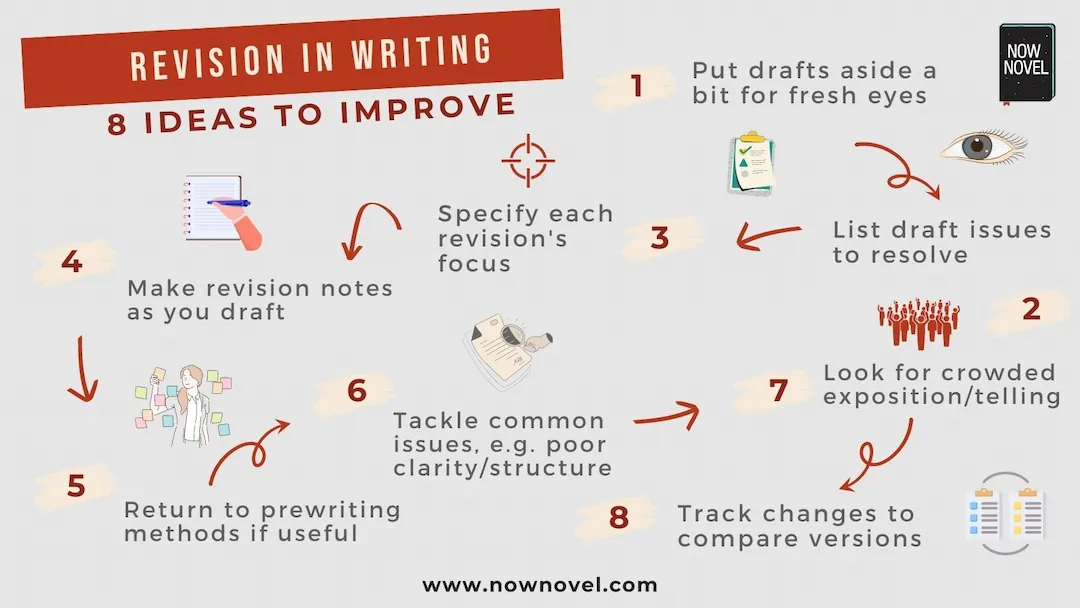
Now Novel's revision framework identifies returning to prewriting methods as a core revision technique — and it applies doubly to AI-assisted work. Character sketches, world rules, and thematic statements written before any generation give you the constraint material that makes prompts specific.
Which AI Story Tools Handle Repetition and Continuity Best?
No tool eliminates formula, but they differ meaningfully in which failure mode they address. Continuity-focused tools reduce cross-scene repetition; structure-focused tools reduce plot formula; general platforms with voice memory reduce prose homogenization.
Continuity and co-writing: NovelAI is built specifically for long-form co-writing with persistent story context, retaining character and tone information across scenes and chapters. Technical Writer HQ's 2026 review of AI story generators identified it as the strongest option for serialized writing where continuity matters most. Its limitation is setup cost — getting useful output requires meaningful configuration of lorebooks and context settings.
Structure and organization: Plot Factory is planning-first — character arcs, timelines, and world-building organization rather than one-click generation. That same review characterized it as best for writers who plan heavily, with the trade-off that it "can feel heavy if you prefer discovery writing." Squibler sits between planning and drafting, offering chapter outlining and in-editor AI expansion, though the review noted it "still requires human editing for voice consistency" and is more than most writers need for short pieces.
Brand and voice consistency: Jasper has the strongest tone-control tooling of the group, built for maintaining a stable house style across high-volume output. Its documented weakness for fiction is that it "can feel too polished if you want raw fiction energy" — which is precisely the fluency-over-originality trade-off identified in the City, University of London research.
Budget entry point: Rytr is the low-friction option for testing whether AI fits your process, with the honest caveat that "output can be generic without good prompts" — which is the entire problem this article addresses.
Multi-model with persistent memory: Jenova's Creative Fiction Writer operates on a different axis. Rather than being a dedicated fiction environment, it runs on a platform with unlimited conversation memory and access to models from OpenAI, Anthropic, Google, xAI, DeepSeek, and others through one interface. For the anti-formula workflow specifically, that matters for two reasons: persistent memory means voice rules and banned-construction lists survive across sessions without re-pasting, and model rotation lets you generate the same scene on two different models to identify which phrasings are model-tics rather than genuine choices. Honest limitations: it is not a manuscript management environment — there is no chapter tree, no scene reordering interface, and no export-to-manuscript pipeline. Writers who want a dedicated writing workspace will find dedicated fiction tools better suited to that job.
Comparison Table
| Feature / Dimension | NovelAI | Plot Factory | Jenova Creative Fiction Writer | Jasper | Rytr |
|---|---|---|---|---|---|
| Cross-session continuity | Strong — built for it via lorebooks | Structural (profiles, timelines) rather than generative | Unlimited persistent memory across all sessions | Voice consistency, limited narrative state | Session-limited |
| Plot structure tooling | Limited — co-writing focused | Strongest of the group; arcs, beats, timelines | Conversational outlining; no visual structure UI | Template-based, marketing-oriented | Minimal |
| Voice grounding from samples | Configurable via context settings | Not a core function | Sample-derived rules retained in memory | Custom tone/voice controls | Template tone presets |
| Model choice | Proprietary models | N/A — planning tool | Multi-provider (OpenAI, Anthropic, Google, xAI, DeepSeek) | Proprietary + partners | Multiple |
| Manuscript workspace | Yes | Yes — planning-first | No — chat-based, no chapter tree | No — content editor | Basic editor |
| Pricing | Subscription tiers (see site) | Subscription tiers (see site) | Free tier; Plus $20/mo (30× free usage); higher tiers to Enterprise | Subscription tiers (see site) | Free tier + low-cost paid |
| Best For | Serialized long fiction needing continuity | Heavy planners with complex world-building | Writers who want model rotation + persistent voice rules | Serialized content with a fixed house style | Testing AI fit at low cost |
Pricing and features for third-party tools reflect publicly available information at the time of writing and change frequently — verify on each vendor's site.
How Do You Set Up an Anti-Formula Workflow Step by Step?
A working anti-formula workflow has four phases and takes about thirty minutes to establish, after which it runs on rails.
Phase 1 — Build Your Constraint Kit (once per project)
- Write a one-paragraph thematic question your story is asking, not answering.
- List three contradictions per major character (Marta is a forensic accountant who never balances her own checkbook).
- Write your banned-construction list — start with eight, grow it as you spot new tics.
- Select 600 words of prose in your target register.
Phase 2 — Derive Voice Rules (once per project)
In whichever tool you use, run the extraction prompt:
"Here are 600 words in my target register. Do not imitate content. Extract: average sentence length, simple-to-complex ratio, dialogue tag habits, paragraph length, and three repeated syntactic patterns. Output as a rules list I can reuse."
Save the output. This becomes your standing voice header.
In Jenova's Creative Fiction Writer, this step benefits from persistent memory — the derived rules and banned-construction list stay available across every subsequent session in that chat without re-pasting, and the agent's memory holds project context between writing days.
In NovelAI, the equivalent is entering these rules into your lorebook and memory fields so they enter context on every generation.
In Plot Factory, you would store them as project notes and paste them into whichever generation tool you pair it with, since its strength is planning rather than generation.
Phase 3 — Generate at Scene Length
For each scene, assemble the prompt in this order:
- Voice rules (pasted or memory-resident)
- Banned construction list
- Scene specification: POV, POV distance, word count, setting detail, character states
- The buried conflict (what the scene is actually about, which characters don't say)
- Structural instruction (where the scene ends, what it withholds)
Cap generation at 400–600 words. Longer outputs pattern-lock.
Phase 4 — Revise Against a Checklist
Do not accept output as a draft. Run it against these checks, adapted from Now Novel's eight-idea revision framework and Gotham Writers Workshop's ten-draft model:
- Read it aloud — repetition is audible before it is visible
- Highlight every sentence opening; if more than two share a structure, rewrite
- Search for each banned construction; add any new offender to the list
- Check for crowded exposition and telling
- Cut the final sentence of the scene — models almost always add one beat too many
- Ask whether a human would have made this choice, or only a probability engine
That last check is the one that matters. The Gotham framework calls its sixth pass "the poetry draft" — mining every sentence for whether it works "not just as a sentence but also as a sentence in your unique novel." That standard is the correct one for AI-drafted prose, and it cannot be delegated.
What Do Writing and AI Researchers Say About Preserving Originality?
The consensus among researchers and practicing AI-using writers is that originality survives when the writer owns the structural and evaluative layers, and degrades when AI is allowed to make story-level decisions.
"The mistake almost everyone makes is treating formulaic output as a quality problem when it's a specification problem. A model given four constraints will produce the median story for those four constraints — that's not the model underperforming, that's the model doing exactly what it was asked. When we look at the difference between writers who get generic output and writers who don't, it isn't the tool and it isn't the model. It's constraint density. We consistently see the inflection point somewhere around eight to twelve explicit constraints per scene-level request, and negative constraints — explicit prohibitions — outperform positive ones by a wide margin."
"The second thing that matters is where you place the AI in your process. The research on long-term AI-using writers is unambiguous: the ones who preserve their voice use AI for execution, never for direction. They arrive with the plot, the character contradictions, and the thematic question already decided, and they hand the model a narrow drafting task inside that frame. The writers who get homogenized output are handing over the decisions, not the typing."
"There's a third pattern that's underrated — model rotation as a diagnostic. Generate the same scene on two different models with identical prompts, then diff them. Everything that appears in both is the story. Everything that appears in only one is a model tic. That single technique catches more generic phrasing than any style guide we've tested, because it separates what your prompt actually specified from what the model filled in on its own."
"The honest caveat is that none of this makes AI-drafted prose original. The City, University of London finding — that AI-assisted editing produces polished text that scores lower on originality — is real and we haven't seen a workflow that eliminates it. What good constraints do is make the output revisable instead of unusable. The originality still comes from the revision pass, and that pass is yours."
— Jenova Product Team, 9 years across AI writing tools and agent design
Does Using AI at All Guarantee Homogenized Writing?
No — but the risk is real and measurable, and it scales inversely with how much structural work you do yourself.
The Science Advances research found the homogenization effect concentrated among writers who accepted AI suggestions most readily, particularly those with lower baseline creativity scores. The mechanism is straightforward: if a thousand writers ask the same model for plot ideas, the model returns overlapping suggestions, and accepted suggestions converge.
The counter-evidence comes from the practitioner side. The arXiv study of long-term AI-using creative writers documented writers who "avoided using AI to generate text or ideas without first putting in their own effort or ensuring that significant editing and rewriting were involved." One participant described actively "pushing back against AI bots' tendencies towards predictable or clichéd content" through experimental prompting and aggressive redrafting. These writers were not homogenized, because they never handed over the decisions that produce homogenization.
There is also a real cognitive cost to over-delegation. Education Week's coverage of MIT Media Lab research on brain activity during AI-assisted writing reported that many writers who used AI heavily on an essay couldn't recall what they had written. Whatever that means for craft development over years, it is not a promising signal for writers trying to build a distinctive voice.
The practical read: AI at the execution layer, under dense constraints, with a real revision pass, does not homogenize your work. AI at the decision layer does. The line is not how much AI you use — it is which layer you use it on.
What Should You Do If Your Current Tool Still Sounds Generic?
If constraint density and voice grounding haven't fixed it, the problem is usually one of three things — diagnose before switching tools.
Diagnosis 1: Your prompt is long but not constrained. Word count is not constraint density. A 300-word prompt full of atmosphere and vibe descriptions can contain three actual constraints. Count them as discrete, checkable specifications. Rewrite as a numbered list if necessary.
Diagnosis 2: You are generating too much at once. If your outputs exceed 800 words, cut them in half and regenerate with a voice header each time. Pattern-lock within a generation window is the single most common cause of repetitive prose, and it is entirely a function of output length.
Diagnosis 3: You are accepting first drafts. Gotham Writers Workshop's ten-draft model allocates an entire pass to cutting — "each piece they finish should be the shortest version of itself possible" — and a separate pass purely to sentence-level language. AI output entering a workflow at draft one and exiting as final is guaranteed to read as AI output, regardless of tool or prompt quality.
If all three are addressed and output is still flat, tool switching becomes reasonable. Match the switch to the specific failure: continuity drift across scenes points toward NovelAI; plot-level formula points toward Plot Factory or manual outlining; identical-sounding prose across sessions points toward a tool with persistent voice memory and model rotation, which is where Jenova's Creative Fiction Writer is positioned. The agent is available at jenova.ai/a/creative-fiction-writer; the free tier covers limited daily usage, with Plus at $20/month providing 30× that allowance.
Whichever direction you go, the underlying principle does not change: the model executes, you decide. Formula enters wherever that boundary blurs.
If you're working on an ongoing fiction project rather than a one-off scene, our Creative Fiction Writer is built to hold voice rules and story context across sessions.