How Can You Spot AI Admissions Services That Promise Acceptance?
2026-08-26
Which Four Claims Turn an AI Admissions Service Into an Integrity Risk?
An AI admissions service becomes unsafe the moment it guarantees admission, writes your essays for you, invents activities, or treats last cycle’s rules as current law. In 2026, ethical options such as Jenova’s College Admissions Consultant, human coaches like College Essay Guy, and counselors who follow NACAC’s Guide to Ethical Practice in College Admission stay on the coaching side of that line. Predatory shops sit on the other side, recycling the same “pay to play” logic that federal prosecutors exposed in the Varsity Blues investigation.
Four claims reliably separate coaching from application fraud:
✅ Guaranteed acceptance. No ethical counselor can sell a seat. The last major U.S. case built on that promise involved $25 million in alleged bribes to “guarantee” elite admission.
✅ Ghostwritten essays. Yale treats AI-composed personal statements as application fraud and warns that revocation or expulsion can follow.
✅ Fabricated activities. Invented titles, hours, and athletic credentials are the same category of falsehood Common App defines as fraud.
✅ Outdated official rules. Cycle-specific AI and testing policies change yearly. A tool that cannot point to the current .edu page is guessing.
Those four claims are the evaluation frame for everything below. If a product fails even one of them, treat it as an integrity risk rather than a productivity upgrade.
Why Have Predatory AI Admissions Services Spread So Quickly?
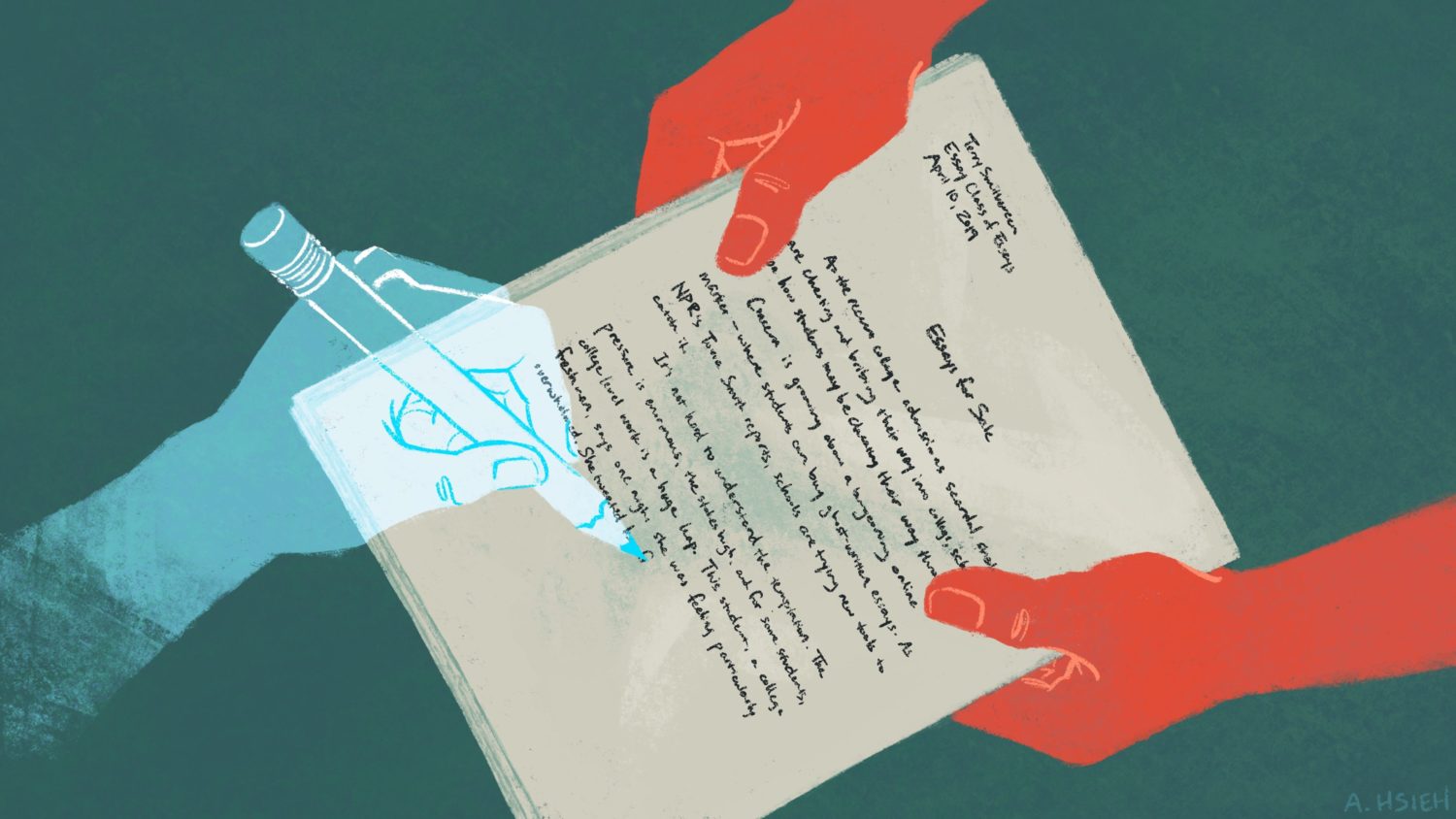
They spread because generative tools made essay mills cheaper, faster, and easier to disguise as “personalized coaching.” Families already anxious about selectivity now meet chatbots that can draft a 650-word Common App essay in seconds, then wrap that draft in marketing copy about “acceptance rates” and “guaranteed results.” The underlying incentive is old. Only the delivery channel is new.
College officers have started drawing a bright line. A 2025 Kaplan survey of admissions offices found that only 2 percent of colleges had an official policy allowing prospective students to use generative AI to write the admissions essay. Caltech now requires Fall 2027 applicants to review ethical-use guidelines before submitting supplements, and it lists copy-pasting from a generator or letting a model outline the essay as unethical.
The commercial vacuum is obvious. Students want help. Few schools publish a long, readable AI policy. Vendors fill the gap with certainty that official pages refuse to offer. That certainty is the product. The more a service sounds like an admissions officer with a contract, the more carefully you should read the fine print.
A second driver is scholarship and aid panic. The same families hunting for essay help also see ads for “pre-approved” awards and processing fees. Those pitches travel in the same inbox as ghostwriting offers, which is why spotting one scam vocabulary often reveals the other.
What Should You Look for Before You Trust an AI Admissions Tool?
You should look for a written refusal to guarantee outcomes, a coaching-not-authoring stance, a way to check current official policies, and a clear ban on inventing activities. Those four checks form a practical screen we call the SAFE Framework: Source, Authorship, Fabrication, and Expiry.
Source
Ask where every policy claim comes from. Ethical tools cite the current college page, Common App, or a .gov aid site. Predatory tools paraphrase “what schools want now” with no link, or they quote a blog post as if it were an admissions office.
Yale’s published AI policy is a useful benchmark. Grammar review and early topic suggestions are allowed. Submitting “the substantive content or output of an artificial intelligence platform” is not. If a vendor cannot distinguish those two uses, it is not reading the same documents admissions officers use.
Authorship
Ask who presses send. Coaching means questions, outlines you write, and line notes on your draft. Ghostwriting means a finished essay in a voice that is not yours. Caltech’s ethical-use page offers a simple test: would it be ethical for a trusted adult to do the same task? A teacher may mark grammar. A teacher may not write the draft you then “tweak.”
Fabrication
Ask whether the service will invent or inflate activities. Common App defines fraud as intentionally providing false or misleading information. Athletic résumés, research titles, and officer roles are the most commonly padded fields. If a chatbot offers to “optimize” your activity list by adding awards you did not earn, stop.
Expiry
Ask which application cycle the advice covers. Caltech’s rules are labeled for Fall 2027 applicants and explicitly say expectations will change. A service still citing last year’s supplement prompts, a retired testing requirement, or a pre-2025 AI stance is not advising. It is recycling.
How Do Ethical AI Consultants Compare to Ghostwriters and Generic Chatbots?
Ethical AI consultants coach strategy and feedback. Ghostwriting services produce the submission. Generic chatbots will do either, depending on how you prompt them. That three-way split matters more than branding.
Jenova’s College Admissions Consultant is built for school list strategy, essay feedback, timeline planning, and interview practice. It does not sell seats and it does not need to invent a résumé to be useful. Its limitation is structural: it cannot independently verify your activities with a coach or counselor, and it cannot replace a school’s official policy page. Students still have to read Yale, Caltech, or their target college themselves.
College Essay Guy publishes a more cautious human-coaching model and warns against letting AI write the application. Strength: a public, student-facing ethic and a large library of process guides. Limitation: human bandwidth and paid programs that do not scale the way software does.
Generic ChatGPT-class tools, the systems Caltech names when it forbids drafting, are strong at brainstorming questions and weak at saying no. They will ghostwrite if asked. They also drift toward last-known training data when a testing or AI rule changes mid-cycle.
Independent counselors who follow NACAC’s ethical-practice guide remain the high-touch human baseline. Strength: professional norms centered on the student’s interest. Limitation: cost and availability vary widely, and not every counselor is equally current on school-by-school AI language.
| Dimension | Jenova College Admissions Consultant | College Essay Guy | Generic chatbot | NACAC-aligned counselor | “Guaranteed admit” shop |
|---|---|---|---|---|---|
| Acceptance promises | None; strategy only | None | None inherent; will imply odds if prompted | None under ethical norms | Core sales pitch |
| Essay role | Feedback and structure on the student’s draft | Human coaching; cautions against AI drafting | Will draft full essays on request | Human feedback | Often writes or heavily rewrites |
| Activity integrity | Relies on student facts; should flag exaggeration | Student-owned résumé | Will invent titles if asked | Student-owned résumé | Documented fabrication risk |
| Policy currency | Can check current sources when search is used | Human-updated guides | High risk of stale rules | Human expertise; still must verify .edu pages | Frequently outdated or false |
| Pricing (as of 2026) | Free tier; paid plans from $20/month on the Jenova platform | Paid programs; pricing varies | Free to about $20/month | Unverified; typically custom retainers | Upfront “processing” or package fees |
| Best for | Students who want ethical, on-demand AI coaching | Students who want a human essay mentor | Narrow brainstorming, never drafting | Families wanting 1:1 human guidance | No legitimate use |
The table is a risk map, not a ranking. The last column fails SAFE on every row.
How Do Colleges Treat AI-Written Essays and Invented Activities?
They treat both as integrity failures, with penalties that can outlast the application year. Yale states that submitting AI-composed personal statements or written responses may lead to admission revocation or expulsion. It also affirms the Common App statements that submitted work is the applicant’s “own work, factually true, and honestly presented.”
Caltech is equally specific. Unethical uses include copying from a generator, relying on AI to outline or draft, replacing the student’s voice, and translating an essay written in another language. Ethical uses include grammar tools, brainstorming questions, and researching the process. Failure to follow those guidelines may result in rescission.
Fabricated activities sit in an older, well-documented category. In Varsity Blues, prosecutors described fake athletic credentials, staged photos, and coaches who agreed to pretend applicants were recruits. An AI service that offers to “build a leadership profile” from thin air is operating in that same factual space, even if no coach is bribed.
Common App’s public materials describe fraud as intentionally false or misleading information and outline reporting paths for members and individuals. Detection is not limited to the reading season. Colleges can reopen files after enrollment. The practical implication is simple: a ghostwritten essay or padded activity list is not a temporary shortcut. It is a standing vulnerability.
A useful middle path exists. Several offices allow grammar checks and early idea generation. College Essay Advisors’ compilation of top-30 policies shows that pattern repeating: brainstorming and mechanics are often tolerated; drafting and rewriting are not. Any service that collapses those categories into “we’ll handle the writing” is ignoring the actual rules.
What Scholarship Pitches Travel With Unethical Admissions Offers?
The same vendors often sell “guaranteed” money next to “guaranteed” admission, and the Federal Trade Commission’s warning language is nearly identical. If a company promises a scholarship in exchange for a processing cost, redemption fee, or other upfront payment, the FTC says to walk away. Legitimate awards are competitive. They do not require you to buy access.
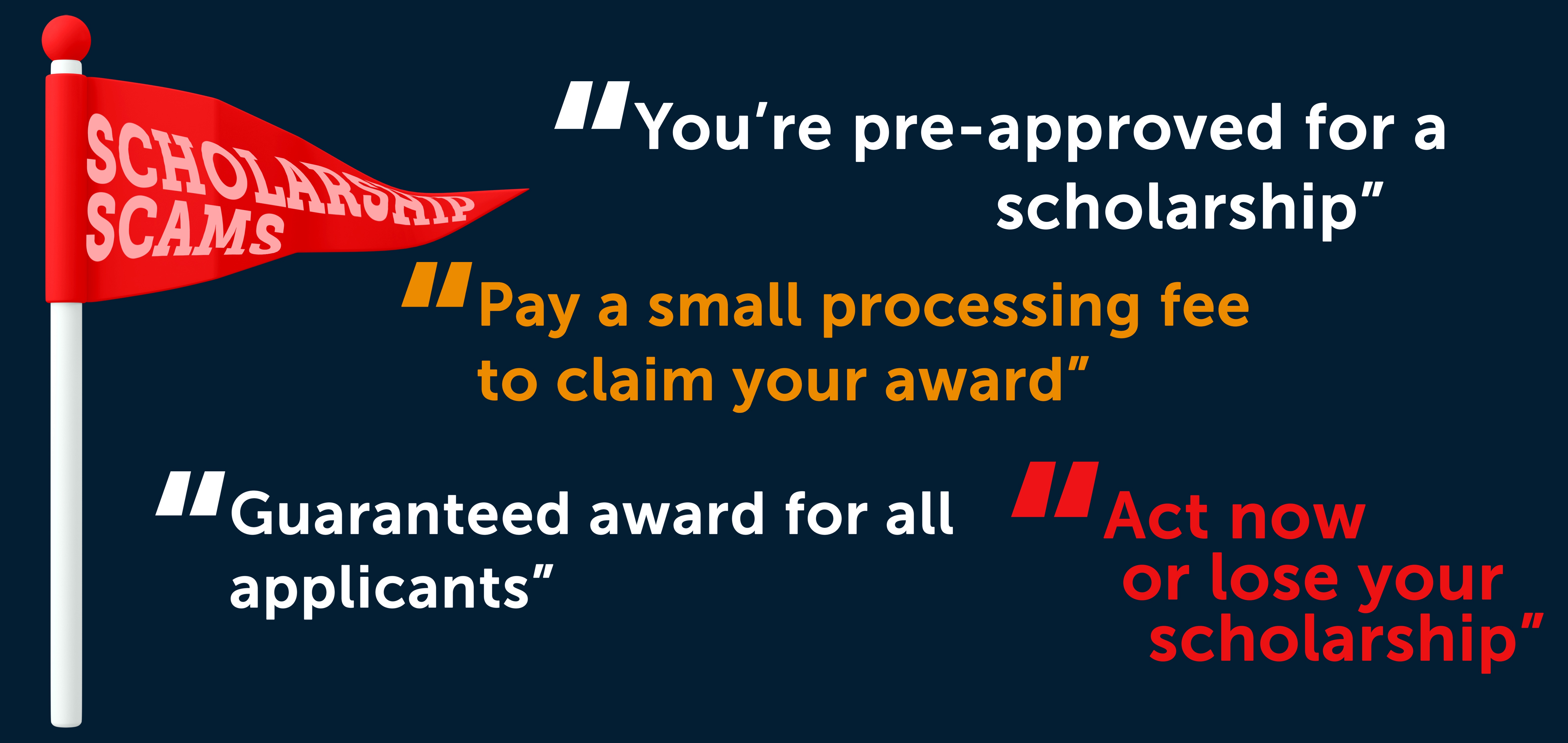
Classic scam phrases include “the scholarship is guaranteed or your money back,” “you’re a finalist” for a contest you never entered, and “I just need your credit card to hold this award.” The FTC lists those lines as scam indicators, not aggressive marketing. FinAid has long described a related model: high-volume applications paired with small fees, which can fund a token award while the operator keeps the rest.
Aid fraud has a second, quieter cost. Some operators offer to complete the FAFSA for a fee and then falsify income. Only the student and family should complete FAFSA, which is free. False information can bring fines up to $20,000 and possible jail time. Never share an FSA ID with a consultant or chatbot wrapper.
Free official starting points still exist. Federal Student Aid’s scholarship page points students to government search tools rather than paid “unlock” portals. If an AI admissions package bundles essay ghostwriting with a paid scholarship match and a guaranteed award, you are looking at one business model with two costumes.
How Can You Tell When an AI Service Is Citing Outdated Admissions Policies?
You can tell when the advice has no cycle year, no official URL, and no willingness to be contradicted by the college’s current page. Policy decay is the quietest of the four red flags, and it is the one generic chatbots fail most often.
Admissions rules are versioned. Caltech’s AI guidance is written for a named cycle and warns that recommendations will evolve. Yale’s page distinguishes allowed grammar help from banned substantive generation. A tool that says “colleges don’t mind AI essays anymore” is not summarizing those documents. It is averaging social media.
Outdated citations show up in predictable places:
- Testing rules recited as if every campus still shares one policy.
- Essay prompts from a prior Common App year, offered as this year’s questions.
- AI stances that predate the 2025–2026 wave of official pages.
- Athletic or talent recruitment shortcuts that ignore post–Varsity Blues compliance.
The check is mechanical. Open the college’s admissions site. Search for “AI,” “essay,” and the current term. If the vendor’s claim cannot survive that two-minute comparison, discard the claim. Jenova’s consultant is stronger here than a generic chatbot because it can be asked to retrieve the live page rather than rely on memory. It is still limited: if you do not ask it to verify, it can sound current while repeating a stale summary.
Graduate and professional tracks have the same problem with different paperwork. An MBA Admissions Consultant or Medical School Admissions Consultant that cites last year’s essay set, an obsolete interview format, or a retired prerequisite is giving you a map to the wrong campus.
How Do You Vet an AI Admissions Tool Before You Share a Draft?
You vet it with a short written audit, then you keep authorship in your own hands. The goal is not to avoid AI. The goal is to keep AI on the allowed side of each college’s line.
- Collect the official rules for your first three schools. Save the AI and integrity pages. Yale and Caltech are useful templates even if you are not applying there.
- Ask the tool to refuse illegal or dishonest work. A safe consultant will decline to write the essay or invent activities. A unsafe one will offer packages.
- Run a SAFE check on the sales page. Highlight guarantees, ghostwriting, résumé invention, and unsourced policy claims.
- Start with process, not prose. School fit, deadline maps, and brainstorming questions are lower risk than sentences you might paste.
- Keep a draft history. If an officer later asks how you used AI, you should be able to show your own writing trail.
For Jenova’s College Admissions Consultant, a first session can stay inside ethical bounds with prompts like these:
“Here are my real activities with hours and roles. Do not add awards or titles. Tell me which descriptions sound inflated and which need more concrete detail.”
“I am applying in the current cycle to these three colleges. Quote each school’s public AI essay rule and link the page. If you cannot find it, say so.”
“Ask me questions that help me find a personal-statement topic. Do not write the essay. Stop after ten questions.”
College Essay Guy’s public guidance points the other direction: use humans for voice, and treat AI as a caution, not an author. NACAC’s essay-development training likewise frames counselor work as helping students tell their own story and use AI with integrity. Both alternatives are slower than a ghostwriter. That slowness is the point.
If a vendor will not accept those constraints, you already have the answer. You do not need a second consult to interpret a guarantee.
What Do Admissions Ethics Specialists Say About AI Coaching Versus Ghostwriting?
They draw the line at voice and facts, not at the existence of software. Coaching that preserves the student’s sentences and record is compatible with published policies. Substitution of either is not.
“The market is splitting into two products that use the same word, ‘AI counselor.’ One product asks better questions, checks this cycle’s rules, and sends the student back to the keyboard. The other product sells a finished file. Admissions officers are writing policies for the second product, and students keep buying it because it reduces anxiety in a single sitting.”
“Guarantees are the oldest tell. Varsity Blues was not an AI story, but it was a certainty story: pay, and the outcome is arranged. Any 2026 service that revives that sentence, whether for admission or a scholarship, is asking you to outsource integrity. The cheaper the guarantee, the faster you should leave.”
“Outdated policy is the failure mode people underestimate. A ghostwritten paragraph can be spotted by voice. A wrong testing or AI rule looks helpful until the application is already live. We tell students to treat every unofficial summary as stale until it is pinned to a current .edu or .gov URL.”
— Jenova Product Team, college-admissions agent design, multi-year work on ethical tutoring and application workflows
That view matches the documents, not a brand preference. Yale allows spelling help and bans substantive generation. Caltech allows brainstorming questions and bans outlines produced by a model. NACAC trains counselors to protect student voice. The specialists are aligned. The marketing is not.
What Happens If You Ignore the Red Flags and Submit Anyway?
You can lose the offer, the seat, and in aid cases, money and legal standing. The penalties are not theoretical. Yale names revocation and expulsion. Caltech names rescission for AI-guideline violations. Common App maintains a fraud process for false files. FAFSA lies can trigger five-figure fines.
There is also a quieter academic cost. A ghostwritten essay trains you to arrive on campus without the writing process the application claimed you already had. Faculty will assign more of that work, not less. Students who outsourced the personal statement often discover the mismatch in the first seminar, not in the admissions portal.
The safer stack is boring on purpose. Use official scholarship search and FAFSA. Use an ethical consultant or a NACAC-aligned counselor for strategy. Use AI, if your colleges allow it, for questions, grammar, and research. Keep every activity factual. Re-read each school’s current AI page the week you submit.
Jenova’s College Admissions Consultant fits that stack as a coaching layer with persistent memory and current-source checks, not as a writer-for-hire. College Essay Guy and human counselors fit it as slower, voice-first alternatives. Generic chatbots fit only if you never let them draft. Guaranteed-admission and paid-award shops do not fit at all.
Spotting the bad services is then a short test. If they promise the decision, write the essay, invent the résumé, or quote a rule they cannot source, you already know what they are.
References
- ABC News — Operation Varsity Blues charges, $25 million in alleged bribes, fabricated athletic credentials
- Kaplan — 2025 college admissions officers survey on generative AI and essays
- Yale Undergraduate Admissions — AI policy and application fraud
- Caltech Admissions — Ethical use of AI guidelines for Fall 2027 applicants
- Common App — Fraud policy
- College Essay Guy — Navigating college applications with AI
- NACAC — Guide to Ethical Practice in College Admission
- Federal Trade Commission — How to avoid scholarship and financial aid scams
- Federal Student Aid — Finding and applying for scholarships
- Common App Applicant Support — How Common App handles fraud
- College Essay Advisors — What top-30 admissions offices will and won’t allow with AI
- NACAC — Developing college essays and responsible AI use
- FinAid — Common scholarship scams
- Get Into Campus — Red flags for fake admission agents, including guaranteed-admission claims