How Can You Prevent an AI Astrology Tool From Miscalculating Your Natal Chart?
2026-08-11
Which Input Errors Actually Cause House Placement Failures in AI Astrology Tools?
Three input categories cause almost every miscalculated chart: ambiguous birth location (city names that exist in multiple time zones), unresolved historical time zone and daylight saving offsets (the local clock time on your birth certificate is not the UTC value the ephemeris needs), and undeclared house system (the same planetary positions distribute across houses differently under Placidus versus Whole Sign). Planetary longitudes are rarely wrong in tools built on the Swiss Ephemeris — houses are where errors concentrate, because houses depend on the exact minute and precise coordinates rather than on the date alone.
Key factors that separate a correctly calculated chart from a plausible-looking wrong one:
✅ Coordinate-level location entry — latitude and longitude, not a bare city name that resolves ambiguously ✅ Explicit UTC offset confirmation — including DST status for the historical date, not today's rules ✅ Declared house system — Placidus, Whole Sign, Koch, Equal, and Regiomontanus produce materially different house cusps ✅ Declared zodiac and ayanamsa — tropical versus sidereal shifts every position by roughly 24 degrees ✅ Ascendant verification against a second calculator — the Ascendant moves about one degree every four minutes, making it the fastest error detector
The rest of this guide works through each failure point and the verification steps that catch them before you build an interpretation on a broken foundation.
Why Do Houses Break More Often Than Planetary Positions?
Houses break more often because they are the only chart component that depends on all three inputs simultaneously — exact time, exact latitude, and exact longitude — while planetary positions depend almost entirely on the date and are relatively forgiving of time error.
The Swiss Ephemeris, the industry-standard calculation library developed by Astrodienst and based on NASA JPL's DE431 and DE441 planetary ephemerides, reproduces JPL data to 0.001 arcseconds of precision across a time range from 13201 BC to AD 17191. That is astronomically exact. Yet a tool using that same library will still hand you the wrong Ascendant if it converted your birth time to UTC incorrectly.
The arithmetic is unforgiving. The Ascendant advances roughly one degree of zodiac per four minutes of clock time. A one-hour DST error therefore shifts your Ascendant by approximately 15 degrees — often enough to change your rising sign entirely and rotate every house cusp in the chart. Planetary longitudes over that same hour barely move, apart from the Moon, which travels roughly 0.5 degrees per hour.
The practical consequence: a chart can display correct planets and completely wrong houses, and it will look perfectly normal. Nothing in the output flags the error. The Galactic Center's chart calculator advises users to ensure "the time and date of birth are accurate within a 15-minute margin" for reliable calculations, per its birth chart calculator guidance.
How Do You Resolve Birth Location Ambiguity Before It Corrupts the Chart?
Resolve location by entering explicit latitude and longitude coordinates rather than a city name, because a single place name frequently maps to multiple geographic locations in different time zones — and the tool will silently pick one.
The Astrological Association's chart calculator issues this warning directly in its interface: "If there is more than one place with the same name in the same time zone, double-check" the resolved coordinates, per its chart calculator. Geocoding guidance for astrology APIs frames the problem the same way — RoxyAPI notes that "one city name maps to many places and timezones," and recommends resolving to verified coordinates and an IANA zone identifier before any chart call is made.
🌍 The location verification procedure
- Find the exact coordinates of the birth hospital or municipality — not the metro area centroid. Municipal-level precision is sufficient; hospital-level is better for high-latitude births.
- Identify the IANA time zone identifier (e.g.,
Asia/Manila,America/Chicago) rather than a UTC offset alone. Offsets change historically; IANA identifiers encode that history. - Enter coordinates directly if the tool accepts them. If it only accepts place names, verify the coordinates it resolved.
- State both explicitly to a conversational AI astrologer:
"Birth data: 3 March 1991, 04:17 local clock time, Naga City, Camarines Sur, Philippines. Coordinates 13.6218° N, 123.1948° E. Time zone Asia/Manila, UTC+8, no DST in effect in the Philippines in 1991. Please confirm the UTC birth time you're using before calculating."
That final clause — asking the tool to state its UTC conversion before proceeding — is the single highest-value verification step available, and it costs one sentence.
Why latitude matters independently: house cusp spacing under quadrant systems like Placidus and Koch varies with latitude. Near the equator, houses are relatively even. At high latitudes, Placidus houses become severely distorted, and above the Arctic and Antarctic circles the system fails to produce valid cusps at all. A location error of a few hundred kilometres north or south is materially worse for a Reykjavík birth than for a Manila birth.
What Time Zone and Daylight Saving Traps Break Historical Birth Charts?
The core trap is that your birth certificate records local clock time, but chart calculation requires UTC — and converting between them requires knowing the time zone rules that were in force on that specific historical date, not the rules in force today.
Astrodienst maintains what it describes as one of the most comprehensive databases for daylight saving times and time zones "through the ages and around the world," precisely because those rules have changed constantly and unpredictably, per Astro.com's time zone documentation. The problem is well enough known among practicing astrologers that The Astrology Podcast's episode on hand-calculation devotes dedicated segments to "why daylight savings is annoying for astrologers," "1950's Chicago time zone issues," and "time zone database controversy," per its episode breakdown.
⏱️ The five historical time traps
| Trap | What Goes Wrong | Verification Step |
|---|---|---|
| DST in effect but not applied | Chart runs one hour early; Ascendant shifts ~15° | Confirm the DST rule for that exact date and jurisdiction |
| War time / double summer time | Two-hour offset applied historically in some regions | Check wartime clock legislation for the birth year |
| Time zone boundary redrawn | Modern zone lookup returns today's zone, not the historical one | Use an IANA-aware database, not a current-offset lookup |
| Local mean time era | Pre-standardization births used solar time, not zone time | Confirm when standard time was adopted at the birthplace |
| Political offset not matching solar longitude | Clock offset diverges from geographic longitude by an hour or more | Compare zone offset against the location's actual longitude |
That last trap is more common than it sounds. Singapore is a frequently cited example — discussion in
notes it is "stated to be +8hours GMT but if you look at the map Singapore should've been +7 hours GMT," a political rather than solar assignment. The chart calculation is not wrong to use +8 — that was the legal clock time — but the discrepancy confuses users who attempt to verify manually against solar position.A note on rounded birth times. If your recorded time is "about 3 o'clock," the honest position is that your house cusps carry a ±30 minute uncertainty, which translates to roughly ±7.5 degrees of Ascendant uncertainty. Tools exist for rectification — VedAstro offers a free birth time finder for exactly this case — but rectification produces a hypothesis, not a fact. Any tool presenting a rectified time as certain is overstating.
Why Does House System Choice Change Your Chart More Than You Expect?
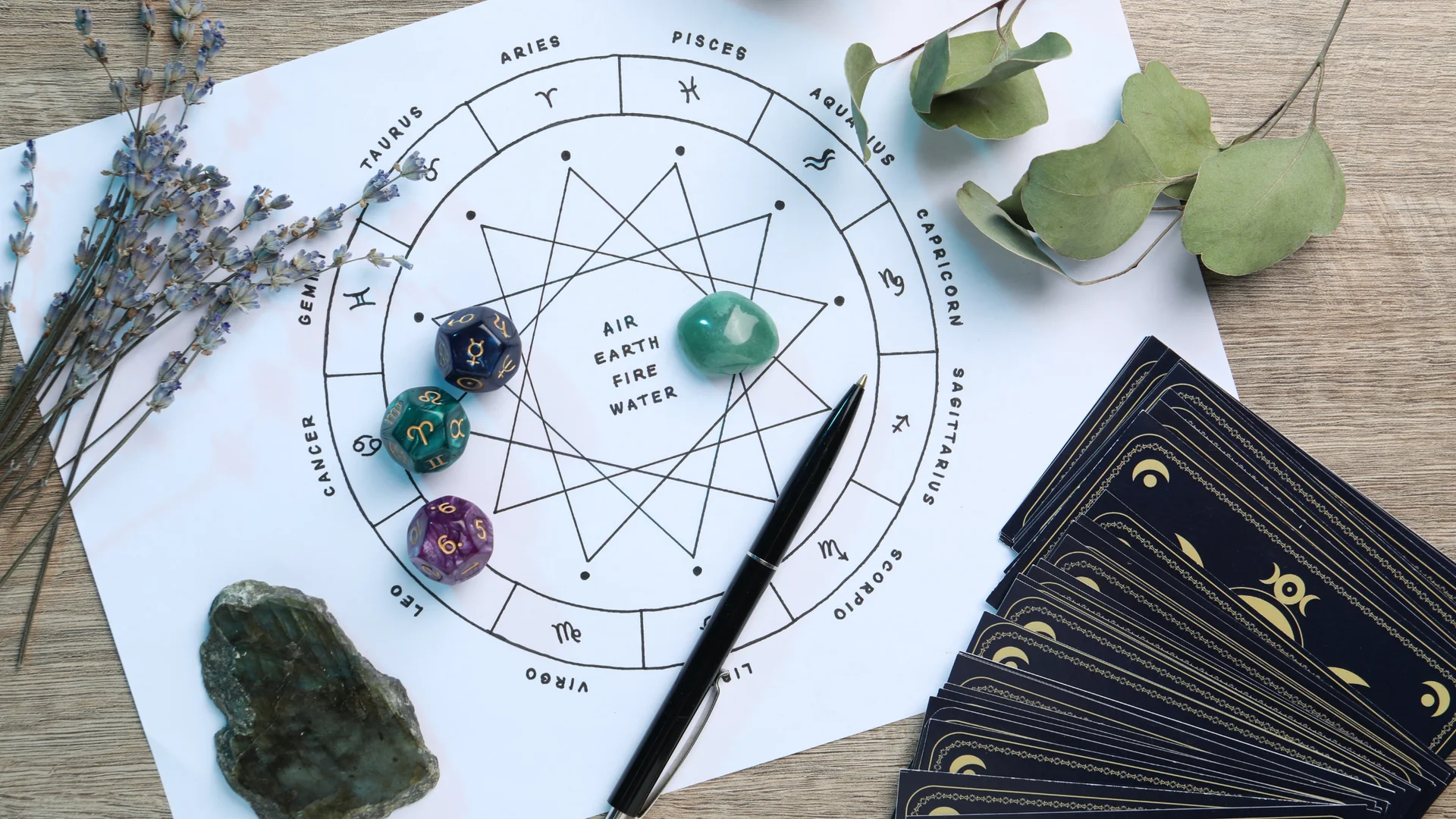
House system choice changes which house each planet occupies, and the same birth data can legitimately place a planet in the 9th house under one system and the 10th under another — with no calculation error involved in either.
Twelve houses are divided by different mathematical methods, and as Wikipedia's overview of astrological houses explains, most horoscopic traditions "divide the horoscope into a number (usually twelve) of houses whose positions depend on time and location." The methods disagree.
🏠 The systems you will encounter
- Whole Sign — each house occupies one entire sign; the Ascendant's sign becomes the 1st house. Ancient, mathematically simple, and increasingly favored in traditional revival practice. CHANI's educational material explains its reasoning for defaulting to Whole Sign.
- Placidus — time-based quadrant division; the most common default in Western software. Distorts severely at high latitudes and fails above the polar circles.
- Koch — another time-based quadrant system with different mathematics; also latitude-sensitive.
- Equal — 30-degree houses measured from the Ascendant degree. Stable at all latitudes.
- Porphyry, Regiomontanus, Campanus, Meridian — additional space-based and time-based variants. Co–Star's explainer covers the three most widely used side by side.
The verification move: run your chart through a comparison calculator that displays multiple systems at once. Astro-Seek's house systems calculator compares Placidus, Koch, Regiomontanus, Campanus, Equal, Whole Sign, Solar, and Meridian side by side, and AstroLibrary offers a similar comparison. If a planet sits near a cusp, you will see immediately which house assignments are stable and which are system-dependent.
Then declare the system to your AI tool explicitly:
"Use Whole Sign houses and the tropical zodiac. If you would normally default to Placidus, tell me and show both."
An AI tool that silently defaults to Placidus while you assume Whole Sign will produce an interpretation that is internally consistent and externally wrong for your purposes.
What Does Tropical Versus Sidereal Get Wrong If You Don't Specify It?
Failing to specify the zodiac produces the largest single error possible in a natal chart: approximately 24 degrees of displacement, enough to move most planets into the previous sign entirely.
Tropical astrology measures from the vernal equinox point. Sidereal astrology — used in Vedic or Jyotish practice — measures against fixed stars, correcting for precession via an offset called the ayanamsa. Prokerala's calculator notes that rasi chart generation requires date, exact time, and place, with tropical zodiac calculation handled as a separate mode.
Ayanamsa itself is not a single value. Lahiri is the Indian government standard and the most widely used, but Raman, Krishnamurti, and Fagan-Bradley all produce slightly different positions. DashaFlow describes its calculator as using "Swiss Ephemeris sub-arcsecond precision" with "Lahiri ayanamsa, Whole Sign houses" — a fully specified configuration, which is exactly what you should be able to state about any chart you rely on.
The complete specification you should be able to write down for any chart:
- Zodiac: tropical or sidereal
- If sidereal: which ayanamsa
- House system
- Node type: mean or true
- UTC birth time and the offset applied to reach it
- Latitude and longitude to at least two decimal places
If a tool cannot tell you all six, you cannot reproduce or verify its output.
How Do the Leading AI Astrology Tools Handle Calculation Accuracy?
The tools differ substantially in whether they compute charts with a real ephemeris, retain your birth data across sessions, and disclose their configuration. Assessments below reflect publicly documented capabilities as of 2026; features and pricing change frequently.
| Dimension | Personal Astrologer (Jenova) | Astro-Seek | Nummi | AstroChart.ai | Generic ChatGPT |
|---|---|---|---|---|---|
| Ephemeris-grade calculation | Conversational agent; verify chart data against a dedicated calculator | DE431 ephemeris; explicit house system and rectification tools | Vedic (Jyotish) calculation engine per vendor | Routes to Western, Vedic, Astrocartography, Numerology, Human Design, BaZi specialists | No native ephemeris; reconstructs from training data — unreliable for house cusps |
| Cross-session birth data retention | Yes — persistent memory carries birth data and prior readings across all sessions | No account-based chat memory; chart-by-chart entry | Yes — conversational chart chat | Yes — saved birth profile, plus saved profiles for partners and family | Does not save your chart between sessions unless re-prompted every time, per Nummi's comparison |
| Explicit house system control | Specify in the prompt; agent instructions are user-customizable | Yes — 8 systems compared side by side | Whole Sign / Vedic default per vendor | Shows the calculated chart alongside interpretation | User must supply and police the configuration manually |
| Interpretive depth and follow-up | Full conversational thread with retained context; daily, weekly, monthly readings | Calculation-focused; limited interpretation | Conversational LLM tuned for spiritual counseling | Conversational; explains calculations in 90+ languages | Broad astrological knowledge, generalist framing |
| Verification transparency | State your configuration in-prompt and ask the agent to confirm its UTC conversion | Full technical output — degrees, cusps, aspects visible | Vendor-described precision; limited public technical disclosure | Displays the calculated chart on request | No verifiable calculation trace |
| Pricing | Free tier; Plus $20/mo (30× usage), Premium $50/mo (75× usage) | Free | Subscription per vendor | Free to start; Android app available | Free tier and paid tiers via OpenAI |
| Best For | Ongoing reading practice where continuity across sessions matters | Ground-truth verification of raw chart data | Vedic-focused conversational readings | Multi-system routing in one companion | Learning astrological concepts, not computing charts |
Reading the table honestly. Astro-Seek is the strongest verification instrument in this set precisely because it is not trying to be a conversational companion — it exposes the raw numbers, compares house systems, and is free. AstroChart.ai's multi-system routing across Western, Vedic, Astrocartography, Numerology, Human Design, and BaZi is genuinely broad, per its own product description. Nummi's Vedic specialization suits Jyotish practitioners better than general-purpose Western tools.
Jenova's Personal Astrologer has real limitations here. It is a conversational agent, not a purpose-built ephemeris calculator with a chart-wheel interface. It does not render a graphical natal wheel, and you should treat any chart data it reports as requiring verification against a dedicated calculator before you build a long-term interpretation on it. What it does offer that stateless calculators cannot: persistent memory of your verified birth data and prior readings, so you enter your configuration once and every subsequent transit or progression discussion inherits it — eliminating the re-entry step where input errors are introduced.
What Is the Five-Minute Verification Workflow for Any AI-Generated Chart?
The workflow is a cross-check: generate the chart in your primary tool, generate the same chart in an independent calculator, and compare five specific values. Discrepancies in those five values catch essentially every category of error described above.
✅ The verification checklist
Step 1 — Compare the Ascendant degree. This is the most sensitive value in the chart. If two calculators disagree by more than a degree, you have a time zone or coordinate problem. A ~15-degree gap indicates a one-hour DST discrepancy specifically.
Step 2 — Compare the Midheaven. The MC is time-sensitive but independent of house system in most configurations, making it a clean second signal. Agreement on Ascendant and MC means your UTC conversion is almost certainly correct.
Step 3 — Compare the Moon's degree. The Moon moves roughly 12–13 degrees per day. A significant Moon discrepancy points to a date or large offset error rather than a minutes-level one.
Step 4 — Confirm the declared configuration matches. Both calculators must be set to the same zodiac, ayanamsa, and house system, or the comparison is meaningless. This step catches more false alarms than real errors.
Step 5 — Identify planets within 2 degrees of a cusp. These are your chart's fragile points. Note them explicitly, because their house assignment will flip under a different system or a small time correction.
🔧 Running this with a conversational AI astrologer
For Jenova's Personal Astrologer, the flow is prompt-driven:
- Open the agent at jenova.ai/a/personal-astrologer.
- Supply the fully specified configuration in one message:
"Birth data: 14 September 1988, 22:40 local clock time, Naga City, Philippines (13.6218° N, 123.1948° E), Asia/Manila, UTC+8, no DST. Tropical zodiac, Whole Sign houses, true node. Before interpreting anything, restate the UTC time you're using, the Ascendant degree, and the MC degree so I can cross-check them."
- Verify those three returned values against Astro-Seek or Cafe Astrology.
- Once confirmed, instruct the agent to retain it:
"Those values match my independent calculation. Save this birth configuration and use it for all future readings without re-asking."
- Flag the fragile placements:
"Which planets in this chart sit within 2 degrees of a house cusp, and how would their house assignment change under Placidus instead of Whole Sign?"
For comparison, Astro-Seek's flow is form-based: enter date, time, and location, select the house system, and read the technical output directly. Its ChatGPT astrology export tool is purpose-built for this hybrid workflow — it calculates planets, signs, degrees, houses, and aspects, then exports them in plain text format you can paste into any conversational AI. This sidesteps the LLM calculation problem entirely: the ephemeris does the math, the language model does the interpretation.
For Cafe Astrology, note its own caveat — the site warns of "issues regarding the accuracy of time zone information in all astrology software programs" and offers help with time zones, per its natal chart report page. That candor is itself a useful signal about which vendors take the problem seriously.
What Do Astrologers and Calculation Specialists Say About AI Chart Accuracy?
Practitioners who work with calculation directly consistently distinguish between astronomical precision and astrological correctness — a distinction that most consumer AI tools blur.
"The precision debate misses where the actual failures happen. Swiss Ephemeris resolves planetary positions to a thousandth of an arcsecond — nobody is losing accuracy in the planetary math. Every real-world broken chart we see traces back to one of three things: the user entered a city name that geocoded to the wrong place, the tool applied today's daylight saving rules to a 1974 birth, or the user assumed Whole Sign while the software silently ran Placidus. None of those are computation problems. They are specification problems."
"The pattern we recommend is separation of concerns. Use a dedicated ephemeris calculator to produce the chart data, verify the Ascendant and Midheaven against a second independent calculator, and only then hand the confirmed positions to a conversational AI for interpretation. Language models are genuinely strong at synthesis — connecting a Saturn placement to a stated career situation, tracking themes across months of readings. They are not ephemeris engines, and treating them as one is where users get burned."
"Persistent memory changes the error profile in a way people underrate. Every time you re-enter birth data into a stateless calculator, you reintroduce the possibility of a typo. A tool that stores your verified configuration once and reuses it for every subsequent transit reading eliminates an entire failure category — not by calculating better, but by not making you re-specify."
— Jenova Product Team, 6 years building conversational AI agents for astrological and divinatory practice
When Should You Distrust a Chart Even If the Numbers Look Right?
Distrust a chart whenever the underlying birth time is uncertain, the location is imprecise, or the tool refuses to disclose its configuration — because a chart can be internally consistent, mathematically flawless, and still describe the wrong moment.
Four distrust triggers:
🚩 Your birth time came from memory rather than a document. Family recollection of "sometime in the early evening" carries hours of uncertainty. Houses are unusable at that precision; only sign-level planetary placements survive.
🚩 The tool will not state its house system or zodiac. Undisclosed configuration means unreproducible output. Paramarsh's analysis makes the underlying point well: the Swiss Ephemeris "strengthens the astronomical foundation of a chart, which is necessary for an accurate reading but does not guarantee one." Precision in the engine does not certify correctness in the configuration.
🚩 Two independent calculators disagree on the Ascendant. Users on
report getting "slightly different results despite putting" identical data into multiple sites — usually attributable to differing default house systems or time zone databases rather than genuine calculation error. Resolve the discrepancy before proceeding; do not average it.🚩 The birth occurred at high latitude under a quadrant system. Placidus and Koch distort above roughly 60 degrees latitude and fail entirely inside the polar circles. Whole Sign or Equal houses remain valid where quadrant systems do not.
The honest framing on rectification: if your time is genuinely lost, rectification techniques can propose a candidate, but the result is an inference tested against life events — not a recovered fact. Use it, label it as provisional, and revisit it if later events contradict the fit.
Readers working across multiple divinatory systems will find the same specification discipline applies elsewhere. Numerology Reader depends on exact birth date and full legal name spelling at birth, and the Chinese Fortune Teller BaZi system requires the same hour-precise birth time and time zone resolution as Western house calculation — with the added complication that traditional Chinese hour pillars use two-hour branches aligned to local solar time rather than clock time. The broader agent gallery is at jenova.ai.
What Is the Minimum Prompt That Prevents Most AI Astrology Errors?
The minimum viable prompt specifies all six configuration values and demands verification output before interpretation — roughly four sentences that eliminate the majority of silent failure modes.
Copy-adaptable template:
"Calculate my natal chart with the following exact specification. Birth: [DD Month YYYY] at [HH:MM] local clock time in [City, Region, Country], coordinates [LAT° N/S, LON° E/W], time zone [IANA identifier], UTC offset [±H] with DST [in effect / not in effect] on that date. Use the [tropical / sidereal with (ayanamsa)] zodiac, [house system] houses, and the [true / mean] node. Before any interpretation, output: (1) the UTC birth time you calculated, (2) the Ascendant sign and degree, (3) the Midheaven sign and degree, and (4) any planet within 2 degrees of a house cusp. I will verify those against an independent calculator before we continue."
Why each clause earns its place:
| Clause | Failure It Prevents |
|---|---|
| Explicit coordinates | Ambiguous city geocoding to the wrong time zone |
| IANA identifier + offset + DST status | Historical DST and boundary-change errors |
| Declared zodiac and ayanamsa | ~24° displacement from tropical/sidereal mismatch |
| Declared house system | Silent Placidus default under a Whole Sign assumption |
| Declared node type | Minor but persistent 1–2° discrepancy in node placement |
| Verification output before interpretation | Building a full reading on an unverified foundation |
| Cusp-proximity flag | Over-reading placements that are configuration-dependent |
Once those values are verified and — in a tool with persistent memory — stored, the specification burden disappears. Every subsequent transit question, progression reading, or synastry comparison inherits the confirmed configuration rather than re-deriving it from scratch, which is precisely where re-entry errors originate.
The underlying discipline is simple to state and easy to skip: a natal chart is a claim about a specific moment at a specific point on Earth, and every element of that claim has to be specified rather than assumed. AI tools are excellent at interpreting a correctly specified chart and entirely indifferent to whether the specification was correct in the first place.