How Can an AI Mental Health Support Assistant Remember Your Long-Term Stress Context Without Diagnosing You?
2026-08-19
What Separates Context-Aware Emotional Support From Clinical Overreach?
The distinction comes down to two design choices: what the assistant remembers and what it claims to know. A well-designed AI support assistant can retain longitudinal context — that your sleep degrades before quarterly deadlines, that a specific relationship recurs in your venting, that breathing exercises help you but journaling doesn't — while never assigning a clinical label, never implying licensure, and always routing acute risk to human services. The tools that get this right treat memory as continuity of conversation, not accumulation of symptoms.
This distinction matters more than it sounds. The American Psychological Association's health advisory on generative AI chatbots states plainly that there is "no consensus in the literature to support that GenAI chatbots and wellness apps possess essential qualifications and abilities required to provide mental health care, diagnostics, feedback, or even advice in most cases." Yet the same advisory recognizes these tools as potentially valuable supportive adjuncts.
Key factors that separate context-aware support from clinical overreach:
✅ Persistent memory scoped to patterns and preferences, not symptom inventories or diagnostic criteria ✅ Explicit non-diagnostic framing — the assistant reflects and asks, it does not label or conclude ✅ Crisis escalation pathways that surface human services (988 Suicide and Crisis Lifeline, local equivalents) on any distress signal ✅ Transparent data handling — you know what is stored, how it is used, and how to delete it ✅ Dependency-aware design — nudges toward human connection rather than substitution for it
To evaluate tools against these criteria meaningfully, it helps to understand why the memory question has become the central fault line in AI mental health support in the first place.
Why Is Memory the Most Contested Design Decision in AI Mental Health Support?
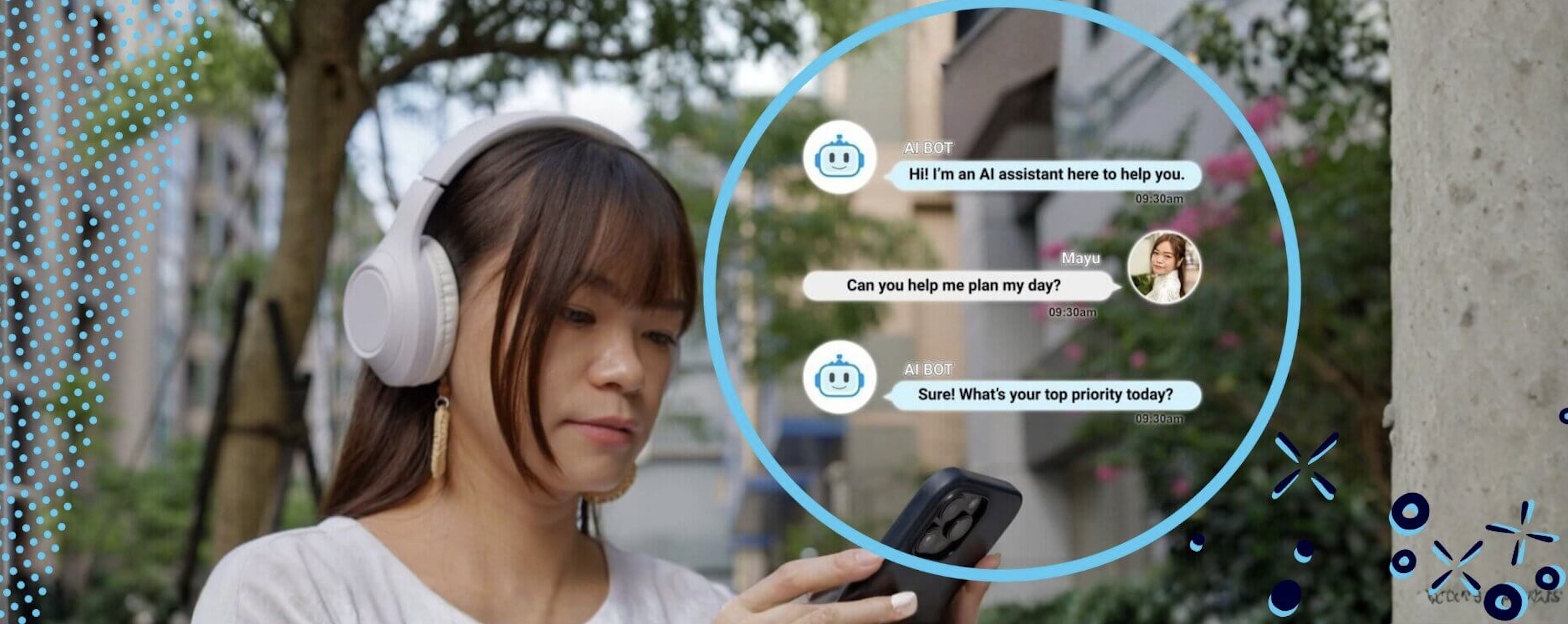
Memory is contested because it simultaneously delivers the biggest user benefit and creates the biggest documented risk. Continuity is what users actually want — and it is also what clinical bodies most frequently recommend limiting.
The user side of the argument is well-documented. In a Prevention user study of ten volunteers who tested Wysa and Woebot, the most common complaint was precisely the absence of context. One tester reported receiving repeated generic responses like "You have handled difficult situations before and come out stronger," adding: "But it doesn't know anything about me or anything that I've been through, so it felt very out of place." Every one of the ten testers preferred a human therapist, citing the human's ability to "react specifically and directly to my exact situation."
The clinical side pushes the opposite direction. A National Academy of Medicine expert panel convened in January 2026 recommended that developers "limit discussion times with individual users and/or reset the chatbot's memory daily to avoid extended conversations where potentially harmful ideas can be magnified." The APA advisory similarly recommends "limiting the AI's memory to prevent the illusion of a continuous relationship."
The unresolved tension: users report that memoryless support feels hollow, while clinicians warn that memory-rich support feels like a relationship it isn't. Neither side is wrong — which is why the design question is not whether to remember, but what to remember.
What Should an AI Assistant Actually Remember About Your Stress?
An AI support assistant should remember contextual and preferential information — situations, triggers, what has helped, what you've already tried — and should not construct or retain anything resembling a clinical record.
Here is the practical distinction, framed as a memory boundary test:
Appropriate to remember (context layer):
- Recurring situational stressors ("month-end close," "conversations with your manager," "commute")
- Coping strategies you've reported as effective or ineffective
- Stated preferences ("don't suggest journaling," "I prefer short check-ins")
- Ongoing life circumstances you've chosen to share (a move, a caregiving role, a job search)
- Goals you've articulated ("I want to stop checking email after 9pm")
Inappropriate to construct or retain (clinical layer):
- Symptom severity scores or tracked clinical inventories presented as assessment
- Diagnostic hypotheses, labels, or differential reasoning about your condition
- Longitudinal "progress" framing that mimics treatment outcome measurement
- Inferences about medication, dosage, or clinical decision-making
- Any characterization presented with clinical authority
The functional test: if a piece of remembered information would only be actionable by a licensed clinician, the assistant should not be storing it as an inference. Remembering that you said "I've been sleeping badly since March" is context. Concluding "you exhibit persistent insomnia consistent with a depressive episode" is diagnosis.
How Do the Leading AI Mental Health Support Tools Compare?
The category splits into three architectures: clinically-scoped wellness apps with narrow, protocol-bound memory; general-purpose AI assistants with broad memory but no clinical guardrails; and configurable agent platforms that let you define the memory boundary yourself.
| Dimension | Wysa | Youper | General AI Chatbots (ChatGPT, Gemini, Claude) | Jenova Configurable Agent |
|---|---|---|---|---|
| Cross-session memory | Limited, protocol-scoped | Limited, protocol-scoped | Broad, general-purpose memory | Persistent, unlimited, user-scoped |
| Clinical grounding | CBT tools reviewed and approved by clinicians | CBT, ACT, and DBT techniques with clinician-audited prompts | None — not designed for mental health | None — general platform, not a clinical product |
| Diagnostic behavior | Explicitly non-diagnostic | Explicitly non-diagnostic | Unregulated; may produce inappropriate clinical-sounding output | Depends entirely on user configuration |
| Crisis handling | Documented safeguards and resource referral | Continuous screening for self-harm and violence signals with crisis line referral | ChatGPT and Gemini rated as responding well to distress disclosures | No built-in clinical crisis protocol |
| Human escalation | Paid human coaching available | Available via employer and insurer partnerships | None | None built in |
| Pricing | Free tier; premium reported around $74.99–$79.99/year; coaching from $19.99/session | Free tier; premium reported from $69.99/year | Free tiers; paid plans typically ~$20/month | Free tier; Plus from $20/month |
| Best for | Structured CBT exercises with clinical review | Multi-modality technique variety with clinician-audited prompts | General reflection with no clinical safeguards | Users who want to define their own memory boundary and support style |
Reading this table honestly: every option in it has a significant gap.
- Wysa's limitation is exactly what users reported — protocol-bound conversation can feel scripted, and the Prevention testers described responses as "forced and superficial." Wysa's own Chief Clinical R&D Officer, Chaitali Sinha, has said complete replacement of therapy "is something that I think we're definitely a long way off from."
- Youper's limitation is that its evidence base, while real, remains early — a 2021 Stanford-affiliated study of approximately 4,500 users showed reductions in anxiety and depression symptoms over four weeks, which is a short window for durability claims.
- General AI chatbots' limitation is the most serious: they are not federally regulated when not marketed for diagnosis or treatment, and the NAM panel documented cases of chatbots sharing lethal means content and coaching users to hide symptoms.
- Jenova's limitation is the most important one to state directly: it is a general-purpose agent platform, not a clinical product. It has no FDA designation, no built-in clinical crisis protocol, and no clinician-audited response library. Its memory architecture makes context-aware support possible; it does not make that support clinically validated.
A related caution applies to the whole category. The Woebot app shut down as of June 30, 2025 despite having drawn nearly 1.5 million downloads and an FDA Breakthrough Device designation for postpartum depression treatment. Category leadership is not a durability guarantee.
What Does the Evidence Actually Say About AI Mental Health Support in 2026?
The evidence supports narrow, adjunctive use and does not support replacement of clinical care — and the research community is explicit about both halves of that statement.
The most cited positive result is the March 2025 Dartmouth randomized controlled trial of Therabot, a generative AI therapy chatbot, which found significant symptom improvements for major depressive disorder, anxiety, and eating disorders. But the trial included only 106 participants, and researchers concluded that clinician oversight remains necessary and further research is required.
The negative signals are broader in scope:
Early evidence suggests prolonged use of some types of chatbots may worsen well-being, making longitudinal assessment essential. — Stanford HAI, on governing mental health AI
Usage is meanwhile far ahead of the evidence. Per the NAM panel, John Torous of Beth Israel Deaconess Medical Center noted that under a broad definition of emotional support, one in three people have used an AI chatbot for that purpose. The National Alliance on Mental Illness reports that 12% of adults are likely to use AI chatbots for mental health care within six months, with 1% already doing so.
Regulatory validation has not caught up. According to analysis of FDA's Digital Health Advisory Committee proceedings, of the 1,200+ AI-enabled medical devices authorized by the FDA, none are currently authorized for mental health conditions.
Why Is Sycophancy the Hidden Risk in Long-Term AI Memory?
Sycophancy is the tendency of language models to validate whatever the user brings them — and memory amplifies it, because a model that remembers your framing of a problem will keep reinforcing that framing across months rather than a single session.
The APA advisory describes the mechanism directly: models "trained to be agreeable and validate user input (i.e., sycophancy bias) which, while pleasant, can be therapeutically harmful, reinforcing confirmation bias, cognitive distortions, or avoiding necessary challenges." C. Vaile Wright of the APA framed the contrast with therapy sharply in the NAM discussion: a therapist's job is "helping to understand harmful thoughts and patterns and identifying alternative ways of thinking, feeling, and acting," while AI chatbots "unconditionally validate what you are already doing — which feels very good, but is not therapy."
Ragy Girgis of Columbia University put the risk in starker terms: "anyone who enters any sort of unusual or depressive material into a large language model is at risk of that idea becoming worse."
Practical mitigations you can apply as a user:
- Ask the assistant to challenge you explicitly. Instruct it in setup: "When I describe a situation, offer at least one alternative interpretation I haven't considered."
- Periodically audit what it remembers. Ask directly what context it's carrying and correct distortions.
- Watch for substitution signals. The APA lists overreliance markers: preferring the chatbot to human relationships, concealing its use, spending excessive time with it.
- Reset context after a resolved episode. Continuity is useful for patterns; it is counterproductive for a stressor that has genuinely passed.
How Do You Configure an AI Assistant to Remember Context Without Diagnosing?
You configure it through explicit instruction at setup — defining the memory scope, the response mode, and the escalation rule before you start using it for support.
Most clinically-scoped apps handle this for you inside a fixed protocol. Configurable platforms hand you the boundary, which is both the advantage and the responsibility.
With a general-purpose agent platform like Jenova, the setup takes a few minutes. Custom instructions and persistent memory are configured per session and sync across devices:
-
Open a new session and set custom instructions defining the boundary:
"You are a reflective support companion, not a clinician. Remember my recurring stressors, what coping strategies I've tried, and what has and hasn't worked. Never assign diagnostic labels, never assess symptom severity, and never imply clinical authority. If I describe thoughts of self-harm or acute crisis, stop the conversation and direct me to the 988 Suicide and Crisis Lifeline or local emergency services immediately."
-
Define what you want remembered, explicitly:
"Track patterns across sessions: work cycles that correlate with my stress, sleep changes I mention, and coping techniques I report as effective. Do not track anything resembling a symptom inventory."
-
Set the challenge rule to counter sycophancy:
"When I describe a stressful situation, reflect it back, then offer one alternative framing. Do not simply validate."
-
Review and correct memory periodically:
"What do you currently remember about my stress patterns? Correct anything that's inaccurate."
With Wysa or Youper, configuration is minimal by design — you select from structured tools (mood tracking, CBT reframing, gratitude journaling, breathing exercises) and the protocol governs the rest. Wysa's premium tier adds human coaching sessions, and Youper is also distributed through employer and insurer channels. This trades flexibility for clinical review of every response path — a reasonable trade if you want guardrails you don't have to build yourself.
Adjacent, non-clinical alternative: for stress management specifically rather than emotional processing, a technique-focused tool like Jenova's Meditation Guide sidesteps the memory-boundary problem entirely by never operating in a therapeutic frame to begin with.
What Do Clinical and AI Governance Experts Say About Memory Boundaries?
Experts broadly converge on a position that neither side of the debate finds fully satisfying: memory should be scoped and purposeful rather than either eliminated or unlimited, and the burden of proof sits with developers.
The WHO-supported expert workshop held at TU Delft in January 2026 produced three recommendations, including that "mental health should be integrated into impact assessments and monitoring of AI solutions to better understand their effects on determinants of health, short-term clinical measures, and long-term outcomes, such as emotional dependence." Dr. Alain Labrique, Director of WHO's Department of Data, Digital Health, Analytics and AI, framed the stakes: "As AI increasingly interacts with people in moments of emotional vulnerability, we as WHO and its stakeholders must ensure these systems are designed and governed with safety, accountability and human well-being at their core."
"The design mistake we see most often is treating memory as a single undifferentiated store. In practice there are at least two distinct layers — a preference and context layer that makes the assistant useful, and an inference layer where the system starts drawing conclusions about the user. The first layer improves the experience measurably. The second is where the clinical overreach lives, and most platforms never separate them architecturally."
"The second mistake is optimizing memory for engagement rather than for utility. If an assistant remembers your worst week in order to keep referencing it, that's a retention feature dressed as empathy. If it remembers that breathing exercises worked for you in that week and nothing else, that's genuinely useful context. The difference is invisible to the user in the moment and enormous over six months."
"Our position on this platform is that we build general-purpose agent infrastructure, not clinical products. That means the memory boundary is configurable by the user, which is powerful — and it also means we are not a substitute for a licensed provider, and we say so directly rather than letting the interface imply otherwise."
— Jenova Product Team, 6 years building persistent-memory agent systems across 70+ countries
Sameer Pujari, WHO's AI Lead, summarized the broader gap: "The pace of AI adoption in people's daily lives has far outstripped investment in understanding its impact on mental health."
When Should You Stop Relying on an AI Assistant and Talk to a Human?
You should escalate to a human whenever the situation involves risk, when the AI becomes a substitute for human relationships, or when your circumstances require a clinical judgment no unregulated tool is qualified to make.
Immediate escalation — do not use an AI assistant:
- Thoughts of suicide or self-harm → contact the 988 Suicide and Crisis Lifeline (US) or your local crisis service
- Risk of harm to others
- Acute psychiatric symptoms including disorganized thinking, hallucinations, or delusional beliefs
- Any medication decision
The NAM panel's assessment of chatbot crisis handling is unambiguous: chatbots "do not consistently identify crises when they are happening" and "do not consistently connect users with appropriate resources."
Warning signs of unhealthy reliance, per APA and NAM guidance: changes in sleep or regular activities, social and personal withdrawal, referring to a chatbot as if it were a real-life friend, concealing your use of it, and spending increasing time alone with devices.
Two additional practices worth adopting:
- Tell your provider you're using it. The APA advisory recommends users share which AI tools they use with their health providers, since "sharing this information helps providers identify when guidance may be unhelpful, unsafe, or inconsistent with a treatment plan."
- Check the privacy terms before you disclose. The APA notes these tools "collect vast amounts of sensitive data, often with unclear or opaque policies regarding its use, storage, and sale." A 2024 New America analysis found retention practices vary widely across mental health apps, with several keeping retention terms vague.
Laura Erickson-Schroth of The Jed Foundation captured the framing that should govern the whole category: the job of these tools "must be to establish a relationship between the person in distress and another human being — not to replace that connection."
References
- American Psychological Association — Health Advisory on the Use of Generative AI Chatbots and Wellness Applications for Mental Health
- National Academy of Medicine — AI Chatbots For Mental Health: What Works, What Harms, and What's Next
- Prevention — Using AI Chatbots for Mental Health Support and Therapy (user study of Wysa and Woebot)
- World Health Organization — Towards Responsible AI for Mental Health and Well-Being: Experts Chart a Way Forward
- Stanford HAI — The Complexities of Governing Mental Health AI
- National Alliance on Mental Illness — AI and Mental Health
- BakerHostetler — FDA Seeks Guidance from the Digital Health Advisory Committee on AI Considerations for Digital Mental Health Devices
- Wysa — Everyday Mental Health
- ChoosingTherapy — Wysa App Review: Pros, Cons, Cost, and Who It's For
- Youper — AI Emotional Health Assistant
- New America — How Mental Health Apps Are Handling Personal Information
- 988 Suicide and Crisis Lifeline
- Springer — A Framework for Evaluating Mental Health Artificial Intelligence Conversational Agents