Haunted House Roleplay AI: Survive a Mansion That Remembers You
2026-08-29
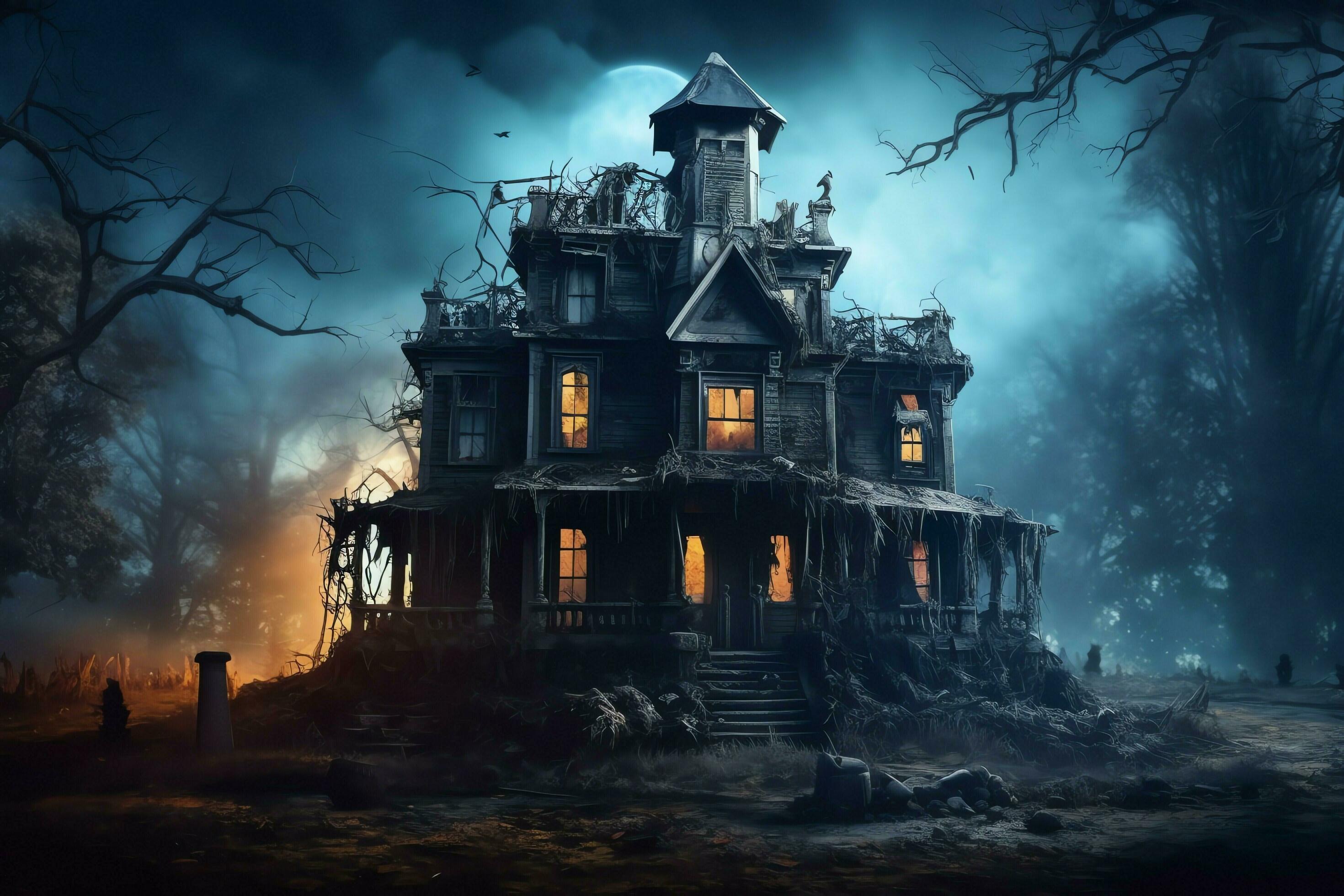
The Mansion helps you live a haunted house roleplay AI story by dropping you into an estate where every room hides secrets and every shadow could be your last. While ticketed walkthroughs end at the exit and generic chatbots forget which door you opened, this AI provides a house that keeps score—and a mystery you have to survive.
In August 2026, that is the difference between watching horror and standing in it. You wake with no memory of how you arrived. The west wing does not reset. The thing in the stairwell remembers you lied.
✅ Persistent rooms, characters, and clues that track every choice ✅ Investigation-first horror you play, not a scripted jump-scare reel ✅ Replayable paths instead of a single night you cannot redo ✅ Full sessions on web or phone, at the intensity you set
To understand why this matters, it helps to look at why most haunted house roleplay still feels thin: the building is not real, the inhabitants do not remember you, and the scare is over before you can ask what it meant.
Quick Answer: What Is Haunted House Roleplay AI?
Haunted house roleplay AI is an interactive horror story that puts you inside a living estate, where rooms, characters, and consequences persist so you can investigate, survive, and escape. You are not watching a haunted house. You are walking it.
Key capabilities:
- Amnesia opening that forces you to reconstruct who you are from the house itself
- Room-by-room exploration in which open doors, stolen keys, and broken promises stay broken
- Inhabitants who remember your last conversation—and punish inconsistency
- Replayable investigations so a different first door produces a different night
Why Most Haunted House Roleplay Still Feels Hollow
Horror only works when space, memory, and consequence agree with each other. If the library is a ballroom on the next turn, dread collapses. If the caretaker forgets you found the cellar key, the plot is cosplay.
That is a harder design problem than it looks. Entertainment time is already crowded: Deloitte’s Digital Media Trends research found U.S. consumers competing for about six hours of media and entertainment a day, with no sign that the clock is getting longer. Meanwhile AI in media and entertainment was valued at $33.7 billion** in 2025 and is projected to reach **$43.1 billion in 2026. People have budget for stories. They do not have budget for stories that refuse to hold together.
Six hours a day — Average U.S. media and entertainment time consumers are already splitting across streaming, social, gaming, and audio
$33.7 billion — AI in media and entertainment market size in 2025
But getting a haunted house that behaves like a haunted house is still frustratingly difficult:
- Physical attractions are seasonal, expensive, and one-pass. You cannot ask the portrait why it is watching you.
- Horror films and most games hand you a corridor someone else designed. Your job is to flinch, not to choose.
- General-purpose roleplay chatbots improvise a scare, then lose the floor plan, the cast, and the tone.
- Branching titles exhaust their trees. After two endings, the house is a map you already finished.
The House Has to Exist Between Messages
Interactive narrative research keeps returning to the same point: engagement rises when choices have visible consequences and paths are worth replaying. A 2025 study of AI-assisted interactive storytelling in Electronics treated user engagement, choice-and-consequence logic, and replay value as first-class measures—not extras. If a haunted house roleplay AI cannot keep a causal chain (you locked the nursery; something is now knocking from the inside), it is generating prose, not producing fear.
Memory Failure Kills Atmosphere Faster Than a Bad Jump Scare
A jump scare is cheap. Continuity is not. When an AI forgets that you hid in the dumbwaiter, or reintroduces a character you already watched die, the spell breaks. Players do not need photoreal graphics for horror. They need the west wing to remain the west wing.
Passive Horror Cannot Answer You Back
Generative AI is already in scriptwriting and world-building for media teams. That helps writers. It does not, by itself, put you in the foyer with a choice that cannot be undone. The gap is not “more spooky text.” The gap is a dedicated haunted house that will not drop the keys.
This is exactly what The Mansion was built for.
Why The Mansion
The Mansion is not a Halloween overlay on a general chatbot. It is a standalone haunted house roleplay AI: you wake in an estate with no memory of how you arrived, every room hides secrets, and every shadow can be your last. The product is the house—the investigation, the inhabitants, the escape—not a theme you have to prompt into existence each night.
| Traditional Approach | The Mansion |
|---|---|
| Ticketed walkthrough, one route, one night | Play any hour; replay until the house gives up a different truth |
| Horror film you cannot interrupt | You open the door, lie to the staff, or refuse the cellar |
| Generic chatbot that forgets the floor plan | Persistent rooms, clues, and characters across the session |
| Jump scares with no investigation | A mystery you can actually solve—or fail |
| Scare intensity you cannot tune | You set how far the night is allowed to go |
The Estate Has a Geography
Fear needs a map. This haunted house roleplay AI treats the building as a place: wings, stairwells, locked rooms, objects that stay where you left them. When you search the library for a name you cannot remember, the next corridor can use what you found. That is how dread accumulates instead of resetting every message.
Inhabitants Who Keep the Receipt
Staff, portraits, things that should not speak—whatever meets you in a doorway—should remember the last lie. Character consistency is the difference between a costume and a threat. You can bluff. You cannot unsay it.
A Plot That Wants to Be Uncovered
The premise is not “be scared.” It is “find out why you are here, and whether leaving is allowed.” That investigation loop is what keeps a session from collapsing into random noises behind wallpaper. You are collecting evidence in a building that would prefer you did not.
Scare on Your Terms
Some players want a slow, Victorian unease. Others want the cellar. You can say so. The house still has rules; you still have a voice. That control is what makes replay useful instead of punishing.
Try prompts like these—instructional lines, not scripts you have to memorize:
"I wake on a cold floor. I don't know my name. Describe only what I can see, hear, and smell from here—no spoilers from other rooms."
"I open the west-wing door. The air smells like wet iron. What is actually in front of me, and what would a careful person notice that a panicked one would miss?"
"I will not go downstairs. I barricade the bedroom with the wardrobe and listen for ten minutes. Tell me what I hear, then wait for my next move."
Related Agents You'll Also Find Useful
If the night in the estate is only the first lock you want to pick, these agents sit on the same path: more horror to survive, or a way to turn what happened into a story you can show someone else.
The Asylum
If you also want a shuttered institution instead of a private estate, The Asylum puts you in as an investigator sent to a closed psychiatric hospital—except something has already gone wrong. Every ward hides a file, a rumor, or a reason not to finish the tour.
- Ward-by-ward investigation rather than a single corridor of scares
- A hidden story you uncover by searching, not by waiting for a cutscene
- The same “will you get out with the truth?” pressure as the mansion, in a different architecture of dread
Film Screenwriter
If a run through the house left you with a set piece you cannot stop thinking about, Film Screenwriter helps you turn it into a screenplay: structure, dialogue, visual storytelling, and revision through draft.
- Scene-level craft after you have already lived the blocking in roleplay
- Dialogue that sounds like people under pressure, not caption-card fear
- Outline-to-draft support if you want the mansion on a page, not only in chat
Comic Creator
If the night wants panels—stairwell, portrait, the thing on the landing—Comic Creator is built for complete sequential stories, from a single issue to a longer horror saga.
- Layouts that hold a scare across a page turn
- Consistent visual style so the house does not change architects mid-issue
- A way to freeze a choice you made in the estate and show the consequence
Try The Mansion free — no credit card required.
How Haunted House Roleplay AI Works
You do not configure a dungeon. You wake up in one. The loop is closer to exploring a real building than to filling out a character sheet.
Step 1: Arrive With Nothing
Open the haunted house roleplay and start from the premise: no memory, an estate, a reason you should not relax. Tell it how much you can see from the first room. Specific sensory limits make the house feel physical.
"First person only. I am standing in a foyer. I can see a staircase, a closed door to my left, and a coat with someone else's name. Do not tell me the backstory. Let me find it."
Step 2: Pick a Door and Mean It
Choose a direction and commit. Horror flattens when every option stays available forever. Name the action, the caution level, and what you refuse to do. The estate should respond to the refusal as much as the advance.
"I take the left door. I keep my back off the wallpaper. If something speaks, I do not answer with my real name—I don't have one yet."
Step 3: Treat Clues Like Evidence
When you find a letter, a photograph, a key, say what you do with it. Pocket it, read it aloud, hide it, burn it. A haunted house roleplay AI only becomes investigative when objects change the next room.
"I take the brass key and the torn photograph. I will not show the photograph to anyone in a uniform. Next I want the room that matches the wallpaper in the picture."
Step 4: Decide Whether Escape Is the Point
Some nights you want the front door. Some nights you want the truth more than the exit. Say which one you are optimizing for. Then live with the version of the house that produces.
"I think I can leave. I also think the house is lying about the exit. I will search one more floor. If I hear my own voice behind a door, I stop and tell you what I do."
Replay is the fifth step you do not have to schedule. A different first door is a different building.
Haunted House Roleplay AI Results & Use Cases
These are concrete nights, not slogans. At least two of them are the estate itself; the others are what people do with the fear after they put the phone down.
📊 Solo Investigation: Map the House Before It Maps You
Scenario: You have one evening and no interest in a party. You want a Victorian layout, a missing name, and a rule: if you look in a mirror for more than a second, describe what fails to match.
Traditional Approach: A streaming horror film (passive, two hours) or a ticketed attraction you cannot pause, question, or replay from the nursery.
The haunted estate: You spend the night reconstructing a floor plan from clues, testing which staff members contradict each other, and choosing whether the truth is worth another locked door.
- You control pacing: linger in the library or force the cellar
- Continuity holds: a key stays a key
- A second run can start with the door you were too afraid to open
💼 Horror Writer: Stress-Test a House Before You Write It
Scenario: You are drafting a feature and the haunted location is still a mood board. You need to know which rooms actually produce story—what a character would do at the top of the stairs, not what a synopsis claims.
Traditional Approach: Outline in a vacuum, then discover in draft five that the geography does not support the scare. Notes, index cards, and a lot of discarded blocking.
The Mansion plus Film Screenwriter: Walk the house in roleplay until a sequence is inevitable. Then hand that sequence to a screenwriting partner for structure, dialogue, and a draft you can revise.
- Blocking comes from lived choices, not a shot list you invented cold
- Dialogue can be harvested from what you actually said under pressure
- You keep the investigation logic that made the night work
📱 Late Train, Low Light, One Earbud
Scenario: You are on a phone, in public, and you still want the house—just not a scream that gets you a look. You set quiet dread: no shouting, no gore dump, full atmosphere.
Traditional Approach: A jump-scare video in an open carriage, or waiting until you are home for anything with tension.
Mobile haunted house roleplay AI: Same estate, shorter moves, whispered stakes. You open one door per stop. The session is still the mansion; the intensity is yours.
- Feature parity on iOS and Android, not a cut-down toy
- You can pause between stations without the house forgetting the last room
- Useful when the point is dread, not volume
🎯 Turn a Survived Night Into Panels
Scenario: You got out—or you did not—and the landing with the portrait is still in your head. You want a ten-page comic that starts at the foyer and ends on the choice you still regret.
Traditional Approach: Commission art, or stall because you cannot draw the stairwell you described.
Comic Creator: Take the run as reference (what you saw, what you did, what looked back) and build a sequential issue with consistent style and page-turn scares.
- The house already gave you blocking and a climax
- Panels can honor a specific failed escape, not a generic haunted-house clip art
- One roleplay night becomes an artifact you can share
Haunted House Roleplay AI FAQ
What is haunted house roleplay AI?
Haunted house roleplay AI is an interactive horror experience in which you explore a haunted estate through conversation: you choose doors, question inhabitants, and live with consequences that persist. Unlike a film, it answers you. Unlike a physical attraction, you can replay. The Mansion is built as that experience—an amnesia opening, a house full of secrets, and an escape you are not guaranteed.
Is The Mansion free to try?
Yes. You can start a haunted house roleplay session without a credit card on the free tier, with core features available and usage limits that scale if you subscribe. Paid tiers add more usage and options such as custom model selection. If you only want one night in the estate, begin free and see whether the house holds together. That is the test that matters—not a feature list.
How is this different from a generic roleplay chatbot?
A general-purpose chatbot can describe a dark hallway. It is not built to keep a floor plan, a cast, and a mystery in register for a whole investigation. Dedicated haunted house roleplay AI starts you in a specific estate with a job: remember nothing, search everything, survive the rooms that remember you. The difference shows up when you go back to a door you already opened and the house has not forgotten.
Can I control how scary the session gets?
Yes. Say the intensity, the lines you do not want crossed, and whether you want slow dread or something in the cellar. The estate still has its own logic—you are a guest, not the architect—but you can refuse a register of horror and keep atmosphere. If a scene is too much, say so and redirect. Good haunted house roleplay is consent plus consequence, not a jump scare you cannot stop.
Does haunted house roleplay AI work on mobile?
Yes. You can play on the web, iPhone, or Android with the same session style: type or use speech-to-text, pick a door, keep going. That is how a commute scene works—one room per stop, house still intact when you return. Settings sync across devices, so the estate does not fork into two contradictory buildings.
Can I turn a session into a screenplay or a comic?
Yes. After a run, take the rooms, choices, and images that stuck and continue in Film Screenwriter for a draft, or in Comic Creator for panels. The roleplay gives you lived blocking; the writing and comics agents give you a form other people can read. You do not have to be a professional. You need a night that was specific enough to adapt.
Step Through the Door Anyway
Most horror asks you to sit still. Haunted house roleplay AI asks you to put a hand on a knob. The problem was never a shortage of spooky sentences. It was houses that would not stay built, characters who would not remember a lie, and nights you could not replay when you finally understood the first clue.
The Mansion is the product that treats those as the job: wake with no memory, search a living estate, and find out whether the truth and the exit are the same room. If you also want a hospital that should have stayed closed, a screenplay, or a comic of the landing you should not have climbed, those paths are next to it.
Try the first foyer. Pick a door. See what the house kept.
Explore more at Jenova.
For Developers: The Mansion is available programmatically via the Jenova API — integrate haunted house roleplay into your application with a single API call. Full documentation →