Game Strategy AI: Master Any Game With Artificial Intelligence (May 2026)
2026-05-24
The golden age of game strategy AI is here. From real-time tactics in grand strategy titles to min-maxing RPG builds and reading competitive metas, artificial intelligence has moved from an in-game opponent to a player's most powerful external tool. The gaming industry — now valued at over $200 billion globally — is being reshaped by AI not just in development, but in how players play. A 2025 Bain & Company analysis found that generative AI is expected to transform gaming more profoundly than any technology since the smartphone, with player-facing AI applications — from personalized coaching to dynamic strategy generation — leading the charge.
Jenova puts elite-level game strategy directly in your hands. With the Roleplay Game Master for immersive tabletop and RPG campaigns with perfect tactical memory, interactive strategy games like The Mansion and The Asylum that demand real strategic thinking to survive, and research agents that can analyze any game's meta, mechanics, or competitive landscape, Jenova doesn't just talk about game strategy — it is game strategy.
Quick Answer: What Is Game Strategy AI?
Game strategy AI refers to artificial intelligence tools that help players analyze, plan, and optimize their gameplay — from build orders and resource management to tactical positioning, meta analysis, and competitive preparation across strategy games, RPGs, competitive titles, and tabletop campaigns.
- 🎮 Tactical analysis — AI evaluates map control, resource allocation, unit composition, and strategic timing
- 🧠 Build optimization — agents like the Roleplay Game Master help craft character builds, party compositions, and campaign strategies with unlimited memory
- 📊 Meta research — use AI to study patch notes, tier lists, win rates, and competitive trends across any game
- ⚔️ Interactive strategy games — practice decision-making in high-stakes environments like The Mansion and The Asylum
The Problem: Why Gamers Need Smarter Strategy Tools
Information Overload Has Broken the Learning Curve
Modern games are extraordinarily complex. A title like Civilization VII, Stellaris, or Baldur's Gate 3 contains thousands of interacting systems — tech trees, diplomacy modifiers, combat mechanics, terrain effects, faction bonuses, and dynamic AI opponents. According to a comprehensive review by Unite.AI, modern strategy games feature branching decision trees with millions of possible states, making it impossible for any single player to intuitively optimize their approach without external analysis.
Millions of possible game states exist in modern strategy titles — far beyond human intuition to optimize unaided (Unite.AI)
The result: players spend more time reading wikis, watching YouTube guides, and browsing Reddit threads than actually playing. The strategy knowledge exists — it's just scattered across dozens of sources, often contradictory, and frequently outdated by the latest patch.
Competitive Metas Change Faster Than Players Can Adapt
In competitive gaming, the "meta" — the most effective tactics available — shifts with every balance patch, new character release, or emerging community discovery. SteelSeries' analysis of AI in esports found that AI-powered coaching tools are increasingly used by professional teams to analyze opponent tendencies, optimize draft strategies, and identify tactical weaknesses — capabilities that casual and mid-level players desperately need but rarely access. By the time a player masters the current meta through traditional learning, it's already shifted.
Strategy Guides Are Static — Games Are Dynamic
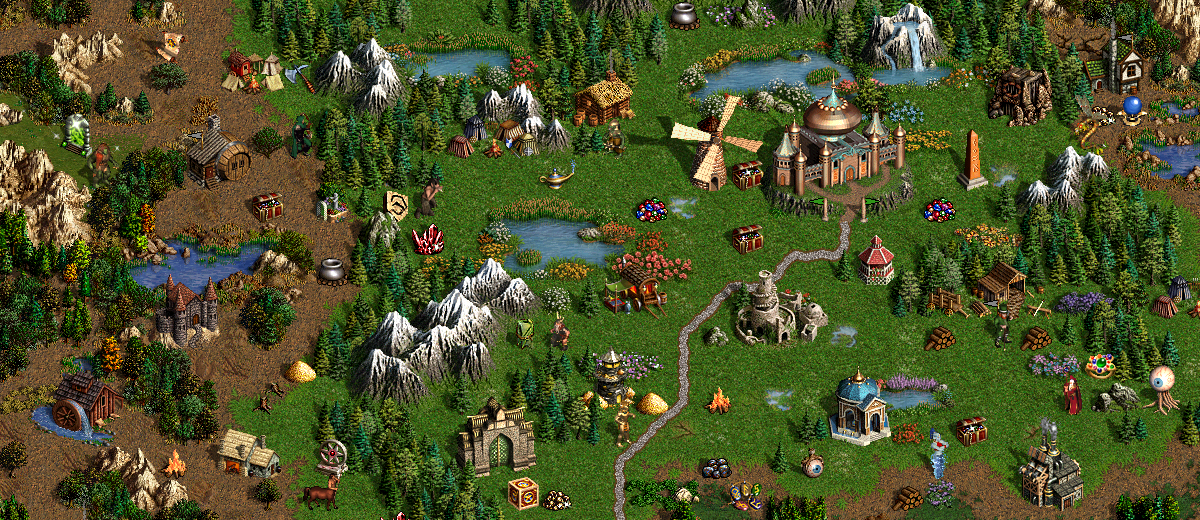
Traditional strategy guides — whether wiki pages, YouTube videos, or Reddit posts — share a fundamental limitation: they're snapshots of a specific moment in a game's lifecycle. They can't adapt to your specific situation, account for your playstyle, or respond to follow-up questions. If you're playing Heroes of Might and Magic III (pictured above) and need to know whether to prioritize a Capitol or a City Hall given your specific map position, starting resources, and opponent faction, no static guide can answer that with precision. You need an AI that understands the game's systems and can reason about your scenario.
Tabletop and RPG Campaigns Demand Persistent Strategic Memory
For tabletop RPG players — whether D&D, Pathfinder, Call of Cthulhu, or homebrew systems — strategic planning requires remembering dozens of NPCs, quest threads, character abilities, inventory items, and world-state changes across sessions that span months or years. Most players rely on handwritten notes that become unmanageable after a few sessions. Game Masters face even steeper challenges, tracking every player decision, consequence chain, and world-building detail while simultaneously improvising narrative.
How AI Is Revolutionizing Game Strategy in 2026
The shift isn't theoretical. According to Bain & Company's 2025 analysis, 70% of gaming executives expect generative AI to have a significant impact on game development and player experience within two years. From the player's side, AI is already being used for real-time coaching, build optimization, meta analysis, and immersive game mastering.
| Traditional Game Strategy | AI-Powered Strategy with Jenova |
|---|---|
| Browse wikis, Reddit, and YouTube for fragmented advice | Ask an AI agent a specific question about your exact situation and get a tailored answer |
| Static guides that can't adapt to your scenario | Dynamic, conversational analysis that accounts for your specific game state |
| Strategy knowledge resets every session | Persistent memory across sessions — the AI remembers your campaign, build, and progress |
| Game Master prep takes hours per session | AI Game Master handles world-building, NPC consistency, and tactical encounters in real time |
| Learning a new game means weeks of research | AI synthesizes game mechanics, meta, and strategy into digestible briefings on demand |
While tools like ChatGPT and Gemini can answer basic game questions, they lack persistent campaign memory, specialized game-mastering capabilities, and the multi-model flexibility to switch between GPT-5.4, Claude Opus 4.6, and Gemini 3.1 Pro Preview depending on whether you need creative narrative generation, precise tactical calculation, or broad knowledge synthesis. Jenova's specialized agents are built for depth — not just surface-level game trivia.
Why the Roleplay Game Master Changes Everything
The Roleplay Game Master isn't a chatbot pretending to run a game — it's a purpose-built AI agent with unlimited memory and perfect character consistency designed to manage complex, multi-session campaigns. Whether you're running a solo adventure, co-GMing a tabletop campaign, or using it as a strategic simulation engine, this agent maintains every detail: NPC motivations, world-state changes, player inventories, faction relationships, and consequences of past decisions.
Strategic Depth That Grows With Every Session
Because the Roleplay Game Master remembers everything — every choice, every battle outcome, every alliance formed and betrayed — it creates strategic depth that compounds over time. Your decisions in Session 3 have real consequences in Session 30. NPCs remember how you treated them. Factions adjust their strategies based on your actions. The world reacts to you as a persistent strategic actor, not a player following a linear script.
"I want to launch a surprise attack on the Northern Keep, but I need to account for the garrison reinforcements we saw last session, the diplomatic fallout with House Valorin, and the supply chain vulnerability my scout identified two sessions ago. What's my best approach?"
Campaign Planning and Tactical Analysis
Use the agent as a strategic advisor within your game world. Plan heists, sieges, diplomatic maneuvers, and resource allocation with an AI that understands the full context of your campaign — not just the rules of the system, but the specific state of your game.
"We have 200 gold, three level-5 party members, and an NPC ally with questionable loyalty. The dragon's lair is two days away. Help me plan our approach — equipment purchases, formation, contingency plans if the NPC betrays us."
Works Across Any System
D&D 5e, Pathfinder 2e, Call of Cthulhu, Shadowrun, FATE, Blades in the Dark, or completely homebrew systems — the Roleplay Game Master adapts to any ruleset. It handles combat mechanics, skill checks, narrative pacing, and strategic encounter design with equal fluency.
Featured Agents for Game Strategy
Roleplay Game Master
The ultimate AI game master for tabletop RPGs, solo adventures, and strategic simulations. Unlimited memory ensures perfect continuity across campaigns that span months. Every NPC, quest, inventory item, and world-state change is tracked and maintained — creating strategic depth that no static tool can match.
- ✅ Unlimited persistent memory — tracks every decision, character, and consequence across sessions
- ✅ System-agnostic — runs D&D, Pathfinder, Call of Cthulhu, Shadowrun, homebrew, and any tabletop RPG
- ✅ Strategic encounter design — creates tactically meaningful battles, puzzles, and scenarios that test real decision-making
The Mansion
A mystery escape game that demands genuine strategic thinking. You wake in a mansion with no memory — explore rooms, uncover clues, solve puzzles, and make survival decisions where every choice matters. The AI adapts to your actions, creating emergent strategy challenges that test observation, deduction, and resource management.
- ✅ Non-linear exploration — multiple paths, hidden rooms, and interconnected mysteries
- ✅ Consequence-driven — decisions affect available options, NPC trust, and survival outcomes
- ✅ Replayable — different strategies lead to different endings and discoveries
The Asylum
A horror investigation game set in a shuttered psychiatric institution. Explore, investigate, and survive using strategic resource management, environmental puzzle-solving, and careful decision-making under pressure. The AI creates genuine tension through adaptive difficulty and consequence systems.
- ✅ Atmospheric horror with real strategic stakes — light management, inventory decisions, risk assessment
- ✅ Investigation mechanics — piece together the asylum's history through documents, environmental clues, and NPC encounters
- ✅ Adaptive AI — the environment responds to your strategic choices, creating unique experiences every playthrough
Real-Time Search
Your meta-research engine. Search across Google, Reddit, YouTube, GitHub, and gaming communities to find up-to-date tier lists, patch note analyses, build guides, and competitive strategies — synthesized into a coherent briefing instead of a list of links.
- ✅ Cross-platform search covering Reddit gaming communities, YouTube strategy channels, and wiki databases
- ✅ Patch-current information — finds the latest meta analysis, not outdated guides
- ✅ Source-cited answers with direct links for deeper reading
LeetCode Coach
For competitive programming gamers — the intersection of coding challenges and strategic thinking. This agent provides adaptive problem-solving guidance, mock interview preparation, and AI-round prep for technical competitions where algorithmic strategy determines victory.
- ✅ Adaptive difficulty scaling based on your skill level and target competition
- ✅ Strategic pattern recognition — teaches you to identify problem categories and select optimal approaches
- ✅ Timed mock sessions that simulate competitive programming pressure
How It Works: From Casual Player to Strategic Thinker
Here's exactly how to use Jenova's AI agents to elevate your game strategy:
Step 1: Define Your Strategic Need
Open the agent that matches your goal. For tabletop campaigns, start with the Roleplay Game Master. For video game meta analysis, use the Real-Time Search. For interactive strategy practice, try The Mansion or The Asylum. For coding competitions, open the LeetCode Coach.
Step 2: Provide Context — The More, The Better
The AI's strategic output scales directly with the context you provide. For a tabletop campaign, share your character sheet, party composition, campaign setting, and current quest state. For a video game, describe your current build, rank, and specific challenges. For meta research, specify the game, patch version, and what you're optimizing for.
"I'm playing Stellaris as a Fanatic Materialist / Egalitarian empire. It's 2260, I have 4 colonies, my neighbor is a Determined Exterminator, and I just unlocked battleships. Should I rush a fleet or invest in megastructures first?"
"I'm stuck on Floor 47 of Slay the Spire with the Ironclad. I have a Barricade-focused deck but no Entrench. What cards should I prioritize from shops and rewards for the rest of Act 3?"
Step 3: Iterate and Drill Deeper
Unlike static guides, Jenova's agents maintain full conversation context. Ask follow-up questions. Challenge the AI's reasoning. Request alternative strategies. Run "what if" scenarios. The more you engage, the more precise and personalized the strategic advice becomes.
"What if the Determined Exterminator attacks before my fleet is ready? Walk me through the optimal defensive strategy with my current tech and economy."
Step 4: Build Persistent Strategic Knowledge
With Jenova's cross-session memory, your strategic context persists. The Roleplay Game Master remembers your entire campaign history. Research conversations about game metas build on previous sessions. You develop a personal strategic knowledge base that grows smarter over time — not a collection of bookmarked Reddit threads you'll never re-read.
Results & Use Cases
🎲 Tabletop RPG: A 50-Session Campaign With Perfect Continuity
Scenario: A D&D group wants to run a year-long campaign but their human GM can only prep for 2 hours per week — not enough for the complex political intrigue and strategic warfare the players want.
Traditional Approach: The GM improvises most sessions, loses track of NPC names and faction alliances, and simplifies encounters to save prep time. Strategic depth suffers. Players lose investment.
Jenova Solution: The GM uses the Roleplay Game Master as a co-GM — feeding it the campaign setting, faction relationships, and player backstories. The AI tracks every NPC interaction, maintains faction disposition scores, and generates tactically rich encounters that account for the party's specific abilities and equipment. The human GM focuses on narrative and roleplay while the AI handles strategic complexity and continuity. Result: 50 sessions of consistent, deep campaign play with zero continuity errors.
📊 Competitive Gaming: Meta Mastery Between Patches
Scenario: A mid-diamond League of Legends player wants to climb to Master tier but struggles to adapt when the meta shifts every two weeks with balance patches.
Traditional Approach: Watch 5-10 YouTube tier list videos after each patch. Read Reddit threads. Try to synthesize conflicting opinions. Waste 20+ games testing builds that don't work. Time: 8-10 hours per patch cycle just on research.
Jenova Solution: After each patch, ask Real-Time Search to find and synthesize the latest win rate data, pro player builds, and community analysis for the player's champion pool. Receive a concise strategic briefing with specific rune pages, item builds, and matchup-specific adjustments — sourced and cited. Time: 30 minutes per patch cycle.
📱 Mobile: Strategy Session on the Commute
Scenario: A Civilization VI player has a multiplayer game tonight and wants to plan their mid-game transition during the lunch break.
Traditional Approach: Try to remember which Steam guide was relevant. Can't access it on mobile. Watch a 45-minute YouTube video at 2x speed and miss the relevant section.
Jenova Solution: Open Jenova on mobile. Describe the current game state — civ choice, map type, neighbor civs, current era, resources, and strategic goal. Receive a tailored mid-game strategy covering district placement priorities, wonder timing, military vs. science investment ratios, and diplomatic positioning. Time: 10 minutes.
⚔️ Interactive Strategy Practice: Sharpen Decision-Making
Scenario: A player wants to improve their strategic thinking — not for a specific game, but as a general skill: resource management, risk assessment, and decision-making under uncertainty.
Traditional Approach: Play more games and hope the skill transfers. Read strategy books. No structured practice.
Jenova Solution: Play through The Mansion or The Asylum — interactive AI games that demand real strategic reasoning. Every room presents resource trade-offs, every NPC encounter requires trust assessment, and every decision creates consequences that shape available options downstream. Unlike video games with fixed mechanics, the AI adapts — creating genuinely novel strategic challenges each playthrough.
FAQ
Can AI actually make me better at strategy games?
Yes — in two distinct ways. First, AI can analyze game mechanics, meta data, and strategic scenarios faster and more comprehensively than any human researcher, giving you optimized builds and strategies. Second, AI-powered interactive games like The Mansion train transferable strategic skills — resource management, risk assessment, and decision-making under pressure — in environments that adapt to your choices. The combination of better information and more strategic practice produces measurable improvement.
How is Jenova different from using ChatGPT for game strategy?
General-purpose chatbots can answer basic game questions but lack three critical capabilities for serious strategy work: persistent memory across sessions (essential for tabletop campaigns), purpose-built game agents like the Roleplay Game Master with specialized game-mastering architecture, and multi-model flexibility to switch between GPT-5.4, Claude Opus 4.6, and Gemini 3.1 Pro Preview depending on whether you need creative worldbuilding, precise mechanical calculations, or broad meta synthesis.
Can AI run a full tabletop RPG campaign?
Absolutely. The Roleplay Game Master can run complete campaigns — solo or as a co-GM alongside a human — across any tabletop system. Its unlimited memory tracks every character, quest, item, faction, and consequence across sessions. Players report running campaigns of 50+ sessions with perfect NPC consistency and strategic continuity that exceeds most human GMs' ability to maintain manually.
What games does Jenova's game strategy AI cover?
Jenova's AI agents are game-agnostic. You can get strategic advice for any title — from grand strategy (Civilization, Stellaris, Crusader Kings, Total War, Hearts of Iron) to competitive games (League of Legends, Valorant, Dota 2, Chess) to RPGs (Baldur's Gate 3, Elden Ring, Final Fantasy) to classic titles like Heroes of Might and Magic. The agents understand game mechanics through conversation context and real-time research, not a pre-loaded database of specific titles.
Is game strategy AI free to use?
Jenova starts free with all core features — no credit card required. Free users can access the Roleplay Game Master, interactive strategy games, and research agents immediately. Paid plans start at $20/month for expanded usage and premium model selection, covering not just game strategy but an entire library of specialized AI agents across every domain.
Can I use game strategy AI on mobile?
Yes. Jenova works fully on mobile — run tabletop campaigns, research game metas, or play interactive strategy games from your phone. Voice-to-text input makes mobile play especially natural for narrative-driven games. Dedicated iOS and Android apps are also available for download.
Conclusion
Game strategy has always been about information, analysis, and decision-making under uncertainty — skills that AI amplifies better than any tool in gaming history. Whether you're optimizing a build in a competitive title, managing a complex tabletop campaign across dozens of sessions, or training your strategic instincts in adaptive AI-powered games, the old approach of scattered wikis, outdated guides, and fragmented Reddit threads can't compete with an AI that understands your specific situation, remembers your progress, and adapts to your needs.
Try the Roleplay Game Master for tabletop campaigns with unlimited memory and perfect strategic continuity. Test your decision-making in The Mansion or The Asylum, where every choice has real consequences. Use Real-Time Search to stay ahead of every meta shift. Start free — no credit card required — and explore the full agent library at Jenova.