Game of Thrones AI Roleplay: Westeros Campaigns With Lasting Memory
2026-10-21
Roleplay Game Master lets you step into Westeros as a lord, sellsword, maester, or spy. It runs a Game of Thrones AI roleplay that remembers every oath, debt, and betrayal. Generic chatbots often lose the thread of a long campaign. They forget which bannerman you bribed or which heir you quietly disinherited. This AI works as a full game master instead. It voices the great houses, tracks shifting alliances, and carries the consequences of your choices from one session to the next.
As of October 2026, you don't need a weekly tabletop group to play out a War of the Five Kings what-if or a Long Night survival story. You choose the era and your character, and the AI runs the rest of the world.
- ✅ Persistent memory across sessions: oaths, debts, and grudges carry forward
- ✅ Consistent character voices: Tyrion stays sharp, Cersei stays cold, and your rivals keep their own agendas
- ✅ Any era, any house: Robert's Rebellion, the Dance of the Dragons, or an original timeline you invent
- ✅ Web, iOS, and Android: your campaign syncs across devices
Westeros is a hard setting to roleplay well. Its politics, prophecy, and huge cast overwhelm most tools. The sections below explain why, and what a dedicated AI game master does differently.

Quick Answer: What Is Game of Thrones AI Roleplay?
Game of Thrones AI roleplay is interactive storytelling where an AI game master voices Westeros characters, runs political and military plots, and reacts to your choices in real time, letting you play any role in the world of Ice and Fire. The best tools add persistent memory, so your alliances and betrayals still matter dozens of sessions later.
Key capabilities:
- Voicing canon characters (Starks, Lannisters, Targaryens) and original NPCs with distinct personalities
- Running court intrigue, succession crises, battles, and supernatural threats beyond the Wall
- Tracking your reputation, loyalties, and secrets across an ongoing campaign
- Adapting to any era, from Aegon's Conquest to an alternate ending you write yourself
Why Game of Thrones Roleplay Is So Hard to Run
Interactive, choice-driven storytelling has moved well beyond niche hobby forums. AI narrative engines are now cited as a primary growth driver for the whole category. Investment in AI agents that hold long, stateful conversations is also rising fast.
**$14.8 billion**: [Projected interactive fiction market by 2034, up from roughly $6.4 billion in 2025 (Dataintelo, via Jabali)](https://www.jabali.ai/blog/interactive-story-games/)
**$10.9 billion**: [Global AI agents market in 2026, up from $7.6 billion in 2025 (Grand View Research, via AI Business Weekly)](https://aibusinessweekly.net/p/ai-agents-statistics)
Game of Thrones fans have been early experimenters. Community-built bots such as a Game of Thrones cast scenario on Character.AI show the demand. So do older projects like the Technical University of Munich app that predicted which characters would survive. Fans clearly want to play out "what if" scenarios.
But running a satisfying Westeros campaign is difficult:
- Human groups are hard to keep going. A political campaign needs many sessions to pay off, and players' schedules rarely line up long enough for a betrayal plot to come to a head.
- Generic chatbots drift. Over a long session, characters slip out of voice. Lord Tywin starts sounding like a help-desk agent, and earlier plot points disappear.
- Choices rarely stick. Narrative designers say a meaningful choice must be informed, costly, and echoed later in the story. Most chat sessions forget the choice before it can echo.
- The setting doesn't forgive mistakes. Succession law, bannermen loyalties, hostage politics, and the threat from beyond the Wall all have to interact consistently, or the world stops feeling like Westeros.
Roleplay Game Master was built to solve exactly these problems.
Why Roleplay Game Master Works for Westeros
Roleplay Game Master is designed for long-form, immersive roleplay. It combines unlimited memory, character consistency, and complete creative freedom. Many AI chat apps center on one persona. This tool runs the whole board: the Small Council, the rival houses, the smallfolk in the taverns, and the cold presence gathering in the North.
In practice, that changes how the campaign plays. Spare a Frey in session three, and he may return in session thirty with a grudge or a debt to repay. Swear fealty to the Dragon Queen, and the Lannisters will remember it.
| Traditional Approach | Roleplay Game Master |
|---|---|
| Scheduling a tabletop group for weekly sessions | Play whenever you want, solo, for ten minutes or three hours |
| Chatbots that forget earlier plot threads | Persistent memory that carries oaths and betrayals across sessions |
| One-character bots with a fixed scenario | A full game master voicing every house, NPC, and faction |
| Pre-written choose-your-own-adventure paths | Open-ended scenes that adapt to whatever you decide |
| Characters drifting out of voice | Distinct, consistent personalities for canon and original characters |
Political Intrigue That Remembers
Westeros runs on leverage: who owes whom, who holds which hostage, and whose bastard could claim what. The AI tracks those threads so a whispered secret in King's Landing can become a bargaining chip three sessions later.
"I'm the second son of a minor Reach house, newly appointed as cupbearer to the Hand. Track every secret I overhear and who would pay for it."
Characters Who Stay in Voice
Canon characters keep the speech patterns and motivations fans expect. Original NPCs get their own consistent personalities. A suspicious maester stays suspicious, and a loyal sworn shield won't suddenly start acting out of character.
"Run a negotiation between me and Olenna Tyrell. She should be sharp, funny, and three moves ahead of me the entire time."
Any Era, Any Perspective
You can play the Dance of the Dragons, Robert's Rebellion, the Long Night, or an alternate timeline where Ned Stark never rode south. You can also play as a sellsword, a Faceless Man initiate, a wildling raider, or a Dornish spymaster.
"Start a campaign during Robert's Rebellion. I'm a Riverlands knight torn between oaths to House Tully and old debts to the Targaryens."
The Full Grimness of the Setting
Game of Thrones is defined by moral compromise, war, and consequences that hurt. The AI has the creative range to let your story go dark when the narrative calls for it, instead of sanding off the edges that make Westeros feel real.
Related Agents You'll Also Find Useful
If your campaign keeps growing, these agents cover the steps around it.
Game of Thrones politics is built on real power dynamics. This pragmatic strategy advisor can help you understand them, or stress-test your character's next scheme before you commit to it.
- Power mapping and incentive decoding
- Negotiation tactics and leverage analysis
- Multi-move campaign planning
If you want to turn a memorable campaign into polished fan fiction or your own original fantasy saga, this storytelling partner can take your roleplay logs from rough draft to finished manuscript.
- Deep research for believable worldbuilding
- Editorial feedback on structure, pacing, and character
- Polished prose in any genre
If you're designing your own Westeros-inspired board game, tabletop system, or video game concept, this design partner can help you build the mechanics behind it.
- Brainstorming and systems analysis
- Design documentation
- Concept art generation
Try Roleplay Game Master free. No credit card is required.
How to Start a Game of Thrones AI Roleplay
Step 1: Choose your era and setting
Tell the AI when and where your story begins. You can start at a famous moment in the canon timeline, or set up an alternate history where a single event went differently.
"It's the year before the Red Wedding. Begin at the Twins, where my house has been invited to negotiate a marriage pact."
Step 2: Define your character
Describe your character's house, rank, skills, and secrets. Specific weaknesses and ambitions give the AI more material to work with, and they make the story better.
"I'm Lady Alys Rowan, a widow with a claim to Goldengrove, a talent for poisons, and a brother sworn to the Night's Watch who knows my secret."
Step 3: Play the opening scene
Your AI game master sets the scene, introduces NPCs, and waits for your move. You can speak in character, describe actions, or step out of the story to ask for options.
"I raise my cup to Lord Walder and ask, quietly, what price his house puts on loyalty these days."
Step 4: Steer the consequences
Push back if a scene drifts from your vision. You can ask for more political tension, a faster battle, or a change in tone. The AI adapts while keeping track of everything that has already happened.
"Slow down. I want the next three scenes to focus on who at court suspects me."
Step 5: Return and continue
Close the app and come back days later. Your alliances, enemies, and unresolved plots will be where you left them, ready for the next move.
Game of Thrones AI Roleplay Campaigns You Can Run
👑 Playing a Lesser House in the War of the Five Kings
Scenario: You lead a minor Riverlands house caught between Stark, Lannister, and Tully armies, and you have to decide whom to back.
Traditional Approach: You'd need a dedicated tabletop group, a game master who knows the lore deeply, and months of sessions before your shifting loyalties pay off.
Roleplay Game Master: It runs every faction's demands and remembers each promise you make. It also makes rivals react when you break one.
- Each faction acts on its own goals, not just in response to you
- Broken oaths come back later in the story
- You can play the campaign at whatever pace suits you
❄️ Surviving the Long Night Beyond the Wall
Scenario: You're a new Night's Watch recruit on a ranging mission when the dead begin to rise.
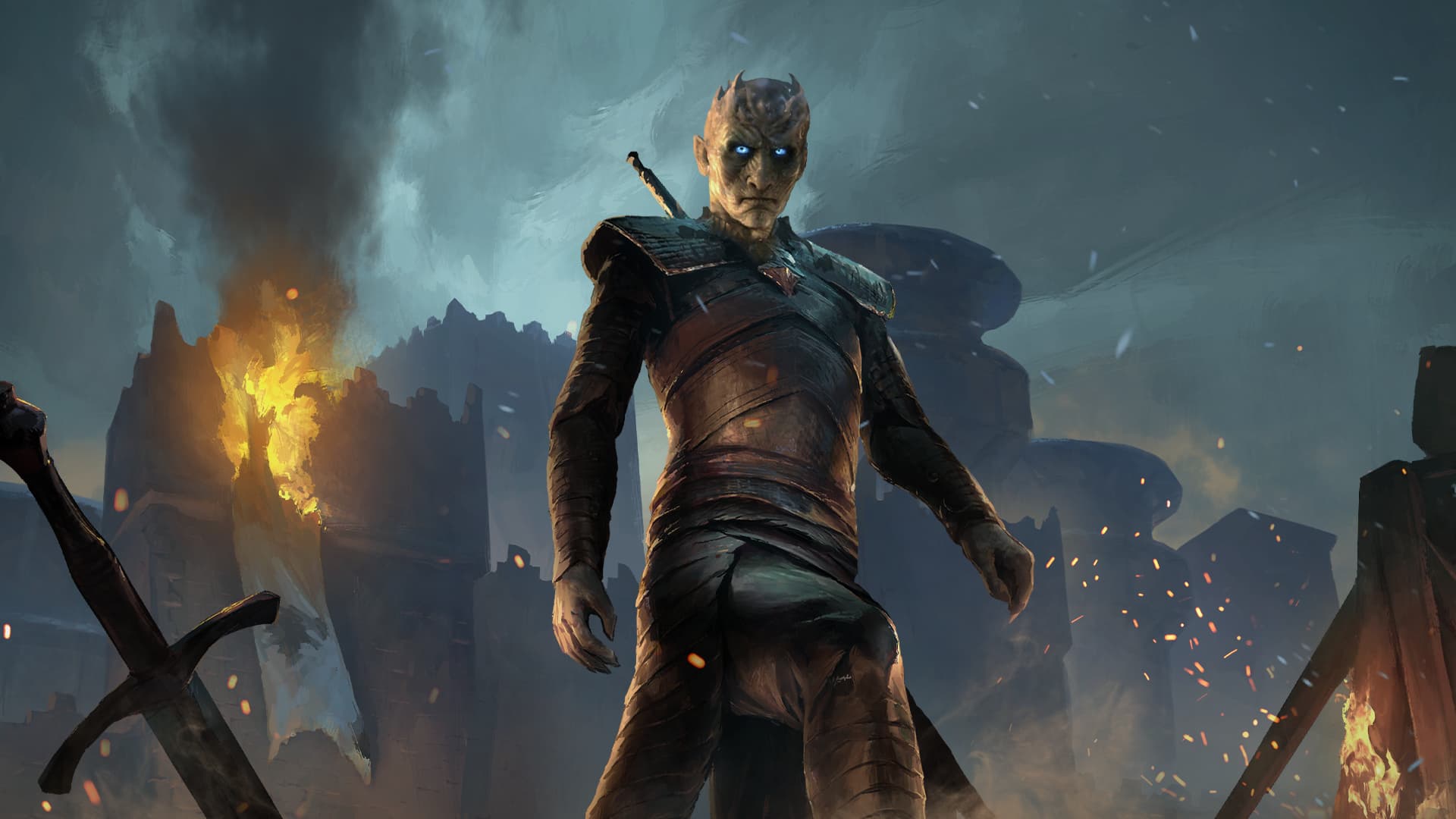
Traditional Approach: Horror pacing is hard to sustain in group play, because tension tends to collapse between sessions.
Roleplay Game Master: The AI builds dread through scarce resources, uncertain allies, and the steady approach of the White Walkers. It tracks injuries, supplies, and which brothers you can still trust.
- Survival details persist from scene to scene
- Dread builds across sessions instead of resetting
- The tone can range from tense survival to full horror
📱 Ten-Minute Court Intrigue on Your Phone
Scenario: You're on your commute and want to advance your King's Landing spy plot before work.
Traditional Approach: Group roleplay needs everyone online at the same time, and generic chat apps forget where you left off.
Roleplay Game Master: You open the app, use speech-to-text to tell the AI your character's next move, and pick up exactly where you stopped. Your campaign syncs across web, iOS, and Android.
- Short sessions still move the plot forward
- Voice input makes playing on mobile easier
- Your full campaign history goes with you
🐉 Rewriting the Dance of the Dragons
Scenario: You play a dragonrider during the Targaryen civil war and try to prevent the dynasty's collapse.
Traditional Approach: Writing alternate history alone means keeping track of dozens of houses, dragons, and claims by hand.
Roleplay Game Master: The AI plays out the ripple effects of your interventions. When the campaign ends, you can take the story to Creative Fiction Writer to turn it into polished fan fiction. If your character is plotting a coup, Machiavelli Mentor can help you work out the power dynamics first.
- Alternate history plays out logically from your choices
- Your campaign logs can become a finished story
- Complex succession politics stay consistent
Frequently Asked Questions
Is there a free Game of Thrones AI roleplay option?
Yes. You can use Roleplay Game Master on Jenova's free tier, which includes all core features with limited usage. For long, frequent campaigns, the Plus plan costs $20/month and gives 30× the free usage plus custom model selection. Usage resets monthly, with no daily caps. You can see the plans at Jenova.
Can AI roleplay remember my storyline across sessions?
Dedicated tools can. This AI game master is built with unlimited memory, so alliances, betrayals, injuries, and secrets carry from one session to the next. That matters most in Game of Thrones campaigns, where political payoffs often take many scenes to arrive and a forgotten oath would break the story.
How is Roleplay Game Master different from Character.AI Game of Thrones bots?
Character.AI hosts many community-made bots, usually built around a single character or a fixed scenario. Roleplay Game Master acts as a full game master instead. It voices every faction and NPC, adapts to any era or character you choose, and tracks consequences across the whole campaign. The result plays more like an open-world tabletop session than a one-on-one chat.
Can I play as an original character instead of Jon Snow or Daenerys?
Yes, and many players prefer to. You can create a knight from a minor house, a sellsword, a maester, a wildling, or a spy, and give them your own backstory and secrets. Canon characters can still appear as allies, rivals, or obstacles. Original characters also give you more room to shape events without contradicting the books or the show.
Does Game of Thrones AI roleplay work on mobile?
Yes. Roleplay Game Master works the same on web, iOS, and Android, and your campaigns sync across devices. Built-in speech-to-text lets you speak your character's lines instead of typing them, which makes short sessions on your phone practical.
Is AI roleplay accurate to the books and the show?
The AI has a strong grasp of major houses, events, and characters. Like any AI, though, it can occasionally get an obscure lore detail wrong. If that happens, correct it in the chat and the story will adjust. For well-researched worldbuilding, you can also take your campaign to Creative Fiction Writer, which researches source material in depth.
Take Your Seat in Westeros
Game of Thrones has always been about choices with weight, such as oaths that bind, betrayals that echo, and power that costs something. Group roleplay struggles to keep those threads alive across months of scheduling. Generic chatbots tend to forget them within one session.
A dedicated Game of Thrones AI roleplay tool fixes both problems. You get a game master available whenever you want to play, a cast of characters who stay in voice, and a world that remembers what you did. You can scheme at court, survive the Long Night, or rewrite the Targaryen dynasty in a Westeros campaign that keeps going as long as you do.
Try Roleplay Game Master now. Explore more at Jenova.
For Developers: Roleplay Game Master is available programmatically via the Jenova API. You can integrate persistent, character-consistent interactive storytelling into your game or fiction app with a single API call. Full documentation →