Game Dialogue Generator: AI for Branching NPC Conversations
2026-09-11
Film Screenwriter helps you generate game dialogue by turning character voice, scene goals, and branch constraints into playable conversation trees. While hand-written NPC talk stalls on unused choices and broken tone, this AI provides line drafts, player replies, and reconverging paths you can drop into a dialogue graph.
As of September 2026, conversation is still treated as a one-off script even as generative AI shows up across thousands of shipped games. A dedicated game dialogue generator is how you keep talk feeling authored without writing every unused leaf.
- ✅ Branching NPC conversations from a single scene brief
- ✅ Player replies that reconverge instead of exploding scope
- ✅ Flags, moods, and bark lines documented with the script
- ✅ Voice-consistent drafts you can revise, not one-shot flavor text
To understand why this matters, let's examine why game dialogue is still so expensive to write, test, and ship.
Quick Answer: What Is a Game Dialogue Generator?
Film Screenwriter is a game dialogue generator that drafts NPC lines, player replies, and branching conversation trees you can implement. It keeps voice consistent across flags, reconvergence, and short barks.
Key capabilities:
- Scene briefs that become speaker lines, player choices, and end-states
- Reconverging branches so extra replies do not clone entire scenes
- Flag-aware copy (mood, relationship, “already said this”)
- Bark lines and UI-length beats for in-world talk, not only cutscenes
- Revision passes that protect character voice after playtest notes
Why Game Dialogue Breaks Production
Players judge a world by how it talks. A two-word bark in a dialogue box and a twenty-node gala conversation are the same problem at different scales: someone has to write the line, choose the replies, decide what persists, and still finish the scene.
The commercial pressure is real. A 2024 survey of procedural content generation notes that the video game industry surpassed combined music and movie revenue in 2022. Research on narrative and dialogue generation treats conversation as content that can raise replay value and cut authoring time — if the pipeline is constrained. Unconstrained chat is not that pipeline.
7,818 games — Titles that had disclosed generative AI in production or gameplay by mid-2025
$10K–$2M+ — Reported indie development cost range by genre, platform, and team size
But shipping a good game dialogue generator is frustratingly difficult:
- Every extra reply multiplies work players may never see. GDC analysis of branching narrative is blunt: consequential branching costs time, money, crunch, and content players never see.
- Tone dies when the graph gets large. The NPC who was wry at the gate becomes generic at the boss. Academic work on author-friendly procedural dialogue exists because writers need control, not a slot machine of sentences.
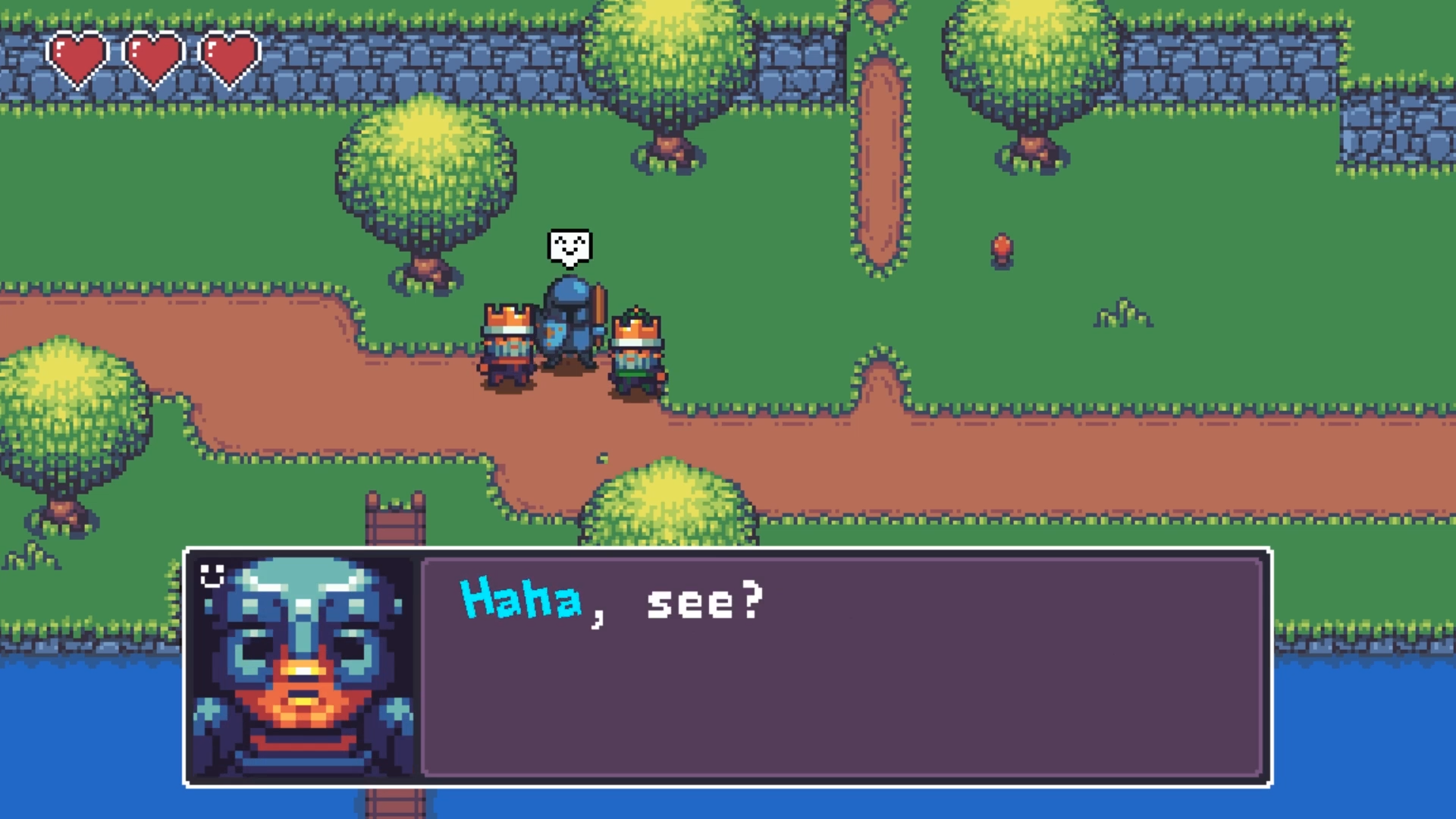
- Barks and conversations are designed as if they were different crafts. A smug “Haha, see?” on the overworld and a hostile gala tree need the same voice bible, or the world splits in two.
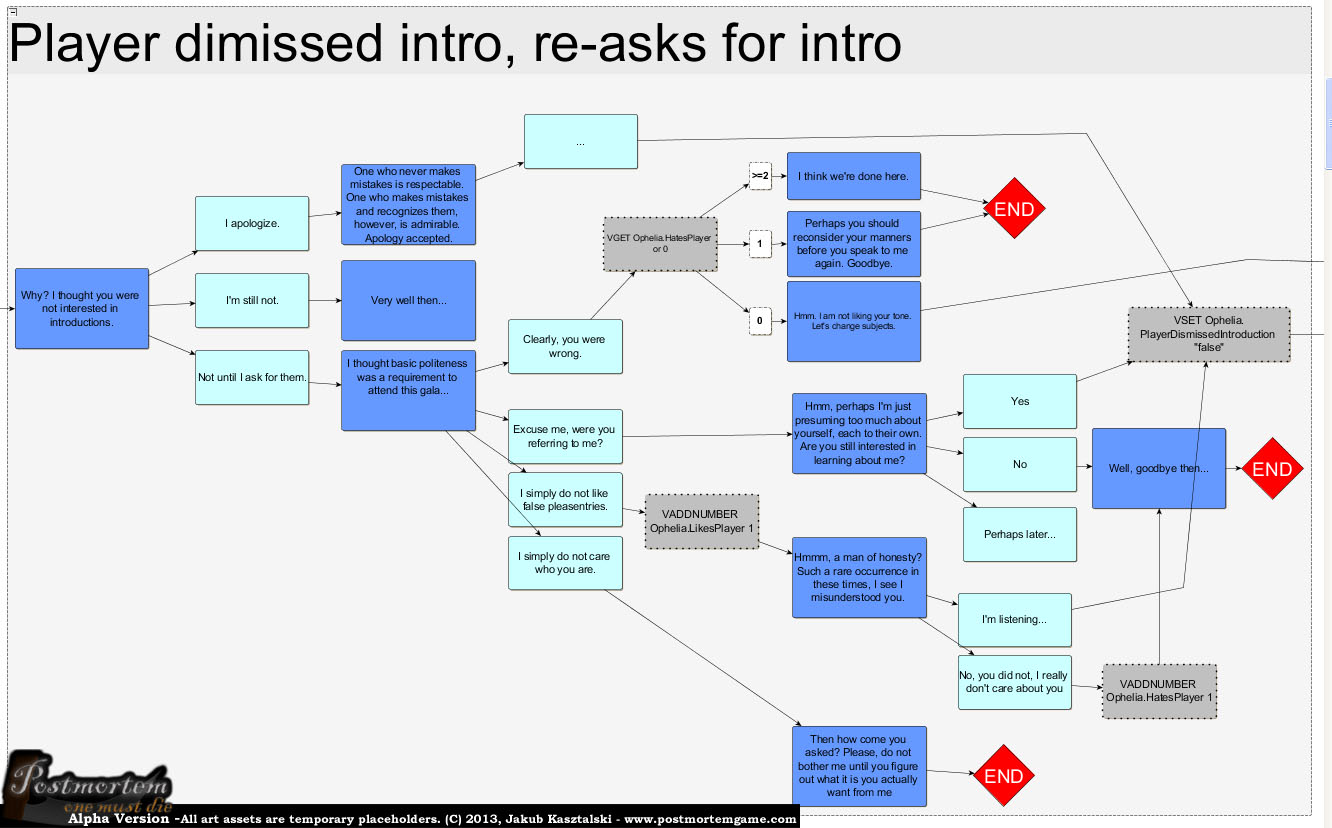
- Flags are an afterthought. Relationship values, “hates player,” and “already asked for the intro” only appear when a branch already contradicts itself in QA.
Authored branching still matters. Interactive-storytelling research keeps returning to the same standard: choices should fork, matter, and still land in a finishable structure. LLMs are already used most often for game narratives; the production gap is turning that fluency into trees a writer can defend and an engineer can implement.
This is exactly what Film Screenwriter was built for.
Why Film Screenwriter for Game Dialogue
Film Screenwriter treats a game dialogue generator as a writing object: character, subtext, beats, and revision — then maps those onto player choices, flags, and reconverging end-states. You bring the scene, the voice, and the production limits. It returns conversation you can playtest, cut, and hand to narrative implementation.
That distinction matters. A general chatbot will invent colorful NPC chatter. A shippable conversation has to answer harder questions: Who is speaking? What does the player want in this node? Which replies are three ways to say yes? Which line sets HatesPlayer? Where does the scene reconverge so VO, localization, and QA can actually finish?
| Traditional Approach | Film Screenwriter |
|---|---|
| Hand-write every reply and every unused leaf | Specify voice, flags, and legal branches, then draft only those paths |
| Flowcharts that drift from the spoken line | Scene drafts with speaker, mood, and reconvergence marked |
| Scope explosion from “just one more choice” | Thematic and character-definition branches that share an end-state |
| Barks written in a different doc than conversations | One voice bible across UI-length lines and long trees |
| Playtest notes trapped in chat logs | Persistent revision across sessions |
Lines first, then the graph
A robust conversation is usually a directed graph: an opener, player replies, conditionals, and a bounded set of exits. The craft is not “infinite talk.” It is legal talk — every branch completable, every flag named, every path able to say goodbye.
Research on NPC dialogue generation from annotated quests and on interactive narrative scene generation starts from structure, then fills fiction. This AI works the same way at draft time. You cap tree depth, name the legal reply types, and force reconvergence so a localization pass can price the scene.
Ask for that explicitly:
"Write a 12-node dialogue tree for a gala NPC named Ophelia. The player dismissed her introduction and now asks again. Include apology, hostility, and 'I simply do not care' branches. Reconverge before goodbye. Tag each line with speaker, mood, and a flag."
Branch on purpose, not on volume
Freelance narrative work presented at GDC maps branching onto a useful spectrum: consequential forks, thematic forks, and character-definition forks (“three ways to say yes”). Most indie scenes cannot afford Until Dawn–scale consequence. They can afford two devastating ways to ask the same question that reconverge on silence — the Pentiment pattern that talk used as its efficiency example.
A game dialogue generator that does not know that spectrum will happily clone acts. One that does will give you earnest / snarky / hostile replies that share a node, then spend the unique lines where a flag actually changes later play.
"Rewrite this gate conversation as character-definition branching only. Three player tones, one NPC reply, no plot fork. Then add a single consequential flag if the player is hostile twice."
Barks are dialogue, just shorter
Overworld talk is not leftover. A portrait, a two-word beat, and a party standing on a dirt road still have to sound like the same people who will later argue at a gala. UI length is a constraint, not an excuse for generic fantasy filler.
"Write bark and conversation lines for a pixel-art RPG party on a dirt road. Tone: light, slightly smug. One line is a punchy two-word beat like 'Haha, see?' plus three player replies that all continue the walk. Max 12 words per NPC line."
From draft to implementation notes
A complete pass should leave you with more than pretty lines:
- Node IDs, speaker tags, and reconvergence points
- Player reply types (apology, refusal, curiosity, hostility)
- Flags set or read (
AlreadyAskedIntro, relationship counters) - Bark vs. conversation length limits for the UI
- Lines that would require unique VO if you later record them
"Convert this conversation into a table: NodeID, Speaker, Line, PlayerReplies, SetFlags, GetFlags, RejoinNode. Call out any line that cannot be reused as a bark."
Related Agents You'll Also Find Useful
If you are building a game dialogue generator into a real production, writing is only one seat at the table. Graph design, playtest, and short-form punch each need their own pass.
Game Designer Assistant
When the conversation leaves the script and becomes a system, Game Designer Assistant helps you specify the grammar: legal reply types, flag names, depth caps, and how a gala tree shares state with a quest or dungeon. That is the difference between a readable scene and a graph engineering can serialize.
- Node maps that match your spoken flags
- Reconvergence rules so QA can finish every path
- Design docs that keep dialogue and systems on the same terms
Roleplay Game Master
A tree can be valid and still feel hollow. Roleplay Game Master lets you walk a generated branch as a player — with memory of prior insults, apologies, and “I simply do not care” — before you spend VO or localization on it.
- Table-read a hostility fork and hear which line actually stings
- Stress-test whether reconvergence feels earned or like a railroad
- Capture “this NPC broke character” notes while the scene is still cheap to rewrite
Microdrama Screenwriter
Some game talk has to land in a few seconds: mobile pop-ups, companion barks, cliffhanger scene exits. Microdrama Screenwriter is built for short, hooky dialogue and pay-off timing you can steal for UI-length lines without writing a novella in a text box.
- Tight beats for portrait-and-box interfaces
- Exit lines that make the next node feel necessary
- Compression passes when a scene is 40% too long for the UI
Try the screenwriter free — no credit card required. Then pull systems design, table-read, and short-form punch into the same pipeline.
How to Use a Game Dialogue Generator Step by Step
You do not start by asking for “100 unique NPC lines.” You start by locking voice, verbs, and legal branches, then you sample from that grammar.
Step 1: Lock the scene, the UI, and the verbs
State genre, camera, box length, and what the player can actually say. A pixel-art walk-and-talk cannot host a courtroom cross-examination. A 12-word bark cannot carry a betrayal speech.
"Pixel-art party RPG. Dialogue box holds about 12 words. Player can greet, joke, or walk away. Draft the roadside conversation so every reply fits the box."
Step 2: Name flags before you write charm
List what the scene must remember: already asked for an intro, relationship counter, hostility threshold, shared goodbye. Quality-based and salience-based narrative design exists because not every line should be a hard branch — some lines should fire because a flag is true.
"Flags: PlayerDismissedIntroduction, OpheliaHatesPlayer (0–2), WantsIntroAgain. Write the re-ask scene so hostility increments, apology can clear tone, and two hates ends the conversation."
Step 3: Draft one vertical slice, not the whole cast
Finish a single conversation — opener, three reply types, reconvergence, exit — until it is speakable. Only then duplicate the template across NPCs. That is the same discipline GDC speakers urge when they warn that consequential branching burns content players never see.
"Write Ophelia's re-ask intro only. No other NPCs. Include apology, 'I'm still not,' and 'not until I ask' as player replies. Rejoin before goodbye."
Step 4: Bind barks to the same voice bible
Take the long scene’s diction and compress it for overworld portraits. If the gala NPC cannot sound like the roadside companion, the generator is inventing two casts.
"From Ophelia's gala voice, write six overworld barks under 8 words. Keep the same formality. None of them should spoil the gala flags."
Step 5: Playtest for meaning, then freeze the grammar
Walk the graph. If every mission-giver sounds like a quest bulletin, tighten diction. If testers cannot tell why a choice mattered, move the flag earlier. When the grammar is stable, freeze reply types and let the generator fill new scenes — do not keep inventing new conversation verbs mid-production.
"I playtested 10 generated conversations. Seven were fetch-flavored politeness. Rebalance toward character-definition replies, keep the same reconvergence node, and preserve the hostility counter."
Results & Use Cases
📊 Indie RPG With a Hostile Re-Ask Scene
- Scenario: A small team needs a gala NPC who notices when the player skipped her introduction, then handles apology, ice, and open dislike without cloning the whole party scene.
- Traditional Approach: A wall of flowchart boxes, duplicated goodbye lines, and a relationship variable that only exists in a designer’s head — the same trap branching talks keep warning against.
- Film Screenwriter: A height-capped tree, tagged flags, and reconvergence before “Well, goodbye then.”
- One end-state for the scene
- Player tones that share assets
- A flag list Game Designer Assistant can turn into implementation notes
- Lines ready for a Roleplay Game Master table-read
💼 Pixel-Art Party Barks That Match the Cutscenes
- Scenario: A dungeon-crawler already has portraits and a two-line UI. Companions need roadside chatter that sounds like the people who will later argue in town.
- Traditional Approach: Designers paste generic fantasy filler into the box. Cutscene voice and overworld voice never meet.
- The AI screenwriter: A shared voice bible, UI-length constraints, and punchy beats that can sit under a portrait without eating the frame.
- Barks that respect word limits
- Replies that all continue traversal
- A compression pass you can hand to Microdrama Screenwriter when a line still runs long
📱 Mobile Rewrite Between Playtests
- Scenario: You are on a train after a messy playtest. Three testers ignored the apology and power-gamed hostility. You need a revised tree before tonight’s build.
- Traditional Approach: Notes in a phone memo, a whiteboard photo, and a morning meeting to reconstruct intent.
- The same writing partner on web, iOS, or Android: Dictate the playtest result, get a reweighted conversation, and send the new flag list to the build channel before you sit down at a desk.
- Speech-to-text for messy debriefs
- Persistent memory of last night’s graph
- A 15-minute pass you can actually finish on a phone
🎯 Live-Service NPCs Who Remember Yesterday
- Scenario: Weekly vendors and board NPCs must react to last week’s siege, not greet the player like a stranger — the gap designers hit when dialogue is generated without state.
- Traditional Approach: Writers invent 20 greetings. Players hear the same three. Nothing persists.
- Structured generation: Flag-in, scene-out drafts in the spirit of narrative PCG research, then a table-read to check whether the causality is readable.
- Child lines that consume yesterday’s flags
- Boards that reconverge on a weekly beat
- Fewer unique VO assets, more perceived memory
FAQ
What is a game dialogue generator?
A game dialogue generator is a constrained writer for playable talk. It drafts NPC lines, player replies, flags, and end-states from character and scene rules instead of dumping unlinked flavor text. The quality bar is not “infinite chatter.” It is legal conversation: every branch completable, every UI line short enough to display, every path able to reconverge so story and build can finish.
Is Film Screenwriter free to use?
Yes. Film Screenwriter is available on a free plan with core features and limited monthly usage. Paid tiers increase usage if you are running long drafting sessions, attaching large voice bibles, or iterating trees daily. You can start a conversation pass without a credit card and upgrade only if the workload needs it.
How is this different from generating NPC lines in a general chatbot?
A general chatbot improvises chatter. This AI is a drafting partner: character voice, scene structure, revision, and consistency across sessions. You can attach a lore bible, keep flag names stable from Monday to Friday, and ask for trees a designer can implement. The output is a game dialogue generator workflow — grammar, flags, reconvergence — not a pile of disconnected one-liners.
Can a game dialogue generator output branching trees with flags?
Yes, if you specify the grammar. Name reply types, depth, reconvergence, and the variables the scene may set or read. Then ask for a node table, not only prose. Pair the draft with Game Designer Assistant when the conversation has to share state with quests, inventory, or a dungeon.
Does Film Screenwriter work on mobile?
Yes. Web, iOS, and Android share the same writing workflow, so you can revise a conversation after a playtest without waiting for a desktop. Speech-to-text helps when you are dumping notes from a session. Settings and history sync, which matters when a flag list has to stay exact across devices.
How do I stop generated NPC dialogue from sounding generic?
Cap the grammar. Give each speaker a diction rule, a forbidden phrase list, and a relationship to the player. Prefer character-definition replies over plot clones. Require flags between scenes. Then playtest. If testers cannot tell two NPCs apart, the problem is almost never “need more random names” — it is that two speakers share the same verbs, the same politeness, and the same reward pitch.
Write Branching Talk You Can Actually Ship
Hand-authored conversation runs out. Unconstrained generators feel cheap. The workable middle is a game dialogue generator with a visible grammar: a voice bible, legal reply types, named flags, UI-length barks, and an end-state every path can hit.
Film Screenwriter is built for that job — scene drafts, branching NPC trees, and lines you can implement. Pair it with systems design, table-read, and short-form punch when you are ready to move from script to build.
Try Film Screenwriter now. Explore more at Jenova.
For Developers: Film Screenwriter is available programmatically via the Jenova API — integrate branching game dialogue generation into your application with a single API call. Full documentation →