Game Balancing AI: Tune Difficulty, Combat & Economy Systems
2026-09-11
Game Designer Assistant helps you ship fair, engaging games by analyzing difficulty curves, combat math, and economy loops the way a senior designer would. While most teams still balance by gut feel and marathon playtests, this AI turns a GDD, a spreadsheet, or a messy patch note into specific tuning recommendations. As of September 2026, live-service calendars leave little room for a broken curve — one overtuned boss or stingy drop table can erase a cohort.
- ✅ Systems analysis across genres, platforms, and regional markets
- ✅ Difficulty, combat, and economy passes from a design brief or live data
- ✅ Documentation you can drop into a GDD, patch note, or balance sheet
- ✅ Concept-to-tuning workflow without standing up a full analytics stack
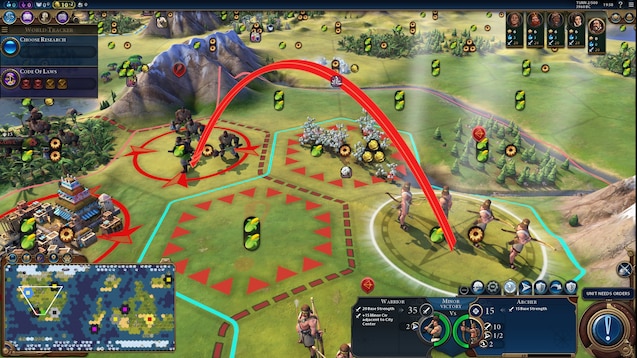
To understand why this matters, look at what “balanced” actually has to do. It is not a single slider. It is the relationship between challenge and skill, between counters and costs, between progress and spending. When that relationship breaks, players leave — or they stay for the wrong reasons.
Quick Answer: What Is Game Balancing AI?
Game Designer Assistant is a game balancing AI that reviews your systems, flags unfair spikes, and proposes concrete tuning changes you can ship. It works from the same inputs a lead designer uses: win conditions, unit stats, fail rates, and player goals.
Key capabilities:
- Difficulty-curve and dynamic difficulty recommendations matched to skill
- Combat, unit, and counter-system analysis for strategy and action games
- Economy, progression, and monetization fairness checks
- Genre-aware documentation for 4X, F2P, live-service, and tabletop-inspired designs
Why Game Difficulty Is So Hard to Get Right
Game balance is the craft of tuning rules, numbers, and presentation so challenge feels fair. Research in Frontiers in Computer Science describes it as time-consuming and complex because so many parameters are interconnected: change a cooldown, and you have also changed a map, an economy, and a dominant strategy.
That complexity has a business cost. Mobile gaming alone is a market Boston Consulting Group has projected at $200 billion worldwide, and in free-to-play the difficulty of each round is one of the few levers that touches engagement, retention, and revenue at once.
300,000+ players over 12 weeks — Columbia, Harvard, and Northwestern field experiment on dynamically adjusting puzzle difficulty
But getting players into a fair fight is frustratingly difficult:
- Parameters interact, so a “small” buff creates a new dominant strategy.
- Playtests are slow, expensive, and biased toward whoever shows up that week.
- Static difficulty dumps skilled players into boredom and new players into rage-quits.
- Monetization pressure tempts teams to spike difficulty in order to sell extras — a habit large-scale evidence now contradicts.
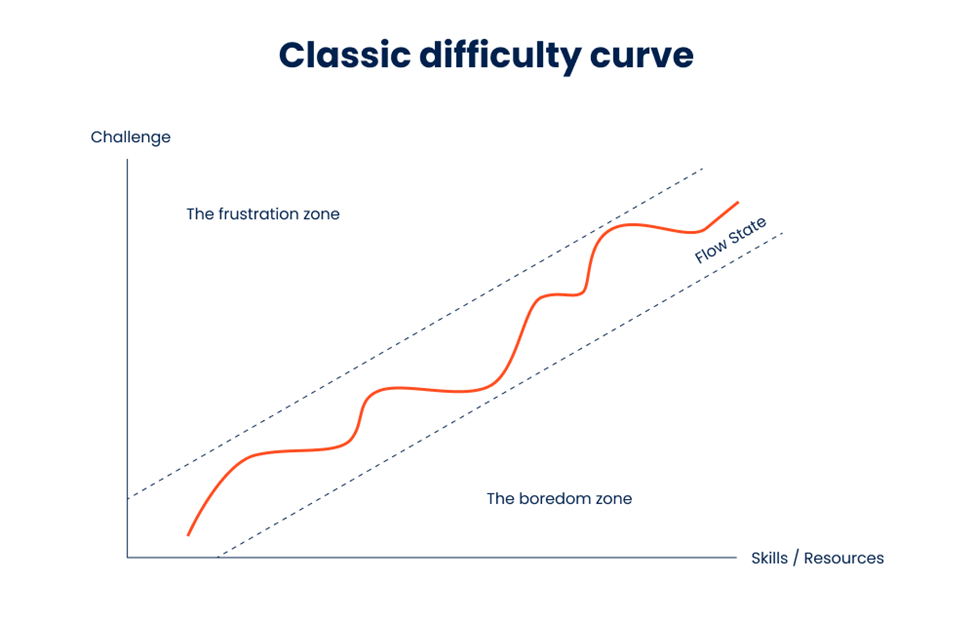
The diagram above is the model most designers already know: Csikszentmihalyi’s flow channel, sitting between a frustration zone (challenge exceeds skill) and a boredom zone (skill exceeds challenge). Frontiers researchers treat that tradeoff as common knowledge — and still found that assistance which made a task too easy reduced fun. Balance is not “make it easier.” It is “keep the curve inside the channel.”
Work on challenge and retention adds another constraint: challenge does influence whether people come back, but the effect depends on player segment and social context. A difficulty spike that feels epic to a clan of veterans can be a churn event for a solo newcomer.
This is exactly what Game Designer Assistant was built for.
Why Game Designer Assistant
Game Designer Assistant treats balancing as a design problem, not a spreadsheet ritual. You describe the genre, the fantasy, the failure modes, and the numbers you already have. It answers like a systems designer on your team: where the curve leaves flow, which unit invalidates the others, which sink is too weak, and what to change first.
You do not need to rebuild the game as a graph before you get a useful pass. You need a clear brief — and, when you have them, fail rates, combat logs, or economy tables.
| Traditional Approach | Game Designer Assistant |
|---|---|
| Weeks of playtests to find one overpowered unit | A structured combat pass from the roster and win conditions |
| Static easy/normal/hard that misses most players | Difficulty and DDA options aimed at the flow channel |
| Difficulty spikes used to force in-app purchases | Retention-first tuning informed by live-ops evidence |
| Balance notes trapped in Slack threads | GDD-ready documentation of assumptions, risks, and patches |
| Separate tools for economy sim, combat math, and writing | One design partner across systems, docs, and concept work |
Difficulty curves and dynamic adjustment
The job is to keep each session inside the flow band as skills and resources grow. That may mean a classic rising curve, a rubber-band for racing, or per-player dynamic difficulty adjustment driven by in-game signals.
Columbia’s puzzle-game experiment is the clearest recent warning against “make it brutal so they pay.” When at-risk players received easier boards, they played more — and spent more over time.
Up to 79% higher purchase revenue and 21% higher ad revenue — when difficulty was lowered for players at risk of churn, not raised to sell extras
Ask the AI for a curve that names the frustration and boredom risks at each beat, then for a DDA policy: who gets help, what changes (spawn rates, resource rolls, enemy HP), and what must never be trivialized.
"Here are fail rates by level for our match-3. Propose a DDA policy for at-risk players that protects flow without deleting challenge for spenders who like to push."
Combat, units, and counter systems
Strategy and action games live or die on rock-paper-scissors that still feels skillful. A catapult arc over a fortified hex is not just VFX — it is range, line of sight, setup cost, and whether infantry should have been in that tile at all.
Game Developer’s design writing makes the same point from the other direction: the way a game is balanced is a large part of how difficult it feels. Learning the meta can be welcome friction; discovering that one tool invalidates the rest is not.
This AI will flag dominant strategies, cheap counters, and snowball loops, then propose cost, cooldown, or positioning changes that preserve the fantasy of each unit.
"Review this 4X roster. Flag any unit that collapses the counter triangle and propose production-cost or movement changes that keep siege slow to set up."
Economy, progression, and fairness
AAAI-reported research treats game economies as graph structures and levels as content that can be searched, simulated, and generated. You do not have to stand up a reinforcement-learning pipeline to use that insight. You do have to ask whether sources, sinks, gates, and time-to-reward actually produce the pace you promised.
Columbia’s team found that easing early frustration did not just add playdays — it increased spending on access (gates, extra content) because players who were still moving wanted to keep moving. Frustration-monetization and progress-monetization are not the same design.
"Map our crafting sinks against daily energy. Where does the economy stall a mid-core player on day seven, and what drop-rate or cost change restores pace without inflating gold?"
Documentation a team can ship from
Balance dies in undocumented intuition. The same session can produce a change list, a risk register (“if we nerf X, Y becomes mandatory”), and patch copy. That is the difference between a clever observation and a build the combat designer can implement.
Tools such as Machinations’ AI Balancer are strong when your economy already lives as a diagram. This design partner is stronger when you still think in verbs, fantasies, and tables — and need language a producer, a combat designer, and a community manager can share.
Related Agents You'll Also Find Useful
If balancing is the bottleneck, adjacent work usually shows up within the same sprint: research, tabletop-style encounter feel, wargame logic, and incentive design.
Deep Research
If you are writing a GDD section on DDA, live-ops, or competitor metas, Deep Research pulls a wide source set and returns a cited brief you can hand to design.
- Synthesizes academic and industry sources with inline citations
- Useful for “what does the evidence actually say about difficulty and retention?”
- Turns a vague “we should look at DDA” into a scoped recommendation
Roleplay Game Master
Numbers can say an encounter is fair while the table says it is miserable. Roleplay Game Master lets you play the beat — boss telegraph, resource drought, social deduction — with consistent characters and long memory.
- Stress-tests pacing and fairness as played, not only as calculated
- Holds encounter rules stable across a long session
- Complements a systems pass with “how this actually feels”
Military & Defense Analyst
For 4X, tactics, and wargames, force composition is the balance problem. This analyst is trained on doctrine, force assessment, and wargaming — the same questions your counter-matrix is trying to answer.
- Force-on-force logic for unit roles, range, and logistics
- Helps you separate “cool model” from “invalidates the infantry line”
- Strong pairing when your combat screenshot looks like a hex war, not a brawler
Machiavelli Mentor
PvP and live-service incentives are political systems. Players will optimize the reward you actually pay, not the fantasy you wrote on slide three.
- Incentive decoding and multi-move campaign structure
- Useful for “does this ranked reset create camping or aggression?”
- Keeps pay, skill, and status from collapsing into one dominant path
Try Game Designer Assistant free — no credit card required.
How to Use Game Balancing AI Step by Step
Step 1: State the fantasy and the failure
Name the genre, the intended feeling, and the current complaint. “Players quit on level 40,” “cavalry makes spears irrelevant,” and “gold has nowhere to go after week two” are better openings than “please balance the game.”
"This is a premium tactics game. New players bounce after the third siege tutorial because setup time feels like punishment. Keep siege as a committed, high-impact option."
Step 2: Put the real numbers in the chat
Paste the roster, the economy table, fail rates, or a slice of the GDD. If you only have qualitative notes, say so — the pass will be more conservative, and it should be.
"Attached: unit spreadsheet, current costs, and last month’s pick rates. Treat anything above 35% pick in ranked as a suspect dominant strategy."
Step 3: Ask for one pass, not every system at once
Combat, difficulty, and economy couple together, but a useful patch changes one surface first. Request a difficulty curve, a counter-matrix, or a sink/source map — then a second pass that checks side effects.
"Do a combat-only pass. Do not touch monetization. List the three smallest number changes that restore the spear–cavalry–siege triangle."
Step 4: Simulate player types, not an average player
Have the AI walk the same content as a completionist, a weekday mobile session, a whale, and a newcomer. Columbia’s results were segment-specific; challenge-and-retention research says the same. An “average” difficulty does not exist.
"Replay the first 30 minutes as a commuter on a phone and as a weekend theorycrafter. Where does each leave the flow channel?"
Step 5: Freeze the decision as documentation
End with a change list, rationale, risks, and how you will know it worked (fail rate, time-to-clear, pick rate, day-7 retention). That document is what design, production, and QA share.
"Turn this into a one-page patch brief: changes, why, what could break, and the two metrics that confirm we are still in flow."
Results & Use Cases
📊 Independent 4X combat pass
Scenario: A small studio’s historical 4X has a siege unit that deletes infantry before they can close, especially on open hexes. Ranked play has collapsed into “rush catapults.”
Traditional Approach: A dozen playtests, a discord argument, and a 10% HP nerf that does not touch range or setup.
Game Designer Assistant: A counter-triangle pass that slows siege setup, keeps the fantasy of the long arc, and makes fortified tiles matter again.
- Names the dominant strategy in player language, not only DPS
- Proposes cost, movement, or minimum-range changes instead of a flat nerf
- Pairs cleanly with a Military & Defense Analyst force-assessment if you want doctrine-level critique of the roster
📱 Mobile F2P puzzle on the commute
Scenario: A match-3 with lives, extras, and gates. Level 67 is a known wall. Design wants the wall because it sells extra moves. Day-1 and day-7 retention are sliding.
Traditional Approach: Raise difficulty to convert frustration into receipts — the myopic loop Columbia’s field experiment was built to test.
This AI: A DDA brief for at-risk players (board generation, not a stealth power spike) plus a separate spender path that still feels like mastery.
- Uses the flow channel as the design constraint, not “make every level brutal”
- Distinguishes extras bought to escape pain from extras bought to continue a run
- Fits phone sessions: you can paste yesterday’s fail-rate CSV during a standup on iOS or Android
💼 Live-service economy after a patch
Scenario: A live RPG just doubled drop rates “to be generous.” Crafting sinks did not move. Gold inflation hits vendors in ten days. Community calls it both too grindy and too easy.
Traditional Approach: Another emergency patch from whoever is awake, with no source/sink map.
The design partner: A graph-style reading of sources, sinks, and time-to-reward — the same economy objects PCG-and-simulation research treats as first-class — plus a two-step rollback that does not yo-yo player trust.
- Separates “feels generous” from “is in equilibrium”
- Writes the patch note so the change sounds like intent, not panic
- Deep Research can sit beside it when you need cited precedent from other live games before you touch rates
🎯 Tabletop-inspired boss that plays badly
Scenario: A digital adaptation of a boss with three phases. Spreadsheet DPS is fair. Players say phase two is a chore and phase three is a coin flip.
Traditional Approach: More HP in phase two, less randomness in phase three, still a chore.
With a systems pass plus Roleplay Game Master: You rewrite telegraphs and resource timing, then play the encounter to hear where fairness and drama diverge.
- Catches “balanced but not good,” the gap empirical PCG-balance work keeps highlighting
- Keeps mechanical fairness while restoring a readable tell
- Produces GM-facing notes if you also ship a tabletop version
FAQ
What is game balancing AI?
Game balancing AI is software that helps designers tune difficulty, combat, and economies so challenge stays matched to skill. In practice that means reading your systems, locating where players leave flow, and proposing number or presentation changes. Game Designer Assistant does that as a design partner: you bring the GDD and the data, it returns a pass you can implement and document.
Is Game Designer Assistant free?
Yes. You can use it on the free plan with limited usage and no credit card. Paid plans raise monthly usage if you are running daily live-ops passes or long GDD workshops. Pricing is cumulative by tier, usage resets on the billing date, and core design features are available without a separate “balance module” SKU.
Can game balancing AI replace playtesting?
No — and it should not. AAAI work on automated balancing still starts from the fact that human playtesting is expensive, not optional. AI compresses the number of obviously broken states you waste testers on. You still need people for feel, accessibility, and the “too easy to be fun” failure Frontiers documented when assistance overshot.
How is this different from Machinations or a combat simulator?
Machinations shines when the economy is already a diagram and you want a solver on those variables. Spreadsheets shine when the model is closed and numeric. This AI shines when the problem is still a design conversation: fantasy, counters, DDA policy, and the write-up your team will ship. Many studios use both — simulate the loop, then ask a designer-shaped agent whether the loop is the game they meant to make.
Does Game Designer Assistant work on mobile?
Yes. Sessions work on web, iOS, and Android with the same project context, which matters when the live-ops channel pings you on a train with a fail-rate screenshot. Voice input is available when your hands are full; attach the CSV when you sit down. Mobile is also the environment many of your players are in, so commuting-length sessions are a legitimate test case, not a downgrade.
Can this AI balance multiplayer and live-service games?
Yes, with honest limits. It can draft counter-matrices, ranked incentive notes, drop-rate hypotheses, and DDA policies. It cannot see your unpublished telemetry unless you paste or describe it, and it will not replace a live experiment. For PvP especially, pair the systems pass with incentive scrutiny — Machiavelli Mentor is the usual follow-up when the question is “what will ranked players actually optimize?”
Keep Players in Flow, Not in the Patch Notes
Game balancing AI will not delete the hard part of design. Interconnected systems, sparse playtests, and the temptation to sell frustration are still there. What it deletes is the week you spend discovering that cavalry invalidated spears, or that level 67 was a churn machine dressed up as a monetization feature.
The evidence is not vague. Personalized difficulty can raise playdays and revenue together. Over-assistance can drain fun. Economies and levels are now treated as objects you can search and simulate. Your job is to stay in the flow channel — and to ship the smallest change that keeps players there.
Try Game Designer Assistant on your next combat pass, difficulty curve, or economy patch. Explore more at Jenova.
For Developers: Game Designer Assistant is available programmatically via the Jenova API — integrate systems analysis and game-balancing passes into your toolchain with a single API call. Full documentation →