Free AI for Tattoo Artists: Design Collaboration, Style Matching & Cultural Guidance at Zero Cost
2026-05-22
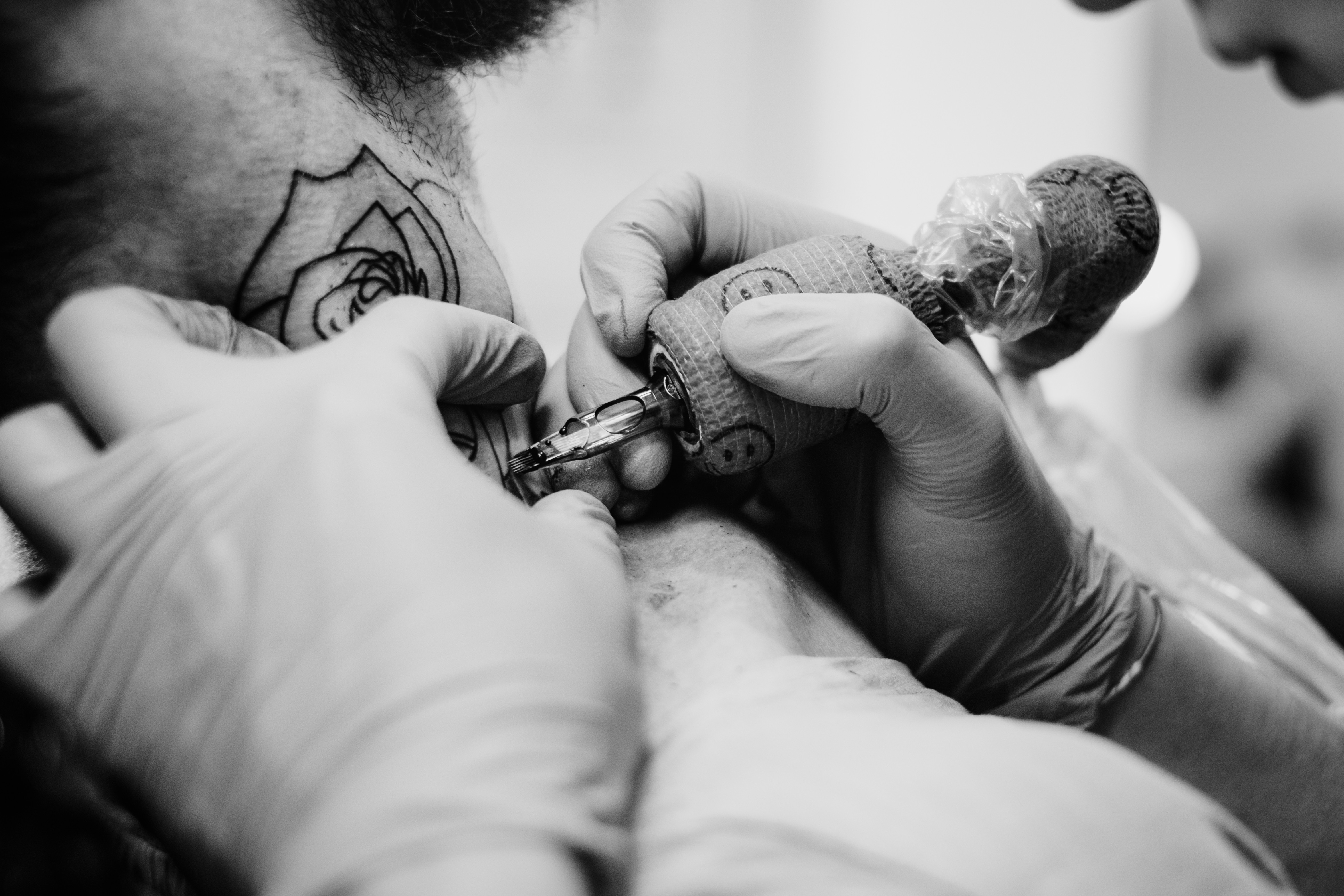
Getting a tattoo right requires two things most people don't have: clear articulation of what they want, and access to someone who understands every tradition well enough to guide them. AI Tattoo Artist is a free AI for tattoo artists and clients that provides veteran-level design collaboration, style discovery across 16+ traditions, culturally informed guidance, placement advice, aftercare protocols, and full business support for working professionals — all accessible from any device, at any hour, with no payment required. Over 52,000 users have already used it to prepare for tattoo sessions, with more than 18,000 first-timers arriving at consultations with a complete design brief — saving artists an average of 30+ minutes per appointment and dramatically reducing miscommunication.
✅ Free to start — no credit card, no subscription wall, no trial period ✅ Design collaboration across 16+ styles from Japanese irezumi to cybersigilism ✅ Cultural context for every tradition — Polynesian tatau, Sak Yant, batok, tā moko ✅ Placement guidance factoring pain, aging, body contours, and career visibility ✅ Professional tools: pricing frameworks, portfolio critique, client communication, shop strategy
But why is access to expert tattoo guidance such a persistent problem — even in a market that's growing at double-digit rates? The answer lies in the widening gap between the industry's explosive growth and the fragmented, expensive nature of expert consultation.
Quick Answer: What Is AI Tattoo Artist?
AI Tattoo Artist is a free AI-powered tattoo consultant that helps clients design, plan, and refine tattoos across every major style and cultural tradition — and provides professional-grade business and technical support for working artists.
Key capabilities:
- Guided style discovery and tattoo brief generation for clients at any experience level
- Visual design concept creation with iterative refinement
- Culturally informed guidance on sacred and ceremonial tattoo traditions
- Professional support: pricing strategy, portfolio critique, client communication frameworks, and shop operations
A $2.66 Billion Industry Where Expert Guidance Remains Scarce
The global tattoo market is valued at [**$2.66 billion in 2026**](https://www.fortunebusinessinsights.com/tattoo-market-104434), growing at a CAGR of 10.67% toward $5.99 billion by 2034. In the U.S. alone, the industry accounts for $1.3 billion across more than 23,774 businesses. Despite this scale, the experience of actually getting a tattoo — or running a tattoo business — remains riddled with friction:
- Clients can't translate feelings into design briefs — leading to wasted consultation time and misaligned expectations
- Style discovery is overwhelming — with 16+ major traditions and rapidly evolving substyles
- Cultural knowledge is treated superficially — sacred traditions reduced to Pinterest categories
- Professional consultations are expensive and time-gated — $100–$300+ per hour with days or weeks of booking lead time
- Working artists face burnout and business complexity far beyond the creative work itself
🎨 The Client's Articulation Problem
Most people arrive at a tattoo consultation with an emotion, not a plan. They know they want something meaningful, something that evokes a particular feeling — but converting that impulse into a concrete design brief with style direction, element specifics, size, and placement is genuinely difficult. The result is consultations that drag on, designs that miss the mark, and — in the worst case — permanent ink that doesn't match what the client envisioned.
Over 23,774 tattoo businesses compete for clients in the U.S. alone — but finding the right artist for your specific style is nearly impossible without understanding the visual language of different traditions. Source: IBISWorld
The challenge is compounded by the sheer variety of tattoo styles. Traditional, neo-traditional, Japanese, Polynesian, blackwork, dotwork, realism, watercolor, geometric, biomechanical, Chicano, trash polka, fine line, ignorant style, cybersigilism, micro-realism — each has distinct aesthetic principles, cultural context, and practical trade-offs around aging, pain, and placement. Without a framework for navigating this landscape, most clients default to scrolling Instagram for hours and arriving at their appointment with a folder of contradictory references.
🖋️ Artists Are Drowning in Non-Art Problems
The challenges facing working tattoo artists extend well beyond the chair. In a highly fragmented market where no single company holds more than 5% share, competition is intense — and getting more so. As Martin Moore, co-owner of Mavericks Tattoo Studio in Southampton, recently observed: "When I began tattooing, there were maybe five other tattoo studios in the larger area. Now, in the town center alone, there are 30 or 40 shops."
The practical challenges artists face daily include:
- Client expectations inflated by social media — Pinterest-perfect results expected on any budget, in a single session
- Physical burnout — hours of precision work in static postures causing chronic pain and shortened careers
- Constantly evolving styles and technology — from new machines and inks to emerging trends like fluid tattoos, microrealism, and cybersigilism that require continuous skill development
- Business complexity — pricing, portfolio presentation, client communication, booking systems, social media strategy, and local SEO optimization all demand expertise that has nothing to do with tattooing
- Regulatory variation — licensing, health codes, and certification requirements differ dramatically by jurisdiction
🌍 Cultural Traditions Deserve More Than an Aesthetic Label
Polynesian tatau, Māori tā moko, Thai Sak Yant, Filipino batok, Berber amazigh, Celtic knotwork — these aren't "styles" in the way fine line or watercolor are styles. They're living cultural practices with specific protocols, earned symbolism, and spiritual significance. Yet most accessible tattoo resources — including most AI tools — treat them as interchangeable aesthetic categories, stripping meaning and enabling casual appropriation.
Why a Free AI for Tattoo Guidance Changes Everything

AI Tattoo Artist eliminates the barriers between inspiration and execution for both clients and professionals. It functions as an encyclopedic tattoo consultant with deep knowledge across every major tradition — available 24/7, at no cost, with no booking wait.
| How It Usually Works | Using AI Tattoo Artist (Free) |
|---|---|
| Pay $100–$300+/hour for a professional consultation | Unlimited consultations at zero cost |
| Wait days or weeks to book a design session | Start collaborating on a design immediately |
| Limited to one artist's style knowledge | Specialist expertise across 16+ traditions and emerging trends |
| Cultural context often absent or superficial | Deep, nuanced education on sacred and ceremonial traditions |
| Business advice requires hiring a separate coach or mentor | Pricing, portfolio, marketing, and operations support built in |
| Aftercare is a generic printed handout | Personalized, stage-specific healing guidance |
🎯 For Clients: Turn a Vague Feeling Into a Clear Plan
This AI transforms the pre-tattoo experience:
- Style Discovery — Guided conversations that narrow your preferences across all major traditions, from classic American traditional to 2026's trending styles like microrealism, fluid tattoos, and nostalgic '90s/'00s motifs
- Tattoo Brief Builder — Produces a structured document you bring directly to your artist: style direction, placement, size, reference imagery, meaning, and elements to include or avoid
- Placement Advisor — Factors in pain levels, aging behavior, how designs interact with body contours and movement, and visibility for career and social contexts
- Cultural Education — Honest, detailed context about the significance of culturally rooted designs, including when seeking a traditional practitioner is more appropriate
💼 For Professionals: A Peer-Level Resource That Costs Nothing
Working artists and apprentices get support across every dimension of the craft — at no charge:
- Design Collaboration — Work through composition challenges, explore style adaptations, generate visual concepts for client presentations
- Portfolio Strategy — Structured feedback on technical execution, composition, and presentation — including the importance of showcasing healed tattoos and organizing work by category for easy browsing
- Business Intelligence — Pricing frameworks, deposit and cancellation policies, local SEO strategy, social media planning, and client retention tactics
- Technical Knowledge — Needle configurations, ink properties, machine tuning, skin type considerations, and healing science
How to Use It: Step-by-Step
Step 1: Describe What You're Looking For
Open AI Tattoo Artist and describe your situation in your own words. Whether you're a first-timer with a vague idea, a returning client exploring a new style, or a professional artist needing business advice — just say it naturally.
"I want a tattoo that honors my grandmother — she loved roses and was from Oaxaca. I'm thinking something on my forearm but I'm not sure about the style."
Step 2: Explore Styles and Cultural Context
The AI walks you through style options relevant to your concept, explaining the visual language, cultural roots, and practical trade-offs of each — aging behavior, pain considerations, how the style interacts with your chosen body area.
"Can you show me how this concept would work in a traditional Mexican folk art style versus a neo-traditional approach? And what about placement — inner forearm versus outer?"
Step 3: Generate Visual Design Concepts
Once your direction is established, AI Tattoo Artist generates tattoo design concepts as visual starting points — detailed enough to communicate direction to your chosen artist, while leaving room for their professional interpretation.
"I'd like to see a design concept with Oaxacan-style roses and a hummingbird, sized for a half-forearm piece."
Step 4: Refine and Build Your Tattoo Brief
Iterate through conversation. Adjust elements, try different compositions, explore color versus black-and-grey, and build a complete tattoo brief document you can bring to your consultation — or download as a PDF.
"I love the composition but want to add her birth year subtly in the design. Also, generate a tattoo brief I can take to my artist."
Step 5: Get Aftercare and Follow-Up Guidance
After your tattoo session, return for stage-specific aftercare advice tailored to your tattoo's style, size, placement, and your skin type. The global tattoo aftercare products market alone is valued at $214 million in 2026, reflecting how critical proper healing is to final results — and how much confusion surrounds it.
Real Scenarios: How People Are Using This Free AI
🎨 First-Timer Arrives Prepared — Artist Saves 45 Minutes
Scenario: A 24-year-old wants their first tattoo — "something nature-related, maybe on my arm" — but can't articulate anything more specific.
Traditional approach: Browse Instagram for three hours, save 40 contradictory references spanning five different styles, show up to a consultation unable to explain what they actually want. The artist spends 30–45 minutes trying to decode preferences before any design work begins.
Using AI Tattoo Artist: A guided conversation narrows "nature-related" to specific elements (botanical illustration vs. wildlife vs. landscape), style preferences (fine line vs. blackwork vs. watercolor), and placement considerations. Within 20 minutes, the client has a structured tattoo brief with style direction, size range, placement rationale, and visual references — ready to hand to any artist.
- Consultation time cut from 45+ minutes to under 15
- Artist receives a clear brief instead of a confused mood board
- Client arrives confident, reducing revision cycles and improving satisfaction
💼 Solo Artist Restructures Pricing After Opening a Private Studio
Scenario: A tattoo artist with four years of experience recently left a shared shop to open a private studio. Their old hourly rate was based on a 50/50 shop split — but now they're covering rent, supplies, insurance, and marketing alone and have no framework for recalculating.
Traditional approach: Ask peers on Instagram (who share conflicting advice based on different markets), guess at a number that "feels right," and hope clients don't push back.
AI Tattoo Artist: Provides a comprehensive pricing framework: overhead calculation (rent, utilities, supplies, insurance, marketing), target hourly earnings, complexity tiers, session minimums, deposit structures, and cancellation policies. Can generate downloadable pricing sheets and consultation intake forms. Also discusses strategies for communicating value to clients without competing on price — a critical skill in a market where lowering rates attracts difficult clients and erodes long-term sustainability.
- Structured, data-informed pricing vs. guesswork
- Templates ready for immediate implementation
- Peer-level business conversation without social dynamics or ego
🌏 Client Navigates a Culturally Sensitive Request — Respectfully
Scenario: A client wants a large-scale piece inspired by Polynesian tatau aesthetics but has no Pacific Island heritage. They're drawn to the visual power of the style but are unsure whether proceeding is appropriate.
Traditional approach: Online resources either dismiss the concern entirely or provide surface-level warnings that leave the client with no actionable understanding.
This AI-powered consultant: Explains the cultural significance of specific Polynesian traditions — the difference between Samoan pe'a, Māori tā moko, and Marquesan patterns. Discusses which elements carry earned, genealogical, or status-based meaning versus which geometric principles can be appreciated and adapted more broadly. Explains when seeking a traditional tufuga or tohunga tā moko is more appropriate than a Western tattoo artist. Empowers an informed decision rather than defaulting to either gatekeeping or dismissal.
- Nuanced cultural education, not a binary yes/no answer
- Helps both clients and artists navigate sensitive territory with integrity
- Contributes to preserving the distinction between appreciation and appropriation
📱 Working Artist Gets Instant Style Reference Between Appointments
Scenario: A professional artist receives a DM request for a "fluid tattoo" — one of 2026's fastest-emerging styles, inspired by water, smoke, and abstract brushstrokes. The artist has never executed one and has 90 minutes before their next client.
Traditional approach: Scroll Instagram for reference images, watch a few speed-lapse videos, and attempt to extrapolate technique from finished results — all on a phone between appointments.
AI Tattoo Artist: The artist asks about the fluid style's defining characteristics, needle configurations that work best for the flowing linework and soft gradients, how the style ages compared to traditional approaches, and composition strategies for the requested body placement. Within minutes, they have enough context to have a productive conversation with the client — and can generate visual concept sketches to explore compositional options.
- Targeted style education in minutes, not hours of research
- Technical specifics: needle groupings, ink dilution, gradient techniques
- Visual concepts as starting points for the artist's own interpretation
Frequently Asked Questions
Is this AI for tattoo artists actually free?
Yes. AI Tattoo Artist is available on a free tier — no credit card required, no trial period, no payment wall. Design collaboration, style discovery, cultural guidance, placement advice, and professional business support are all included within your free usage allocation. Paid plans offer significantly higher usage limits for users who need extended or frequent sessions.
Can AI Tattoo Artist create my final tattoo design?
It generates detailed visual design concepts as starting points and communication tools — not final tattoo-ready stencils. These concepts help you articulate your vision clearly and give your chosen artist a concrete foundation to work from. The human artist brings the design to life with their own skill, interpretation, and understanding of how ink behaves on skin.
How does it handle sacred and culturally significant tattoo traditions?
With depth and honesty. Rather than treating traditions like Polynesian tatau, Māori tā moko, or Thai Sak Yant as aesthetic categories, the tool provides detailed cultural context — spiritual significance, traditional protocols, earned symbolism, and whether seeking a traditional practitioner is more appropriate. The goal is informed decision-making, not gatekeeping or dismissal.
Is this useful for professional tattoo artists, not just clients?
Absolutely. Working artists and apprentices get peer-level support: portfolio critique with structured feedback, pricing strategy frameworks, client communication templates, technical knowledge (needle configurations, ink properties, machine tuning), local SEO and marketing strategy, and business operations advice. The AI adapts its technical depth based on whether you're a first-time client or a 10-year professional.
What tattoo styles does it cover?
All major traditions and contemporary movements: Traditional, Neo-Traditional, Japanese (Irezumi), Polynesian (Tatau), Sak Yant, Blackwork, Dotwork, Realism, Watercolor, Geometric, Tribal (Borneo, Filipino batok, Berber, Celtic), Chicano, Biomechanical, Trash Polka, Fine Line, Minimalist, Ignorant Style, Lettering, and emerging 2026 trends including microrealism, fluid tattoos, nostalgic themes, and ornamental designs.
Does AI Tattoo Artist work on my phone?
Yes — full feature parity across web, iOS, and Android, including photo uploads and voice input. Many artists use it between appointments on their phone, and clients frequently access it while browsing reference imagery on mobile.
Conclusion
The tattoo industry is growing toward $5.99 billion globally by 2034, yet the experience of preparing for a tattoo — or running a tattoo business — remains unnecessarily difficult. Clients struggle to translate inspiration into actionable plans. Artists juggle creative, technical, and business demands with limited support and intensifying competition from an ever-growing number of studios. Cultural traditions deserve informed respect, not surface-level treatment.
A free AI for tattoo artists and clients solves all three problems. AI Tattoo Artist puts encyclopedic style knowledge, culturally informed guidance, design collaboration, and professional business intelligence into a single conversation — accessible to anyone, at any time, at zero cost. Whether you're a first-timer trying to articulate a vague idea, a professional restructuring your pricing after going independent, or an artist exploring an unfamiliar style for the first time — get started with AI Tattoo Artist and bring your next tattoo from inspiration to reality with the confidence of a 30-year veteran.
If you're looking for deeper design collaboration — including style exploration, placement mapping, and cultural guidance for a specific tattoo project — our Tattoo Artist agent is built for exactly that kind of iterative creative work.