Free AI for RFP Generation: Build Professional Solicitations Without Expensive Consultants
2026-04-01
Looking for a free AI for RFP generation that delivers the strategic depth of a senior contracting officer? AI RFP Generator enables procurement teams to produce evaluation-ready Requests for Proposals — from structured requirements development to scored evaluation frameworks to submission-ready documents — without paying thousands in consulting fees. Over 24,000 procurement professionals have already used this AI-powered tool to draft, review, and finalize solicitations across government, enterprise, healthcare, and construction sectors.
✅ Free tier available — start creating RFPs immediately with no credit card required ✅ Evaluation framework design with weighted scoring rubrics included at every tier ✅ Compliance matrices and protest-proofing built into the drafting workflow ✅ PDF, Word, and CSV exports for requirements inventories and evaluation rubrics
With procurement budgets tightening and solicitation volumes climbing, teams can no longer justify spending weeks — or tens of thousands of dollars — on a single RFP. Here's how free AI for RFP generation is closing that gap.
Quick Answer: What Is AI RFP Generator?
AI RFP Generator is a free AI-powered procurement strategist that walks you through building professional, defensible RFPs from initial needs discovery through final document export.
It works across any industry, jurisdiction, and procurement framework — U.S. federal FAR/DFARS, EU procurement directives, state and local regulations, and private-sector acquisitions worldwide.
Key capabilities:
- Converts loosely defined business needs into structured, evaluable requirements
- Recommends and designs scoring methodologies (LPTA, best value, QBS) with weighted criteria
- Generates compliance matrices and requirements inventories as downloadable CSV files
- Produces complete RFP documents as PDF or Word files ready for distribution
Why Procurement Teams Need Free AI for RFP Creation in 2026
The economics of procurement have shifted dramatically. According to The Hackett Group's 2026 Procurement Key Issues report, procurement workloads are rising 8% in 2026 while headcount and operating budgets are declining. Meanwhile, Supply Chain 24/7 reports that staffing levels continue to shrink even as solicitation complexity grows.
This creates a fundamental problem for RFP creation: the process demands significant expertise, but teams have fewer people and less budget to produce each solicitation.
Here's where the pressure concentrates:
- Consulting costs are prohibitive for most teams — external procurement consultants charge $200–$500/hour, making a single complex RFP a $15,000–$40,000 engagement
- Internal expertise is spread thin — senior contracting officers juggle multiple solicitations simultaneously, diluting quality
- Evaluation frameworks get shortchanged — teams rush past the most consequential design decisions under deadline pressure
- Compliance gaps create protest risk — without systematic review, solicitations contain vulnerabilities that vendors exploit
- Smaller organizations are shut out entirely — municipalities, nonprofits, and mid-market companies lack access to procurement strategy resources
The RFP Knowledge Gap Is Widening
According to Deloitte's 2025 Global CPO Survey, cited by Art of Procurement, RFP/RFQ generation ranks as the second most common use case for generative AI in procurement at 42.33%, trailing only spend analytics. This signals that procurement leaders recognize solicitation creation as a prime candidate for AI augmentation.
Yet the EFESO Management Consultants' 2026 CPO Annual Pulse Report reveals that while 93% of executives have used generative AI at least once, only 5% of organizations have achieved widespread adoption. The gap between awareness and implementation remains enormous — particularly for smaller teams without dedicated AI budgets.
55% of organizations now use generative AI for automating requests for proposals, making it one of the three most common procurement AI use cases in 2026.
Stakeholder Coordination Remains the Hidden Bottleneck
The technical challenge of writing an RFP is only part of the problem. As GEP's 2026 analysis of stakeholder RFP management emphasizes, most RFP delays stem from "unclear decision rights and late input" — not from supplier complexity or sourcing difficulty.
When finance, legal, IT, and operations each contribute competing requirements without a structured prioritization process, the resulting solicitation becomes overloaded and vendors struggle to respond clearly. A free AI for RFP generation that structures this intake process can eliminate weeks of back-and-forth before a single word of the RFP is drafted.
How Free AI for RFP Generation Compares to Traditional Methods
AI RFP Generator addresses the cost and expertise barriers that prevent most teams from producing professional-grade solicitations.
| Traditional RFP Approach | Free AI for RFP Generation |
|---|---|
| $15,000–$40,000 per engagement with external consultants | Free tier available; paid plans from $20/month |
| 4–6 week drafting cycles with multiple revision rounds | Structured, phase-by-phase drafting in a single session |
| Evaluation criteria treated as an afterthought | Dedicated evaluation framework design with scoring rubrics |
| Stakeholder input gathered via scattered emails | Structured intake that surfaces conflicts and forces prioritization |
| Generic templates that ignore industry context | Industry-specific research and regulatory adaptation |
| No protest-proofing until legal reviews the final draft | Fairness and defensibility checks at every stage |
| Requires senior contracting officer availability | Available 24/7 with the depth of an experienced procurement strategist |
Adapts to Your Regulatory Environment
Whether you're issuing a solicitation under FAR/DFARS regulations, EU procurement directives, state-level requirements, or private-sector purchasing policies, this AI-powered solution researches the specific conventions, legal requirements, and evaluation norms of your jurisdiction before generating any content.
When it encounters an unfamiliar procurement context — a specific municipal code, a foreign government's tendering rules, or a niche industry's standard contract vehicles — it conducts targeted research rather than applying generic templates.
Designs Evaluation Frameworks That Withstand Scrutiny
The evaluation framework is the most consequential decision in any RFP, and it's the component most often rushed or poorly designed. Ambiguous scoring rubrics produce inconsistent evaluator results. Poorly weighted criteria generate proposals that don't align with organizational priorities. Both create vulnerability to procurement protests.
AI RFP Generator's capabilities include dedicated evaluation framework design — recommending the appropriate methodology (LPTA, best value trade-off, qualifications-based selection), designing weighted factors and subfactors, building scoring rubrics with clear rating definitions, and reviewing every element for evaluator usability and protest vulnerability.
How It Works: From Business Need to Submission-Ready Document
The process follows five structured phases. You can work through them in sequence or jump directly to the phase where you need the most help.
Step 1: Define Your Procurement Need
Describe the business problem, operational gap, or capability your organization needs to acquire. You can upload existing requirements documents, paste stakeholder input, or simply explain the opportunity conversationally.
"We're a county government that needs to replace our aging permitting software. Budget is approximately $500K over 5 years. We need cloud hosting, integration with our GIS system, and public-facing portal access."
The AI asks targeted clarifying questions about scope, budget, timeline, stakeholders, current systems, and constraints — then recommends the appropriate solicitation type and contract vehicle.
Step 2: Develop Structured Requirements
AI RFP Generator translates your business needs into evaluable requirements. Each requirement is classified as mandatory (shall/must) or desirable (should/may), with clear pass/fail gates distinguished from scored criteria.
The AI calibrates specificity — precise enough for evaluators to determine compliance, flexible enough to allow innovative solutions — and flags conflicts between competing stakeholder priorities so you can resolve them before vendors see the document.
Output: A requirements inventory exportable as CSV, tracking each requirement's classification, section mapping, and evaluation linkage.
Step 3: Design the Evaluation Framework
This phase is where the tool delivers its highest strategic value. Based on your procurement context, the AI recommends a scoring methodology with clear rationale, then designs:
- Evaluation factors and subfactors with relative importance weighting
- Scoring rubrics with defined rating levels and descriptions
- Past performance evaluation approach
- Price evaluation methodology
- Oral presentation or demonstration scenarios (when applicable)
Every element is reviewed for protest vulnerability and practical evaluator usability.
Step 4: Draft the Complete RFP
Section-by-section drafting of the full solicitation document, including:
- Statement of Work / Performance Work Statement with task descriptions, deliverables, and performance standards
- Instructions to offerors structured for efficient, comparable evaluation
- Evaluation criteria that communicate methodology without revealing details vendors could exploit
- Terms and conditions appropriate to contract type and risk profile
- Attachments — pricing templates, past performance questionnaires, key personnel forms
Step 5: Review, Protest-Proof, and Export
The AI conducts a comprehensive final review covering:
- Completeness — every requirement has evaluation coverage, every criterion maps to requirements
- Fairness — no language inadvertently favoring any vendor, including incumbents
- Protest-proofing — evaluation methodology, scoring rubrics, and requirements reviewed for defensibility
- Bidder readability — every element assessed through the proposal team's perspective
- Q&A preparation — anticipated vendor questions with recommended responses
Final output: PDF, Word document, or both — plus supporting artifacts as CSV exports.
Real-World Use Cases and Results
📊 Municipal Government: First-Time RFP for Technology Procurement
Scenario: A small-city IT director needs to issue a formal RFP for a new enterprise resource planning (ERP) system — the municipality's first technology RFP in over a decade.
Without AI: The city hires an outside consultant at $350/hour, spending $18,000 over six weeks. The consultant produces a document the IT director struggles to evaluate against because the scoring methodology wasn't designed collaboratively.
With AI RFP Generator: The IT director describes the city's current pain points and desired capabilities. The AI guides them through needs discovery, explains each procurement concept in plain language, builds performance-based requirements rather than prescriptive specifications, and designs a weighted evaluation framework reflecting the city's actual priorities. Total cost on the free tier: $0. The city receives a professional solicitation on par with what a procurement consultancy would produce.
- Requirements structured for fair, apples-to-apples comparison
- Evaluation rubrics designed for consistent scoring across a committee of non-procurement evaluators
- Complete document exported as Word for city council review
💼 Enterprise Procurement: Multi-Vendor SaaS Evaluation
Scenario: A mid-market company's procurement team manages 40+ active solicitations per quarter with a three-person team. They need to issue an RFP for a customer data platform but can't dedicate the usual two-week drafting cycle.
With AI RFP Generator: The team uses the AI to structure requirements from stakeholder input collected via a 30-minute kickoff meeting. The AI identifies three conflicting requirements between marketing and IT, surfaces them for resolution, and designs a best-value evaluation framework with technical capability, integration architecture, data security, and total cost of ownership as weighted factors. The team produces a submission-ready RFP in a single afternoon.
📱 Healthcare Procurement: HIPAA-Compliant System Acquisition
Scenario: A hospital network procurement director needs to issue an RFP for a clinical documentation system while traveling between facilities.
With the tool: The conversational interface works seamlessly on mobile. The director verbally describes clinical system requirements, the AI captures and structures them into evaluable specifications, and flags HIPAA compliance sections requiring clinical SME input. The director reviews progress on the go, with the AI tracking requirements status, evaluation framework completion, and section assignments.
🏗️ Construction: Design-Build Solicitation
Scenario: A county government issues a design-build RFP for a new public safety training facility under a tight legislative deadline.
With AI RFP Generator: The AI researches qualifications-based selection requirements for the jurisdiction, recommends a two-phase process (Statement of Qualifications followed by detailed proposals from shortlisted firms), designs evaluation criteria around relevant experience, team qualifications, design approach, and price, and ensures compliance with prevailing wage and bonding requirements specific to the county.
Frequently Asked Questions
Is AI RFP Generator really free to use?
Yes. AI RFP Generator is available on Jenova with a free tier that provides access to all core capabilities — needs discovery, requirements development, evaluation framework design, RFP drafting, and review. Paid plans starting at $20/month provide significantly more usage, custom model selection, and document generation without watermarks.
How does free AI for RFP generation compare to paid procurement software?
Dedicated procurement platforms (Jaggaer, SAP Ariba, GEP) cost $50,000–$500,000+ annually and focus on the full source-to-pay lifecycle. AI RFP Generator is purpose-built for solicitation creation — the strategic design phase that determines vendor response quality and evaluation defensibility. It complements existing procurement systems rather than replacing them.
Can it handle solicitations outside the United States?
Yes. The AI adapts to procurement laws, frameworks, and conventions of any country or region — including EU procurement directives, WTO GPA requirements, UK public procurement regulations, and country-specific tendering rules. When it encounters an unfamiliar jurisdiction, it researches the specific procurement conventions before advising.
Does it generate actual downloadable documents?
Yes. After completing the drafting and review phases, the AI generates your complete RFP as a PDF or Word document. It also exports supporting artifacts — requirements inventories, evaluation rubrics, compliance matrices, and section assignment trackers — as CSV files.
What types of solicitations can it create beyond RFPs?
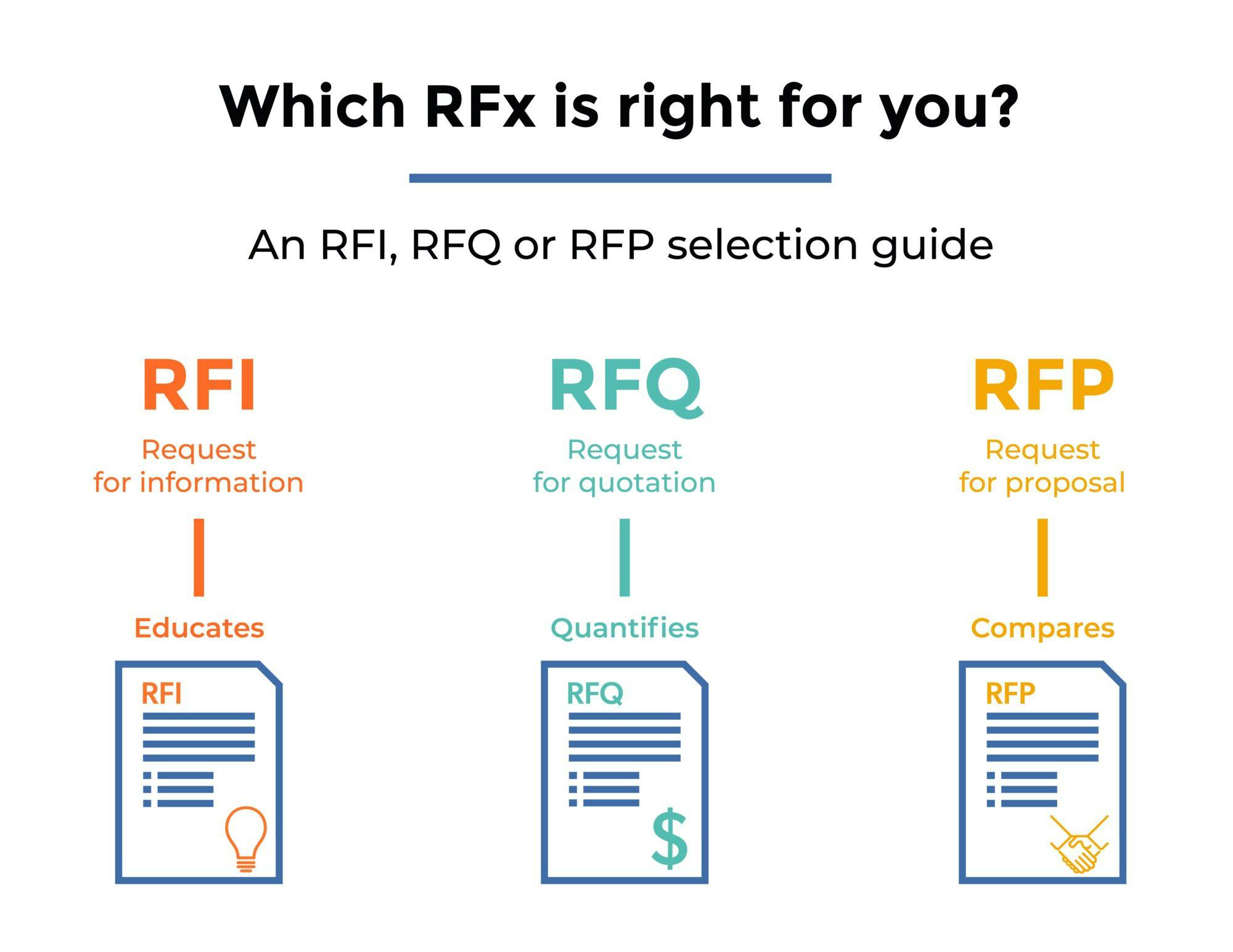
While optimized for RFPs, the AI also handles RFQs (Requests for Quotation), RFIs (Requests for Information), sole-source justifications, and Statements of Qualifications (SOQs). It recommends the appropriate solicitation type based on your procurement context and objectives.
Is my procurement data secure?
Your conversations and data on Jenova are never used to train public AI models. The AI treats all procurement intelligence — including budget ceilings, evaluation strategies, source selection plans, and competitive analysis — as confidential.
Stop Paying Consultant Rates for Solicitation Strategy
The traditional model of RFP creation — weeks of manual drafting, expensive external consultants, disconnected stakeholder input, and evaluation frameworks designed as afterthoughts — doesn't scale in an environment where procurement workloads are rising 8% while budgets and headcount decline.
Free AI for RFP generation changes the equation. AI RFP Generator delivers the strategic depth of an experienced contracting officer to every solicitation you create — adapting to your industry, your regulatory environment, and your team's experience level. From needs discovery through final document export, it ensures every requirement is evaluable, every criterion is defensible, and every section is written with both the buyer's objectives and the bidder's perspective in mind.
Get started with AI RFP Generator for free and produce your next solicitation on a foundation of strategic precision — without the consulting invoice.