Free AI for Microdrama Screenwriting: Master Vertical Storytelling Without Premium Costs
2026-02-22

Looking for a free AI for microdrama screenwriting? Microdrama Screenwriter AI delivers professional-grade vertical drama development without the premium price tag that has historically gatekept this exploding format. Instead of paying expensive consultants or struggling through trial and error, you can access the structural frameworks, cliffhanger engineering, and paywall-aware architecture that platforms like ReelShort and DramaBox demand—all while focusing on what matters most: your story.
Why over 47,000 writers have chosen this free approach:
- ✅ Mastery of microdrama-specific frameworks (3-7-21 rule, 3-15-30 structure, paywall-aware blocking)
- ✅ Episode-by-episode development from concept through complete 60-100 episode season drafts
- ✅ Cliffhanger engineering that maximizes viewer retention and monetization
- ✅ Vertical-frame visual storytelling optimized for mobile-first consumption
- ✅ No credit card required to start writing
The microdrama industry has exploded beyond all expectations. According to Sensor Tower's February 2026 report, short drama apps generated $2.98 billion in in-app revenue in 2025—a 115% year-over-year increase. Mobile users spent 5.78 billion more hours on short drama apps compared to the previous year. Yet most writers still struggle to crack the format's unique demands. Free AI tools like Microdrama Screenwriter are democratizing access to professional vertical storytelling techniques that previously required expensive development consultants or years of trial and error.
Quick Answer: What Is Microdrama Screenwriter AI?
Microdrama Screenwriter AI is a free specialized development partner that guides writers through creating vertical short-form drama series for platforms like ReelShort, DramaBox, GoodShort, and FlexTV.
Unlike generic writing assistants, this free AI understands microdrama-specific structural frameworks, dialogue compression techniques, and paywall-aware story architecture—the elements that separate viral hits from forgettable content.
Key capabilities:
- Complete season development from concept through 60-100 episode drafts
- Cliffhanger chain management ensuring continuity across episodes
- Visual storytelling guidance for vertical 9:16 mobile framing
- Character development using the "fairy tale approach" for instant recognition
- Paywall placement strategy to maximize viewer conversion
The 2026 Microdrama Explosion: Why Writers Need Specialized Tools
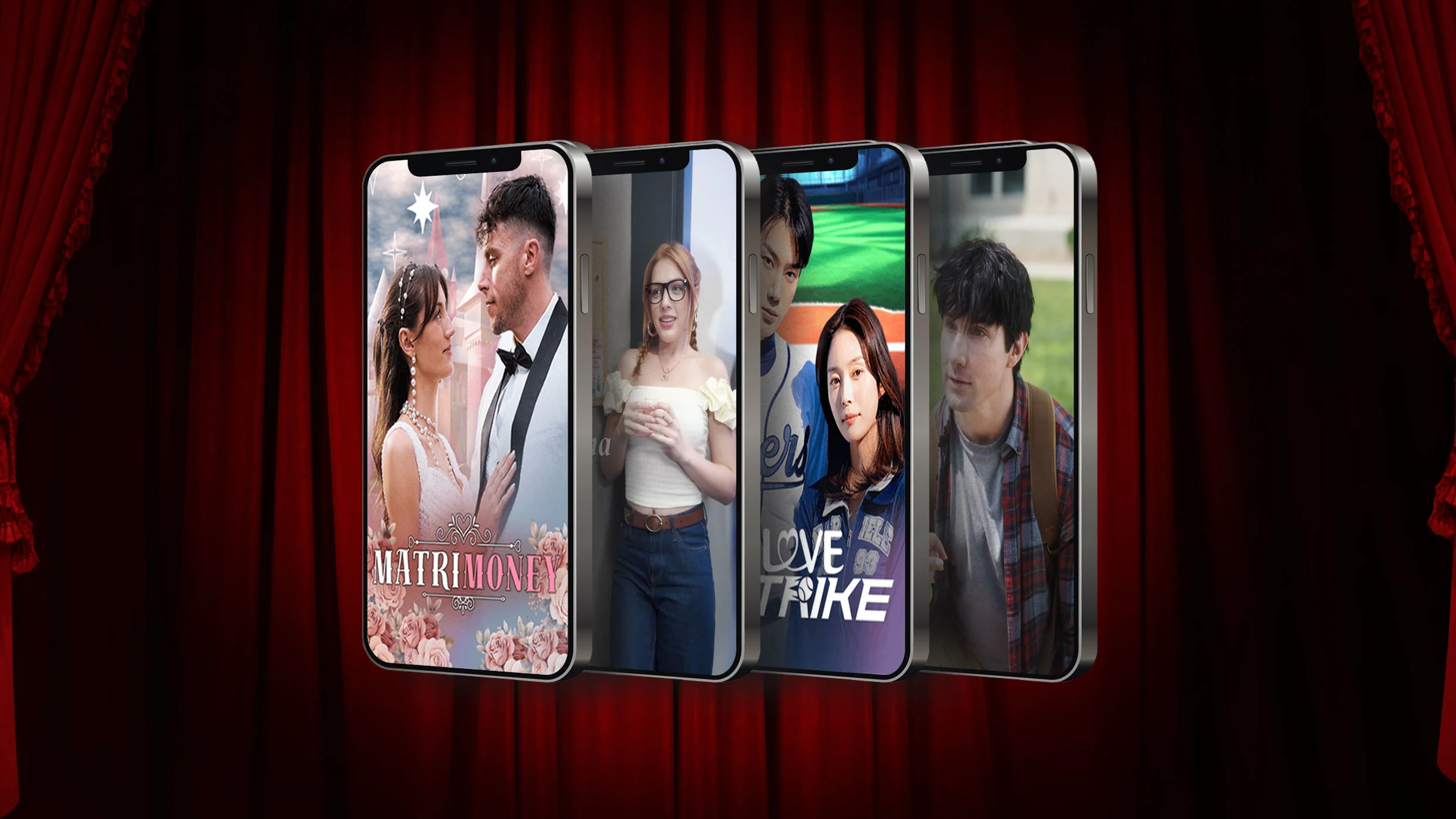
The microdrama market has transformed from niche experiment to global entertainment phenomenon in just four years. According to The Guardian's February 2026 analysis, revenues in the sector are up 8,000% year-on-year.
📊 The Numbers Are Staggering
| Metric | 2025 Performance | Source |
|---|---|---|
| Global microdrama revenue | $11 billion | Omdia |
| Short drama app downloads | 2.3 billion | Hollywood Reporter |
| ReelShort gross consumer spending | $1.2 billion (+119% YoY) | TechCrunch |
| DramaBox gross consumer spending | $276 million (+100% YoY) | TechCrunch |
| 2026 projected in-app revenue | $7.8 billion | Deloitte TMT Predictions |
According to Deloitte's TMT Predictions 2026, "In 2026, Deloitte predicts that the revenue growth of in-app micro-series will more than double, reaching US$7.8 billion."
🎬 Hollywood Is Betting Big
The industry has moved far beyond its Chinese origins. According to The Guardian:
"Every single Hollywood studio you can think of is involved or trialling. For actors in America, 90% of the jobs on [major casting platform] Actor's Access are verticals."
Major investments include:
- Fox Entertainment: Committed to producing at least 200 vertical series over two years through Holywater
- GammaTime: Former Miramax CEO Bill Block raised $14 million from Kim Kardashian, Kris Jenner, and Alexis Ohanian
- MicroCo: Former WME, ABC, Showtime, and NBCUniversal executives launching a new platform
- TikTok: Launched standalone microdrama app PineDrama
Why Traditional Screenwriting Fails—And Why Free AI Tools Matter
The microdrama format demands a completely different craft than traditional screenwriting. According to Variety's comprehensive analysis, "Writing verticals is a crash course in identifying what is unnecessary and deleting it."
🎯 The Compression Challenge
Traditional "show, don't tell" principles break down when you have 90 seconds to hook, escalate, and cliffhang. As one industry veteran explained: "Plotlines feel rushed, emotions feel hollow, and characters vanish before they begin to matter" when writers apply traditional techniques.
⏱️ The 3-Second Hook Imperative
According to industry analysis, viewers decide inside fifteen seconds whether to swipe away. Chinese showrunners call the opening "爆点"—the detonation. Many studios drop the most cinematic beat of the entire season into the first 15 seconds as a built-in trailer.
🔗 Cliffhanger Engineering at Scale
A traditional TV episode might have 4-5 act breaks. A microdrama season of 80 episodes requires 80 consecutive cliffhangers, each compelling enough to trigger an in-app purchase or ad view. Most writers have never structured stories with this density of hooks.
💵 Paywall-Aware Architecture
Unlike subscription streaming where viewers have already paid, microdramas monetize through episodic unlocks. This means story structure must align with paywall tiers—major revelations landing after payment thresholds, not before. Traditional three-act structure doesn't account for this commercial reality.
What Free Alternatives Typically Lack
Most free screenwriting resources come with significant limitations:
- Generic AI chatbots: No understanding of microdrama-specific frameworks like 3-7-21 or paywall-aware structure
- Traditional screenwriting software: Designed for features and TV, not 60-90 second episodes
- Writing groups: Inconsistent availability, varied expertise in vertical formats
- Online tutorials: Theory without practical application or development partnership
Microdrama Screenwriter AI addresses these gaps by providing structural frameworks, cliffhanger engineering, and paywall-aware architecture—the elements that separate viral hits from forgettable content—without requiring payment.
How Free AI Solves These Problems
Microdrama Screenwriter AI addresses every major barrier to microdrama writing through specialized guidance built specifically for vertical short-form storytelling.
| Traditional Approach | Free AI Microdrama Screenwriter |
|---|---|
| Generic story structure advice | Microdrama-specific frameworks (3-7-21, 3-15-30) |
| No understanding of paywall dynamics | Paywall-aligned story architecture |
| Standard dialogue techniques | Compression-first dialogue craft |
| Horizontal frame composition | Vertical 9:16 visual storytelling |
| Single cliffhanger per act | 80+ cliffhanger chain management |
🎯 Structural Framework Mastery
The AI provides deep knowledge of microdrama-specific frameworks that most writers have never encountered:
The 3-7-21 Rule:
- 3 seconds: Hook viewer with visual or emotional detonation
- 7 seconds: Anchor theme and establish stakes
- 21 seconds: Create addiction through escalating tension
The 3-15-30 Framework:
- First 3 seconds: A hook that grabs attention—mysterious dialogue, shocked expression, visually intriguing scene
- Next 15 seconds: A mini-climax that expands plot, reveals information, or adds mystery
- Final 30 seconds: A cliffhanger or open-ended question compelling immediate continuation
💰 Paywall-Aligned Story Architecture
This free tool helps you structure 60-100 episode seasons around commercial realities:
- Block 1 (Episodes 1-10): Free tier—hook viewers, establish world and stakes
- Block 2 (Episodes 11-30): First paywall—major complications, relationship escalation
- Block 3 (Episodes 31-50): Mid-season—reversals, betrayals, subplot convergence
- Block 4 (Episodes 51-70): Acceleration—secrets revealed, alliances shift
- Block 5 (Episodes 71-100): Climax and resolution—all threads converge
The critical insight: major revelations land 1-2 episodes after paywall thresholds. Cliffhangers at thresholds pose questions—they don't answer them.
📱 Visual Storytelling for Vertical Frames
The 20-60-20 composition rule guides every scene:
- Top 20%: Symbolic elements, environmental hints
- Middle 60%: Emotional core—faces, hand movements, eye gestures
- Bottom 20%: Hidden clues, supporting details
The AI helps you write for close-ups (60-80% of shots), write for silence (many viewers watch muted), and change angles every 3 seconds to support rapid cutting.
Step-by-Step: Writing Your First Microdrama Free
Getting started with Microdrama Screenwriter AI takes minutes, not hours of setup or payment processing.
Step 1: Concept Development
Start by refining your premise with the AI. You'll lock genre, tone, platform target, and the 5-6 storylines that will thread across your season. The AI helps you craft a logline that captures the melodramatic hook platforms demand—think "billionaire CEO vs. underdog secretary" or "secret heir vs. usurper."
Example prompt:
"I want to write a revenge drama about a woman who discovers her husband has a secret family."
The AI helps you explore storyline possibilities: (A) Primary revenge arc, (B) Secret family dynamics, (C) Workplace power struggle, (D) Unexpected ally/romance, (E) Hidden past revelation.
Step 2: Episode Tracker Development
The tool helps you build a comprehensive episode tracker mapping hooks, core events, and cliffhangers across your entire season. This isn't optional—a weak episode tracker creates a weak season.
The AI generates and maintains tracking for:
- Episode number and block placement
- 3-second hook description
- Core event for each episode
- Cliffhanger ending
- Active storylines
- Status (Outline/Draft/Revised/Locked)
Step 3: Character Development
Microdrama characters follow the "fairy tale approach"—compelling instantly, not gradually revealed. The AI helps you create characters with:
- Binary conflict in four words: "Rich bully vs. underdog"
- Visual tell anchoring: Every character has a signature visual—ring, scar, gesture
- One dominant emotion: Each character operates from a single emotional register
- Primal goals: Survival, love, status, revenge—visceral, instantly understood
Step 4: Episode Writing
When you're ready to write, Microdrama Screenwriter AI delivers complete, polished pages in proper screenplay format:
=== EPISODE 1: THE SLAP ===

FADE IN:

INT. CHEN CORPORATION - LOBBY - DAY

Glass and chrome. The kind of lobby that whispers money.

MEI (25), worn jade bracelet on her wrist, cheap blazer that
doesn't quite fit, walks toward the elevator. She doesn't
belong here. She knows it. Everyone knows it.

VICTORIA (35), red lipstick perfect, designer everything,
steps into her path.

VICTORIA
You must be the new intern.

MEI
Assistant. To Mr. Chen.

VICTORIA
(smiling, not kindly)
Same thing.

Victoria's hand moves fast. The SLAP echoes across the marble.

MEI
(touching her cheek, quiet)
That's the last time you touch me.

ANGLE ON: A BLACK SEDAN outside the glass doors. A MAN watches
from inside. We can't see his face.

MEI (V.O.)
I didn't know it then. But he'd been watching me for years.

SMASH CUT TO BLACK.
Step 5: Revision and Cliffhanger Optimization
The AI diagnoses pacing problems and strengthens weak cliffhangers. When something isn't working, it explains why:
"Your episode 10 cliffhanger is a reveal, not a question. Reveals satisfy—questions compel. Move the reveal to episode 11 and end episode 10 on the moment just before."
Real Results: Over 47,000 Writers Have Completed Seasons
Since launching, Microdrama Screenwriter AI has helped over 47,000 writers develop microdrama seasons with professional-quality structure and cliffhanger engineering. Users report breakthrough moments that traditional methods never provided:
📊 Adapting Web Novels for Vertical Format
Scenario: You have rights to a popular romance web novel and need to adapt it for ReelShort.
Traditional Approach: Months of development trying to condense 200 chapters into a coherent screenplay, with no guidance on paywall placement.
With Microdrama Screenwriter AI: The tool helps you identify which novel beats translate to visual hooks, restructure the story around paywall tiers, and compress dialogue while preserving emotional beats. A 200-chapter novel becomes an 80-episode season with cliffhanger chains that maximize reader-to-viewer conversion—at no cost.
💼 Breaking Into Microdrama Writing
Scenario: You're an experienced TV writer whose traditional credits aren't getting you hired in the microdrama boom.
Traditional Approach: Trial and error, potentially burning relationships with platforms by delivering scripts that don't understand format conventions.
With this free tool: Learn the 3-7-21 rule, paywall-aware structure, and vertical visual thinking before your first pitch. Develop a spec season that demonstrates format mastery, not just general writing ability.
📱 Mobile-First Development Workflow
Scenario: You're developing a microdrama while traveling, with only your phone for writing sessions.
Traditional Approach: Lose continuity between sessions, forget cliffhanger chains, struggle to maintain character consistency.
With Microdrama Screenwriter AI: The persistent state tracking maintains your project identity, current development phase, active storylines, and cliffhanger chain across sessions. Pick up exactly where you left off, with full context of your 5-6 storylines and their current states. Full feature parity across web, iOS, and Android means development happens wherever inspiration strikes.
🎯 Standing Out in a Crowded Market
Scenario: You want to create elevated microdramas that stand out from formulaic content.
According to The Guardian, the best verticals are those that "know and trust their audience"—lightweight but extremely well made. New platforms like GammaTime are pitching themselves as "the Netflix of premium short-form storytelling."
With the free AI: Develop character-driven stories that build dramatic tension through development rather than relying solely on shock value—while still mastering the format conventions that make content perform.
2026 Industry Context: Why Free AI Microdrama Tools Have Arrived
📈 The Format Is Going Mainstream
According to Hollywood Reporter's January 2026 analysis, "Short drama app downloads grew more than 100 percent year over year, traditional streaming app downloads fell by more than four percent."
The sea change was clear in global download rankings:
- DramaBox (vertical microdrama app)
- ReelShort (vertical microdrama app)
- Netflix (traditional streaming)
According to Deloitte's Digital Media Trends survey, "About 30% of Generation Z and millennials were familiar with micro-series or micro-dramas. Among them, nearly half are watching more micro-series content now than they did a year ago."
🤖 AI Is Transforming Production
According to Variety's analysis, "AI is rapidly becoming embedded across the microdrama value chain. In China, AI is already used for personalized discovery, faster iteration, genre testing, branching storylines and viral loops."
According to Gizmott's industry analysis, AI-powered microdrama tools offer:
- Speed: From script to screen in hours, not weeks
- Scalability: One story can instantly go global with AI dubbing and subtitles
- Cost savings: Automation reduces the need for large teams
- Creative freedom: Writers focus on storytelling while AI handles repetitive tasks
Writers who understand how to leverage AI for development—while maintaining human creative authorship—will have significant advantages.
🌍 Global Expansion Accelerating
According to CNBC's February 2026 analysis, "Omdia estimates that the total revenue for all short-drama streaming platforms generated from outside China will amount to $3 billion in 2026."
Latin America has become the fastest-growing region, with downloads of top 20 short-drama apps increasing 402% year-on-year in 2025—on top of 4,300% growth in 2024.
Frequently Asked Questions
Is Microdrama Screenwriter AI actually free to use?
Yes. Microdrama Screenwriter AI is available on Jenova with free access to core features and limited daily usage. Paid plans (starting at $20/month) offer higher usage limits for intensive development work, but the core microdrama development methodology—structural frameworks, cliffhanger engineering, paywall-aware architecture—is accessible at no cost.
Can this AI actually write my microdrama for me?
Yes—when you ask for episodes, the AI delivers complete, polished screenplay pages. But it's designed as a development partner, not a replacement for your creative vision. It can ghostwrite episodes, provide drafts for revision, or coach you to write them yourself, depending on what you need.
How is this different from ChatGPT or other AI writing tools?
Generic AI assistants don't understand microdrama-specific frameworks like the 3-7-21 rule, paywall-aligned story architecture, or vertical visual composition. Microdrama Screenwriter AI is built specifically for the structural and commercial demands of platforms like ReelShort and DramaBox.
Does this work for platforms other than ReelShort?
Yes. The AI covers ReelShort, DramaBox, GoodShort, FlexTV, and similar vertical microdrama platforms. The core principles—60-90 second episodes, cliffhanger engineering, mobile-first visual storytelling—apply across the category.
Will using AI hurt my chances with platforms?
Platforms care about content that performs—hooks that stop scrolling, cliffhangers that drive unlocks, stories that retain viewers. How you develop that content is your business. According to Variety, AI is "rapidly becoming embedded across the microdrama value chain." Many successful microdrama productions already use AI for localization, dubbing, and workflow optimization.
Can I use this for YouTube Shorts or TikTok series?
The principles transfer, but platform-specific conventions may differ. The AI is specialized for dedicated microdrama apps with episodic unlock monetization. For social platform distribution, some adaptation of the paywall-aware structure would be needed.
Conclusion: Professional Microdrama Development Shouldn't Require Professional Budgets
The microdrama industry has exploded from $500 million in 2021 to $11 billion in 2025, with Deloitte predicting $7.8 billion in in-app revenue for 2026. Hollywood veterans are flooding into the space. Fox, Disney, and major investors are betting billions.
According to The Guardian, "For actors in America, 90% of the jobs on [major casting platform] Actor's Access are verticals." The format has become one of the few places of real growth in a stagnating entertainment market.
But the format demands writers who understand its unique constraints. As CSI creator Anthony Zuiker, now writing for GammaTime, explained to Hollywood Reporter:
"Every time I call Bill Block and say, 'I've got an idea,' the answer is 'Yes.' That's the best part about it."
The opportunity is real. The question is whether you have the format-specific skills to seize it.
Microdrama Screenwriter AI gives you the structural frameworks, craft expertise, and development workflow to compete in this exploding market—without requiring a premium subscription. Whether you're adapting existing IP, developing original concepts, or breaking into the format for the first time, over 47,000 writers have discovered how this tool provides the specialized guidance that generic writing assistants simply can't offer.
Ready to master vertical storytelling without the premium price tag?
Try Microdrama Screenwriter AI free and start crafting cliffhangers that convert—one episode at a time.