Free AI for Kotlin Coding: Write Idiomatic Android, KMP & Backend Code Without Paying a Dime
2026-03-16
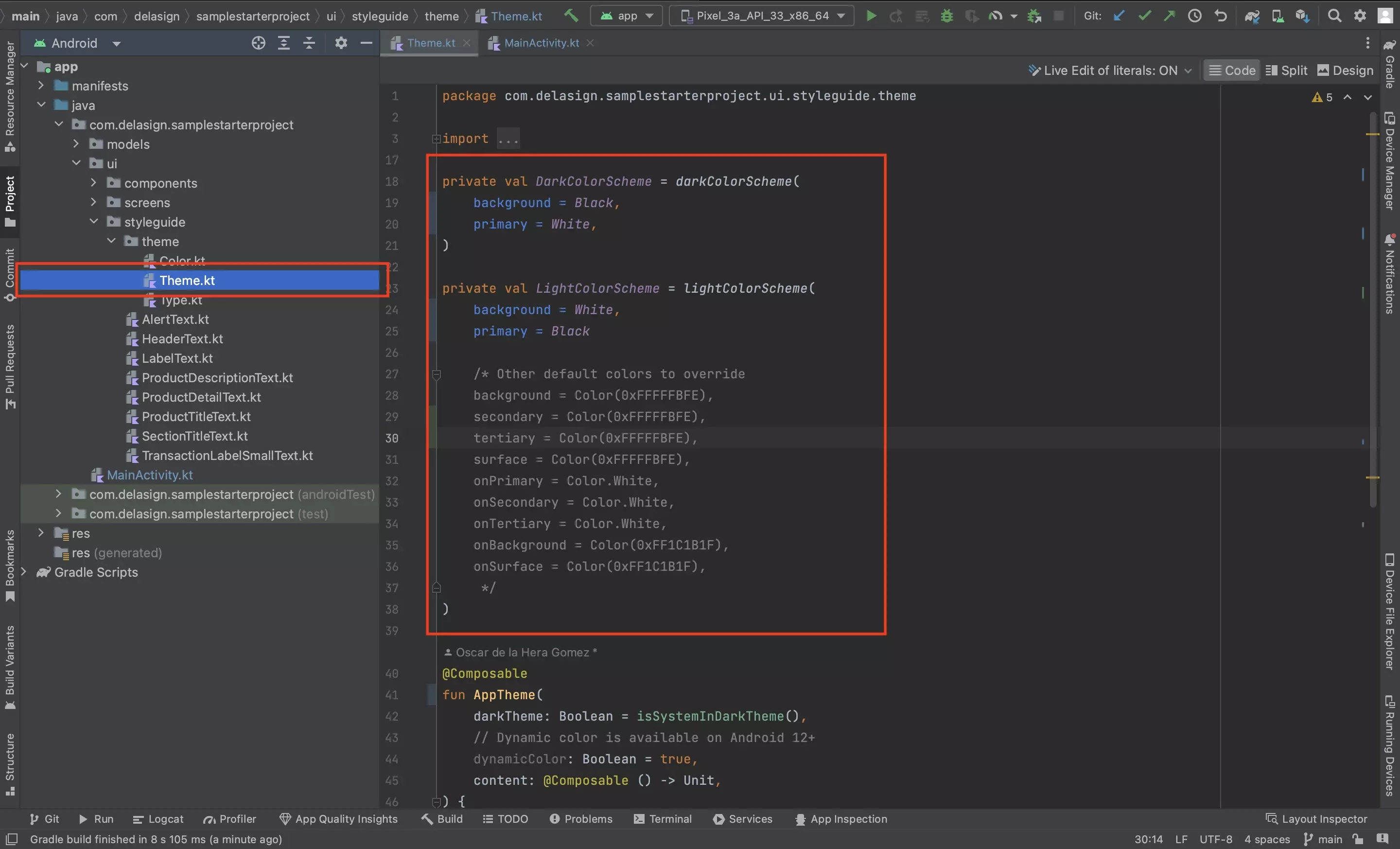
Looking for a free AI for Kotlin coding assistance? AI Kotlin Coding Assistant delivers expert-level Kotlin code generation at zero cost — covering everything from Jetpack Compose UI components to Kotlin Multiplatform shared modules and Ktor backend services. With Kotlin now reaching 2.5 million developers worldwide and the ecosystem evolving rapidly through K2 compiler improvements, Compose Multiplatform iOS stability, and Swift Export, having an AI partner that understands the full Kotlin landscape has become essential for staying productive.
✅ Free tier available — start generating production-grade Kotlin code immediately
✅ 2026-current knowledge — K2 compiler, Kotlin 2.3+, Compose Multiplatform, Swift Export
✅ Full-stack Kotlin fluency — Android, KMP, Ktor, Spring Boot, kotlinx.serialization
✅ Context-aware coding — tracks your project's versions, dependencies, and conventions
Over 12,000 developers have already used this tool to accelerate their Kotlin workflows — from junior developers learning coroutine patterns to senior engineers scaffolding complex KMP architectures in minutes instead of hours. Here's why free AI-powered Kotlin assistance matters more than ever in 2026.
Quick Answer: What Is AI Kotlin Coding Assistant?
AI Kotlin Coding Assistant is a free AI-powered development tool that generates idiomatic, production-ready Kotlin code across Android, multiplatform, and server-side projects in seconds. It understands your project context, enforces null safety and structured concurrency, and adapts its output to your experience level.
Key capabilities:
- Idiomatic code generation — sealed classes, extension functions, DSL builders, value classes
- Coroutine expertise — structured concurrency, Flow operators, proper dispatcher usage
- Multiplatform architecture — expect/actual declarations, shared module design, Swift Export
- Build system guidance — Gradle Kotlin DSL, version catalogs, KSP migration, dependency resolution
- Test scaffolding — JUnit 5, Kotest, MockK, Turbine for Flow testing
Why Kotlin Developers Need Free AI Assistance in 2026
The Kotlin ecosystem has entered a period of rapid maturation. According to the JetBrains Developer Ecosystem Survey 2025, Kotlin ranks among the top five languages developers want to adopt next, and 48% of professional mobile developers now use it as their primary language. But this growth has introduced new layers of complexity that even experienced developers struggle to manage alone:
- K2 compiler migration — ~98% of projects now use K2, but legacy codebases face breaking changes
- KAPT to KSP transition — annotation processing migration is underway across the ecosystem
- Compose Multiplatform expansion — iOS stable, Web in Beta, with 96% of teams reporting no major performance concerns
- Swift Export adoption — enabled by default since Kotlin 2.2.0, changing how iOS teams consume shared code
- Coroutine evolution — new patterns for structured concurrency, context parameters, and Flow composition
Kotlin Multiplatform usage more than doubled from 7% in 2024 to 18% in 2025 — and companies like McDonald's, Duolingo, Netflix, and Google Docs now run KMP in production.
The Cost Barrier to Expert Kotlin Guidance
Professional Kotlin consulting typically costs $150–$300/hour. Paid AI coding tools add $10–$50/month to your stack. For independent developers, students, and small teams, these costs add up quickly — especially when you need help with specialized topics like KMP architecture or coroutine debugging.
AI Kotlin Coding Assistant removes this barrier entirely with its free tier, giving every developer access to deep Kotlin expertise without financial commitment.
The K2 Compiler Transition Creates New Pain Points
The K2 compiler delivers up to 94% compilation speed gains in clean builds and approximately 39% faster code analysis in the IDE. But migrating to K2 means dealing with:
- Plugin compatibility issues across your Gradle build
- Behavioral changes in type inference and smart casts
- KAPT deprecation requiring KSP migration for Room, Dagger, and Moshi
- New language features (guard conditions in
when, context parameters) that older code doesn't leverage
Coroutines: Simple Syntax, Deep Complexity
Kotlin coroutines remain one of the language's most powerful — and most misunderstood — features:
kotlin// This 4-line snippet requires understanding:
// - CoroutineScope lifecycle management
// - SupervisorJob for failure isolation
// - Dispatcher selection for I/O vs computation
// - Cancellation propagation through the hierarchy
val scope = CoroutineScope(SupervisorJob() + Dispatchers.Default)
scope.launch {
    val data = withContext(Dispatchers.IO) { repository.fetch() }
    processData(data)
}
85% of developers regularly use AI tools for coding, and 62% rely on at least one AI coding assistant — yet most general-purpose AI tools lack the Kotlin-specific depth needed for coroutine debugging, KMP architecture, or Gradle configuration.

How Free AI Kotlin Coding Assistance Solves These Problems
AI Kotlin Coding Assistant is purpose-built for the Kotlin ecosystem. Unlike generic code completion tools, it encodes deep understanding of Kotlin's type system, concurrency model, and multiplatform architecture.
| Challenge | Without AI Assistance | With AI Kotlin Coding Assistant |
|---|---|---|
| Coroutine scope management | Trial-and-error, memory leaks | Correct scope hierarchy with cancellation handling |
| KMP expect/actual patterns | Hours reading documentation | Platform-specific implementations generated instantly |
| Gradle version conflicts | Manual compatibility checking | Automatic detection with resolution guidance |
| Java-to-Kotlin migration | Syntax-only conversion | Idiomatic Kotlin with proper null safety, scope functions, data classes |
| Compose state management | Boilerplate-heavy ViewModel setup | Complete state hoisting with lifecycle-aware collection |
Kotlin Type System Mastery
The assistant generates code that leverages Kotlin's advanced type features correctly:
- Sealed class hierarchies for exhaustive
whenexpressions - Value classes for type-safe wrappers without runtime overhead
- Declaration-site variance (
in/out) for generic constraints - Reified generics with
inlinefunctions for type-safe operations - Context receivers and context parameters for cleaner dependency injection
Ecosystem-Wide Coverage
Whether you're building for Android, iOS, web, desktop, or server, this AI covers the full Kotlin stack:
- Jetpack Compose — state hoisting, side effects,
LaunchedEffect,DisposableEffect, composition locals - Compose Multiplatform — shared UI with platform-specific interop, Compose Hot Reload
- Ktor — routing, content negotiation, authentication pipelines, WebSocket support
- kotlinx.serialization — polymorphic serialization, custom serializers, JSON configuration
- SQLDelight / Room — cross-platform persistence with type-safe queries
How It Works: From Question to Production Code
Step 1: Describe Your Project Stack
Share your Kotlin version, target platforms, and key dependencies. The assistant remembers this context throughout your session:
"I'm building a KMP project targeting Android and iOS. Using Kotlin 2.3, Compose Multiplatform 1.10, Ktor 3.3 for networking, and Room for local persistence."
Step 2: Ask for What You Need
Describe your requirement in natural language. The assistant generates idiomatic Kotlin with proper error handling:
"Create a network-first repository that falls back to cached data when offline, using sealed classes for result states."
AI Kotlin Coding Assistant produces complete, compilable code:
kotlinsealed interface SyncResult<out T> {
    data class Success<T>(val data: T, val source: DataSource) : SyncResult<T>
    data class Error(val exception: Throwable, val cachedData: Any? = null) : SyncResult<Nothing>
    data object Loading : SyncResult<Nothing>
}

enum class DataSource { NETWORK, CACHE }

class ArticleRepository(
    private val api: ArticleApi,
    private val dao: ArticleDao,
    private val ioDispatcher: CoroutineDispatcher = Dispatchers.IO
) {
    fun getArticles(): Flow<SyncResult<List<Article>>> = flow {
        emit(SyncResult.Loading)

        // Emit cache first for instant UI
        val cached = dao.getAllArticles()
        if (cached.isNotEmpty()) {
            emit(SyncResult.Success(cached, DataSource.CACHE))
        }

        // Attempt network refresh
        try {
            val fresh = withContext(ioDispatcher) { api.fetchArticles() }
            dao.replaceAll(fresh)
            emit(SyncResult.Success(fresh, DataSource.NETWORK))
        } catch (e: IOException) {
            if (cached.isEmpty()) {
                emit(SyncResult.Error(e))
            }
            // If cache was emitted, user already has data
        }
    }.flowOn(ioDispatcher)
}
Step 3: Get Build Configuration Help
The assistant provides exact dependency declarations for your version catalog:
toml# libs.versions.toml
[versions]
kotlin = "2.3.0"
ktor = "3.3.0"
room = "2.7.1"
kotlinx-coroutines = "1.10.1"

[libraries]
ktor-client-core = { module = "io.ktor:ktor-client-core", version.ref = "ktor" }
room-runtime = { module = "androidx.room:room-runtime", version.ref = "room" }
room-compiler = { module = "androidx.room:room-compiler", version.ref = "room" }
Step 4: Iterate and Expand
Ask follow-up questions. The assistant maintains your project context:
"Now add pagination support using Paging 3 on Android, with the shared repository providing the data source."
It generates platform-specific code while preserving your shared architecture — no need to re-explain your stack.
Real-World Use Cases and Results
📱 Jetpack Compose UI Development
Scenario: Building an adaptive layout that works across phones, foldables, and tablets
Without AI: 3-4 hours researching window size classes, implementing state management, handling configuration changes
With AI Kotlin Coding Assistant: Complete adaptive scaffold with proper state hoisting in minutes
- Material 3 Adaptive layouts with
WindowSizeClass - Proper
rememberandderivedStateOfusage - Preview annotations with multiple device configurations
- Edge-to-edge design with system bar handling
🌐 Kotlin Multiplatform Shared Logic
Scenario: Sharing authentication logic between Android and iOS with platform-specific biometric integration
Without AI: Days of documentation reading, expect/actual trial-and-error, Swift interop debugging
With this AI-powered tool: Clean shared module with platform boundaries defined correctly
Companies like Forbes share over 80% of logic across iOS and Android using KMP, and McDonald's achieved fewer crashes and better performance after migrating their entire app to Kotlin Multiplatform.
kotlin// commonMain — shared authentication contract
expect class BiometricAuthenticator {
    suspend fun authenticate(): BiometricResult
}

sealed class BiometricResult {
    data object Success : BiometricResult()
    data class Failed(val reason: String) : BiometricResult()
    data object NotAvailable : BiometricResult()
}
⚡ Ktor Backend Services
Scenario: REST API with request validation, structured error responses, and database integration
Without AI: Manual routing setup, serialization configuration, error handling boilerplate
With the tool: Production-ready Ktor module with:
- Content negotiation using kotlinx.serialization
- Status pages for consistent error formatting
- Request validation with typed error responses
- Structured logging with kotlin-logging
- Built-in dependency injection (Ktor 3.2+)
🧪 Automated Test Generation
Scenario: Testing a Flow-based repository with network and cache interactions
AI Kotlin Coding Assistant generates complete test suites:
kotlin@Test
fun `emits cache then network data on successful sync`() = runTest {
    // Given
    val cachedArticles = listOf(Article("1", "Cached"))
    val freshArticles = listOf(Article("1", "Fresh"))
    coEvery { dao.getAllArticles() } returns cachedArticles
    coEvery { api.fetchArticles() } returns freshArticles

    // When/Then
    repository.getArticles().test {
        assertEquals(SyncResult.Loading, awaitItem())
        assertEquals(
            SyncResult.Success(cachedArticles, DataSource.CACHE),
            awaitItem()
        )
        assertEquals(
            SyncResult.Success(freshArticles, DataSource.NETWORK),
            awaitItem()
        )
        awaitComplete()
    }
    coVerify { dao.replaceAll(freshArticles) }
}
Using Turbine for Flow assertions, MockK for coroutine-aware mocking, and runTest for deterministic virtual time control.
Frequently Asked Questions
Is AI Kotlin Coding Assistant really free?
Yes. AI Kotlin Coding Assistant offers a free tier that includes core code generation, debugging assistance, and Kotlin expertise. Paid plans (starting at $20/month) provide higher usage limits and additional features like custom model selection, but the free tier covers substantial daily usage for most individual developers.
How does free AI for Kotlin coding compare to GitHub Copilot?
General-purpose tools like Copilot provide broad code completion across many languages. AI Kotlin Coding Assistant provides specialized Kotlin depth: structured concurrency enforcement, KMP architecture guidance, Gradle Kotlin DSL configuration, version compatibility checking, and K2 compiler migration support that generic tools typically miss.
Can it help me migrate from Java to Kotlin?
Yes. The assistant performs idiomatic conversion — not just syntax translation. It applies proper null safety annotations, replaces Java patterns with Kotlin equivalents (data classes, sealed hierarchies, scope functions), handles platform type edge cases from Java interop, and flags potential lateinit vs. lazy decisions.
Does it support Compose Multiplatform for iOS?
Full support. With Compose Multiplatform for iOS reaching stable in 2025 and 96% of teams reporting no major performance concerns, the assistant generates cross-platform Compose code with proper platform interop, including Swift Export integration and native view embedding.
How current is its knowledge of Kotlin versions?
The assistant researches current documentation and can access the latest Kotlin release information. It understands Kotlin 2.3+ features including stable guard conditions in when, context parameters, multi-dollar string interpolation, and Swift Export improvements with enum and variadic function support.
Can it debug coroutine issues?
Yes. Paste stack traces, error messages, or problematic coroutine code. The assistant traces root causes through suspend function chains, identifies common pitfalls (dispatcher misuse, missing ensureActive() calls, improper exception handling in supervisorScope), and provides corrected implementations.
Start Writing Better Kotlin Today — For Free
Kotlin's ecosystem has never been more capable — or more complex. With 2.5 million developers worldwide, the K2 compiler delivering 40%+ compilation time reductions, and KMP adoption accelerating across companies like Google, Netflix, Duolingo, and McDonald's, mastering the full Kotlin stack requires more than documentation browsing.
AI Kotlin Coding Assistant gives you an expert Kotlin partner that understands coroutines, Compose, KMP, Ktor, and the entire build toolchain — available whenever you need it, at no cost to start.
Stop spending hours debugging Gradle conflicts and coroutine scope leaks. Get started with AI Kotlin Coding Assistant for free and write Kotlin that compiles, runs, and scales.