Free AI for IQ Testing: 7-Domain Cognitive Assessment with Adaptive Difficulty, Percentile Ranking & Formal Report
2026-05-27
Every year, millions of people search for a way to measure their intelligence online — and every year, most of them end up clicking through a 15-question quiz that flatters them with an inflated score and teaches them nothing about how they actually think. AI IQ Tester is a free AI for IQ testing that takes a fundamentally different approach: 50+ adaptive questions spanning seven distinct cognitive domains, invisible per-domain difficulty calibration, and a formal assessment report that includes your estimated IQ, percentile ranking, dimensional breakdown, and an honest written performance narrative — all accessible from any device, at no cost to start.
✅ Free to begin — no credit card, no paywall for the full 7-domain assessment
✅ 50+ adaptive questions with invisible per-domain difficulty adjustment
✅ Seven cognitive domains: verbal, logical, pattern recognition, quantitative, spatial, working memory, abstract reasoning
✅ Formal Cognitive Assessment Report with composite score, percentile ranking, and strengths/weaknesses analysis
✅ Exportable as PDF, Word, or CSV — or emailed directly
Over 22,500 users have completed assessments through AI IQ Tester — with more than 6,800 discovering cognitive strengths they didn't know they had and using their dimensional breakdowns to make more informed decisions about study strategies, career paths, and personal development.
To understand why a free, structured AI-powered IQ test matters — and why most online alternatives are barely better than entertainment — let's look at what real cognitive assessment requires and where the current landscape falls short.
Quick Answer: What Is AI IQ Tester?
AI IQ Tester is a free adaptive cognitive assessment that administers 50+ questions across seven reasoning domains to generate an estimated IQ score with a formal, downloadable report. It references established psychometric frameworks including the Wechsler Adult Intelligence Scale and Cattell-Horn-Carroll theory for scoring calibration.
Key capabilities:
- Per-domain adaptive difficulty that calibrates independently based on your accuracy in each reasoning area
- Seven cognitive domains tested: verbal, logical, pattern recognition, quantitative, spatial, working memory, and abstract reasoning
- Formal Cognitive Assessment Report with composite score, dimensional breakdown, percentile ranking, and written performance narrative
- Export options including PDF, Word, CSV, and direct email delivery
The Real Cost of Understanding Your Own Intelligence
Cognitive assessment has a rigorous scientific lineage stretching back more than a century — from Alfred Binet's original 1905 scale to the modern Wechsler Adult Intelligence Scale, now in its fourth edition. The American Psychological Association defines intelligence as encompassing the ability to reason, plan, solve problems, think abstractly, and learn from experience. Yet for most people, accessing a meaningful measurement of these abilities remains either prohibitively expensive or frustratingly superficial.
Here's why:
- Professional testing costs $1,000–$5,000+ — putting rigorous assessment out of reach for anyone who's simply curious
- Most free online tests measure 1–2 dimensions — producing a single number with zero insight into how you actually think
- Fixed-difficulty questions can't measure accurately — without adaptation, tests can't distinguish between someone breezing through and someone at their ceiling
- No dimensional analysis means no actionable insight — "Your IQ is 112" tells you almost nothing useful
- Results vanish after you close the browser — no formal documentation, no exportable report, no record of your cognitive profile
💰 The $1,000+ Barrier to Professional Testing
A comprehensive cognitive evaluation administered by a licensed psychologist typically involves a multi-hour appointment, specialized test materials, and professional scoring and interpretation. According to clinical practice data, psychological assessments including IQ testing commonly range from $1,000 to $5,000 depending on evaluation depth and the clinician's credentials.
This cost makes complete sense for clinical contexts — diagnosing learning disabilities, supporting educational accommodations, or informing neuropsychological treatment plans. But for the vast majority of people who want to understand their cognitive profile out of genuine curiosity or personal development interest, paying thousands of dollars for a single assessment session isn't realistic.
🧩 The Shallow Online Alternative
The Wechsler Adult Intelligence Scale — the most widely used individual IQ test globally — measures cognitive ability across multiple index scores including verbal comprehension, perceptual reasoning, working memory, and processing speed. The Cattell-Horn-Carroll (CHC) theory identifies seven or more broad cognitive abilities that together constitute a comprehensive intelligence profile.
Most free online IQ tests ignore all of this. They serve up 10–20 pattern-matching questions, apply a simple scoring formula, and present a flattering number designed to make you share the result on social media. No dimensional analysis. No adaptive difficulty. No acknowledgment that intelligence is multidimensional and that a single number stripped of context is almost meaningless.
75–85% accuracy — research indicates that well-designed online IQ tests can achieve 75–85% correlation with professional assessments, but only when they employ adaptive difficulty and multi-domain coverage. Most free tests fail on both counts.
📊 Why Adaptive Difficulty Is Non-Negotiable
Real psychometric instruments use adaptive testing — where question difficulty adjusts based on your performance. The principle is straightforward: if every test-taker answers identical questions, the test can't distinguish between someone who finds every item trivially easy and someone who's working at the upper edge of their ability. Adaptive testing converges on the difficulty level where the test-taker answers approximately 50% correctly, producing a far more precise measurement than fixed-difficulty formats.
According to Mettl's psychometric assessment research, adaptive testing can reduce the time required to evaluate a candidate's ability by up to 50% while simultaneously improving measurement precision — because the assessment spends its questions at the boundary of your capability, not on items that are trivially easy or impossibly hard.
📋 A Single Number Without Context Is Barely Information
"Your IQ is 107." What does that actually tell you? Almost nothing actionable. You might have exceptional verbal reasoning paired with below-average spatial processing. You might have strong working memory but weaker abstract reasoning. Without a dimensional breakdown showing performance across distinct cognitive domains, a composite IQ number is a summary statistic that obscures far more than it reveals.
The gap between what cognitive science knows about intelligence — that it's multidimensional, domain-specific, and measurable across distinct reasoning faculties — and what most online tests deliver — a single flattering number with no explanation — is where free AI-powered assessment creates genuine value.
How Free AI-Powered IQ Testing Changes the Equation
AI IQ Tester sits in the gap between expensive professional evaluations and worthless click-through quizzes. It brings the structural rigor of psychometric assessment — multi-domain coverage, adaptive difficulty, dimensional analysis — into a free, conversational format accessible from any device.
| Free Online Quizzes | Professional Testing ($1,000–$5,000) | AI IQ Tester |
|---|---|---|
| 10–20 fixed-difficulty questions | Multi-hour proctored session | 50+ adaptive questions |
| 1–2 cognitive dimensions tested | 4+ index scores with subtests | 7 distinct cognitive domains |
| Single inflated number, no breakdown | Full clinical report delivered days later | Formal report generated instantly with dimensional analysis |
| No adaptive difficulty | Clinician-adjusted item selection | Invisible per-domain adaptive calibration |
| Results vanish when you close the tab | Paper report, not easily shareable | Exportable as PDF, Word, CSV, or email |
| Free | $1,000–$5,000+ per session | Free to start |
🧠 Seven Domains — Not a Pattern-Matching Parlor Trick
Unlike shallow alternatives that test one or two dimensions and call it an IQ assessment, AI IQ Tester evaluates across the full spectrum of cognitive ability:
- Verbal Reasoning — Analogies, vocabulary depth, sentence completion, verbal classification, and semantic disambiguation
- Logical Reasoning — Syllogisms, conditional logic, multi-premise deductions, fallacy identification, and constraint satisfaction
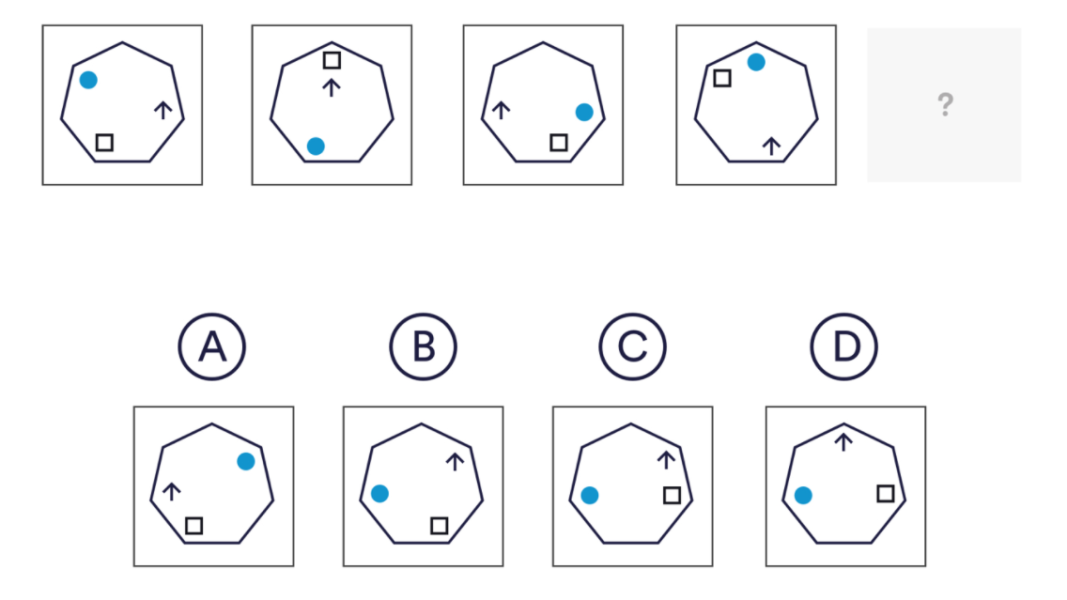
- Pattern Recognition — Number sequences, letter patterns, rule identification, matrix completion, and multi-layered pattern detection
- Quantitative Reasoning — Mental arithmetic, word problems, estimation, probability, and algebraic thinking
- Spatial Reasoning — Mental folding, directional navigation, rotation, 2D-to-3D inference, and cross-section reasoning
- Working Memory — Multi-step retention, reverse sequences, dual-task tracking, and interference resistance
- Abstract Reasoning — Novel rule application, category formation, analogical transfer, and system modeling
Each domain contains multiple question sub-types across three difficulty tiers (easy, medium, hard), ensuring the assessment captures nuance across the full ability spectrum — from individuals who find most reasoning tasks straightforward to those who operate at the upper extremes.
🎯 Invisible Adaptive Calibration — Per Domain, Not Global
What separates this AI from most online alternatives is how it adjusts difficulty. Rather than applying a single global difficulty slider, the assessment tracks your performance in each of the seven domains independently. If you're excelling at logical reasoning but struggling with spatial problems, the test gets harder in logic while adjusting spatial questions to find your true level — not punishing you in one domain because you're strong in another.
You'll never see the calibration happening. Questions arrive one at a time, domain-mixing is seamless, and there's zero feedback — no "correct," no "nice try," no indication of how you're performing. The flat, neutral testing environment prevents emotional reactions from contaminating your responses. Results are withheld entirely until the formal report is generated after the final question.
📊 A Formal Report — Not a Number on a Screen
After completing all 50+ questions, AI IQ Tester generates a comprehensive Cognitive Assessment Report that includes:
- Composite IQ score with classification label and percentile rank
- Bell curve visualization showing where you fall relative to the general population
- Full dimensional breakdown — estimated score, classification, and percentile for each of the 7 domains
- Raw performance data — questions attempted, accuracy rate, and difficulty ceiling reached per domain
- Written performance narrative — a detailed assessment of your cognitive profile, notable inter-domain patterns, and specific strengths and weaknesses
- Export options — download as PDF, Word, or CSV, or email directly
This is not a score that vanishes when you close the tab. It's a structured document you can save, share, reference, or use as a baseline for future assessments.
Step-by-Step: Taking the Free AI IQ Test
Here's exactly what the experience looks like from start to finish with AI IQ Tester:
Step 1: Launch the Assessment
Open AI IQ Tester and type "Start the IQ test." The AI delivers a brief disclaimer (this is a cognitive estimation, not a clinical evaluation), an integrity statement requesting you not use external tools or AI assistants, and then launches directly into the first question. No account setup. No configuration screens. No ads between questions.
"Start the IQ test"
Step 2: Answer 50+ Questions Across All Seven Domains
Questions arrive one at a time, seamlessly rotating across all seven cognitive domains. You won't know which domain is being tested. The tone throughout is flat and clinical — no encouragement, no feedback, no emotional cues that might affect your responses.
Example question types you might encounter:
"Entropy is to order as erosion is to ___"
"A number doubled and increased by 7 equals 23. What is the number?"
"You face north. You turn right, walk 3 blocks, turn left, walk 2 blocks, and turn left again. Which direction are you now facing?"
If you don't know an answer, say "I don't know" — it counts as incorrect, but it's better than guessing randomly, as the adaptive system uses your accuracy pattern to calibrate. Previous answers are final. The full assessment must be completed to generate results.
Step 3: Receive Your Formal Cognitive Assessment Report
Once all questions are complete, the AI generates your report directly in the conversation. This includes your composite score with population percentile, the 7-domain dimensional breakdown, raw performance statistics, a written narrative analyzing your cognitive profile, and explicit identification of your strongest and weakest domains with evidence from your session.
The report doesn't soften low scores or inflate high ones. If you performed below average in spatial reasoning but exceptionally in verbal domains, the report says so — with specifics about which question types revealed the pattern.
Step 4: Export or Share Your Results
After reviewing the in-chat report, request a downloadable version. The AI can generate your assessment as a PDF for professional sharing, a Word document for personal records, a CSV for data analysis, or send it directly to an email address of your choosing.
Who Benefits from Free AI-Powered IQ Testing — And How
🔬 Personal Cognitive Mapping
Scenario: You've always wondered whether you're genuinely strong at logical reasoning or whether you just feel like you are. You want an honest dimensional assessment, not a flattering number.
With most online tests: Answer 15 pattern questions, get told your IQ is 128, learn absolutely nothing about your actual cognitive profile.
With AI IQ Tester: Complete a 50+ question adaptive assessment that independently measures seven domains. Discover that your logical reasoning scores in the 92nd percentile while your spatial reasoning sits at the 45th — a specific, actionable insight that no single-number quiz could ever provide.
- Identify genuine cognitive strengths versus assumed ones
- Discover weaknesses in domains you've never deliberately tested
- Get a formal, exportable report documenting your complete cognitive profile
💼 Job Application Preparation
Scenario: You're applying for a position that includes a cognitive ability test as part of the screening process. You want to understand your baseline performance across all commonly tested domains before the real assessment.
Without preparation: Walk into the employer's cognitive test blind, potentially surprised by question types you've never encountered.
With this free AI assessment: Take a comprehensive 7-domain test covering all major cognitive dimensions used in employment screening — verbal, numerical, logical, abstract, spatial — and identify exactly where you need to prepare. According to Qandle's research on AI psychometric assessment, organizations increasingly use AI-driven cognitive evaluations that measure specific abilities aligned to role requirements. Knowing your dimensional profile before an employer tests it gives you a significant preparation advantage.
- Practice the exact question types used in professional cognitive assessments
- Pinpoint specific domains where targeted practice would improve your score
- Build justified confidence by understanding where you already perform well
🎓 Learning Strategy Optimization
Scenario: A university student wants to understand how they think — not how much they know — to make better decisions about study methods, course selection, and academic focus areas.
Traditional approach: Rely on academic grades, which reflect knowledge acquisition and effort, not underlying cognitive capacity. Or pay $1,000+ for a professional evaluation.
With AI IQ Tester: A structured assessment that separates reasoning capacity from acquired knowledge — testing how you process information, not what you've memorized.
- Discover whether you learn more effectively through verbal, spatial, or quantitative channels
- Identify working memory limitations that might affect study efficiency
- Use dimensional insights to choose study strategies that align with your cognitive strengths rather than fighting against them
📱 A Rigorous Challenge — Not a Clickbait Quiz
Scenario: You have 45 minutes on a commute and want to genuinely challenge yourself with a cognitive assessment that doesn't insult your intelligence with easy questions and inflated results.
With most apps: Download a free IQ test that shows ads between every question, asks 12 trivial items, and tells everyone they're above average.
With AI IQ Tester: A full 50+ question adaptive assessment accessible from any mobile device — iOS, Android, or web — with results delivered as a formal report. No ads. No gimmicks. No score inflation. Questions that genuinely challenge you at the boundary of your ability.
🧭 Career Direction and Self-Awareness
Scenario: A professional in their mid-30s is considering a career transition and wants to understand their cognitive strengths and weaknesses to make a more informed decision about which directions play to their natural abilities.
With AI IQ Tester: The 7-domain breakdown reveals that they have exceptionally strong verbal and logical reasoning but below-average spatial processing — suggesting analytical, communication-heavy, or strategic roles would leverage their natural strengths more than design, engineering, or spatial-reasoning-heavy disciplines.
- Cognitive profile provides objective data to inform career decisions
- Dimensional breakdown highlights natural aptitudes beyond self-perception
- Formal report serves as a personal reference document for ongoing development
The Growing Role of AI in Cognitive Assessment
The intersection of artificial intelligence and psychometric testing is accelerating rapidly. According to Fortune Business Insights, the AI-enabled testing market was valued at $1.01 billion in 2025 and is projected to grow to $4.64 billion by 2033. Research from Mettl identifies AI integration, adaptive testing, and gamification as the key trends reshaping psychometric assessment — with AI improving diagnostic accuracy by over 20% compared to static scoring models.
A 2026 analysis from Qandle noted that AI psychometric assessments are shifting hiring and personal evaluation from "subjective judgment to evidence-based decision-making" — with AI algorithms analyzing response patterns, consistency, and correlations across thousands of data points to produce insights that static tests simply cannot match.
For individual cognitive assessment, these same principles apply. AI-powered adaptive testing doesn't just ask better questions — it asks the right questions for your specific ability level in each domain independently. The result is a more precise, more granular, and more honest assessment of how you actually think.
Frequently Asked Questions
Is AI IQ Tester really free?
Yes. AI IQ Tester is accessible on Jenova's free tier — the full 50+ question assessment, all seven cognitive domains, and the complete formal report are included within your usage allocation. Free accounts have limited usage; paid plans starting at $20/month provide significantly more capacity and features like custom model selection.
How accurate is an AI-based IQ test compared to a professional evaluation?
This is a cognitive estimation, not a clinically validated IQ test. It uses established psychometric frameworks (Wechsler, Cattell-Horn-Carroll) as scoring references and employs per-domain adaptive difficulty — which research suggests achieves 75–85% correlation with professional assessments when multi-domain coverage and adaptive calibration are both present. However, it cannot replicate timed visual puzzles, physical block manipulation, or clinician observation. The report transparently acknowledges these limitations.
Can I cheat by using another AI to answer questions?
You can, but you'd only be measuring the other AI's reasoning ability, not your own. The assessment is designed for honest self-evaluation. The agent explicitly requests that you not use external tools, and the integrity — and usefulness — of your results depends entirely on your honesty.
How long does the assessment take?
Most users complete the 50+ question assessment in 30–60 minutes, depending on response speed and the difficulty level the adaptive system converges on. There's no formal time limit, but the AI advises answering promptly for the most accurate estimation — extended deliberation on individual questions can affect the calibration.
Can I retake the test?
Yes. After receiving your report, you can request a new assessment in the same session. AI IQ Tester will administer a different set of questions, and your previous results remain on record above the new assessment — allowing you to compare performance across sessions.
Does it work on mobile?
Yes. The assessment runs across web, iOS, and Android with full feature parity. You can complete the entire 50+ question test and receive your formal report on any device — making it practical for commutes, waiting rooms, or anywhere you have 30–60 uninterrupted minutes.
Find Out How You Actually Think — For Free
Most online IQ tests exist to flatter you. They deliver easy questions, inflated scores, and zero insight — leaving you with a number that feels good but teaches you nothing. The gap between that experience and a genuine cognitive assessment has historically been filled by a $1,000+ appointment with a licensed psychologist — a barrier that keeps meaningful self-knowledge locked behind a price tag most people can't justify.
Free AI for IQ testing eliminates that barrier. AI IQ Tester delivers what both the quizzes and the price tags can't: a rigorous, multi-domain assessment with adaptive difficulty that finds your actual level in each cognitive domain, a formal report that tells you the truth about your strengths and weaknesses, and a dimensional profile you can use to make better decisions about how you learn, work, and develop.
No sugar-coating. No inflated scores. No hidden fees. Just an honest measurement of how you think — across seven dimensions, with a report you can keep.