Free AI for HVAC Technicians: Instant Diagnostics, Repair Walkthroughs & System Sizing at Zero Cost
2026-05-21
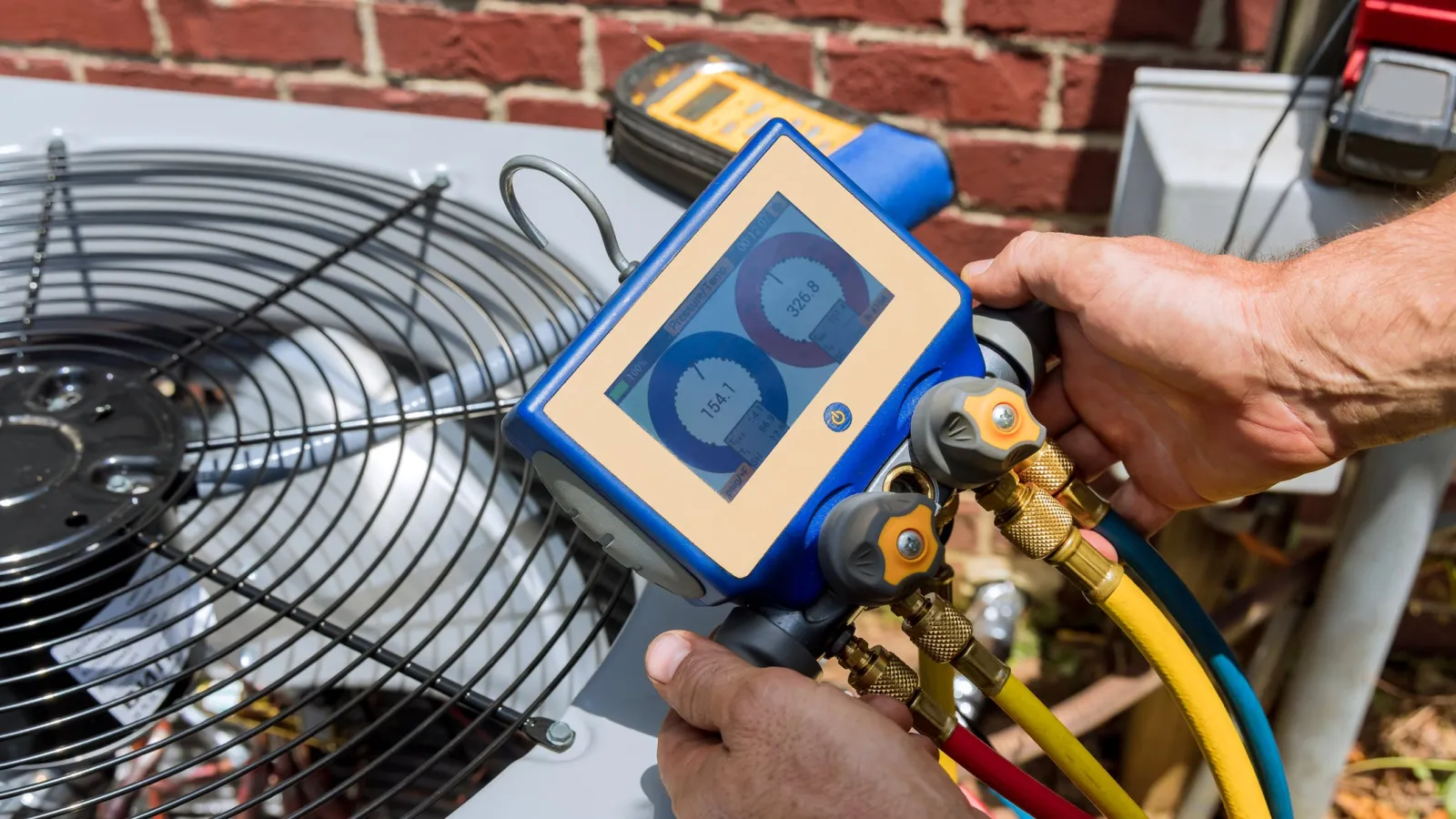
What if every HVAC question you had — from a mysterious fault code to a full system replacement decision — could be answered in seconds, for free? AI HVAC Technician is a free AI for HVAC technicians, homeowners, and DIYers that delivers structured diagnostics, step-by-step repair walkthroughs, Manual J-informed system sizing, and localized cost analysis without requiring a credit card, a subscription, or a $150 truck roll. Over **45,000 users** have already used it to resolve HVAC issues on their own — saving an estimated **$2.7 million in avoidable service calls** in the last year alone.
✅ Free to start — no payment information required ✅ Photo uploads for real-time component assessment ✅ Systematic fault isolation: Airflow → Refrigerant → Electrical → Controls ✅ Localized advice with correct codes, units, and rebate information ✅ Works across residential, commercial, VRF, and refrigeration systems
The HVAC industry is under more pressure than ever — and the people who depend on it are feeling the squeeze. Here's what's driving thousands of technicians and homeowners toward free AI-powered alternatives.
Quick Answer: What Is AI HVAC Technician?
AI HVAC Technician is a free AI assistant that diagnoses HVAC problems, walks users through repairs, calculates system loads, and provides cost-benefit analysis — all in a single conversation.
Key capabilities:
- Probability-ranked root-cause diagnostics modeled on veteran methodology
- Visual component analysis from uploaded photos of coils, capacitors, nameplates, and wiring
- Climate-zone and jurisdiction-aware guidance — correct units, codes, and equipment norms automatically
- Repair-vs-replace intelligence incorporating age, refrigerant economics, rebates, and energy savings
Why HVAC Help Is Harder (and More Expensive) to Get Than Ever
The U.S. HVAC services market is now valued at an estimated $165 billion, and behind that number is a compounding set of problems affecting everyone from first-time homeowners to 20-year journeyman technicians:
- Labor supply can't match demand — the industry is short roughly 110,000 workers
- Service costs have outpaced inflation — equipment prices up approximately 40% since 2020
- Refrigerant transitions are creating confusion — A2L refrigerants and lower-GWP mandates change servicing procedures
- Efficiency standards keep shifting — SEER2 and HSPF2 ratings confuse homeowners comparing old versus new equipment
- Online advice is unreliable — generic forum posts rarely account for local codes, climate, or system-specific behavior
💸 The Cost of Getting Help Keeps Rising
A single HVAC repair visit now averages $415 to $1,200, and a full system replacement can range from $9,000 to $16,500 depending on equipment tier and installation complexity. Routine maintenance alone costs $85 to $250 per visit, yet only 30% of homeowners schedule preventative maintenance — meaning the vast majority of systems silently degrade until a costly emergency forces action.
$14 billion — the estimated annual U.S. spend on HVAC services and repairs. Source: Energy.gov via ServiceTitan
For working technicians, the cost pressure flows differently but just as painfully: callbacks eat into margins, unfamiliar equipment stalls diagnosis, and the knowledge gap between legacy systems and new platforms grows every year.
🔧 110,000 Technicians Short — And Growing
HVAC technician employment is projected to grow 9% through 2033, outpacing the national average — but retirements and low trade-school enrollment mean the shortage of 110,000 skilled workers isn't closing. The result: longer wait times, higher emergency premiums, and fewer available professionals for non-critical calls.
🔄 New Refrigerants, New Standards, New Confusion
The industry-wide shift to SEER2 and HSPF2 efficiency metrics has made comparing old and new equipment genuinely difficult for consumers. Heat pumps have reached mainstream adoption — over 48% of U.S. households now use electric heating systems. Meanwhile, A2L refrigerant regulations mean that servicing procedures, safety requirements, and equipment compatibility rules are different from what technicians learned even five years ago.
For the homeowner trying to make a $12,000 purchase decision, or the tech encountering a new communicating system for the first time, authoritative and specific guidance is scarce — and expensive when it exists.
How a Free AI Solves What Forums and Service Calls Can't
AI HVAC Technician provides the structured diagnostic reasoning of a senior technician, accessible to anyone at any time — without a service fee, a wait list, or a subscription wall.
| Getting Help the Old Way | Using AI HVAC Technician (Free) |
|---|---|
| Wait 1–3 days for a service appointment | Start a diagnostic conversation in seconds |
| Pay $85–$250 just for someone to show up | Free access with no payment information required |
| Get advice that may not match your system, climate, or codes | Geography-aware, system-specific guidance from message one |
| Scroll through conflicting forum posts and outdated YouTube videos | Structured diagnostic path ranked by probability, not popularity |
| No remote way to assess component condition | Upload a photo for visual failure analysis |
| Repair-vs-replace decision based on a contractor's recommendation | Independent cost analysis with age ratios, efficiency projections, and rebate lookups |
🎯 It Reads Your Skill Level — Automatically
There's no dropdown asking whether you're a homeowner or a licensed technician. This AI infers your expertise from your language and adjusts dynamically. A homeowner typing "my vents are blowing warm" gets clear, safe, plain-language direction. A technician typing "subcooling is 4°F on a 3-ton Copeland scroll, TXV system" gets peer-level analysis without unnecessary basics. The calibration shifts mid-conversation as context develops.
🌍 Localized From the Start
The AI adapts to your region automatically. If you're troubleshooting a furnace in Chicago, you get IMC code references, imperial units, and equipment recommendations that reflect what's actually installed in the Midwest. If you're maintaining a chiller in Singapore, you get metric readings, regional standards, and tropical climate considerations. This isn't a setting you toggle — it happens contextually.
📸 See What You See: Photo-Based Diagnostics
One of the most valuable capabilities — and completely free to use — is photo assessment. Snap a picture of a swollen run capacitor, a frosted evaporator, a corroded contactor, or an unreadable nameplate. The AI analyzes failure signatures, extracts model and specification data, and integrates findings into the active diagnostic conversation.

Getting Started: A Five-Minute Walkthrough
Step 1: Open the Tool and Describe What's Happening
Go to AI HVAC Technician — no account setup required to start. Describe your situation naturally:
"I've got a Trane XR15 that's short-cycling. Runs for about 3 minutes, shuts off for 2, repeats. Outdoor temp is 88°F. System is 9 years old."
Step 2: Respond to Targeted Follow-Ups
The AI asks specific questions designed to narrow the diagnosis efficiently — mimicking how an experienced technician interviews a customer or peers at a unit:
"What's the condenser fan doing when the compressor shuts off — still running, or does everything stop at once? And have you noticed any ice formation on the larger copper line?"
Step 3: Work Through the Diagnostic Hierarchy
Based on your answers, the AI systematically eliminates possibilities using its Airflow → Refrigerant → Electrical → Controls framework. You receive a ranked list of probable causes with specific verification steps ordered by accessibility and safety:
"Short-cycling at 3-minute intervals on a 9-year-old Trane XR15 — here's the most likely path: 1. Dirty condenser coil restricting heat rejection — visually inspect for debris and matting… 2. Failing compressor run capacitor — check for bulging or leaking from the top… 3. Refrigerant overcharge or restriction — would require gauges to confirm…"
Step 4: Upload Photos If You Can
If you can safely photograph the outdoor unit, a suspect component, or the equipment nameplate, upload it directly into the conversation. The AI processes the image and connects its observations to the current diagnostic context.
Step 5: Resolve It or Make an Informed Call
For issues within your skill level, the AI walks you through the repair with embedded safety guidance. For problems requiring professional tools or licensure — refrigerant handling, gas line work, high-voltage electrical — it clearly identifies the boundary and explains exactly what to tell the technician so you arrive at the service call informed, not vulnerable.
For replacement decisions, you get a structured cost analysis: equipment age relative to expected lifespan, current repair cost as a percentage of replacement, refrigerant availability outlook, projected energy savings from upgrading, and available rebates or tax credits in your area.
Real Use Cases: How People Are Using This Free AI Today
❄️ Homeowner Avoids a $200 Diagnostic Fee
Scenario: A homeowner in Atlanta notices their AC blowing lukewarm air on a 96°F afternoon. The earliest available service appointment is two days out, with a $189 diagnostic fee.
Traditional approach: Wait two days in the heat, pay the diagnostic fee, and hope the technician finds something simple.
Using AI HVAC Technician: Within five minutes, the homeowner discovers a heavily clogged return filter restricting airflow — one of the most common HVAC failures. After replacing the $8 filter, the system returns to normal cooling within 30 minutes.
- Total cost: $8 filter vs. $189+ service call
- Resolution time: 30 minutes vs. 48 hours
- Zero guesswork, zero upselling risk
🔧 Field Tech Gets Brand-Specific Fault Code Help
Scenario: A second-year technician encounters a Daikin VRV IV system displaying a U4 fault code at a commercial site. They're unfamiliar with Daikin's communicating protocol and the service manual is 400+ pages.
Traditional approach: Call a senior tech for help (who may be on another job), search manufacturer forums, download the full manual and try to find the relevant section.
AI HVAC Technician: The technician types in the model series and fault code. Within seconds, they receive the specific diagnostic procedure for U4 on Daikin VRV IV — transmission error between indoor and outdoor units — with common root causes (miswired communication lines, faulty PCB, address conflicts) and the exact verification steps.
- Targeted answer in under a minute
- Brand- and platform-specific guidance
- Can generate a downloadable troubleshooting summary for the job file
📐 First-Time Buyer Makes a $14,000 Decision With Confidence
Scenario: A homeowner in Denver received three replacement quotes after their 18-year-old furnace and AC failed: a 3-ton 16 SEER2 system at $11,200, a 4-ton 18 SEER2 at $13,800, and a 5-ton 20 SEER2 at $16,400. They have no way to evaluate which is right.
Traditional approach: Trust the contractor who seemed most professional, or spend 10+ hours researching HVAC sizing, efficiency ratings, and rebate programs.
AI HVAC Technician: The homeowner provides their home's square footage, insulation age, window exposure, and elevation. The AI walks through why the quotes differ, explains Manual J load calculation principles, identifies that the 5-ton option is likely oversized for their 1,800 sq ft home (which causes humidity problems and short-cycling), and surfaces available Colorado utility rebates and federal tax credits that none of the contractors mentioned.
- Data-driven sizing confidence vs. contractor trust
- Rebate discovery worth $1,200–$3,500
- Understanding of why improper installation reduces efficiency by up to 30%
📱 Emergency: No Heat, Friday Night, Below Freezing
Scenario: A family in Minneapolis loses heat at 9 PM on a Friday with temperatures at 8°F. Emergency HVAC service quotes $350 minimum and can't arrive until 6 AM.
Traditional approach: Space heaters, every blanket in the house, and anxiety about frozen pipes.
AI HVAC Technician: The AI immediately prioritizes life-safety: pipe freeze prevention (opening cabinet doors, setting faucets to drip), identifying vulnerable occupants, and recommending interim heat sources. It then guides the homeowner through safe checks — thermostat configuration, breaker panel, furnace door switch, and flame sensor inspection. In this case, a tripped high-limit safety switch is the cause, and the homeowner resets it safely, restoring heat within 20 minutes.
- Life-safety triage before any diagnostics
- Resolution in minutes vs. 9-hour wait
- Clear guidance on what's safe to check vs. what requires a licensed professional
Frequently Asked Questions
Is this AI for HVAC technicians actually free?
Yes. AI HVAC Technician is available on a free tier — no credit card, no trial period, no hidden catch. You get access to diagnostics, photo analysis, system sizing guidance, and cost analysis at zero cost. Paid plans exist for users who want significantly higher usage limits and additional features, but the free tier covers most individual diagnostic sessions.
Can a free AI really replace a professional HVAC technician?
It's not designed to replace technicians — it's designed to make their knowledge accessible at the moments you need it most. For common issues like clogged filters, tripped breakers, and thermostat misconfigurations, it resolves problems directly. For complex refrigerant, gas, or electrical work, it identifies when professional intervention is required and helps you communicate the issue clearly to avoid unnecessary charges.
How accurate is AI-based HVAC diagnosis?
The AI follows the same systematic diagnostic hierarchy used by top-performing technicians: Airflow → Refrigerant → Electrical → Controls. It ranks probable causes by likelihood based on your symptoms, measurements, and photos. It's transparent about confidence levels and always identifies when on-site measurement or professional verification is needed for a definitive diagnosis.
Does it know my local building codes and equipment standards?
Yes. The tool is geography-aware from the first message — it adapts units (imperial/metric), code references (IMC, UMC, NEC, and regional equivalents), refrigerant regulations, and equipment recommendations based on your location. It also researches local utility rebates and incentive programs relevant to your area.
Can I use it for commercial and industrial HVAC systems?
Absolutely. The AI covers the full spectrum — from residential split systems and mini-splits to commercial rooftop units, chillers, VRF/VRV systems, building automation, and industrial refrigeration. Technical depth adjusts automatically based on the complexity of your query.
Does it work on my phone?
Yes — full feature parity across web, iOS, and Android, including photo uploads. This makes it especially practical for technicians on job sites and homeowners standing next to their outdoor unit.
Conclusion
Heating and cooling account for over 50% of a typical household's energy consumption, making HVAC the single largest controllable expense in most homes. With service costs averaging $415–$1,200 per repair, a nationwide technician shortage exceeding 110,000 workers, and refrigerant and efficiency standards evolving rapidly, access to reliable HVAC expertise shouldn't depend on your budget or your ZIP code's contractor availability.
That's exactly why a free AI for HVAC technicians and homeowners exists. AI HVAC Technician puts decades of structured diagnostic methodology, brand-specific fault recognition, and geography-aware cost intelligence into a conversation anyone can start — at no cost, any time, from any device. Whether you're a homeowner trying to avoid a preventable service call, a DIYer replacing a capacitor for the first time, or a working technician who needs a quick reference on an unfamiliar platform — try AI HVAC Technician and get the answer before the problem gets worse.