Free AI for Haunted Mansion Games: Gothic Survival Horror with AI-Generated Mysteries, Autonomous NPCs & Permadeath
2026-03-10

What if the haunted mansion you explored tonight had never existed before — and would never exist again? The Mansion is a free AI for gothic horror that constructs an entire cursed estate around you in real-time: the family who built it, the sin they committed, the supernatural consequence they left behind, and the NPCs who may help you escape — or ensure you never leave. Over 18,000 players have survived (or failed to survive) its procedurally generated horrors, with many reporting that sessions three and four terrified them more than the first — because the AI kept inventing nightmares they hadn't anticipated.
What draws players into the dark:
- ✅ A unique cursed family lineage generated from scratch every session
- ✅ NPCs who remember your actions, hold grudges, and pursue their own survival
- ✅ No weapons — you hide, run, or die
- ✅ Endings earned through depth of investigation, not dialogue menus
- ✅ Permanent, graphic death — no saves, no checkpoints, no second chances
Horror gaming is surging into 2026 with unprecedented momentum. GameSpot lists over 30 upcoming horror titles for 2026 and beyond — from Resident Evil: Requiem to Fatal Frame 2: Crimson Butterfly Remake to Reanimal. The broader immersive horror market was valued at USD 8.7 billion in 2024 and is forecast to exceed USD 17 billion by 2030. Meanwhile, the AI in gaming market is projected to reach USD 51.26 billion by 2033 at a 36.1% CAGR. For players seeking a free AI for mansion-style horror, The Mansion represents something genuinely new — an experience that generates its terror at runtime rather than shipping it pre-authored.
Quick Answer: What Is The Mansion AI?
The Mansion is a free AI-powered gothic horror text adventure that uses a large language model as a dynamic Game Master, constructing a unique cursed estate — its family, its sins, and its supernatural consequences — from scratch every time you play. No two sessions share the same backstory, the same NPCs, or the same path to escape.
Key capabilities:
- Constructs complete family histories with specific transgressions and their supernatural aftermath
- Generates NPCs with autonomous knowledge, motivations, and capacity for deception or sacrifice
- Tracks your exploration depth to determine ending quality — from hollow escape to full revelation
- Enforces permanent death with visceral, narrative-driven consequences
- Maintains internal consistency across generated rooms, documents, and character interactions
The Gothic Mansion's Oldest Problem: Finite Fear
The haunted mansion is arguably horror's most iconic setting. From Horace Walpole's The Castle of Otranto in 1764 to Resident Evil Village's Castle Dimitrescu in 2021, the isolated estate hiding dark secrets has captivated audiences for centuries. In gaming, Clock Tower creator Hifumi Kono articulated the formula's power in an interview with GamesRadar: "The most important thing for me was the stillness — nothing happening, just walking down the hallways in complete silence."
That formula still resonates. Try Evidence's research shows that survival horror's share of Steam games has grown from 2% in 2015 to over 5% in 2024 — nearly 19,000 titles. The genre has gone mainstream.
But every haunted mansion game shares a structural flaw.
🏚️ The One-Story Estate
Every traditional mansion horror game tells exactly one story. The Barrows family in Clock Tower. The Bakers in Resident Evil 7. The Dimitrescus in Village. Once you know the family's secret, the mansion becomes a museum — interesting to revisit, but incapable of surprising you.
As the Wikipedia entry on the Clock Tower series notes: "Gameplay in the series generally involves the player hiding and escaping from enemy pursuers without any weapons to defeat them." The vulnerability persists across playthroughs. The mystery does not.
🗝️ The Fixed Clue Problem
Gothic horror depends on discovery — journals, letters, portraits, locked rooms. In traditional games, these artifacts are authored once. The diary is always in the library. The locked room always contains the same revelation. The portrait always hides the same secret passage. Discovery becomes retrieval.
🎭 The Scripted Companion
Traditional horror NPCs are predetermined allies or predetermined traitors. The servant who offers to guide you either helps or betrays — and the outcome was decided before the game shipped. XDA's analysis of horror gaming tropes captures the consequence: "Once the rules are clear, the fear fades rapidly. The stalker stops being an unknown threat and becomes a chore instead."
🔁 The Replay Paradox
Game Developer's analysis of emergent narratives identifies the core tension: "When a player has the ability to construct their own narrative with a game, it not only immerses the player even more than a linear story, but allows for countless hours of replayability." Traditional mansion horror offers the opposite — a single, meticulously crafted narrative that loses its power with each repetition.
How a Free AI Rebuilds the Haunted Mansion from Nothing
The Mansion solves these problems by making the estate itself emergent. The AI doesn't select from a library of pre-written backstories — it constructs a complete gothic family history for each session, including the family's name, their era, their specific transgression, and the supernatural consequence that transgression produced.
Traditional Mansion Horror vs. AI-Generated Gothic Terror
| Traditional Mansion Horror | The Mansion AI |
|---|---|
| One family backstory per game | Fresh lineage, transgression, and consequence every session |
| Fixed room layouts you memorize | Architecture revealed through exploration |
| NPCs follow predetermined scripts | NPCs possess autonomous knowledge, goals, and survival instincts |
| Same clues in the same drawers | Journals, letters, and evidence generated to match the session's unique history |
| 3-5 endings triggered by choices | Ending tier determined by depth of actual investigation |
| Replay = revisit | Replay = genuinely new mystery |
Rooted in Clock Tower's Design Philosophy
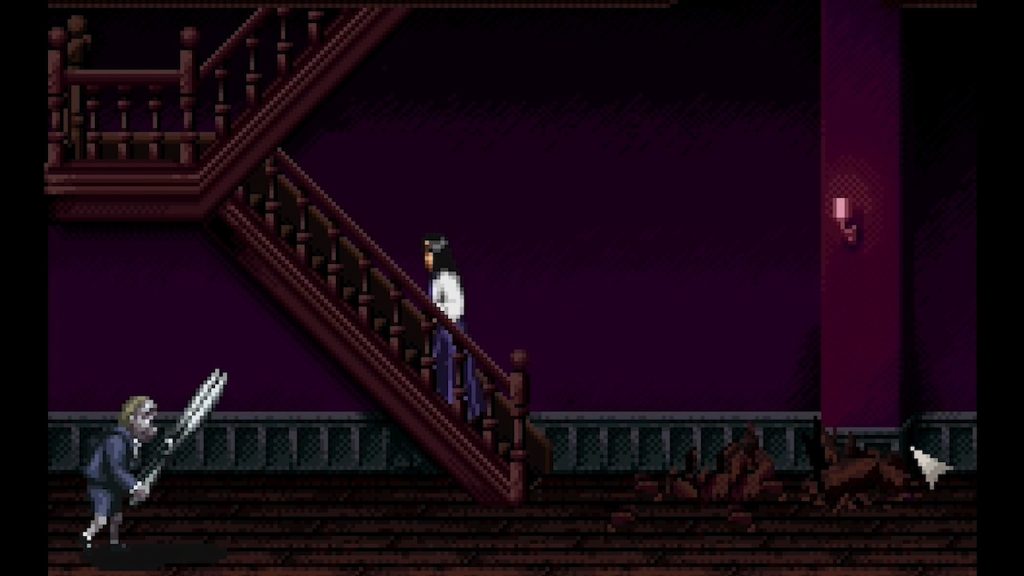
The Mansion preserves the mechanics that made Clock Tower and its descendants terrifying:
- No combat — you cannot fight what haunts this place
- Panic mechanics — fear degrades your character's ability to act
- Resource scarcity — every item matters, every choice costs
- Persistent threat — danger can materialize at any moment
But it adds what no traditional game could deliver: a different mystery every time. The family whose sins haunt the mansion? Generated fresh. The NPCs you encounter? Their knowledge, loyalties, and agendas emerge from the narrative. The ending you reach? Earned through what you actually discovered — not which button you pressed.
The Academic Case for LLMs as Game Masters
The academic paper "Large Language Models and Games: A Survey" identifies the Game Master role as particularly promising for LLMs: "A Game Master (GM) in table-top role-playing games is the person who creates the plot of a game, its characters, and narrative. GMs wear many hats during the course of the game session."
Henrik Fahraeus, lead designer of Crusader Kings 2 and a recognized authority on emergent narrative, identified unpredictability as essential for emergent storytelling. His core principles — complex simulation, unpredictability, human factors, seedlings of prewritten narrative, conflict, and dubious morals — map directly onto what this AI generates in every session.
Inside a Session: What Actually Happens
Step 1: A Family Takes Shape
When you begin, the AI constructs a family — their name, their era, their position in society, and the specific transgression they committed. Murder. Occult experimentation. Imprisonment. Something they couldn't name in their own records. The supernatural consequence of that transgression still inhabits the mansion. None of this existed before you started playing.
Step 2: You Wake Up Inside
You find yourself in the mansion. The circumstances of your arrival are unclear. Your purpose feels just beyond memory's reach. You have nothing — no weapons, no tools, no map. The mansion is dark. You are alone. Or you believe you are.
Step 3: Rooms Emerge from Exploration
Every direction you choose can reveal something new: a study with a desk facing the wall instead of the door. A nursery with cribs arranged in a circle. A basement with drainage channels cut into stone floors. A bedroom with locks on the outside. The AI generates spaces that serve the narrative — building atmosphere, rewarding careful attention, deepening the mystery.
Step 4: NPCs Arrive with Their Own Agendas
Each session includes 1-4 NPCs with varying knowledge and motivations. A servant who knows the family's secret but won't share it freely. A fellow trespasser who seems helpful but has their own reasons for being here. A figure who may not be entirely human anymore. The Mansion tracks your interactions — trust is earned, betrayal is possible, and relationships have consequences.
Step 5: Documents Reveal the Truth in Layers
The investigation unfolds through generated artifacts:
"The family ledger shows payments to Dr. Hargrove — monthly, for three years. No corresponding medical records exist. The last entry reads: 'Services rendered. Subject stable. Do not visit the east wing.'"
Early documents deliver fragments. Mid-session, patterns emerge — names recur, dates align, the family's transgression takes shape. Late-session, the full picture crystallizes.
Step 6: Your Investigation Determines Your Fate
Escape requires understanding enough of what happened. The ending you receive — hollow, partial, full, or true — reflects what you actually explored and discovered. But escape isn't guaranteed. Death is permanent and graphic. The session ends. Your next playthrough generates an entirely new family, mystery, and set of threats.
Three Scenarios That Show the Difference
📜 The Locked Room
Scenario: You find a journal mentioning a sealed chamber in the east wing.
In a traditional game: The journal directs you to a scripted location with predetermined content.
In The Mansion: The journal exists because the AI determined this session's mystery involves something hidden in the east wing. What you find there depends on the specific family history generated for your playthrough — and whether you survive long enough to reach it. The AI hasn't fully determined the answer yet. Your investigation shapes it.
🚪 The Helpful Stranger
Scenario: Someone you encounter offers to lead you through a dangerous section of the mansion.
In a traditional game: The NPC either helps or betrays you based on a fixed script.
In The Mansion: This person has a generated history with the estate. They might genuinely want to help — out of guilt, or self-preservation. They might believe they know a safe route but be wrong, their memories warped by years in this place. They might be leading you somewhere specific for reasons that make sense given their relationship to the family's sins. Your interactions determine what they reveal and whether they survive the journey.
💀 The Wrong Door
Scenario: You open a door you shouldn't have.
In a traditional game: Reload from checkpoint, retry with foreknowledge.
In this AI-powered experience: What happens depends on the specific transgression this family committed and the supernatural consequence it produced. You might die. You might survive but lose something — memory, sanity, time. The session continues or ends based on the narrative logic of this particular mansion's history. There are no checkpoints.
The Neuroscience of Why AI Horror Works Better
Controlled Uncertainty — Renewed Every Session
Try Evidence's research identifies the core appeal of horror: "What truly attracts them is controlled uncertainty — the chance to enter a situation where you don't know everything, but you know enough to try."
Traditional mansion horror delivers controlled uncertainty once. The Mansion delivers it on every session because the family history, the NPC agendas, and the supernatural threat genuinely don't exist until the AI generates them.
The Neurochemistry of Genuine Surprise
The same research describes the biological mechanism: "Fear triggers the release of adrenaline and noradrenaline, which prepares the body to fight or flee. In the safe context of a game, this reaction excites instead of paralyzing. Dopamine, the reward neurotransmitter, ensures euphoria after fear."
When the threat pursuing you wasn't scripted by a developer but emerged from an AI responding to your specific exploration, the fictional danger feels more immediate. You genuinely don't know what's behind the next door — because the AI hasn't decided yet.
Benign Masochism Amplified
Try Evidence describes "benign masochism" — the pleasure of experiencing danger in safe conditions: "Games create 'emotional playgrounds': save rooms, safe zones, and pause options. In these genuinely safe conditions, the brain interprets unpleasant stimuli as satisfaction."
The gothic mansion amplifies this effect. The setting carries centuries of cultural weight. The Mansion leverages that familiarity while making the specific horrors unpredictable. You know you're in a haunted mansion. You don't know whose mansion, what they did, or what they left behind.
What the AI Constructs: The Gothic Horror Engine
Family Transgressions and Their Aftermath
Each session generates a unique family with a specific sin:
- Murder — a killing that was covered up, justified, or ritualized
- Occult practice — experiments with forces the family couldn't control
- Imprisonment — someone kept here against their will, for years or decades
- Experimentation — medical, alchemical, or psychological procedures conducted in secret
- Betrayal — a family member destroyed by their own blood
- Something unnamed — a sin the family couldn't even describe in their own records
Environmental Storytelling Through Generated Detail
Rooms might include:
- A nursery with cribs arranged in a circle, not a row
- A study with a desk facing the wall, not the door
- A basement with drainage channels cut into stone floors
- A bedroom with locks on the outside of the door
Documents might include:
- Letters between family members that shift in tone over months
- A diary that stops mid-sentence
- Financial records showing payments to people who don't appear in any other document
- A family tree with names crossed out — or added in different handwriting
Frequently Asked Questions
Is The Mansion free to play?
Yes. The Mansion is accessible through Jenova's free tier, which provides core access with usage limits per billing cycle. Paid plans offer significantly higher usage — up to 300× more on the Max tier — along with custom model selection and additional features.
How does The Mansion compare to Clock Tower or Resident Evil?
All three share DNA: vulnerability, gothic settings, and the tension of being hunted. The fundamental difference is replayability. Clock Tower and Resident Evil deliver masterfully crafted single narratives. The Mansion generates a new family, new NPCs, new documents, and new endings every session. You're investigating a different mystery each time.
Can I play on mobile?
Yes. Jenova offers full feature parity across web, iOS, and Android. The text-based format is naturally suited to mobile play — many players report completing sessions during commutes or late-night reading sessions.
How long does a typical session last?
Sessions vary based on exploration style and survival. A thorough investigator who uncovers the full family mystery might spend 2-4 hours. A player who rushes or makes fatal mistakes might experience a shorter but complete narrative arc ending in death.
How is this different from AI Dungeon or other AI text games?
The Mansion is purpose-built for survival horror with specific mechanics: resource tracking, NPC memory, consistent geography, earned endings, and permanent death. It's not a general-purpose AI storyteller — it's a designed game experience that uses AI to generate content within carefully constructed constraints. As Totally Human Media's analysis notes, nearly 20% of 2025 Steam releases disclosed AI use — but players respond best when AI operates within structured rules rather than as an unconstrained chatbot.
Is the content appropriate for all ages?
No. The Mansion is an 18+ experience featuring graphic violence, psychological horror, and disturbing content. The AI generates horror that serves the narrative without content restrictions.
AI-Native Horror Is Already Here
The AI in gaming market grew from USD 5.85 billion in 2024 to USD 7.05 billion in 2025, and is projected to reach USD 37.89 billion by 2034 at a 20.54% CAGR. The NPC behavior/character AI segment is expected to grow at the fastest rate within that market, and the generative AI segment is leading innovation.
As Forbes reported in February 2026, "AI agents are moving games beyond scripted characters, enabling lifelike NPCs, emergent gameplay, and faster development." Meanwhile, GameGrin's analysis of player-driven storytelling observes: "The future of AI, procedural generation, and adaptive dialogue systems will enable worlds to react more convincingly and with memory."
The Mansion isn't waiting for that future. It's already delivering it — free to access, generating unique gothic horror narratives for thousands of players every month.
Walk Into a Mansion That Has Never Existed Before
Clock Tower proved that vulnerability, stillness, and the sound of approaching danger create genuine fear. Resident Evil proved that gothic mansions are horror's most enduring setting. The Mansion preserves all of that and removes the one limitation that made every mansion horror game finite: the fact that the family's story was written before you arrived.
Here, the family's history doesn't exist until you begin exploring. The NPCs develop agendas in response to your presence. The documents emerge from your investigation. The ending you reach — escape, death, or something worse — reflects what you actually uncovered.
Over 18,000 players have already crossed the threshold. No two have discovered the same family, the same sin, or the same truth.