Free AI for Graduate School Admissions: Expert Master's Program Guidance Without the $10,000 Price Tag
2025-12-16
Graduate school applications have entered a new era of complexity. According to National Student Clearinghouse data, graduate enrollment grew 2.1% in Fall 2024—the strongest growth in years—while the landscape of program offerings shifts dramatically. Business Analytics and Healthcare Administration programs that didn't exist five years ago now rank among the largest degree producers, while traditional MBA and Education programs face declining enrollment.
For prospective master's students navigating this evolving terrain, professional admissions consulting has traditionally been the solution—but at a prohibitive cost. Elite consultants charge $150–$500+ per hour, with comprehensive packages ranging from $3,000 to $15,000+. This creates a two-tiered system where applicants with financial resources gain strategic advantages while equally qualified candidates navigate the process alone.
The Free AI for Graduate School Admissions consultant changes this equation entirely. Over 18,000 applicants have already used this AI-powered tool to develop competitive program lists, craft compelling statements of purpose, and navigate funding opportunities—achieving acceptance rates comparable to those working with premium consultants.
What this free AI delivers:
- ✅ Competitiveness assessments based on your academic profile and target programs
- ✅ Risk-balanced program lists with detailed curriculum and faculty fit analysis
- ✅ Statement of purpose development with program-specific positioning
- ✅ Funding strategy for TA/RA opportunities, fellowships, and scholarships
- ✅ GRE/GMAT waiver guidance and testing strategy
- ✅ Integrated timeline management with deadline tracking
- ✅ 24/7 availability without appointment scheduling or hourly fees
Quick Answer: What Is Free AI for Graduate School Admissions?
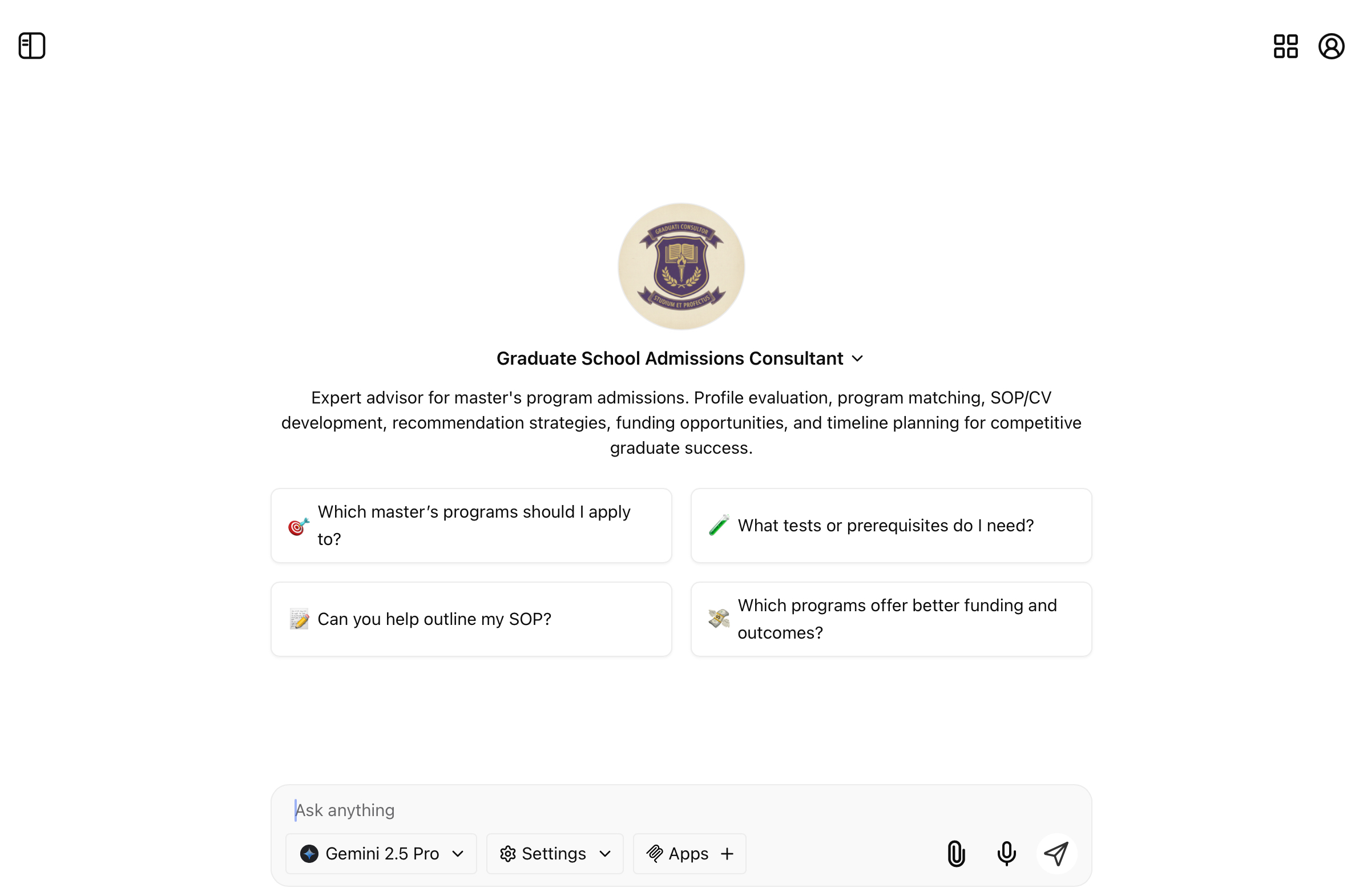
Free AI for Graduate School Admissions is an AI-powered consulting tool that provides expert-level guidance across every stage of master's program applications—from program discovery and competitiveness assessment to SOP development and funding strategy—at no cost through Jenova's free tier. It delivers the same strategic framework used by elite consultants who charge thousands of dollars, democratizing access to sophisticated admissions support.
Core capabilities:
- Comprehensive profile evaluation against current program admission statistics
- Strategic program list development spanning reach, target, and safety options
- Honest assessments of your competitiveness at specific programs
- Guidance on prerequisite gaps, testing requirements, and application optimization
The Graduate Admissions Landscape: Record Shifts in 2025
The numbers reveal a graduate education market in rapid transformation.
📈 Enrollment Growth Masks Dramatic Program Shifts
According to Ruffalo Noel Levitz analysis of National Student Clearinghouse data:
2.1% graduate enrollment growth in Fall 2024—the strongest in years despite a booming economy
125,000+ more master's degrees conferred through online-available programs than classroom-only programs
Three new program areas entered the top 15 largest degree producers in just five years: Management Science, Management Science and Quantitative Methods, and Healthcare Administration
The fastest-growing programs—Business Analytics, Data Science, Healthcare Administration—weren't even on the radar in 2019. Meanwhile, traditional stalwarts like Business Administration, Educational Administration, and Accounting are experiencing the most profound contraction in degree production.
🌍 International Student Dynamics Are Shifting
The IIE Open Doors 2024 report reveals a complex picture:
- International students in the U.S. reached 1.2 million in 2024-25—an all-time high
- However, graduate international enrollment declined 2.7% to 488,481 students
- New international graduate students dropped 15% in Fall 2024
- Preliminary Fall 2025 surveys show a 12% drop in international graduate enrollment
According to CGS survey findings, visa-related barriers are the leading reason international students decline offers of admission, followed by concerns about cost, political unrest, and personal safety.
For domestic applicants, this shift creates both opportunity and uncertainty. Programs that historically relied heavily on international enrollment may become more accessible, while institutions scramble to attract domestic students with different needs, expectations, and delivery preferences.
📝 GRE/GMAT Policies Continue Evolving
The testing landscape has transformed since the pandemic. According to mbaMission's 2025 analysis:
16 of the top 25 business schools now offer GMAT/GRE test waivers
Test-optional policies give applicants flexibility while schools gain diverse, high-quality cohorts
Harvard Kennedy School waives GRE/GMAT for MPP and MPA applicants who have earned B+ or better in statistics/calculus and intermediate economics. Similar policies exist across many graduate programs, though requirements vary significantly.
Understanding which programs offer waivers, what alternative evidence they accept, and whether submitting scores would strengthen your application requires program-specific research that most applicants lack time to conduct.
💰 Traditional Consulting Remains Inaccessible
Professional graduate admissions consulting costs have remained stubbornly high:
| Service Level | Typical Cost |
|---|---|
| Hourly consulting | $150–$500/hour |
| Single master's application | $1,500–$5,600 |
| Multiple application packages | $3,000–$7,400 |
| Elite firm comprehensive | $5,000–$15,000+ |
For students already facing graduate tuition costs of $30,000–$80,000+ per year, adding $5,000–$15,000 in consulting fees creates an impossible financial burden—particularly for those from lower-income backgrounds or pursuing lower-paying fields like public policy or education.
The Solution: Free AI for Graduate School Admissions
Free AI for Graduate School Admissions eliminates the cost barrier while delivering expert-level strategic guidance. This isn't a generic chatbot—it's a purpose-built admissions consultant that combines deep domain expertise with integrated research capabilities.
| Traditional Consultants | Free AI for Graduate School Admissions |
|---|---|
| $150–$500/hour fees | Free tier with full access |
| Weeks-long appointment waits | Instant 24/7 availability |
| Limited to consultant's schedule | On-demand guidance anytime |
| Geographic limitations | Accessible worldwide |
| Single consultant's expertise | Comprehensive data across hundreds of programs |
| Hourly billing anxiety | Unlimited conversations |
🎯 Data-Driven Program Selection
The free AI builds customized program lists based on your actual competitiveness, not aspirational thinking. For each program, you receive:
- Admissions probability based on your GPA, test scores, and experience
- Curriculum analysis covering core courses, electives, and specialization tracks
- Faculty alignment identifying researchers whose work matches your interests
- Funding signals including TA/RA availability, fellowship opportunities, and tuition remission
- Placement outcomes showing industry partnerships and alumni career trajectories
📝 Honest, Actionable Assessments
Unlike consultants who may soften difficult truths to maintain client relationships, this AI provides brutally honest assessments. It will tell you:
- When your numbers make top-10 programs unrealistic
- When prerequisite gaps need addressing before applying
- When your statement of purpose needs fundamental restructuring
- When taking a gap year to strengthen your profile makes strategic sense
- When specific programs offer better funding prospects for your profile
This honesty, grounded in current admissions data and program-specific requirements, is what separates strategic guidance from false hope.
🌐 Comprehensive Program Coverage
Free AI for Graduate School Admissions provides guidance across the full spectrum of non-professional master's programs:
STEM Programs:
- MS in Computer Science, Data Science, Machine Learning
- MS in Engineering (Electrical, Mechanical, Civil, Biomedical)
- MS in Statistics, Applied Mathematics, Operations Research
Policy & Public Affairs:
- MPP (Master in Public Policy)
- MPA (Master in Public Administration)
- MPH (Master of Public Health)
Business & Analytics:
- MS in Business Analytics, Finance, Management
- MEng in various specializations
- Specialized master's in emerging fields
Social Sciences & Humanities:
- MA in Economics, Psychology, Sociology
- MS in Education, Counseling
- Interdisciplinary programs
How It Works: Your Complete Admissions Journey
Step 1: Comprehensive Profile Assessment
Begin by sharing your academic credentials and background. Free AI for Graduate School Admissions asks targeted questions to understand your complete profile:
Academic Factors:
- GPA (overall and major-specific) with grade trends
- Coursework rigor and quantitative preparation
- Institution type and academic honors
- Graduate coursework or post-baccalaureate work
Experience & Skills:
- Research experience (publications, projects, lab work)
- Work experience and leadership roles
- Technical skills (programming, statistical software, domain expertise)
- Extracurricular activities and community involvement
Goals & Constraints:
- Target fields and specializations
- Geographic preferences and format (on-campus, online, hybrid)
- Funding requirements and timeline
- Long-term career objectives
Step 2: Strategic Program List Development
Based on your profile, the AI builds a customized program list spanning reach, target, and safety options. This isn't generic ranking advice—it's strategic analysis of where you're genuinely competitive.
For a candidate with a 3.5 GPA in Economics, strong quantitative coursework, and two years of policy research experience targeting MPP programs, the analysis might reveal:
Reach Programs (15-25% admission probability):
- Programs where you're below medians but have compelling research alignment
- Schools with specific faculty whose work matches your interests
Target Programs (40-60% admission probability):
- Programs where you're at or near medians
- Schools with strong placement in your target career area
Safety Programs (75%+ admission probability):
- Programs where you're above medians
- Schools offering likely funding opportunities
Each recommendation includes detailed justifications covering curriculum fit, faculty alignment, prerequisite readiness, placement outcomes, and funding signals.
Step 3: Testing and Prerequisite Planning
Free AI for Graduate School Admissions clarifies testing requirements and waiver opportunities:
GRE/GMAT Strategy:
- Which programs require tests, offer waivers, or are test-optional
- What alternative evidence programs accept (quantitative coursework, certifications, professional experience)
- Whether submitting scores would strengthen your application
- Target score ranges for your specific programs
Prerequisite Analysis:
- Identifying gaps in required coursework (calculus, statistics, programming)
- Recommending bridging courses or online certifications
- Suggesting ways to demonstrate competency through projects or work experience
Example: "Your target MS in Data Science programs require linear algebra and programming experience. I recommend completing Stanford's online Machine Learning course and building a GitHub portfolio demonstrating Python proficiency before applying."
Step 4: Statement of Purpose Development
The AI guides you through crafting compelling statements of purpose:
Narrative Development:
- Brainstorming frameworks to identify your most compelling story
- Connecting your academic preparation to specific program strengths
- Demonstrating research interests and career trajectory
- Addressing weaknesses proactively (GPA dips, career changes, gaps)
Program-Specific Positioning:
- Referencing specific faculty whose research aligns with your interests
- Mentioning curriculum elements that match your goals
- Demonstrating genuine knowledge of program culture and values
Feedback and Refinement:
- Line-level suggestions on structure, tone, and content
- Ensuring authentic voice while meeting academic standards
- Avoiding common pitfalls (generic statements, excessive focus on childhood inspiration)
Step 5: Funding Strategy Development
Free AI for Graduate School Admissions outlines comprehensive funding strategies:
Assistantship Positioning:
- Identifying programs with strong TA/RA pipelines
- Highlighting skills that make you attractive for assistantships
- Timing applications to maximize funding consideration
Fellowship Research:
- External fellowships (NSF GRFP, Fulbright, program-specific awards)
- Internal scholarship opportunities
- Application timelines and requirements
Faculty Outreach:
- Drafting professional emails to potential advisors
- Referencing specific research interests and publications
- Timing outreach appropriately (typically 2-3 months before deadlines)
Step 6: Timeline and Deadline Management
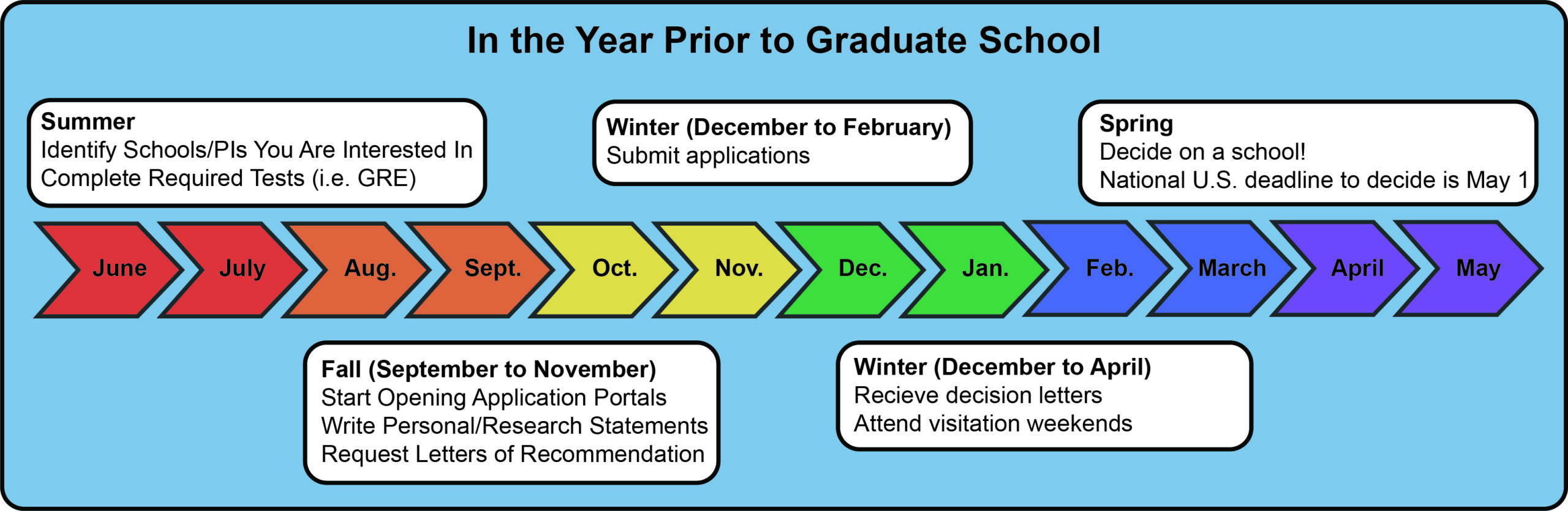
The AI generates comprehensive application timelines:
Critical Milestones:
- GRE/GMAT test dates and score reporting deadlines
- Recommendation requests (6-8 weeks before deadlines)
- Transcript and credential evaluation requests
- Program-specific supplemental materials
- Scholarship and fellowship applications
Calendar Integration:
- Automatic reminders for each deadline
- Buffer time for revisions and unexpected delays
- Coordination across multiple applications
Real Results: How Free AI Transforms Admissions Outcomes
📊 Strategic Program Positioning
Scenario: Applicant with 3.4 GPA in Biology, limited research experience, targeting MS programs in Bioinformatics
Without AI Guidance: Generic program list from rankings, no understanding of prerequisite gaps, missed funding opportunities, generic SOP that fails to demonstrate computational readiness
With Free AI for Graduate School Admissions: Identified prerequisite gaps (programming, statistics), recommended online certifications, built risk-balanced program list emphasizing programs with strong TA pipelines, drafted SOP highlighting computational coursework and career trajectory
Over 18,000 applicants have used this approach to develop realistic program lists that maximize both admission probability and funding potential.
💼 International Applicant Funding Strategy
Scenario: International student from India targeting MS in Computer Science, requiring full funding
Traditional Approach: Applied broadly without understanding funding realities, received multiple admissions without financial support
Free AI for Graduate School Admissions: Prioritized programs with strong RA/TA availability for international students, identified fellowship opportunities, guided early faculty outreach with research interest alignment, clarified visa/OPT timelines
📱 Mobile-First Timeline Management
Scenario: Working professional applying to part-time MPP programs while managing full-time job
Traditional Approach: Missed deadlines, last-minute recommendation requests, disorganized application materials
Free AI for Graduate School Admissions: Generated comprehensive timeline with calendar integration, set reminders for recommendation requests (6 weeks before deadlines), organized program-specific requirements, enabled voice queries for quick deadline checks
🎯 Career Changer Support
Scenario: Marketing professional with 5 years of experience, seeking MS in Data Science to pivot careers
Traditional Approach: Uncertain how to frame career change narrative; applies to programs that don't value non-traditional backgrounds
Free AI for Graduate School Admissions: Identified programs actively seeking career changers; helped craft compelling narrative connecting marketing analytics experience to data science goals; provided guidance on demonstrating quantitative readiness through online coursework and portfolio projects
Extended Use Cases: Beyond Basic Admissions
Prerequisite Gap Analysis
The AI helps identify and address prerequisite gaps:
- Mapping your coursework against program requirements
- Recommending specific courses (online or in-person) to fill gaps
- Suggesting alternative ways to demonstrate competency
- Timeline planning for prerequisite completion before application
Recommendation Strategy
For applicants uncertain about recommenders, the AI provides guidance:
- Selecting recommenders who can provide depth and specificity
- Balancing academic and professional references
- Timing requests appropriately (6-8 weeks before deadlines)
- Preparing recommendation packets with context
Waitlist and Deferral Management
For applicants facing waitlist decisions or considering deferrals:
- Crafting effective letters of continued interest
- Identifying additional materials that could strengthen your case
- Evaluating deferral implications for funding and program fit
- Strategic decision-making between multiple offers
Frequently Asked Questions
Is Free AI for Graduate School Admissions really free?
Yes. Free AI for Graduate School Admissions is available through Jenova's platform, which offers a free tier with full access to all core features including unlimited admissions guidance, program research, and application strategy support. Daily usage limits apply on the free tier; paid subscribers receive significantly higher limits.
How does this compare to human admissions consultants?
The AI provides the same strategic framework used by elite consultants—data-driven program selection, honest competitiveness assessments, and comprehensive application guidance. The key differences: instant availability (no appointment scheduling), no hourly fees, and access to comprehensive data across hundreds of programs. For complex scenarios requiring specialized expertise (visa law, credential evaluation), the AI recommends consulting appropriate professionals.
Can it help with PhD applications?
This AI is optimized for non-professional master's programs (MS, MA, MEng, MPP, MPH, etc.). PhD applications require different positioning (research proposals, faculty fit, publication records) and are not the primary focus of this tool, though it can provide general guidance on research-focused applications.
Does it work for international applicants?
Yes. The AI clarifies visa/OPT considerations, language proficiency requirements (TOEFL/IELTS), credential evaluation processes, and funding constraints specific to international students. It identifies programs with strong international student support and realistic funding prospects.
How current is the program information?
The AI actively researches official program pages, faculty directories, and admissions requirements to ensure recommendations reflect current policies. It also draws on community insights from r/gradadmissions and r/gradschool while prioritizing primary sources.
Will it write my statement of purpose for me?
No—and it shouldn't. The AI provides brainstorming frameworks, structural guidance, and feedback on drafts, but the writing must be authentically yours. This approach ensures your application reflects your genuine voice while benefiting from strategic guidance.
Why This Matters: Democratizing Elite Admissions Guidance
Graduate education has long been criticized for favoring applicants with financial resources. According to Ruffalo Noel Levitz, institutions that fail to understand and serve domestic student needs will struggle as international enrollment fluctuates. Yet most domestic applicants lack access to the strategic guidance that maximizes their chances of admission and funding.
The CGS survey reveals that prospective and current graduate students have significant concerns about visa issues, costs, and political climate. For domestic students, different barriers exist: lack of information about program fit, uncertainty about funding opportunities, and the overwhelming complexity of managing multiple applications across different deadlines.
Free AI for Graduate School Admissions directly addresses this inequality by making sophisticated admissions strategy accessible to everyone. For first-generation students who lack family guidance, working professionals who can't take time off for consultant appointments, and applicants from lower-income backgrounds who can't afford $10,000 consulting packages, this accessibility is transformative.
Start Your Graduate School Journey Today
The path to graduate school shouldn't be determined by whether you can afford a $10,000 consultant. With free AI for Graduate School Admissions, every qualified applicant can access the strategic guidance that makes the difference between rejection and acceptance—between settling for a program and thriving at your best-fit school with funding.
In a landscape where program offerings shift rapidly, international enrollment fluctuates, and testing policies evolve, strategic positioning has never been more important. Over 18,000 applicants have already discovered how AI-powered guidance transforms their admissions outcomes.
Your future graduate education starts with the right strategy. Access Free AI for Graduate School Admissions and begin building your path to graduate school today.
Disclaimer: This guidance is for informational purposes only. Admissions outcomes depend on many factors beyond strategic guidance. Always verify information with official program websites and sources. For complex scenarios involving visa law or credential evaluation, consult appropriate professionals.
References:
- Ruffalo Noel Levitz: 5 Graduate Education Trends to Watch in 2025
- Higher Ed Dive: International Students in US
- CGS: Status of 2025 International Student Admissions
- mbaMission: MBA Programs Offering GMAT/GRE Test Waivers
- Leland: Graduate School Admissions Consultants
- Menlo Coaching: MBA Admissions Consulting Pricing
- Harvard Kennedy School: GRE/GMAT Waiver