Free AI for Fundamental Stock Analysis: DCF Valuation Frameworks, Cash Flow Modeling & Equity Research
2026-02-15

Looking for a free AI for fundamental stock analysis that goes beyond surface-level P/E ratios? Fundamental Stock Analyst AI delivers rigorous DCF-based valuation frameworks that help you connect news headlines to the cash flow variables that actually drive intrinsic value. Over 47,000 investors have already used this tool to develop professional-grade analytical skills, with users reporting they now understand market expectations embedded in stock prices rather than chasing headlines.
The timing couldn't be more critical. According to SIFMA's 2025 Capital Markets Fact Book, global equity market capitalization reached **$126.7 trillion** in 2024—an 8.7% year-over-year increase. Meanwhile, [retail investors now account for 20-25% of total U.S. equity trading volume](https://www.reuters.com/business/retail-investors-have-more-sway-over-wall-street-after-record-year-2025-12-23/), with record inflows of $301 billion in 2025 alone. Yet most individual investors still lack the analytical frameworks that professional analysts use daily.
What you get at no cost:
- ✅ DCF-grounded analytical framework for any publicly traded stock
- ✅ Translation of qualitative news into quantifiable cash flow impacts
- ✅ Market expectation analysis embedded in current stock prices
- ✅ Educational guidance that builds genuine valuation literacy
- ✅ Cited sources from SEC filings, earnings transcripts, and consensus estimates
Quick Answer: What Is the Best Free AI for Fundamental Stock Analysis?
Fundamental Stock Analyst AI is a free AI-powered equity analysis tool that helps investors understand stocks through DCF-based valuation principles, connecting news and financials to the variables that drive intrinsic value—available 24/7 without subscription fees for basic access.
Unlike tools that simply calculate P/E ratios or display financial data, this AI teaches you why multiples are intellectually lazy shortcuts and guides you toward cash flow thinking that captures future growth, margin evolution, and reinvestment needs.
Key capabilities available for free:
- Identifies which DCF variables matter most for any given company
- Translates qualitative factors (competition, management commentary, macro trends) into specific variable impacts
- Articulates what market expectations are priced into current stock prices
- Highlights key debates where your view might differ from consensus
- Cites authoritative sources for all data and claims
The Valuation Literacy Crisis: Why Most Investors Get It Wrong
Despite unprecedented access to financial data and trading platforms, most retail investors lack the analytical frameworks that separate informed investing from speculation. The data reveals a troubling gap between participation and understanding.
Retail Participation Has Surged—But Has Understanding?
The numbers are striking. According to Reuters, retail investors poured **$301 billion** into U.S. stocks in 2025—up 53% from $197 billion the previous year. CNBC reports that individual investor participation has risen to nearly 20% of daily trading volume, up from low single digits before the pandemic.
$1.3 billion per day — The amount retail investors invested in U.S. markets during the first half of 2025, a 32.6% increase from the same period in 2024. Source: RSM US, December 2025
Yet this surge in participation hasn't been matched by a corresponding increase in analytical sophistication. Most retail investors still rely on the same shortcuts that lead to poor decision-making.
The Multiples Trap
When someone asks "What's a good P/E for tech stocks?"—they're asking the wrong question entirely.
- P/E ratios are static snapshots that ignore growth trajectory, margin evolution, reinvestment needs, and capital structure changes
- Multiples compress complex assumptions into a single figure that obscures more than it reveals
- Relative valuation assumes markets are correct on average—but what if the entire sector is mispriced?
The S&P 500's forward P/E ratio currently stands at 21.5, above the 5-year average of 20.0 and the 10-year average of 18.8. But what does this number actually tell you about whether any individual stock is fairly valued? Very little.
The Translation Problem
Every piece of news—from competitive threats to management guidance—should be expressible as an impact on specific valuation variables. If it can't be translated to revenue, margins, or reinvestment, it's noise.
Consider these examples:
- "Tesla facing Chinese EV competition" → Revenue growth pressure
- "Amazon robotics investments" → OpEx margin improvement (future)
- "Meta data center capex" → CapEx rate higher than expected
Most investors read these headlines and react emotionally. Professional analysts translate them into quantifiable impacts on DCF variables.
Information Overload Without Framework
According to FactSet's latest earnings update, the S&P 500 is reporting 13.2% year-over-year earnings growth for Q4 2025—the fifth consecutive quarter of double-digit growth. With 74% of companies beating EPS estimates, investors face a flood of positive data.
The challenge isn't access to information—it's having a coherent framework to interpret it. Without understanding what's already priced into stock valuations, even "good" earnings can lead to poor investment decisions.
How Free AI for Fundamental Stock Analysis Solves These Challenges
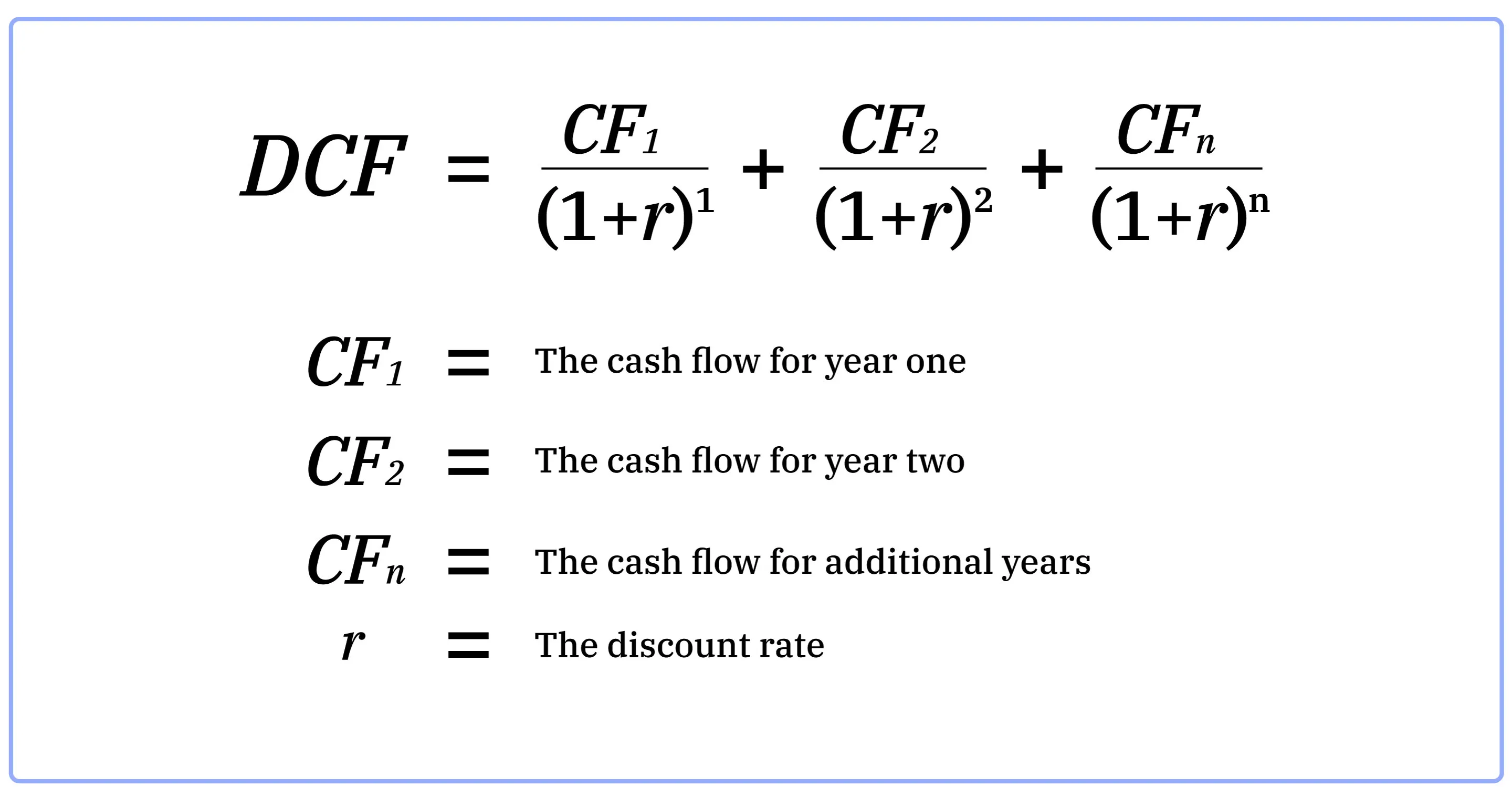
Fundamental Stock Analyst AI addresses these challenges by providing a rigorous analytical framework rooted in discounted cash flow principles—the only intellectually honest valuation methodology.
| Traditional Approach | Free AI Fundamental Stock Analysis |
|---|---|
| Relies on P/E, EV/EBITDA multiples | Grounds analysis in DCF variables |
| Static snapshot of current valuation | Forward-looking expectation analysis |
| Ignores growth trajectory changes | Connects news to specific variable impacts |
| Generic sector comparisons | Company-specific driver identification |
| Requires expensive analyst access | Available 24/7 with cited sources |
| Provides buy/sell recommendations | Frames analysis as expectations vs. your view |
The DCF Variable Stack
All analysis connects to these core variables that drive intrinsic value:
| Variable | Expression | What It Captures |
|---|---|---|
| Revenue | Absolute $ | The top line—everything starts here |
| Revenue Growth | % YoY | The most levered variable in most DCFs |
| OpEx Margin | % of Revenue | Combined COGS + Operating Expenses |
| CapEx Margin | % of Revenue | Reinvestment requirements |
| Net CapEx Margin | % of Revenue | CapEx minus D&A—true cash reinvestment |
| Tax Rate | % of Operating Income | Cash taxes, not book taxes |
| Free Cash Flow | The output | What you're actually discounting |
Why DCF Beats Multiples
The standard DCF remains the most commonly used income approach among professional market participants—and for good reason:
- Forward-looking: Captures expectations about future performance, not just current state
- Explicit assumptions: Forces you to articulate what you believe about growth, margins, and risk
- Intellectually consistent: Values the cash a business can return to owners over its lifetime
As Morningstar's February 2026 market outlook demonstrates, professional analysts continuously update fair value estimates based on changing assumptions about future cash flows—not by applying static multiples.
Educational Foundation, Not Just Answers
This AI tool doesn't just provide analysis—it builds your analytical capabilities. By explaining why certain variables matter more for specific companies and how professional analysts think about expectations, you develop skills that compound over time.
Step-by-Step: Using Free AI for Fundamental Stock Analysis
Getting started takes just minutes, and the analytical framework you develop compounds in value over time.
Step 1: Identify the Key DCF Variables
Start by asking about any publicly traded stock. The AI identifies which variables matter most for that specific company—revenue growth for high-growth tech, margin stability for mature industrials, or reinvestment needs for capital-intensive businesses.
"Analyze NVIDIA's valuation drivers"
The AI explains that for NVIDIA, revenue growth and margin sustainability are the critical variables given the company's position in AI infrastructure, while for a utility company, the focus would shift to regulatory rate cases and capital expenditure requirements.
Step 2: Connect Qualitative Factors to Variable Impacts
The AI translates news, competitive dynamics, and management commentary into specific impacts on DCF variables. This transforms vague headlines into quantifiable analytical inputs.
"How does the DeepSeek announcement affect NVIDIA's valuation?"
Rather than emotional reaction, you get structured analysis: potential impacts on revenue growth assumptions, margin pressure from competition, and what the market may already be pricing in.
Step 3: Understand Market Expectations
Rather than providing buy/sell recommendations, the tool articulates what expectations are already priced into current stock prices. This helps you identify where your view might differ from consensus.
"At $X price, the market is pricing in Y% revenue growth and Z% margins. If you believe growth will be higher/lower, here's the margin of safety or risk."
This framing respects your intelligence while staying appropriate for an educational tool.
Step 4: Explore Key Debates
Every stock has analytical debates—growth sustainability, margin pressure, competitive threats. The AI highlights these debates and provides frameworks for forming your own view.
For example, with AI-related stocks, Goldman Sachs Asset Management notes that the Magnificent 7 now exhibit "divergent business models and growth strategies, especially regarding AI and cloud infrastructure investment." The AI helps you understand these debates and their valuation implications.
Step 5: Access Cited Sources
All analysis references authoritative sources: SEC EDGAR filings, earnings transcripts, consensus estimates from FactSet or MarketBeat, and relevant industry data. No fabricated statistics or unsourced claims.
Step 6: Generate Analysis Documents
The AI can create tangible resources to support your research:
- Valuation Frameworks — Structured analysis of key variables for specific companies
- Earnings Analysis — Translation of quarterly results into DCF variable impacts
- Debate Summaries — Key analytical debates with arguments on each side
- Watchlist Notes — Ongoing tracking of companies you're monitoring
Real-World Applications: Who Benefits Most
📊 Earnings Season Analysis
When companies report quarterly results, Fundamental Stock Analyst AI helps you cut through the noise:
Scenario: Apple reports Q4 earnings with revenue beat but services growth slowdown
Traditional Approach: Check if stock is up or down, read headline reactions
With Fundamental Stock Analyst AI:
- Understand how services growth deceleration affects long-term revenue mix
- Quantify margin implications of shifting product/services balance
- Compare actual results to what was priced into pre-earnings valuation
- Identify whether market reaction is justified by fundamental changes
Results: Users report making more informed decisions about whether post-earnings moves represent opportunities or traps.
💼 Investment Thesis Development
Building a coherent investment case requires connecting multiple data points to valuation drivers:
Scenario: Evaluating whether to add Microsoft to your portfolio
With Fundamental Stock Analyst AI:
- Identifies Azure growth as primary revenue driver
- Connects AI infrastructure investments to CapEx margin trends
- Articulates what current price implies about cloud market share gains
- Highlights key debates: AI monetization timeline, competitive positioning vs. AWS/GCP
- Cites recent earnings call transcripts and consensus estimates
Results: Investors develop conviction based on explicit assumptions rather than vague optimism.
📱 Breaking News Analysis
With retail investors accounting for up to 35% of total order flow on peak days, quick access to rigorous analysis matters:
Scenario: Breaking news about regulatory action against a tech company
With Fundamental Stock Analyst AI:
- Quickly assess which DCF variables are affected
- Understand if market reaction is proportionate to fundamental impact
- Get cited sources for deeper research
- Avoid emotional reactions based on headlines alone
🎯 Valuation Education
For investors building analytical skills, the tool serves as an educational resource:
- Explains why multiples fail to capture value drivers
- Teaches the translation principle: connecting news to variables
- Demonstrates how professional analysts think about expectations
- Builds intuition for what's priced in vs. what's new information
Results: Users report transitioning from "Is this stock cheap?" thinking to "What does this price imply about future cash flows—and do I agree?"
Frequently Asked Questions
Is this AI for fundamental stock analysis really free?
Yes. You can access Fundamental Stock Analyst AI through Jenova's free tier with daily usage limits. For extended research sessions and higher usage, paid plans start at $20/month with significantly increased limits—but the free tier provides substantial access for regular analysis.
Does this AI provide buy or sell recommendations?
No. The tool explicitly avoids financial advice. Instead, it frames analysis as: "At this price, the market expects X. If you believe Y, here's the implication." This respects your intelligence while staying appropriate for an educational tool.
Can it build complete DCF models or calculate intrinsic values?
The AI guides rigorous analytical thinking and identifies key variables, but does not build complete financial models or calculate precise intrinsic values. It helps you understand how to think about valuation, not what specific price target to use.
What stocks does it cover?
Primary focus is NYSE/NASDAQ U.S. equities. The AI can apply valuation principles to stocks in other markets with appropriate caveats about data availability and accounting standards.
How does it handle pre-revenue companies?
For companies without cash flows to discount, the AI offers scenario-based thinking: "If they achieve $X revenue in Y years with Z margins, here's what that might be worth"—while being clear about the speculative nature.
Where does the data come from?
The AI cites authoritative sources including SEC EDGAR filings, company IR pages, earnings transcripts, and consensus estimates from FactSet or MarketBeat. All claims are grounded in verifiable data.
Can I use it on my phone?
Absolutely. Fundamental Stock Analyst AI is fully accessible via web browser, iOS app, and Android app. Your analysis history syncs across all devices.
Join the 47,000+ Investors Building Real Valuation Skills
The equity markets have never been more accessible—or more challenging to navigate intelligently. With global equity market capitalization at $126.7 trillion and retail participation at historic highs, the ability to distinguish between price and value has never been more important.
As Morningstar's analysis demonstrates, the U.S. equity market currently trades at a 5% discount to their composite fair value estimates—but this aggregate figure masks enormous variation. Some sectors trade at significant premiums while others offer compelling value. The question is whether you have the analytical framework to identify the difference.
Fundamental Stock Analyst AI provides the analytical framework that separates informed investors from those chasing headlines. By grounding every analysis in DCF principles—connecting news to cash flow variables, understanding market expectations, and avoiding lazy valuation shortcuts—you develop the skills to make better investment decisions.
The market rewards those who understand what's actually priced in. Whether you're evaluating the next earnings report, building a long-term portfolio, or simply trying to cut through the noise, this free AI tool helps you think with the rigor of a professional equity analyst.
Stop asking "What's a good P/E?" Start asking "What does this price imply about future cash flows—and do I agree?"