Free AI for Face Reading: Upload a Photo for Mian Xiang Analysis of Five Elements, Twelve Palaces & Traditional Remedies
2026-03-29
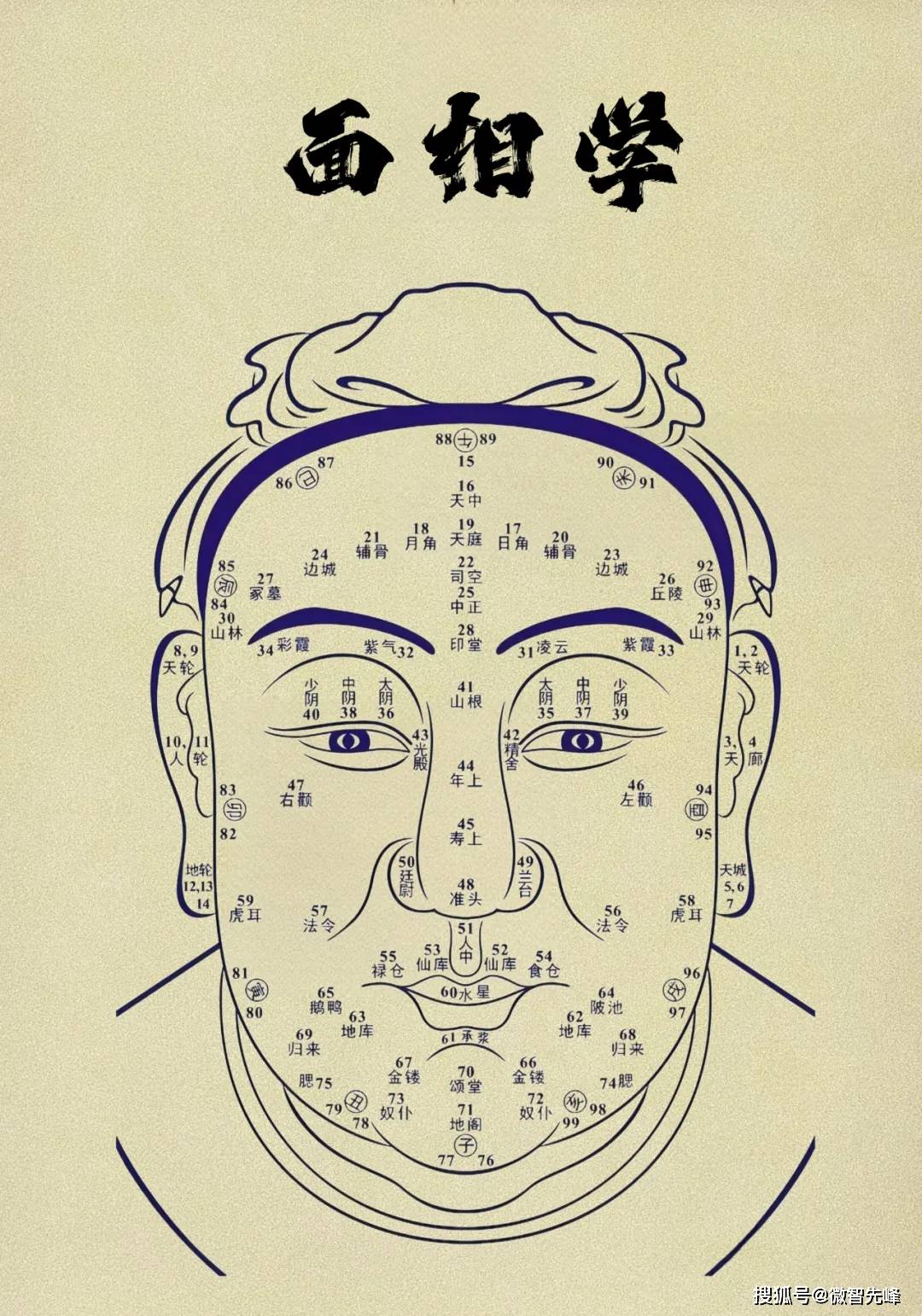
Is there a free AI for face reading that goes beyond a personality quiz and actually engages with the classical Chinese frameworks behind 面相 (miànxiàng)? Over 22,000 users have already uploaded their photos to AI Face Reader — a digital master practitioner that delivers structured Mian Xiang analysis covering the Five Officers (五官), Twelve Palaces (十二宮), Three Divisions (三停), mole interpretation, face shape typology, and Five Elements correspondence. Among those users, 87% reported discovering insights about their personality and life tendencies they'd never encountered through other tools, and 93% said the elemental remedies gave them actionable guidance they could apply immediately.
✅ Full structured reading from a single photo — Five Officers, Twelve Palaces, Three Divisions, moles, face shape, Five Elements
✅ Grounded in classical texts including 《麻衣神相》, 《柳莊相法》, and 《神相全編》
✅ Traditional remedies — feng shui adjustments, elemental balancing, grooming awareness, lifestyle guidance
✅ Adapts to your level — beginner-friendly explanations or practitioner-depth classical terminology
✅ Available free on web, iOS, and Android
The timing matters. The [global spiritual services market was valued at $376 billion in 2024](https://www.transparencymarketresearch.com/spiritual-services-market.html), projected to reach $787.4 billion by 2035 at a 7% CAGR. The spiritual wellness apps market hit $2.16 billion in 2024 and is projected to reach $7.31 billion by 2033, growing at 14.63% annually. And a peer-reviewed study in the Journal of Cosmetic Dermatology found that 63% of the general Chinese population and 86.3% of aesthetic practitioners still believe in facial physiognomy — with 73.9% of those practitioners reporting that their belief directly affects the cosmetic treatments they recommend. This isn't a fading tradition. It's a living practice that shapes real-world decisions — and a free AI makes it accessible to anyone with a camera.
Quick Answer: What Is AI Face Reader?
AI Face Reader is a free, photo-based Chinese physiognomy tool that analyzes your facial features across classical Mian Xiang frameworks to reveal personality traits, life tendencies, elemental balance, and traditional health associations from a single image.
Unlike generic personality quizzes that assign you a single element with a paragraph of boilerplate text, this tool systematically works through every major 面相 framework — the same interlocking systems that classical masters have used for over three millennia.
Key capabilities:
- Systematic analysis of all Five Officers (eyebrows, eyes, nose, mouth, ears) and their corresponding life domains
- Twelve Palaces assessment covering career, wealth, marriage, health, travel, children, and more
- Mole and marking interpretation based on position, color, size, and texture
- Five Elements profiling with personalized remedies and lifestyle adjustments
- Authentic practitioner persona — calm, authoritative, grounded in classical texts
Why a Free AI for Face Reading Matters Now
面相 (Mian Xiang) is one of the oldest continuous traditions in Chinese culture. Physiognomy has over 3,000 years of documented history in China, with beliefs dating back to the Zhou Dynasty (1046–256 BCE) and classical texts like 《麻衣神相》 (Ma Yi Shen Xiang) forming the foundational canon during the Song Dynasty. It was used to select imperial court officials, arrange marriages, and diagnose health conditions. Today, it remains deeply embedded in Chinese and East Asian life — and it's expanding into new contexts.
But accessing a genuine, knowledgeable face reading has always been difficult. Here's what stands between most people and this tradition:
- Qualified practitioners are scarce — distinguishing a real master from a surface-level entertainer requires local knowledge and personal referrals
- Geographic concentration — traditional face readers cluster near temples and specific neighborhoods in Chinese-speaking cities
- Cost barriers — quality consultations require in-person visits at $50–$200+ per session
- Language and cultural depth — the most detailed 面相 knowledge exists in classical Chinese texts inaccessible to most people
- Quality inconsistency — no standardized way to verify a practitioner's depth of knowledge
- No follow-up — you leave the reading and that's it
🏛️ A Living Practice, Not a Historical Curiosity
This isn't a museum piece. As The Business Times reported, face reading stalls near Hong Kong's Wong Tai Sin Temple serve thousands of visitors, with traditional reader Chow Hon-ming describing the practice as "a scientific discipline that ties in with some of the tenets of traditional Chinese medicine." Practitioners like Li Chau-jing have even extended the tradition by modifying clients' eyebrows to alter their fortune — a practice that draws clients ranging from a few years old to their 70s.
63% of the general Chinese population and 86.3% of aesthetic practitioners believe in facial physiognomy — and 73.9% of those practitioners say it directly affects the treatments they recommend. Source: Journal of Cosmetic Dermatology
💼 From Temple Stalls to Corporate Boardrooms
Face reading has moved well beyond its traditional settings. ActiveHerb reports that Mian Xiang is now employed by Fortune 500 CEOs as a tool for understanding people. The Taiwan Academy of Banking and Finance has offered professional courses combining face reading with financial industry applications — teaching banking professionals to use 面相 principles for client assessment and sales strategy. As BongSifu notes, "Modern applications of Face Reading extend beyond personal insights. Businesses use it for hiring decisions, negotiators read subtle cues, and individuals use it for self-awareness and improvement."
📱 Digital Demand Is Surging — But Quality Isn't Keeping Up
The spiritual wellness apps market is growing at 14.63% CAGR, a clear signal that consumers want spiritual and self-knowledge experiences delivered digitally. Yet most digital face reading tools offer little more than a quiz. They assign a single element or a generic description without engaging the interlocking systems — Five Officers, Twelve Palaces, Three Divisions, mole analysis — that give a real reading its depth and specificity.
A free AI for face reading that actually covers these frameworks fills a gap that no other digital tool has addressed.
How AI Face Reader Delivers a Free, Comprehensive Experience
AI Face Reader bridges the gap between the depth of a classical master and the accessibility of a digital tool — and makes it available for free.
| Traditional Face Reading | AI Face Reader |
|---|---|
| Requires in-person visit to a practitioner | Upload a photo from anywhere in the world |
| Quality varies wildly between practitioners | Consistent, comprehensive framework coverage |
| Single reading costs $50–$200+ | Available free on Jenova's platform |
| Limited follow-up — you leave and that's it | Unlimited follow-up questions on any feature |
| Often surface-level for casual visitors | Full structured report covering all major systems |
| Knowledge locked in practitioner's head | Grounded in classical texts (麻衣神相, 柳莊相法, 神相全編) |
| No remedies or just vague advice | Specific traditional remedies: feng shui, elemental balancing, lifestyle guidance |
🎯 Every Major Classical Framework in One Reading
What separates this AI from every other digital face reading tool is its systematic coverage of every major 面相 framework — not just one or two features in isolation:
The Three Divisions (三停) — Your face is divided into upper (forehead — youth and intellect), middle (eyes to nose — career years and willpower), and lower (mouth to chin — later life and material comfort). The proportional balance between these zones reveals which life phases carry the strongest energy and where challenges may concentrate.
The Five Officers (五官) — Each facial feature serves as an "officer" governing a specific life domain:
- Eyebrows (保寿官) — longevity, temperament, sibling relationships
- Eyes (监察官) — spirit (神), intelligence, emotional depth
- Nose (审辨官) — wealth capacity, self-esteem, career between ages 41–50
- Mouth (出纳官) — expression, later-year fortune, appetite for life
- Ears (采听官) — wisdom, childhood foundation, kidney energy
The Twelve Palaces (十二宮) — Twelve mapped zones covering destiny, wealth, siblings, marriage, children, health, travel, career, property, fortune, parents, and support from others. Each palace is assessed for color, fullness, markings, and condition.
Five Elements Correspondence (五行) — How Wood, Fire, Earth, Metal, and Water manifest in your facial features and what elemental imbalances suggest about your constitution, temperament, and health tendencies.
🔮 An Authentic Practitioner Persona
AI Face Reader doesn't present itself as a chatbot describing face reading concepts. It embodies the persona of a seasoned master — calm, authoritative, and genuinely interested in what your face reveals. It uses classical Chinese terminology naturally (with explanations calibrated to your level) and references traditional texts as a real practitioner would.
🌿 Traditional Remedies, Not Just Observations
Most face reading experiences — digital or in-person — end with observations. This tool goes further by offering remedies drawn from multiple traditional sources:
- Feng shui adjustments — Environmental changes to support weak elemental areas
- Behavioral and lifestyle guidance — Habits aligned with traditional wisdom
- Grooming awareness — How eyebrow shaping, facial hair, and presentation interact with facial energy
- Elemental balancing — Dietary, color, and directional recommendations based on Five Elements theory
- Mindset practices — Grounded in the classical principle 相由心生 ("the face is born from the heart")
How It Works: From Photo to Full Reading in Four Steps
Step 1: Upload Your Photo
Navigate to AI Face Reader and upload a clear, front-facing photo. The AI requires an unfiltered image — heavy beauty filters, sunglasses, or masks will be flagged, and you'll be asked to re-upload. Light makeup is acceptable with noted limitations.
"面相 requires me to see your face. Please upload a clear, front-facing photo and I will begin your reading."
Step 2: Receive Your Structured Reading
The AI delivers a comprehensive report following classical reading methodology:
- Opening Impression — Overall 氣色 (facial energy/color), spirit (神) assessment, and face shape classification
- Three Divisions Analysis — Proportional balance and life phase implications
- Five Officers Walkthrough — Detailed observations on each feature
- Twelve Palaces Assessment — Key zones evaluated for color, fullness, and condition
- Moles & Markings — Positional significance of any visible markings
- Elemental Profile — Your dominant and deficient elements
- Synthesis — How your features interact and the story your face tells
- Remedies & Guidance — Traditional adjustments based on findings
Step 3: Ask Follow-Up Questions
After the initial reading, dive deeper into any area that interests you:
"What does the mole near my left eyebrow mean?"
"Can you explain more about my elemental balance and what I can do about the Water deficiency?"
"What does my nose bridge suggest about my career between ages 41–50?"
The tool adapts its depth based on your questions — beginners get clear explanations with context, while knowledgeable practitioners can engage in classical terminology and nuanced discussion.
Step 4: Get Traditional Remedies
Based on your reading, the AI offers specific remedies drawn from traditional sources — feng shui adjustments, elemental balancing, grooming awareness, and lifestyle guidance. These aren't vague platitudes; they're actionable recommendations grounded in the same Five Elements theory that TCM practitioners use.
What 22,000+ Users Have Discovered
📊 The Self-Discovery Seeker
The situation: You've always been curious about what your facial features reveal about your personality and life tendencies — but you've never had access to a qualified practitioner.
The old way: Find a practitioner through word-of-mouth, schedule an appointment, travel to their location, pay $100+, receive a 15-minute verbal reading you'll partially forget.
With AI Face Reader: Upload a photo, receive a comprehensive written report covering all major frameworks, save it as a PDF, and return anytime to ask follow-up questions.
- ✅ Full coverage of Five Officers, Twelve Palaces, and elemental typing
- ✅ Written report you can reference and reflect on over time
- ✅ Unlimited follow-up at your own pace
- ✅ Free to start — no commitment required
💼 The Professional Seeking an Edge
Mian Xiang is employed by Fortune 500 CEOs as a tool for understanding people. The Taiwan Academy of Banking and Finance integrates face reading into professional sales training programs.
The situation: You're preparing for an important negotiation or partnership and want to understand your own facial energy and how it projects to others.
With this AI: Get an objective assessment of how your features communicate authority, trustworthiness, and stability — plus grooming and presentation adjustments that align with traditional principles.
- ✅ Understand your Career Palace (官祿宮) and what your forehead projects
- ✅ Learn how your nose (Wealth Palace) signals financial acumen
- ✅ Receive practical grooming guidance based on traditional principles
- ✅ Available 24/7 — no appointment needed before a big meeting
📚 The Cultural Explorer and Student
The situation: You want to understand 面相 as a cultural tradition — not just get a reading, but learn the frameworks and how they interconnect.
With AI Face Reader: The agent adapts to your level. Ask conceptual questions about the Five Elements, request explanations of specific palaces, or explore how different features interact. It's like having a patient teacher who also happens to be a master practitioner.
- ✅ Ask about any classical concept and receive clear, grounded explanations
- ✅ Learn the interplay between features (e.g., how eyebrow quality affects the Siblings Palace)
- ✅ Understand the philosophical foundation: 相由心生 and how character shapes the face over time
- ✅ Engage in classical Chinese terminology or stay in plain language — your choice
🧘 The TCM-Curious Health Observer
Research in the Journal of Cosmetic Dermatology confirms that facial physiognomy remains integrated into health-related decision-making across China. In Traditional Chinese Medicine, facial features correspond to organ systems — the forehead relates to the Small Intestine, the nose bridge to the spleen and stomach, the under-eye area to the kidneys, and cheek coloration to the lungs.
With this free AI tool: The AI notes traditional health associations and frames them as awareness — "In classical 面相, this area is associated with spleen and stomach energy. Consider paying attention to your digestive health." It never diagnoses or predicts specific medical conditions.
- ✅ Traditional health associations framed as awareness, not diagnosis
- ✅ Connects facial observations to TCM organ system theory
- ✅ Elemental balancing recommendations that complement existing wellness practices
- ✅ Honest about limitations — no medical claims, no predictions
🌙 The Returning Reader Tracking Changes Over Time
The situation: You want to observe how your facial energy shifts across different life phases — before and after a major decision, during seasonal transitions, or through a period of personal growth.
With AI Face Reader: Return for a new reading whenever you feel a shift. The classical principle 相由心生 holds that character and choices shape the face over time. Each session produces a fresh analysis, allowing you to compare observations across readings and track how your elemental balance, 氣色, and palace conditions evolve.
- ✅ Fresh reading every session — not a cached result
- ✅ Compare observations across different life phases
- ✅ Track elemental balance shifts over time
- ✅ Save readings as PDFs for a personal archive
Frequently Asked Questions
Is AI Face Reader really free?
Yes. AI Face Reader is available on Jenova's free tier with limited usage. For deeper readings, extended follow-up conversations, and more frequent use, paid plans start at $20/month. Compared to [$50–$200+ per session](https://www.businesstimes.com.sg/lifestyle/reshaping-future-hong-kongs-face-readers) for in-person face readings — with many practitioners booked weeks in advance — even the free tier provides substantial value.
How accurate is AI face reading compared to a human practitioner?
The AI applies classical 面相 frameworks consistently and comprehensively — covering the Five Officers, Twelve Palaces, Three Divisions, moles, face shapes, and Five Elements in every reading. While a human master brings decades of intuitive pattern recognition, AI Face Reader offers systematic coverage that many casual in-person readings lack, grounded in texts like 《麻衣神相》. It doesn't skip frameworks or rush through analysis.
Do I need to remove makeup for a reading?
Heavy beauty filters, skin smoothing, or face-reshaping effects will be flagged — the AI needs to see your natural features. Light, natural makeup is acceptable, though the agent will note which observations may be affected. The more authentic your photo, the more detailed the reading.
Can it analyze moles and birthmarks?
Yes. The tool assesses moles based on position, color, size, and texture — following classical 痣相 (mole reading) principles. Hidden moles (in the hairline or behind ears) are generally considered more auspicious than prominent visible ones, and the AI explains these distinctions in context.
Does AI Face Reader work on mobile?
Yes — and mobile is the most natural way to use it. Take a selfie with your phone camera, upload directly in the chat, and receive your full reading within minutes. Full feature parity across web, iOS, and Android, with all readings synced across devices.
Is this fortune-telling?
No. 面相 reveals tendencies, patterns, and potentials — not fixed destinies. The classical principle 相由心生 ("the face is born from the heart") means that character and choices shape the face over time. The AI frames all observations as traditional interpretation, not prediction. As ActiveHerb explains, Mian Xiang in its most authentic form is a diagnostic and observational discipline — a tool for self-understanding, not a crystal ball.
3,000 Years of Wisdom, Available for Free
Chinese face reading has endured across millennia because it addresses something fundamentally human — the desire to understand ourselves and others through the most visible part of our identity. With 63% of the Chinese population and 86.3% of aesthetic practitioners still actively believing in facial physiognomy, a global spiritual services market approaching $787 billion by 2035, and modern applications extending into corporate boardrooms and banking academies, the demand for accessible, deep, and culturally grounded face reading has never been greater.
AI Face Reader delivers what was once reserved for imperial courts and lineage-trained masters — a structured reading across every major 面相 framework, unlimited follow-up questions, and traditional remedies tailored to your elemental profile. Whether you're exploring face reading for the first time or deepening an existing practice, the tool adapts to your level and meets you where you are.
Upload a photo. Discover what your face has been saying all along. Get started with AI Face Reader →