Free AI for Energy Analysis: Trilemma Scorecards, Cost Curves & Geopolitical Risk Mapping Without Consulting Fees
2026-04-14
Looking for a free AI for energy analysis that delivers more than surface-level commentary? AI Energy Analyst provides institutional-quality energy intelligence — trilemma scorecards, technology cost curve assessments, geopolitical chokepoint mapping, and policy evaluation — grounded in real-time data from the IEA, EIA, BloombergNEF, and Ember, and available on a free tier right now. In a year when $2.3 trillion flowed into the energy transition, the Strait of Hormuz crisis created what the IEA's director called "the largest supply disruption in the history of the global oil market", and global electricity demand is growing at 3.6% annually — the need for rigorous, accessible energy analysis has never been more acute. More than 18,000 users — from renewable energy developers evaluating project economics to policy advisors drafting national energy strategies — have already used this AI to make sense of the most complex energy landscape in a generation.
✅ Free tier access — no credit card, no paywall for core analytical capabilities ✅ Trilemma-balanced analysis: security, affordability, sustainability — no ideological bias ✅ Real-time research grounded in IEA, EIA, BloombergNEF, Ember, and IRENA data ✅ Physics-first technology assessments from solar and batteries to nuclear and hydrogen
To understand why free access to this caliber of energy intelligence matters right now, consider the forces reshaping global energy systems in April 2026 — and who currently gets to understand them.
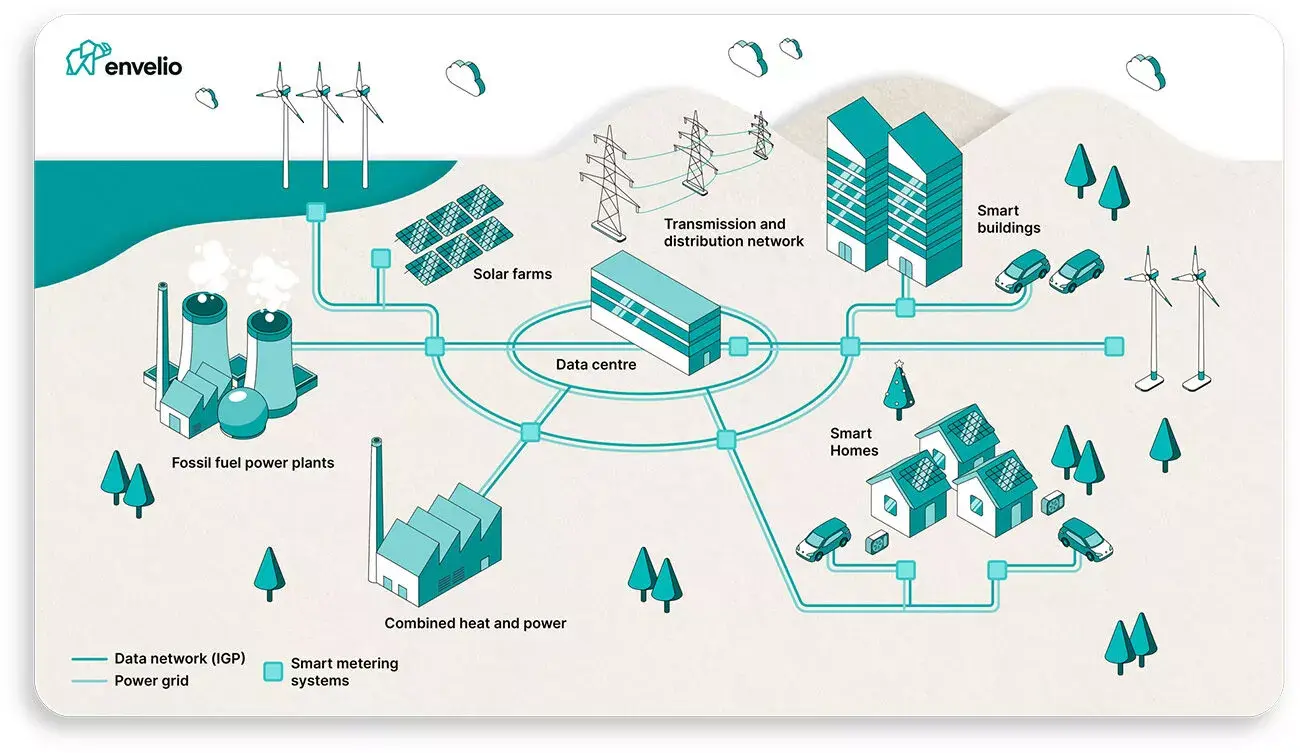
Quick Answer: What Is AI Energy Analyst?
AI Energy Analyst is a free AI-powered energy intelligence tool that delivers trilemma-balanced analysis of power systems, technology costs, and geopolitical risks in seconds. It searches authoritative sources like the IEA, EIA, BloombergNEF, and Ember in real time to ground every assessment in current data.
Key capabilities:
- Country-level energy trilemma scorecards covering security, affordability, and sustainability
- Technology feasibility assessments with cost curve rigor (LCOE, LCOS, LCOH)
- Geopolitical-energy nexus analysis — chokepoints, sanctions, supply chain disruptions
- Policy evaluation that distinguishes what works from what doesn't, grounded in physics and economics
The 2026 Energy Landscape: Why Free Analysis Matters Now
April 2026 is arguably the most complex moment in global energy history. Three simultaneous forces — a geopolitical crisis disrupting the world's most critical oil chokepoint, a renewable energy buildout reaching unprecedented scale, and AI-driven electricity demand surging across advanced economies — are colliding in ways that make rigorous energy analysis essential for anyone making decisions that touch energy systems.
- The Hormuz crisis is rewriting energy security assumptions — The IEA's Fatih Birol called it "the largest supply disruption in the history of the global oil market", affecting not just oil but 9 critical non-oil commodities from fertilizers to helium
- Renewable capacity is surging — Global renewable power capacity reached 5,149 GW in 2025 after adding 692 GW, a 15.5% annual increase
- Electricity demand growth is accelerating — The IEA forecasts 3.6% average annual growth through 2030, 50% faster than the previous decade's average
- Only 28% of countries managed to advance across all three trilemma dimensions simultaneously, per the WEF Energy Transition Index 2025
- Technology hype continues to outpace deployment reality — hydrogen investment reached just $7.3 billion in 2025, while electrolysis capacity is only now beginning to scale
🛢️ The Hormuz Crisis Exposed a Structural Vulnerability
The near-closure of the Strait of Hormuz has made one thing unmistakable: energy analysis without geopolitical awareness is dangerously incomplete. According to the U.S. Energy Information Administration, oil flow through the strait averaged 20 million barrels per day in 2024 — equivalent to about 20% of global petroleum liquids consumption. An estimated 84% of crude oil flowing through Hormuz is destined for Asian markets, and roughly 25% of global oil trade and 20% of global LNG trade move through this single passage.
Only ~2.6 million b/d of pipeline bypass capacity exists to reroute flows around the Strait of Hormuz — against 20 million b/d of daily transit. Source: U.S. Energy Information Administration
Understanding the transmission mechanism from this chokepoint disruption to LNG pricing in Asia, fertilizer availability in India, or battery material costs in Europe requires the kind of integrated, cross-domain analysis that most available tools simply cannot deliver.
⚡ The Clean Energy Buildout Is Real — But Unevenly Distributed
The scale of renewable deployment is staggering. IRENA reported that 2025 saw total renewable power capacity reach 5,149 GW — with renewables now approaching almost 50% of global electricity capacity. In the U.S. alone, renewables accounted for 88% of new generating capacity added in 2025.
Yet Ember's analysis reveals a more nuanced picture: solar and wind have for the first time outpaced global electricity demand growth across a sustained period, supplying 17.6% of global electricity in the first three quarters of 2025. But grid congestion in hubs like Frankfurt, London, and Dublin has created 7–10-year connection queues, and more than 2,500 GW of projects remain stalled in grid connection queues worldwide.
🔬 Technology Hype Still Obscures Reality
From "hydrogen for everything" narratives to fusion timelines that perpetually recede, the energy sector remains saturated with hype cycles. BloombergNEF found that hydrogen investment totaled just $7.3 billion in 2025, while S&P Global projects electrolysis deployment reaching 4.5 GW in 2026 — meaningful growth, but far from the scale needed to justify the most ambitious hydrogen roadmaps. Distinguishing between what is technically feasible, economically viable, and deployable at scale requires physics-first, cost-curve-grounded analysis.
How This Free AI for Energy Analysis Fills the Gap
AI Energy Analyst is built to address exactly these challenges. It combines the analytical depth of a top energy research desk with the speed and accessibility of AI — and makes the core capabilities available at no cost.
| Traditional Energy Research | AI Energy Analyst |
|---|---|
| Hours reading separate IEA, EIA, IRENA, and BNEF reports | Synthesized analysis from authoritative sources in seconds |
| Ideologically filtered commentary from all directions | Trilemma-balanced, physics-first analysis |
| Stale data from months-old publications | Real-time search across current energy data and geopolitical events |
| Fragmented: separate tools for policy, technology, and markets | Full-spectrum: systems, technology, geopolitics, and finance integrated |
| Generic AI that fabricates energy statistics | Grounded in authoritative sources with inline citations |
| Avoids calling out bad policy | Blunt analytical clarity — identifies trade-offs explicitly |
🔺 The Energy Trilemma as Analytical Foundation
Every analysis from this AI is structured through the energy trilemma — the framework used by the World Energy Council to evaluate energy systems across 120+ countries:
- Security — Can the system reliably meet demand, withstand shocks, and maintain supply diversity?
- Affordability — Is energy accessible and affordable for households and industry?
- Sustainability — Is the system transitioning toward lower emissions and environmental impact?
The WEF's 2025 Energy Transition Index found that only 28% of countries achieved gains across all three dimensions — because most energy policy optimizes one dimension while ignoring the other two. AI Energy Analyst identifies these trade-offs explicitly.
🌍 Geopolitical-Energy Integration
Unlike generic AI tools, AI Energy Analyst actively searches for current geopolitical context when analyzing energy markets. It understands how the Hormuz crisis transmits into fertilizer supply chains, battery material costs, and helium availability for semiconductor manufacturing — because energy analysis without geopolitical awareness produces dangerously incomplete conclusions.
🔬 Anti-Hype Discipline
The tool distinguishes between three very different things: technically feasible, economically viable, and deployable at scale. When Ember's analysis shows that solar paired with batteries can deliver round-the-clock electricity at around $104/MWh in high-insolation regions, that's a meaningful data point. When someone claims hydrogen will replace natural gas for home heating by 2030, AI Energy Analyst's physics-first approach identifies why the thermodynamics and cost curves don't support that timeline.
Step-by-Step: Getting Free Energy Analysis
Step 1: Ask Any Energy Question
Open AI Energy Analyst and ask anything across the full energy spectrum — from country-level trilemma assessments to technology feasibility questions to geopolitical impact analysis.
"How is the Strait of Hormuz crisis affecting Asian LNG markets, and what are the realistic bypass options?"
Step 2: Get Real-Time, Source-Grounded Analysis
The AI searches authoritative sources — IEA, EIA, BloombergNEF, Ember, IRENA, and specialist energy press — to ground its analysis in current data. Every statistic comes with a citation.
"What's the actual cost of green hydrogen today for industrial decarbonization, and where does it pencil out?"
Step 3: Receive Structured, Trilemma-Framed Output
Responses follow the format that matches your question type — structured trilemma scorecards for country assessments, cost-curve analysis for technology questions, scenario frameworks for forward-looking queries.
"Compare India's and Vietnam's energy trilemma positions — where does each country stand on security, affordability, and sustainability?"
Step 4: Go Deeper or Generate Deliverables
Follow up with deeper questions, request formal deliverables like PDF policy briefs or technology assessment reports, or ask for comparative analyses across countries or technologies.
"Generate a comparison of nuclear vs. renewables-plus-storage for baseload in Southeast Asia, including cost projections and grid integration challenges."
Who Uses Free AI for Energy Analysis — and What They Achieve
📊 Policy Advisors Drafting National Energy Strategies
Scenario: A government energy advisor needs to evaluate whether their country's renewable targets are achievable given current grid infrastructure and import dependencies.
Without AI: Commission a consulting study (weeks of lead time, significant budget) or piece together data from multiple IEA, IRENA, and national agency reports.
With AI Energy Analyst: Delivers a structured trilemma scorecard with current generation mix, import dependency, grid capacity constraints, and specific indicators for each dimension — grounded in the latest WEF ETI data and IEA projections.
- Identifies whether targets account for storage requirements, transmission capacity, and baseload backup
- Contextualizes within regional and global benchmarks
- Flags where stated policy ambitions diverge from engineering reality
- Available instantly, not after a multi-week consulting engagement
⚓ Risk Analysts Tracking Geopolitical Energy Disruptions
Scenario: A commodities analyst needs to assess how the Hormuz crisis affects not just oil prices but the broader supply chain — fertilizers, battery materials, LNG contracts.
Without AI: Scanning Reuters, Bloomberg, EIA reports, UNCTAD publications, and multiple think tank analyses — piecing together transit volumes, bypass capacity, and downstream commodity impacts.
With this free AI: Integrates EIA chokepoint data showing 20 million b/d of oil flow, WEF analysis on 9 non-oil commodities affected, and Dallas Fed research on economic transmission mechanisms into a structured event → transmission → supply/price impact → severity assessment.
- Maps which countries and industries face the greatest exposure
- Quantifies bypass infrastructure constraints
- Traces second-order effects through fertilizer, battery material, and petrochemical supply chains
- Assesses duration and severity scenarios
💼 Renewable Energy Developers Evaluating Project Economics
Scenario: A solar developer needs to assess whether a solar-plus-storage project in a specific market is economically viable given current battery costs, grid connection timelines, and policy incentives.
Without AI: Cross-referencing Lazard LCOE data, IRENA cost reports, national grid operator queue data, and policy databases.
With AI Energy Analyst: Delivers a structured feasibility assessment covering cost structure, key assumptions, sensitivity analysis, and conditions for viability — informed by Ember's finding that solar paired with batteries can deliver round-the-clock electricity at ~$104/MWh in high-insolation regions.
- Distinguishes between what works at lab scale, what's economically viable at current costs, and what's deployable given grid constraints
- Identifies the specific cost-of-capital and capacity factor assumptions that make or break the project
- Flags grid connection queue risks that most project models ignore
📱 Journalists Covering the Energy Transition
Scenario: A reporter needs to quickly fact-check a claim about hydrogen's role in decarbonizing steel production before a deadline.
Without AI: Call multiple energy economists, wait for callbacks, try to parse conflicting industry claims.
With AI Energy Analyst: Concise, physics-grounded assessment distinguishing between the thermodynamic feasibility, current cost structure, and deployment timeline — with specific attention to the efficiency gap and capital intensity that determine viability.
- Identifies which claims are supported by engineering reality and which are aspirational
- Provides specific cost and efficiency data points with citations
- Available on mobile for breaking news situations
🎓 Energy Policy Students and Researchers
Scenario: A graduate student needs to compare how different countries are managing the energy trilemma — specifically, which nations are advancing on sustainability without sacrificing security or affordability.
Without AI: Weeks of literature review across WEC Trilemma reports, IEA country profiles, and national energy statistics.
With this AI-powered tool: Comparative analysis across energy systems, drawing on the WEF ETI 2025 showing that Sweden, Finland, Denmark, and Norway lead the rankings, while China achieved the fifth-highest transition readiness score globally.
- Cross-system pattern recognition across different energy transition pathways
- Identifies which policy approaches produce balanced trilemma outcomes vs. single-dimension optimization
- Provides structured data that accelerates the research process
Frequently Asked Questions
Is AI Energy Analyst really free?
Yes. You can access AI Energy Analyst on the free tier with no credit card required. The free tier includes limited usage. Paid plans start at $20/month for significantly more usage capacity — but the core analytical capabilities, including trilemma assessments, technology evaluations, and geopolitical analysis, are available at no cost.
How is this different from reading IEA or BloombergNEF reports directly?
Those are primary data sources — and excellent ones. AI Energy Analyst synthesizes across multiple authoritative sources simultaneously, applies the trilemma framework, integrates current geopolitical context, and delivers structured analysis in seconds rather than hours. It's the analyst that reads all the reports so you don't have to — and connects the dots between them.
Does it take political sides on energy policy?
No. The tool applies the energy trilemma framework — security, affordability, sustainability — without ideological bias. Nuclear is analyzed on the same terms as solar or gas: cost curves, system value, deployment reality. When a policy fails on one trilemma dimension while succeeding on another, it says so clearly and explains the trade-off.
Can it provide investment advice?
No. It provides rigorous energy analysis — cost structures, market dynamics, technology trajectories, and policy implications — but does not recommend what to buy, sell, or hold. It's the analytical foundation that informs investment decisions, not the decision itself.
How current is the data?
AI Energy Analyst searches for current data in real time whenever a question has a timeliness component. It targets authoritative sources like IEA, EIA, Ember, BloombergNEF, and specialist energy press to ensure analysis reflects the latest developments — not months-old training data. In a landscape where the Hormuz crisis is reshaping energy flows in real time, this matters.
Does it work on mobile?
Yes. Full feature parity across web, iOS, and Android. Whether you're reviewing energy data at your desk or need a quick trilemma assessment during a conference, the analysis is accessible anywhere.
Conclusion: Energy Intelligence Should Be a Public Good, Not a Luxury
The global energy system is undergoing its most complex transformation in a century. $3.3 trillion in total energy investment, 692 GW of new renewable capacity, a geopolitical crisis disrupting 25% of global oil trade, AI-driven electricity demand growing 50% faster than the previous decade, and only 28% of countries managing to advance across all three trilemma dimensions — all happening simultaneously.
Navigating this landscape requires an analyst that understands the physics well enough to identify hype, knows the cost curves well enough to assess viability, frames everything through the trilemma without ideological bias, integrates geopolitical context because stale assumptions are worse than no assumptions, and searches for current data because the landscape shifts weekly.
Free AI for energy analysis makes this possible for everyone — not just those with institutional research budgets. Get started with AI Energy Analyst and access the kind of rigorous, physics-grounded energy intelligence that serious decisions demand — at no cost.