Free AI for Electrical Assistance: Troubleshoot Circuits, Navigate NEC Codes & Size Wiring Without a Service Call
2026-05-21
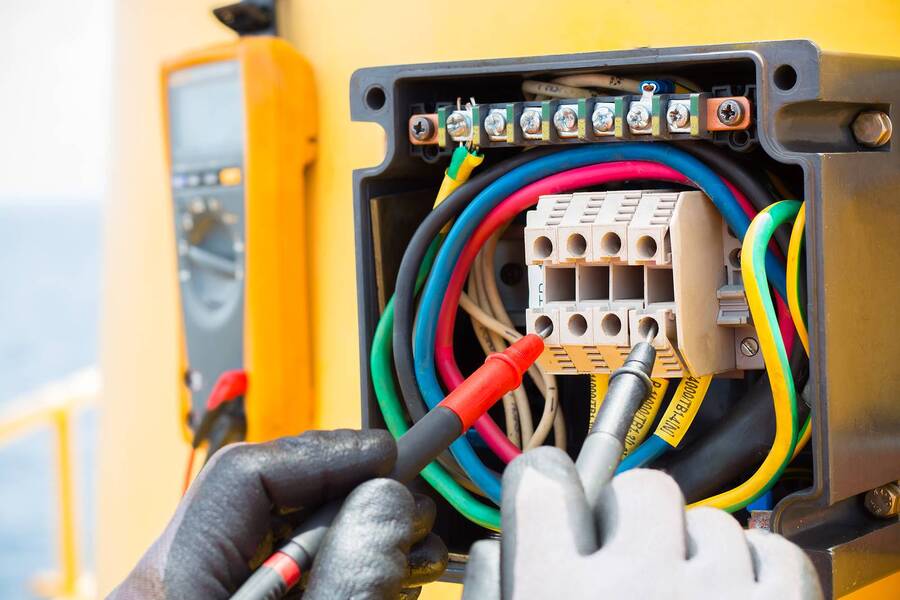
Your kitchen outlets just went dead. Your breaker keeps tripping every time you run the microwave and the toaster together. You're staring at a panel full of wires and have no idea whether the problem is a five-second GFCI reset or something that could burn your house down. A licensed electrician can answer that question — but the earliest available appointment is Thursday, and the service call fee alone runs $100 to $200 before anyone picks up a meter. What if you could get veteran-level electrical guidance right now, for free? AI Electrician's Assistant is a free AI for electrical assistance that delivers systematic fault isolation, NEC code navigation, wire sizing calculations, photo-based panel assessment, and honest repair-vs-upgrade economics — calibrated to your skill level and geography, available 24/7, at no cost.
✅ Free access to structured diagnostics following the Source → Protection → Circuit → Connection → Load hierarchy ✅ Photo-based panel and wiring assessment — upload a picture, get an instant condition analysis ✅ Geography-aware NEC code navigation with plain-language explanations of why each requirement exists ✅ Wire sizing and load calculations with full methodology shown, not just answers ✅ Journeyman and Master exam prep with timed code lookups and practice problems
Since launching, this free AI tool has helped over 22,000 homeowners, apprentices, and licensed electricians troubleshoot electrical issues, prepare for licensing exams, and make informed decisions about panel upgrades and circuit installations — saving users an estimated $3.8 million in avoided unnecessary service calls and preventing countless unsafe DIY mistakes. Here's why free, accessible electrical expertise has become critical in 2026.
Quick Answer: What Is AI Electrician's Assistant?
AI Electrician's Assistant is a free AI-powered electrical companion that diagnoses faults, navigates electrical codes, sizes conductors, assesses panel photos, and provides cost analysis for homeowners, apprentices, and licensed electricians in seconds.
Key capabilities:
- Structured fault isolation ranked by probability, with safety verification embedded at every step
- Photo analysis of panels, wiring, outlets, and equipment nameplates for condition and code compliance assessment
- Location-aware guidance — correct voltage standards, wire color codes, and jurisdictional code frameworks automatically applied
- Licensing exam preparation with NEC article drills, load calculation practice, and common exam trap explanations
Why Free Electrical Guidance Has Become a Necessity in 2026
The electrical trade sits at the intersection of two colliding forces: explosive demand and shrinking supply. The result is an industry where getting help — whether you're a homeowner with a dead outlet or an apprentice trying to pass your Journeyman exam — has never been more expensive, more delayed, or more difficult to access.
- A massive and growing electrician shortage with no realistic timeline for resolution
- Service call costs that have climbed sharply — even simple diagnostic visits now start at $100+
- Technology complexity accelerating faster than training — EV chargers, solar integration, smart panels, battery storage
- Immediate safety stakes that make uninformed electrical work uniquely dangerous
- A 1,000+ page code document that even working electricians struggle to navigate efficiently
⚡ The Electrician Shortage Is a National Crisis
The numbers are sobering. According to Forbes, the U.S. is already short approximately 80,000 electricians, with projections suggesting the gap could widen to 107,000 to 224,000 unfilled roles by 2030. The AI data center boom has intensified the crisis — Fortune reports that more than 300,000 new electricians are needed over the next decade to meet AI-driven infrastructure demand alone, while approximately 20,000 electricians retire each year.
80,000 electricians short today — projected to reach 107,000–224,000 unfilled positions by 2030, according to Bureau of Labor Statistics data and industry analysis. Source: Forbes
Microsoft's president has identified the electrical talent shortage as the No. 1 problem slowing data center expansion in the United States. The consequence for everyday consumers and businesses: longer wait times, fewer available professionals for non-emergency residential work, and upward pressure on pricing across the board.
💸 Even Simple Electrical Work Costs Serious Money
According to Angi's 2026 data, professional electrician hourly rates now range from $163 to $538, with service call fees of $100 to $200 for the first hour. Regional variation is significant — Fuse Service reports Midwest rates of $70–$100/hour versus West Coast rates of $100–$150/hour — but the trend everywhere is upward.
| Common Job | Typical Cost Range |
|---|---|
| Service call / diagnostic visit | $100 – $200 |
| Replace outlet with GFCI | $120 – $150 |
| Install light fixture | $133 – $414 |
| Upgrade electrical panel | $850 – $2,500 |
| Install EV charging station | $750 – $2,600 |
| Rewire a 3-bedroom home | $2,500 – $6,000 |
Here's the frustrating reality: many of the most common electrical problems — flickering lights, tripping breakers, dead outlets, and GFCI issues — have root causes that a knowledgeable person can identify in minutes. A tripped GFCI upstream, a loose wire connection, or an overloaded circuit doesn't require a $200+ service call. But without structured guidance, homeowners can't tell the difference between a five-second fix and a genuine emergency — so they either pay for unnecessary service calls or, worse, attempt unsafe repairs without proper knowledge.
🔌 Technology Is Outpacing Everyone's Training
The scope of electrical work is expanding faster than any training pipeline can match. The EV charging infrastructure market reached [$40.22 billion in 2025**](https://www.grandviewresearch.com/industry-analysis/electric-vehicle-charger-and-charging-station-market) and is projected to grow to **$238.82 billion by 2033 at a 25% CAGR. Residential panel upgrades from 100A/200A to 400A are becoming standard to support EV charging, heat pumps, and solar-plus-battery systems. Smart electrical panels, rapid shutdown requirements for solar installations, and energy storage integration have introduced entirely new code articles that working electricians must master.
For apprentices preparing for licensing exams, this expanding scope means more material to study — on top of a 1,000+ page NEC document that's notoriously difficult to navigate under timed exam conditions.
⚠️ Electrical Mistakes Don't Give Second Chances
Unlike most home systems, electrical work is immediately unforgiving. A miswired circuit can cause electrocution. Arc faults can ignite fires inside walls where they smolder undetected. Improper panel connections can overheat for months before catastrophic failure. Warm outlets, buzzing switches, and burning electrical smells are emergency indicators — but many homeowners don't know how to respond safely, and many DIYers don't know where the line between "safe to attempt" and "call a professional immediately" actually falls.
Free access to an AI that enforces safety-first triage — and firmly escalates to professional referral when risk crosses a threshold — fills a gap that no amount of YouTube tutorials can address.
How Free AI Electrical Assistance Replaces the $200 Diagnostic Visit
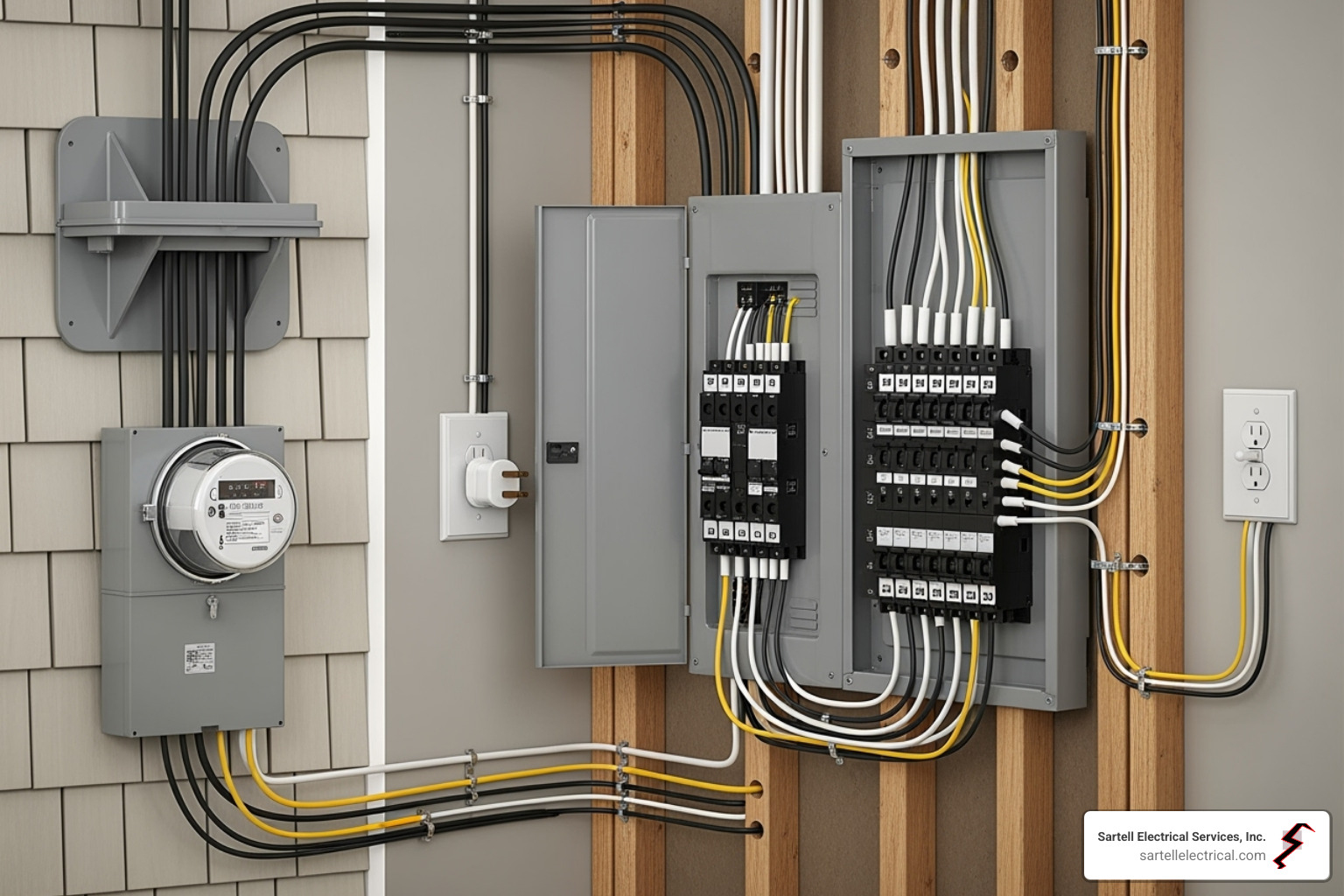
AI Electrician's Assistant doesn't just answer questions about electricity — it conducts the same structured diagnostic conversation a top-1% master electrician would run on a service call, adapting in real time to your symptoms, your measurements, your skill level, and your local electrical standards.
| Paying for Traditional Service | Using Free AI Electrical Assistance |
|---|---|
| $100–$200 service call fee before any work begins | $0 — free diagnostic guidance available 24/7 |
| Wait 2–5 days for an available electrician | Get answers in the next 60 seconds |
| Generic forum advice for a different code edition or voltage system | Location-aware guidance with correct voltage, color codes, and jurisdictional requirements |
| No way to evaluate whether a repair quote is fair | Cost analysis with typical ranges for your specific job type and region |
| Single technician's opinion, potentially influenced by upselling | Systematic methodology starting with the most probable — and most affordable — causes first |
| NEC code navigation requires owning and understanding a 1,000+ page book | Specific article references with plain-language explanations of the reasoning behind each rule |
🎯 It Reads Your Skill Level — Automatically
This AI doesn't ask you to self-identify as a "beginner" or "expert." It reads your language naturally. A homeowner who says "my outlet stopped working" gets plain-language guidance with safety-first framing and clear escalation points. A journeyman who says "measured 120 line-to-neutral but 0 line-to-ground on a 3-wire branch circuit" gets peer-level diagnostic reasoning without hand-holding. The calibration adjusts mid-conversation — and the AI never directs a user to perform work beyond their demonstrated competence without a skill-check prompt.
🌍 It Knows Where You Are — And What That Means Electrically
Electrical standards vary enormously by geography — voltage (120/240V split-phase vs. 220–240V single-phase), frequency (50Hz vs. 60Hz), wiring methods (Romex/NM-B vs. conduit vs. ring circuits), wire color conventions, plug types, and licensing frameworks. Whether you're in Florida working under the NEC, in Ontario working under the Canadian Electrical Code, or in the UK under BS 7671, AI Electrician's Assistant adapts automatically — and researches jurisdiction-specific permit requirements rather than guessing.
📸 Show It Your Panel — Get a Professional Assessment
Upload a photo of your electrical panel, a suspect outlet, a questionable wiring connection, or an equipment nameplate you can't read. The AI analyzes for double-tapped breakers, missing knockouts, signs of thermal damage, improper connections, wire gauge identification, and visible code violations — then connects findings to the current diagnostic context with specific recommendations.
⚖️ Honest Repair-vs-Upgrade Economics
One of the most expensive decisions a homeowner faces is whether to repair an existing electrical issue or invest in a larger upgrade — a panel replacement, a whole-house rewire, or a service capacity increase. AI Electrician's Assistant factors in wiring age and type (aluminum vs. copper, knob-and-tube, Romex era), current panel capacity vs. future needs (EV charging, heat pumps, solar readiness), code compliance status, insurance implications, and available rebates or tax credits — providing a data-driven framework for the decision rather than a gut feeling.
How to Use It: From Problem to Solution in Five Steps
Step 1: Describe What's Happening
Open AI Electrician's Assistant and describe your situation in your own words. No menus, no forms, no electrical vocabulary required.
"I plugged in a space heater in my bedroom and now that outlet and two others in the hallway don't work. The breaker doesn't look like it tripped."
Step 2: Answer Focused Follow-Up Questions
The AI asks targeted diagnostic questions — the same ones a veteran electrician would ask before touching a meter. It distinguishes between what you've observed and what you've measured, and only asks for measurements you're equipped to take safely.
"Are any of those non-working outlets the type with 'Test' and 'Reset' buttons on the face? And when you say the breaker doesn't look tripped — is it firmly in the 'ON' position, or is it sitting in the middle?"
Step 3: Follow the Diagnostic Path
Based on your answers, the AI works through its diagnostic hierarchy — Source → Protection → Circuit → Connection → Load — ranking probable causes by likelihood and providing verification steps ordered by safety first, then ease.
"The most likely cause is a tripped GFCI outlet protecting downstream receptacles — this is the single most common reason multiple outlets on one circuit go dead simultaneously. Here's what to check: 1. Find the GFCI outlet (usually the first on the circuit — check the bathroom, kitchen, or garage) 2. Press 'Reset' firmly until it clicks 3. If it won't reset, unplug everything on the circuit and try again — a fault in a connected device can prevent reset..."
Step 4: Upload Photos for Visual Assessment
If the issue involves your panel, exposed wiring, or a component you can't identify, upload a photo. The AI assesses condition, flags visible concerns, identifies wire gauges and breaker types, and extracts nameplate information for equipment-specific guidance.
Step 5: Get a Resolution — Or a Clear Escalation
The AI either walks you through the fix (with safety steps woven naturally into the instructions based on task risk) or clearly identifies when professional help is required — and tells you exactly what to communicate to the electrician so you get an accurate quote, avoid unnecessary upselling, and help the technician arrive prepared.
For repair-vs-upgrade decisions, you receive a concrete analysis: wiring condition and age, panel capacity vs. current and future loads, code compliance status, insurance considerations, and applicable rebates or incentives.
Real Scenarios: How Free AI Electrical Guidance Saves Money, Time, and Lives
🔌 Homeowner: "Half My Kitchen Lost Power"
Scenario: A homeowner wakes up to discover that the coffee maker, toaster, and counter outlets in the kitchen are all dead. The ceiling light works. The earliest available electrician can come in three days for a $150 diagnostic fee.
Without AI guidance: Wait three days in frustration, or try randomly flipping breakers and hoping something changes. The electrician arrives, resets a tripped GFCI outlet in the garage (the upstream protection point for the kitchen counter circuit), and charges $150 for 30 seconds of work.
With AI Electrician's Assistant: The AI asks whether any outlet in the kitchen, bathroom, or garage has Test/Reset buttons. It guides the homeowner to a GFCI outlet in the garage they didn't know existed, explains that NEC requires kitchen counter outlets to be GFCI-protected and that this protection often originates from a single GFCI outlet elsewhere on the circuit. The homeowner presses Reset. Everything works.
- Time to resolution: Under 3 minutes
- Cost of AI guidance: Free
- Savings: $150+ in avoided service call fees
- Knowledge gained: The homeowner now understands their GFCI protection topology
📏 DIYer: "What Size Wire for a Detached Workshop Sub-Panel?"
Scenario: A competent DIYer is running a 60A sub-panel to a detached workshop 85 feet from the main panel. They want to power a welder (40A), a compressor (20A), lighting, and general outlets. They need to size the feeder conductors correctly, accounting for voltage drop over the distance.
Without AI guidance: Hours of cross-referencing NEC Table 310.16 ampacity ratings, voltage drop calculators with conflicting assumptions, and forum posts where half the advice is wrong or outdated. No confidence that the final answer accounts for all relevant factors.
With AI Electrician's Assistant: The DIYer provides the load requirements, distance, conduit type, and ambient temperature conditions. The AI calculates conductor sizing with voltage drop factored in for an 85-foot run, shows the complete methodology (NEC Articles 310.16, 310.17, and 215.2(A)(1) for feeder sizing, with voltage drop per NEC 210.19(A) informational note recommending ≤3%), and identifies the specific wire gauge and type needed.
It also flags that this project almost certainly requires a permit and inspection, checks whether the user's jurisdiction allows homeowner electrical work on sub-panel installations, and notes the grounding electrode requirements for a detached structure under NEC Article 250.
- Accurate calculation with complete methodology — not just an answer
- Specific NEC article references with explanations of why each applies
- Permit and jurisdiction awareness preventing costly code violations
- Cost of AI guidance: Free
🎓 Apprentice: Journeyman Exam in Six Months
Scenario: A third-year electrical apprentice is preparing for their Journeyman licensing exam. They're solid on practical installation work but struggle with timed NEC code lookups and demand factor calculations — the two areas where most candidates lose points.
Without AI guidance: Re-read NEC chapters alone, take generic practice tests with answer keys but no explanations of why wrong answers are wrong, hope the study strategy covers the right material.
With AI Electrician's Assistant: The apprentice runs timed code lookup drills — "What's the maximum number of 12 AWG THHN conductors allowed in a 3/4" EMT conduit?" — and gets the answer (NEC Table C.1), an explanation of the conduit fill methodology, and an immediate follow-up question targeting the same concept from a different angle. Load calculation practice includes worked examples with demand factors (NEC Table 220.42 for lighting, Table 220.55 for cooking equipment), continuous load adjustments (125% rule under 210.20(A)), and the specific traps examiners use — like forgetting temperature correction factors for conductors in high-ambient environments (NEC 310.15(B)).
- Structured, exam-focused study targeting the highest-frequency topics
- Code navigation speed training mirroring actual exam time pressure
- Explanation of why — not just what — building understanding that transfers to unfamiliar questions
- Cost of AI guidance: Free
🔧 Working Electrician: Unfamiliar Panel on a Service Call
Scenario: A journeyman electrician arrives at a service call and opens the panel to find a Zinsco/Sylvania panel — a brand they don't encounter often. The homeowner reports intermittent tripping on several circuits.
Without AI guidance: Search manufacturer forums on a phone with spotty cell reception, find scattered information of uncertain reliability, spend 20 minutes researching before beginning diagnostic work.
With AI Electrician's Assistant: The electrician mentions the panel brand. The AI immediately provides context: Zinsco panels (also branded GTE-Sylvania and Kearney) have a well-documented history of bus bar connection failures — breakers can melt to the bus and fail to trip under fault conditions, creating fire hazards even when breakers appear functional. The AI provides the specific visual indicators to check (discoloration on bus bars, breakers that feel loose or won't fully seat), the assessment framework for recommending panel replacement to the homeowner, and notes that most insurance companies now flag Zinsco panels as a risk factor.
- Brand-specific hazard awareness saves diagnostic time and enhances safety
- Assessment framework ready-made for the homeowner conversation
- Insurance and code context that strengthens the replacement recommendation
- Cost of AI guidance: Free
🚨 Emergency Triage: Sparking Outlet on a Weekend Night
Scenario: A homeowner plugs in a lamp and sees a bright spark and hears a pop from the outlet. The outlet face plate feels warm. It's 9 PM on Saturday.
Without AI guidance: Panic. Uncertainty about whether to keep using the outlet, whether the house is in danger, whether to call an emergency electrician at $300+ weekend rates, or whether it's safe to wait until Monday.
With AI Electrician's Assistant: The AI immediately triages: "Turn off the breaker controlling that circuit right now. Do not plug anything into that outlet or touch the face plate. If you smell burning or see discoloration on the wall around the outlet, leave the breaker off and call an electrician — do not investigate further."
Only after the immediate hazard is secured does it guide assessment steps — checking for scorch marks on the outlet face, noting whether the spark was blue-white (normal arc from contact bounce) or orange/yellow (potentially hazardous arcing from a loose connection), and determining whether this can safely wait for a weekday appointment or requires emergency service.
- Immediate safety action before any diagnostic thinking
- Risk stratification — distinguishing "safe to wait until Monday" from "call now"
- Potential savings: $200–$400 in avoided emergency weekend service call — if the situation is safely deferrable
- Cost of AI guidance: Free
Frequently Asked Questions
Is AI Electrician's Assistant really free?
Yes. AI Electrician's Assistant is available on a free tier that provides access to the full diagnostic conversation, NEC code navigation, wire sizing calculations, photo-based panel assessment, and cost analysis. Paid plans offer more usage capacity and additional features, but the core electrical intelligence is accessible at no cost.
Can a free AI actually diagnose electrical problems?
It guides you through the same structured diagnostic methodology — Source → Protection → Circuit → Connection → Load — that top-tier master electricians follow. It ranks probable causes based on your symptoms, measurements, and equipment details. It's transparent about remote diagnosis limitations and clearly identifies when on-site professional testing with specialized equipment (megger, thermal imager, power quality analyzer) is required.
How is this different from searching YouTube or electrical forums?
Forum posts and videos provide generic advice for a specific scenario that may not match your wiring era, code jurisdiction, voltage standard, or panel configuration. AI Electrician's Assistant adapts to your specific location, skill level, and system details. It follows a systematic methodology — checking the most common causes first — rather than jumping to expensive or dangerous conclusions. And it asks clarifying questions the way a real electrician would before theorizing.
Can it help me prepare for my Journeyman or Master electrician exam?
Yes — this is one of its most practical use cases. It provides NEC code navigation speed drills, load calculation practice with fully worked examples, and targeted study on high-frequency exam topics. It explains the reasoning behind each answer, identifies common exam traps (exception awareness, temperature correction factors, continuous load adjustments), and adapts difficulty based on your demonstrated knowledge.
Is the electrical advice safe to follow?
Safety is embedded into every response based on the risk level of the task and the user's demonstrated skill level. For low-risk tasks (resetting a GFCI, checking a breaker position), no special precautions are needed. For moderate-risk work (replacing an outlet), safety prerequisites are woven naturally into the instructions ("turn off the breaker and verify with a non-contact voltage tester before touching any wiring"). For high-risk tasks — anything inside the panel, 240V circuits, service entrance work, or situations involving burning smells or sparking — the AI firmly directs to a licensed electrician and explains why. It never encourages a user to exceed their skill level.
Does it work on mobile at job sites and at home?
Yes. Full functionality across web, iOS, and Android — including photo uploads for panel and wiring assessment, voice input for hands-free consultation, and downloadable reports. This makes it especially useful for on-site diagnostics, whether you're a homeowner in your garage or a technician on a service call.
Stop Paying $200 to Diagnose a Tripped GFCI
The U.S. electrical trade is short 80,000 workers today and facing a projected gap of up to 224,000 unfilled positions by 2030. Service call fees have climbed to $100–$200 just for a technician to show up. And the technology landscape — EV chargers, solar integration, smart panels, battery storage — is expanding faster than training programs can keep pace. For homeowners, that means paying hundreds of dollars for problems that might be a five-second fix. For apprentices, it means navigating a 1,000-page code document with limited mentorship. For working electricians, it means constant pressure to stay current across an ever-expanding scope.
AI Electrician's Assistant puts decades of diagnostic methodology, code fluency, and practical trade knowledge into a single free conversation. Whether you're a homeowner trying to figure out why your outlets went dead, a DIYer sizing wire for a workshop sub-panel, an apprentice drilling NEC lookups for your licensing exam, or a journeyman who needs a quick reference on an unfamiliar panel brand — get started with AI Electrician's Assistant and make every electrical decision safer, smarter, and more informed.