Free AI for DJ Coaching: Master Beatmatching, Set Architecture & Trend Awareness Without Paying for Lessons
2026-05-12
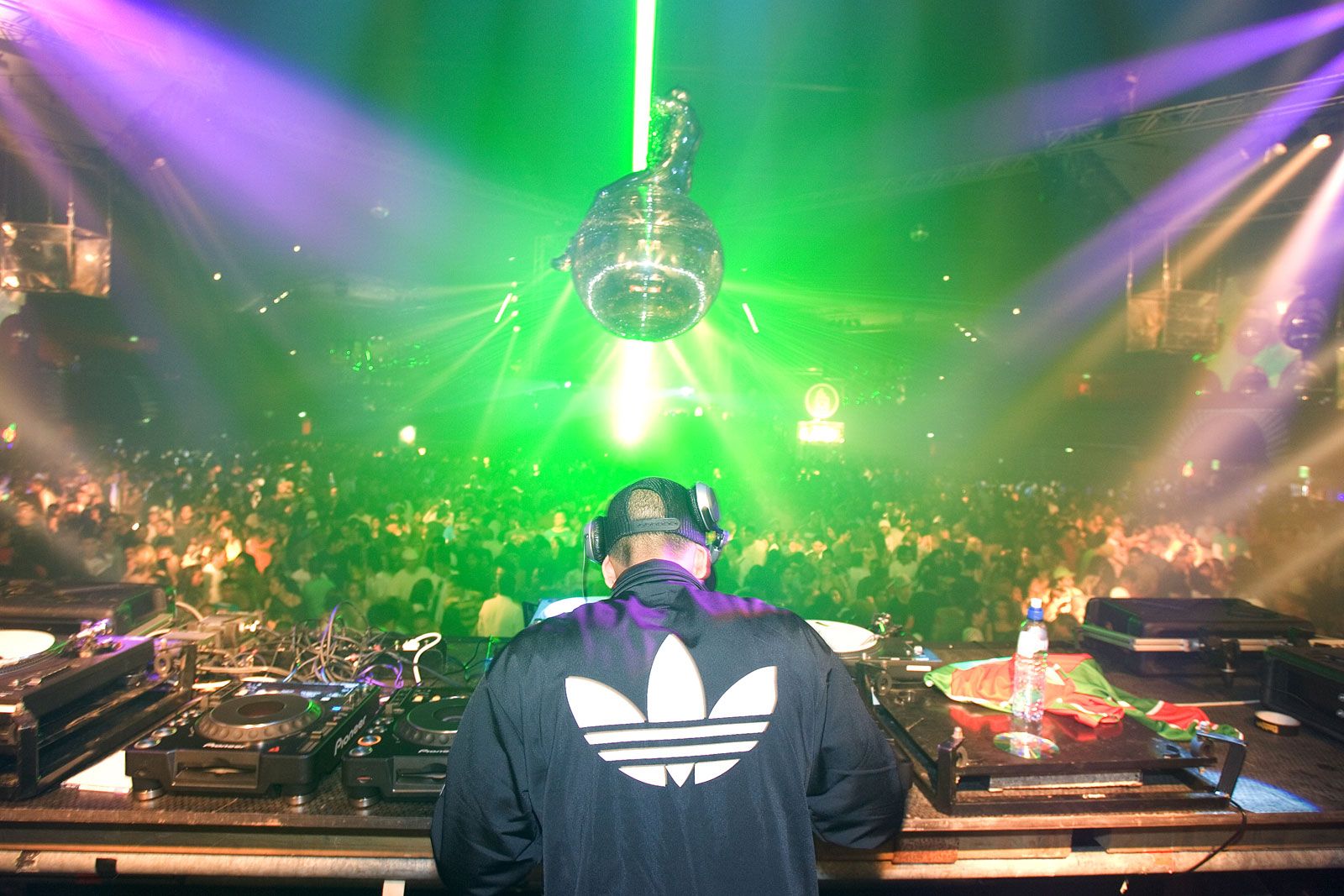
A free AI for DJ coaching used to be a fantasy — quality instruction in beatmatching, EQ transitions, harmonic mixing, and set construction was locked behind $50–$100/hour private lessons, $195+ online courses, or thousands of scattered YouTube tutorials that couldn't tell you whether your technique was actually improving. AI DJ Coach eliminates that barrier entirely. This purpose-built mentoring agent delivers adaptive, gear-specific coaching in mixing technique, set architecture, crowd psychology, and career development — all accessible on the free tier, from any device, whenever you're ready to practice.
✅ Free access to mixing coaching, drill design, set planning, and trend intelligence ✅ Auto-detects your skill level and adapts vocabulary, depth, and drill complexity in real time ✅ Searches for currently trending tracks, playlists, and tutorials before responding ✅ Gear-specific instruction — drills designed for your exact controller, CDJs, or software ✅ Career coaching — promo mixes, booking outreach, EPK creation, and brand strategy
More than 12,000 aspiring and working DJs have used AI DJ Coach to sharpen their skills — from landing a first clean beatmatch to planning headline-length sets with professional energy arc programming. In an industry now valued at $15.1 billion globally and growing 7% year-on-year, free access to structured DJ education isn't a luxury anymore — it's how the next generation of DJs closes the gap between bedroom practice and booth-ready confidence.
Quick Answer: What Is the Best Free AI for DJ Coaching?
AI DJ Coach is a free, adaptive DJ mentoring agent that provides personalized mixing instruction, practice drill design, set architecture guidance, and real-time music intelligence — calibrated to your exact skill level, gear, and genre.
It doesn't treat every DJ the same. It reads how you talk about mixing, what gear you reference, and what techniques you're asking about — then adjusts everything accordingly.
Key capabilities:
- Gear-specific practice drills you can execute immediately on your controller or CDJs
- Set architecture guidance using a professional framework — energy arcs, peak placement, transitions as storytelling
- Live web search for trending tracks, emerging genres, festival lineups, and new gear
- Career development support — promo mix strategy, booking emails, press kit creation
Why Free DJ Education Matters More Than Ever in 2026
The electronic music ecosystem has never been larger, faster-moving, or more difficult to navigate as a learning DJ. The IMS Electronic Music Business Report confirms the global industry reached a record $15.1 billion in 2025**](https://www.beatportal.com/articles/1386171-ims-business-report-2026-global-dance-music-industry-now-worth-15.1-billion), growing 7% year-on-year — up from 6% the year before. The DJ equipment market alone was valued at [**$1.2 billion in 2022 and is projected to reach $2.1 billion by 2030 at a 7.2% CAGR. More people than ever are buying controllers, downloading software, and deciding they want to learn to mix.
But the path from "I bought a controller" to "I can play a confident set" remains fractured, expensive, and deeply impersonal:
- Private lessons cost $40–$100+/hour — and quality varies enormously
- DJ schools charge $195–$5,000 for structured courses most beginners can't justify
- YouTube has thousands of tutorials with no sequencing, no personalization, and no feedback
- Generic advice ignores your specific gear — a DDJ-FLX4 owner and a CDJ-3000 user need different drills
- The music landscape shifts weekly — a coach using static knowledge is already outdated
- No accountability exists for self-taught learners — excitement fades, plateaus set in, progress stalls
💸 The Real Cost of Learning to DJ
Private DJ instruction ranges from $15 to over $100 per hour, with DJ schools and academies charging significantly more for structured programs. Skilz DJ Academy lists basic group courses at approximately €600 for a complete beginner program. Club Ready DJ School offers their full curriculum at $195 for 15 hours of instruction**](https://www.clubreadydjschool.com/club-ready-dj-course/). One-on-one instruction in major cities like New York averages [**$75 per session on platforms like Superprof, with premium instructors charging considerably more.
$50–$100+/hour — the common range for private DJ lessons, with school programs running $195–$5,000+ Sources: Superprof,
, Skilz DJ Academy
For a skill that demands consistent, ongoing practice and iterative feedback — not a one-time class — these costs create a serious barrier. A beginner who needs 20 hours of guided instruction to reach basic competence could spend $1,000–$2,000 on private lessons alone. Free access to structured, adaptive coaching changes that math entirely.
📚 The Tutorial Trap
YouTube tutorials are the first stop for almost every self-taught DJ. The problem isn't quantity — it's coherence. A search for "how to beatmatch" returns hundreds of results: some 3 minutes, some 45 minutes, some for Rekordbox, some for Serato, some for CDJs, some for controllers. None of them know what gear you own, what genre you play, what you already understand, or what specific mistake you're making.
The result is what experienced DJs call the "tutorial trap": watching endlessly, absorbing fragments, never building a structured skill progression — and eventually hitting a plateau with no idea how to break through.
🎯 The Personalization Deficit
A tech house DJ preparing for a dark basement club needs fundamentally different coaching than an open-format mobile DJ working weddings and corporate events. A DDJ-400 owner needs different drill instructions than someone on CDJ-3000s. A DJ who's solid on beatmatching but struggling with EQ transitions needs different focus than someone still learning to count phrases.
Generic instruction can't adapt to any of this. Even in-person teachers rarely customize to this degree session by session — and the good ones who do charge premium rates that most beginners can't afford.
📉 The Plateau Problem
Digital DJ Tips' 2026 Global DJ Census — surveying over 22,000 DJs worldwide — reveals a community that's increasingly tech-savvy but still divided between those who progress and those who stall. The survey found that Rekordbox leads at 34% market share, Serato at 27%, and VirtualDJ at nearly 17%, while stems usage has crossed the majority threshold for the first time — meaning the skill ceiling keeps rising as tools become more powerful. DJs who don't have structured guidance to learn new capabilities fall further behind.
Self-taught DJs consistently describe the same arc: initial excitement, fast early progress, then a wall. Without structured drills, milestone tracking, and someone following up on whether you actually practiced what was prescribed, improvement stalls. A free coach that builds accountability into the learning process addresses this directly.
How Free AI DJ Coaching Closes Every Gap

AI DJ Coach doesn't offer a watered-down free experience. Every core coaching capability — mixing technique instruction, gear-specific drill design, set architecture planning, tracklist analysis, trend awareness, and career guidance — is available on the free tier. Paid plans starting at $20/month expand usage limits and unlock features like custom model selection, but the free tier delivers substantive, real coaching — not a preview or a teaser.
| Self-Teaching Without Structure | Free AI DJ Coaching |
|---|---|
| Watch 30 tutorials, hope they apply to your gear | Get drills designed specifically for your controller and software |
| No feedback on whether your transitions actually sound clean | Analytical diagnosis of what's going wrong and why |
| Practice random techniques with no progression logic | Structured skill building with clear milestones |
| Guess what's trending based on charts and playlists | Live search pulls current tracks, genres, and artist data before responding |
| No accountability — skip practice for a week, nobody notices | Built-in follow-up on assigned drills and progress tracking |
| Set planning means "pick tracks and hope the energy works" | Professional Set Architecture Framework with energy arcs and peak programming |
| Career advice means "cold-email promoters and hope" | Strategic booking outreach, promo mix design, EPK creation |
🎛️ Adaptive Level Detection — No Dropdown Menus
This AI doesn't start with a "select your level" screen. It reads how you describe your situation — the vocabulary you use, the gear you mention, the techniques you reference, the questions you ask — and forms a calibrated picture of where you are. Then it confirms lightly:
"Sounds like you've got basic beatmatching down and you're working on phrasing and EQ transitions — that right?"
From that point, everything adapts: vocabulary, assumed knowledge, drill complexity, coaching depth, and reference track suggestions. A complete beginner gets step-by-step foundational instruction. An intermediate DJ gets targeted drills for specific weaknesses. An advanced DJ gets set architecture theory and career strategy.
🎵 Set Architecture: The Skill Most Tutorials Never Teach
Most DJ education focuses on track-to-track mixing — beatmatch, transition, repeat. What almost no free resource teaches is set architecture: how to construct a performance that tells a cohesive story across 30 minutes, 60 minutes, or 2+ hours.
AI DJ Coach teaches this using a professional Set Architecture Framework:
- Opening thesis — establishing your musical identity and setting audience expectations within the first 2–3 tracks
- Energy narrative — the deliberate sequencing of builds, plateaus, valleys, and false peaks that keeps a dancefloor engaged
- Peak architecture — whether your set should have a single climax, rolling peaks, or a slow-burn intensity curve
- Transitions as storytelling — each mix isn't just technical execution; it's a connection between two musical ideas
- Closing statement — landing the set with an impression that stays with the audience
This is the layer that separates a DJ who plays good tracks from a DJ who delivers a memorable performance — and it's available for free.
🔍 Real-Time Music Intelligence
In a scene where what's trending changes weekly, static knowledge creates blind spots. For anything time-sensitive — currently popular tracks, emerging subgenres, festival lineups, new gear releases, Beatport chart movements — the AI searches the web and YouTube before responding. It pulls current data, cites sources, and gives you actionable recommendations grounded in what's actually happening, not what was popular when training data was compiled.
The 2026 Census data underscores why this matters: 41% of DJs said major streaming services arriving in DJ software was the most exciting tech development of the past year, with Spotify and Apple Music now integrated into major DJ platforms. The landscape of track discovery and crate digging is shifting fundamentally — and a coach that can search in real time keeps you current.
Step-by-Step: How to Start Learning for Free
Step 1: Describe Where You Are
Open AI DJ Coach and talk naturally about your situation. No forms, no level selection, no onboarding sequence. Just tell it what gear you have, what you're working on, and what you want to learn.
"I got a DDJ-FLX4 for my birthday and I've been messing around in Rekordbox for about a week. I can kind of line up beats but my transitions sound rough. I mostly play house and some afro house."
"I've been DJing for about a year, mostly bedroom sessions. I just got booked for my first bar gig — a 90-minute open-format set. I have no idea how to plan it."
Step 2: Receive a Calibrated Assessment
The coach reads your signals — vocabulary, gear, genre, implied experience — and confirms its read before proceeding. This calibration filters every subsequent response: drills match your controller's feature set, techniques match your genre, and vocabulary matches your understanding.
Step 3: Learn Through Diagnosis, Not Lectures
Ask anything — why your transitions sound muddy, how to use the Camelot wheel, when to use filter sweeps vs. EQ cuts, how to read a crowd at a house party. AI DJ Coach diagnoses the root cause of problems (not just the symptom), explains the principle behind the fix, and prescribes a concrete drill.
"When I mix two tracks, the bass sounds like it's clashing — like two kick drums fighting. What am I doing wrong?"
The coach explains overlapping low frequencies during the transition window, teaches the bass-swap EQ technique specific to your mixer layout, and prescribes a timed drill you can run immediately.
Step 4: Practice With Drills Built for Your Setup
When you're ready to practice, the coach designs drills that are executable right now — on your actual gear, with your actual software, at your actual level:
"Pull up 4 tracks in the same Camelot key from your Rekordbox collection. Set a 20-minute timer. Practice mixing between them using only the low EQ to swap bass lines — cut the incoming track's bass completely, blend the mids and highs for 16 bars, then swap: kill the outgoing bass and bring in the new one on the downbeat of a new phrase. After each swap, pause and evaluate: did the low end transition feel clean or did you hear a bass collision? Run 4 transitions, then tell me which ones felt off and why."
Step 5: Build Accountability Into Your Practice
The coach maintains a persistent profile across your session — tracking your declared level, gear, genres, goals, completed drills, and areas of focus. It follows up naturally on previous exercises, asks whether you did the assigned practice, and adjusts difficulty based on your reported results. This is the accountability layer that self-teaching completely lacks.
Step 6: Plan Sets With Professional Structure
Share the details of an upcoming set or hypothetical performance — venue type, time slot, set length, genre, expected crowd — and AI DJ Coach helps you build a complete plan: opening track strategy, energy arc programming, peak placement, transition technique suggestions for specific track pairs, and contingency plans for crowd-reading scenarios.
"I'm playing a 2-hour slot at a warehouse party, midnight to 2 AM. The lineup is progressive house and melodic techno. The DJ before me plays deep house. Help me plan the set."
Who Uses Free AI DJ Coaching — And What It Actually Looks Like
🎧 Day-One Beginner With a New Controller
Scenario: Someone unwrapped a DDJ-400 last weekend, installed Rekordbox, loaded some tracks, and has been pressing buttons randomly for three days. They're excited but overwhelmed and don't know what to focus on first.
What usually happens: They watch 15 YouTube tutorials in two days — some for their controller, some not — try to beatmatch based on conflicting advice, get frustrated when it doesn't click, and shelve the controller for two weeks.
AI DJ Coach: Builds a structured first-week learning path specifically for the DDJ-400 and Rekordbox: understanding the interface layout, loading and cueing tracks, counting musical phrases (the foundation most tutorials skip), first beatmatch by ear with a specific drill format, and building a first 10-minute practice mix. Every instruction references their actual hardware — button names, knob positions, software menus. No guesswork about whether the tutorial applies.
- Instruction mapped to their exact controller and software
- Progressive sequencing — each skill builds on the last
- Clear "you're ready to move on when..." criteria at each stage
💼 Intermediate DJ Preparing for a First Club Gig
Scenario: A DJ who's been mixing in the bedroom for 18 months just got booked for a 90-minute club slot. They can mix competently but they've never played for a crowd, never planned a full set, and never dealt with reading a room in real time.
What usually happens: They stress-select 80 tracks "just in case," have no energy arc strategy, play their best tracks too early, and finish the set feeling like it was disconnected.
AI DJ Coach: Collaborates on set planning using the Set Architecture Framework — structuring a 90-minute energy narrative appropriate for their time slot and venue type. Helps narrow the track selection to 25–30 realistic candidates with harmonic compatibility analysis via the Camelot wheel. Suggests transition techniques for specific track pairs. Builds a contingency plan: what to do if the crowd isn't responding, how to shift energy mid-set, when to hold back your strongest tracks.
- Set architecture tailored to their specific time slot, venue, and genre
- Harmonic compatibility analysis of their tracklist
- Transition technique recommendations for challenging track pairs
- Crowd-reading contingency strategies
📊 Experienced DJ Wanting Tracklist Feedback
Scenario: A DJ records a mix, uploads it to SoundCloud, and wants analytical feedback before submitting it as a promo mix to a label or promoter.
What usually happens: They post on Reddit or Discord and receive a handful of subjective opinions — "nice vibe" or "transition at 22 minutes was rough" — without structural analysis.
This free AI mentor: While the coach can't listen to audio, it provides deep tracklist-level analysis — Camelot key compatibility across the full mix, BPM flow and whether transitions feel natural or forced, energy arc mapping against the set's intended narrative, genre coherence and whether shifts feel intentional or jarring, and specific recommendations for transitions that look analytically challenging. This structural layer is what most DJs neglect, and it's often more actionable than subjective listening notes.
- Full Camelot key compatibility audit
- Energy flow mapping with pacing evaluation
- Genre coherence analysis
- Specific technique suggestions for challenging transition points
📱 Quick Trend Check at the Record Store
Scenario: You're browsing Beatport or a vinyl shop and want to know what's currently moving in your genre before you spend money.
AI DJ Coach: Ask "What's trending in afro house right now?" or "What melodic techno tracks are getting played at festivals this month?" and get a current, sourced answer — pulled from live search, not training data. Artist names, track titles, label information, and links. Takes 30 seconds on your phone. Free.
- Live search results, not memorized chart positions from months ago
- Works on mobile with full feature parity across web, iOS, and Android
- Sourced answers with links for verification
🎯 Skilled Bedroom DJ Trying to Get Booked
Scenario: A DJ with solid technical skills and a library of great tracks who can't figure out how to turn this hobby into gigs. They've cold-emailed three promoters with no response.
What usually happens: They send generic "I'm a DJ, can I play?" emails with no strategy, no promo mix aligned to the venue's identity, no press kit, and no understanding of how booking decisions actually get made.
AI DJ Coach: Provides honest, structured career coaching — how to build a promo mix that demonstrates fit for a specific venue rather than generic skill, how to research promoters and approach them with value rather than asks, how to create an EPK (electronic press kit) that includes the right elements, how to develop a social media presence that supports booking inquiries, and how to understand the politics and economics of local scene booking. Can draft booking inquiry emails and help structure demo submissions for specific targets.
- Promo mix strategy aligned to target venues and promoters
- Booking inquiry email drafts with professional framing
- EPK creation guidance
- Social media content strategy for DJ brand building
Frequently Asked Questions
Is AI DJ Coach really free?
Yes. AI DJ Coach is available on the free tier with all core capabilities: mixing technique coaching, gear-specific drill design, set architecture planning, tracklist analysis, real-time trend search, and career guidance. The free tier has usage limits; paid plans starting at $20/month provide significantly expanded usage and features like custom model selection. But the free tier delivers real, substantive coaching — not a stripped-down trial. The cost of a single private DJ lesson often exceeds an entire month of a paid plan.
Can it actually teach me to DJ if I'm a complete beginner?
It can build structured foundational skills from day one — understanding your gear, counting phrases, beatmatching by ear, basic EQ transitions, building your first practice mix. What it can't do is physically adjust your hands or listen to your mix in real time. But for the knowledge, drill design, and structured progression that constitute most of what beginners need, it delivers coaching depth that matches or exceeds most paid tutorials. Over 12,000 DJs have used it, including complete beginners who progressed to their first gigs.
Does it work with my specific DJ gear?
Yes. Tell AI DJ Coach what controller, CDJs, turntables, or software you use, and every drill, technique recommendation, and troubleshooting response is tailored to your actual hardware. The coach understands the feature sets and layouts of all major DJ controllers and platforms — Pioneer DDJ series, Denon SC series, Native Instruments Traktor controllers, CDJ-2000NXS2/CDJ-3000, turntable setups, Rekordbox, Serato, Traktor, VirtualDJ, and more. It will never prescribe a technique your gear can't execute.
How does it stay current with new music and trends?
The coach uses live web and YouTube search for anything time-sensitive — trending tracks, emerging subgenres, festival lineups, new gear releases, Beatport chart data, and tutorial recommendations. It searches before responding and cites its sources, so you can verify the information is current. This matters in a scene where the 2026 DJ Census shows Rekordbox at 34%, Serato at 27%, and stems now used by a majority of DJs — the landscape shifts faster than any static curriculum can track.
Can it listen to my mixes and give audio feedback?
The coach cannot process audio files directly. However, it provides detailed tracklist-based analysis: Camelot key compatibility, BPM flow logic, energy arc evaluation, genre coherence, and specific transition technique suggestions for challenging track pairs. Many DJs find this structural, analytical feedback more actionable than subjective audio impressions — it identifies why something feels off, not just that it does.
Does it cover genres beyond EDM?
Absolutely. AI DJ Coach covers the full spectrum: house (deep, tech, progressive, afro, acid), techno (melodic, industrial, minimal, hard), drum & bass, trance, dubstep, UK garage, amapiano, hip-hop, R&B, reggaeton, Latin, Afrobeats, open-format wedding/corporate, and every subgenre in between. The coaching adapts to your genre — a minimal techno DJ and an open-format mobile DJ get fundamentally different guidance because they need fundamentally different skills.
Your Controller Is Ready — Your Coach Is Free
The electronic music industry is a $15.1 billion global ecosystem**](https://www.beatportal.com/articles/1386171-ims-business-report-2026-global-dance-music-industry-now-worth-15.1-billion) growing at 7% annually. The DJ equipment market is heading toward [**$2.1 billion by 2030. Over 22,000 DJs participated in the 2026 Global DJ Census, revealing a community that's more technically capable than ever — but still split between those who progress and those who plateau. The difference, overwhelmingly, is structured coaching and accountability.
A free AI for DJ coaching doesn't spin the records for you. But it makes sure that when you do — whether it's your first beatmatch on a bedroom controller, a 90-minute club debut, or a festival headline slot — you've practiced with purpose, planned with structure, and built the skills that separate DJs who play tracks from DJs who deliver performances.
Start using AI DJ Coach for free today and turn scattered practice into structured progression — one drill, one set plan, one confident transition at a time.