Free AI for Daoist Wisdom: How an Ancient Tradition Helps Modern People Stop Forcing and Start Living in 2026
2026-04-07
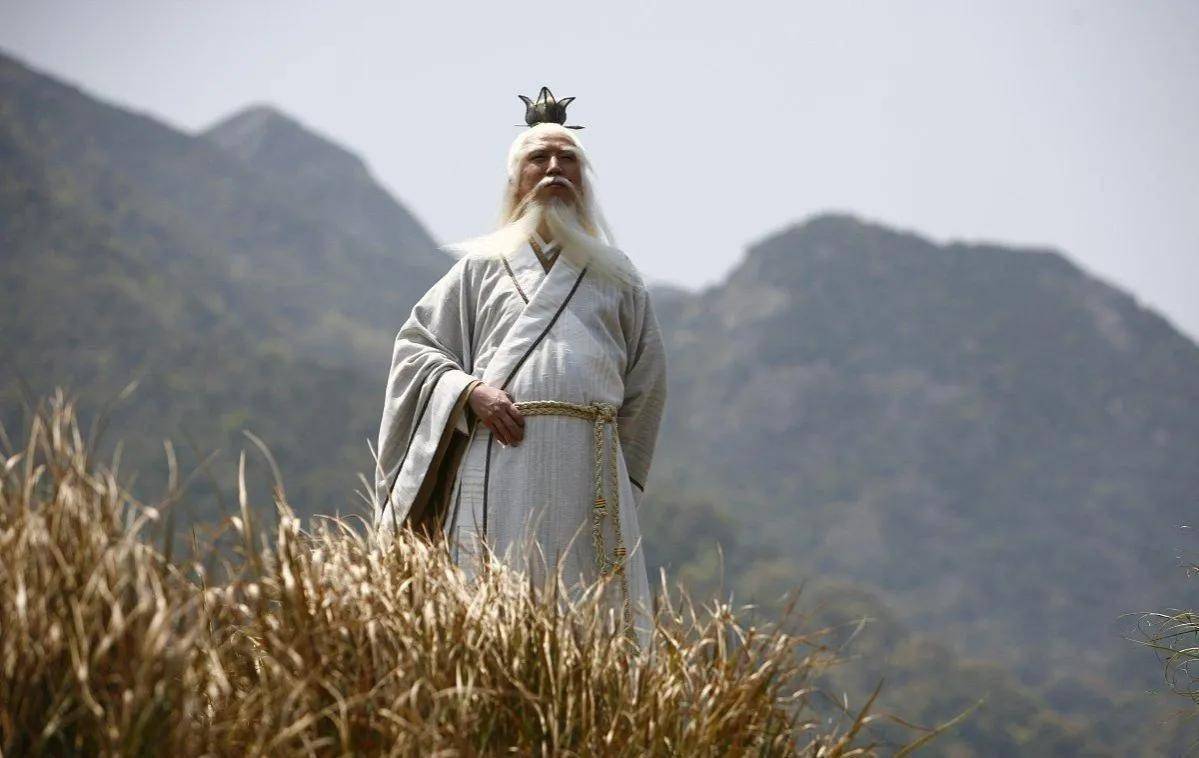
If you're looking for a free AI for Daoist wisdom and guidance, you've arrived at the right moment — and perhaps for the right reasons. In a year when 76% of people report experiencing burnout, 1 in 3 workers say they're merely surviving, and the Global Wellness Summit identifies nervous system regulation as wellness's next frontier, people aren't just searching for stress relief. They're searching for a fundamentally different way of relating to effort, control, and the relentless pressure to optimize. AI Daoist Sage offers exactly that — a free, living conversation with 2,500 years of Daoist philosophy, available whenever you need it.
✅ Deep contemplation of the Dao De Jing, Zhuangzi, and the broader Daoist canon
✅ Wu wei counsel for career decisions, relationships, grief, and life transitions
✅ I Ching hexagram exploration as a reflective wisdom tool
✅ Inner alchemy and cultivation frameworks explained with nuance
✅ Knowledge spanning philosophical, religious, and practice-oriented Daoism
Over 9,000 people have used AI Daoist Sage to find clarity during career transitions, navigate grief through the lens of impermanence, and discover what happens when they stop pushing and start listening. Here's why Daoist wisdom is resonating so deeply right now — and how to access it for free.
Quick Answer: What Is the Best Free AI for Daoist Wisdom?
AI Daoist Sage is a free conversational AI grounded in the full depth of the Daoist tradition — from Laozi and Zhuangzi's philosophical insights to inner alchemy, cosmology, and religious Daoism — that provides personalized wisdom, textual contemplation, and life counsel through the lens of wu wei and naturalness.
Unlike generic AI assistants that treat Daoism as a collection of inspirational quotes, it engages the tradition at the level of serious scholarship while remaining accessible to anyone.
Key capabilities:
- Contemplation of classical Daoist texts with commentary from multiple traditions (Wang Bi, Heshanggong, Guo Xiang)
- Wu wei–based life counsel for decisions, stress, and transitions
- I Ching hexagram exploration as a reflective practice
- Inner alchemy (neidan) conceptual guidance and yangsheng (nourishing life) wisdom
- Comparative engagement with Confucianism, Buddhism, and Western philosophy
The 2026 Crisis Daoism Was Built to Address
The world in 2026 isn't just stressed — it's chronically dysregulated. And the data tells a story that reads like a diagnosis the Daoist tradition wrote about millennia ago: a civilization that has lost touch with natural rhythms and can't stop forcing.
🧠 The Nervous System Is Stuck in Fight-or-Flight
The Global Wellness Summit's 2026 Trends Report names "The Rise of Neurowellness" as one of the year's defining movements, describing how "modern life keeps the nervous system in a near-constant state of activation" — contributing to "poor sleep, anxiety, inflammation, hormonal imbalance, cognitive fog, weakened immunity and accelerated aging."
This is precisely the condition the Zhuangzi describes when it speaks of people "running about frantically, oblivious to their insanity." The Daoist tradition has been diagnosing nervous system dysregulation — and prescribing its antidote — for over two thousand years. It just used different language.
📉 Burnout Has Become the Default, Not the Exception
The numbers are stark:
76% of people now experience burnout, according to Harvard physician Dr. Aditi Nerurkar — and over 75% of workers worldwide report some degree of burnout in 2026.
Source: The Guardian
The 2026 NAMI-Ipsos Workplace Mental Health Poll found that 53% of employees report feeling burned out because of their job in the past year. The University of Illinois Workplace Wellbeing Report 2026 found that 61% of U.S. workers are languishing — struggling with engagement, motivation, or fulfillment.
These aren't people who need another productivity system. They need permission to stop.
🌊 The Over-Optimization Backlash Is Here
The Global Wellness Summit identifies "The Over-Optimization Backlash" as a defining cultural shift: "Sleep is scored, glucose is graphed, aging is tracked, and wellbeing has shifted from something we feel to something we perform correctly." The report describes a pivot "toward regulation over results, sensation over scores, and wellbeing measured by how fully alive we feel."
This is, almost word for word, what Laozi was saying in chapter 48 of the Dao De Jing: "In the pursuit of learning, one adds to it daily. In the pursuit of Dao, one reduces daily." The backlash against optimization culture is a rediscovery of wu wei — whether the people experiencing it know that term or not.
📚 Academic Research Confirms Daoism's Therapeutic Relevance
A 2025 peer-reviewed paper in Religions (MDPI) by Robbert Zandbergen at East China Normal University argues that "texts like the Zhuangzi have an uncanny relevance for any serious investigation of mental health and illness in twenty-first-century China." The paper highlights how the Daoist tradition promotes "an important level of flexibility conducive to what we now refer to as mental health" — in contrast to rigid systems that insist on conformity and control.
Meanwhile, Mindful Leader's 2026 trends analysis describes people arriving at mindfulness practice "fried, scattered, running on fumes" — and argues that the field must evolve to meet people where they are, not where tradition expects them to be. AI Daoist Sage does exactly this.
💰 But Accessing Daoist Wisdom Meaningfully Is Difficult
The global meditation market is valued at $11.88 billion in 2026, growing at a 23.3% CAGR — yet the market is dominated by apps offering generic mindfulness content. Finding genuine engagement with Daoism specifically remains challenging:
- The texts are dense and layered — The Dao De Jing has hundreds of translations, each with different interpretive lenses
- Commentarial traditions are vast — Wang Bi, Heshanggong, and Guo Xiang read the same passages in fundamentally different ways
- Qualified teachers are scarce — Finding someone versed in both philosophical and religious Daoism is rare outside academic or monastic settings
- Self-help distortions are everywhere — Daoism gets reduced to "go with the flow" platitudes
- Academic courses cost thousands — And require years of dedicated study

Why AI Daoist Sage Is the Best Free AI for Daoist Guidance
AI Daoist Sage was built to dissolve the barriers between modern seekers and an ancient tradition that has never been more relevant. It's not a quote generator or a meditation timer — it's a sage who engages with your specific situation through the full depth of the Daoist canon.
| Traditional Approach | AI Daoist Sage |
|---|---|
| Years of classical Chinese study to read primary texts | Passages presented with translation, commentary, and contemplative guidance |
| Finding a qualified teacher in your area | 24/7 access to a sage versed in philosophical, religious, and cultivation Daoism |
| Expensive academic courses or retreats | Free to start, with deep engagement at a fraction of any course cost |
| Self-help books that flatten the tradition | Authentic Daoism that corrects misunderstandings and honors complexity |
| Isolated study without dialogue | Interactive contemplation — the sage responds to your situation |
| One teacher, one lineage | Knowledge spanning Classical, Celestial Masters, Complete Perfection, inner alchemy, and modern Daoism |
☯️ Depth Without Gatekeeping
This AI draws on the full Daoist canon. It can walk you through chapter 11 of the Dao De Jing — the one about the usefulness of emptiness — and then connect it to Wang Bi's metaphysical reading, Heshanggong's body-cultivation interpretation, and your actual question about whether to quit your job. It holds multiple commentarial traditions simultaneously and lets you explore the tensions between them.
🌊 Wu Wei as Practical Life Counsel
When you bring a life situation — a difficult decision, a relationship conflict, a career crossroads — the sage listens for where you're forcing. Not "what should you do?" but "what is the natural movement here? What happens if you stop pushing?" This is wu wei applied to real life: not passivity, but the art of acting without forcing, like water finding its course.
📖 Living Textual Contemplation
The Daoist approach to texts is more meditative than analytical. The sage presents a passage, unpacks its layers, engages the commentarial tradition, and then sometimes simply invites you to sit with it. "What does this stir in you?" is a legitimate Daoist pedagogical move — and one that no static book can offer.
🔄 Meets You Where You Are
A first-time reader curious about the Dao De Jing gets clear, accessible guidance. A graduate student working through Guo Xiang's commentary on the Zhuangzi gets scholarly engagement. Someone in grief gets presence first, wisdom second. The calibration happens naturally from how you communicate.
How It Works: Five Steps to Daoist Dialogue
Using AI Daoist Sage requires no preparation, no background knowledge, and no commitment. The sage meets you where you are.
Step 1: Begin Where You Are
Open AI Daoist Sage and simply start. There's no onboarding, no questionnaire. Bring a question, a life situation, or pure curiosity.
"I've been promoted at work but I feel more anxious than ever. The more control I have, the worse I feel. Is there a Daoist perspective on this?"
Step 2: Receive Wisdom Tailored to Your Situation
The sage doesn't deliver generic quotes. It engages with your specific context — drawing on relevant passages, stories (like Zhuangzi's Cook Ding or the useless tree), and Daoist frameworks to illuminate your situation from an angle you haven't considered.
Step 3: Explore Texts Together
Ask to work through a specific passage. The sage presents the classical Chinese, offers translation, unpacks character-by-character meaning when you want depth, and connects the text to the broader tradition.
"Can we look at chapter 22 of the Dao De Jing? I keep coming back to the idea of yielding and overcoming."
Step 4: Deepen Over Time
Keep conversations in the same chat. The sage remembers what you've explored, notices patterns in your questions, and builds on previous discussions. A relationship with Daoist wisdom develops naturally — the way the tradition itself unfolds.
Step 5: Explore Cultivation and Practice
When you're ready, ask about meditation frameworks like zuowang (sitting and forgetting) or xinzhai (fasting of the heart-mind). Explore inner alchemy concepts — jing, qi, shen — or yangsheng practices for daily life. AI Daoist Sage explains these as the tradition's own language for internal experience, acknowledging where a living teacher becomes important for advanced practice.
Real-World Use Cases: How People Put It to Work
📊 The Over-Optimizer Seeking Relief
Scenario: A tech executive tracks sleep, glucose, steps, and HRV daily — and feels worse than ever. The data says they're healthy; they feel exhausted.
Traditional approach: Another app, another protocol, another optimization layer.
AI Daoist Sage: Recognizes the pattern immediately — the Dao De Jing's warning that "the more you know, the less you understand." Introduces the concept of wu wei not as laziness but as the art of not interfering with what's already working. Offers chapter 48's teaching on daily reduction. Reframes the executive's exhaustion not as a problem to solve but as the body's wisdom signaling that the forcing has become the problem.
- Connects the over-optimization backlash to ancient Daoist critiques of Confucian "mental hygiene"
- Distinguishes between productive effort and counterproductive forcing
- Offers specific contemplative practices for letting go of control
💼 The Burned-Out Professional
Scenario: A mid-career professional feels stuck — overworking, over-planning, unable to let go of control. They've tried therapy, meditation apps, and productivity systems. Nothing sticks.
Traditional approach: Another self-help book, another framework to master.
The sage: Listens for where the forcing is happening. Might tell the story of the useless tree from Zhuangzi chapter 4 — the tree that survived precisely because it was "useless" to the carpenter. Reframes the situation: "What if the problem dissolves when you stop constructing it?" Offers the Dao De Jing's water metaphor not as decoration but as a genuine model for understanding power through yielding.
- Identifies patterns of over-efforting across conversations
- Connects ancient wisdom to specific modern situations
- Distinguishes wu wei from passivity with concrete examples
📱 The Philosophy Student Going Deep
Scenario: A philosophy student wants to understand how Zhuangzi's perspectivism differs from Western postmodernism — and whether the Zhuangzi's approach to mental health, as described in Zandbergen's 2025 paper, offers something Western psychology doesn't.
Traditional approach: Weeks of reading secondary literature, cross-referencing translations, seeking out a professor with comparative expertise.
AI Daoist Sage: An immediate, nuanced conversation drawing on the Zhuangzi's "Qiwulun" (On Making All Things Equal), specific textual passages, and clear distinctions between what the tradition says, what scholars debate, and where genuine uncertainty exists.
- Engages with primary texts in classical Chinese
- Distinguishes Daoist perspectivism from Western relativism with precision
- References specific scholars and commentarial traditions
🎯 Navigating Grief and Impermanence
Scenario: Someone dealing with the loss of a parent wants perspective beyond conventional comfort — something that addresses the nature of change itself.
Traditional approach: Well-meaning but often hollow reassurances from people unfamiliar with how Daoism approaches impermanence.
AI Daoist Sage: Meets grief with presence first — the playfulness recedes. Then, when the moment is right, offers what the tradition offers: Zhuangzi drumming on a pot after his wife's death, not from callousness but from a profound understanding of transformation. The Dao De Jing's teaching that "returning is the movement of the Dao." Not platitudes — genuine engagement with how the tradition understands change, loss, and the flow of things.
- Shifts register appropriately — present with suffering, not performatively wise
- Draws on specific textual traditions around impermanence
- Acknowledges when professional support is needed alongside philosophical perspective
Frequently Asked Questions
Is AI Daoist Sage really free?
Yes — you can access AI Daoist Sage for free with core features on Jenova's free tier. Paid plans starting at $20/month offer significantly more usage and custom model selection for those who want to use it as an ongoing contemplative partner. But the free tier provides genuine, deep engagement — not a watered-down preview.
How is this different from reading a Dao De Jing translation?
A translation gives you one interpreter's rendering of the text. AI Daoist Sage presents passages with multiple commentarial perspectives (Wang Bi, Heshanggong, Guo Xiang), connects them to your actual questions, and engages in the kind of contemplative dialogue that the tradition itself values. It's the difference between reading a map and walking with a guide.
Can AI Daoist Sage replace a living Daoist teacher?
No — and it says so honestly. For advanced cultivation practices, especially inner alchemy (neidan), a living teacher-student relationship matters. The sage explains frameworks, offers conceptual guidance, and discusses what the tradition says about practice — but it acknowledges its limits clearly, particularly for physical practices like qigong or taijiquan.
Does it cover religious Daoism or just philosophy?
Both. While its center of gravity is philosophical Daoism (Laozi, Zhuangzi, Liezi), it is conversant with the Celestial Masters, Complete Perfection, Shangqing, Lingbao, and inner alchemy traditions. It can discuss a jiao ceremony or the symbolism of the Jade Emperor with the same ease as a passage from the Dao De Jing.
Does it work on mobile?
Yes — full feature parity across web, iOS, and Android. The sage is available wherever you are, whether you're commuting, on a lunch break, or sitting quietly at home.
Is AI Daoist Sage accurate about Daoist philosophy?
The sage distinguishes carefully between canonical teaching, commentarial interpretation, specific scholars' views, and its own synthesis. When the tradition genuinely disagrees with itself — and it often does — it presents the disagreement rather than forcing resolution. When it doesn't know something, it says so.
Stop Optimizing. Start Listening.
The modern world generates stress at industrial scale. The meditation market alone is valued at $11.88 billion in 2026, growing at 23% annually. The Global Wellness Summit describes a cultural backlash against "wellness performed correctly" — a collective exhaustion with the idea that health is something you optimize rather than something you inhabit.
Daoism has been offering an alternative for over two millennia. Not a system to master, but a way of being to discover. Not more effort, but less forcing. Not another thing to optimize, but permission to stop optimizing and notice what's already here. As the Mindful Leader's 2026 analysis puts it, people in 2026 aren't "looking for enlightenment. They're looking for a way to stay upright."
The best free AI for Daoist wisdom doesn't tell you what to do. It helps you see where you're forcing — and what happens when you stop.
Try AI Daoist Sage and bring an ancient conversation into your modern life. The sage is waiting — unhurried, at ease, with no particular need to impress you. Which is, of course, precisely the point.