Free AI for CPA Exam Tutoring: Adaptive Practice, Weak-Area Diagnosis & Study Plans for Every Global Accounting Qualification
2026-04-04

Is there a free AI for CPA exam tutoring that actually understands the difference between a US CPA FAR simulation and an ACCA Strategic Business Reporting case study? In a profession where more than 300,000 accountants have left the workforce in recent years while the Bureau of Labor Statistics projects 136,400 accounting openings per year, earning your CPA or equivalent qualification has never been more valuable — or more difficult. CPA Tutor AI provides free, full-depth tutoring across the US CPA (AUD, FAR, REG, BAR, ISC, TCP), CPA Canada, CPA Australia, ICAEW ACA, and ACCA — with adaptive practice questions, weak-area diagnosis, and personalized study plans that adjust to exactly where you are. Over 19,000 candidates have used it to build structured study routines, with users reporting measurable score improvements and an average 35% reduction in wasted study time within their first month.
✅ Full curriculum coverage for US CPA, CPA Canada, CPA Australia, ICAEW ACA & ACCA ✅ Exam-format practice questions with detailed explanations and trap analysis ✅ Weak-area diagnosis that identifies exactly which subtopics are dragging your score down ✅ Personalized study plans calibrated to your exam date, available hours, and current progress ✅ 24/7 availability — no scheduling, no hourly fees, any language
The search for a free AI for CPA exam preparation reflects a real gap in the market. Traditional review courses cost $1,299 to $6,299 for a single qualification, yet 94% of finance and accounting leaders say they lack the talent they need for high-priority work in 2026. The demand for qualified accountants is surging while the pipeline of new CPAs continues to shrink — making every candidate who passes their exam more valuable, and every failed attempt more costly.
Quick Answer: What Is CPA Tutor AI?
CPA Tutor AI is a free, AI-powered exam preparation partner that provides full-depth tutoring for CPA and CPA-equivalent accounting qualifications worldwide — covering every section, every exam format, and every major jurisdiction.
Unlike static review courses that deliver the same content to every candidate, this AI adapts its teaching to your specific qualification, section, weak areas, and learning pace.
Key capabilities:
- Covers all sections of the US CPA exam (AUD, FAR, REG, BAR, ISC, TCP), CPA Canada, CPA Australia, ICAEW ACA, and ACCA
- Generates exam-representative MCQs and task-based simulations with detailed explanations
- Diagnoses weak areas through targeted questioning — not just tracking what you got wrong, but why
- Builds personalized study schedules based on your available hours, exam dates, and performance patterns
- Provides jurisdiction-specific exam strategy, including CPA Evolution discipline selection and CPA Canada transition guidance
The Accounting Talent Crisis Makes Your CPA Worth More — But the Exam Isn't Getting Easier
The accounting profession is in the midst of a structural talent shortage that shows no signs of easing. Understanding this context matters for every CPA candidate: the credential you're pursuing is becoming more valuable by the year, but the exams remain among the most demanding professional assessments in any field.
📉 The Workforce Gap Is Widening
The numbers are stark. More than 300,000 accountants have left the profession in recent years, while fewer graduates are entering the pipeline. The Bureau of Labor Statistics projects 6% growth in demand for accounting professionals, equating to approximately 136,400 openings per year. Meanwhile, open finance and accounting roles have surged 150% in just one year, with 87% of leaders citing a talent shortage.
94% of finance and accounting leaders say they don't have the talent they need to complete their high-priority work in 2026. Source: befree Global
For candidates, this means one thing: passing your CPA exam opens doors that are wider than they've been in decades. But first, you have to pass.
📊 Pass Rates Reveal Where Candidates Struggle Most
The 2025 CPA exam data from the AICPA paints a clear picture of difficulty under the CPA Evolution format:
| Section | Type | 2025 Cumulative Pass Rate |
|---|---|---|
| FAR | Core | 42.12% |
| AUD | Core | 48.21% |
| REG | Core | 63.12% |
| BAR | Discipline | 41.94% |
| ISC | Discipline | 67.79% |
| TCP | Discipline | 77.65% |
The first-time pass rate across all four required sections sits at roughly 25–30%. FAR and BAR remain the most punishing sections — both hovering around 42% — while TCP leads at nearly 78%, reflecting strong candidate self-selection rather than easier content.
💰 The Cost Barrier Is Real
Beyond difficulty, cost is a significant barrier. The total cost to become a licensed CPA ranges from $3,000 to $7,000+, including exam fees, application costs, review courses, and licensing. Traditional review courses alone range from $1,299 to $6,299 depending on provider and tier. For candidates outside the US pursuing ACCA, ACA, or CPA Australia, the costs compound further with multiple exam sittings, registration fees, and study materials across 13–15 separate papers.
🌍 Global Qualifications Add Layers of Complexity
The challenge multiplies for candidates pursuing qualifications outside the US:
- CPA Canada is in active transition — the current CPA PEP program continues through 2027, with the final CFE expected in September 2028 and a new CPA Professional Program launching in early 2027
- ACCA Strategic Professional papers posted pass rates as low as 38% for AAA and 40% for PM in December 2025, with ACCA preparing a redesigned qualification launching in 2027
- ICAEW ACA Professional Level pass rates range from 76% to 91% across subjects, but the 15-exam structure across three levels plus 450 days of practical experience makes it a multi-year commitment
- CPA Australia uses a semester-based model with scaled scoring (passing score of 540 on a 100–900 scale), with six subjects and regional tax variants
Finding a single tutor — human or AI — who can provide substantive guidance across all of these qualifications is nearly impossible. That's the gap a free AI for CPA tutoring needs to fill.
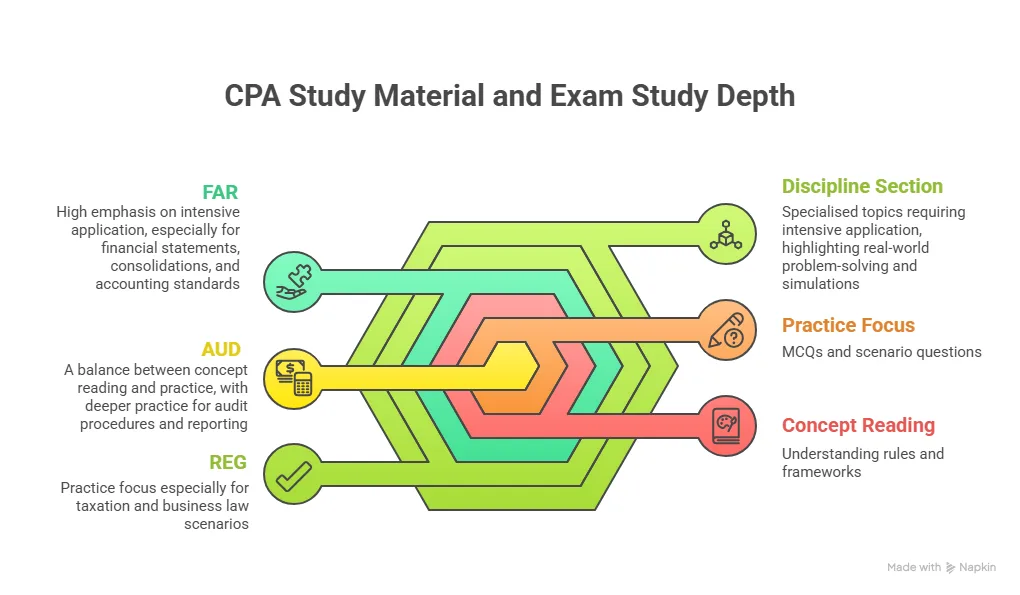
How CPA Tutor AI Addresses Every Dimension of the Preparation Challenge
CPA Tutor AI was built to solve the specific problems that cause candidates to fail: studying the wrong topics, practicing without feedback, and lacking a structured plan that adapts as they improve.
| Traditional CPA Prep | CPA Tutor AI |
|---|---|
| Fixed curriculum — same for everyone | Adapts to your qualification, section, and diagnosed weak areas |
| Pre-recorded video lectures | Interactive explanations with unlimited follow-up Q&A |
| Generic practice question banks | Exam-format questions tagged by topic, subtopic, and difficulty with trap analysis |
| $1,300–$6,300 for a single qualification | Free tier available; covers all 5 major qualifications |
| Office hours or email support | Available 24/7, instant responses |
| US CPA only (most providers) | US CPA, CPA Canada, CPA Australia, ACA, ACCA |
| No awareness of your weak patterns | Diagnoses the specific misconception behind each error |
🔍 Diagnostic Precision: Finding the Real Problem
The most common reason candidates plateau isn't a lack of effort — it's studying the wrong things. A candidate scoring 68 on FAR might assume they need to "study more FAR," but this AI identifies whether the issue is governmental fund accounting classifications, modified accrual recognition timing, or GASB-specific standards. It then re-teaches only the gap area with fresh examples and progressively harder practice questions.
This diagnostic approach mirrors what the best human tutors do — but at a fraction of the cost and without scheduling constraints.
📋 Jurisdiction-Aware From the First Message
The first thing CPA Tutor AI does is identify exactly which qualification you're pursuing, where you are in your journey, and what you need to focus on. It asks four targeted questions:
- Which qualification are you pursuing?
- Where are you in your journey?
- What's your current focus area or section?
- Do you have exam dates set?
From there, every interaction — concept explanations, practice questions, study plans, exam strategy — is tailored to your specific qualification, section, and jurisdiction.
📚 Technical Depth Across Every Section
This isn't a surface-level study companion. CPA Tutor AI's knowledge spans:
- US CPA Core: AUD (audit procedures, PCAOB standards, SSARS), FAR (US GAAP, IFRS differences, governmental/NFP accounting), REG (federal taxation across all entity types, business law, ethics)
- US CPA Disciplines: BAR (advanced financial reporting, prospective financial information), ISC (IT governance, cybersecurity, SOC engagements), TCP (multi-jurisdictional tax, property transactions, compensation planning)
- CPA Canada: All PEP modules, CFE strategy (Day 1 case, Day 2 role, Day 3 multis), and transition timeline guidance for the new CPA Professional Program launching in 2027
- CPA Australia: All 4 compulsory subjects plus elective guidance, including regional tax variants and the scaled scoring model
- ICAEW ACA: Full exam structure across all three levels, with Professional Level pass rates ranging from 76% to 91%
- ACCA: All 13 papers across Applied Knowledge, Applied Skills, and Strategic Professional levels, including optional paper selection strategy
How It Works: From First Message to Exam Day
Step 1: Tell the Tutor Where You Are
Open CPA Tutor AI and describe your situation. The tutor identifies your qualification and calibrates everything accordingly.
"I'm studying for the US CPA exam. I've passed AUD and REG, and I'm preparing for FAR with an exam date in six weeks."
"I'm an ACCA student about to sit SBR and AAA in the June sitting. I need help with the written answer technique."
Step 2: Get Concept Explanations That Actually Clarify
Ask about any topic and receive a structured breakdown with worked examples, standards references, and common exam traps. The tutor doesn't just define terms — it explains how examiners test them and where candidates typically lose marks.
"Walk me through the consolidation adjustments when a subsidiary has intercompany inventory profits under ASC 810."
Step 3: Practice with Exam-Format Questions
Request practice questions matched to your specific exam format — MCQs and task-based simulations for US CPA, case studies for the CFE, written responses for ACCA Strategic Professional papers.
"Give me 5 intermediate-difficulty MCQs on revenue recognition under ASC 606 for FAR."
After you answer, the tutor provides the correct answer, a detailed explanation of the underlying concept, and analysis of why each wrong answer is a common trap — not just "B is correct" but why candidates pick C and what misconception drives that choice.
Step 4: Build a Personalized Study Plan
Share your available study hours, exam date, and current progress. The tutor creates a realistic, week-by-week schedule that prioritizes high-yield topics and accounts for your diagnosed weak areas.
"I have 12 hours per week and my FAR exam is May 20. Build me a study plan that front-loads governmental accounting — that's where I'm weakest."
Step 5: Track Progress and Adjust Dynamically
As you work through practice questions and topics, the tutor tracks your strengths and weaknesses, updating its recommendations in real time. It identifies avoidance patterns — if you keep requesting REG questions but haven't touched FAR simulations, it flags the imbalance.
Real Scenarios: How Candidates Use Free AI for CPA Exam Tutoring
📊 Diagnosing a FAR Score Plateau
Scenario: A candidate has failed FAR twice with scores of 71 and 73 — close but not passing.
Without CPA Tutor AI: Re-study the entire FAR curriculum, spending equal time on topics they've already mastered and topics pulling their score down. Purchase a second review course for $1,500+.
With CPA Tutor AI: The tutor runs targeted diagnostic questions across FAR subtopics and identifies that the candidate's governmental accounting and NFP knowledge is strong, but they're consistently misapplying lease classification rules under ASC 842 and making errors on consolidation eliminations with intercompany transactions. It re-teaches only these gap areas with fresh examples, generates progressively harder TBS-style problems, and tracks improvement.
- Pinpoints the 2–3 subtopics responsible for the score gap
- Saves weeks of re-studying topics already mastered
- Generates targeted practice at the exact difficulty level needed
💼 Choosing Between BAR, ISC, and TCP
Scenario: A candidate has passed all three core sections and needs to select their discipline — but forum advice is contradictory and pass-rate-driven.
Without CPA Tutor AI: Read r/CPA threads, pick TCP because it has the highest pass rate (77.65%), and hope for the best.
With CPA Tutor AI: The tutor evaluates the candidate's career goals, academic background, and performance patterns across core sections. A candidate who scored highest on REG with tax career aspirations gets a clear recommendation for TCP, along with a study plan that leverages their existing tax knowledge. A candidate interested in IT audit or cybersecurity gets guidance on ISC's content — IT governance, SOC engagements, and data analytics — with an honest assessment of the content's difficulty relative to their background.
- Decision grounded in career goals and demonstrated strengths, not just pass rates
- Transparent about what each discipline actually tests
- Study plan that leverages existing knowledge
🌏 Navigating the CPA Canada Transition
Scenario: A Canadian candidate has completed Core 1 and Core 2 but is unsure whether to accelerate through the current CPA PEP or wait for the new program.
Without CPA Tutor AI: Piece together information from CPA Canada's website, provincial body announcements, and peer forums. Remain confused about deadlines.
With this AI-powered tutor: The tutor lays out the specific transition deadlines — the last Core 1 offering begins January 2027, the final CFE is expected in September 2028, and the PER deadline is January 1, 2029. It evaluates the candidate's current progress against these dates and provides a concrete recommendation with a timeline.
- Clear, date-specific transition guidance
- Personalized recommendation based on current progress
- Avoids the confusion of piecing together information from multiple provincial bodies
📱 Commute-Sized Study Sessions
Scenario: A working professional studying for ACCA has a 25-minute train commute and wants to use it productively.
Without CPA Tutor AI: Try to watch a lecture video on a phone screen with poor audio. Give up after two stops.
With CPA Tutor AI: The tutor delivers a focused mini-quiz on a specific SBR subtopic — say, IFRS 15 five-step revenue recognition — provides instant feedback with examiner-perspective commentary, and tracks performance. All text-based, all mobile-optimized, all synced across devices.
- Sessions as short as 5–10 minutes
- Full feature parity across web, iOS, and Android
- Progress tracked across fragmented study sessions
📝 ACCA Strategic Professional Exam Technique
Scenario: An ACCA student consistently fails AAA (Advanced Audit and Assurance), which posted a 38% pass rate in December 2025 — the lowest of any ACCA paper that sitting.
Without CPA Tutor AI: Re-read the study text, practice more questions without structured feedback, hope the next sitting goes better.
With get started with CPA Tutor AI: The tutor identifies that the candidate's technical knowledge is adequate but their written answer technique is weak — they're not structuring responses around the marking scheme, they're writing generic audit procedures instead of scenario-specific ones, and they're not earning the "professional marks" that separate a 49 from a 51. It coaches on answer structure, generates practice scenarios with model answers annotated to show where marks are awarded, and builds the exam technique that AAA specifically demands.
- Addresses the technique gap, not just the knowledge gap
- Model answers annotated with marking scheme alignment
- Focused on the specific skills that separate near-misses from passes
Frequently Asked Questions
Is CPA Tutor AI actually free?
Yes. CPA Tutor AI is available on Jenova's free tier with limited usage — enough for regular practice sessions, concept explanations, and study plan generation. For heavier use, such as daily practice across multiple sections, paid plans starting at $20/month offer significantly more usage capacity. Compared to traditional review courses at $1,300–$6,300, even the paid plans cost less than a fraction of one course.
How is CPA Tutor AI different from Becker, Surgent, or UWorld?
Traditional review courses provide pre-built content libraries — video lectures, textbooks, and question banks. CPA Tutor AI is an interactive tutor that adapts to your specific questions, diagnoses your weak areas through practice, and explains concepts from multiple angles until you understand them. It also covers five major global qualifications, while most review courses focus exclusively on the US CPA exam. Many candidates use it alongside a traditional review course for targeted reinforcement of weak areas.
Can it help with qualifications outside the US?
Yes. CPA Tutor AI provides full-depth coverage for CPA Canada (including transition guidance for the new CPA Professional Program), CPA Australia, ICAEW ACA, and ACCA. For candidates pursuing qualifications in other jurisdictions (India CA, SAICA, HKICPA, Philippines CPA, etc.), it researches the relevant curriculum and provides substantive support.
Does it generate practice questions?
Yes. It generates original, exam-representative questions matched to your specific exam format — MCQs and task-based simulations for US CPA, case studies for the CFE, written responses for ACCA Strategic Professional papers. Questions are tagged by topic, subtopic, and difficulty level, with detailed explanations and trap analysis after each attempt.
Can it build me a study plan?
Absolutely. Share your exam date, available study hours per week, and current progress, and CPA Tutor AI builds a realistic, week-by-week schedule that prioritizes high-yield topics and targets your weak areas. It can also generate downloadable study plans and progress trackers as PDFs.
Is CPA Tutor AI accurate on tax law and accounting standards?
The tutor references specific standards (ASC 842, IAS 16, ISA 700, IFRS 15, etc.) and cites authoritative bodies (AICPA, FASB, IASB, PCAOB, IRS, HMRC). When it encounters a question where it's not confident about a specific detail — especially for rapidly changing tax law or smaller jurisdictions — it flags the uncertainty and offers to research the current guidance rather than risk teaching something incorrect.
Does it work on mobile?
Yes. CPA Tutor AI works with full feature parity across web, iOS, and Android. All progress, settings, and conversation history sync across devices — study on your laptop at home, continue on your phone during your commute.
The Profession Needs You. Your Exam Prep Should Work as Hard as You Do.
The accounting profession is facing its most severe talent shortage in decades. With 300,000+ accountants having left the workforce, 136,400 openings projected annually, and 94% of firms reporting they can't find enough qualified professionals, the career opportunities for newly qualified CPAs have never been stronger.
But getting there requires passing one of the most demanding professional exams in any field. With FAR at 42%, BAR at 42%, and ACCA AAA at 38%, the margin between passing and failing is often a handful of points — points that come from studying the right topics, practicing with the right feedback, and following a plan that adapts as you improve.
A free AI for CPA exam tutoring that covers every major global qualification, diagnoses your specific weak areas, and builds study plans around your actual schedule addresses every dimension of this challenge: cost, access, personalization, and diagnostic precision. CPA Tutor AI provides that adaptive coaching — available 24/7, on any device, across any accounting qualification worldwide.
Whether you're tackling FAR for the first time, navigating the CPA Canada transition, or pushing past an ACCA score plateau, try CPA Tutor AI for free and turn your study time into measurable progress toward the credential that opens every door in accounting.