Free AI for Cosmetic Surgery Imaging: Facial Analysis, Procedure Mock-Ups & Before/After Content Creation
2026-03-27
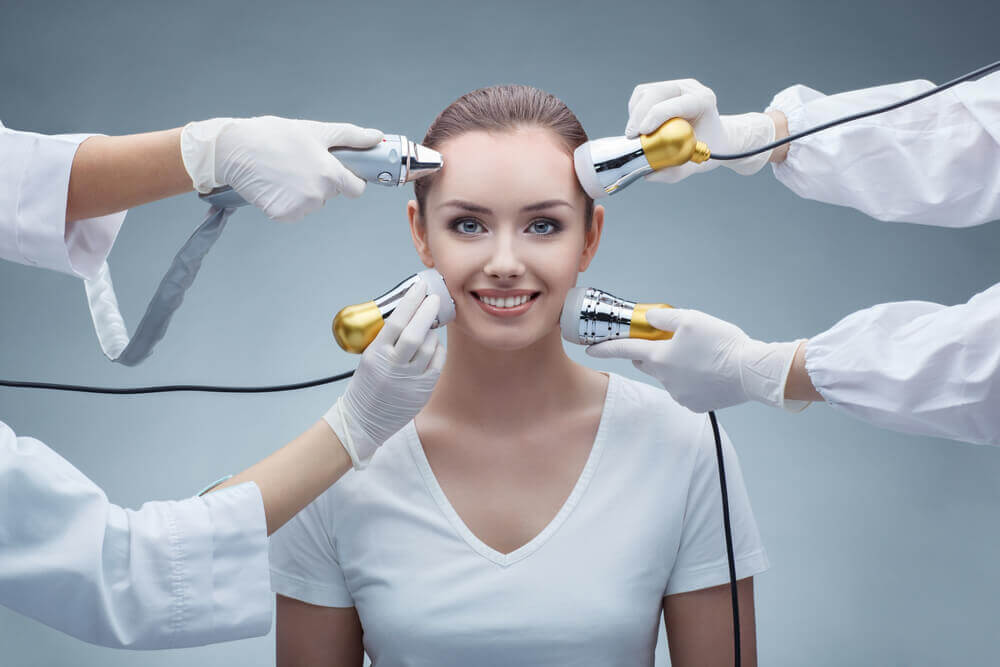
Need a free AI for cosmetic surgery imaging that covers everything from quantified facial proportion analysis to polished before/after Instagram content? Cosmetic Surgery Image Specialist brings the analytical depth of a clinical imaging expert together with the production quality of an aesthetic marketing agency — analyzing clinical photos with measurable symmetry assessment, generating photorealistic procedure mock-ups, and creating platform-ready visual content, all within a single conversation. Over 8,500 surgeons, clinic marketing teams, and aesthetic professionals have used this free AI tool to streamline their imaging workflows, with users reporting an average of 4+ hours saved per week on clinical documentation, consultation preparation, and social media content creation.
✅ Facial proportion analysis with golden ratio, rule of thirds, and symmetry quantification
✅ Photorealistic procedure mock-ups for rhinoplasty, facelifts, fillers, blepharoplasty & more
✅ Professional before/after comparison layouts for portfolios, Instagram, and patient presentations
✅ Post-operative healing evaluation with complication identification
✅ Available for free — no expensive visualization software subscription required
The aesthetic medicine industry is experiencing a convergence of record patient volumes and rapid AI adoption. With 17.4 million cosmetic surgeries and 20.5 million non-surgical treatments performed worldwide in 2024 alone — a 42.5% increase over four years — the demand for precise, professional-grade clinical imagery has never been higher. Yet most practices still rely on fragmented, expensive tools that separate analysis from editing from content creation.
Quick Answer: What Is AI Cosmetic Surgery Image Specialist?
Cosmetic Surgery Image Specialist is a free AI-powered visual analysis and content creation tool that helps aesthetic professionals analyze clinical photos, generate procedure mock-ups, and produce marketing-ready before/after content — combining clinical imaging expertise with visual production in a single conversation.
Key capabilities:
- Detailed facial and body proportion analysis with measurable symmetry assessment from uploaded photos
- Procedure outcome visualization for surgical, non-surgical, and reconstructive cases
- Professional before/after comparison layouts optimized for Instagram, clinic websites, and patient presentations
- Post-operative evaluation including healing stage assessment and complication identification
Why Aesthetic Practices Are Struggling with Clinical Imagery in 2026
The global cosmetic surgery market was valued at USD 59.13 billion in 2025 and is projected to reach USD 83.33 billion by 2034. The AAFPRS 2024 member survey found that 68% of patients cite avoiding an unnatural look as their top concern — making visual communication during consultations more critical than ever. Yet the tools available to most practices remain fragmented, expensive, and disconnected from each other.
Here are the specific challenges:
- Clinical photography standardization is poor — More than half a billion clinical photos are taken per year worldwide, yet inconsistencies in angles, lighting, and positioning remain pervasive
- Visualization software is prohibitively expensive — Platforms like Crisalix report an average conversion rate of 84% for users vs. 36% standard, but pricing puts them out of reach for many practices
- Before/after content creation is time-intensive — Building professional layouts, marketing assets, and case presentations manually consumes clinical hours
- Analysis and content creation live in separate tools — Surgeons juggle different applications for facial assessment, photo editing, mock-up generation, and marketing
- AI research is exploding but accessibility lags — A PubMed review identified 1,866 articles on AI in plastic surgery published before September 2025, yet practical, affordable tools remain scarce
📸 The Clinical Photography Problem
Research published in Aesthetic Plastic Surgery emphasizes that standardized clinical photography in aesthetic practice requires consistent views, background, distance, and lighting conditions to make accurate clinical decisions. A separate study in Diagnostics found that achieving consistency in clinical photography remains a challenge due to variability in equipment, techniques, and patient characteristics — and that only 6.2% of dermatologists even consider white balance when capturing clinical images.
"Anytime you're comparing the same patient over time, you want standardization — standard views, background, distance, and lighting conditions to be able to make accurate clinical decisions." — Dr. Michael Golinko, Vanderbilt University Medical Center
For aesthetic practices, inconsistent before/after photos don't just create documentation problems — they undermine credibility with prospective patients evaluating your results gallery.
💰 The Cost Barrier to Outcome Visualization
Dedicated cosmetic surgery imaging platforms typically cost $3,000–$10,000+ annually. For smaller practices — which represent a significant portion of the market, given that 47.4% of cosmetic procedures are performed in hospitals and 31.1% in specialty clinics — this creates a significant barrier to offering patients the visual consultation experience they increasingly expect.
Meanwhile, a comprehensive review in PMC/NIH confirms that AI-powered 3D modeling and augmented reality now allow patients to visualize possible outcomes of procedures like rhinoplasty or cheek enhancement in interactive simulations — but access to these capabilities remains concentrated among well-funded practices.
⏱️ The Content Creation Bottleneck
With the AAFPRS reporting that minimally invasive procedures account for 80% of total treatments, clinics are handling higher patient volumes than ever. As VMG Health noted in March 2026, AI in aesthetics "isn't a fad — it's a set of tools that can elevate patient experience, sharpen decision-making, and streamline operations when used responsibly." Yet most practices still spend 30–60 minutes per before/after post manually editing photos, creating layouts, and formatting for different platforms.
The Free AI Solution: Clinical Analysis, Visualization & Content in One Tool
Cosmetic Surgery Image Specialist consolidates the entire aesthetic imaging workflow — clinical photo analysis, procedure visualization, and marketing content creation — into a single conversational interface available for free.
| Traditional Approach | Cosmetic Surgery Image Specialist |
|---|---|
| Separate tools for analysis, mock-ups, and marketing | Single integrated workflow |
| $3,000–$10,000+/year for visualization software | Free AI-powered alternative |
| Manual before/after layout creation (30–60 min/post) | Automated professional comparison layouts in minutes |
| Subjective visual assessment only | Quantified facial proportion analysis with measurements |
| Hours spent on case presentation packaging | PDF case presentations generated in minutes |
| Limited to procedures you've photographed | Mock-ups generated from descriptions or reference images |
🔬 Clinical Photo Analysis with Measurable Depth
Unlike basic photo editors, this AI brings genuine clinical knowledge to image analysis. Upload a clinical photo, and it evaluates:
- Facial proportions — golden ratio adherence, rule of thirds, rule of fifths, horizontal and vertical symmetry
- Nasal analysis — dorsal profile, tip projection and rotation, alar base width relative to intercanthal distance
- Periorbital assessment — canthal tilt, brow position, lid-cheek junction, tear trough depth
- Aging patterns — volume loss mapping, gravitational descent, dynamic vs. static rhytids
- Skin quality — texture, pigmentation irregularities, acne scarring classification, photodamage grading
A recent study in Journal of Clinical Medicine (PMC) found that AI models show promise in analyzing qualitative facial features like skin texture, symmetry, and overall harmony — precisely the kind of structured analysis that supports clinical decision-making and patient education.
🎨 Procedure Mock-Ups Across the Full Aesthetic Spectrum
Cosmetic Surgery Image Specialist generates photorealistic visualizations for:
- Surgical procedures — rhinoplasty, blepharoplasty, facelift, chin augmentation, otoplasty, body contouring
- Non-surgical treatments — fillers, neurotoxins, thread lifts, laser resurfacing, chemical peels
- Reconstructive cases — scar revision, post-trauma restoration, congenital anomaly correction
The tool adapts to the patient's ethnic background and stated aesthetic goals, avoiding the imposition of any single beauty standard — addressing the algorithmic bias concerns that PMC research has identified as a key challenge in AI-driven aesthetic tools.
📊 Marketing-Ready Content Creation
From Instagram-optimized before/after grids to professional PDF case presentations, the tool handles the full content pipeline. It auto-adapts aspect ratios for different platforms, adds branding elements, and maintains visual consistency across multi-image series — the kind of capability that VMG Health identifies as essential for modern aesthetic practices.
How It Works: From Upload to Expert Output in Minutes
Step 1: Upload or Describe
Upload a clinical photo for analysis, or describe the procedure and patient demographics you want to visualize. Cosmetic Surgery Image Specialist adapts to whatever input you provide.
"Analyze this frontal and lateral photo of a 38-year-old female patient considering rhinoplasty. Assess nasal proportions and suggest areas for improvement."
Step 2: Receive Expert Analysis
For uploaded photos, the AI delivers a comprehensive assessment covering facial proportions, symmetry deviations, skin quality, aging patterns, and procedure-specific observations. It quantifies measurements where possible and flags findings you may not have asked about.
Step 3: Generate Visualizations
Request mock-ups, before/after comparisons, or educational diagrams. Specify the procedure, desired changes, and output format.
"Generate a side-by-side before/after mock-up showing subtle lip augmentation with filler on this patient's frontal view. Format for Instagram at 1080x1080."
Step 4: Iterate and Refine
Adjust the visualization — modify the degree of change, try different layouts, add text overlays or branding, or generate additional angles. The AI maintains consistency across iterations.
"Make the result slightly more conservative — I want to show a natural enhancement, not a dramatic change."
Step 5: Package and Export
Compile images into PDF case presentations, create platform-specific content variations, or organize assets into your cloud storage. The tool integrates with Google Drive, Dropbox, and Notion for seamless content management.
What 8,500+ Aesthetic Professionals Have Accomplished
🔍 Pre-Operative Consultation Enhancement
The situation: A patient presents for rhinoplasty consultation with reference photos from social media, asking "Can I look like this?"
The old way: Surgeon manually assesses feasibility, sketches on printed photos, or uses expensive 3D simulation software. The patient leaves uncertain about what's achievable.
With Cosmetic Surgery Image Specialist:
- Upload the patient's standardized clinical photos
- Receive quantified nasal analysis (dorsal profile, tip projection ratios, alar base width)
- Generate a realistic mock-up showing achievable results
- Compare the patient's reference images against anatomically plausible outcomes
- Create a patient-friendly handout explaining the proposed changes
The AAFPRS reports that 68% of patients' top concern is avoiding an unnatural look — visual simulations directly address this by setting realistic expectations before any procedure begins.
- ✅ Quantified analysis replaces subjective assessment
- ✅ Realistic mock-ups set appropriate expectations
- ✅ Patient education materials generated on demand
- ✅ No expensive software subscription required
📱 Social Media and Clinic Marketing
The situation: A med spa wants to build a consistent Instagram presence showcasing filler and Botox results — but the marketing coordinator isn't a graphic designer.
The old way: Hire a photographer, manually edit photos in Photoshop, create layouts one by one. Each post takes 30–60 minutes. Quality varies.
With this AI-powered tool:
-
Upload before/after clinical photos from the session
-
Auto-generate side-by-side comparisons with consistent lighting normalization
-
Create Instagram Story (1080×1920) and feed post (1080×1080) versions simultaneously
-
Add clinic branding, watermarks, and call-to-action text
-
Maintain visual consistency across an entire content series
-
✅ Professional-quality social content in under 2 minutes
-
✅ Consistent branding across all posts
-
✅ Multiple platform versions from one request
-
✅ No design skills required
💼 Resident Education and Case Documentation
The situation: A plastic surgery resident needs to prepare a case presentation for grand rounds — and has 48 hours to compile photos, create annotations, and format slides.
The old way: Hours spent compiling photos, creating annotations in PowerPoint, formatting slides manually.
With Cosmetic Surgery Image Specialist's capabilities:
-
Upload multi-angle clinical photos (frontal, 3/4, lateral, basal views)
-
Receive cross-referenced analysis across all views
-
Generate annotated images highlighting key findings
-
Package everything into a polished PDF case presentation
-
Include literature references via integrated Google Scholar search
-
✅ Case presentations assembled in minutes, not hours
-
✅ Annotated images with clinical findings highlighted
-
✅ Literature references integrated automatically
-
✅ Professional formatting throughout
🩺 Post-Operative Monitoring and Documentation
The situation: A surgeon wants to document and assess a patient's healing trajectory at 1 week, 1 month, and 3 months post-rhinoplasty — and needs to identify any concerning findings early.
The old way: Visual comparison by memory or side-by-side printed photos. Subtle asymmetries or delayed healing patterns may go unnoticed.
With this AI:
-
Upload sequential post-op photos
-
Receive comparative analysis tracking swelling resolution, scar maturation, and symmetry improvement
-
Identify any concerning findings (asymmetry, skin irregularities, delayed healing)
-
Generate a timeline progression layout documenting the healing journey
-
✅ Systematic tracking across multiple time points
-
✅ Early identification of potential complications
-
✅ Professional healing timeline documentation
-
✅ Shareable with patients for education and reassurance
🎯 Patient Consultation for Non-Surgical Treatments
The situation: A patient is considering dermal fillers for cheek volume restoration but can't visualize what the result would look like — and the clinic doesn't have $10,000/year visualization software.
With Cosmetic Surgery Image Specialist:
-
Upload the patient's current photo
-
Describe the treatment plan (e.g., "Show cheek volume restoration with 2ml hyaluronic acid filler, maintaining natural contour")
-
Receive a realistic mock-up showing the projected outcome
-
Generate a patient-friendly comparison for discussion
-
✅ No expensive software subscription required
-
✅ Clinically realistic outcomes — won't depict impossible results
-
✅ Directly supports the consultation workflow
-
✅ Increases treatment acceptance through visual communication
Frequently Asked Questions
Is AI Cosmetic Surgery Image Specialist really free?
Yes, you can start using Cosmetic Surgery Image Specialist for free with core features and limited usage. Paid plans starting at $20/month provide significantly more usage for high-volume clinical practices and remove watermarks on generated images — important for professional marketing content.
Can it analyze any type of cosmetic procedure?
It covers the full spectrum — surgical procedures (rhinoplasty, blepharoplasty, facelift, chin/jaw augmentation, otoplasty, body contouring), non-surgical treatments (fillers, neurotoxins, thread lifts, laser resurfacing, chemical peels), and reconstructive cases. Both facial and body assessment are supported.
How accurate are the procedure mock-ups?
The AI prioritizes clinical realism and anatomical plausibility. It will flag when a requested outcome may be