Free AI for Clinical Scribing: Transform Dictation Into SOAP Notes, H&Ps & Structured Records With Intelligent Flags
2026-03-30

Looking for a free AI for clinical scribing that doesn't just transcribe — but actually thinks like a clinician? Clinical Scribe AI has already helped over 18,000 physicians, therapists, and medical students produce professional clinical documentation faster and more consistently. Among those users, more than 5,400 clinicians report eliminating after-hours charting entirely, and over 3,200 medical students say the tool's intelligent flags accelerated their documentation learning curve by months.
✅ Converts free-form dictation into structured SOAP, DAP/BIRP, H&P, and procedure notes automatically ✅ Flags documentation gaps, potential drug interactions, and ICD-10 coding specificity issues ✅ Tracks patient data across encounters within a single session for longitudinal continuity ✅ Free to start — no credit card, no software installation, no EHR integration required
The documentation crisis in healthcare isn't theoretical. Physicians today spend nearly 2 hours on paperwork and EHR tasks for every hour of direct patient care, and documentation is now the leading cause of physician burnout according to 2025 Tebra research. A free AI for clinical scribing isn't a luxury — it's the most practical step a clinician can take to reclaim their evenings. Here's the data behind the crisis, and how this tool addresses it.
Quick Answer: What Is Clinical Scribe AI?
Clinical Scribe AI is a free-to-start AI documentation partner that transforms raw dictation, pasted notes, or shorthand into polished, professionally structured clinical records — with intelligent clinical observations that help catch what might otherwise be missed.
Unlike generic transcription tools that simply convert speech to text, it understands clinical context, auto-detects the appropriate documentation format, and appends meaningful flags about gaps, inconsistencies, and coding opportunities.
Key capabilities:
- Auto-detects the right format — SOAP, DAP/BIRP, H&P, procedure notes, discharge summaries — based on clinical context
- Appends a Clinical Notes section flagging missing elements, drug interactions, and ICD-10 specificity opportunities
- Maintains a persistent Patient Chart within each session for longitudinal continuity across encounters
- Exports to PDF, Word, Google Drive, or Notion with a single request
Why Every Clinician Needs a Free AI for Clinical Scribing in 2026
The AI medical scribe has officially crossed the threshold from experimental tool to essential clinical infrastructure in 2026. But the documentation burden that drives adoption hasn't gone away — in many ways, it's intensified. The data from the past year paints a picture that should concern every healthcare professional still charting manually.
- Documentation consumes nearly half the workday — A JAMA study found that clinical documentation consumed 49% of a physician's workday in 2024
- Burnout remains alarmingly high — 43% of U.S. primary care physicians report burnout, the highest rate among 10 high-income countries studied by the Commonwealth Fund
- Over half of practices have lost physicians to burnout — A 2026 MGMA survey of more than 230 physician practices found that over half reported losing at least one physician to burnout in the past three years
- The AI scribe market is exploding — The global AI medical scribe software market reached USD 1.53 billion in 2025 and is forecast to hit $5.08 billion by 2030, a 27.2% CAGR
- Nearly 75% of clinicians say documentation impedes patient care — per the AMIA 25x5 Task Force survey
⏱️ The "Pajama Time" Problem Is Real
Physicians spend nearly 2 hours on paperwork for every 1 hour of direct patient care — creating what clinicians call "pajama time," the evening hours spent charting after clinic ends. Source: Sully.ai / Tebra 2025 Physician Burnout Survey
For a physician seeing 20 patients per day, documentation adds up to hours of after-clinic work. UChicago Medicine researchers found that even an 8.5% reduction in documentation time — saving just 2–3 minutes per patient — translates to multiple hours reclaimed per week. The math is straightforward: small per-note savings compound into meaningful life-quality improvements.
💰 The Cost of Existing Solutions Is Prohibitive
Human medical scribes cost $30,000–$60,000+ per year in salary and benefits per provider. Enterprise AI scribe platforms like Nuance DAX Copilot run $500–$1,500/month per provider. Even mid-tier tools like Freed ($84/month) or Suki ($299/month) represent significant recurring costs for independent practitioners and small practices.
For solo clinicians, residents, medical students, and therapists in private practice, these price points create a documentation support gap. A free AI for clinical scribing closes that gap — providing intelligent documentation assistance without the enterprise price tag.
🧠 The Burnout-Documentation Link Is Now Proven
The evidence connecting documentation burden to burnout is no longer anecdotal. A peer-reviewed narrative review in PubMed Central synthesizing studies from 2019–2025 concluded that "AI scribes consistently reduce documentation burden and cognitive load, improve workflow efficiency, save time, and enhance patient–clinician" interactions. A multi-center study published in JAMA Network Open found that burnout among 263 clinicians dropped from 52% to 39% after just 30 days of using an AI scribe.
At The Permanente Medical Group, 7,260 physicians used ambient AI tools across more than 2.5 million patient encounters, saving an estimated 15,791 hours of documentation time — equivalent to 1,800 eight-hour workdays. 84% of physicians reported a positive effect on communication, and 82% said their overall work satisfaction improved.
What Makes Clinical Scribe AI Different from Ambient AI Scribes
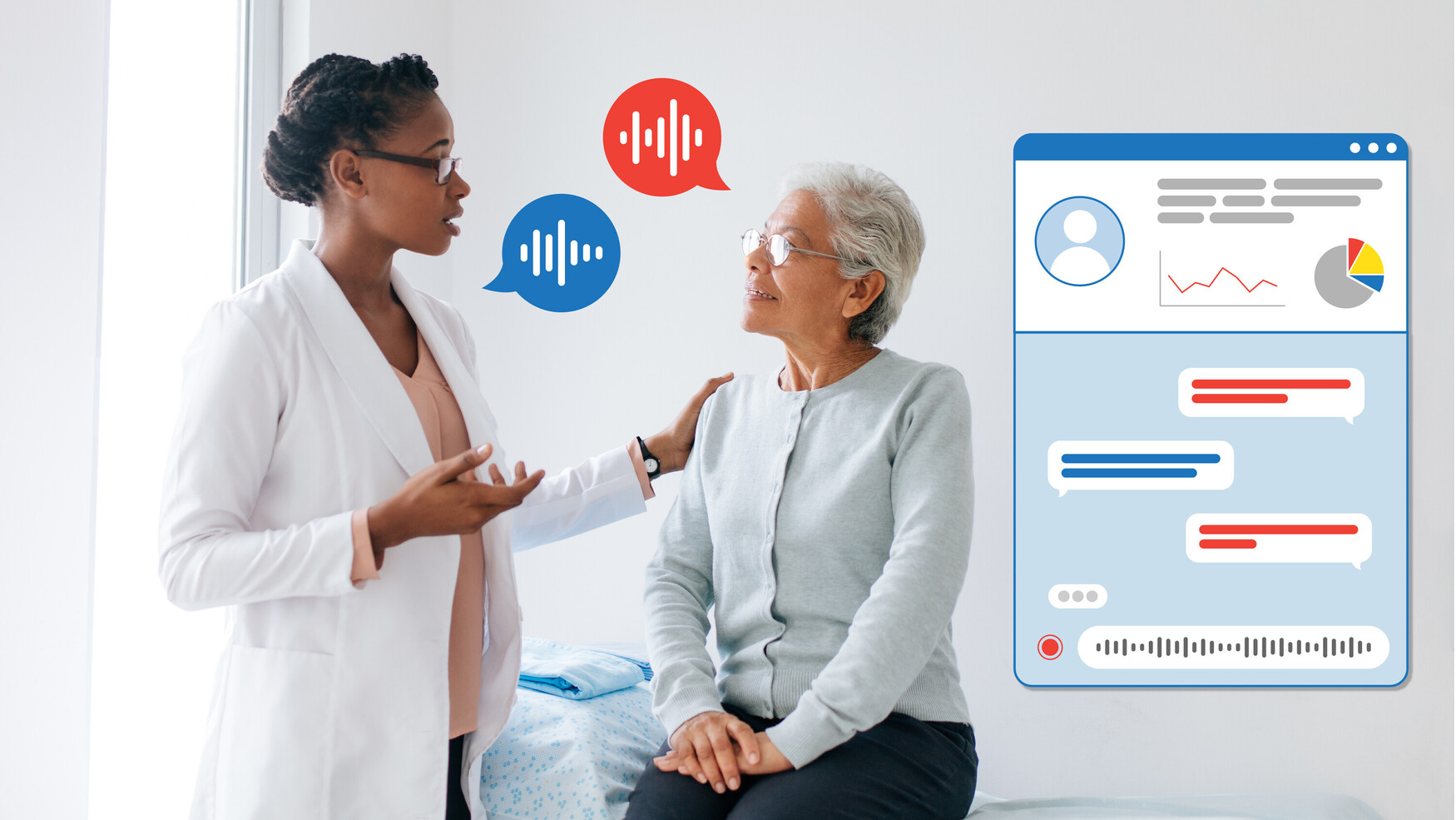
Most AI scribe tools in 2026 are ambient listeners — they record live conversations and generate notes from audio. Clinical Scribe AI takes a fundamentally different approach: it's a text-based documentation partner that accepts any form of clinical input — rough shorthand, pasted transcripts, voice-to-text dictation, or partial updates — and transforms it into structured, professional documentation with intelligent clinical observations.
This makes it complementary to ambient tools, not competitive with them. It's designed for clinicians who dictate after the encounter, type shorthand notes, or need to restructure existing documentation.
| Ambient AI Scribes (DAX, Abridge, etc.) | Clinical Scribe AI |
|---|---|
| Records live patient conversations | Accepts text input in any form — dictation, shorthand, pasted notes |
| Requires microphone setup and patient consent for recording | No recording needed — paste or dictate your notes post-encounter |
| $100–$1,500+/month per provider | Free to start, paid plans from $20/month |
| Generates notes from audio only | Generates notes from any text input |
| Limited clinical intelligence beyond transcription | Appends Clinical Notes with gap detection, interaction flags, and ICD-10 suggestions |
| No longitudinal tracking within sessions | Maintains a persistent Patient Chart across encounters in one session |
| Requires EHR integration for full value | Works independently — export to any EHR via copy-paste, PDF, or Word |
🎯 Intelligent Format Detection
Rather than requiring you to specify a template each time, this AI reads the clinical context and selects the right format automatically:
- Outpatient encounter → SOAP note
- Mental health session → DAP or BIRP note
- Initial patient encounter → H&P
- Surgical or procedural encounter → Procedure note
- Hospital discharge → Discharge summary
You can always override — just say "format this as an H&P" and it adjusts immediately.
🔍 Clinical Intelligence That Catches What You Might Miss
After generating the formatted documentation, Clinical Scribe AI appends a clearly separated Clinical Notes section with observations — only when there's something meaningful to flag:
- "ROS not addressed — consider documenting pertinent negatives"
- "Hypertension noted in HPI but not in Assessment — intentional?"
- "Patient on warfarin — new NSAID may warrant interaction risk documentation"
- "Consider documenting specificity for ICD-10: E11.65 vs. E11.9"
This mirrors what Forbes reported as the most significant risk with AI scribes: omission errors account for 71–83% of all errors across platforms and studies, with 45% of omissions carrying moderate clinical significance. Clinical Scribe AI's flag system is specifically designed to catch these omissions before they reach the chart.
📋 Patient Continuity Within a Session
Each chat session represents one patient. The tool maintains a running Patient Chart that tracks:
- Demographics, allergies, and active problems
- Current medications with dosages
- A visit log across multiple encounters
- Uploaded reference files (labs, prior notes, imaging)
This means the agent can surface observations like "You documented hypertension in Visit 1 but didn't include it in today's assessment" — the kind of longitudinal awareness that prevents documentation drift across encounters.
How It Works: From Raw Notes to Polished Documentation
Step 1: Start a New Chat for Your Patient
Open Clinical Scribe AI and begin a new chat. Each chat represents one patient — this allows the agent to build a longitudinal record across encounters within the session.
Step 2: Provide Your Clinical Input
Dictate or paste your encounter notes in any form. The scribe accepts anything — rough shorthand, full narration, pasted transcripts, or partial updates. Use voice-to-text for hands-free input.
"52yo female, hx HTN, DM2, presenting with 2-week progressive bilateral LE edema. Meds: amlodipine 10mg, metformin 1000 BID, atorvastatin 40mg. Vitals WNL except BP 148/92. Exam: 2+ pitting edema bilateral, lungs clear, no JVD. Plan: BMP, BNP, echo, consider adding furosemide 20mg daily, f/u 2 weeks."
Step 3: Review the Formatted Documentation
Clinical Scribe AI auto-detects this as an outpatient encounter and generates a clean SOAP note with proper section headers, consistent tense, standardized terminology, and complete formatting — transforming your shorthand into a professional clinical record.
Step 4: Review Clinical Notes (If Applicable)
Below the documentation, you'll see a Clinical Notes section with observations like:
📋 Clinical Notes
- Social history not documented — consider tobacco/alcohol use given cardiovascular risk factors
- Consider adding differential diagnoses: CHF exacerbation, venous insufficiency, medication-related edema (amlodipine)
- BP 148/92 with current amlodipine 10mg — consider documenting plan for hypertension management adjustment
- ICD-10 suggestion: Consider R60.0 (Localized edema) or I50.9 (Heart failure, unspecified) pending workup
Step 5: Export or Continue
Ask the scribe to save the note as a PDF, Word document, or export it directly to Google Drive or Notion. For the next encounter with the same patient, simply continue in the same chat — the Patient Chart updates automatically.
How 18,000+ Clinicians Are Using Clinical Scribe AI
🩺 Primary Care Physician — Eliminating "Pajama Time"
Scenario: A family medicine physician finishes a full day of 22 patient visits and needs to complete notes for encounters where documentation is incomplete.
The old way: 2–3 hours of after-clinic charting each evening, manually typing SOAP notes from memory and brief shorthand — the "pajama time" that St. Luke's Health System identified as a direct contributor to physician burnout.
With Clinical Scribe AI: Dictate each encounter in 60–90 seconds using voice-to-text, then review the formatted SOAP note and Clinical Notes. Complete 22 charts in under 30 minutes.
- ✅ Consistent SOAP formatting across all notes
- ✅ Drug interaction flags catch a missed NSAID-warfarin interaction
- ✅ ICD-10 suggestions improve coding specificity — potentially recovering 3–5% of annual revenue from previously incomplete documentation
- ✅ Home before dinner instead of charting until 10 PM
🧠 Therapist — Session Documentation Without Compassion Fatigue
Scenario: A licensed clinical psychologist completes six therapy sessions in a day and needs to write progress notes in DAP format for each.
The old way: Writing each DAP note from scratch, often late in the evening — contributing to clinician fatigue and compassion fatigue after emotionally demanding work.
With this AI-powered scribe: Dictate a narrative summary of each session. The scribe auto-detects the mental health context and generates a DAP note with appropriate clinical language.
- ✅ Auto-formats Data, Assessment, Plan sections
- ✅ Flags if risk assessment language is absent when session content suggests it should be documented
- ✅ Adapts to BIRP format if the therapist prefers — just state the preference once
- ✅ Supports the unique documentation needs of psychology, psychiatry, and counseling settings that most ambient AI scribes underserve
📋 Medical Student — Learning Documentation Standards in Real Time
Scenario: A third-year medical student is on a clinical rotation and needs to practice writing H&P notes for patient encounters.
The old way: Writing draft notes, waiting for attending feedback (which may come days later), and learning through trial and error.
With Clinical Scribe AI: Submit a rough H&P draft. The agent reformats it into a professional H&P, flags sections that are incomplete or could be improved, and suggests pertinent negatives or documentation standards the student may have missed.
- ✅ Accelerates learning of proper documentation conventions
- ✅ Clinical Notes section functions as real-time mentoring
- ✅ Exposure to correct formatting across multiple note types
- ✅ Free tier makes it accessible to students without institutional budgets
🌍 International Clinician — Documentation Without US-Centric Assumptions
Scenario: A general practitioner in the UK needs to document patient encounters using British medical conventions and terminology.
The old way: Using US-centric tools that default to "acetaminophen" instead of "paracetamol," suggest CPT codes, and follow American documentation patterns.
With Clinical Scribe AI: The scribe detects the user's terminology and adapts. British abbreviations, medication names, and documentation conventions are respected. ICD-10 codes are suggested (universal), while CPT codes are only shown for users in US-context practice.
- ✅ Regional terminology adaptation without manual configuration
- ✅ Multi-language support for non-English-speaking providers
- ✅ No US-centric assumptions forced on international users
📱 On-the-Go Documentation Between Appointments
Scenario: A physician between appointments needs to quickly document a follow-up encounter on their phone.
With the tool: Use voice-to-text to dictate a quick encounter summary. The agent formats it instantly. Review and approve the note in under two minutes — right from a mobile device.
- ✅ Full feature parity across web, iOS, and Android
- ✅ Voice input makes mobile documentation practical
- ✅ Export directly to Google Drive or Notion without touching a desktop
Frequently Asked Questions
Is Clinical Scribe AI really free?
Yes. You can start using Clinical Scribe AI with a free Jenova account — no credit card required. The free tier includes enough usage to document multiple patient encounters, review Clinical Notes flags, and export formatted documentation. For heavier use — such as documenting a full clinic day of 20+ patients — paid plans starting at $20/month provide significantly more capacity, custom model selection, and no watermarks on exported documents.
How is a free AI for clinical scribing different from an ambient AI scribe?
Ambient AI scribes (like Nuance DAX, Abridge, or Freed) record live patient conversations and generate notes from audio. Clinical Scribe AI is text-based — it accepts dictation, shorthand, pasted transcripts, or any form of written clinical input and transforms it into structured documentation. It's designed for clinicians who document after the encounter, not during it. The two approaches are complementary: you can use an ambient scribe during the visit and Clinical Scribe AI to restructure or enhance the output afterward.
Is Clinical Scribe AI accurate enough for clinical use?
The agent generates professional-quality drafts based on your input and flags potential issues for your review. All documentation is explicitly labeled as AI-generated and intended as a draft — the clinician always has final authority. This aligns with the consensus across the field that the clinician who signs the note is always responsible for its accuracy and completeness.
Does it work for mental health documentation?
Yes. The scribe supports DAP notes, BIRP notes, intake assessments, treatment plans, risk assessments, and session summaries — all formats commonly used in psychology, psychiatry, and therapy settings. It auto-detects mental health context from your input and applies the appropriate format.
Does Clinical Scribe AI work on mobile?
Yes. The platform offers full feature parity across web, iOS, and Android. Combined with voice-to-text input, this makes mobile documentation practical — particularly useful for clinicians between appointments or in settings without desktop access.
Is my patient data secure?
Conversations and data are never used to train public AI models and are not sold or shared with advertisers. However, Clinical Scribe AI does not claim HIPAA compliance as a standalone product — clinicians are responsible for ensuring their use of any documentation tool complies with applicable privacy regulations in their jurisdiction.
The Documentation Crisis Has a Solution — And It's Free to Try
The evidence is clear: AI-assisted documentation reduces burnout in as little as 30 days, saves 15,000+ hours annually at scale, and improves both clinician satisfaction and patient communication. The AI medical scribe market has reached $1.53 billion and is growing at 27% annually — a clear signal that healthcare professionals at every level recognize documentation as a problem worth solving with technology.
But most AI scribe solutions cost hundreds of dollars per month per provider. For solo practitioners, residents, medical students, therapists, and international clinicians, those price points remain out of reach.
Clinical Scribe AI changes that equation. It puts intelligent, format-aware, clinically observant documentation assistance directly into the hands of any healthcare professional — with a free tier that requires nothing more than a Jenova account. No microphones. No EHR integration. No enterprise contracts. Just paste your notes, review the output, and get back to what matters.
Stop spending your evenings on documentation. Try Clinical Scribe AI and get back to your patients — and your life.