Free AI for Business Plan Writing: Build Investor-Ready Plans With Real-Time Research & Financial Modeling
2026-03-12

Looking for a free AI for business plan writing that goes beyond filling in templates? AI Business Plan Writer functions as a strategic co-pilot — conducting real-time market research, building three-statement financial models, and pressure-testing your assumptions before investors do. In a funding environment where AI companies captured 65% of all venture deal value in 2025 and investors now demand "capital efficiency, proven business models, and measurable outcomes over moonshot promises", the quality of your business plan isn't optional — it's the difference between a term sheet and a polite rejection.
✅ Free tier with full strategic planning capabilities | ✅ Real-time market research and competitive intelligence | ✅ Three-statement financial modeling with scenario analysis | ✅ Industry-specific frameworks for SaaS, e-commerce, fintech, and 10+ verticals
Over 38,000 founders and small business owners have used this tool to develop plans that secured funding, validated market assumptions, and mapped execution roadmaps — without paying the $300–$500/hour that traditional strategy consultants charge. Here's why a free, purpose-built AI for business plan writing matters more than ever in 2026's selective capital environment.
Quick Answer: What Is AI Business Plan Writer?
AI Business Plan Writer is a free AI-powered strategic planning tool that transforms startup concepts into comprehensive, investor-ready business plans through guided research, financial modeling, and execution frameworks. Unlike template-based generators that produce static documents, it functions as a thinking partner that challenges assumptions, surfaces blind spots, and ensures every plan demonstrates genuine strategic clarity.
Key capabilities:
- Conducts real-time market research for TAM/SAM/SOM sizing, competitor landscapes, and industry benchmarks
- Builds 3–5 year financial projections with P&L, cash flow, and balance sheet modeling
- Applies industry-specific frameworks for SaaS, marketplace, hardware, fintech, healthcare, and more
- Pressure-tests weak assumptions before investors do
- Adapts plan format for different audiences: VC pitch, bank loan, visa application, internal alignment
Why Free Access to Strategic Business Planning Matters in 2026
The startup landscape has entered what Forbes calls "the value creation era" — a period where capital flows selectively toward founders who can demonstrate disciplined thinking, not just ambitious vision. Understanding the scale of this shift reveals why a free AI for business plan writing has become essential for founders at every stage.
The Failure Rate Hasn't Changed — But the Reasons Are Preventable
The numbers remain stark:
90% of startups fail overall, with 10% failing within the first year and 70% collapsing during years two through five. Source: Failory Startup Failure Analysis
But the reasons behind these failures are overwhelmingly tied to planning deficiencies:
- 42% of startups fail due to misreading market demand — building products nobody wants
- 56% of marketing-related failures stem from lack of product-market fit — the single largest killer
- 82% of businesses that went under in 2023 did so because of cash flow problems — problems that proper financial modeling can anticipate
- 75% of venture-backed startups never return cash to investors
These aren't random misfortunes. They're systematic planning failures — the exact problems a structured business planning process is designed to prevent.
Investors Have Rewritten the Rules
The 2026 funding environment has fundamentally shifted from the growth-at-all-costs era of 2021. According to Crunchbase's 2026 forecast, global venture capital deployment is expected to reach the high $400 billion range — but that capital is flowing with unprecedented selectivity.
"Investors now demand capital efficiency, proven business models, and measurable outcomes over moonshot promises." Source: SeedScope — What Investors Want in 2026
What this means for founders:
- Top-down TAM is dead. Saying "if we get 1% of a $100B market" triggers immediate dismissal. Investors expect bottom-up market sizing grounded in actual customer counts and willingness-to-pay data.
- Unit economics are non-negotiable. CAC, LTV, payback period, and margin structure must be explicit and testable — even at pre-seed.
- Capital efficiency is the new superpower. Founders are advised to maintain 18–24 months of runway after a raise, with clear milestone-based allocation.
- Traction beats vision. As SeedScope's analysis puts it: "Investors don't back ideas. They back execution."
The Cost Barrier Keeps Most Founders Out
Yet the traditional path to investor-grade planning remains prohibitively expensive:
- Strategy consultants: $300–$500/hour for the kind of market sizing, financial modeling, and competitive analysis that investors demand
- Dedicated business plan software: $20–$145/month for tools like LivePlan, PrometAI, or Upmetrics — costs that add up quickly for bootstrapped founders
- Self-directed research: 40+ hours of spreadsheet wrestling, fragmented market reports, and outdated statistics
For the 78% of startups that are self-funded, these costs create a planning gap that directly contributes to the failure statistics above. A free AI for business plan writing removes that barrier entirely.
How Free AI Business Planning Compares to Traditional Methods
AI Business Plan Writer addresses the convergence of rising investor expectations, preventable planning failures, and prohibitive consulting costs through a fundamentally different approach.
| Traditional Approach | Free AI Business Planning |
|---|---|
| Start with template, fill in blanks | Start with validation, build strategy iteratively |
| Static market research (outdated by publication) | Real-time research integration across markets and competitors |
| Generic financial projections from spreadsheet templates | Industry-specific unit economics with scenario modeling |
| One-size-fits-all structure | Audience-adapted formats (VC pitch, bank loan, visa, internal) |
| $300–$500/hour for consultant-grade analysis | Free tier with full strategic framework |
| Document delivered, relationship ends | Continuous planning system with persistent memory |
Real-Time Research That Grounds Every Claim
Before writing a single section, AI Business Plan Writer conducts targeted research based on your specific business concept:
| Research Need | What Gets Analyzed |
|---|---|
| Market trends & sizing | Industry reports, growth data, comparable company analysis |
| Competitor intelligence | Funding rounds, user complaints, product positioning, pricing |
| Industry sentiment | Practitioner discussions on Reddit, unfiltered market feedback |
| Consumer behavior | Purchase patterns, community discussions, willingness-to-pay signals |
| Pricing research | Live market price comparison across competitors |
| Local market dynamics | Geographic density analysis, regional regulatory requirements |
This isn't surface-level scraping. It's the kind of strategic research that Coleman Management Advisors describes as "architectural work" — building the structural foundation that determines whether a business can withstand real-world pressure.
Financial Modeling That Withstands Scrutiny
The tool builds dynamic financial models that go far beyond static spreadsheets:
- Three-statement integration: P&L, cash flow, and balance sheet with interdependent assumptions
- Unit economics focus: CAC, LTV, payback period, and margin structure by segment
- Scenario modeling: Base, optimistic, and conservative cases with trigger-based activation
- Sensitivity analysis: Identifies which assumptions most impact outcomes — the exact analysis investors in 2026 expect at every stage
Strategic Pressure-Testing Before You Face Investors
Before finalization, the tool evaluates your plan against critical criteria that investors will probe:
Red Flags Surfaced:
- TAM that's top-down only (no bottom-up validation)
- No evidence of customer conversations or demand signals
- Hockey-stick projections without explicit growth drivers
- Competitive section dismissing all alternatives
- Use of funds vague or entirely allocated to "growth"
- Team section not addressing capability gaps
This is the kind of pre-screening that QED Investors' partners describe when they note that "investors are mistaking early AI traction for durable advantage" — the tool helps you avoid presenting a plan that confuses momentum with moat.
How to Use AI Business Plan Writer: Step-by-Step
Getting started with AI Business Plan Writer adapts to your starting point — whether you have a validated concept needing documentation or a raw idea requiring strategic development.
Step 1: Share Your Business Concept
Describe your business idea, target geography, and planning objectives. The AI calibrates to your sophistication level — first-time founders get guided strategy development, while experienced entrepreneurs get efficient documentation.
"I'm building a B2B SaaS platform for restaurant inventory management. We have 12 paying customers in Chicago and want to raise a $750K pre-seed round."
Pro tip: Keep all planning work in one chat thread so the AI maintains full context of your strategy and decisions across sessions.
Step 2: Validate Market Assumptions With Live Research
The AI conducts targeted web searches to gather current statistics, competitor data, and industry benchmarks specific to your vertical. For the restaurant SaaS example, it would research restaurant technology adoption rates, competitor pricing, market size by geography, and industry pain points — all with proper citations.
Step 3: Build Financial Projections With Scenario Intelligence
Move beyond guesswork to structured financial modeling:
- Bottom-up revenue projections tied to specific customer acquisition assumptions
- Cost modeling that accounts for hiring thresholds, infrastructure scaling, and go-to-market spend
- Three scenarios (base, optimistic, conservative) showing range of outcomes
- Sensitivity analysis identifying which variables most impact your runway and path to profitability
Step 4: Pressure-Test Strategy and Surface Risks
The AI evaluates your plan against the criteria that 2026 investors actually use — flagging gaps in market validation, competitive positioning, team-market fit, and financial coherence before you're in front of a partner meeting.
Step 5: Generate Audience-Optimized Deliverables
Export in formats matched to your specific audience:
| Audience | What Gets Emphasized |
|---|---|
| VC/Angel investors | Growth potential, market size, team, defensibility |
| Bank/SBA loan | Cash flow stability, collateral, repayment ability |
| Visa/immigration | Job creation, economic impact, founder qualifications |
| Internal alignment | OKRs, milestones, resource allocation, accountability |
Where Free AI Business Planning Delivers Real Results
📊 Pre-Seed SaaS Founder Seeking First Institutional Round
Scenario: Technical founder with working MVP, 50 paying customers, needs $500K seed round.
Without structured planning: 3–4 weeks researching comparable companies, building financial models from scratch, struggling to articulate TAM beyond "HR tech is $X billion." The plan reads like a template because it is one.
With AI Business Plan Writer:
- Bottom-up TAM built from actual employer counts by segment and willingness-to-pay data
- Competitor intelligence revealing underserved mid-market niche
- Financial projections showing path to $1M ARR with 18-month runway
- Use-of-funds allocation tied to specific hiring milestones and product development phases
💼 Small Business Owner Applying for SBA Loan
Scenario: Restaurant owner expanding to a second location, needs $200K in bank financing.
Without structured planning: Generic business plan template with optimistic revenue projections, no sensitivity analysis, and no clear demonstration of repayment capacity. The loan officer asks questions the plan doesn't answer.
With this AI-powered tool:
- Market-specific competitive analysis (local competitors, foot traffic data, demographic trends)
- Cash flow modeling showing repayment capacity under conservative assumptions
- Break-even analysis accounting for seasonal variation
- Sensitivity testing: what happens if revenue is 15% below projections?
📱 Founder Between Investor Meetings
Scenario: Founder on a roadshow, needs to customize pitch for afternoon VC who focuses on unit economics.
Without structured planning: No access to detailed financials on mobile, generic pitch delivered, missed opportunity to address specific partner interests.
With AI Business Plan Writer:
- Real-time scenario adjustment showing sensitivity of payback period to CAC changes
- Comparable company analysis relevant to that specific VC's portfolio
- Customized appendix addressing their known diligence focus areas
- Full mobile access through Jenova's iOS and Android apps
🌍 International Founder Entering New Market
Scenario: Successful DTC brand in the US, planning UK/EU expansion, needs financing.
Without structured planning: Generic market research, currency conversion of US projections, missed VAT and GDPR compliance costs.
With AI Business Plan Writer:
- Market-specific competitive analysis (local players vs. US entrants)
- Regulatory pathway mapping (GDPR, product safety standards, import requirements)
- Localization cost modeling (translation, fulfillment infrastructure, customer service)
- Currency hedging strategy and pricing adaptation
What 2026 Investors Actually Look For in a Business Plan
Understanding the current investor mindset is essential for creating a plan that resonates. Based on extensive analysis of 2026 VC expectations, here's what separates fundable plans from rejected ones:
The Eight Dimensions of Strategic Assessment
AI Business Plan Writer evaluates your plan against the same framework investors use:
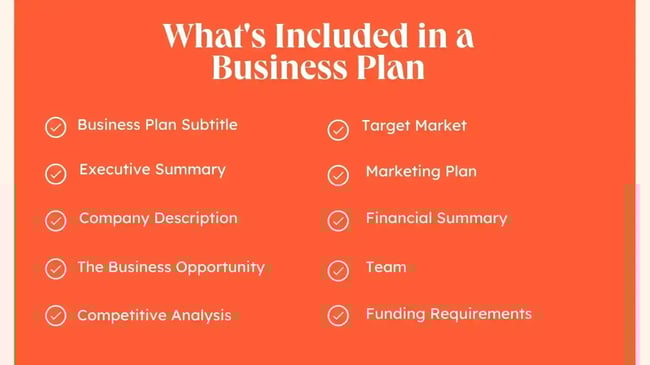
- Problem Validation — Is this a real problem people pay to solve? What's the evidence?
- Solution-Market Fit — Why would someone switch from their current solution?
- Defensible Market Sizing — Bottom-up TAM with realistic penetration assumptions
- Business Model Coherence — Unit economics that work (or credible path to them)
- Competitive Positioning — Honest assessment including "do nothing" as an alternative
- Go-to-Market Realism — Specific channels with cost/conversion assumptions
- Team-Market Fit — Why is this team right for this problem?
- Financial Projections That Tell a Story — Assumptions explicit and testable
Businesses that write out detailed business plans grow 30% faster than those that do not. Source: Embroker Startup Statistics
The Capital Efficiency Imperative
Perhaps the most significant shift in 2026 is the emphasis on capital efficiency. As Wellington Management's VC outlook notes, the venture market has become "more selective, quality-driven" with "access, underwriting discipline, and cross-market insights" mattering most.
What this means for your plan:
- Burn rate must be justified relative to milestones achieved
- Use of funds must be specific — not "growth and marketing" but "hire 2 SDRs to reach 50 enterprise demos/month by Q3"
- Runway calculations must be conservative — 18–24 months minimum
- Revenue projections must have explicit drivers — not hockey sticks, but bottoms-up models tied to specific acquisition channels
AI Business Plan Writer builds these elements into every plan automatically, ensuring your financial story meets the standard that Cambridge Associates and other institutional investors now expect.
Frequently Asked Questions
Is AI Business Plan Writer really free to use?
Yes. AI Business Plan Writer is available on Jenova's free tier with full strategic planning capabilities — real-time research, financial modeling, competitive analysis, and audience-adapted formatting. Free users get limited monthly usage, while paid plans ($20–$200/month) offer significantly higher usage limits and additional features like custom model selection. All tiers access the same strategic framework. Compare this to strategy consultants at $300–$500/hour or dedicated business plan software at $20–$145/month.
How is this different from template-based business plan generators?
Template tools produce documents; AI Business Plan Writer produces strategic clarity. Key differences: real-time research integration (not static databases), financial modeling with scenario intelligence (not spreadsheet upload), strategic pressure-testing that surfaces red flags before investors do (not blank-fill acceptance), and persistent memory that maintains context across planning sessions (not start-from-scratch each time).
Can an AI-generated plan actually secure funding?
Yes — when properly customized and grounded in real data. As Monday.com's 2026 comparison of AI business plan tools notes, "investors fund solid businesses, not just fancy documents." The AI provides professional structure and research acceleration; your domain expertise and authentic founder story make it compelling. The tool is designed to produce plans that withstand the kind of rigorous due diligence 2026 investors now conduct.
What industries does it specialize in?
Specialized frameworks for: SaaS/Software (MRR/ARR, churn, PLG vs. sales-led), E-commerce/DTC (unit economics by SKU, ROAS by channel), Marketplace (liquidity metrics, chicken-and-egg strategy), Hardware (BOM, MOQ, supply chain), Fintech (regulatory pathway, compliance costs), Healthcare/Biotech (clinical validation, reimbursement), and 5+ additional verticals. The AI adapts its financial modeling and strategic framework to match your specific industry's benchmarks and investor expectations.
How long does a complete plan take?
Initial comprehensive draft: 2–4 hours of structured interaction. Refinement and customization: additional 3–6 hours depending on complexity. Compare to 40+ hours for traditional consultant engagement or 2–3 weeks for self-directed research and modeling. The tool's persistent memory means you can work across multiple sessions without losing context.
Does it work for non-US markets?
Yes. Geographic adaptation includes regulatory and legal requirements specific to your target market, competitive landscape analysis (local players, not just global), go-to-market channels that work in that geography, currency and pricing considerations, local partnership requirements, and cultural factors affecting adoption. The real-time research capability pulls current data for any market you're targeting.
Stop Planning Blind in the Most Selective Funding Market in a Decade
The venture capital landscape has entered what TrueBridge Capital calls "the value creation era" — where capital concentrates around founders who demonstrate disciplined thinking, validated assumptions, and credible execution plans. Meanwhile, 90% of startups still fail, with the majority of failures tied to preventable planning deficiencies: misreading market demand, running out of cash, and underestimating competitive dynamics.
The gap between what investors demand and what most founders can produce on their own has never been wider. Strategy consultants charge $300–$500/hour. Dedicated planning software costs $20–$145/month. And generic AI tools produce plans that crumble under investor scrutiny.
AI Business Plan Writer closes that gap — for free. Real-time market research that grounds every claim. Financial modeling that withstands due diligence. Strategic pressure-testing that surfaces red flags before investors do. And industry-specific frameworks that speak the language of your market.
Whether you're a first-time founder validating a concept, a small business owner applying for an SBA loan, or an experienced entrepreneur expanding into new markets — the tool adapts to your sophistication level and builds the strategic clarity that 2026's capital environment demands.
Get started with AI Business Plan Writer and build a plan that doesn't just document your vision — but proves you can execute it.