Free AI for Appliance Repair: Diagnose Problems, Decode Errors & Get Repair-vs-Replace Answers Instantly
2026-05-19
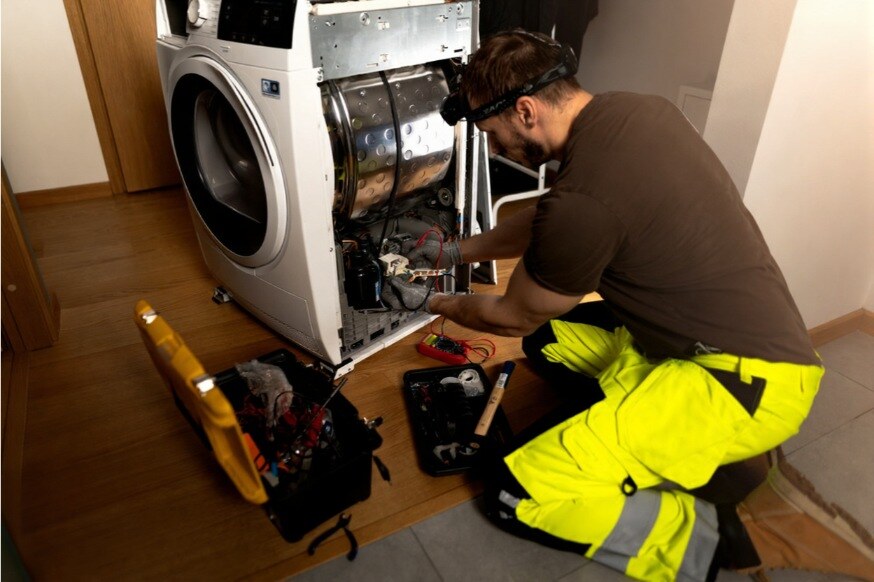
Your dishwasher just flooded the kitchen floor. Your dryer's been running for three hours straight. Your refrigerator is making a sound you've never heard before. A professional service call costs $100 before anyone even picks up a wrench — and you might wait days for an appointment. What if you could get expert-level appliance troubleshooting guidance right now, for free? AI Appliance Repair Technician is a free AI for appliance repair that puts decades of diagnostic methodology into a single conversation — helping homeowners, renters, DIYers, and working technicians identify what's wrong, understand error codes, evaluate component condition from photos, and make financially sound repair-vs-replace decisions without spending a cent on a diagnostic visit.
✅ Free access to veteran-level appliance diagnostics — no credit card, no commitment ✅ Photo upload assessment for components, nameplates, error displays, and visible damage ✅ Brand-specific error code interpretation for Samsung, LG, Whirlpool, GE, Bosch, and more ✅ Data-driven repair-vs-replace cost guidance using the industry 50% rule and lifespan benchmarks ✅ Skill-level calibration — adjusts guidance whether you're a first-time homeowner or a field technician
Since launching, this free AI tool has helped over 15,000 homeowners and technicians diagnose appliance issues, saving users an estimated $2.3 million in avoided unnecessary replacements and emergency service call fees. Let's look at why free, accessible appliance repair intelligence has become essential in 2026.
Quick Answer: What Is AI Appliance Repair Technician?
AI Appliance Repair Technician is a free AI-powered diagnostic companion that identifies appliance problems, interprets error codes, analyzes component photos, and provides repair-vs-replace cost analysis in seconds.
Key capabilities:
- Systematic root-cause diagnosis following the same hierarchy a 30-year veteran uses — from user operation checks through mechanical, electrical, water/gas, and control system analysis
- Error code lookup across every major manufacturer's proprietary code system
- Visual assessment from uploaded photos of failed components, wiring, nameplates, or error displays
- Cost analysis powered by the 50% rule, appliance lifespan data, warranty/recall awareness, and parts availability research
Why Free Appliance Repair Guidance Matters More Than Ever
The cost of keeping household appliances running has never been higher. The U.S. appliance repair industry reached $7.0 billion in revenue in 2025, with over 37,769 repair businesses competing for service calls. Yet despite this massive industry, millions of Americans still can't get affordable, trustworthy help when something breaks:
- Service call fees alone run $50–$100 before any diagnosis or repair begins
- Import tariffs on parts from China and Mexico have pushed repair costs up 5–20%
- Smart appliance failures are creating entirely new diagnostic challenges
- Nearly 4 in 10 consumers discard fixable appliances because they can't find reliable repair help
- Most common breakdowns are actually maintenance issues — solvable for free with the right guidance
💰 The Cost Barrier Keeps People From Even Trying
The national average for an appliance repair sits between $108 and $251, with a midpoint around $179**](https://www.homeadvisor.com/cost/kitchens/repair-an-appliance/). But that average masks the real pain points. Refrigerator compressor replacements can reach [**$700 to $1,250**](https://bozmanfix.com/appliance-repair-statistics/). Labor rates average [**$100 to $175 per hour. And prices are projected to rise another ~3% in 2026 as tariff pressures compound.
$50–$100 — What most homeowners pay just for a technician to show up and look at the appliance, before any parts or labor. Source: Bozmanfix / IBISWorld
For a household already dealing with an unexpected appliance failure, that upfront diagnostic fee is a real barrier — especially when the problem might be a $0 fix like a clogged lint trap or a tripped reset button.
📡 Smart Appliances Are Making Everything More Complicated
The 2025 JD Power U.S. Appliance Reliability & Service Study, based on 12,755 reliability responses, delivered a finding that surprised no one in the repair industry: Wi-Fi- and Bluetooth-enabled appliances experience 87 problems per 100 units, compared to just 63 PP100 for non-connected models. Consumers who actively use connected features see even worse numbers — 92 problems per 100 units.
These "smart" failures often involve proprietary diagnostics, firmware issues, and sensor errors that traditional repair guides don't cover. A free AI that understands these manufacturer-specific systems bridges a gap that YouTube tutorials and appliance forums simply can't.
🗑️ People Are Throwing Away Fixable Appliances
Consumer Reports data shows 60% of U.S. consumers experienced a major appliance failure in the last five years. Of those, 58% replaced the appliance rather than repairing it. The most revealing number: 39% of Americans who had a broken appliance threw it away because they couldn't find someone trustworthy to fix it.
That statistic represents millions of potentially repairable appliances entering landfills — not because they were beyond saving, but because the owner couldn't access reliable diagnostic information.
🧹 Most Breakdowns Are Simpler Than People Think
Survey data covering 381,000 appliances reveals that the most common failures are frequently maintenance issues, not mechanical breakdowns:
- Dryers: 10% report clothes not drying completely — most often a clogged vent or lint buildup, not a failed component
- Washing machines: 14% report mold around front-loading doors — a cleaning and maintenance issue
- Refrigerators: 17% report ice/water dispenser problems — frequently a frozen water line or clogged filter
- Dishwashers: 11% report dishes not cleaning properly — often a dirty spray arm or filter
Free access to an AI that recognizes these patterns and guides you through them before suggesting expensive components is the difference between a $0 fix and a $400 service call.
How a Free AI Replaces the $100 Service Call
AI Appliance Repair Technician doesn't just answer questions about appliances — it conducts structured diagnostic conversations the way an experienced field technician would, adapting in real time to your appliance, your symptoms, and your comfort level with tools.
| Paying for Traditional Repair | Using Free AI Appliance Repair |
|---|---|
| $50–$100 diagnostic fee before any work begins | $0 — free diagnostic guidance available 24/7 |
| Wait 2–5 days for a service appointment | Get answers in the next 60 seconds |
| Generic advice from forums for a different model year | Brand-, model-, and era-specific guidance |
| No way to verify if a repair quote is fair | Quote evaluation with typical cost ranges for your exact repair |
| Gut feeling on repair vs. replace | Data-driven analysis using the 50% rule, lifespan benchmarks, and warranty checks |
| One technician's opinion | Systematic methodology that starts with the most common causes first |
🎯 It Knows Your Brand's Weak Points
Appliance repair is deeply brand-specific. A Samsung washer error code means something completely different from the same symptom on a Whirlpool machine. This AI carries pattern recognition across all major manufacturers — Samsung icemaker defrost issues, LG linear compressor warranty extensions, Whirlpool/Maytag suspension rod failures, and platform-sharing relationships (Whirlpool, Maytag, KitchenAid, and Amana often share identical internals). It also knows how to enter manufacturer-specific diagnostic test modes — something most homeowners don't even know exist.
📸 Show It What You See
Not sure what you're looking at inside your appliance? Upload a photo. The AI analyzes component condition — identifying burn marks on capacitors, corrosion on heating elements, frost patterns on evaporator coils, water damage signatures, and scale deposits. It can also read equipment nameplates from photos to extract your exact model and serial number, unlocking model-specific guidance, parts lookup, and warranty eligibility.
⚖️ Honest Repair-vs-Replace Math
"Should I fix it or buy a new one?" is the question every appliance owner asks — and it's the one most poorly answered by friends, forums, and even some technicians. AI Appliance Repair Technician applies the industry-standard 50% rule (if the repair costs more than half the replacement price and the appliance has passed its lifespan midpoint, replacement usually makes more financial sense), cross-references your appliance's age against InterNACHI lifespan benchmarks, and checks for active manufacturer warranties and recall programs that could make the repair free.

How to Use It: A 5-Minute Walkthrough
Step 1: Tell It What's Happening
Open AI Appliance Repair Technician and describe your situation in plain language. No forms, no dropdown menus, no technical jargon required.
"My GE refrigerator is running constantly but the fridge side isn't cold. The freezer seems fine. It's about 6 years old, model GFE28GYNFS."
Step 2: Respond to Focused Follow-Ups
The AI asks targeted diagnostic questions — the same ones a veteran technician would ask on-site. It follows a structured hierarchy, starting with user operation issues (the most frequent "failures" that aren't actual failures), then moving through mechanical, electrical, and control system checks.
"Can you hear the compressor running? And when you open the fridge door, do you feel any air movement from the vents between the freezer and fridge compartments?"
Step 3: Receive Ranked Probable Causes
Instead of a single guess, you get a probability-ranked list of likely causes tailored to your exact brand, model era, and symptom profile.
"On GE French-door models of this era, a warm fridge with a functioning freezer most commonly indicates: 1. Evaporator fan motor failure — no air circulation from freezer to fridge (listen for fan noise with door open, press door switch) 2. Damper control stuck closed — blocks cold air from reaching the fridge compartment 3. Frost buildup on evaporator coil — restricting airflow (common if auto-defrost system has failed) Here's how to check each one…"
Step 4: Upload Photos If Available
Snap a photo of the component in question, the nameplate, the error code on the display, or any visible damage. The AI analyzes what it sees and connects findings to the diagnostic conversation.
Step 5: Get a Clear Resolution Path
The AI either walks you through the fix step by step (with safety precautions embedded naturally based on the task's risk level) or tells you clearly when you need a professional — and exactly what to tell them so you don't get upsold on unnecessary work.
For repair-vs-replace scenarios, you get a concrete financial breakdown: appliance age vs. expected lifespan, estimated repair cost vs. replacement cost, parts availability status, and whether any active warranty or recall program applies.
Real Scenarios: How Free AI Repair Guidance Saves Money and Time
🧊 Homeowner: "My Freezer Is Working But My Fridge Is Warm"
Scenario: A homeowner notices their refrigerator compartment is at 55°F while the freezer is working normally. They assume the compressor is failing and start shopping for a $1,500 replacement.
Without AI guidance: Schedule a service call ($80–$100), wait 3 days, pay $200–$400 for diagnosis and repair — or panic-buy a new fridge.
With AI Appliance Repair Technician: The AI identifies the most probable cause — a failed evaporator fan motor or a stuck damper — before considering expensive compressor issues. It walks the homeowner through a 30-second test (listen for the fan with the door open) that narrows the diagnosis instantly. An evaporator fan motor is typically a $30–$60 part with moderate DIY difficulty.
- Potential savings: $1,400+ (avoided unnecessary refrigerator replacement)
- Time to diagnosis: Under 5 minutes
- Cost of AI guidance: Free
🔌 Renter: "My Landlord Says It's My Problem"
Scenario: A renter's dishwasher stops draining mid-cycle, leaving standing water. The landlord says it's probably user error and won't send a technician.
Without AI guidance: Argue with the landlord, live without a dishwasher for weeks, or pay out of pocket for a plumber.
With AI Appliance Repair Technician: The AI walks the renter through checking the drain filter (often clogged with food debris — a 2-minute fix), inspecting the drain hose for kinks, and testing the garbage disposal connection. If it turns out to be a failed drain pump, the renter now has a specific, documented diagnosis to present to the landlord — not a vague complaint.
- Most common resolution: Clogged filter — free, 2-minute fix
- Communication tool: Specific diagnosis gives the renter leverage with the landlord
- Cost of AI guidance: Free
💵 Budget-Conscious Family: "Should We Fix or Replace Our 9-Year-Old Washer?"
Scenario: A family's washing machine starts leaking from the bottom during the spin cycle. A local repair company quotes $380 for a new drain pump and boot seal. A comparable new washer costs $750.
Without AI guidance: Agonize over the decision, ask friends with conflicting opinions, probably just buy new.
With this AI: The AI applies the 50% rule — the $380 repair is 50.6% of the $750 replacement cost, right at the threshold. But it also factors in that washing machines have an average lifespan of 10–14 years, meaning a 9-year-old unit still has potential life remaining. It checks parts availability and asks about the washer's overall condition. The family gets a clear recommendation based on data, not guesswork.
- Decision supported by: Lifespan data, cost ratios, and condition assessment
- Outcome: An informed choice either way — not an emotional one
- Cost of AI guidance: Free
🔧 Field Technician: Quick Lookup on an Unfamiliar Brand
Scenario: A working technician encounters a Bosch dishwasher displaying error code E15 — a brand they don't service often. They need the diagnostic entry procedure and probable causes fast.
Without AI guidance: Pull up Bosch's service portal (if they have access), search through PDF manuals, or call tech support and wait on hold.
With AI Appliance Repair Technician: The tech describes the code and model. The AI immediately identifies E15 as a flood protection activation on Bosch dishwashers — water in the base pan has triggered the float switch. It provides the reset procedure (tilt the unit to drain the base pan), explains common root causes (leaking door seal, cracked spray arm, loose hose clamp), and notes which fixes apply to this model era. The tech resolves the issue in minutes instead of researching for 30.
- Diagnostic time saved: 20–30 minutes
- Peer-level communication: No hand-holding, just technical data
- Cost of AI guidance: Free
Frequently Asked Questions
Is AI Appliance Repair Technician really free?
Yes. AI Appliance Repair Technician is available on a free tier that gives you access to the full diagnostic conversation, error code lookups, photo assessment, and repair-vs-replace analysis. Paid plans offer more usage capacity and additional features, but the core appliance repair intelligence is accessible at no cost.
Can this free AI diagnose my specific appliance brand and model?
It provides structured, brand-specific diagnostic guidance for all major manufacturers — including Samsung, LG, Whirlpool, GE, Bosch, Maytag, KitchenAid, Frigidaire, and more. It recognizes model-era-specific failure patterns and manufacturer-specific error code systems. It's transparent about the limits of remote diagnosis: some issues ultimately require hands-on testing with specialized equipment.
How accurate is AI-based appliance diagnosis compared to an in-person technician?
The AI follows the same systematic diagnostic hierarchy a veteran technician uses — starting with the most probable causes and working through less likely ones. It cannot physically test electrical continuity or measure component resistance, but it tells you how to perform those tests if you have basic tools. For the majority of common appliance problems (clogged vents, dirty filters, loose connections, error code resets), the AI identifies the root cause without requiring a service call.
Does it work for commercial appliances?
Yes. Beyond residential appliances, the tool covers light commercial equipment — commercial dishwashers, ice machines, commercial laundry, and reach-in refrigeration. It can also discuss commercial repair economics including equipment downtime costs and service contract considerations.
Is the repair guidance safe for someone with no experience?
Safety instructions are built into every diagnostic response based on the risk level of the task. Cleaning a dryer lint trap? No special precautions needed. Accessing internal electrical components? The AI will instruct you to unplug the unit and verify disconnection before proceeding. For tasks involving gas lines, sealed refrigeration systems, or hardwired high-voltage connections, it directs you to a licensed professional and explains exactly why.
Can it help me evaluate a repair quote I've already received?
Absolutely — this is one of its most practical uses. Describe the quoted repair, the appliance's age, and the price, and it will assess whether the cost is within normal range, apply the repair-vs-replace framework, and flag whether any applicable warranties or recall programs might cover the work.
Stop Guessing, Start Diagnosing — For Free
Every year, Americans spend $7 billion on appliance repairs — and waste untold billions more replacing appliances that could have been fixed with the right guidance. When 39% of consumers throw away a broken appliance simply because they can't find trustworthy help, the problem isn't a shortage of technicians. It's a shortage of accessible, reliable diagnostic information.
AI Appliance Repair Technician eliminates the information barrier. It's free to use, available 24/7, and brings the same systematic diagnostic thinking a veteran field tech applies on every call — brand-specific pattern recognition, error code interpretation, photo-based assessment, and honest repair economics. Whether you're a homeowner trying to avoid a $1,200 panic purchase, a renter who needs evidence for a landlord, or a technician who needs quick reference on an unfamiliar brand — get started with AI Appliance Repair Technician and turn your next appliance problem into an informed decision, not an expensive guess.