Free AI for Antique Expertise: Identify, Value & Authenticate Collectibles From Your Phone
2026-05-25
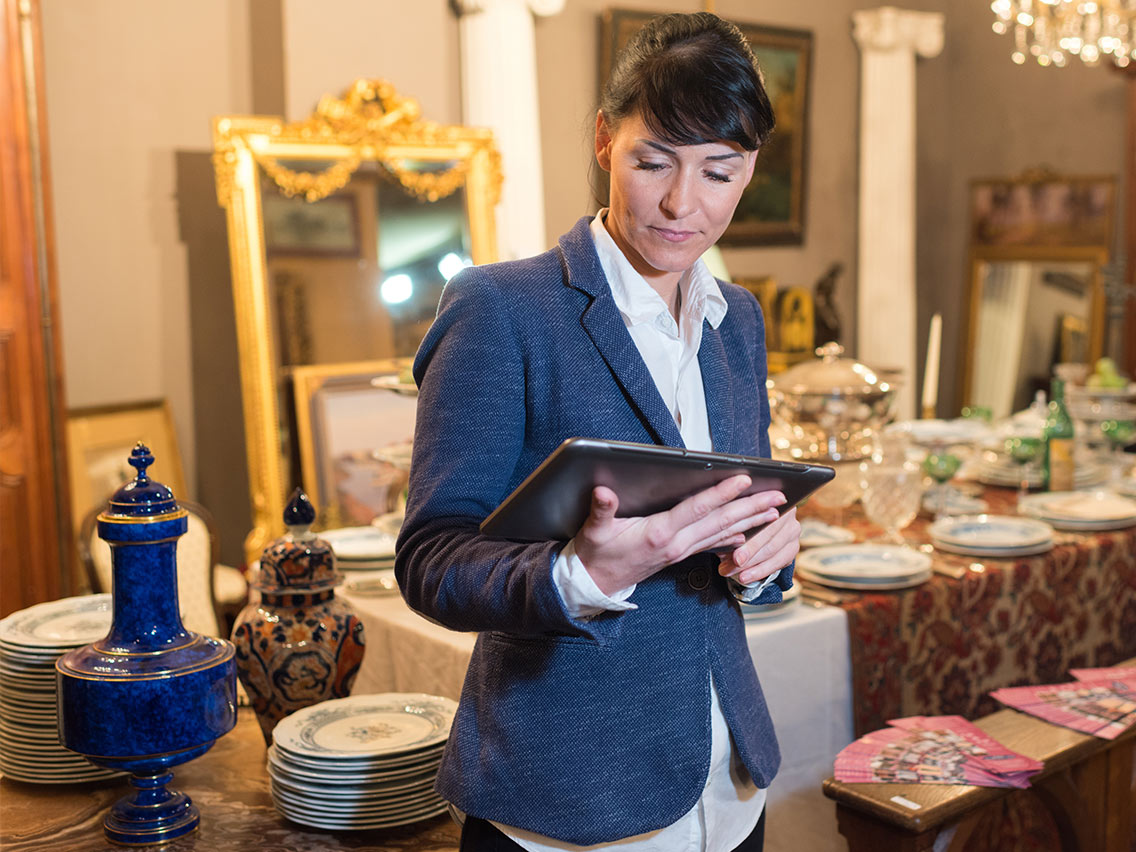
Looking for a free AI for antique expertise that actually delivers professional-grade analysis? Antique Expert AI puts a museum-caliber appraiser in your pocket — capable of identifying, valuing, and authenticating antiques from photos across every category, era, and origin. Whether you've just pulled a mysterious vase from a storage unit, you're standing in front of a promising find at an estate sale with sixty seconds to decide, or you're a dealer processing an unfamiliar lot, this AI delivers structured expert analysis in seconds — covering furniture, ceramics, porcelain, silver, jewelry, fine art, coins, militaria, textiles, and everything in between.
✅ Photo-based identification spanning all antique categories, periods, and global traditions ✅ Market-aware value ranges across auction, retail, and insurance contexts ✅ Red-flag detection for forgeries, reproductions, and misattributions ✅ Curator-level historical context, provenance guidance, and collecting mentorship
More than 9,500 collectors, inheritors, and dealers have used this tool to make confident decisions about pieces they'd otherwise have guessed on — identifying undervalued estate finds, catching reproductions before purchase, and building collecting knowledge with every interaction. Here's why free access to this level of antique expertise changes the equation entirely.
Quick Answer: What Is the Free AI for Antique Expertise?
Antique Expert AI is a free, photo-based virtual appraiser that identifies antiques, provides market-aware valuations, detects forgeries, and delivers curator-level historical context — all from uploaded images.
It combines the diagnostic methodology of a master appraiser with the teaching instinct of a museum mentor, giving you not just answers but the reasoning behind them.
Key capabilities:
- 📸 Identifies period, origin, maker, material, and technique from photos
- 💰 Provides value ranges contextualized by condition, rarity, venue, and current market trends
- 🔍 Flags construction inconsistencies, artificial aging, and reproduction indicators
- 📜 Delivers provenance guidance, collecting strategy, and conservation recommendations
Why Antique Identification Remains One of the Hardest Problems for Collectors
The antiques and collectibles market was valued at USD 150.2 billion in 2025 and is projected to reach USD 229.7 billion by 2035 — a market growing faster than many collectors realize. Yet for most people who encounter antiques — through inheritance, flea markets, estate sales, or online listings — the fundamental questions remain frustratingly hard to answer: What is this? Is it genuine? What is it actually worth?
The core barriers:
- Professional appraisals are prohibitively expensive for casual use — putting expert analysis out of reach for everyday finds
- Forgeries have become increasingly sophisticated — deceiving even experienced collectors
- The knowledge required spans centuries of production across thousands of categories — no single person masters it all
- Online research produces unreliable, contradictory information — especially on valuation
- The market itself is shifting rapidly — yesterday's overlooked category is today's hot commodity
💸 The Appraisal Cost Problem
The economics of professional antique appraisal create a structural barrier for most collectors. According to Lion & Unicorn, a single-item written appraisal runs $50 to $300, while certified appraisers typically charge $150–$300 per hour for in-person evaluations — as noted by Underpriced AI's market analysis.
$50–$300 per item for a written appraisal; $150–$300/hour for certified in-person evaluations — Lion & Unicorn / Underpriced AI
For someone who inherited a houseful of objects, or a collector evaluating a $45 flea market find, that math doesn't work. You can't spend $200 to determine whether a piece of pottery is worth $30 or $400. The result is that the vast majority of antique identification decisions happen without expert input — driven by guesswork, gut instinct, and unreliable online searches.
🔍 The Forgery Sophistication Problem
Counterfeit antiques have entered a new era of quality. As Antiquesmart reports, modern forgeries are "so meticulously crafted that they can deceive even professional appraisers." Artificial aging techniques — distressed finishes, chemical patination, reproduction maker's marks — have become widely accessible, meaning that visual inspection alone requires deep category-specific expertise to distinguish a genuine 18th-century piece from a well-executed reproduction.
This problem is compounding as more transactions move online. Global Market Insights identifies authentication and provenance as the biggest barriers to buyer confidence in digital antique transactions — a gap that widens every year as the online share of the market grows.
📈 A Generational Market Shift Is Creating New Demand
The antiques market in 2026 is undergoing a dramatic generational transition. According to Asheford Institute of Antiques, six major trend categories are reshaping demand: the Brutalist revival, the return of chrome and polished steel, the resurgence of traditional "brown furniture," 1980s Post-Modernism, surrealist and whimsical décor, and an Americana surge fueled by the United States' 250th anniversary (Semiquincentennial) in 2026.
Veranda reports a particular surge of interest in Asian antiques — pieces with Ming-style legs, Coromandel screens, and distinctive craftsmanship — while Country Living highlights pine furniture, porcelain, and mid-century icons as categories poised for significant value increases.
These shifting trends mean that something gathering dust in an attic today might be at the center of a hot collecting category tomorrow. But recognizing that requires exactly the kind of cross-category expertise that most collectors lack — and that professional appraisers charge premium rates to provide.
How Free AI Antique Expertise Changes the Equation
Antique Expert AI eliminates the cost barrier, the access barrier, and the expertise barrier simultaneously — delivering the analytical depth of a seasoned appraiser at no cost for core usage.
| Traditional Appraisal Path | Antique Expert AI |
|---|---|
| $150–$300/hour for certified appraisers | Free access with core features |
| Days or weeks to schedule an appointment | Upload a photo and receive analysis in seconds |
| Limited to the appraiser's specialty areas | Covers all antique categories, eras, and global traditions |
| Single expert opinion with no transparency into reasoning | Structured analysis explaining how the identification was made |
| Geographically restricted to local professionals | Available anywhere, anytime, on any device |
| Verdict-based — you get an answer, not education | Teaching-oriented — builds your own collecting eye over time |
| Requires physical item transport or in-home visit | Works from photos uploaded on your phone |
🏺 Structured Diagnostic Methodology
What separates this AI from generic image-recognition tools is its analytical framework. Every piece runs through a structured diagnostic protocol — the same macro-to-micro approach used by master appraisers:
- Silhouette & Form — Overall shape and proportions narrow the period, region, and functional category
- Materials Analysis — Primary and secondary materials cross-referenced against period-appropriate norms
- Construction & Technique — Hand vs. machine indicators, joinery types, glazing methods, and tool marks
- Surface & Patina — Natural aging patterns evaluated against artificial distressing and reproduction indicators
- Marks & Inscriptions — Maker's marks, hallmarks, labels, and signatures cross-referenced against known databases
- Anomaly Detection — Inconsistencies flagged that suggest reproductions, later alterations, or misattributions
This isn't a simple "what does this look like" image match. It's a systematic evaluation that considers the full context of an object's physical evidence.
🎓 Differential Analysis That Builds Your Expertise
One of the most valuable features for developing collectors: Antique Expert AI doesn't just tell you what something is — it tells you what it could be mistaken for and explains the distinguishing evidence.
For example: "This chair reads as Chippendale at first glance, but the shell carving proportions and the specific ball-and-claw foot treatment are consistent with Philadelphia workshop traditions of the 1760s–1780s, not English originals. The secondary wood — likely tulip poplar — confirms American origin."
Every interaction becomes a micro-lesson in connoisseurship. Over time, this approach transfers the appraiser's observational methodology to you — building the "trained eye" that traditionally requires years of hands-on experience.
💰 Market-Contextualized Valuation
Value assessments from the tool include ranges rather than single-point prices — and explicitly explain what drives the range:
- Condition impact — How damage, repairs, or restoration affect value
- Provenance premium — What documented ownership history adds (and what its absence costs)
- Rarity positioning — Where this piece sits relative to how many similar examples exist
- Venue context — Auction estimate vs. retail price vs. insurance replacement value
- Market momentum — Whether this category is trending upward, stable, or cooling
This transparency lets you evaluate offers, set realistic expectations, and understand why two seemingly similar pieces can have dramatically different values.
How It Works: Getting Expert Analysis in Five Steps
Using Antique Expert AI is straightforward — designed to work naturally whether you're at home with an inherited collection or standing in front of a promising piece at a flea market.
Step 1: Start With a Photo or Description
Open a conversation and upload photos of your item — or describe it if you don't have images available yet. The AI can work from descriptions, but visual evidence produces significantly more precise identifications.
"I found this brass candelabra at an estate sale. It has five arms and what looks like a coat of arms on the base. Can you tell me what it is?"
Step 2: Provide Multiple Angles When Possible
For the most accurate assessment, include several views. The AI will proactively request specific angles if needed:
- Overall view — front, side, or full top-down perspective
- Base or underside — where maker's marks, labels, and construction details hide
- Close-ups — hardware, joinery, glazes, signatures, stamps, or distinctive decorative elements
- Damage or wear areas — any chips, cracks, repairs, or areas of concern
"Great — now can you show me the underside? I'm looking for hallmarks or a maker's stamp."
Step 3: Receive Your Structured Expert Assessment
The AI delivers a comprehensive analysis covering:
- Identification — what the piece is, its likely period, region of origin, and attributed maker
- Evidence trail — the specific visual and structural features supporting the identification
- Differential analysis — what it might be confused with, and why it is or isn't
- Condition assessment — damage, repairs, restorations, and their impact on value
- Value context — an informed price range with explanation of the factors driving it
- Confidence level — how certain the assessment is, and what additional evidence would strengthen it
- Recommended next steps — whether that's further research, professional in-person appraisal, conservation, or selling strategy
Step 4: Ask Follow-Up Questions
Explore any dimension deeper — historical context, care and conservation, related collecting opportunities, or market trends. The AI adapts its response depth to your expertise level, from complete beginner to seasoned professional.
"What design movement does this belong to? Are similar pieces trending right now? How should I store it to preserve value?"
Step 5: Build Your Knowledge Over Time
Each interaction is designed as a learning opportunity. The AI explains how it reaches its conclusions — which diagnostic features matter, what separates originals from reproductions, and how to develop the observational skills that define expert-level connoisseurship.

Where Free AI Antique Expertise Delivers the Most Value
🏠 Sorting Through an Inherited Estate
Scenario: A parent has passed away, leaving a home filled with five decades of accumulated objects — furniture, china sets, silverware, framed prints, figurines, jewelry boxes, and items stored in the attic that no one has seen in years. You need to determine what's valuable, what's sentimental but not monetarily significant, and what can be donated.
Traditional Approach: Hire an estate appraiser for a full-day on-site visit — potentially $1,000–$3,000 for a comprehensive evaluation — or spend weeks photographing items and posting them individually to online forums, receiving inconsistent and often contradictory responses.
Antique Expert AI: Photograph each item and receive immediate identification and value context. In a single afternoon, you can triage an entire estate — separating genuine antiques from reproductions, identifying which pieces justify the cost of a formal in-person appraisal, and understanding the historical significance of family heirlooms.
- Rapid triage saves thousands in unnecessary professional appraisal fees
- Prioritizes items that warrant certified evaluation based on AI assessment
- Provides historical context that transforms anonymous objects into family stories
🛒 Real-Time Decisions at Flea Markets and Estate Sales
Scenario: You're at an outdoor market and a vendor has a ceramic piece with an unfamiliar mark, priced at $65. The glaze quality and weight suggest age, but you're not sure if it's a genuine example or a well-made reproduction. Two other people are circling the table.
Traditional Approach: Make a snap judgment — either overpaying for a modern copy or walking away from a genuine piece worth several hundred dollars.
Antique Expert AI: Snap a photo on your phone, get an instant identification with confidence level, and make your decision with expert-level context before anyone else picks it up.
- Real-time analysis while you're still at the sale — no waiting hours for forum responses
- Red-flag detection for common reproduction indicators
- Value context that informs your negotiation strategy
💼 Cross-Category Support for Dealers and Resellers
Scenario: You're a furniture dealer who just acquired a mixed lot from an estate. The lot includes several pieces of silver, a collection of ceramics, and what appears to be a Civil War-era sword. These are outside your area of specialization, and you need quick, knowledgeable assessments to price your inventory accurately.
Traditional Approach: Consult specialist colleagues (if available and willing), spend hours researching unfamiliar categories online, or risk misattributing and mispricing items — leaving money on the table or overpaying.
This AI-powered expert: Delivers peer-level analysis across all categories. The AI calibrates to professional expertise levels — skipping introductory context and focusing on attribution nuances, construction details, comparable sales context, and market positioning.
- Cross-category expertise without needing multiple specialist consultants
- Structured condition assessments suitable for inventory documentation
- 2026 market trend insights — including awareness of hot categories like Brutalist furniture, the chrome revival, and the Americana surge
📱 International Antique Shopping on Mobile
Scenario: You're traveling in Portugal and discover a small antiques shop with fascinating ceramics. The shopkeeper speaks limited English, and the pieces come from regional traditions you're unfamiliar with — possibly Caldas da Rainha or Bordallo Pinheiro pottery.
Traditional Approach: Buy on instinct and hope for the best, or pass on potentially excellent finds out of uncertainty about authenticity and fair pricing.
Antique Expert AI: Upload photos directly from your phone. The AI covers Western and non-Western traditions — including European regional pottery, Asian ceramics, African tribal art, and Latin American folk art — and can contextualize pieces within traditions you've never encountered before.
- Global expertise across Asian, European, African, and American antique traditions
- Understanding of regional construction methods, decorative vocabularies, and stylistic evolution
- Accessible on mobile anywhere in the world with an internet connection
📊 Building a Focused Collection With Strategic Guidance
Scenario: You've decided to build a serious collection of Art Deco lighting — a category experiencing strong demand in 2026 as part of the broader vintage lighting revival. You want guidance on what to pursue, what to avoid, how to spot reproductions, and how to develop your eye.
Traditional Approach: Years of self-education through books, shows, and expensive mistakes — learning by getting burned.
Antique Expert AI: Acts as an ongoing mentor, helping you develop transferable observation skills with every interaction. The AI teaches you how to identify diagnostic features — the difference between a genuine Lalique shade and a reproduction, the tell-tale signs of re-wired vintage fixtures, the characteristics that separate investment-grade pieces from decorative-only examples.
- Collecting strategy tailored to your interests, budget, and risk tolerance
- Guidance on emerging categories and current market dynamics
- Care and conservation advice to protect the value of your acquisitions
Frequently Asked Questions
Is Antique Expert AI really free?
Yes, Antique Expert AI is accessible for free with limited usage — enough for casual collectors, one-off identifications, and exploring the tool's capabilities. For heavier use — evaluating an entire estate, using it as a daily professional tool, or building a collection with ongoing mentorship — subscription plans starting at $20/month provide significantly more capacity. All plans deliver the same expert-level analysis.
How does free AI antique identification compare to paid appraisal apps?
Most paid antique appraisal apps focus on price lookup through marketplace data — pulling asking or sold prices from platforms like eBay and Etsy. Antique Expert AI operates differently: it performs a structured diagnostic assessment — analyzing form, materials, construction, patina, and marks — to identify a piece before contextualizing its value. The result is deeper than a price tag — it's a full expert opinion on what something is, whether it's genuine, and what it's worth in context.
Can it detect fakes and reproductions?
The AI provides detailed authenticity analysis — flagging construction inconsistencies, artificial aging indicators, anachronistic materials, and reproduction marks. It frames these as expert-informed assessments, not legally binding certifications. For high-value purchases or situations with legal implications, it recommends certified in-person authentication — and identifies specifically what a physical examiner should look for based on the flags it has raised.
What categories and eras does it cover?
All of them. Furniture, ceramics, porcelain, glass, silver, jewelry, textiles, clocks, watches, coins, medals, fine art, prints, books, maps, toys, militaria, tribal art, Asian antiques, rugs, architectural salvage, scientific instruments, musical instruments, and more — spanning ancient through mid-20th century, covering both Western and non-Western traditions. The AI also stays current with 2026 market trends, including the Brutalist revival, Americana surge, and Post-Modern 80s resurgence.
Does it work on mobile at flea markets and estate sales?
Absolutely. Full feature parity across web, iOS, and Android. The photo-upload workflow is designed for exactly this scenario — snap images at a sale, receive expert analysis in seconds, and make informed buying decisions before someone else grabs the piece. Many users report that the mobile experience is where the tool delivers its highest value.
Can it replace a certified appraiser?
For everyday collecting decisions — buying, selling, triaging inherited items, and building knowledge — it provides expert-level guidance that covers the vast majority of use cases. For formal purposes — insurance documentation, estate settlements, legal disputes, or certified authentication of high-value pieces — a credentialed human appraiser remains necessary. Antique Expert AI is transparent about this boundary and will recommend professional appraisal when a situation warrants it.
Conclusion: Expert Antique Knowledge Should Not Be Behind a Paywall
The antiques world rewards knowledge — and penalizes its absence. A collector who can distinguish a genuine Philadelphia Chippendale chair from a Centennial reproduction has a material advantage. A dealer who recognizes an underpriced Roseville vase at an estate sale before anyone else does turns that knowledge into profit. An inheritor who understands what's genuinely valuable in a parent's estate avoids giving away heirlooms for pennies.
That knowledge has historically been locked behind expensive professional appraisals, years of hands-on experience, and access to specialist mentors. With the antiques market projected to reach $229.7 billion by 2035 and six major trend categories reshaping demand in 2026 alone, the gap between those who have expertise and those who don't is widening — and costing people real money on both sides of every transaction.
Antique Expert AI closes that gap. Free access to a structured diagnostic methodology that covers every category, every era, and every level of collector experience. Upload a photo. Get the kind of analysis that used to require a $200-per-hour appointment. And develop your own eye in the process.
Try Antique Expert AI today — and start making antique decisions with expert-level confidence.
If you're serious about building antique expertise — identification, authentication, valuation, and collecting strategy across every category — our Antique Expert is built for exactly that.