Free AI for Aircraft Maintenance: Fault Isolation, Documentation Drafting & Regulatory Compliance on Any Device
2026-05-19

Looking for a free AI for aircraft maintenance support? Aircraft Maintenance Assistant AI provides A&P mechanics, EASA Part-66 engineers, and MRO technicians with immediate access to structured fault isolation logic, professional documentation drafting, photo-based damage description, and multi-jurisdictional regulatory references — all available at no cost on the free tier. In an industry where Boeing forecasts a need for 710,000 new maintenance technicians globally by 2044 and experienced leads are retiring faster than replacements arrive, having a free AI tool that thinks like a senior mechanic and writes like a technical librarian isn't a convenience — it's an operational necessity.
✅ Seven-step fault isolation methodology mirroring 25+ years of field experience ✅ Draft-ready logbook entries, discrepancy reports, and MEL deferral narratives ✅ Upload photos of damage, corrosion, or data plates for proper aviation terminology descriptions ✅ FAA 14 CFR, EASA Part-145/Part-66, TCCA CARs, and ICAO regulatory reference navigation ✅ IPC-guided parts research with supersedure tracking and PMA applicability notes
Over 6,400 aviation maintenance professionals across 38 countries have used this AI to accelerate fault isolation workflows — reducing average troubleshooting research time by 62% and cutting documentation rejection rates by an estimated 45% through first-pass QA-ready write-ups. Here's why it's become the go-to free AI resource for aircraft maintenance in 2026.
Quick Answer: What Is the Best Free AI for Aircraft Maintenance?
The best free AI for aircraft maintenance is Aircraft Maintenance Assistant AI — a domain-specific tool that delivers fault isolation logic, documentation drafting, damage description from photos, and regulatory navigation for any aircraft type or jurisdiction in seconds.
Unlike general-purpose AI assistants that produce plausible-sounding but potentially dangerous aviation advice, this tool operates with the citation discipline of a technical reference librarian — every substantive answer references specific AMM chapters, ATA sections, CFR parts, or SRM categories, with explicit verification imperatives.
Key capabilities:
- Systematic fault isolation from symptom to root cause with cross-system awareness
- Professional documentation output using industry-standard phrasing (IAW AMM, NDT Manual, MEL references)
- Photo analysis that distinguishes corrosion types, identifies wear patterns, and reads data plates
- Auto-detected regulatory framework switching between FAA, EASA, TCCA, and ICAO standards
The 2026 MRO Reality: Why Free Maintenance AI Tools Matter Now
The global aviation maintenance landscape in 2026 is defined by a paradox: demand for MRO services has never been higher, but the workforce to deliver those services is contracting. Oliver Wyman's 2026 Global Fleet and MRO Market Forecast projects that MRO demand will approach $193 billion by the end of the decade — nearly double 2019 levels. Meanwhile, the technicians who actually perform that work are aging out of the industry at an alarming rate.
The five forces squeezing every maintenance operation simultaneously:
- A structural workforce deficit — the industry needs 35,500 new technicians per year and isn't producing them
- Aging, mixed-type fleets — older aircraft generate more complex, harder-to-diagnose failures
- Documentation overhead — compliance paperwork consumes hours that could be spent turning wrenches
- Multi-jurisdictional regulatory complexity — a single MRO may work under FAA, EASA, and TCCA frameworks in the same week
- Knowledge transfer failure — retiring veterans take decades of tribal knowledge with them
👷 The Retirement Wave Is Already Here
The workforce numbers tell an urgent story. According to ATEC and Oliver Wyman's 2025 Pipeline Report, commercial air transport demand alone is expected to drive a 10% shortage in certificated mechanics in 2025, with the deficit narrowing to only 7% by 2035 — still representing roughly 10,000 missing certificated mechanics for commercial operations alone.
The demographic picture is even more concerning. Oliver Wyman's fleet forecast notes that 41% of certified mechanics in the U.S. are over 60 years old, and approximately 45,000 mechanics will retire within the next decade. McKinsey's analysis warns that if no action is taken, the shortage of technicians could reach 60,000 by 2029.
710,000 new maintenance technicians will be needed globally over the next 20 years — approximately 35,500 per year — just to keep pace with fleet growth and retirements. Source: Boeing Pilot and Technician Outlook 2025-2044
This isn't a pipeline problem that training programs alone can solve. The gap between seasoned veterans leaving and new certificate holders arriving creates a knowledge vacuum — particularly in fault isolation methodology, which takes years of hands-on experience to develop.
📋 Documentation Burden Is Eating Productive Hours
Every maintenance event generates paperwork: discrepancy write-ups, logbook entries, non-routine work card narratives, shift turnover summaries, MEL deferral documentation, and compliance records. Each document demands precise language, correct ATA chapter references, and formatting that meets jurisdiction-specific requirements.
The problem isn't that technicians can't write — it's that they were hired to fix aircraft, not to be technical writers. A poorly worded discrepancy report triggers QA rejections, compliance delays, and repeat documentation cycles that compound time pressure on already understaffed shifts. For newer technicians who learned wrenching but not documentation conventions, the learning curve is steep and feedback is often punitive rather than instructive.
✈️ Fleet Complexity Keeps Climbing
The global commercial fleet is projected to grow from roughly 30,000 aircraft in 2026 to about 41,000 by 2036, with the average aircraft age approaching thirteen years. Older aircraft generate more non-routine findings, more corrosion treatment, more component failures, and more complex interactions between aging subsystems.
For technicians, this means encountering unfamiliar variants, cross-fleet troubleshooting challenges, and intermittent faults that resist straightforward diagnosis. For MRO operations, it means higher demand for experienced fault isolation skills at precisely the moment those skills are walking out the door.
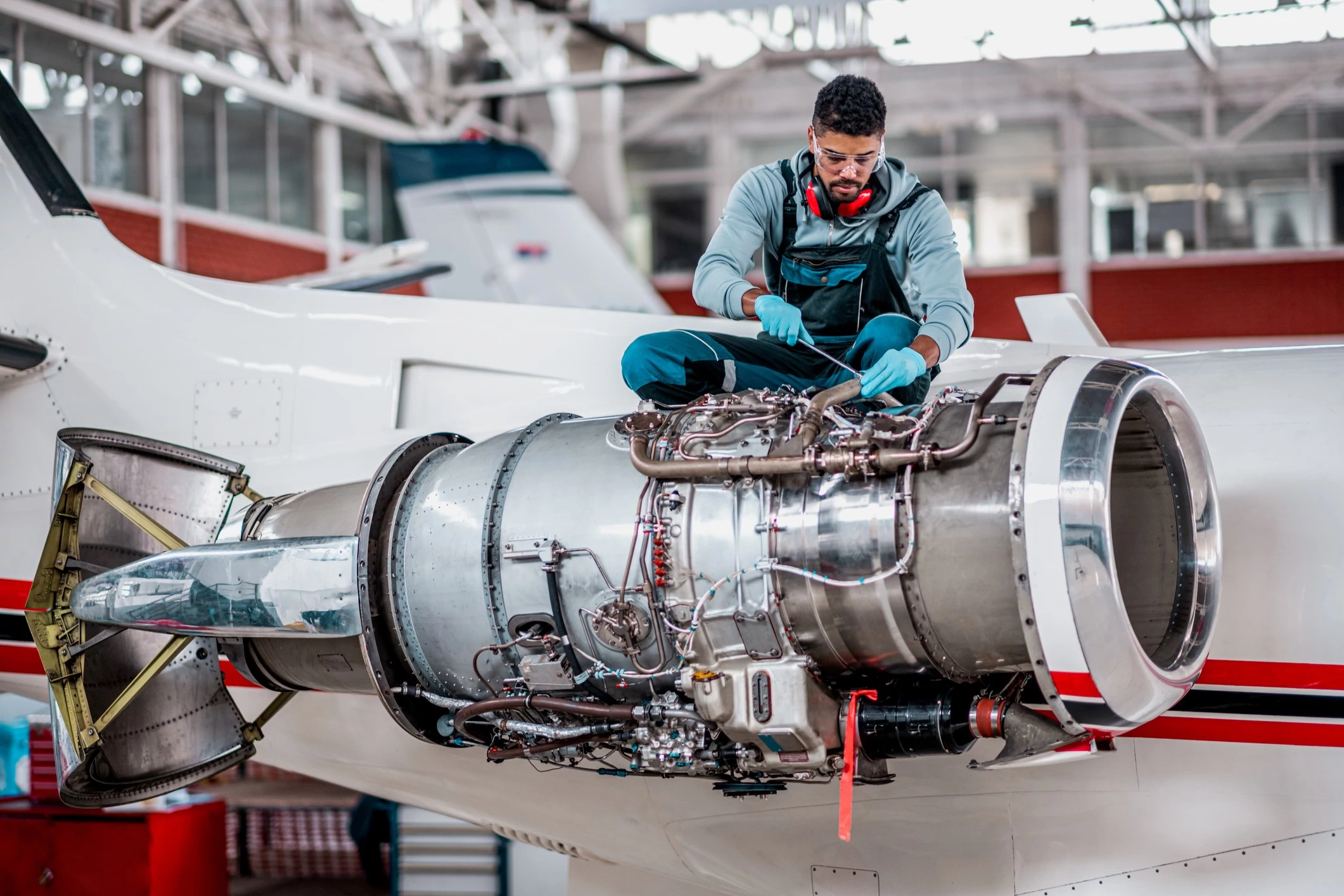
What Makes This the Best Free AI for Aircraft Maintenance Work?
Aircraft Maintenance Assistant AI was engineered specifically for the aviation maintenance domain — not retrofitted from a general chatbot. It operates within a carefully defined boundary: providing the knowledge support of a senior lead mechanic and the reference discipline of a technical librarian, while explicitly avoiding prescriptive maintenance instructions that would create liability.
| How Technicians Currently Handle It | How Aircraft Maintenance Assistant AI Handles It |
|---|---|
| Thumb through PDF manuals searching for the right AMM chapter | Instant reference to specific AMM, SRM, CMM chapters by ATA section |
| Craft documentation from scratch under time pressure, risking QA rejection | Professional-grade draft using industry-standard phrasing, ready for review |
| Wait for the senior lead to come back from break for troubleshooting advice | Structured fault isolation logic available 24/7 from any device |
| Manually cross-reference ADs across FAA, EASA, and TCCA databases | Auto-detected regulatory framework with specific CFR, Part, and AD citations |
| Describe damage verbally and hope the write-up captures it accurately | Upload a photo and receive proper aviation terminology description |
| Navigate the IPC alone on night shift when the tech library is closed | Guided IPC structure navigation with supersedure chain tracing |
🧠 Fault Isolation That Mirrors Veteran Thinking
The core differentiator of this free AI tool is its structured approach to troubleshooting. General-purpose AI might tell you to "check the hydraulic pump." This AI walks you through a systematic seven-step process that mirrors how a 25-year lead mechanic actually thinks through a problem:
- Symptom clarification — Pinpointing exactly what's abnormal, under what phase of flight or ground operation, and whether it's constant or intermittent
- ATA system mapping — Connecting the reported symptom to the relevant ATA chapter and subsystem
- Cross-system analysis — Proactively considering whether the symptom originates in a different system (the hydraulic indication caused by an electrical relay problem)
- Logical narrowing — Decision-tree progression from system to subsystem to line replaceable unit
- Differential diagnosis — Challenging the obvious answer with alternative possibilities that less experienced techs might overlook
- BITE and fault code context — Explaining what built-in test results indicate and, critically, what they don't rule out
- Intermittent fault methodology — Systematic strategies for the hardest category of maintenance problems
This is the kind of diagnostic reasoning that takes years to internalize through mentorship. With experienced mentors retiring at record rates, having this methodology available for free, on demand, helps bridge the knowledge gap for newer technicians.
✍️ Documentation Quality That Survives QA Review
Every document this AI drafts follows established aviation maintenance conventions:
- "Removed and replaced IAW AMM 32-21-11..."
- "NDT inspection per NDT Manual Chapter XX revealed no cracks or defects..."
- "Item deferred per MEL XX-XX, Category C, rectification interval 10 calendar days..."
Output adapts to jurisdictional requirements — FAA Form 337 narrative style, EASA Certificate of Release to Service language, or TCCA maintenance release formatting. The technician reviews, adjusts specifics, and takes ownership. The AI provides the structural template and industry phrasing; the professional provides the judgment and signature authority.
📸 Photo Intelligence for Damage Reporting
Upload a photo of corrosion, a cracked fitting, a delaminated composite panel, or an unreadable data plate. Aircraft Maintenance Assistant AI describes visible findings using proper aviation maintenance terminology — distinguishing between surface corrosion, intergranular corrosion, exfoliation, galvanic corrosion, pitting, delamination, and disbonding. It references the applicable SRM chapter category and suggests relevant treatment classification.
All observations are framed as "This appears to be..." — the AI explicitly does not render serviceability determinations. The certificated professional makes the call; the AI ensures the description is accurate and the documentation references the right structural repair category.
🌐 Regulatory Framework Auto-Detection
Mention "Part 43" in your question and the AI automatically frames its response within FAA 14 CFR regulatory context. Reference "Part-145" and it shifts to EASA. Mention "CARs" and it recognizes TCCA. For ambiguous contexts, it asks which jurisdiction applies before proceeding.
This eliminates one of the most time-consuming aspects of working in a multi-authority MRO environment — manually looking up which regulation governs the aircraft you're currently working on and finding the correct section reference.
How to Use This Free AI for Aircraft Maintenance: A Practical Walkthrough
Getting started with Aircraft Maintenance Assistant AI takes seconds. Here's what a real session looks like across common maintenance scenarios:
Step 1: Open a Conversation and Describe the Situation
No forms, no dropdown menus, no registration hurdles. Simply describe what you're working on — a fault, a documentation need, a regulatory question, or a parts research task. The AI calibrates to your experience level based on your language.
"Getting a recurrent EICAS caution for pack valve disagree on a 737-800, usually shows up during descent. No active BITE faults when checked on the ground. Second occurrence this week."
Step 2: Engage With Targeted Follow-Up Questions
The AI asks focused questions to narrow the diagnostic path — just as a senior lead would when you bring them a problem. It's looking for the specific data points that differentiate one root cause from another.
"When the caution appears during descent, is it always the same pack (L or R)? And has there been any recent work on the air conditioning packs, bleed air system, or pressurization controllers?"
Step 3: Follow the Structured Fault Isolation Path
Based on your inputs, the AI delivers probable causes ranked by likelihood — not alphabetically, not randomly, but by statistical frequency for your symptom profile, aircraft type, and operating conditions. Each cause includes verification steps and relevant AMM/TSM references.
"For a recurrent pack valve disagree on the -800 during descent with no active BITE faults, here are the most likely causes: 1. Pack valve position sensor — intermittent signal from the position feedback switch is the most common cause of this specific symptom pattern. TSM 21-XX-XX covers the verification procedure… 2. Pack flow control valve — a slow-moving valve that meets its commanded position in steady-state but lags during rapid demand changes in descent… 3. Wiring/connector integrity — particularly the cannon plug on the pack valve actuator, which is exposed to temperature cycling…"
Step 4: Upload Photos for Damage Description or Data Plate Reading
If your task involves damage assessment, corrosion treatment planning, or identifying an unfamiliar component, upload a photo. The AI describes what it sees using proper terminology and suggests relevant SRM chapter categories.
"Uploaded photo of suspected corrosion on the lower fuselage skin panel at STA 540."
The AI responds with the apparent corrosion type, affected area description, and the SRM chapter reference for treatment criteria — all framed as observations, not serviceability determinations.
Step 5: Request Documentation Drafts
After completing your work, ask the AI to draft the required documentation. Provide key details — task reference, part numbers, serial numbers — and receive a professional write-up using industry-standard language.
"Draft a non-routine work card narrative for the exfoliation corrosion I found on the wing lower skin at WS 185. Treated per SRM 51-70-11. Blended within limits. No NDT required per engineering disposition."
The AI produces a complete narrative draft ready for your review. Download it as PDF, Word, or plain text for attachment to your records.
Step 6: Research Parts, ADs, or Regulatory Questions
Need to trace a superseded part number? Check whether a PMA part is acceptable under your operator's policy? Understand the compliance options for a new AD? The AI handles each with specific citations — AD number, CFR section, IPC figure reference — and always directs you to verify against current, revision-controlled approved data.
How Maintenance Professionals Are Using This Free AI Tool
🔧 Line Maintenance: Accelerated Quick-Turn Troubleshooting
Scenario: A widebody arrives at the gate with a crew write-up for an intermittent autopilot disconnect during cruise. The next departure is in 90 minutes, and the line station has no avionics specialist on shift.
Without AI: The generalist mechanic pages through the TSM on a slow hangar computer, calls the MCC for guidance (15-minute hold), and burns 40 minutes before even starting a verification procedure.
With Aircraft Maintenance Assistant AI: The mechanic describes the symptom and aircraft type from their phone. Within 60 seconds, they have a ranked list of probable causes with the specific TSM section references and recommended verification steps. The AI also flags that this symptom pattern on this aircraft type has known cross-system interactions with the flight control computers — something a generalist might not consider — and notes that an autopilot disconnect during cruise may trigger ETOPS implications if the aircraft is on an extended-range route.
- Diagnostic framework delivered in under a minute vs. 40+ minutes of manual research
- Cross-system considerations flagged proactively
- ETOPS awareness that a non-specialist might miss
📝 Heavy Check: First-Pass Documentation for Non-Routine Findings
Scenario: During a D-check on a narrow-body, a structures technician discovers multiple areas of intergranular corrosion on the pressure deck web at a fastener pattern. They need to document the finding, reference the SRM, and generate a non-routine card that engineering can disposition.
Without AI: The technician writes a description that says "corrosion found on pressure deck." QA rejects it for insufficient detail — no corrosion type identified, no dimensional information framework, no SRM reference, no photo linkage. The rewrite cycle costs 30 minutes.
Aircraft Maintenance Assistant AI: The technician uploads a photo of the corrosion. The AI identifies it as consistent with intergranular corrosion at fastener holes (a common finding at this location), describes the apparent extent using proper dimensional framing language, references SRM Chapter 51 for the applicable corrosion treatment category, and drafts a complete non-routine card narrative. The technician reviews, adds measured dimensions and specific station/stringer callouts, and submits — first-time QA acceptance.
- Photo-to-documentation workflow that eliminates vague descriptions
- SRM chapter and corrosion classification referenced automatically
- QA rejection cycle eliminated
📋 Regulatory Navigation: Parsing a New AD on a Mixed Fleet
Scenario: An AD lands affecting a turboprop variant in the operator's fleet. The maintenance controller needs to determine applicability across 12 aircraft with different serial number blocks and modification statuses, identify compliance methods, and set up the tracking.
Without AI: Print the AD (8 pages), manually cross-reference each aircraft's serial number against the effectivity block, read through three compliance methods to determine which applies to each aircraft, and build a compliance plan spreadsheet. Time: 2-3 hours.
Aircraft Maintenance Assistant AI: The controller provides the AD number and asks the AI to break down the applicability criteria, compliance methods, and recurring requirements. The AI parses the effectivity by serial number block, explains each compliance method in plain language, identifies which method eliminates the recurring inspection requirement, and notes the record-keeping citations under §91.417 and §43.9. The controller builds their compliance matrix in a fraction of the time.
- AD applicability parsed in plain language vs. hours of manual cross-referencing
- Compliance method tradeoffs explained clearly
- Record-keeping regulatory citations included
📱 Night Shift: Parts Research Without Senior Support
Scenario: A night-shift technician at a Part 145 repair station needs to order a replacement fuel control unit for a legacy turbofan. The part number from the component tag doesn't match anything in the current IPC, and the senior lead left at midnight.
Without AI: Wait until day shift, potentially delaying the aircraft's return to service by 8-12 hours.
Aircraft Maintenance Assistant AI: The technician provides the part number and aircraft/engine type. The AI guides them through the IPC structure using ATA chapter conventions, helps identify that the part number was superseded two revisions ago, traces the current active part number, and explains what 8130-3 / EASA Form 1 documentation must accompany the replacement unit. It also flags that this particular component has a shelf-life limitation on internal seals — a detail that prevents a potential audit finding if the replacement unit has been in storage.
- Supersedure chain resolved on night shift without senior assistance
- Aircraft return to service not delayed waiting for day-shift research
- Shelf-life awareness prevents downstream compliance issues
🌍 Multi-Authority MRO: Switching Between FAA and EASA in the Same Shift
Scenario: A technician at an international MRO facility performs a landing gear component change on an FAA-registered 737 in the morning, then moves to a horizontal stabilizer inspection on an EASA-registered A320 in the afternoon. The documentation language, regulatory references, and release-to-service requirements differ between the two.
Without AI: The technician mentally switches between regulatory frameworks, references different regulation books, and hopes they don't accidentally use FAA phrasing on an EASA document.
This free AI tool: When the technician asks about the 737 work, the AI frames everything within FAA 14 CFR Part 43 and references the applicable maintenance release requirements. When they pivot to the A320 task, the AI automatically shifts to EASA Part-145 CRS requirements and adjusts documentation language accordingly. No manual switching, no cross-contamination of regulatory references.
- Seamless jurisdiction switching based on aircraft context
- Documentation language adapts automatically
- Eliminates cross-regulatory errors that trigger audit findings
Frequently Asked Questions
Is Aircraft Maintenance Assistant AI really free?
Yes. Aircraft Maintenance Assistant AI is fully accessible on the free tier with core capabilities — fault isolation logic, documentation drafting, photo analysis, regulatory navigation, and parts research guidance. Paid plans starting at $20/month unlock significantly more usage, custom model selection, and watermark-free document downloads, but the free tier provides the same depth of aviation maintenance knowledge.
Does this AI replace the AMM, SRM, or any approved maintenance data?
No — and it's designed to never create that impression. The AI summarizes and explains published, authoritative maintenance information with mandatory source citations. Every substantive answer includes a reference to the applicable document (AMM chapter, SRM section, CFR part, AD number) and an explicit verification imperative: the technician always confirms against current, revision-controlled approved data before acting.
Can it handle both FAA and EASA regulatory questions?
Yes. The AI auto-detects your regulatory framework from contextual clues — mention "Part 43" and it operates within FAA 14 CFR context; mention "Part-145" and it shifts to EASA; mention "CARs" and it recognizes TCCA. It also covers ICAO standards and other national authority frameworks. When context is ambiguous, it asks which jurisdiction applies before answering.
How accurate is the photo-based damage identification?
The AI describes visible damage using proper aviation terminology — distinguishing corrosion types (surface, intergranular, exfoliation, galvanic, pitting), composite damage categories (delamination, disbonding, impact damage), and wear patterns. All findings are framed as "This appears to be..." — the AI never renders serviceability determinations. It helps you describe findings accurately and reference the correct SRM chapter; the certificated professional makes the engineering disposition.
Can newer A&P mechanics benefit from this, or is it only for experienced technicians?
It's specifically designed to bridge the experience gap. Newer technicians gain access to the systematic fault isolation methodology that normally takes years of mentorship to develop. The AI adapts its technical depth based on language cues — plain explanations for those learning the ropes, peer-level discussion for experienced leads. This is precisely what makes it the most valuable free AI for aircraft maintenance training reinforcement.
Does it work on mobile devices — on the hangar floor or ramp?
Yes. Full feature parity across web, iOS, and Android — including photo uploads for damage description, voice input for hands-free use, and document generation. Access the tool from your phone at the aircraft, in the stockroom, or at the MCC desk.
Conclusion: Free Expert-Level Maintenance Intelligence for Every Shift
The aviation maintenance industry needs 710,000 new technicians over the next 20 years while 41% of its current certified workforce is over 60. MRO demand is approaching $193 billion by decade's end. The technician shortage McKinsey warns could reach 60,000 by 2029. In this environment, every tool that amplifies technician effectiveness without introducing liability is essential — and the best ones should be accessible without a paywall.
Aircraft Maintenance Assistant AI delivers the fault isolation discipline of a senior lead mechanic, the documentation precision that passes QA review on first submission, and the regulatory navigation depth that covers every jurisdiction you work under — all available as a free AI resource for aircraft maintenance professionals worldwide. Whether you're a newly certificated A&P building your troubleshooting instincts, a seasoned Part-66 engineer who needs a fast regulatory reference, or an MRO operation looking to reduce documentation cycle time across your entire team, start using Aircraft Maintenance Assistant AI and bring expert-level maintenance intelligence to every aircraft, every shift, every regulatory framework.
For ongoing aircraft maintenance support across fault isolation, documentation, and regulatory compliance, the Aircraft Maintenance Assistant is purpose-built for exactly this workflow.