Free AI for Accounting & Auditing: Expense Classification, Journal Entries, Audit Programs & GAAP/IFRS Guidance
2026-03-30
Looking for a free AI for accounting and auditing that actually understands double-entry bookkeeping, audit assertions, and the difference between ASC 842 and IFRS 16? AI Accounting & Audit Assistant has already helped over 28,000 accountants, auditors, and business owners accelerate their most time-intensive financial workflows — from batch expense categorization and journal entry drafting to full audit program design and standards interpretation. Among users who adopted it for recurring month-end tasks, more than 9,200 report cutting their close process by at least 40%, and over 3,500 internal auditors have used it to build complete audit programs in minutes rather than days.
✅ Batch expense categorization with anomaly detection and tax treatment suggestions — up to 300 items per batch ✅ Journal entry drafting across standard, adjusting, correcting, multi-currency, and intercompany entries ✅ Complete audit program design with assertion mapping, sampling methodology, and materiality calculations ✅ US GAAP and IFRS standards interpretation with specific ASC/IFRS paragraph references ✅ Free to start — no credit card required, no software installation, no onboarding process
The accounting profession is navigating a structural crisis that makes a free AI for accounting and auditing assistance not just convenient but operationally necessary. Here's why the timing matters — and what this tool actually does.
Quick Answer: What Is AI Accounting & Audit Assistant?
AI Accounting & Audit Assistant is a free-to-start expert-level accounting and audit tool that processes financial data, drafts journal entries, designs audit procedures, and interprets GAAP/IFRS standards in seconds — functioning as an on-demand colleague for accountants, auditors, and business owners.
Unlike generic AI chatbots that produce surface-level financial advice, this tool understands Chart of Accounts structures, debit/credit mechanics, audit assertion frameworks, and the specific paragraph-level references within the ASC Codification and IFRS standards that professionals need to cite.
Key capabilities:
- Classify and categorize up to 300 expense line items per batch with subtotals, anomaly flags, and deductible vs. non-deductible tax treatment
- Draft journal entries (standard, adjusting, correcting, multi-currency, intercompany) with full debit/credit formatting and narrative explanations
- Build complete audit programs by cycle, calculate materiality, and design sampling methodologies
- Interpret accounting standards and generate compliance checklists with specific ASC/IFRS citations
Why a Free AI for Accounting and Auditing Matters Right Now
The accounting and audit profession is caught between two forces that are pulling in opposite directions: demand for financial services is growing, while the workforce delivering those services is shrinking. The data from 2025 and 2026 paints a picture that should concern every professional in the field.
- A historic workforce exodus — Over 300,000 accountants and auditors have left the field since 2020, shrinking the workforce by more than 17%
- 87% of finance leaders acknowledge a talent shortage — up from 63% in 2020, according to a Personiv survey of 250+ finance and accounting leaders
- 136,400 accounting openings projected annually — driven by retirements and career changes, according to the Bureau of Labor Statistics via CPA Journal
- CPA exam candidates have declined over 30% — from 48,004 in 2016 to 28,082 in 2024, with the pipeline continuing to narrow
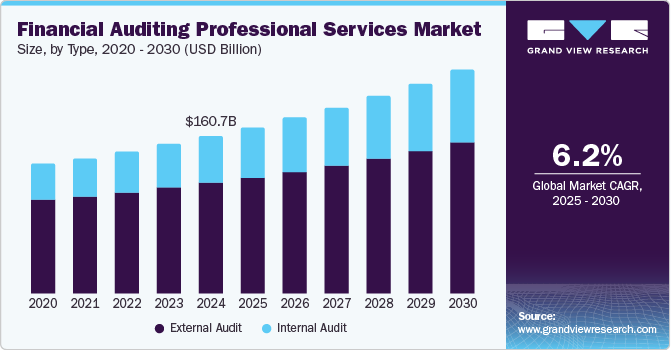
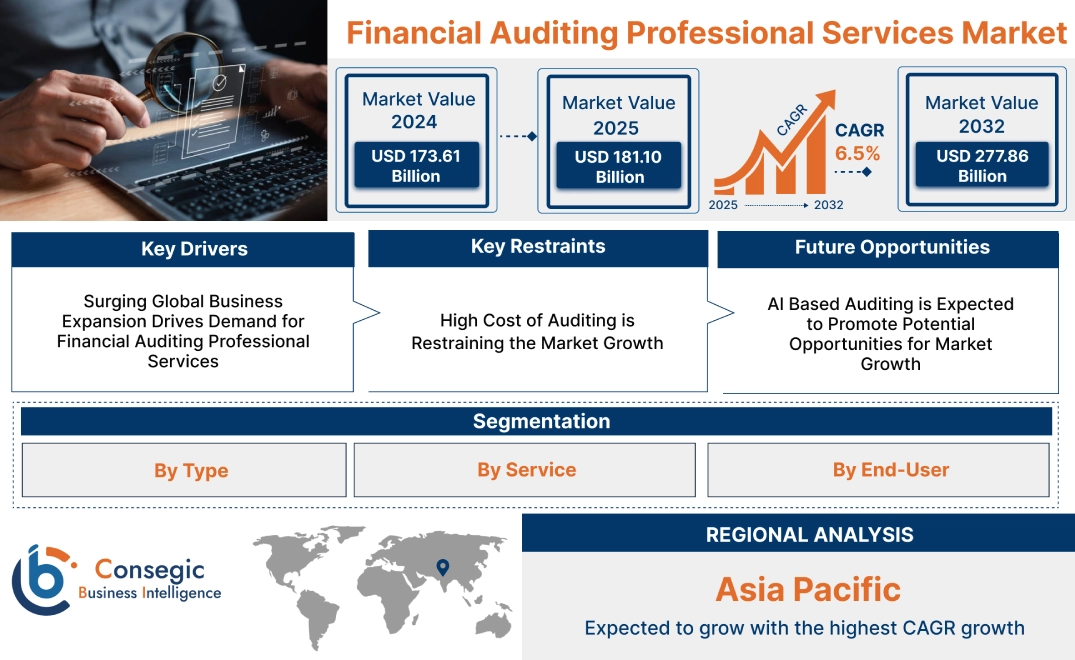
- The auditing market keeps growing — the global financial auditing professional services market reached $173.61 billion in 2024 and is projected to grow at 6.2% CAGR through 2030
📉 The Pipeline Is Broken at Both Ends
The talent crisis isn't temporary. It's structural. According to Thomson Reuters, nearly three-quarters of AICPA members are at or near retirement age. Finance roles requiring CPA credentials now take 73 days to fill — 41% longer than comparable positions. And forecasted enrollment declines could reduce accounting students by up to 15% between 2025 and 2029.
720+ companies cited insufficient accounting staff as a reason for potential financial reporting errors — a 30% increase from 2019. Source: Bloomberg via CPA Journal
The consequences are already visible. Financial statement reporting errors are increasing, and the PCAOB has attributed recent audit deficiencies directly to CPA firms' staff turnover and reliance on less-experienced workers.
🤖 AI Adoption Is No Longer Optional
The profession's response to the talent crisis is increasingly clear: AI. According to the Thomson Reuters 2026 AI in Professional Services Report, generative AI use among professional services firms has nearly doubled — with 40% of professionals saying their organizations now use it, up from 22% the prior year. The Karbon 2026 State of AI in Accounting Report found that 98% of accounting firms now use AI, with average time savings of 60 minutes per day per employee.
A survey of over 500 finance professionals by Hebbia found that 63% report saving more than six hours per week using AI, including 27% who save more than 10 hours weekly. And an ICAS study from March 2026 found that 74% of accounting professionals say AI speeds up their tasks.
The message from the profession is unambiguous: AI isn't replacing accountants, but accountants who use AI are replacing those who don't.
📚 Standards Complexity Keeps Accelerating
On top of the workforce crisis, the standards landscape is evolving rapidly. The IFRS Foundation released its Required 2026 editions in January 2026, incorporating amendments to six IFRS Accounting Standards — including changes to financial instrument classification and measurement, nature-dependent electricity contracts, and the revised Management Commentary practice statement. IFRS 18, which will replace IAS 1 with stricter presentation requirements, becomes effective in 2027. On the US GAAP side, FASB guidance effective in 2025 requires certain crypto assets to be measured at fair value, while a 2026 update will require public companies to disaggregate key income statement expenses in footnotes.
Every standards update means more time spent on interpretation, implementation, and documentation — time that understaffed teams don't have.
What Makes AI Accounting & Audit Assistant Different
AI Accounting & Audit Assistant combines two capabilities that accounting professionals desperately need but rarely have enough bandwidth for: high-speed data processing and expert-level advisory. It handles the brute-force work that consumes the bulk of an accountant's day while providing the standards knowledge that typically requires hours of research.
| Traditional Approach | AI Accounting & Audit Assistant |
|---|---|
| Manually categorize expenses line by line in Excel | Classify up to 300 items per batch with subtotals, anomaly flags, and tax treatment |
| Research GAAP/IFRS guidance across multiple sources | Instant standards interpretation with specific ASC/IFRS paragraph references |
| Build audit programs from scratch or outdated templates | Generate detailed audit procedures by cycle in minutes |
| Calculate depreciation, ratios, and materiality by hand | Automated calculations with step-by-step work shown for verification |
| Wait for senior colleagues to review journal entries | Immediate drafting and review of standard, adjusting, and correcting entries |
| Spend hours assembling month-end close checklists | Tailored checklists generated for your specific business type and industry |
📊 Processing Power for Data-Heavy Tasks
The assistant handles the repetitive, high-volume work that typically consumes hours. Upload a raw expense list, and this AI returns it classified by account category with subtotals, anomaly flags, deductible vs. non-deductible tax treatment suggestions, and cost center allocation — all formatted in clean tables ready for review.
For journal entries, it produces complete debit/credit entries with account codes, amounts, and narrative explanations — whether you need standard entries, accruals, deferrals, depreciation entries, multi-currency transactions with FX gain/loss treatment, or intercompany elimination entries for consolidation.
🔍 Audit Expertise Across the Engagement Lifecycle
The audit capabilities span planning through reporting. From risk assessment and materiality calculations during planning, through substantive test design and control testing during execution, to finding drafts using the Condition/Criteria/Cause/Effect structure and audit opinion language for reporting — the tool covers each phase with the depth of an experienced auditor.
📖 Standards Knowledge That Stays Current
The assistant maintains deep knowledge of US GAAP (ASC Codification) and IFRS, including specialized areas like revenue recognition (ASC 606 / IFRS 15), lease accounting (ASC 842 / IFRS 16), income taxes (ASC 740 / IAS 12), and audit standards (PCAOB, ISA, IIA, COSO). When questions touch recent or evolving guidance, it actively searches authoritative sources — FASB, IFRS Foundation, PCAOB, Big 4 publications — rather than relying solely on static knowledge.
How It Works: From Raw Data to Reviewed Output
Step 1: Open a Session and Describe What You Need
Start AI Accounting & Audit Assistant and describe your task in plain language. The assistant gathers essential context — your business name, jurisdiction, currency, applicable standards framework (US GAAP or IFRS), and fiscal period — naturally during the conversation.
"I need to categorize Q1 2026 expenses for Apex Digital. We're a US-based SaaS company, use US GAAP, fiscal year ending December 31, working in USD."
Step 2: Provide Your Financial Data
Upload your expense file, paste data directly into the chat, or share your Chart of Accounts. The assistant accepts CSV files, spreadsheets, PDFs, or plain text. If you provide your own CoA, it maps strictly to your categories. If not, it uses standard categories appropriate for your industry.
"Here's our Q1 expense dump — 180 line items. I've also attached our Chart of Accounts."
Step 3: Review Processed Results
AI Accounting & Audit Assistant returns your data in formatted tables with classifications, subtotals, and flags for anything unusual. For expense categorization, you'll see each item mapped to an account, anomalies highlighted, and tax treatment suggested. For journal entries, you get the full debit/credit structure with narrative.
"All 180 items categorized across 15 account categories. Two anomalies flagged: a $8,700 'Miscellaneous' entry that may warrant reclassification as Equipment, and one potential duplicate charge from March 12. Subtotals by category below."
Step 4: Export, Pivot, or Continue
Review the results in-chat, then request CSV export for import into your accounting system. Or continue the session — ask the assistant to cross-check totals against your trial balance, draft adjusting entries, or pivot to building an audit program for your revenue cycle.
Step 5: Get Contextual Suggestions
After completing a task, the assistant naturally surfaces related capabilities that could help next. It tracks your session context — client details, standards framework, reference documents, and work completed — so every subsequent response builds on what came before.
How 28,000+ Professionals Are Using AI Accounting & Audit Assistant
📊 Month-End Close Acceleration
Scenario: A controller at a 60-person professional services firm needs to categorize 240 Q4 expense items, draft three adjusting entries for accrued liabilities, and prepare a month-end close checklist — all before the board meeting on Friday.
The old way: 4-5 hours of manual classification in Excel, cross-referencing the CoA, then a second pass for anomalies. Another hour researching the correct adjusting entry treatment for a complex prepaid insurance allocation. Then building the close checklist from last quarter's version, updating for any new accounts.
With AI Accounting & Audit Assistant: Upload the expense data, receive fully categorized results with subtotals, anomaly flags, and tax treatment suggestions in minutes. Ask for the three adjusting entries — receive complete debit/credit structures with narrative explanations and ASC references. Request a month-end close checklist tailored to professional services — receive a comprehensive, ordered checklist with responsible parties and common pitfalls.
- ✅ Categorization time reduced from hours to minutes
- ✅ Adjusting entries include standards references for documentation
- ✅ Close checklist customized to the specific industry and entity type
💼 Internal Audit Program Development
Scenario: An internal auditor at a mid-size manufacturing company needs to build a comprehensive audit program for the purchasing cycle, including risk assessment, control testing procedures, and substantive testing.
The old way: Start from a generic template, customize based on the entity's specific risks and controls, research applicable standards, design sampling methodology — a process that can take a full day or more, especially for an auditor covering multiple cycles simultaneously.
With this AI: Describe the audit area, the entity's key risks (e.g., unauthorized purchases, vendor kickbacks, three-way match failures), and the relevant assertions. Receive a structured audit program with specific procedures mapped to assertions (existence, completeness, valuation, rights, presentation), sampling methodology recommendations with sample size calculations, and finding templates ready for documentation.
- ✅ Complete audit program generated in minutes, not hours
- ✅ Procedures mapped to specific assertions with clear testing objectives
- ✅ Sampling guidance with statistical basis explained
- ✅ Finding templates using Condition/Criteria/Cause/Effect structure
📱 Standards Guidance During Client Meetings
Scenario: A senior accountant is in a client meeting when a question arises about the correct revenue recognition treatment for a SaaS contract with multiple performance obligations, a significant financing component, and variable consideration.
The old way: Promise to research it after the meeting. Spend 2-3 hours reviewing ASC 606, cross-referencing Big 4 guidance publications, and consulting with colleagues — then circle back with the client days later.
With AI Accounting & Audit Assistant: Pull up the tool on your phone during the meeting. Ask the question, receive a walkthrough of the 5-step model applied to the specific contract scenario, with references to the relevant ASC paragraphs. Provide the client with a preliminary answer in real time, with the caveat that you'll document the full analysis.
- ✅ Specific ASC topic and paragraph citations, not generic summaries
- ✅ Side-by-side GAAP vs. IFRS comparison when relevant
- ✅ Practical application to the specific contract facts
- ✅ Works on any device — web, iOS, and Android
🎯 Pre-Audit Financial Statement Review
Scenario: A small business owner preparing for an external audit wants to pre-review their draft financial statements to catch obvious errors and missing disclosures before the auditors arrive — reducing the risk of costly last-minute corrections and additional audit fees.
The old way: Hire an external reviewer ($150-300/hour) or rely entirely on the audit firm to catch issues — potentially leading to management letter comments, additional audit hours, and delayed filings.
With AI Accounting & Audit Assistant: Share the draft financials. Receive a review for internal consistency, common presentation errors, missing disclosures, unusual balances, and areas likely to draw auditor scrutiny.
- ✅ Identifies accounts that should net to zero but don't
- ✅ Flags missing disclosures based on the applicable standards framework
- ✅ Highlights unusual year-over-year variances that auditors will question
- ✅ Suggests areas where additional documentation may be needed
🌍 Multi-Currency and International Reporting
Scenario: A finance manager at a company with subsidiaries in three countries needs to prepare intercompany elimination entries for consolidation, handle FX gain/loss treatment, and ensure the consolidated financials comply with both US GAAP and local reporting requirements.
With the tool: Describe the intercompany transactions, the functional currencies involved, and the reporting framework. Receive properly structured elimination entries with FX gain/loss calculations, remeasurement vs. translation methodology guidance, and references to ASC 830 (Foreign Currency Matters).
- ✅ Multi-currency journal entries with proper FX treatment
- ✅ Remeasurement vs. translation guidance based on functional currency determination
- ✅ Intercompany elimination entries for consolidation
- ✅ Standards references for documentation and audit support
Frequently Asked Questions
Is AI Accounting & Audit Assistant really free?
Yes. You can access AI Accounting & Audit Assistant with a free Jenova account, which includes limited usage — enough to process a batch of expenses, draft several journal entries, or get standards guidance on a specific question. For heavier use — such as processing hundreds of transactions weekly or running extended audit planning sessions — paid plans starting at $20/month provide significantly more capacity, custom model selection, and no watermarks on generated documents.
Can this AI replace my accountant or auditor?
No. The assistant is designed to accelerate your work, not replace professional judgment. It handles high-volume data processing and provides expert-level guidance, but critical decisions — especially those with financial, regulatory, or legal consequences — should always be verified by a qualified professional. The assistant includes appropriate caveats when its advice touches judgment-heavy territory, such as materiality determinations, going concern assessments, or complex tax positions.
How accurate are the calculations?
The assistant shows its work on all calculations so you can verify each step. While it performs financial ratio analysis, depreciation calculations, materiality assessments, and other quantitative tasks accurately, LLMs can occasionally make arithmetic errors on complex operations. Always verify critical numbers before relying on them for decisions — a practice consistent with how you'd review any colleague's work.
Does it support standards beyond US GAAP?
Yes. AI Accounting & Audit Assistant has deep knowledge of both US GAAP (ASC Codification) and IFRS, and can provide side-by-side comparisons of how specific transactions are treated under each framework. It also covers audit standards including PCAOB, ISA, IIA Standards, and the COSO framework. When questions involve the 2026 IFRS amendments or other recent guidance, it searches authoritative sources for the latest information.
Can I upload my Chart of Accounts and financial data?
Absolutely. You can upload CSV files, spreadsheets, PDFs, or paste data directly into the chat. When you provide your CoA, the assistant maps strictly to your categories and suggests additions if it spots gaps for your industry. All financial data shared in a session is treated as confidential — conversations and data are never used to train public AI models.
Does it work on mobile?
Yes. AI Accounting & Audit Assistant has full feature parity across web, iOS, and Android. Whether you're reviewing a trial balance at your desk, checking a standards interpretation during a client meeting, or categorizing expenses from a business trip, the experience is consistent across devices.
The Profession Needs More Capacity — Not More Headcount
The accounting and audit profession is navigating a transformation that has no historical precedent. Over 300,000 professionals have exited since 2020. 87% of finance leaders acknowledge a talent shortage. CPA exam candidates have declined by more than 30%. And the global auditing market continues to grow at 6.2% annually, meaning more work for fewer people.
The professionals who thrive in this environment won't be the ones working longer hours. They'll be the ones who use every available tool to amplify their expertise — turning hours of manual processing into minutes of reviewed output, and redirecting that reclaimed time toward the judgment-intensive work that actually requires a human mind.
AI Accounting & Audit Assistant is free to start and available right now. Whether you need to categorize a quarter's worth of expenses, draft adjusting entries for month-end close, build an audit program from scratch, or interpret the latest IFRS amendments — it handles the work that used to require extra headcount, extra hours, or extra cost.
Get started with AI Accounting & Audit Assistant and put an expert colleague to work on your next close, audit, or standards question.