Forbidden Romance Roleplay: AI Partners That Stay in Character
2026-09-02
Jenova helps you run a forbidden romance roleplay that actually holds together — secret stakes, consistent characters, and a plot that remembers what you did last night. While most story apps lock the best lines behind paywalls and most chatbots drop the thread mid-confession, this platform gives you specialized AI agents that stay in role, keep the tension alive, and let you take the scene as far as the story needs. In September 2026, that combination of memory, language, and creative follow-through is what separates a one-off chat from a pairing you return to.
✅ Persistent memory so slow-burn plots, secrets, and consequences survive across sessions ✅ Immersive roleplay in English or another language without breaking character ✅ Custom agents built around a specific pairing, era, or taboo ✅ Creative partners that turn your scenes into a script, manga, or webtoon
To understand why this matters, it helps to look at why forbidden romance roleplay so often collapses — and what changes when the story is backed by agents built for long-running, high-stakes intimacy.
Quick Answer: What Is Forbidden Romance Roleplay?
Forbidden romance roleplay is interactive storytelling in which you and an AI partner act out a secret or high-stakes love story, making choices that change relationships, consequences, and endings. The draw is not a single spicy line. It is the slow accumulation of stolen moments, near-misses, and decisions that could cost a job, a reputation, or a throne.
Key capabilities:
- Long-running scenes with characters who remember vows, lies, and last night's almost-kiss — including Learn English Through Roleplay for fully immersive English scenarios
- Multilingual roleplay so the affair can unfold in French, Japanese, Korean, Spanish, or another language you want to feel
- Custom agents you define by era, power imbalance, and what must stay hidden
- A path from play to page: the same story can become a screenplay, webtoon, or manga instead of dying in a chat log
The Problem With Most Forbidden Romance Roleplay
Demand for this kind of story is not a niche hobby. The [global interactive fiction market was valued at $6.4 billion in 2025](https://dataintelo.com/report/interactive-fiction-market) and is projected to reach $14.8 billion by 2034. Romance is not a side dish in that growth. Research on digital intimacy shows that players treat in-game love as a real mode of play — not a cutscene to skip.
$6.4 billion — Interactive fiction market value in 2025, with a 9.8% CAGR through 2034
1.4 billion users — People who engaged with some form of interactive narrative content in 2025
A taxonomy of romance in AAA games describes “limerent” love — the all-consuming, soulmate-structured romance that players plan for before a title even launches. Forbidden romance roleplay lives in that register: intensity, secrecy, and a partner who feels irreplaceable. Most players, regardless of gender, agree that romance greatly enhances story-focused games. The appetite is proven. The tools most people actually use are not.
But getting a forbidden romance that stays coherent is frustratingly difficult:
- Pre-written story apps gate the emotional beat behind a premium currency
- Human partners disappear mid-arc, taking months of shared canon with them
- Generic chatbots forget the secret, the rival, or the reason the love is forbidden
- Content filters snap the scene at the exact moment the stakes peak
- Visual novels and dating sims offer beautiful art with a finite branch map
Paywalled Choices Flatten the Affair
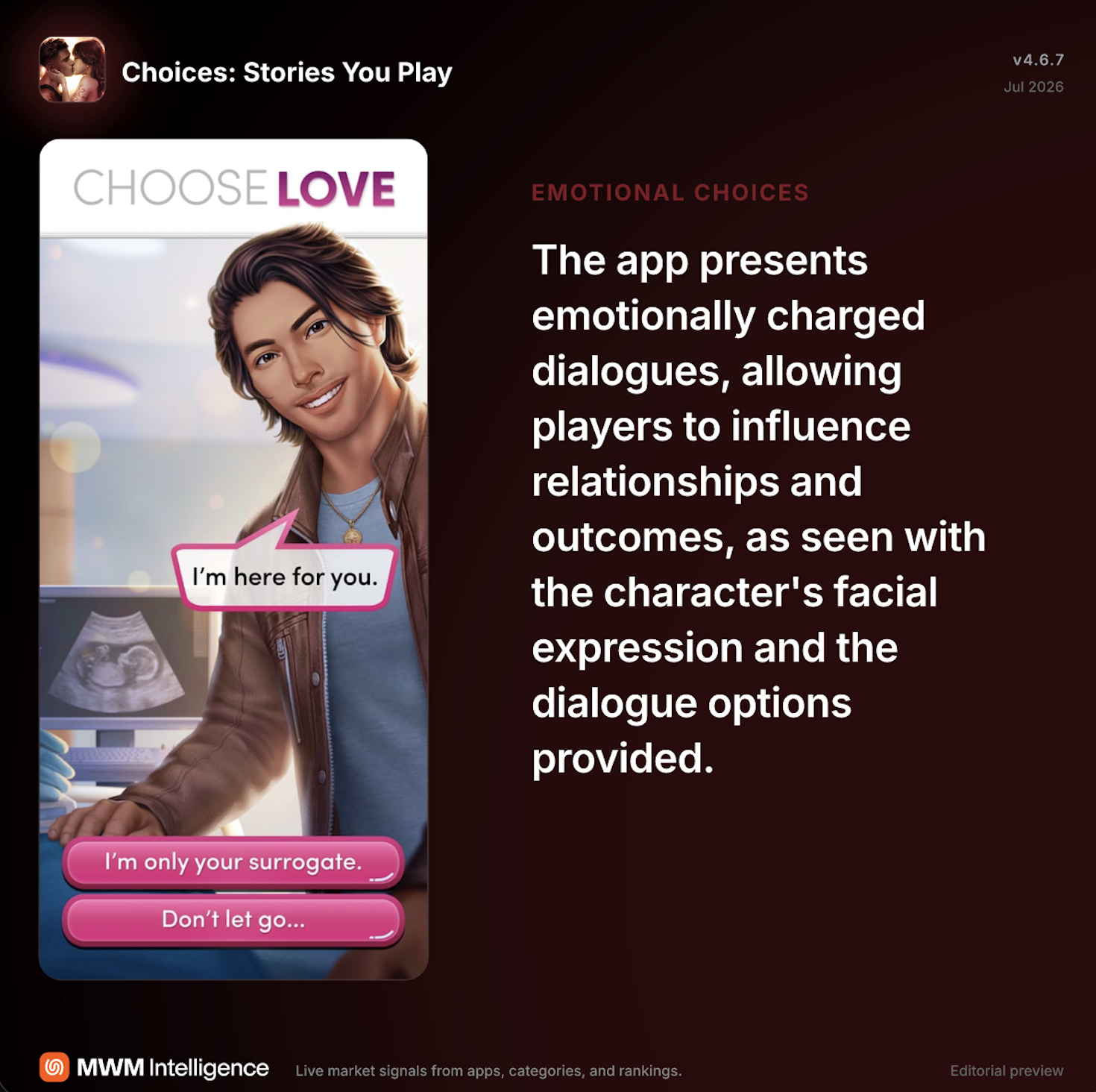
Mobile story apps popularized emotionally charged dialogues and relationship meters. They also trained a generation of readers to expect the best line — the confession, the kiss, the “don’t let go” — to sit behind a purchase. Mobile platforms already account for about 41.2% of interactive fiction revenue, which is why so many forbidden romance experiences are designed as short, monetized scenes rather than open-ended roleplay. You can feel the heat. You cannot freely choose what happens next.
Partners and Bots Do Not Keep Canon
Text roleplay communities have always known the pain of a disappeared co-writer. AI was supposed to fix that. In practice, many tools still lose the thread: a wedding ring that was a plot point yesterday becomes a mystery today. About 70% of AI roleplay users report sessions longer than 30 minutes — a sign of deep engagement that makes memory failure even more punishing. A forbidden romance lives on continuity. If the AI forgets who is married, who is watching, and what was promised, the taboo evaporates.
Fixed Branches Cannot Hold Your Pairing
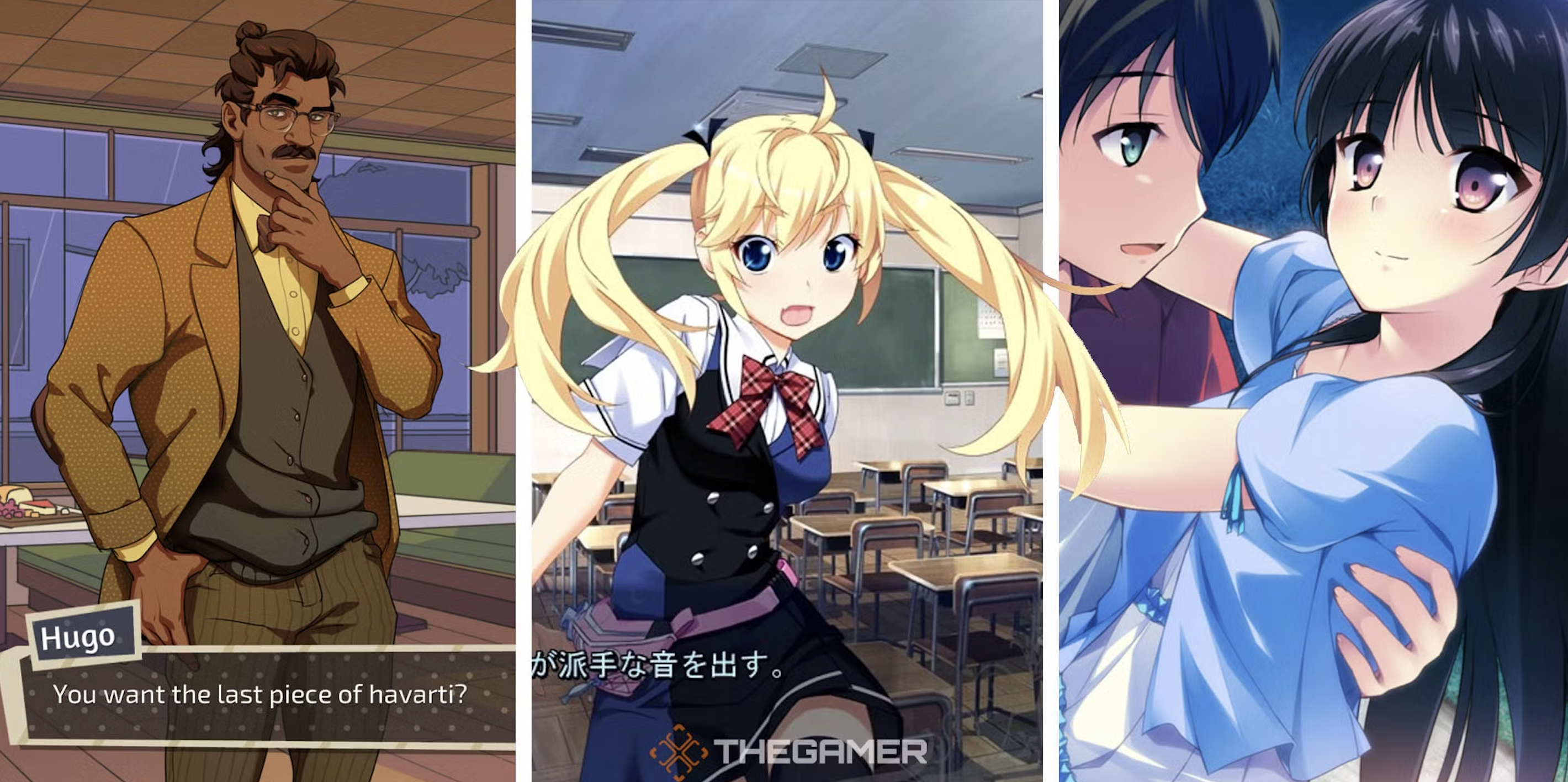
Visual novels and dating sims remain one of the richest looks for digital love — western character art, classroom anime, late-night confessions. The art is the point. The limitation is the map. Someone else already decided every fork. Your specific pairing, your private lore, your particular reason the love is forbidden, will never appear on that list.
$1.20 billion → $3.4 billion — Love game market size from 2023, projected by 2031 at a 14.2% CAGR
The market is growing because people want to be in the romance, not only watch one. Pre-authored branches cannot scale to every secret.
Filters and Shallow Memory Kill the Stakes
Forbidden romance roleplay depends on tension that would be awkward in a customer-support chatbot: power gaps, secrecy, moral cost, adult desire. When a filter treats every charged line as a policy incident, the story becomes a fade-to-black whether you wanted one or not. When memory is a sliding window instead of a living canon, the slow-burn never burns. Writers and players then bounce between apps, documents, and Discord servers just to keep a single pairing alive.
This is exactly what Jenova was built for.
The Jenova Solution
Jenova is not a single romance chatbot. It is a platform of expert agents — language roleplay partners, screenwriters, manga and webtoon artists, an acting coach, a date planner — plus the option to build a custom agent around your forbidden pairing. Multi-model access, persistent memory, and MCP tool integrations mean the same story can be played, remembered, researched, and turned into a finished work without starting over in a new tab.
| Traditional Approach | Jenova |
|---|---|
| Diamond-gated lines in a pre-written app | Open scenes you steer, with no script forcing the confession |
| Roleplay partners who ghost mid-arc | Agents with persistent memory across sessions |
| Chatbots that forget the secret | Unlimited conversation history and long-running canon |
| One language, one tone, one filter setting | Roleplay in English, French, Japanese, Korean, Spanish, and more |
| A finished chat log you cannot reuse | Hand-off to a screenwriter, manga creator, or webtoon artist |
Play the Affair in the Language It Belongs In
A Paris apartment hits differently in French. A chaebol heir’s secrecy hits differently in Korean. Learn French Through Roleplay is built for emotionally rich stories where every conversation is practice — vocabulary, grammar, and cultural nuance attached to moments you will not forget. The same design powers English, Spanish, Japanese, Korean, and Chinese roleplay agents: any theme, any intensity, character consistency that does not reset when you close the phone.
That is not a gimmick for language learners who also like romance. It is how a forbidden romance feels specific. The stolen “je t’aime,” the honorific you should not have used, the text you should have deleted — those details are the plot.
Write the Story Instead of Only Surviving It
When a scene is good enough to keep, Film Screenwriter takes you from concept through outline, draft, and revision — structure, dialogue, character, visual storytelling. Manga Creator turns the same pairing into panels with consistent art direction, from a one-shot to a long serialization. You are not stuck choosing between “playing” and “publishing.” The roleplay can be the writers’ room.
Stay in Character When the Stakes Get Uncomfortable
Forbidden romance fails when the other party sounds like a helpful assistant. Acting craft — subtext, objective, what the character cannot say out loud — is what makes a rival, a superior, or a sworn enemy feel like a person. Pair that with etiquette for period and class stories, and with date planning for the one evening they should not have agreed to, and the world around the pairing stops being wallpaper.
Specialized AI Agents for Forbidden Romance Roleplay
Try Jenova free — no credit card required. These are the agents readers actually use when a secret love story needs more than a blank chat box.
Language Roleplay Partners
If you want to live inside the scene, start with a roleplay tutor that will not flinch at theme or intensity.
Learn English Through Roleplay runs any scenario you name and keeps idioms, grammar, and natural speech attached to lived moments rather than worksheets.
- Any premise, including workplace, royal, fantasy, and rivals-to-lovers
- Character consistency across long arcs
- Intensity you control, from slow-burn letters to confrontation
Learn Japanese Through Roleplay is the natural partner for visual-novel energy: speech levels, unspoken rules, and the particular pain of a confession that cannot be said directly.
- Boundless scenarios with vocabulary anchored to unforgettable moments
- Tone and formality as plot, not decoration
- Continuity that respects the pairing you built
Learn Korean Through Roleplay maps cleanly onto K-drama forbidden structures — contracts, family pressure, public image — while teaching speech levels and cultural nuance in the same breath.
- Emotionally engaging stories where every line is practice
- Honorifics and distance as romantic conflict
- A mentor who does not drop the serial
Learn Spanish Through Roleplay and Learn Chinese Through Roleplay extend the same model: complete creative freedom, grammar that sticks because the moment mattered, and a secret that can be kept in the language it would actually be kept in.
From Roleplay to a Work You Can Ship
Webtoon Creator is built for mobile-first romance: vertical scroll rhythm, episode hooks, full-color consistency — the format where forbidden love already dominates reader charts.
- Short series or 100+ episode sagas
- Cliffhangers designed for the next episode, not a paywall
- Visual continuity so your pairing always looks like themselves
Microdrama Screenwriter specializes in 60–100 episode vertical seasons — structure, dialogue, and hooks for the exact length people watch between stops on the train.
Comic Creator covers sequential art and graphic-novel scale when the affair needs a western comics page rather than a webtoon episode.
If you are also working on a feature-length version of the same pairing, Film Screenwriter can take the roleplay transcript and impose professional structure without sanding off the heat that made the chat worth saving.
Craft, Chemistry, and the World Around Them
Acting Coach is the agent to bring in when a character sounds like a plot device. Scene work, objective, dialect, and subtext — the tools that make a forbidden glance land.
- Stage, screen, voice, and improv technique
- Audition-style drills if you want to play the character, not only write them
- Feedback that targets chemistry, not generic “make it more romantic”
Date Planner designs the one evening they should not have. Venue psychology, local research, contingencies — useful whether you are roleplaying the date or stealing ideas for a scene.
Etiquette Coach is the quiet engine of period and class-gap stories: unwritten rules, phrasing, cultural briefings, and the social repair that follows a dance that went too far. Forbidden romance is often just etiquette with the volume turned up.
How It Works
Step 1: Choose a Partner or Build One
Open Jenova and pick a roleplay agent that matches the language and tone you want, or create a custom agent with instructions, a preferred model, and a private knowledge base (your lore bible, timeline, and house rules). A custom agent can be “the duke who cannot be seen with you” as easily as it can be a modern workplace rival.
"You are Elias, 34, counsel to the queen. We are in a forbidden romance. You must never say you love me in public. You remember every letter. Stay in character."
Step 2: Set the Taboo in One Message
State who you are, why the love is forbidden, what happens if you are caught, and what just occurred. Specificity is the whole medium. “Office crush” is a mood. “I am your second-in-command and the board votes on your removal at dawn” is a scene.
"I am your rival family's translator. Tonight's ceasefire banquet is the first time we have been seated together. My brother is watching. Do not look at me unless you have to."
Step 3: Play for Consequence, Not Just Chemistry
Answer in character. Push the secret. Let the AI answer as the other person, with memory of prior choices. If the English needs to be sharper, richer, or more idiomatic, keep the scene in Learn English Through Roleplay so the language itself carries the heat.
"I should leave. Instead I take the last glass of wine from your hand and wait to see whether you will stop me."
Step 4: Continue Tomorrow — Then Decide What the Story Becomes
Because history persists, you can close the phone and reopen a week later without re-explaining the ring, the lie, or the almost-kiss. When a run is strong enough to keep, hand the transcript to a screenwriter or manga agent and ask for an outline, a chapter, or a vertical episode. The roleplay was never a dead end. It was draft zero.
Results and Use Cases
📊 Workplace Slow-Burn With a Paper Trail
Scenario: You are the chief of staff. They are the newly appointed director. Every late meeting is a risk, and the assistant two desks over is not as unobservant as they pretend.
Traditional Approach: A story app offers three diamond choices and a fade-to-black. A generic chatbot forgets the assistant by message twelve.
Jenova: You run the affair as an ongoing roleplay, then ask Film Screenwriter to turn the strongest week into a tight two-hander with subtext that would survive a table read.
- Secrets accumulate instead of resetting
- Professional language versus private language becomes the whole engine
- You leave with a scene list, not only a chat log
💼 A Court Affair You Can Actually Speak
Scenario: You want a historical forbidden romance — letters, chaperones, a marriage contract already signed — and you want it in French so the restraint is grammatical, not just aesthetic.
Traditional Approach: English-only bots that sprinkle “mon cher” like garnish. Language apps that refuse to stay in a love story long enough to matter.
Jenova: Learn French Through Roleplay holds the era, the secrecy, and the language at once. Bring in the etiquette coach when a bow, a title, or a ruined reputation needs to be accurate.
- Vocabulary sticks because the letter could have gotten you exiled
- Formal address versus stolen familiarity is playable, not theoretical
- The same pairing can later become a manga or a microdrama season
📱 Enemies-to-Lovers on the Train Home
Scenario: It is late. You have ten minutes and a phone. You want one charged scene with a rival who should not be texting you.
Traditional Approach: Opening a heavy visual novel or hunting a human partner who happens to be online.
Jenova: Full feature parity on iOS and Android means the custom agent, the memory, and the voice-to-text all travel. You dictate a reply in a hallway, lock the phone, and the canon is still there in the morning.
- Speech-to-text for walking-and-roleplaying
- Sessions that match how people already use story apps — short, intense, mobile-first
- No need to re-pitch the pairing to a stranger in a Discord server
🎯 From Private RP to a Webtoon Hook
Scenario: You and an AI have been running a celebrity/bodyguard pairing for three weeks. The beats are good enough that you want episodes, not just memories.
Traditional Approach: Copy-paste into a notes app, lose formatting, never draw the thing.
Jenova: Hand the arc to Webtoon Creator for vertical episodes, or to Manga Creator if you want print-paced chapters. The roleplay supplied character voice. The creative agents supply craft.
- Episode hooks instead of a wall of chat
- Consistent character designs across a saga
- A path from secret hobby to a story you can actually show someone
FAQ
What is forbidden romance roleplay?
Forbidden romance roleplay is collaborative fiction in which two or more characters want each other and something powerful — law, family, work, a vow, a war — says they cannot. You write (or speak) in character. The other party answers in character. The pleasure is the cost. On Jenova, that other party can be a dedicated roleplay agent with memory, or a custom agent built around your exact taboo.
Is Jenova free to use for romance roleplay?
Yes. Jenova has a free tier with core features and limited monthly usage. Paid plans increase usage and add options such as custom model selection. You can start a forbidden romance roleplay without a credit card and decide later whether you need more room for long arcs.
How is this different from story apps or a generic chatbot?
Story apps such as choice-driven romance titles give you polished art and a finite script. Generic chatbots give you an open prompt and a short memory. Jenova sits in between: open-ended play, persistent canon, multilingual roleplay agents, and creative agents that can turn the run into a screenplay or webtoon. You are not buying the next diamond choice. You are keeping a pairing.
Can I do forbidden romance roleplay in another language?
Yes. Language roleplay agents — including Learn Japanese Through Roleplay and the French, Korean, Spanish, and Chinese counterparts — are designed for any theme and any intensity. The language is not a translation layer bolted on afterward. It is the scene.
Does forbidden romance roleplay on Jenova work on mobile?
Yes. Web, iOS, and Android share feature parity, including speech-to-text. That matches how interactive fiction is already consumed: mobile held roughly 41.2% of interactive fiction revenue in 2025. A confession written on a phone is still canon when you open a laptop later.
Will the AI remember my story, and is it private?
Agents are built to retain conversation history and long-running project context, which is the difference between a one-night scene and a serialized affair. Jenova does not use your data to train public AI models, encrypts data in transit and at rest, and does not sell it to advertisers. You still decide what you put in the scene.
Conclusion
Forbidden romance roleplay fails when the secret is forgotten, the best line is paywalled, or the character starts sounding like a help desk. It works when memory, language, and consequence stay in the room.
Jenova puts those pieces in one place: roleplay partners who can hold a taboo in English or another language, creative agents who can turn a private arc into a script or a webtoon, and craft tools — acting, etiquette, date design — that keep the world around the pairing believable. The interactive fiction market is already enormous. The gap is not demand. It is a place where your specific forbidden love can continue tomorrow.
Explore the full agent library at Jenova, start with Learn English Through Roleplay if you want to step into a scene tonight, or open Learn French Through Roleplay if the affair needs another tongue. The pairing is yours. The story does not have to end when the chat does.
For Developers: Every agent in this article is available programmatically via the Jenova API — build AI-powered roleplay and storytelling features into your application with a single integration. Full documentation →