Farm Life Simulator AI: Plan Crops, Livestock and Farm Ops
2026-08-31
Jenova helps you run a farm life simulator AI workflow by combining crop rotations, livestock, cashflow, and sim-game systems in one working model. In 2026, a new homestead — or a farming-sim prototype — still dies in notebooks, disconnected yield tables, and tycoon rules that cannot answer “what happens if the hay fails and the dairy still needs feed?” This AI lets you interrogate that question before seed, steel, or a store page is committed.
✅ Pressure-test crop mix, field timing, and feed supply before you plant ✅ Model herds, labor, and a season P&L against weather and prices ✅ Generate farm-game loops, homestead stories, and visual direction next to the numbers ✅ Keep a living farm model across sessions so decisions compound instead of resetting
To understand why this matters, look at what growers, homesteaders, and farming-sim teams are actually up against: labor is scarce, precision tools are unevenly adopted, and a pretty farm map is not the same thing as a season that pencils out.
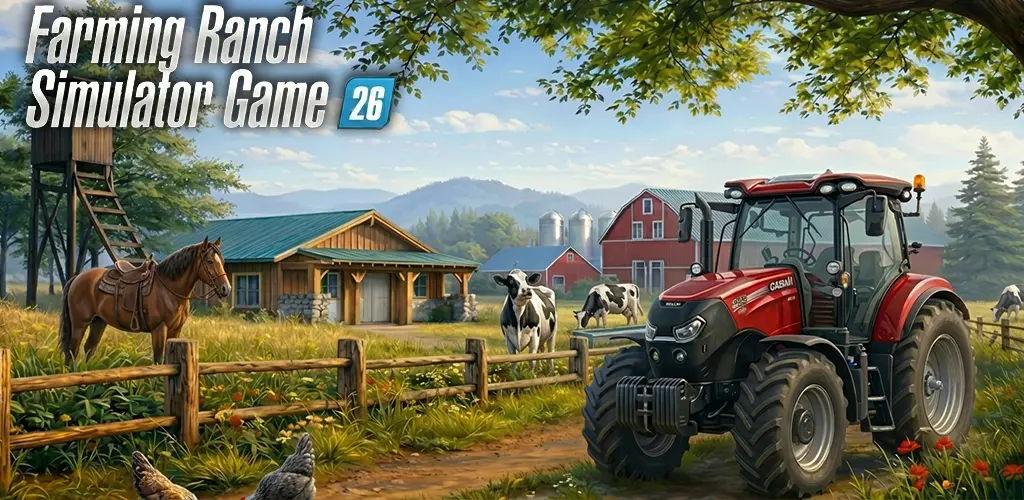
Quick Answer: What Is Farm Life Simulator AI?
Farm life simulator AI is a planning system that models crops, livestock, labor, and farm-game systems so you can test a season — or a farming sim — before you plant or ship. It is not a locked tycoon sandbox. It is a conversation that behaves like an agronomy desk, an ops war room, and a design bible at once.
Key capabilities:
- Crop rotations, soil, pests, and livestock cadence with a Farm & Agriculture Advisor
- Field loops, guest/player economy, and systems bibles with a Game Designer Assistant
- Labor, feed, and season P&L scenarios with a Business Co-Pilot
- Homestead walkthroughs, farm-to-table menus, and launch creative from the same farm model
Why Farm Simulation Is Harder Than It Looks
Real farms and farm games share a brutal constraint: biology does not pause for your spreadsheet. Labor is tight, inputs are expensive, and a missed weather window can erase a season. USDA Economic Research Service notes that hired labor is a small slice of the national workforce — yet wages and contract labor can represent 40% of production expenses for fruit and tree-nut operations and 42% for greenhouse and nursery operations, versus about 12% for farms overall.
40% — Labor’s share of production expenses on U.S. fruit and tree-nut operations
The people problem is not abstract. Industry analysis has put open U.S. agricultural jobs on the order of 2.4 million in 2024, with 56% of farmers reporting labor shortages. ERS also documents an aging hired farm workforce as fewer young immigrants enter the sector — and real wages for nonsupervisory crop and livestock workers have been rising faster in the last decade as workers got harder to find.
Meanwhile the tools that should help are not evenly in the field. A U.S. Government Accountability Office assessment found that only 27% of U.S. farms or ranches used precision agriculture practices to manage crops or livestock in USDA’s 2023 reporting window — despite GPS, automation, and sensors that can raise profit and cut fertilizer, water, and fuel.
27% — Share of U.S. farms or ranches using precision agriculture practices
The farm-game side of the keyword is not small either. The Farming Simulator series has sold over 25 million copies, with tens of millions more mobile downloads, and the latest mainline entry has been reported past five million copies. Analysts have sized the broader farming-game market in the billions. Players already expect AI workers, course-planned fieldwork, and farms that feel busy. Designers still have to invent the rules those workers obey.
But turning a sketch into a farm that actually runs is frustratingly difficult:
- Crop plans look balanced on a calendar and fail in week six of rain
- Livestock, forage, and cash grain are treated as three separate hobbies
- Labor, equipment hours, and market windows never live in the same file
- Classic farm tycoons teach construction, not a pitchable operating model
- Real operations now run on sensors and AI — paper sims lag behind
Pretty Calendars Hide Broken Seasons
A rotation can win a design review and still starve the dairy in late winter. Planting dates, drying days, custom-hire queues, and the walk from the parlor to the calf hutches are operational constraints, not vibe. When those choices are only visual, you discover the failure after seed is in the ground — or after players rage-quit because the farm “looks” productive but generates no surplus.
Crops, Herds, and Cash Do Not Share a Ledger
Yield is not income. A 180-bushel corn year still fails if nitrogen, diesel, and drying ate the margin, or if the haylage was short and you bought feed at the worst week. ERS data show labor-cost shares behaving very differently by commodity — fruit and vegetables feel wage pressure that a grain farm may not. Most teams model one layer in a notebook and the other in a hope.
Labor Is a Mechanic, Not Flavor Text
If 56% of operators cannot find enough people, then “hire three hands at harvest” is a fantasy rule. Shift length, housing, H-2A timing, and which jobs can be mechanized are the actual simulation. GAO is blunt about why precision tools stall: high up-front cost, messy data ownership, and equipment that does not talk to other equipment. A farm life simulator that ignores those frictions is simulating a brochure.
Tycoon Games Are Not an Operating Model
There is a durable fantasy in planting, milking, and watching a homestead grow — from cozy life sims to hardcore machinery titles. Farming Simulator’s own academy now teaches semi-autonomous AI workers: create a job, send a machine to field work, loop load-and-deliver, let the helper refuel. Mods such as Courseplay exist because players want better fieldwork AI than the base helper. Those games are superb at construction play. They are a weak substitute when you need custom agronomy, a real climate, a real brand, or a GDD that engineers and investors can share.
Real Farms Already Run on Data You Are Not Simulating
OECD work on AI in agriculture maps AI across cultivation, monitoring, and harvest — soil diagnostics, irrigation, pest risk, robotic weeding, yield forecasts. Market researchers have put the AI-in-agriculture market near USD 5.9 billion. Academic summaries of AI-driven precision systems report yield gains on the order of 15–30%, with large reductions in water and pesticide use in studied settings. If your “simulator” cannot talk about variable-rate maps, parlor sensors, or a helper that actually finishes the headlands, it is simulating yesterday’s farm.
This is exactly what Jenova was built for.
The Jenova Solution
Jenova treats your farm as a single, persistent project: soil, animals, money, story, and player/guest behavior in one thread. You describe the acres, the climate, the herd, the budget, and the fantasy. The platform returns rotations you can argue with, operating rules you can stress-test, and creative you can show a producer or a lender the same afternoon.
| Traditional Approach | Jenova |
|---|---|
| Notebook + spreadsheet + a separate mood board | One farm model you can interrogate in plain language |
| Tycoon games with fixed economic rules | Custom simulation logic for your farm or your game |
| Agronomist, accountant, and designer in sequence | Parallel crop, livestock, finance, and systems work in one workspace |
| Static season plans | Memory across sessions — the farm remembers prior decisions |
| Generic LLM chat with no domain spine | Specialized agents for agronomy, business, research, and narrative |
Crops, Soil, and Livestock
Start with the Farm & Agriculture Advisor when the farm has to obey biology. It is built for crop planning, pest diagnosis, soil health, livestock, business strategy, and sustainable practice across climates and scales — which is exactly what a farm life simulator needs: rotations that feed the herd, forage inventories, and a pest plan that is not “spray everything in June.”
Ask for a season sheet, not a vibe.
"I have 80 acres, humid subtropical, a 40-cow dairy, and no extra labor in July. Design a forage-plus-cash-crop rotation. Show me where the farm runs out of feed, people, or drying days."
Pair animal husbandry questions that sit closer to homestead companions — horses, farm dogs, backyard flocks — with Pet Care Advisor so daily care, nutrition, and behavior do not get hand-waved as “livestock = milk.”
Farm-Game Systems and Player Loops
Hand the same farm to the Game Designer Assistant when the product is a game: brainstorming, systems analysis, documentation, and genre-aware design. A management sim needs field objects, animal agents, economy sinks, failure states, and a season cycle that is fun and coherent. It should know when you have accidentally built a city-builder with tractors.
"Design a farm-life sim where soil fertility, animal stress, and player stamina are first-class. I need a day loop, a season loop, and three failure states that are not ‘run out of money.’"
Graphic Designer turns that bible into map language, barn elevations, and store-page art so the fantasy and the rules look like the same place.
Operations, Labor, and the Season P&L
This is the layer tycoon games fake with a happiness meter. Business Co-Pilot takes planning, financial modeling, and operating cadence: custom-hire versus own equipment, labor as a percent of revenue, what happens if the combine is down for four days. Personal Tax Advisor is the caution layer for homesteaders who suddenly have Schedule F questions — treat it as planning support, then verify with a qualified preparer.
A Home Renovation Advisor keeps barns, wash-packs, and farmhouses in the capital plan instead of as decoration. HVAC Technician belongs in that same conversation whenever you are storing grain, cooling a dairy, or pretending a greenhouse is “just a building.”
Research, Markets, and the Guest’s Actual Day
Before you freeze a crop mix or a theme, run Deep Research against regional comparables, price series, and what similar operations actually run. Then let a Marketing Strategist decide whether you are selling a CSA, agritourism, or a Steam wish-list.
Meal Planner is surprisingly load-bearing for farm-to-table and CSA box design: if you cannot plate the harvest, you cannot sell the harvest. E-Commerce Business Partner takes the same SKUs to a shop. Tour Guide writes the u-pick script. Roleplay Game Master will walk a family through a muddy Saturday with unlimited memory — the tired kid, the grandparent who needs shade, the player who only wanted to milk the cows.
That loop is the difference between a map and a year.
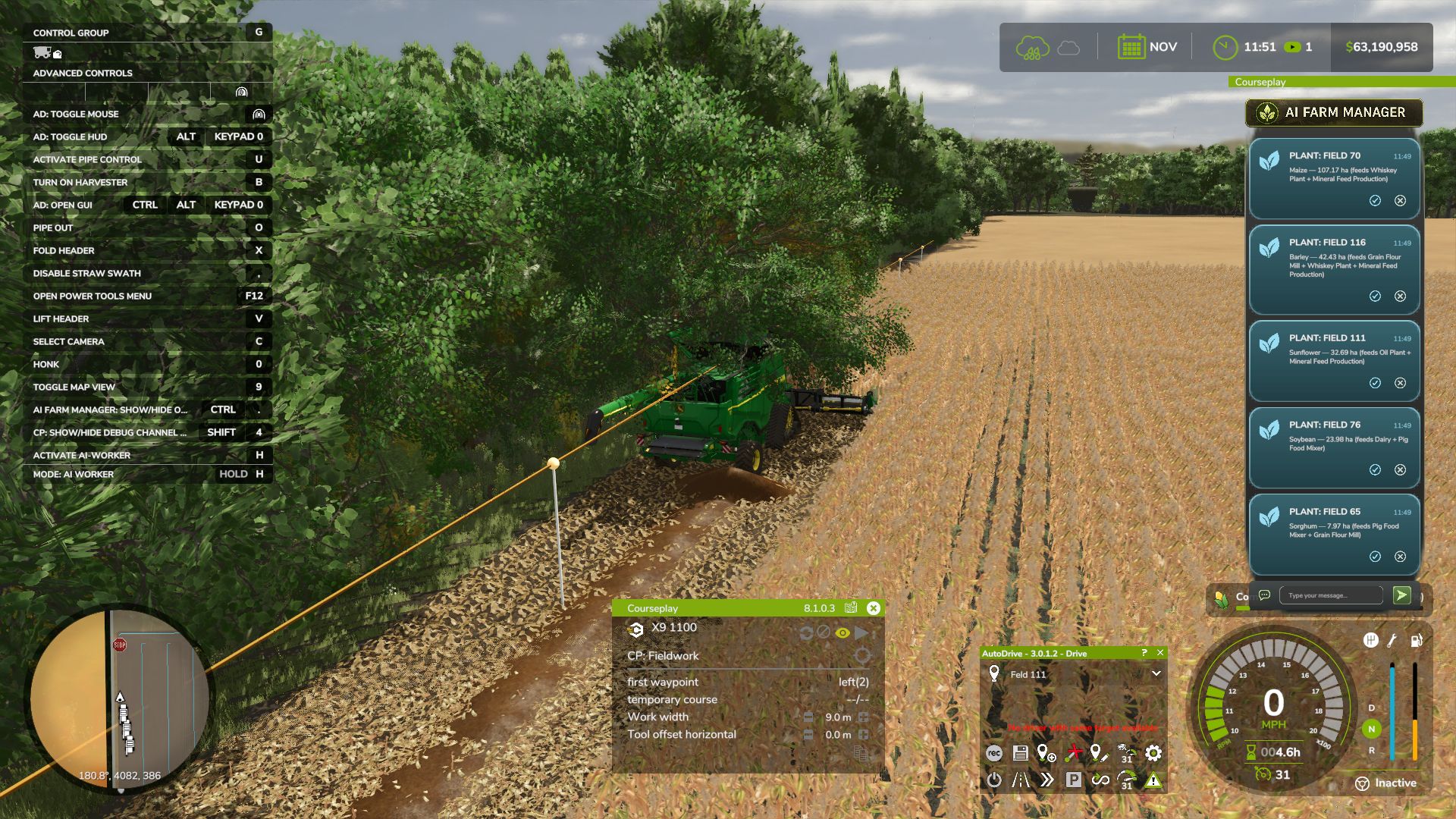
Specialized AI Agents for Farm Life Simulation
If you are writing the GDD for a commercial farm sim — helpers, course planning, animal AI, a day/night economy — Game Designer Assistant stays on the spine of the project. It will break guest/player needs, economy sinks, and scenario goals into systems you can actually build.
- Systems bibles, loop diagrams, and feature cuts that protect the core loop
- Genre and platform context so your sim does not accidentally become a city-builder
- Concept direction you can hand to an illustrator or an image model
If the farm has to make money in soil — or look like it could — Business Co-Pilot and agronomy planning keep creative from outrunning cash and calendar.
- Opening-year labor models and weather-year P&L
- Capex phasing: what you buy in year one versus what you paint on the map
- Sensitivity tables for price and yield misses, not a single heroic forecast
If you need to feel the farm, Roleplay Game Master will play a full homestead day without breaking character, while Tour Guide writes the in-world voice of the land.
- Family, enthusiast, and accessibility walkthroughs of the same layout
- Bottleneck discovery that numbers alone will miss (“nobody can see the wash-pack from the parking ruts”)
- Scripted helper barks, app notifications, and wayfinding copy that match the season
Try Jenova free — no credit card required.
How to Run a Farm Life Simulator AI Session
Step 1: Lock the Constraint, Not the Fantasy Name the acres, climate, labor cap, brand limits, and the one thing the farm must be famous for. A constraint is a gift. “Cozy homestead” is not a brief. “40 acres, clay loam, 2 family workers, no hired harvest crew, one hoop house, direct-market vegetables plus six laying hens” is a brief.
"I have 40 acres on clay loam, two family workers, no hired harvest crew, and a $180k equipment budget. Design the farm around mixed vegetables and a small flock. Call out what I cannot afford."
Step 2: Build the Skeleton — Fields, Herds, Paths Use the farm and agriculture advisor to propose rotations, stocking rates, forage inventories, and the harvest/emergency spine. Demand a clog map, not a mood board. If every crop peaks in the same two weeks, you already know the review note.
"Give me a month-by-month table: labor hours, field operations, feed on hand, cash, and the first place this farm fails in a wet spring."
Step 3: Simulate a Real Year, Not an Average Year Walk three seasons, then break something: a 10-day rain cell at planting, a parlor outage, a helper that will not finish headlands, a heat week that tanks milk. This is where business co-pilot and homestead roleplay earn their keep.
"Simulate a wet May and a $2 drop in milk. Show me feed purchases, delayed hay, and which job I have to drop so the family does not burn out."
Step 4: Attach Money, Labor, and a Go-to-Market Convert the skeleton into labor hours, per-acre costs, channel mix, and an opening campaign. If you cannot explain how the farm survives a 15% yield miss, you do not have a farm yet. You have a rendering.
"Build a year-one P&L at 70%, 100%, and 120% of trend yield. Include family labor at a real wage, repairs as a percent of equipment, and a CSA mix that does not explode in July."
Step 5: Package What Stakeholders Can Approve Turn the thread into a GDD chapter, a lender narrative, SKU lists, farm-stand art, and a guest-facing tour script. The simulator is not finished when the map looks good. It is finished when operations, creative, and finance can argue from the same artifact.
Results & Use Cases
🚜 Indie Team Shipping a Farm-Sim Prototype
Scenario: A five-person studio wants deeper farm AI than a happiness meter — soil moisture, animal stress, helper pathing, and a season economy that punishes greedy monoculture. Traditional Approach: Months of undocumented design Discord, a vertical slice that looks like every other tycoon, and a GDD engineers ignore. Jenova: A systems bible, economy loops, and failure states you can drop into production, with game-design documentation that programmers can ticket.
- Cuts features that do not serve the day/season loop
- Documents helper and animal-agent needs in buildable language
- Keeps art, design, and production on one living brief
🌾 First-Generation Grower Planning Year One
Scenario: A family is leaving town jobs for 40 acres and a farmers-market stall. They have enthusiasm, a used tractor, and no forage inventory. Traditional Approach: YouTube, a seed catalog, and a loan conversation that happens after the greenhouse is already ordered. Farm planning + ops modeling: A constrained rotation, a labor calendar that fits two people, and a cash plan that survives a late frost.
- Forage and cash crops on the same calendar
- Equipment you can skip in year one
- A market channel that matches actual harvest weeks
🐄 Diversified Dairy That Also Sells Experiences
Scenario: An existing herd wants a u-pick berry patch and weekend tours without wrecking chore time. Traditional Approach: A pretty site plan and a Saturday that collides with milking. Roleplay + tour copy + P&L: Guest paths that miss the parlor rush, a chore map, and a price that pays for the extra hours.
- Animal welfare and guest flow in the same walkthrough
- Shade, restrooms, and parking as first-class objects
- A script Tour Guide can keep consistent with barn rules
📱 Operator Diagnosing a Field From the Cab
Scenario: A grower on Android photographs a yellowing corn edge and a clogged waterway between landings. Traditional Approach: A dealer visit next week and a guess in the meantime. Jenova on mobile: Immediate agronomic hypotheses, a sampling plan, and a note you can paste to the crop advisor — then a reminder the farm already logged last year’s similar patch.
- Full workflow on phone, not a “lite” afterthought
- Photo in, operating note out, while you are still in the row
- Memory of last season’s fix so you are not re-explaining the field
🛒 CSA Launch That Has to Match the Harvest
Scenario: The farm needs 80 shares and a shop, and marketing keeps promising tomatoes in weeks the tunnel cannot deliver. Traditional Approach: Pretty photos and angry week-3 emails. Marketing Strategist + E-Commerce Business Partner + meal planning: Share size, substitution rules, and listings tied to a real harvest calendar.
- Creative that does not outrun the tunnel
- SKUs and prep lists from the same crop plan
- Local versus delivery spend that matches actual bunches
FAQ
What is farm life simulator AI?
Farm life simulator AI is software that lets you model a farm’s crops, animals, labor, and commercial performance in conversation — then iterate. On Jenova it is not one locked tycoon engine. It is a set of expert agents that share memory, so the rotation, the P&L, and the homestead story stay consistent. Use it to design a real place, a pitch, or the systems of a farming game.
Is farm life simulator AI free to try?
Yes. Jenova has a free tier with core features and limited usage, so you can run a first farm brief — rotation, labor calendar, and a rough operating year — without a card. Heavier iteration, custom model choice, and higher volume sit on paid tiers. Start with one constrained brief; if the thread is useful, you will know before you upgrade.
How is this different from Farming Simulator or a cozy farm game?
Those games are construction toys with authored rules, and they are excellent at that job — including built-in AI workers and a huge mod scene. Jenova does not replace a real-time farm builder. It replaces the messy layer around one: custom agronomy, real climates, brand constraints, GDD writing, lender narrative, and day-in-the-life storytelling that a boxed sim will not let you rewrite. Many teams use both — build in the engine, think on Jenova.
Can this help with a real farm, not just games?
Yes, with the obvious limit: it is a decision-support model, not a control system for your planter or parlor. You can rehearse rotations, feed inventories, labor mixes, and price scenarios, and you can ground them with Deep Research on comparables. Live operations already use AI for monitoring, prediction, and automation; this is the planning twin of that stack, not a substitute for agronomists, veterinarians, or safety systems.
Does farm life simulator AI work on mobile?
Yes. Jenova is built for web, iOS, and Android with the same core workflow. That matters here: the useful question often appears in a field, not at a desk. Photograph a stand, dictate the constraint, and get a season diagnosis before you reach the next headland. Speech-to-text is there when your hands are dusty.
How accurate is a farm life simulator AI?
Accuracy tracks the quality of your constraints. Give it acres, climate, stocking rates, and a budget, and you get a model you can stress-test. Give it “make a cute farm,” and you get mood. Treat outputs as a rigorously argued draft — then verify varieties, labels, codes, and veterinary advice with licensed professionals. Precision tools already struggle with cost, data, and interoperability; an AI plan does not replace a soil test or a ride-along with your extension agent.
Conclusion
A farm is a machine for turning sunlight, labor, and feed into a surplus — in soil or in a game engine. Most “plans” only show the surplus. Farm life simulator AI on Jenova puts rotations, herds, labor, story, and launch creative in one persistent model so you can break the season on purpose — then fix it — before weather, players, or a lender does it for you.
Whether you are writing the GDD for the next management sim, standing up a first market stall, or sitting in a cab looking at a field that will not even out, you do not need another disconnected deck. You need a farm you can argue with.
Start with the Farm & Agriculture Advisor for biology, bring in Game Designer Assistant for systems, and let Business Co-Pilot keep the year honest. Explore the rest of the workspace at Jenova.
For Developers: Every agent in this article is available programmatically via the Jenova API — build farm-planning, sim-design, or homestead-experience features into your application with a single integration. Full documentation →