Fantasy Character Name Generator: Create Lore-Ready Names for Any World (April 2026)
2026-04-20
In 2026, fantasy is the dominant force in fiction. The "romantasy" subgenre alone surged 85.2% in the first half of 2024 compared to the prior year, the tabletop gaming market has reached a $21.43 billion valuation](https://www.jenova.ai/en/resources/ai-fantasy-name-generator), and self-published fantasy fiction is growing at a [17% annual rate](https://www.jenova.ai/en/resources/ai-fantasy-name-generator). With [3.32 billion gamers worldwide](https://www.artemisiacollege.com/blog/growth-opportunities-gaming-industry/) and the gaming creator economy paying out over [$1.5 billion in 2025 from Roblox and Fortnite alone, the demand for unique, memorable, culturally grounded fantasy character names has never been higher.
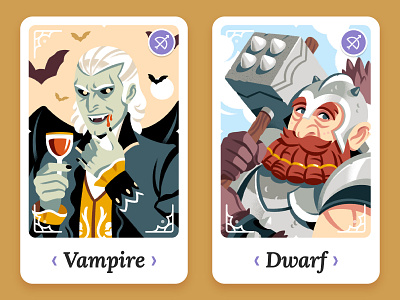
Every one of these stories, campaigns, and worlds needs names — names for heroes, villains, kingdoms, taverns, magic swords, and ancient gods. And the old approach of staring at a blank character sheet or mashing random syllables together doesn't scale.
Jenova's Name Generator is built for exactly this: a dedicated AI naming consultant that understands the difference between a Celtic-inspired elven ranger, a guttural orcish warlord, and a whimsical halfling innkeeper — with persistent memory that learns your world's linguistic rules across sessions.
Quick Answer: What Is a Fantasy Character Name Generator?
A fantasy character name generator is an AI-powered tool that creates unique, lore-consistent names for characters, places, items, factions, and creatures within fictional worlds — in seconds rather than hours of manual brainstorming.
- 🎯 World-aware output — Name Generator crafts names that respect your world's established linguistic patterns, cultural inspirations, and tonal conventions
- 🧠 Persistent lore memory — Tell it your naming rules once; it remembers across sessions and never re-suggests rejected names
- ✍️ Complete naming systems — Individual character names, regional naming conventions, patronymic structures, and full constructed-language phonologies
- 🔄 Multi-model intelligence — Access GPT-5.4, Claude Opus 4.6, Gemini 3.1 Pro, and more to find the model whose linguistic patterns best match your world
The Problem: Why Fantasy Naming Is Harder Than It Looks
Fantasy characters are more difficult to name than contemporary ones. As writing consultant Mary Kole explains, "how does a writer name their protagonists when Kevin and Rachel are off the table?" (Good Story Company). The challenge isn't just creativity — it's consistency, pronounceability, and cultural depth at scale.
Unpronounceable Names Kill Immersion
"Something like 'how is that even pronounced?' really pulls me out of the story. Or when names are deliberately weird and I can imagine an author just mashing keys." —
Writers frequently go overboard with apostrophes and vowel-less consonant streams. While names like T'Challa and Muad'Dib work, using stylistic choices sparingly preserves their impact. When every name in a book turns to "Charlie-Brown-garble" in the reader's head, engagement collapses (Good Story Company).
Consistency Breaks Down at Scale
A solo indie developer or fantasy novelist might name the first 20 characters carefully — but by character #100, names become inconsistent, some are unpronounceable, and several accidentally duplicate existing IP. The Writing Stack Exchange community documents this challenge extensively: creating a consistent feel for character names across an entire fantasy setting requires systematic phonetic rules that most writers struggle to maintain manually.
Random Generators Produce Random Results
Traditional fantasy name generators — like the rule-based tools that have dominated for over a decade — combine predefined prefixes and suffixes from curated lists. While effective for quick random generation, they lack contextual understanding (Skywork AI). You select "elf" or "dwarf," click generate, and get a list of random syllable combinations with no context, no meaning, and no consistency. As Reedsy notes, the best fantasy names require consistency with worldbuilding, attention to sound, and cultural grounding — none of which random generators provide.
The 2026 Fantasy Landscape Demands More
The 2026 fantasy market is undergoing a shift toward "inward stakes" — personal, psychological narratives that demand deeper character development. Cross-genre hybrid storytelling is growing rapidly, blending romance with fantasy, dystopian with mystery, and sci-fi with mythology. Each of these subgenres carries distinct naming conventions. A romantasy heroine sounds different from a grimdark mercenary, who sounds different from a cozy fantasy innkeeper. One-size-fits-all generators can't handle this nuance.
Why Name Generator Is the Best Fantasy Character Name Generator
This is exactly what Name Generator was built for. Instead of random syllable combinations, it's a specialized AI naming consultant that understands your world's cultures, linguistic inspirations, and narrative needs — then generates names as part of a complete world-building workflow.
While tools like ChatGPT require careful prompt engineering to produce quality fantasy names, and standalone generators like Reedsy offer curated databases with limited contextual understanding (Skywork AI), Jenova's Name Generator combines conversational intelligence, cultural depth, and persistent memory in a single agent.
| Challenge | Traditional Name Generators | Name Generator |
|---|---|---|
| Name generation | Random syllable combinations | Context-aware, lore-consistent |
| World-building integration | None — copy-paste into your doc | Builds complete naming systems for multiple cultures |
| Persistent memory | Each session starts fresh | Remembers your world's rules across sessions |
| Cultural & linguistic depth | Limited style presets | Etymology, phonetics, meaning layers, connotation mapping |
| Multi-model intelligence | None | GPT-5.4, Claude Opus 4.6, Gemini 3.1 Pro |
| Full creative ecosystem | Standalone tool | Names → characters → stories in one workflow |
🏰 Complete Naming Systems, Not Random Lists
The core advantage of Name Generator over every standalone fantasy naming tool is its ability to build systems, not just names. Describe your world's cultures — "one inspired by Mediterranean coastal civilizations, one by steppe nomads, and one by deep-forest isolationists" — and the agent builds distinct phonetic patterns, naming conventions (patronymics, clan names, honorifics), and internal consistency rules you can apply to generate additional names yourself.
🌍 Cross-Cultural Linguistic Intelligence
Fantasy naming draws from real-world linguistic traditions — Celtic, Norse, Arabic, Japanese, Swahili, Finnish — but the best fantasy names evoke these traditions without directly copying them. As Reedsy documents, Tolkien's Elvish was heavily inspired by Finnish and Welsh, while Martin's Westeros carries echoes of Old Norse. The Name Generator understands the phonetic DNA of dozens of linguistic families and can create names that feel authentically rooted without being derivative. It also flags unintended meanings in real-world languages — preventing the embarrassing discovery that your dark lord's name means "potato" in Finnish.
🧠 Persistent World Memory
Unlike standalone tools where every session starts from scratch, the Name Generator remembers your world's established names, rejected options, phonetic rules, and cultural conventions across sessions. If you're naming characters across a 12-book series or a multi-year campaign, the agent builds on previous conversations — ensuring consistency and never re-suggesting names you've already passed on.
Example Prompts
"I need a naming system for three cultures in my fantasy world: one inspired by ancient Mesopotamia (river-kingdom scholars), one by Polynesian seafarers, and one by alpine mountain clans. Each should have distinct phonetic patterns, 2-3 syllable character names, and naming conventions that reflect their social structures."
"Generate 20 NPC names for a grimdark fantasy tavern scene. Mix of humans, dwarves, and half-elves. The city has a Slavic-inspired naming tradition. Include surnames that reference occupations or geography. Nothing too hard to pronounce at a gaming table."
"I'm writing a romantasy novel and need a name for my male lead — a disgraced prince from a desert kingdom. The name should sound regal but have a hard edge. Two syllables preferred. Something that works well in dialogue and doesn't sound like existing popular fantasy characters."
Try Name Generator free — no credit card required.
Related Agents You'll Also Like
✍️ Creative Fiction Writer
Once you've named your characters, you need to bring them to life. The Creative Fiction Writer is a storytelling partner that handles research, editorial insight, and polished prose — turning your named characters into fully realized narrative voices.
- Research-backed world-building and historical grounding
- Editorial-level prose with consistent character voice
- Full manuscript support from outline through revision
🎲 Roleplay Game Master
For Dungeon Masters and tabletop RPG players, the Roleplay Game Master is the ultimate campaign companion — featuring unlimited memory, perfect character consistency, and support for any rule system. Combined with Name Generator, you can build entire worlds with named NPCs, locations, and factions, then run campaigns where every character the AI portrays uses their established name and personality consistently.
- Unlimited memory and perfect character consistency
- Support for any rule system or homebrew setting
- Dynamic adaptation to player creativity without boundary
📖 Manga Creator
For visual storytellers, the Manga Creator produces complete manga stories with consistent panel flow and art — from one-shots to 200+ page epics. Pair it with Name Generator to ensure every character in your manga has a name that matches their visual design and cultural background.
- Complete manga stories with consistent art style
- Panel flow and sequential layout expertise
- One-shots to full-length graphic novel support
Start with Name Generator and see results in your first session.
How It Works: From Blank Character Sheet to Named World
1. Describe Your World's Cultures
Visit Jenova and open the Name Generator. Start by telling the agent about your world — the cultures, the tone, the subgenre. Are you writing high fantasy with Tolkien-esque linguistic depth? Grimdark with harsh, guttural names? Romantasy where names need to sound beautiful in dialogue? The agent adapts its approach to match.
"My world has four major civilizations: a desert empire inspired by Moorish Spain, a frozen northern kingdom with Norse influences, a tropical archipelago drawing from Southeast Asian traditions, and an underground dwarven city with Germanic phonetics."
2. Set Your Naming Rules
Define the constraints that matter to you. How many syllables? Should names be easy to pronounce at a gaming table, or can they be more complex for a literary audience? Do you want patronymics, clan names, or titles? The agent locks these rules in and applies them consistently.
"All names should be 2-3 syllables maximum. No apostrophes. Each culture should have a distinct first-letter pattern so readers can immediately identify which civilization a character belongs to."
3. Generate and Refine
The agent produces names with explanations — etymology, phonetic logic, cultural reasoning, and meaning layers. You're not just getting a list; you're getting a naming consultant that explains why each name works.
"I like the desert empire names but they feel too soft. Can you make them sharper — more consonant-heavy, with harder stops? Think 'Kael' instead of 'Lirael.'"
4. Build the Full Naming System
Once you've approved the patterns, ask the agent to generate names in batches — organized by culture, gender, social class, or entity type (characters, locations, items, factions). The agent maintains context throughout, ensuring that names from different cultures sound genuinely distinct while remaining pronounceable and memorable.
5. Hand Off to the Creative Ecosystem
Use @mention to bring in the Creative Fiction Writer for backstories and prose, or the Roleplay Game Master for campaign integration — all within Jenova's ecosystem, with full context retained.
Results & Use Cases
📖 Fantasy Novelists & Series Writers
Scenario: A fantasy author is writing a five-book series with characters from six distinct cultures. Each culture needs internally consistent naming conventions — names that feel like they belong to the same linguistic tradition without being derivative of real-world languages.
Traditional Approach: Spends weeks researching Welsh, Finnish, Arabic, and Japanese phonetics to build naming systems manually. Creates spreadsheets of phonetic rules. Still produces names that feel inconsistent because the rules are applied unevenly across hundreds of characters. As Good Story Company notes, "fantasy names are hard. It's even harder to come up with original names."
Jenova Solution: Name Generator builds complete naming systems for all six cultures in a single conversation — with distinct phonetic patterns, naming conventions, and internal consistency rules. The agent remembers these rules across sessions, ensuring that character #200 sounds as culturally authentic as character #1. The Creative Fiction Writer then develops backstories and dialogue that reflect each culture's naming traditions.
🎲 Dungeon Masters & TTRPG Campaigns
Scenario: A DM is running a weekly Pathfinder campaign and needs to generate named NPCs, taverns, cities, and magical items on the fly — all consistent with the world's established lore.
Traditional Approach: Keeps a browser tab open to fantasynamegenerators.com, clicks "generate" repeatedly until something sounds acceptable, writes it on a sticky note, and forgets the name by next session. The tabletop gaming market has reached $21.43 billion, yet most DMs still rely on tools that can't remember what happened last session.
Jenova Solution: Name Generator learns the campaign's naming conventions and generates lore-consistent names for any entity type — NPCs, locations, items, factions — in seconds. The Roleplay Game Master then brings those named characters to life with persistent memory, consistent personalities, and adaptive dialogue across sessions.
📱 Indie Game Developers
Scenario: A solo indie developer is building a fantasy RPG and needs hundreds of named characters, locations, items, and abilities — all with consistent naming that communicates cultural identity to the player.
Traditional Approach: Names the first 20 characters carefully, then starts rushing. By character #100, names are inconsistent, some are unpronounceable, and several accidentally duplicate existing IP. With 20% of new Steam games now disclosing the use of AI — double the figure from a year earlier — developers who don't use AI naming tools are falling behind.
Jenova Solution: Name Generator creates a complete naming framework before development begins — with rules that can be applied systematically across the entire game. The agent generates names in batches, organized by culture and entity type, with pronunciation guides and meaning notes for the writing team.
📚 Self-Publishing Romantasy Authors
Scenario: A self-published romantasy author needs character names that feel fresh, romantic, and fantasy-appropriate — without accidentally choosing names already associated with major series. With romantasy sales surging 85% year-over-year, the subgenre is more competitive than ever.
Traditional Approach: Browses baby name websites and fantasy name lists. Discovers too late that their chosen name is already the protagonist of a bestselling BookTok series. Rebranding mid-series costs reader recognition and search visibility.
Jenova Solution: Name Generator creates original names with etymological depth — explaining meaning layers, phonetic appeal, and cultural resonance. The agent can check whether proposed names are already strongly associated with existing fantasy IP, helping authors avoid unintentional overlap.
FAQ
What is the best fantasy character name generator in 2026?
The best fantasy character name generator depends on your needs. For quick random names, free tools like Reedsy offer curated databases of 100,000+ names. For lore-consistent, culturally grounded names with persistent memory, Jenova's Name Generator is the most capable option — it builds complete naming systems for multiple cultures, remembers your world's rules across sessions, and integrates with a full creative ecosystem.
Can an AI generate names for entire fantasy cultures at once?
Yes. In a single conversation, you can ask Name Generator to build complete naming systems for multiple cultures — each with distinct phonetic patterns, naming conventions (patronymics, clan names, titles), and internal consistency rules. The agent maintains context throughout, ensuring that names from different cultures sound genuinely distinct while remaining pronounceable and memorable.
What makes a good fantasy character name?
The best fantasy names in 2026 balance four qualities: pronounceability (say it out loud — if you stumble, your readers will too), memorability (avoid names that are overly complex or too similar to each other), genre fit (the name should align with your world's tone and cultural register), and meaning (even if readers never learn the etymology, names with intentional meaning layers feel more authentic) (Reedsy, Skywork AI).
How is this different from ChatGPT for fantasy naming?
ChatGPT is a general-purpose AI that requires detailed prompting to produce lore-consistent, culturally aware fantasy names. Name Generator is a specialized naming consultant with built-in knowledge of linguistic traditions, fantasy genre conventions, and world-building best practices. It also features persistent memory — meaning your 50th naming request reflects the same world rules as your first, without re-explaining your phonetic preferences. And it integrates with Jenova's broader creative ecosystem: hand off your named characters to the Creative Fiction Writer for prose or the Roleplay Game Master for campaigns without losing context.
Is a fantasy character name generator free to use?
Yes. Jenova offers a free tier that includes access to all core features, including the Name Generator. You can generate fantasy names for characters, locations, items, and entire naming systems without a credit card. Paid plans starting at $20/month unlock higher usage limits and premium model selection.
Does the AI learn my world's naming rules over time?
Yes. Jenova's persistent memory system means the Name Generator remembers your world's established names, phonetic rules, cultural conventions, and rejected options across sessions. Whether you're naming characters for a single novel or a multi-year TTRPG campaign, the agent builds on previous conversations — ensuring consistency and progressively refining its understanding of your world's linguistic identity.
Conclusion
In a fantasy landscape where the tabletop gaming market has reached $21.43 billion, romantasy sales have surged 85%, self-published fantasy fiction grows at 17% annually, and the 2026 fantasy market demands deeper lore and more authentic world-building than ever before, the old approach — random syllable generators, baby name websites, and frantic mid-session improvisation — produces names that feel generic, inconsistent, and forgettable.
The creators who build worlds that feel real start with names that sound like they belong. Name Generator gives you a dedicated naming consultant that understands fantasy linguistics, builds complete naming systems for multiple cultures, and remembers your world's rules permanently. Generate names for characters, kingdoms, taverns, magic items, and entire civilizations — all from a single conversation, with the cultural depth that random generators can't match.
Start building worlds that sound as real as they feel — try Name Generator now, free.
Explore more specialized AI agents at Jenova.