Fantasy Character AI Generator: Build Heroes, Villains & Worlds That Persist (May 2026)
2026-05-06
Every fantasy writer, game master, and worldbuilder knows the moment: you can see the character — the scarred half-orc diplomat, the cursed elvish queen, the artificer whose inventions are slowly killing her. You can feel the contradictions that make them real. And then you open an AI tool, type a description, and get back a beautiful stranger with no soul.
The AI character generators market was valued at USD 1.2 billion in 2025 and is expected to reach USD 4.5 billion by 2033, growing at a 9.1% CAGR — driven by explosive adoption in gaming, publishing, tabletop RPGs, and serialized visual storytelling. Character.AI alone reached 45 million active users and $50 million in revenue by 2025. But the overwhelming majority of these tools solve only one half of the character problem: appearance or conversation — almost never the deeper challenge of building a character whose psychology, voice, relationships, and arc hold together across a 300-page novel or a year-long campaign.
The Creative Fiction Writer on Jenova was built for the other half — the half that matters most. Not just a fantasy portrait. Not just a chatbot wearing a character's name. A dedicated storytelling partner that builds fantasy characters from internal contradiction outward and maintains every detail across unlimited sessions, so the character you create in chapter one is still unmistakably, consistently, themselves in chapter fifty.
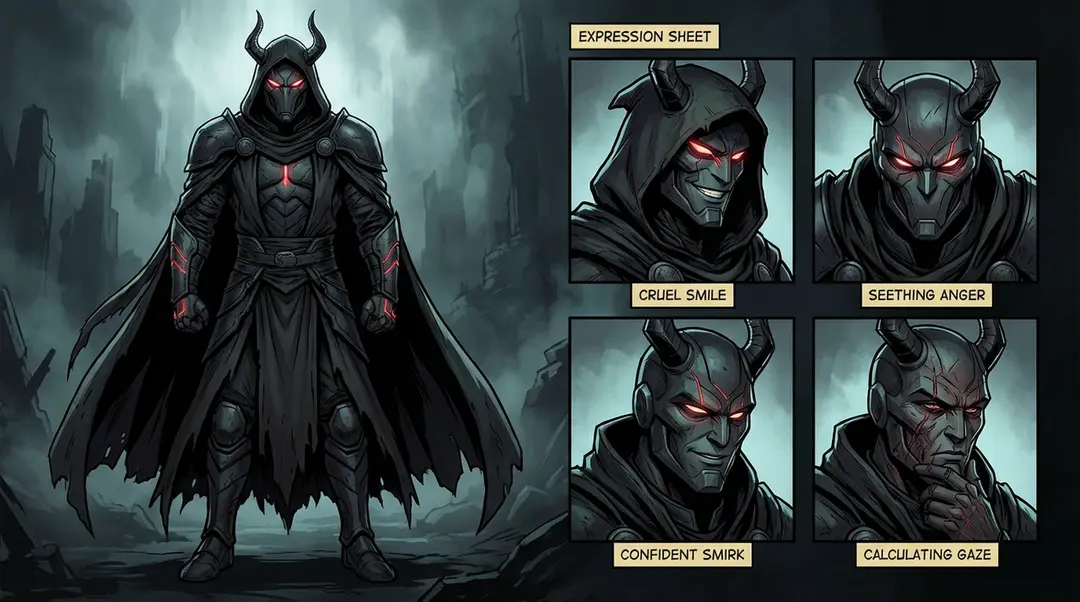
Quick Answer: What Is a Fantasy Character AI Generator?
A fantasy character AI generator is an AI-powered tool that creates fantasy characters — visually, narratively, or both — including species, abilities, backstory, personality, relationships, and arcs for novels, games, screenplays, manga, and tabletop RPGs.
- 🧠 Psychological architecture — Build characters from core desires, wounds, and contradictions using the Creative Fiction Writer
- 🎭 Character discovery through play — Inhabit your characters in living fantasy worlds with the Roleplay Game Master
- 🎨 Visual character storytelling — Create consistent manga, comics, and webtoons with the Manga Creator and Webtoon Creator
- 🔄 Persistent memory — Character details, relationships, and arcs survive across unlimited sessions on Jenova
The Problem: Why Most Fantasy Character AI Generators Stop at the Surface
Visual Generators Create Portraits, Not Characters
The 2026 landscape of fantasy character tools is dominated by image generators — Midjourney, Leonardo AI, Recraft, CharGen — that produce stunning visual portraits of elves, sorcerers, and armored warriors. A comparison of the 10 best AI fantasy character generators evaluated tools almost entirely on output quality, prompt understanding, customization, and pricing. Not one criterion addressed who the character is — their motivations, relationships, flaws, or narrative arc.
A beautiful portrait of a dark elf sorcerer tells you nothing about why she left her homeland, what she's willing to sacrifice, or how she speaks when she's lying. Image generators solve the appearance problem. They don't touch the character problem.
The Consistency Crisis
"You've spent hours perfecting your character design. The hairstyle, the expression, the outfit — everything looks exactly right. Then you need that same character in a different pose. Or a new scene. And what comes back? A stranger wearing your character's clothes." — Neolemon, 2026 Consistency Benchmark
For fantasy creators, this problem is magnified. Fantasy characters carry more distinctive visual elements — pointed ears, glowing runes, enchanted weapons, species-specific anatomy — and any drift in those details shatters the illusion. The character generation market is increasingly splitting into general image tools and consistency-first tools, but even the best visual consistency tools achieve roughly 95% match for illustrated characters — meaning one in twenty images introduces visible drift. Over a 200-page graphic novel, that's dozens of inconsistencies.
And that's just visual consistency. Narrative consistency — same voice, same psychology, same memories — is the challenge most tools don't even attempt.
No Tool Bridges Visual and Narrative
The most frustrating gap in the current AI fantasy character landscape: visual tools don't understand narrative, and narrative tools don't generate visuals. You can use Midjourney to create a breathtaking portrait of a dwarven blacksmith. You can use ChatGPT to write his backstory. But nothing connects the two — the visual tool has no idea about his secret guilt, and the narrative tool can't show you what his forge looks like.
Fantasy characters live at the intersection of appearance and story. A scar isn't just a visual detail — it's a narrative event. A weapon isn't just an accessory — it's a relationship. Until a tool understands both dimensions, fantasy character generation remains fractured.
Memory Walls Destroy Long-Form Fantasy
Fantasy is inherently long-form. Trilogies. Campaign arcs. Serialized webtoons spanning hundreds of episodes. And most AI writing tools operate within narrow context windows — typically 8,000 to 16,000 tokens — meaning they forget your protagonist's motivation, your antagonist's secret, and your entire magic system within a few scenes. For a genre where Chekhov's magical artifact planted in book one must pay off in book three, this isn't a limitation — it's a fundamental incompatibility.
Why Creative Fiction Writer Is the Fantasy Character Generator Serious Creators Need
This is exactly what the Creative Fiction Writer was built for — not a chatbot that generates trait lists on request, but a narrative partner that treats fantasy characters as living, evolving entities whose psychology drives every scene.
While Midjourney produces stunning cinematic fantasy art and tools like CharGen are purpose-built for tabletop RPG tokens, and narrative platforms like NovelAI offer lorebook systems for tracking details, Jenova's Creative Fiction Writer combines deep character intelligence with unlimited persistent memory, multi-model flexibility, and an ecosystem of visual agents — so you can build the character's soul and their appearance in one place.
| Capability | Image Generators (Midjourney, etc.) | Generic AI Writers (ChatGPT) | Creative Fiction Writer |
|---|---|---|---|
| Visual character creation | ✅ Stunning output | ❌ No image generation | ✅ Via @mention of visual agents |
| Backstory, motivation, psychology | ❌ None | ⚠️ Generic, resets per session | ✅ Deep, persistent, genre-aware |
| Character consistency across 50+ chapters | N/A | ❌ Forgets after context window | ✅ Persistent cross-session memory |
| Fantasy world integration (magic systems, species lore) | ❌ Prompt-only | ⚠️ Basic, no persistence | ✅ World bible stored across sessions |
| Character voice and speech patterns | ❌ N/A | ⚠️ All characters sound alike | ✅ Voice-level differentiation |
| Relationship mapping between characters | ❌ N/A | ❌ Resets each session | ✅ Tracks evolving dynamics |
| Multi-model access | ❌ One model | ❌ One model | ✅ GPT-5.4, Claude Opus 4.6, Gemini 3.1 Pro Preview, plus xAI and DeepSeek |
Persistent Fantasy Character Memory
The single biggest differentiator for fantasy character work is memory — and fantasy demands more of it than any other genre. Your character's magic system has rules. Her species has customs. His weapon has a history. The prophecy has specific wording that matters in act three. Jenova's cross-session memory stores all of it — character psychology, speech patterns, relationship shifts, world rules, magical constraints — across unlimited sessions. No lorebook management. No re-feeding character sheets. No context window anxiety.
Introduce a character's secret alliance in chapter one, and the Creative Fiction Writer still knows it's unresolved in chapter thirty — and understands that the confrontation in chapter thirty-one needs to account for it.
Multi-Model Fantasy Intelligence
Different AI models produce different character textures, and fantasy's breadth demands that flexibility:
- Claude Opus 4.6 excels at psychologically complex fantasy characters — morally ambiguous anti-heroes, unreliable narrators, characters whose power systems reflect their internal contradictions
- GPT-5.4 delivers sharp-witted, momentum-driven characters — rogues with fast dialogue, warriors defined by action, protagonists who need to move
- Gemini 3.1 Pro Preview handles epic ensemble casts — tracking the political allegiances, bloodline relationships, and prophecy connections of twenty characters across a sprawling world
Switch between models mid-project. Your character's history stays consistent — only the stylistic rendering changes.
Fantasy-Specific Creative Direction
The Creative Fiction Writer responds to character-level creative direction that goes far beyond trait generation:
"Create a full character bible for a high fantasy novel. The protagonist is a 43-year-old human siege engineer who was conscripted into a war she didn't believe in, won battles she's ashamed of, and now runs a bridge-building company as penance. She has no magic in a world where magic is common — and this absence defines her worldview. Build her backstory, speech patterns (she avoids metaphors because she distrusts anything that isn't literal), three key relationships, her fatal flaw (she believes redemption is earned through usefulness, not forgiveness), and the moment where that belief will cost her everything."
"I have a fantasy villain who needs to feel genuinely sympathetic. He's a lich who became undead not for power, but to keep a promise to protect a city that no longer exists. Define his personality, his relationship to the protagonist, and the scene where the reader realizes they've been rooting for the wrong person."
"Write chapter 12. Recall that in chapter 7, Kael discovered the binding rune on his sword was his mother's handwriting. The confrontation with his father needs to happen here — but his father doesn't know Kael knows. Write the dinner scene as a conversation about something mundane where both characters are really talking about betrayal."
These aren't prompts for generic text — they're the kind of structural, psychological creative direction that builds fantasy characters worth following across an entire series.
Related Agents You'll Also Like
Roleplay Game Master
The most powerful character discovery tool in fantasy isn't an outline — it's improvisation. The Roleplay Game Master creates living fantasy worlds where you become your character and discover who they are through action. Place your paladin in front of an unjust order and find out what she actually does — not what your outline says she should do. Play the scene where your rogue must choose between loyalty and survival. Let the character surprise you, then lift those discoveries into your manuscript or campaign.
- 🎭 Unlimited persistent memory — NPCs remember your character's past actions across hundreds of interactions
- 🌍 Any fantasy subgenre — high fantasy, grimdark, steampunk, mythic, urban fantasy, cosmic horror
- 🎲 Character discovery through action — find out who they are by watching them act under pressure
Manga Creator
For fantasy characters destined for visual storytelling, the Manga Creator transforms your narrative characters into complete visual stories with consistent character art across hundreds of pages. Fantasy's visual demands are extreme — ornate armor, magical effects, species-specific anatomy, enchanted weapons — and this agent maintains those details panel after panel.
- 📐 Consistent character art from panel 1 to panel 400
- ⚔️ Fantasy-specific visual language — magic effects, combat choreography, creature design
- 📖 One-shots to 200+ page epics with full narrative arc support
Writing Assistant
Once your characters are built and your draft is complete, the Writing Assistant refines the prose — sharpening voice distinction between characters, tightening dialogue, and ensuring each character's speech patterns remain consistent. It adapts to your style: YA fantasy reads differently from adult grimdark reads differently from literary fantasy.
- ✂️ Line-level editing that preserves each character's distinct voice
- 📐 Audience calibration — adjusts for YA fantasy vs. adult grimdark vs. literary fantasy
- 🔄 Format flexibility — the same character rendered in prose, screenplay, pitch deck, or game documentation
How It Works: From Concept to Complete Fantasy Character
Step 1: Start With Contradiction, Not Description
Open the Creative Fiction Writer and begin with the internal conflict that makes a character worth following. A "level 12 elven ranger with high dexterity" is a stat block. A "ranger who protects a forest she secretly plans to burn" is a character.
"My character: a dwarven diplomat who was trained as an assassin. She chose diplomacy not because she believes in peace, but because killing was too easy and she wanted something hard. She's terrifyingly good at both. Her fatal flaw: she thinks difficulty equals virtue — and this makes her dismiss simple solutions that could save lives. Build her backstory, her world (a fantasy setting where dwarves are the dominant diplomatic power because they control the only source of fireproof timber), and three relationships that test her worldview."
Step 2: Build the Character Bible With Fantasy-Specific Depth
Fantasy characters carry more narrative load than realistic fiction characters — they exist within magic systems, species hierarchies, prophecies, and world-specific cultures. The Creative Fiction Writer develops all of it in relation to the character, not as disconnected lore:
"Define Thyra's relationship to magic. In this world, runic magic requires physical sacrifice — carving glyphs into living bone. As a non-mage, she sees mages as people who traded their bodies for power and judges them for it. But her sister is a runecarver. Build the tension between her worldview and her deepest relationship."
Step 3: Discover Voice Through Dialogue and Improvisation
A character isn't real until they speak — and speak differently depending on who they're talking to. Generate dialogue samples across multiple contexts:
"Write three conversations: Thyra negotiating a border treaty (professional, precise, controlled), Thyra arguing with her sister about the war (raw, defensive, contradictory), and Thyra interrogating a captured spy she personally respects (calm, almost gentle, which makes it more frightening). She should sound recognizably like the same person in all three."
Then @mention the Roleplay Game Master in the same chat to inhabit the character. Play through a high-stakes scene. Watch how she actually reacts when the situation doesn't follow the outline.
Step 4: Build the Supporting Cast as a System
No fantasy character exists in isolation. Develop the ensemble as a network of pressures and mirrors:
"Build three characters who orbit Thyra: an antagonist who shares her fatal flaw but reached a different conclusion, a mentor whose advice is always right but whose methods she can't accept, and an ally she's slowly destroying without realizing it. Each should feel like the protagonist of their own story."
Step 5: Switch Models for Different Character Textures
Use the model selector to experiment. Claude Opus 4.6 might produce a more psychologically layered version of your villain. GPT-5.4 might give your rogue sharper, faster dialogue. Gemini 3.1 Pro Preview might handle your twelve-person council scene with cleaner voice separation. Your character's history stays consistent — only the narrative texture changes.
Step 6: Bring Characters to Visual Life
@mention the Manga Creator or Graphic Designer in the same chat to generate visual character designs. Because the agents share persistent memory, the visual agent already knows Thyra's build, her scars, her diplomatic attire, and the way she stands — you direct the visual without re-describing the character from scratch.
Step 7: Export and Continue
Download character bibles, dialogue samples, or full draft chapters as PDF, Word, or TXT directly from the chat. Your entire character development history lives in one persistent conversation — return weeks later and pick up exactly where you left off.
Results & Use Cases
📖 The Fantasy Novelist Building a Trilogy
Scenario: An author is developing a three-book epic fantasy with a cast of fifteen characters whose arcs interweave across 900 pages — with foreshadowed betrayals, evolving alliances, and a protagonist whose personality at the end of book three is recognizably but distinctly different from book one.
Traditional Approach: Uses Scrivener for notes, a separate AI tool for brainstorming, a spreadsheet for timeline tracking. By book two, she's lost track of which prophecy was planted in which chapter. Beta readers flag that the protagonist seems to have "reset" between books. Two supporting characters have merged into one voice.
With Jenova: She builds the entire cast with the Creative Fiction Writer — each character's psychology, voice, and relationship dynamics stored in persistent memory. When she writes book two's pivotal betrayal scene, the AI remembers that the betrayer's hesitation was established through a throwaway gesture in book one, chapter four. The protagonist's emotional scar tissue accumulates naturally across sessions without manual tracking.
🎲 The Game Master Running a Year-Long Campaign
Scenario: A D&D dungeon master needs thirty NPCs with distinct personalities, motivations, and memories across a campaign spanning forty sessions over twelve months.
Traditional Approach: Scribbled notes, improvised accents, and the inevitable session where a player says "wait, didn't the blacksmith hate the baron?" and the DM realizes they've contradicted their own lore.
With Jenova: The Roleplay Game Master develops every NPC through actual roleplay — testing how the dragon's emissary responds to threats, how the forest witch reacts to children, how the corrupt knight justifies his choices when confronted. Every interaction is remembered. Six months later, the same NPCs respond with full awareness of everything that's happened. Players stop catching inconsistencies because there aren't any.
📱 The Webtoon Creator Launching a Fantasy Series
Scenario: An indie creator wants to launch a fantasy webtoon with six recurring characters across 100+ episodes. Visual consistency — same faces, armor, magical effects — is critical for reader retention.
Traditional Approach: Designs character reference sheets manually. Generates each panel separately with image tools. Spends hours correcting drift — the protagonist's sword changes shape, the antagonist's scar moves, the elf's ear proportions shift.
With Jenova: The Creative Fiction Writer builds the narrative backbone — character arcs, episode outlines, dialogue. The Webtoon Creator generates visually consistent episodes with the same character art maintained across the series. Both agents share one persistent memory. A complete fantasy webtoon season in weeks, not months.
📊 The Game Developer Building an RPG Cast
Scenario: An indie game developer needs thirty playable fantasy characters — each with distinct abilities, backstories, and dialogue trees — for a narrative RPG. Characters need to feel like real people, not stat blocks with names attached.
Traditional Approach: Hires a writer ($5K–$15K). Iterates on character designs for 3–6 months. Discovers during playtesting that five characters sound identical and three have contradictory lore.
With Jenova: The Creative Fiction Writer generates character bibles with voice-distinct dialogue samples, backstory integration, and cross-character relationship mapping. The Roleplay Game Master stress-tests each character through simulated player interactions — revealing which personalities shine and which need depth. Thirty distinct characters with consistent lore in 3–4 weeks.
The Best AI Fantasy Character Generators in 2026: Visual + Narrative
Fantasy character creation spans two domains — visual (how they look) and narrative (who they are). The strongest workflow combines both.
Visual Fantasy Character Generators
| Tool | Best For | Consistency | Free Tier | Price |
|---|---|---|---|---|
| Midjourney | Cinematic, painterly fantasy art | Moderate (--cref helps) | ❌ No | From $10/mo |
| Leonardo AI | Versatile styles, budget-friendly | Good (character reference) | ✅ Yes | From $12/mo |
| Neolemon | Cartoon/illustrated characters | Excellent (95%+ match) | ✅ Limited | $29/mo |
| CharGen | Tabletop RPG tokens and portraits | High (within style) | ✅ Yes | Free + paid |
| Recraft AI | Detailed fantasy art, vector + raster | High | ✅ Yes | Free + paid |
| SVGMaker | Scalable vector fantasy art | High | ✅ Yes | Free + paid |
As SVGMaker's 2026 guide noted: "There is no single winner for everyone. The best tool depends on your goals, budget, technical comfort level, and output requirements."
While these tools excel at how characters look, none of them builds who characters are.
Narrative Fantasy Character Generators
| Tool | Best For | Memory | World-Building | Character Arcs |
|---|---|---|---|---|
| Creative Fiction Writer (Jenova) | Full character bibles, serialized fantasy | ✅ Persistent cross-session | ✅ Magic systems, lore, species | ✅ Flaw → growth → transformation |
| Roleplay Game Master (Jenova) | Interactive character discovery, campaigns | ✅ Unlimited | ✅ Adaptive world-building | ✅ Emergent through play |
| ChatGPT | Quick brainstorming | ❌ Resets per session | ⚠️ Basic | ❌ No tracking |
| NovelAI | Prose-quality fantasy fiction | ⚠️ 8K token limit | ⚠️ Lorebook only | ❌ No structural awareness |
The Combined Workflow
The most powerful approach in 2026 combines visual and narrative tools:
- Build your character's identity, voice, and arc with the Creative Fiction Writer
- Discover their behavior through interactive play with the Roleplay Game Master
- Generate visual character art with Midjourney, Leonardo AI, or CharGen for standalone portraits
- Create visual stories with the Manga Creator or Webtoon Creator for sequential narratives
FAQ
What is the best AI fantasy character generator in 2026?
It depends on whether you need a visual character or a narrative character. For visual fantasy portraits, Midjourney leads in cinematic quality, while CharGen is purpose-built for tabletop RPG tokens. For complete fantasy characters with backstories, voices, arcs, and persistent consistency, the Creative Fiction Writer on Jenova offers cross-session memory, multi-model access (GPT-5.4, Claude Opus 4.6, Gemini 3.1 Pro Preview), and genre-specific intelligence that no image generator provides.
Can AI create consistent fantasy characters across multiple chapters or episodes?
Visual consistency remains challenging — even the best tools achieve roughly 95% match for illustrated characters, meaning drift accumulates over long projects. For narrative consistency — same voice, same personality, same memories, same relationship dynamics — Jenova's persistent cross-session memory ensures your fantasy character is identical in chapter 1 and chapter 50 without re-explaining anything. The two dimensions (visual and narrative) work best when combined through Jenova's agent ecosystem.
How do I create a fantasy character that feels like a real person, not a trope?
Start with contradiction, not archetype. A "brave warrior" is a trope. A warrior who fights because she's afraid of what she'll become if she stops is a character. The Creative Fiction Writer builds characters from internal conflicts outward — flaws that generate plot, speech patterns that reveal personality, and relationships that test core beliefs. The Roleplay Game Master lets you discover your character's real personality by playing through high-stakes scenarios.
Can I generate both visual and narrative fantasy characters with one platform?
On Jenova, you can build a character's narrative identity with the Creative Fiction Writer, then bring them to visual life with the Manga Creator, Webtoon Creator, or Graphic Designer — all within the same platform using the @mention feature, which brings agents into your conversation with full context. The character you built psychologically informs the visual design without re-describing them.
Is an AI fantasy character generator useful for tabletop RPGs like D&D?
Extremely. The Roleplay Game Master was built for exactly this — developing NPC casts with persistent personalities and memories, testing character dynamics before sessions, and running campaigns where every NPC remembers what happened across months of play. Visual tools like CharGen and Midjourney complement this by generating tokens and portrait art for those characters.
How much does a fantasy character AI generator cost?
Visual generators range from free (Leonardo AI, CharGen free tiers) to $10–$30/month (Midjourney, Neolemon). Jenova offers a free tier with all core narrative features — enough to build full character bibles, draft chapters, and test characters through roleplay. Paid plans start at $20/month (Plus) for 30× the free usage with custom model selection. No credit card required to start.
Conclusion
The AI character generators market is surging toward $4.5 billion by 2033, but the tools winning aren't just the ones that produce the most beautiful fantasy portraits — they're the ones that produce characters who feel real. A stunning portrait of an armored knight is content. A knight with a voice, a wound, a choice she can't undo, and a secret that will reshape the story in chapter thirty — that's a character.
The best fantasy characters live at the intersection of appearance and story. Build yours with the Creative Fiction Writer for persistent, voice-distinct characters that drive narratives forward. Discover who they truly are through interactive play with the Roleplay Game Master. Bring them to visual life with the Manga Creator or Webtoon Creator. And explore the full library of creative agents at Jenova — free, no credit card required.