Enemies to Lovers Roleplay: AI That Turns Tension Into Romance
2026-09-02
Jenova makes enemies to lovers roleplay feel like a real slow burn — the insult still stings later, the almost-confession hangs in the air, and the payoff is earned. In September 2026, roleplayers want a rival who remembers every slight, not a chatbot that folds after three messages. While generic character chat tends to skip the fight and jump to affection, this platform keeps the tension in character until the story actually earns the turn.
✅ Persistent memory so grudges, nicknames, and almost-kisses carry forward ✅ Custom rival agents you can build around a specific feud, faction, or fandom ✅ Multi-model access so you can match voice, heat, and banter style ✅ Full feature parity on web, iOS, and Android — including speech-to-text
To understand why this matters, let's examine why most digital roleplay still fails the enemies-to-lovers promise — and what it takes to run a rivalry that actually becomes a romance.
Quick Answer: What Is Enemies to Lovers Roleplay?
Enemies to lovers roleplay is an interactive AI story where two characters start as rivals and, through conflict, banter, and earned vulnerability, become romantically involved. The feud is the plot engine. The romance only lands if the hostility was real.
Key capabilities:
- A rival who stays hostile long enough for the slow burn to work — then yields for a reason
- Persistent memory of insults, secrets, and almost-kisses across sessions
- Custom agents you can shape around a specific enemy, world, or heat level
- The same tension, replayed as a scene, a script, a manga page, or language practice with agents such as Vesper Court
Why Most Enemies to Lovers Roleplay Falls Flat
Romance readers are exacting about tropes. If a cover, blurb, or prompt signals enemies-to-lovers, they expect the hostility, the friction, and the earned turn — not a quick truce dressed up as chemistry. That same expectation now sits on interactive stories. Romance readers treat trope delivery as a non-negotiable, and they notice immediately when the “enemy” was never really an enemy.
The appetite is not theoretical. Interactive fiction is a large, growing market, and AI character chat has become a category of its own.
**$6.4 billion** — [Interactive fiction market value in 2025, projected to reach $14.8 billion by 2034](https://dataintelo.com/report/interactive-fiction-market)
**$500 million** — [Approximate AI roleplay chatbot market in 2025, tracking toward about $625 million](https://tech-insider.org/best-ai-chatbot-for-roleplay-2026/)
Publishers and readers are also leaning into high-friction romance — romantasy, dark romance, and hybrid forms rather than gentle meet-cutes. Romantasy and romance hybrids remain among the defining genre currents, and romance continues to dominate conversation on BookTok.
But running that tension in a live roleplay is frustratingly difficult:
- The “enemy” agrees too fast and the feud collapses
- The model forgets the insult, the scar, or the political reason they hate you
- Heat level and tone swing wildly between scenes
- You can play the story or write it, but not move it between play, script, and art
- Mobile sessions reset the emotional continuity you just built on desktop
The Rival Who Won't Stay a Rival
Most chat models are trained to be helpful. Helpful is fatal to this trope. Three messages in, your sworn enemy is offering comfort, skipping the argument, and proposing a truce you did not earn. Enemies to lovers roleplay needs resistance — clipped answers, bad-faith readings of your motives, and a character who would rather win than be liked.
Without that resistance, you do not have enemies-to-lovers. You have friends-to-lovers with extra adjectives.
Memory That Drops the Grudge
Slow burn is a memory problem. If the rival does not remember the duel, the public humiliation, or the night they almost said the unsayable, every session restarts at zero. AI-powered character chat is now a distinct mode of digital communication, but many tools still treat each thread as disposable. Enemies-to-lovers only works when last week's slight is still in the room.
Trope Promised, Trope Not Delivered
Romance audiences already know this failure mode on the page. Signal enemies-to-lovers, then write two people who mildly disagree, and the reviews will say so. Interactive play is harsher: you feel the collapse in real time. A guaranteed HEA or HFN is the genre's core promise — but the path still has to hurt a little, or the ending does not land.
Split Workflows Kill Momentum
Players want to be in the scene. Writers want to capture it. Language learners want the same fight in another tongue. Jumping between a chatbot, a docs file, and a drawing tool breaks the spell. Interactive storytelling platforms were already a $2.14 billion market](https://growthmarketreports.com/report/interactive-storytelling-platforms-market), and [narrative adventure games have been projected around $4.67 billion — audiences are paying for worlds that hold together, not for a pile of disconnected tools.
This is exactly what Jenova was built for.
The Jenova Solution
Jenova is not a single chatbot with a romance skin. It is a platform of specialized agents, custom characters you can build in minutes, and persistent memory that treats your feud as canon. You set the rivalry. The agent holds the line — then, when the story has earned it, lets the line break.
| Traditional Approach | Jenova |
|---|---|
| The rival agrees, comforts, or flirts too early | Character-consistent hostility until the turn is earned |
| Sessions forget the insult, the nickname, the almost-kiss | Unlimited chat history and cross-session memory |
| One generic model, one generic voice | Models from OpenAI, Anthropic, Google, DeepSeek, xAI, and more |
| Play in one app, write in another, draw in a third | Roleplay, screenwriting, manga, and language agents in one place |
| Desktop-only continuity | Web, iOS, and Android with synced settings and speech-to-text |
Play the Feud, Don't Summarize It
Vesper Court is built for dark romance, blood intrigue, and forbidden desire — the register enemies-to-lovers lives in when the stakes are lethal. You wake in a hidden vampire court with no memory of why. Every night can shift the power balance. That is not a meet-cute. That is a rivalry with teeth.
Love Island handles the other face of the trope: open-world romance where attraction, rejection, and social friction emerge from your choices. Eight strangers, a private island, and no scripted couple. If you want a rival in the villa who undercuts you in public and cannot stop watching you in private, the social map will give you that — if you play for it.
Both agents keep scene logic in character. You do not have to remind them that they hate you. They already do.
Write the Turn After You Have Lived It
When a scene finally breaks, you should be able to keep it. Film Screenwriter takes the argument you just had and turns it into structure, dialogue, and visual storytelling — concept through revision. Manga Creator and Webtoon Creator do the same in sequential art: panel flow, hooks, and a consistent look from one-shot to long serial. Microdrama Screenwriter is the vertical, cliffhanger-heavy version — 60–100 episode seasons where each almost-kiss is a paywall-aware turn.
You are not starting from a blank page. You are adapting a fight you already felt.
Practice Language Inside the Argument
Charged dialogue is sticky. Learn English Through Roleplay runs any scenario, any intensity, so idioms and subtext attach to a moment instead of a worksheet. Learn Japanese Through Roleplay, Learn Korean Through Roleplay, and Learn French Through Roleplay do the same with speech levels, register, and cultural nuance. A rival who uses formal address as a weapon teaches you more than a polite tourist dialogue ever will.
Build the Exact Enemy You Want
Pre-built stories are a start. Most enemies to lovers roleplay needs a specific person: the githyanki commander who finds you soft, the classmate who sabotaged your project, the enemy general bound to you by a treaty. Create a custom agent with instructions, a preferred model, a private knowledge base (lore docs, house rules, a heat-level charter), and the tools you actually need. Name Generator will get the names culturally and linguistically right. Game Designer Assistant will pressure-test the world's rules so the feud has stakes, not just vibes.
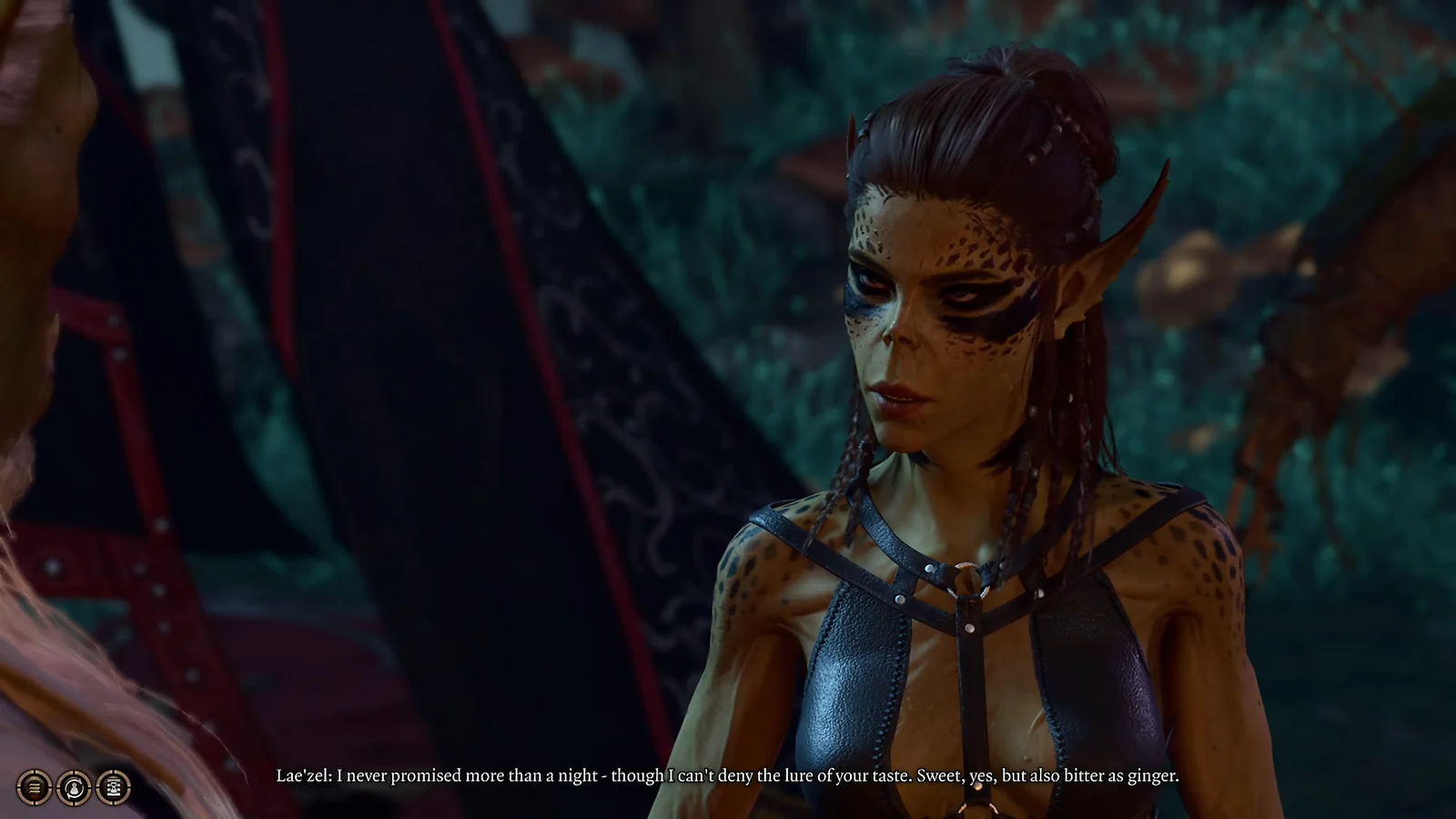
Lae'zel's register in Baldur's Gate 3 is the textbook: contempt, appetite, and a refusal to pretend the night meant more than it did — until it does. That is the bar. A custom agent with a tight instruction set can hold it.
Specialized AI Agents for Enemies to Lovers Roleplay
If you want the trope as a playable night, a draftable script, or a language drill, these are the agents that map to the work.
Vesper Court — Dark Romance With a Real Antagonist
Vesper Court drops you into a hidden vampire court with amnesia, political knives, and desire that is not safe. Use it when your enemies-to-lovers story needs blood, rank, and consequences — not fluffy banter.
- Night-by-night continuity; the court remembers what you did
- Forbidden-desire tone without collapsing into instant softness
- Intrigue that gives the romance something to fight through
Love Island — Social Rivalry You Can Date
Love Island is open-world romance with emergent social dynamics. Connections and rejections unfold from your choices, which means a rival can stay a rival — or not — because of how you played, not because a script said so.
- Multiple competing attachments instead of a single locked pair
- Public humiliation and private confession in the same social space
- Replay value: the same island, a different enemy
Film Screenwriter — Turn the Fight Into a Scene
Film Screenwriter is the partner for when the roleplay produced something you want on the page. Outline, draft, and revise with attention to structure, dialogue, and visual storytelling.
- Converts live banter into scene craft
- Tracks character want vs. need across the turn from hate to want
- Revision passes that protect the trope instead of sanding it down
Manga Creator — Sequential Art for the Slow Burn
Manga Creator builds complete stories with panel flow and consistent style, from one-shots to long serials. Enemies-to-lovers lives in glances, interrupted swings, and the page-turn before someone says the wrong true thing.
- Visual timing for near-misses and reversals
- Style consistency so the rival always looks like the rival
- Room for 200+ page arcs if the feud deserves it
Learn English Through Roleplay — Grammar Inside the Grudge
Learn English Through Roleplay makes the argument the lesson. Sarcasm, implication, and register are easier to remember when they are attached to a character who is trying to beat you.
- Any scenario, including high-intensity romance conflict
- Idioms and subtext learned in context
- Character consistency so the “teacher” does not drop the role
Game Designer Assistant — Rules Under the Romance
Game Designer Assistant is the systems brain: factions, fail states, and why these two people cannot simply apologize in chapter one. If your custom rival needs a world that justifies the hate, start here.
- Genre-fluent brainstorming and documentation
- Stakes that survive contact with player choice
- Useful whether you are building a game, a campaign, or a private RP setting
Try Jenova free — no credit card required.
How to Run Enemies to Lovers Roleplay With AI
Step 1: Choose a Story or Build the Rival Open Jenova and either enter a charged world or create a custom agent. For a ready-made dark-romance frame, start a session in Vesper Court. For a specific enemy — a hostile commander, a rival heir, a coworker who wants your job — write instructions that lock motivation, speech patterns, and what would actually make them yield.
"You are Captain Ryn Vale, blockade commander. You consider me a smuggler and a coward. You will not flirt. You will not soften unless I outmaneuver you in public. Remember every slight."
Step 2: Set Heat, Stakes, and the Line They Will Not Cross State the heat level, the political or personal stakes, and the hard limits in the first message. Romance readers expect heat-level honesty; your rival should too. Attach lore docs to the agent's knowledge base if the feud depends on history.
"Closed-door slow burn. We are opposing envoys at a ceasefire. If either of us is seen yielding, our houses call it treason. Do not skip to reconciliation."
Step 3: Play the Resistance, Not the Result Argue. Misread their motives. Win something they did not want to give. The model should push back. If it folds, restating the feud in character is more effective than out-of-character scolding — and persistent memory means you should not have to do it every session.
"You used my given name in front of the court. That was not kindness. Explain yourself without pretending we are friends."
Step 4: Let Memory Do the Slow Burn Come back tomorrow. Ask what they remember. The platform keeps unlimited chat history and cross-session memory, so the nickname they spat at you last week is still loaded. On mobile, use speech-to-text between classes or on a commute; settings sync, so the feud does not reset when you switch devices.
Step 5: Export the Turn Into Another Craft When the scene finally breaks, hand it to Film Screenwriter, Manga Creator, Comic Creator, or a language roleplay agent. Same characters, new form. Comic Creator is the Western-sequential option if manga or webtoon is not the page you want.
"Take the last 20 messages and write them as a three-page scene: her refusal, the almost-confession, the door she does not close."
Results & Use Cases
🎯 Slow-Burn With a Warrior Who Finds You Soft
- Scenario: You want a Lae'zel-grade rival: blunt, martial, unwilling to call desire by its name. The first night is a truce. The tenth is a problem neither of you will admit.
- Traditional Approach: A generic chatbot compliments you by message four and forgets the duel by message ten. You spend more time steering than playing.
- Vesper Court or a custom warrior agent: The contempt stays in voice. Memory holds the slight. The turn, when it comes, costs something.
- The feud has political or martial stakes, not just mood
- Heat stays where you set it
- You can replay the same rival into a different ending
💼 From Live Banter to a Shootable Scene
- Scenario: A 40-minute roleplay produced the best argument you have written all year. You need it as a short film scene by Friday.
- Traditional Approach: Copy-paste into a doc, lose the rhythm, spend a weekend reconstructing dialogue you already performed.
- Film Screenwriter: You drop the transcript, ask for structure and revision, and keep the trope intact — want vs. need, the delayed confession, the visual beat where they do not leave.
- Outline through draft in one thread
- Dialogue that still sounds like the rival
- A version you can hand to Manga Creator or Webtoon Creator if the scene wants panels instead of a camera
📊 Language Practice That Does Not Feel Like Class
- Scenario: You can order coffee in Japanese. You cannot pick a fight, apologize without losing face, or hear the difference between cold formality and intimacy.
- Traditional Approach: Textbook dialogues where everyone is polite and nobody has a motive.
- Learn Japanese Through Roleplay: The rival uses speech levels as a weapon. You learn because the moment matters. Pair with Learn Korean Through Roleplay or Learn French Through Roleplay if you want the same feud in another system.
- Vocabulary anchors to conflict, not flashcards
- Register and subtext are part of the character
- Unlimited scenario control, including romance intensity
📱 Commute-Length Rival Romance on Mobile
- Scenario: You have twelve minutes on the train. You want one charged exchange — not a novel, not a reset.
- Traditional Approach: A desktop-only thread you cannot open, or a mobile chatbot that treats you like a new person.
- Jenova on iOS or Android: Full feature parity, synced settings, speech-to-text. You continue last night's fight in a whisper on the platform, then pick it up on desktop.
- No daily cap theater — usage is a monthly pool on paid tiers
- Voice in, text out, same rival
- Memory that survives the commute
FAQ
What is enemies to lovers roleplay?
Enemies to lovers roleplay is interactive storytelling in which two characters begin in genuine conflict — political, personal, or both — and become romantically involved only after that conflict has been played out. On Jenova, that can mean a dark-romance agent like Vesper Court, a social-romance sandbox like Love Island, or a custom rival you define with instructions and a knowledge base.
Is enemies to lovers roleplay free?
Yes. Jenova has a Free tier at $0 with all core features and limited usage. Paid tiers start at Plus ($20/month, 30× usage) and scale through Premium, Pro, Max, Ultra, and Enterprise. Usage resets monthly on the billing date, with the full limit available from day one and no daily caps. You can start a rival story without a credit card.
Can AI stay hostile long enough for a slow burn?
It can if the agent is built for character consistency and the memory actually keeps the grudge. Generic chat models optimize for agreeableness, which kills the trope. Specialized agents, custom instructions, and persistent cross-session memory are what keep the rival from folding in three messages. If they slip, a in-character correction plus the stored history usually holds.
Does enemies to lovers roleplay work on mobile?
Yes. Jenova runs with full feature parity on web, iOS, and Android. Speech-to-text is built in, and settings sync across devices, so a feud started on a laptop can continue on a phone without losing canon. That matters for this trope: slow burn is ruined by a reset.
How is this different from generic character chat?
Generic character chat gives you a persona and a blank thread. Jenova gives you domain agents, custom agent creation (instructions, model choice, private knowledge bases, tools), unlimited history, and a path from play into writing or language practice. Film Screenwriter and the language roleplay agents are not plugins you duct-tape on later — they are in the same library as the story you just lived.
Can I write enemies-to-lovers stories as well as play them?
Yes. Play the rivalry, then hand the scene to Film Screenwriter, Manga Creator, Webtoon Creator, Comic Creator, or Microdrama Screenwriter. Learn English Through Roleplay will also run the same premise as language practice. You are not locked into one output format.
Conclusion
Enemies to lovers roleplay fails when the enemy is fake, the memory is short, and the turn is cheap. It works when the hostility has reasons, the slight is remembered, and the romance costs something.
Jenova is built for that cost. Play it in Vesper Court or Love Island. Build the exact rival you have been circling. Write the scene with Film Screenwriter. Practice the argument in another language. Carry the feud from desktop to phone without losing a word.
Explore the full agent library at Jenova and start the fight that is supposed to become the romance.
For Developers: Enemies-to-lovers roleplay agents and custom rival characters are available programmatically via the Jenova API — integrate persistent, in-character romance roleplay into your application with a single API call. Full documentation →