Email Paraphrasing AI: Transform Professional Communication with Intelligent Rewriting
2026-02-11
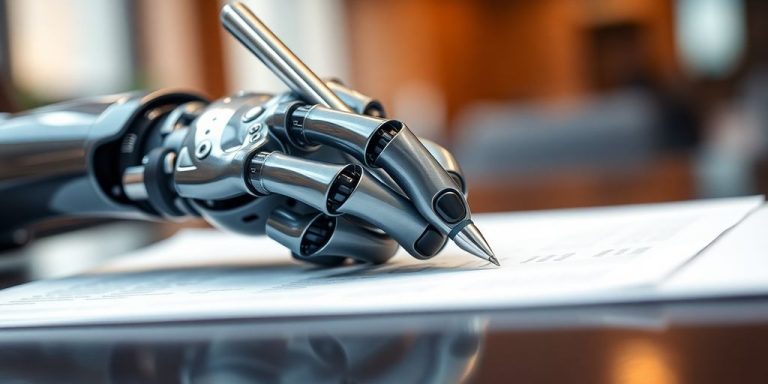
AI-powered email tools are reshaping how professionals communicate, with 87% of marketing teams now using AI for email workflows.
Quick Answer: What Is Email Paraphrasing AI?
Email paraphrasing AI is intelligent software that rewrites your email content while preserving original meaning—transforming tone, improving clarity, and adapting messages for different audiences. Unlike basic spell-checkers, modern tools leverage GPT-5.2, Claude Opus 4.5, and Gemini 3 Pro to understand context and generate natural, professional rewrites in seconds.
Key capabilities include:
- Tone adaptation — Shift between formal, casual, persuasive, or diplomatic styles
- Clarity enhancement — Simplify complex ideas without losing substance
- Length optimization — Expand brief notes or condense lengthy threads
- Multi-language support — Real-time translation with cultural nuance preservation
The Hidden Cost of Poor Email Communication
Professional email has become a productivity crisis hiding in plain sight. Despite spending more time in email than any other work application, professionals often reply late, miss critical messages, or struggle to strike the right tone—slowing deals, deadlines, and decisions.
The Scale of Email Overload
The numbers reveal a staggering burden on knowledge workers:
| Metric | Statistic | Source |
|---|---|---|
| Weekly email time | 11.7 hours per week processing emails | Inbox Zero 2025 |
| Daily email volume | 120+ messages daily for average professionals | Inbox Zero |
| Communication vs. creation ratio | 57% communicating, 43% creating/focusing | Microsoft Work Trend Index |
| AI adoption in email | 87% of marketing teams use AI for email workflows | Knak 2026 |
| Weekly AI usage | 88% of teams use AI tools at least weekly | RingCentral Trends 2025 |
"The average knowledge worker spends 28% of their work week—nearly three full days—managing email. Only 10% of those messages are truly business-critical." — Inbox Zero Research, 2025
Why Traditional Email Writing Fails
Context switching drains cognitive resources. Every email interruption costs several minutes of refocus time. Research links excessive email monitoring to decreased attention and increased error rates, with 68% of workers reporting insufficient uninterrupted focus time.
Tone inconsistency damages professional relationships. A message drafted in haste can sound abrupt; an overly formal note to a close colleague creates distance. Without dedicated editing time, professionals default to suboptimal phrasing.
Volume overwhelms quality. When facing 120+ daily messages, thorough rewriting becomes impossible. The result: unclear requests, missed opportunities, and communication that fails to achieve its purpose.
How Email Paraphrasing AI Solves These Challenges
Modern AI paraphrasing tools operate as editing assistants—not "spinners"—that refresh wording, improve clarity, and repurpose existing assets while preserving original meaning.
The Technology Behind Intelligent Rewriting
Today's leading tools leverage frontier language models available on Jenova:
| Model | Strength | Best For |
|---|---|---|
| GPT-5.2 | Nuanced context understanding | Complex business negotiations, technical explanations |
| Claude Opus 4.5 | Long-form coherence | Multi-thread summaries, detailed proposals |
| Gemini 3 Pro | Multilingual precision | Global correspondence, cultural adaptation |
| Grok 4.1 | Direct, efficient rewrites | Quick clarifications, internal updates |
These models process natural language through:
- Semantic analysis — Understanding intent beyond literal word matching
- Context preservation — Maintaining meaning across structural changes
- Tone detection — Identifying emotional register and adjusting appropriately
- Audience adaptation — Modifying complexity based on recipient profile
Core Use Cases for Email Paraphrasing
Professional tone calibration. Transform rushed drafts into polished correspondence:
- Before: "Hey, need that report ASAP. Thanks."
- After: "I hope this message finds you well. When you have a moment, could you please share the latest version of the Q4 report? Your insights would be invaluable for tomorrow's presentation."
Cross-cultural communication. Adapt messages for international colleagues with automatic formality adjustment and idiom replacement.
Executive summarization. Condense lengthy threads into actionable briefs while preserving decision-critical details.
Accessibility enhancement. Simplify complex technical content for non-specialist stakeholders without patronizing language.
Specialized AI Agents for Email Paraphrasing
Jenova's Email Writer represents the specialized approach to intelligent email composition. Unlike generic AI tools, it learns your unique voice and background context—drafting authentic emails across client outreach, internal updates, and cold emails that sound genuinely yours.
Featured Agents for Professional Communication
| Agent | Primary Function | Ideal For |
|---|---|---|
| Email Writer | Voice-learning composition | Recurring correspondence requiring consistent personal style |
| SEO Blog Generator | Research-backed content creation | Marketing teams producing high-volume email campaigns |
| Personal Secretary | Calendar-integrated communication | Executives managing complex scheduling via email |
| Marketing Strategist | Campaign-aligned messaging | CMO-level email strategy and brand-consistent outreach |
Why specialized agents outperform general tools: Generic chatbots require users to "switch tabs, copy and paste context, and manually 'ask' for help." This workflow fragmentation limits impact. Jenova's agent architecture embeds AI directly into communication workflows, eliminating friction and compounding productivity.
How Email Paraphrasing AI Works: A Step-by-Step Guide
Step 1: Input Analysis
The AI examines your original text for:
- Core message and subpoints
- Current tone and register
- Implicit audience assumptions
- Technical complexity level
Step 2: Intent Preservation
Using transformer architecture, the system maps semantic relationships—ensuring that "quarterly projections look concerning" doesn't become "quarterly projections appear worrisome" when "concerning" was deliberately diplomatic.
Step 3: Structural Optimization
The AI reconfigures sentence architecture:
- Breaking compound sentences for clarity
- Varying rhythm to maintain reader engagement
- Adjusting passive/active voice based on context
Step 4: Tone Application
Selected parameters guide final output:
- Formal: Complete sentences, professional vocabulary, structured paragraphs
- Casual: Contractions, conversational transitions, approachable language
- Persuasive: Benefit-forward framing, strategic emphasis, call-to-action optimization
- Diplomatic: Softened criticism, face-saving alternatives, collaborative framing
Step 5: Quality Verification
Built-in checks ensure:
- Grammatical accuracy
- Logical coherence
- Brand voice alignment (for enterprise tools)
- Plagiarism avoidance
Results & Real-World Applications
📊 Productivity Transformation
| Scenario | Traditional Approach | AI-Enhanced Solution |
|---|---|---|
| Weekly email volume | 11.7 hours manual processing | 4-5 hours with AI-assisted drafting and paraphrasing |
| Executive correspondence | 30+ minutes per carefully composed message | 5-10 minutes with tone-calibrated templates |
| Cross-functional updates | Generic broadcasts with low engagement | Personalized variants generated automatically |
| Crisis communication | Hours of committee review | Rapid draft generation with built-in diplomacy |
💼 Enterprise Implementation
Organizations report measurable outcomes from integrated email AI:
- Hootsuite: 90% reduction in email execution time, 4× faster campaign deployment
- Google Cloud: 90% reduction in change requests at launch, 250 marketers enabled
- FTI Consulting: 316× increase in email output capacity without headcount addition
📱 Mobile Professional Workflow
For executives managing correspondence between meetings:
"I dictate rough thoughts on my phone between appointments. The AI transforms these into polished, appropriately-toned messages I can review and send in seconds—not the 15-20 minutes each email used to require."
FAQ: Email Paraphrasing AI
How does AI paraphrasing differ from basic spell-checking?
Spell-checkers identify errors; paraphrasing AI restructures entire messages. Modern tools understand context, preserve intent, and generate multiple variants—functioning as collaborative editors rather than passive proofreaders.
Will AI-paraphrased emails sound robotic?
Not with frontier models. Research from Cornell and Max-Planck Institute confirms that communications suspected of AI assistance are judged as less cooperative—but this reflects poor tool selection, not inherent limitation. Quality paraphrasing tools like Wordtune and Jenova's Email Writer produce "organic, conversational, and context-aware" output indistinguishable from human drafting.
Can AI maintain my personal writing style?
Advanced tools offer voice training capabilities. Jasper AI's brand voice profiles and Jenova's personalized agents learn from your past correspondence—ensuring consistent phrasing, rhythm, and vocabulary across all generated content.
Is my email data secure with AI tools?
Enterprise-grade platforms offer "no-train" policies and encrypted processing. However, Grammarly's research notes that 95% of organizations get zero return from AI pilots due to security concerns—emphasizing the importance of selecting tools with explicit data-handling guarantees. Jenova's platform never uses customer data for model training.
How does paraphrasing AI handle sensitive topics?
Constitutional AI frameworks (like those in Claude Opus 4.5) include built-in safety protocols. For high-stakes communication, human-in-the-loop review remains essential—AI accelerates drafting, strategic judgment ensures appropriateness.
What's the ROI of implementing email paraphrasing AI?
Organizations report average labor cost savings of 25% from current AI tools, with ranges from 10-55% depending on implementation depth. For email specifically, the 11.7 hours weekly average can reduce to 4-5 hours—reclaiming nearly a full workday weekly per professional.
Conclusion
Email paraphrasing AI transforms professional communication from a time-consuming obligation into a strategic advantage. By reclaiming the 11.7 hours weekly that knowledge workers currently spend on email processing, these tools enable deeper focus on creative and strategic work that drives organizational value.
The technology has matured beyond early "spinning" tools to sophisticated assistants that preserve voice, maintain meaning, and adapt to diverse professional contexts. With 87% of marketing teams already adopting AI for email workflows and only 6% achieving high performance, the competitive advantage lies not in tool access but in workflow integration.
Jenova's specialized agents—including the Email Writer, Personal Secretary, and Marketing Strategist—embed this capability directly into professional workflows, eliminating the "AI detour" that limits productivity gains from standalone tools.
The future of professional communication isn't about replacing human judgment with algorithmic output. It's about eliminating the friction that prevents professionals from expressing their best thinking clearly, appropriately, and efficiently—every single time.
Ready to transform your email workflow? Explore Jenova's complete agent gallery or start with the specialized Email Writer to experience voice-authentic, AI-enhanced professional communication.