Does Multi-Model AI Reduce Stock Analysis Blind Spots Better?
2026-08-24
How Do Model Disagreement and Ensemble Checks Expose Hidden Thesis Risk?
Multi-model cross-checking reduces blind spots and overconfidence more reliably than single-model stock analysis, because disagreement between models is itself a risk signal rather than a nuisance to average away. In 2026, a single fluent answer from ChatGPT, Claude, or Gemini can feel like completed research. That fluency is the problem. One model, one context window, and one training distribution produce a coherent story even when the numbers are stale, the filing is misread, or the bear case is missing.
What actually separates careful AI equity research from confident guessing:
✅ Source grounding — live filings, estimates, and prices versus a training cutoff ✅ Model diversity — more than one provider, so a shared corpus bias is easier to spot ✅ Role diversity — fundamental, technical, macro, and portfolio views instead of one generalist ✅ Uncertainty display — ranges, conflicts, and “cannot verify” flags instead of false precision ✅ Cost of a second look — cheap enough that cross-checks actually happen before size is added
A useful working rule is the Disagreement-as-Signal test: treat model consensus as a hypothesis, and treat model conflict as the research agenda. The rest of this article applies that test to single-model chatbots, purpose-built scorers such as Danelfin, citation-first research tools such as Perplexity, and Jenova’s specialist equity agents.
Why Does Overconfidence Persist When Investors Use a Single AI Model?
Overconfidence persists because a single model returns one polished narrative, and polished narratives suppress the friction that normally forces a second look. Behavioral finance treats overconfidence as a systematic bias, not a personality flaw. In markets it shows up as excessive trading, concentrated bets, and ignored contrary evidence.
That pattern does not disappear when the analyst is an AI. Research on overconfidence and confirmation bias in trading links the bias to more turnover, thinner diversification, and weaker returns. A 2025 review of AI-era investor behavior finds that discretionary overrides can undo the efficiency gains of algorithms, raising volatility instead of reducing it. Newer work describes “algorithmic overconfidence”: once analysis is delegated to a model, users treat the output as more objective than it is.
A single-model session makes this worse in three mechanical ways. First, the model is rewarded for coherence, so it fills gaps rather than advertising them. Second, the user sees no peer disagreement, which is the cue institutions use to widen confidence intervals. Third, the interface is conversational, so a wrong figure still arrives in confident prose. The U.S. SEC’s investor alert on AI is blunt on this point: AI can generate and spread false or inaccurate information, and investors should verify claims with registered professionals.
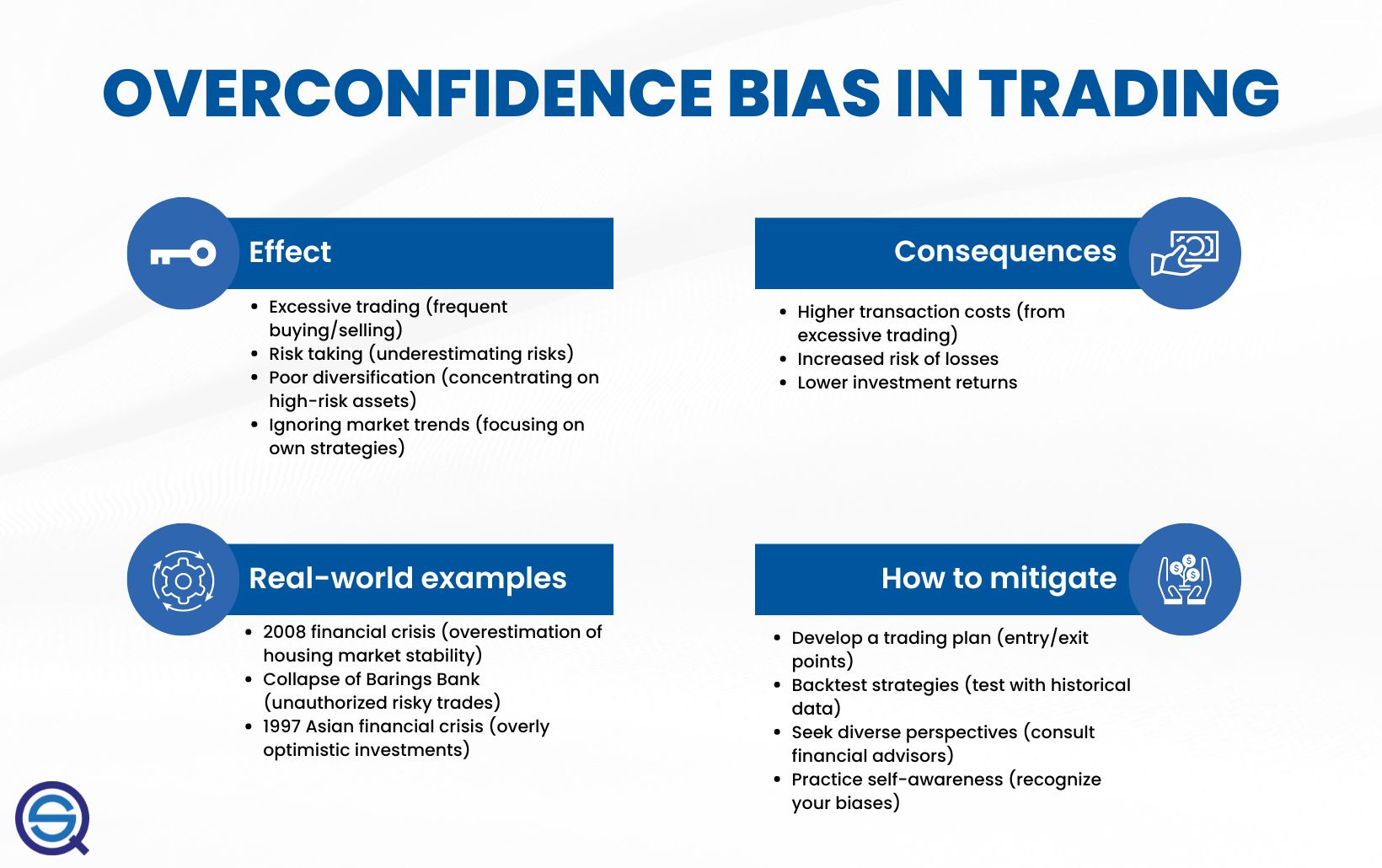
Classic mitigation — a written plan, historical tests, and diverse perspectives — maps directly onto research architecture. A single model can help write the plan. It cannot, by itself, be the diverse perspective.
What Should You Evaluate When Comparing Single-Model and Multi-Model Stock Analysis?
You should evaluate six layers of coverage, not which interface sounds smarter. Call this the Six-Layer Blind-Spot Audit. It is a practical checklist for any ticker, any tool, and any time horizon.
1. Source grounding. Does the system pull current SEC filings, estimates, and prices, or is it completing text from a cutoff date? Openbook Analytics notes that general chatbots lack live market data and cannot verify the numbers they generate, and that Perplexity’s CEO has acknowledged stale market data on the platform.
2. Model diversity. One vendor means one failure mode. Cross-checking GPT-class output against Claude, Gemini, or DeepSeek is useful only if the prompt, data, and role actually change. Swapping brands on the same stale prompt is not diversity.
3. Role diversity. A fundamental read, a tape-and-structure read, and a macro overlay catch different errors. This is closer to a research meeting than to a chatbot thread.
4. Uncertainty representation. Prefer ranges, rival cases, and explicit “unverified” flags over a single target price.
5. Persistence. Thesis work spans weeks. Tools that forget last Tuesday’s variant view will re-inflate confidence the next session.
6. Cost-per-check. If a second model pass is expensive or awkward, it will be skipped exactly when the position is largest.
FINRA’s review of AI in the securities industry puts the same issues in regulatory language: model risk management, explainability, data integrity, and supervisory controls. Firms are expected to understand how a model produces an outcome before they lean on it for investment-advice workflows under Regulation Best Interest and FINRA Rule 2111. Individual investors do not have a Rule 3110 program. They still need an equivalent habit: know what the model cannot see.
A 2025 Harvard Business School paper on foreign bias in financial LLMs adds a quieter failure mode. Information can be absent from training data or present but underweighted. Two U.S.-centric models can “agree” on an emerging-market name and still share the same gap.
How Do ChatGPT, Danelfin, Perplexity, and Jenova Differ on Blind-Spot Coverage?
They differ first on whether they produce one score, one cited brief, or a contestable research file. ChatGPT is strongest as a thinking partner and weakest as a numbers engine. Danelfin is strongest as a transparent screener and weaker as a multi-role debate. Perplexity is strongest at fetching cited snippets and weaker when those snippets are stale. Jenova’s Fundamental Stock Analyst is strongest when a thesis needs earnings, valuation, and sentiment pulled together and then challenged by other models or specialist agents.
Openbook Analytics, summarizing earlier tests, reports that ChatGPT answered incorrectly on about 35% of financial and investing queries and that Gemini hallucinated financial information at rates as high as 88–91% in some evaluations. Those figures are not a reason to abandon language models. They are a reason not to let one of them close a thesis.
| Feature / Dimension | ChatGPT | Danelfin | Perplexity | Jenova Fundamental Stock Analyst |
|---|---|---|---|---|
| Primary output | Prose explanation | Explainable AI Score and features | Cited web answers | Filing-grounded fundamental memo |
| Live / verified market data | Weak; cutoff-bound | Built for scored universes | Cited, but can be stale | SEC filings, estimates, sentiment |
| Multi-model cross-check | Manual, multi-account | Single proprietary system | Multi-model search, one brief | Native multi-provider plus specialist agents |
| Uncertainty handling | Confident prose by default | Score plus feature attribution | Citations, less residual risk | Rival cases, model disagreement, memory |
| Pricing (as of 2026) | About $20/month paid | Unverified in this review | $20/month Pro; free tier | Free tier; paid from $20/month |
| Best for | Concept review, bear-case drafting | Screening and timing a known list | Fast sourced facts | Cross-checked equity research |
ChatGPT
ChatGPT remains useful for translating a 10-K section, listing industry structure, or forcing a bear case in plain language. A 2026 four-model comparison places it in the generalist camp rather than as a live-data terminal. Its limitation is structural: it will still write a clean margin bridge from memory. That is exactly how overconfidence enters a research note.
Danelfin
Danelfin is a different product. It publishes an AI Score rather than a chat. The firm says U.S. stocks scored 10/10 outperformed the market by 21.05% annualized alpha after three months since 2017, while 1/10 names underperformed by 33.28%, and that an AI Score strategy returned 376% from 3 January 2017 to 9 June 2025 versus 166% for the S&P 500. Explainable features are a genuine antidote to black-box scoring. The limitation is complementary: a score can rank a universe without pressure-testing the specific accounting, segment, or policy risk that would break this position.
Perplexity
Perplexity earns its place as a citation layer. Helm Terminal’s 2026 comparison says it leads on live cited facts and finance features, while Claude leads on deep filing synthesis. The limitation is the one its CEO has already flagged: a citation is only as fresh as the page it points to. Cross-checking Perplexity against a filing-native workflow is more valuable than treating the citation count as proof.
Jenova Fundamental Stock Analyst
Jenova’s Fundamental Stock Analyst is built as an equity specialist: earnings, relative valuation, business-model work, and real-time data across filings, estimates, and sentiment. On the Jenova platform it can be re-run across OpenAI, Anthropic, Google, DeepSeek, and xAI models, and it can sit beside other specialists instead of pretending to be all of them. Persistent memory keeps the last disagreement on the table.
Honest limits matter here. Jenova does not publish a long-horizon composite score comparable to Danelfin’s 2017–2025 track record. Multi-model runs consume more usage than a single pass. Conflicting answers increase cognitive load, and the user still has to open the 10-K. Those are real costs. They are also the costs of not confusing fluency with diligence.
How Does Multi-Agent Orchestration Change Fundamental Equity Research?
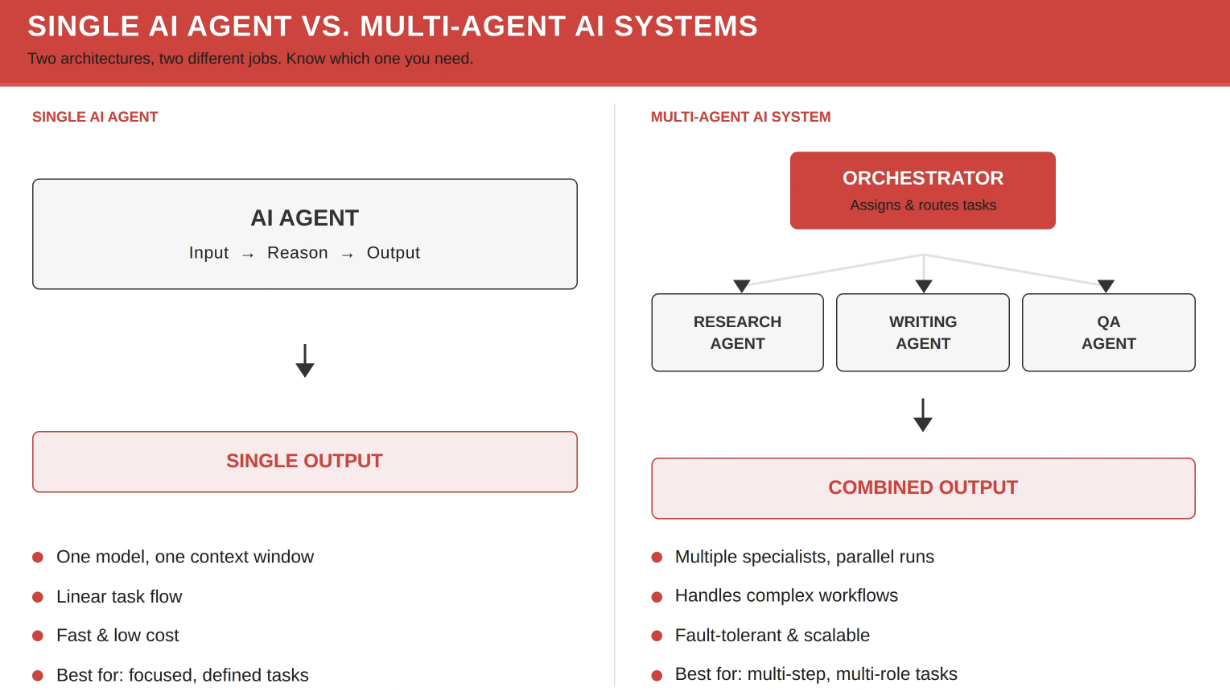
Orchestration changes the job from “ask one analyst” to “staff a small desk and reconcile the file.” A single agent follows a linear path: input, reason, output. That is fast, cheap, and appropriate when the question is narrow. A multi-agent layout adds an orchestrator that assigns work to specialists — research, writing, quality review — and returns a combined product. The architecture is slower and more expensive. It is also how you keep one eloquent error from becoming the whole memo.
In equity work, the analogous split is not “research / writing / QA” in the abstract. It is:
- Fundamental: quality of earnings, unit economics, valuation, capital allocation
- Technical: structure, volume, momentum, invalidation levels
- Macro: policy, rates, cross-asset regime
- Portfolio: size, correlation, drawdown, whether the idea belongs in this book
Jenova’s Fundamental Stock Analyst covers the first seat. Pairing it with the Technical Stock Analyst and the Macro Strategist is the practical version of multi-agent QA. One model that likes the story, one that says the tape is broken, and one that says the rate path kills the multiple is not a failed query. It is a complete risk meeting.
Ensemble evidence outside equity chatbots points the same way. A 2025 arXiv study of LLM ensembles on Survey of Professional Forecasters data found that an LLM combination beat simple averaging on several short-horizon indicators and stayed more useful when expert disagreement was high. The mechanism was not magic. The ensemble down-weighted recently inaccurate experts, adjusted for lagged revisions, and refused to treat every voice as equal. That is the opposite of asking one chatbot for a target price and stopping.
FINRA’s language on black-box models and explainability is relevant even for retail workflows. If you cannot explain why the bull case survived contact with a second model and a second role, you do not have an investment process. You have a transcript.
Can Technical, Macro, and Portfolio Agents Catch What a Single Model Misses?
Yes. They catch category errors — the mistakes a fundamental-only model is structurally unlikely to notice. A language model that has just written a clean compounder narrative will rarely volunteer that the stock is extended, that the sector is a pure duration bet, or that the position doubles a factor you already own.
Typical misses by seat:
- Technical seat. The fundamental model can be right on value and early by a year. Price structure, failed breakouts, and volume divergence are not footnotes. They are timing and invalidation. The Technical Stock Analyst is built around those questions: market structure, momentum, and defined risk.
- Macro seat. A stock-level DCF that ignores the policy regime is a spreadsheet with a hidden rate assumption. The Macro Strategist is designed for cross-asset synthesis and policy analysis, which is where many “idiosyncratic” stories actually break.
- Portfolio seat. A great idea in isolation can be a bad increment to the book. Drift, stress, and correlation live at the portfolio layer, which is the job of Jenova’s Portfolio Management Strategist.
This is also where single-score platforms and single-chat models share a blind spot. Danelfin’s score can be transparent about the features behind a rank and still say nothing about whether your book is already long the same factor. ChatGPT can list risks in the abstract and still not know that you already own three software names with the same rate sensitivity. Multi-role review is how those errors surface.
The limitation is correlation of worldview. If every agent is prompted as a bull, or every model is fed the same secondary blog post, you have theater. Role diversity only works when the technical agent is allowed to kill the trade, the macro agent is allowed to reprice the multiple, and the portfolio agent is allowed to cut size to a token.
How Do You Run a Multi-Model Cross-Check on a Stock Thesis?
You run it as a four-pass file, not as a longer chat. The goal is to manufacture disagreement on purpose, then decide what evidence would resolve it.
Pass 1 — Ground the facts. Ask the Fundamental Stock Analyst for a sourced snapshot only: last two reported periods, guidance, segment mix, net debt, buybacks, and the valuation multiples that actually match the business. Ban target prices in this pass.
“Using the latest 10-K, 10-Q, and last two earnings calls for [TICKER], extract revenue by segment, gross and operating margin, FCF, net debt, and diluted share count. Quote the filing or call for every figure. If you cannot source a number, write Unverified.”
Pass 2 — Change the model, not the question. Re-run the same extraction on a second provider. Material differences in a reported figure are not “style.” They are a data-integrity event. Check the filing yourself before Pass 3.
Pass 3 — Staff the other seats. Send the same ticker to the Technical Stock Analyst for invalidation levels and to the Macro Strategist for the rate, FX, or commodity assumption buried in the multiple.
“Ignore the bullish fundamental memo. Identify the price level and the macro regime that would make this setup not worth owning, even if the thesis is eventually right.”
Pass 4 — Force a written dissent. Ask any one model to argue the opposite side with equal length and equal sourcing. Lucid.now’s behavioral-finance note flags the usual human pattern: overestimating forecast skill, trading too often, and concentrating in a favored story. A mandatory dissent is how you interrupt that pattern when the “analyst” is also a model.
On ChatGPT or Claude alone, you can approximate Passes 2 and 4 by opening a second product and pasting the same sourced extract. You cannot approximate live filing pulls or persistent memory across weeks unless the tool actually has them. On Danelfin, Pass 1 is partly automated by the score and feature list; Passes 3 and 4 still need a separate research surface.
Jenova pricing is usage-based across tiers: a free plan with limited usage, then $20, $50, $100, $200, $500, and $1,000 per month as allowances rise. A four-pass check costs more than one chat. For any position large enough to matter, that is the cheaper error.
What Do Market Practitioners Say About AI Overconfidence in Research?
Practitioners who sit with these tools daily tend to treat single-model certainty as a process failure, not as a feature of “better” models.
"The most expensive mistake we see is not a wrong number. It is a right-sounding number that never met a second model. When three providers agree on a margin bridge that none of them can foot to the 10-Q, the agreement is the red flag. We would rather ship a memo with two conflicting ranges and a list of Unverified items than a single target price with no residue."
"Multi-model is not automatically safer. If you ask GPT, Claude, and Gemini the same sloppy question, you often get the same sloppy answer with different adjectives. Diversity has to be designed: different roles, different data pulls, and a standing instruction to dissent. Otherwise you have purchased correlated overconfidence at three times the token cost."
"On the desk, disagreement is how we decide what to read next. If fundamental and macro conflict, we go to the rate assumption. If fundamental and technical conflict, we go to timing and size. If every seat agrees too quickly, we assume the file is thin. That habit is older than LLMs. The models just make it easier to skip."
— Jenova Product Team, equity-agent design and evaluation, multi-year work on multi-model research workflows
That stance lines up with FINRA’s emphasis on testing, fallback plans, and cross-functional oversight before AI tools influence investment advice. It also lines up with the ensemble-forecasting result: combinations help most when the inputs disagree and someone has a rule for weighting them.
When Is Single-Model Analysis Still the Better Choice?
Single-model analysis is still the better choice when the task is bounded, the cost of error is low, and speed matters more than residual risk. Multi-model cross-checking is a control system. You do not need a control system to define ROIC or to summarize a business in two paragraphs.
Single-model is usually enough when:
- You are learning a concept, not sizing a position
- You already have the filing open and only need a reading companion
- You are screening language, not computing a valuation
- You need a first-pass outline before a slower, sourced workflow
- Incremental model calls would not change the decision
Openbook’s 2026 guide makes the same category split: general chatbots are starting points, not primary research engines. Danelfin’s score is a single system, but it is a specialized one; using it as a screen and then stopping is still a single-model decision if no one challenges the name. Perplexity is the right single pass when you need a citation trail in minutes and will verify the primary source yourself.
The failure mode is using the cheap pass for the expensive decision. Overconfidence is not caused by AI. It is caused by ending the process at the first coherent answer. Sidley’s 2025 summary of U.S. financial-regulator guidance underscores that firms already have to treat AI as a supervised activity, not as an oracle. Private investors should copy the spirit of that rule even when no examiner will ask.
A compact decision rule: if being wrong would change position size, use at least two models and two roles. If being wrong would only change a sentence in your notes, one good model is enough.
How Should Regulation and Model Risk Shape Your AI Research Workflow?
They should force you to document what the model did not see, not merely what it said. FINRA’s AI discussion is written for broker-dealers, but the control themes transfer. Model risk management, data governance, explainability, and supervision exist because autonomous-looking tools fail in correlated ways.
For an individual research process, the transferable controls are small:
- Keep the primary source in the file. If the model cannot point to the 10-K, 10-Q, 8-K, or call transcript, the claim is a draft.
- Record disagreement. A one-line log — “Claude sees compression, Gemini does not, 10-Q page 37 unresolved” — is more useful than a regenerated bull case.
- Separate advice from explanation. Chatbots are not a suitability engine. FINRA notes that AI tools generating recommendations sit inside Regulation BI and Rule 2111 for member firms. Retail users should treat model output as analysis, not as a personalized recommendation.
- Assume shared bias until proven otherwise. The HBS foreign-bias result is one example. Two models can miss the same non-U.S. fact. A local filing, a second language source, or a human specialist is the actual diversification.
- Prefer tools that can say Unverified. False precision is the tell. A system that always completes the paragraph is not “more analytical.” It is less supervised.
None of this requires an institutional budget. Bloomberg-class terminals still sit in another cost world — Openbook cites typical Bloomberg pricing above $25,000 a year. The control that actually reduces overconfidence is cheaper: a second model, a second seat, and a rule that consensus without sources does not increase size.
Single-model stock analysis is a drafting tool. Multi-model, multi-role cross-checking is a blind-spot tool. Use the first to start the file. Use the second to decide whether the file is done.
References
- Openbook Analytics — Best AI Stock Analysis Tools in 2026
- Investopedia — Behavioral Finance: Biases, Emotions and Investor Behavior
- Preprints.org — Overconfidence and Confirmation Bias in Trading
- ResearchGate — Investor Overconfidence in the AI Era: Human vs. Algorithmic Decision-Making
- SSRN — Investor Behavior in Stock Markets: The Emergence of AI and Algorithmic Overconfidence
- Investor.gov — Artificial Intelligence (AI) and Investment Fraud: Investor Alert
- FINRA — Artificial Intelligence in the Securities Industry: Key Challenges and Regulatory Considerations
- Harvard Business School — When LLMs Go Abroad: Foreign Bias in AI Financial Analysis
- Danelfin — AI Stock Picker and AI Score Methodology
- AI Business Weekly — AI Pricing Guide 2026: ChatGPT, Claude and Gemini
- Perplexity — Pricing for Individuals and Enterprise
- Helm Terminal — ChatGPT vs Claude vs Gemini vs Perplexity for Stock Research
- arXiv — Can LLM Improve for Expert Forecast Combination?
- Lucid.now — AI in Financial Decisions: Behavioral Insights
- Sidley Austin — Artificial Intelligence: U.S. Securities and Commodities Regulator Guidelines