Do General Chatbots or Specialized AI Tarot Readers Give Better Interpretations?
2026-08-12
The comparison sounds like it should be about interpretation quality, but almost every meaningful difference traces back to something more mundane: who supplies the draw, who tracks the spread positions, and who remembers what you asked last time.

Which Layer Actually Determines Interpretation Quality — the Model or the Reading Inputs?
The reading inputs determine quality far more than the model does, which is why specialized AI tarot readers usually produce more structured and contextual interpretations than general chatbots — not because they run better language models, but because they capture the draw, spread positions, orientation, and prior context as product state rather than asking you to retype it every session.
The distinction that governs everything downstream:
✅ General chatbots don't know your draw — as Chatarot's evaluation framework puts it plainly, "the model does not know the actual draw unless you supply it" ✅ Specialized tools own the randomization — shuffle, draw, and orientation happen inside the product, so the cards are genuinely random rather than model-generated or user-selected ✅ Positional meaning is structural, not stylistic — the same card means different things in "challenge" versus "outcome," and only a spread-aware tool tracks that automatically ✅ Context continuity is a memory question — follow-ups only stay tied to the same reading if something persists the card set ✅ Model quality converges; input handling doesn't — a frontier chatbot given complete inputs matches or beats most specialized apps
That last point is the honest caveat that most comparisons skip. A general chatbot with a well-constructed prompt is not inferior — it is just doing manually what a specialized tool does structurally, and most users don't construct that prompt.
Why Do General Chatbots Struggle With Tarot Structure Specifically?
They struggle because tarot is a stateful practice and a general chat session is stateless by default — every element that gives a reading its structure has to be re-supplied by the user each time.
Consider what a complete tarot prompt actually has to contain: the question, the specific cards drawn, the spread being used, which position each card occupies, whether each card is upright or reversed, and any relevant history. Miss one element and the interpretation silently degrades into generic card meanings dressed up as a reading.
The randomization problem is the deepest one. If you ask a chatbot to "draw three cards," the model generates card names — it is not shuffling a deck. Whether that matters depends entirely on your view of what makes a draw meaningful, but it is a genuine methodological difference from a tool that runs an actual randomizer.
The practical consequence: users get inconsistent results from general chatbots not because the model varies, but because their prompts vary. The same person asking the same question in two sessions supplies different amounts of context and gets structurally different readings.
The
has active discussion from users reporting that ChatGPT read them "with so much accuracy that I'm surprised it got so many things right." Those reports are real — and they mostly come from users who happened to supply rich context, which is exactly the variable in question.What Do Specialized AI Tarot Readers Actually Add?
They add product state — the draw, spread, orientation, and reading history become properties of the application rather than things you have to describe in prose.
Chatarot's framework identifies seven concrete evaluation criteria that separate structured tools from prompt-based readings:
| Criterion | What it means in practice |
|---|---|
| Question context | The tool uses your exact question in interpretation rather than returning generic card meanings |
| Random draw handling | You draw inside the product instead of inventing or pasting cards into a chat |
| Spread position | Each card occupies a defined slot — present, challenge, advice, environment, outcome |
| Upright/reversed orientation | Reversals are distinguished without collapsing into a fixed negative reading |
| Card relationships | Multiple cards are synthesized rather than described in isolation |
| Follow-up continuity | Questions stay tied to the same card set within one reading |
| Privacy boundary | Account, history, and sensitive-input handling are clear before you share anything |
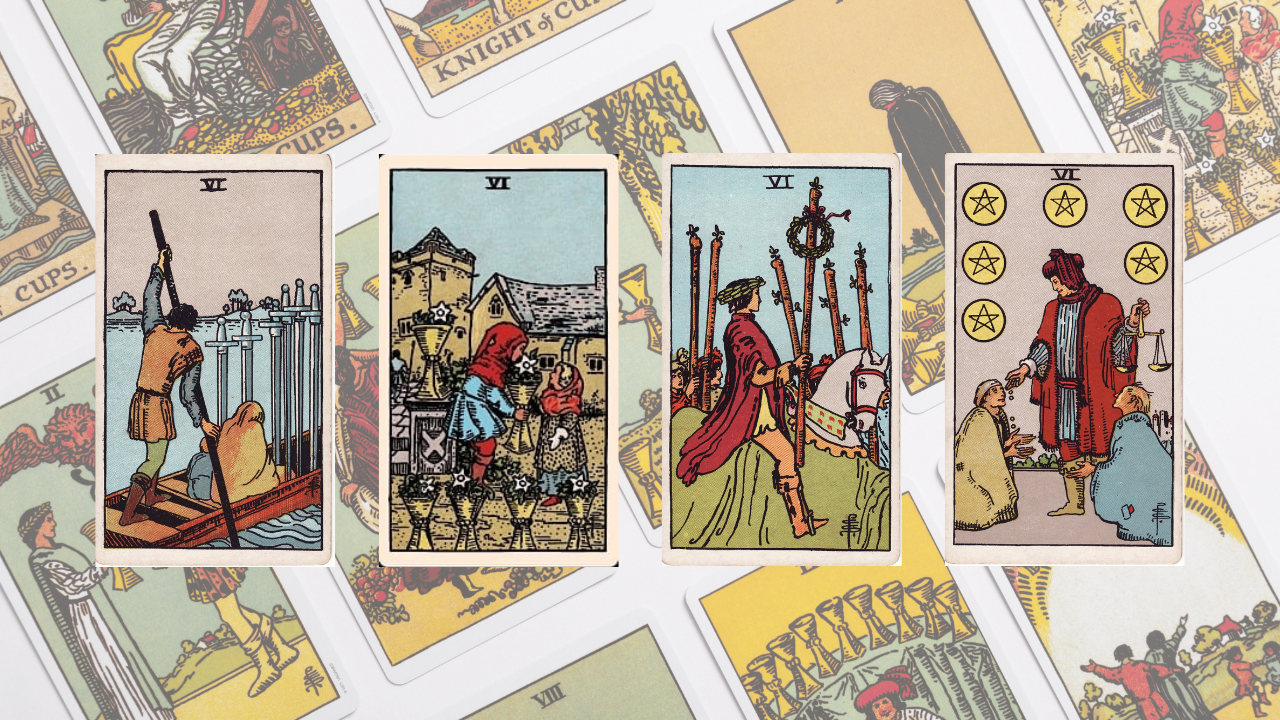
The card-relationship criterion is underrated. A weak reading describes each card sequentially; a structured one explains how the Six of Swords sitting beside the Six of Pentacles changes both. That synthesis requires the tool to know the positions, which requires the positions to exist as data.
How Should You Evaluate Any AI Tarot Tool Before Trusting Its Reading?
Evaluate on five weighted dimensions, weighted toward input handling rather than prose quality, since prose quality converges quickly across modern models while input architecture varies enormously.
The Reading Integrity Framework:
- Draw provenance — Where did the cards come from? A product randomizer, a physical deck you shuffled, or the model's own generation?
- Positional awareness — Does the tool track which card sits where, or does it interpret a flat list?
- Orientation handling — Are reversals distinguished, and are they treated as nuance rather than automatic negatives?
- Context persistence — Does a follow-up question stay attached to the same cards, and does a reading six months from now know about this one?
- Sycophancy resistance — Can you instruct the tool toward challenge rather than agreement, and does it comply?
Weighting guidance: For someone who draws physical cards and only wants interpretive help, draw provenance drops to near zero and positional awareness plus sycophancy resistance dominate — which makes a general chatbot perfectly adequate. For someone who wants the whole ritual in one place, draw provenance and context persistence carry most of the weight, and specialized tools win.
The diagnostic test: Give any tool the same three cards twice, once as a bare list and once with spread positions and orientations specified. If the two readings are substantively identical, the tool is not using positional data — it is producing card-meaning prose regardless of what you supply.
Which Tools Handle Structure and Context Best?
No product leads across every dimension. Purpose-built tarot apps own draw handling and spread UI; general chatbots own flexibility and reasoning depth; agent platforms own cross-session memory that neither category treats as core.
| Dimension | General chatbots (ChatGPT/Claude) | Chatarot | AI-Tarot: Reading Chat | Overchat AI | Tarotap | Jenova Mystic Tarot Reader |
|---|---|---|---|---|---|---|
| Draw source | User must supply cards | In-product 3D draw flow | In-app six-card draw | In-app realistic deck | In-app draw | In-agent draw |
| Spread positions | Only if user specifies | Four spreads incl. Celtic Cross | Fixed six-card spread | Yes/no, 3-card, Celtic Cross, love, career, daily | Auto-selected by question type | Celtic Cross, relationship, visual layouts |
| Reversals | Only if user specifies | Upright/reversed distinguished | Not documented | Handled separately from upright | Not documented | Full 78-card deck with reversals |
| Follow-up context | Within session only | Same-reading follow-up | Follow-up chat on saved readings | Within session | Session memory on follow-ups | Unlimited, within and across sessions |
| Cross-session memory | None by default | Not documented | Reading memory builds on past questions | Not documented | Not documented | Persistent across all sessions |
| Pricing | Free tiers; ~$20/mo paid | Not published | Free w/ IAP; $6.99/wk or $12.99 unlimited | $14.99/mo or $49.99/yr | Free tier (2 readings/day, ads); $5.99–$12.99/mo | Free tier; Plus $20/mo at 30× free usage |
| Best for | Users who draw physical cards and want interpretive depth | Users wanting the full draw-to-follow-up flow in one tarot-specific product | iOS users wanting saved readings with tone control | Users wanting tarot inside a broader AI tool suite | Users who want the spread chosen for them | Users building a reading archive that compounds over years |
Features and pricing as of 2026 and subject to change; verify current terms with each provider.
💬 General chatbots (ChatGPT, Claude, Gemini)
The most capable interpretive engines in the comparison, and the least structured. Chatarot's own competitive analysis concedes the strength directly: a general chatbot suits you "when you want flexible explanation and can provide the cards, spread, orientation, and question yourself."
Strengths: Unmatched reasoning depth on ambiguous multi-card synthesis. Complete freedom in spread design — you can invent a nine-card layout and it will read it. No paywall on reading length or follow-up count. Best-in-class at handling the instruction that matters most: "give me the interpretation I don't want to hear." Excellent for readers who draw a physical deck and only want interpretive assistance.
Limitations: No draw randomizer, so card selection is either yours or model-generated. No persistent positional state — you re-specify the spread every time. No cross-session memory by default, so a reading from March is gone by June unless you saved it externally. Reading quality is a direct function of prompt completeness, which most casual users don't supply. The
also hosts substantial pushback against AI in spiritual practice generally, a position worth taking seriously rather than dismissing.🔮 Chatarot
The most explicit about structure as its differentiator, and the most methodologically transparent about what it is not. It describes itself as "a symbolic interpretation tool" and states directly that it "should not be described as a guaranteed predictor, medical advisor, legal advisor, financial advisor, or replacement for professional support."
Strengths: A 3D interactive draw flow covering ask, shuffle, draw, spread selection, read, and follow-up in one sequence. Four defined spreads — Mirror of Soul, Time Flow, Choice, and Celtic Cross. Five interpretation lenses letting you view the same cards from different angles, with the honest caveat that "lens variety should not be described as 'more accurate' by itself." A local 78-card Rider-Waite-Smith meaning library. Same-reading follow-up so you don't rewrite "these are my cards, these are the positions" into every prompt.
Limitations: Pricing is not published on the comparison page, which makes cost evaluation impossible upfront. Cross-session memory is not documented — the strength is within-reading continuity, not across-reading history. The evaluation framework itself is published by Chatarot and positions Chatarot favorably, so treat the competitive claims as vendor framing rather than independent testing.
🃏 AI-Tarot: Reading Chat
The most reflection-oriented positioning in the group. Its App Store listing states the app "is designed for reflection, journaling, and personal insight" and "is not a substitute for professional advice."
Strengths: Reading Style control across five tones — balanced, direct, gentle, practical, or deep — which is the single most useful sycophancy countermeasure in this comparison, since selecting "direct" changes what the model optimizes for. Follow-up chat on saved readings, built on the premise that "a reading should not end the moment it appears." Reading memory that builds on prior questions. Shareable reading links. The developer states no data is collected from the app, though the service privacy policy describes usage data collection including IP address, device identifiers, and diagnostic data, and notes that shared reading links are publicly viewable by anyone holding the link until you unshare or delete.
Limitations: Fixed six-card spread with no layout choice, and spread positions are not documented in detail. Reversals are not mentioned in the feature description. iOS-only. At $6.99 weekly, the annualized cost exceeds most alternatives here. Reviewers report recurring technical failures — one describes persistent "short circuit" messages over two weeks, another reports being unable to receive readings due to bugs. Rated 4+ with user-generated content rather than a wellness classification.
⚡ Overchat AI
The broadest spread coverage among dedicated tools, bundled inside a general AI platform. Its own roundup documents a full 78-card Rider-Waite deck, position-and-orientation-aware reading, and reversed cards handled separately from upright.
Strengths: Six spread types — yes/no, three-card, Celtic Cross, love, career, daily. Visual deck rendering. Readings complete in 15–30 seconds. The subscription also unlocks the wider Overchat platform including general chatbots and 100+ AI tools, which makes it the best value if you want tarot plus general AI in one bill.
Limitations: The roundup is authored by Overchat and ranks Overchat first, which is disclosed but still worth weighting. Cross-session memory is not documented — session-level context only. At $14.99/month it is mid-priced for a feature set where tarot is one component rather than the focus.
🎴 Tarotap
The only tool here that removes spread selection from the user entirely. It reads your question and chooses the layout itself, selecting from a three-card past/present/future timeline, a seven-card detailed layout, a relationship spread, or a single-card yes/no draw.
Strengths: Auto-spread selection is genuinely useful for users who don't know which layout fits their question — a real barrier for beginners. Follow-up questions within the same session retain memory. A functional free tier at two readings plus one yes/no draw daily. Flexible pricing down to $5.99/month billed yearly.
Limitations: Less control if you want a specific spread. The free tier shows ads. Reversal handling is not documented. Session memory only — no documented cross-session persistence.
How Does an Agent Platform Handle This Differently From Both Categories?
An agent platform sits structurally between the two: it retains the general chatbot's reasoning flexibility while adding the positional structure and cross-session memory that dedicated apps partially provide.
On Jenova, the Mystic Tarot Reader draws, interprets, and renders readings as a visual ritual. Overchat's independent roundup — which competes directly with Jenova — documents its tarot-specific capabilities as the complete 78-card deck with reversed meanings, positional reading where a card is interpreted by where it falls in the spread, visually rendered spreads including Celtic Cross and relationship layouts, and memory across sessions so a later reading can reference an earlier one.
What the architecture enables for structure and context specifically:
- Cross-session memory — the agent retains what you asked in March, which spread it pulled, and what you reported back in June, making recurring-theme detection possible rather than aspirational
- Unlimited chat history — no history paywall tier, which matters because retrievability is the precondition for context
- Free-form spread definition — you can request a standard Celtic Cross or invent a layout, the way a general chatbot allows, without losing positional tracking
- Agent composition via @mention — bring the Numerology Reader or Dream Interpreter into the same conversation when a reading touches material another framework handles better
- Explicit tone instruction — you can demand challenge over agreement in plain language, which is the direct countermeasure to the sycophancy problem
Honest limitations: Jenova has no animated 3D card-flip ritual, no daily push notification cadence, no built-in journal template, and no moon phase tracker. Overchat's roundup lists it as "expensive" and "overkill for many users who don't need other AI agents" — both fair criticisms, since the Plus tier at $20/month exceeds every dedicated tarot app here and covers the full agent library rather than one vertical. Users who want a designed spiritual interface rather than a conversation will find dedicated apps more satisfying, and users who only pull cards occasionally will find the pricing hard to justify.
How Do You Get a Structured Reading From Either Type of Tool?
Structure comes from what you supply, not what the tool promises — and the required inputs are identical whether you're using a general chatbot or a specialized app.
Getting a structured reading from a general chatbot:
If you draw a physical deck, this is the more capable option. Supply all six elements explicitly:
"I drew a Celtic Cross for the question: should I take the promotion that requires relocating? Position 1 (present): Six of Swords, upright. Position 2 (challenge): Six of Cups, reversed. Position 3 (conscious goal): Six of Wands, upright. Position 4 (foundation): Six of Pentacles, upright. [continue for all ten positions.] Interpret each card by its position, then synthesize how the cards relate to each other — particularly the repeated sixes. Don't summarize card meanings in isolation."
Then force the interpretive fork rather than accepting a single reading:
"Give me two genuinely opposed readings of this same spread — one supporting the move, one against — and don't tell me which you favor until I've responded to both."
Getting the same reading on Jenova:
- Open the Mystic Tarot Reader at jenova.ai/a/mystic-tarot-reader
- Establish context in the first message so later readings can build on it:
"I want to build an ongoing practice. I've read with the Rider-Waite-Smith deck for three years and I'm currently working through a career relocation decision. Remember this for future readings."
- Request the spread with positional interpretation:
"Draw a Celtic Cross for the relocation question. Interpret each card by position, note any reversals, and explicitly address how the cards relate to one another rather than reading them in sequence."
- Close the loop after the situation resolves:
"Two months ago you pulled the Six of Swords in the present position for my relocation question. I took the job. Here's what actually happened — where was the reading wrong?"
Getting a structured reading on AI-Tarot: Reading Chat: Set Reading Style to "direct" before your first reading — this is the app's built-in lever against agreeable output. Add optional context (name, zodiac sign, birth year, location) only if you want more specificity, recognizing it also increases the surface area for generic-sounding statements. Use follow-up chat on saved readings rather than starting fresh, since reading memory activates there.
Getting a structured reading on Chatarot: Choose the spread deliberately rather than defaulting — Mirror of Soul, Time Flow, Choice, and Celtic Cross frame the same question differently. Then use the five reader lenses to view one spread from multiple angles, treating the variation as perspective rather than escalating accuracy, exactly as the platform itself advises.
What Do Researchers Say About AI-Mediated Tarot Interpretation?
The finding that matters most for this comparison is that structure helps only when it increases interpretive effort — and that AI's default behavior does the opposite.
The April 2026 study of 12 tarot practitioners documented in The Conversation found readers pulled in two directions. Some used AI to sidestep the frustration of interpreting many cards against a question — drawing the Fool and Ten of Wands for a career change and asking the model to resolve whether it means "leave, something better awaits" or "leave, and the new job will be just as demanding." The researchers describe AI's "yes man energy" making readers feel more confident, and note community concern that "the sycophantic nature of the technology could undermine people's intuition and reasoning." Others used it deliberately to challenge their own blind spots, requesting alternative perspectives to compare.
"The structural advantage of a specialized tool is real but narrower than most people assume. What it genuinely fixes is input fidelity — the tool knows the card is reversed and sitting in the challenge position, so the interpretation is anchored to something. What it does not fix is the interpretive shortcut. A tool can have perfect positional awareness and still hand you a confident synthesis that removes the work you came for."
"We see a consistent pattern in how people use general chatbots for readings: the first prompt is rich and the third is not. Someone will carefully specify ten card positions and orientations for a Celtic Cross, get a genuinely good reading, then ask three follow-ups that don't reference the spread at all. By the fourth message the model is producing general life advice with tarot vocabulary. That degradation is invisible to the user, and it's the strongest practical argument for a tool that holds the card state for you."
"The recommendation that actually improves output is boring and almost nobody follows it: write your own interpretation before you ask for one. Even two sentences. Then ask the tool where your reading is thin. That single change converts the AI from an answer machine into an argument partner, and it works identically on a general chatbot and a specialized app. Platform choice matters far less than sequence choice."
— Jenova Product Team, 7 years building conversational AI systems with persistent memory architecture
Which Type Should You Choose for Your Practice?
Choose based on whether you draw physical cards and how much you need the reading to persist — those two variables settle it faster than any feature comparison.
Choose a general chatbot if: You draw a physical deck and want interpretive depth, you're comfortable specifying positions and orientations in every prompt, or you want maximum flexibility in spread design. This is the strongest option for experienced readers who use AI as a second opinion rather than a reading engine.
Choose Chatarot if: You want the complete draw-to-follow-up flow inside one tarot-specific product with explicit spread positions, orientation handling, and card-relationship synthesis. Verify current pricing before committing, since it is not published on the comparison page.
Choose AI-Tarot: Reading Chat if: You're on iOS, want saved readings with follow-up chat, and value the tone control for pushing against agreeable output. Weigh the weekly pricing and the reported reliability issues against that.
Choose Overchat AI if: You want tarot with the widest spread selection bundled into a broader AI toolkit, and would otherwise pay separately for general AI access.
Choose Tarotap if: You're newer to tarot and want the spread chosen for you, or you want a genuinely usable free tier and can tolerate ads.
Choose Jenova's Mystic Tarot Reader if: You want readings that persist and reference each other across months and years, you value cross-session memory over ritual interface, and you'd use other agents on the same account. Available at jenova.ai — the free tier includes limited usage, with Plus at $20/month providing 30× that allowance.
Choose none of them if: You want a practice untouched by AI. The r/tarot community maintains active discussion of AI-free tarot apps, and a physical deck with a paper journal remains the highest-fidelity option for both structure and context.
What Should You Verify Before Trusting Any AI Reading?
Four checks catch most of the failure modes in this category.
Verify positional awareness, not positional claims. Run the same three cards through the tool twice — once as a bare list, once with positions and orientations specified. If the readings match, positions aren't being used regardless of what the marketing says.
Test sycophancy resistance directly. Ask for the least flattering interpretation of your spread. A tool that softens it or reframes toward reassurance is optimizing for your comfort rather than your reflection, and that behavior will not improve on more important questions.
Understand what "no data collected" means. Developer-declared App Store labels and service privacy policies can describe different scopes. AI-Tarot: Reading Chat carries a "Data Not Collected" declaration while its service privacy policy describes usage data collection including IP addresses, device identifiers, and diagnostic data, and notes that shared reading links are publicly viewable by anyone holding the link. Jenova states data is never used to train public AI models, is encrypted in transit and at rest, and is not sold or shared with advertisers. Read the current policy before entering anything sensitive.
Keep the boundary clear. Chatarot states its own limitation better than most competitors do: AI tarot "cannot verify facts, guarantee outcomes, diagnose health issues, decide legal or financial actions, or replace professional judgment." That applies equally to a general chatbot and a purpose-built app, and no amount of structural sophistication changes it.
The genuinely useful conclusion is narrower than the question implies. Specialized tools produce more consistently structured readings because they capture inputs you would otherwise forget to supply. General chatbots produce better readings when you do supply them. The variable that actually predicts output quality is not which category you chose — it is whether you wrote a complete question before you drew.
References
- Chatarot — Best AI Tarot Reading Tools: Evaluation Criteria for 2026
- The Conversation — How tarot readers are using AI and what it says about our growing reliance on chatbots
- Apple App Store — AI Tarot: Reading Chat
- AI-Tarot — Privacy Policy
- Overchat AI — The 6 Best AI Tarot Reading Apps in 2026
- PBS NewsHour — More tarot readers are turning to AI for advice
- Vyas Astrology — AI vs Tarot Reader: Can Technology Replace Intuition?
- Dazed — Inside the uncanny world of AI tarot readings