Disaster Response Simulator: AI Training for Crisis Readiness
2026-08-31
A disaster response simulator helps you rehearse crisis decisions — triage, evacuation, resource allocation, and public messaging — before a real hazard hits. Live exercises remain essential, yet they are costly, infrequent, and hard to repeat when staff rotate or plans change. In August 2026, Jenova gives planners, educators, and incident teams a practical rehearsal loop: immersive scenario play, research-backed threat briefings, and custom simulation design you can run as often as the risk picture demands.
- ✅ Rehearse incident command, mass-casualty triage, and public information under time pressure
- ✅ Stress-test continuity plans against supply-chain, cyber, and infrastructure shocks
- ✅ Convert after-action notes into playbooks your team can reuse on the next drill
- ✅ Practice on web, iOS, or Android with the same conversation history
To understand why that loop matters, it helps to look at the gap between rising disaster costs and how rarely most teams get to practice a full response.
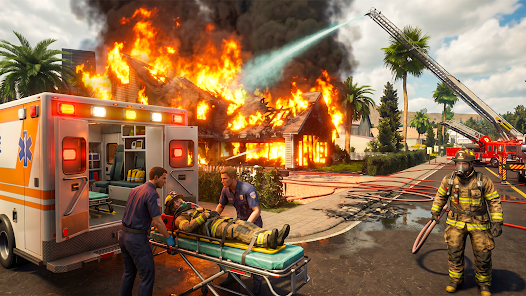
Quick Answer: What Is a Disaster Response Simulator?
A disaster response simulator is a training environment that recreates fires, floods, tsunamis, or mass-casualty events so teams can practice decisions, coordination, and plans without real-world harm. Serious games, tabletops, and AI-facilitated roleplay all sit in this category.
Key capabilities:
- Scenario injects that force trade-offs among lives, time, budget, and infrastructure
- Role-based play for incident command, EMS, public information, and elected officials via Roleplay Game Master
- After-action critique that maps failures back to plans, staffing, and communications
- Custom simulator design for classrooms, agencies, or products with a game design partner
The Problem: Why Traditional Crisis Drills Still Leave Teams Exposed
Disasters are no longer rare budget shocks. The UN Office for Disaster Risk Reduction reports that total disaster costs now exceed $2.3 trillion a year once cascading and ecosystem losses are counted — nearly ten times official direct-loss figures.
$2.3 trillion — Estimated annual global disaster costs when indirect and ecosystem impacts are included
Direct damage alone climbed from about $70–80 billion a year between 1970 and 2000 to $180–200 billion a year between 2001 and 2020. Earthquakes still account for over a quarter of global economic disaster losses, while floods make up a large share of weather-related events.
Prevention pays. UNDRR cites evidence that $1 spent on disaster risk reduction delivers an average return of $15 in averted recovery costs. Most financing, however, still arrives after the event. That mismatch shows up in training: agencies know they should drill, yet few can stage a realistic response often enough for new staff, night shifts, or partner organizations.
But accessing high-quality practice is frustratingly difficult:
- Full-scale live exercises consume venues, overtime, actors, and months of planning
- Discussion-based tabletops rarely recreate the time pressure of a working incident
- Off-the-shelf serious games teach principles, not your plan, roster, or hazard map
- Multi-agency coordination fails in ways a single department drill never reveals
- After-action reports stall, so the same gaps reappear in the next event
Live Exercises Are Powerful — and Too Rare
FEMA notes that disaster exercises give organizations a no-fault setting to test plans, train roles, find weaknesses, and build coordination. That value is real. The constraint is cadence. A full-scale drill can take a year to design. Hospitals in England are expected to run a desktop exercise yearly and a major live exercise only every three years. When the real incident arrives in between, many people on the floor have never practiced the plan they are holding.
Tabletop Talk Does Not Equal Operational Pressure
Discussion-based exercises clarify roles. They do not force a triage nurse to choose the next patient while radios fail, or a public information officer to rewrite a shelter message after a rumor spreads. Research on health emergency preparedness exercises found that staff who had recently practiced a similar scenario felt better prepared and coordinated more cleanly when a real mass-casualty attack occurred. The enabling factor was practice, not a binder on a shelf.
Generic Games Stop at Awareness
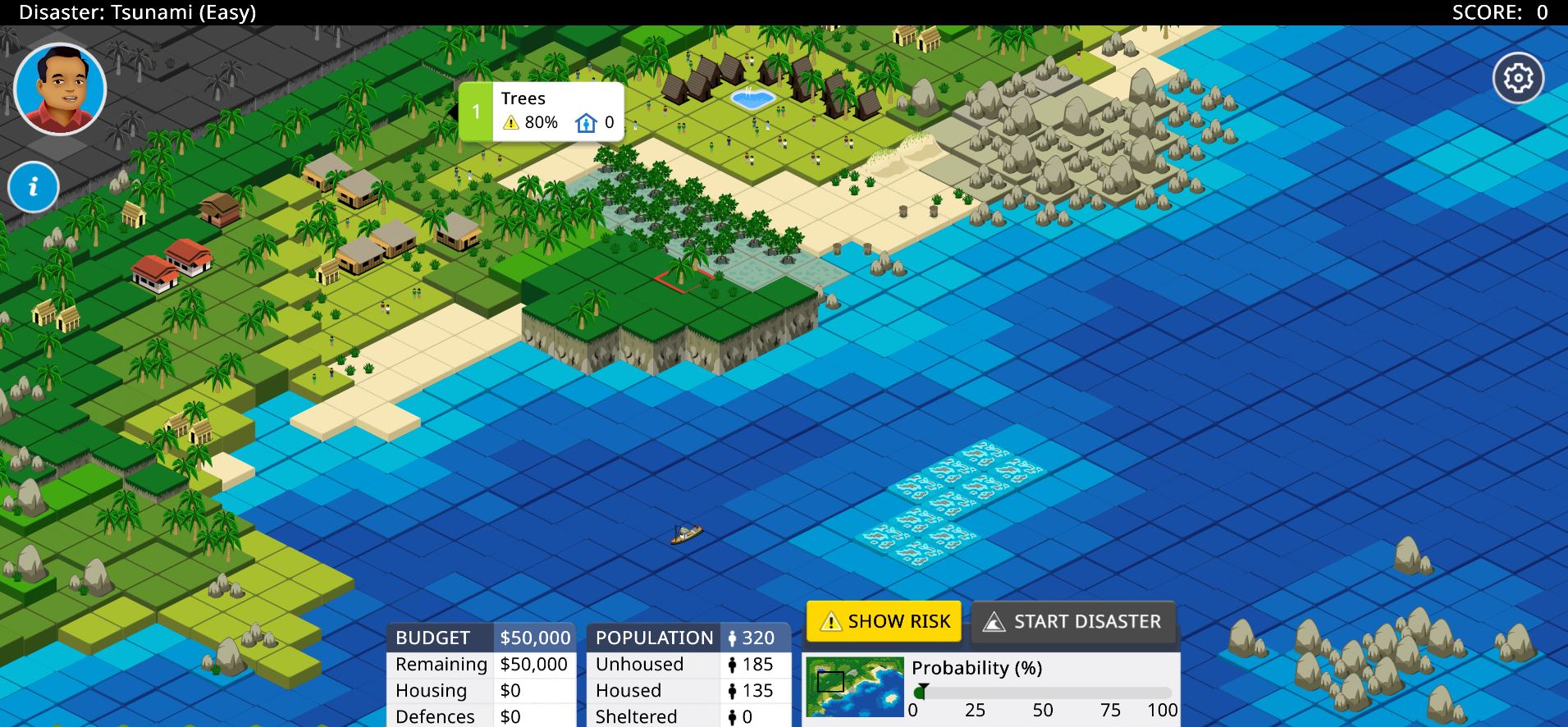
UNDRR’s STOP DISASTERS game shows how land use, construction, ecosystems, and early warning shape losses — a useful shift from “natural disaster” thinking toward risk that humans can reduce. A review of dozens of DRM serious games likewise finds strong potential for education and engagement. Those titles still cannot ingest your continuity plan, your hospital surge protocol, or last year’s after-action findings. Awareness is not the same as rehearsing this jurisdiction’s response.
Coordination Breaks at the Boundaries
Fires, tsunamis, and cyber-physical incidents cut across EMS, fire, public works, hospitals, utilities, and elected leadership. Simulation exercises exist specifically to stress-test those systems. In practice, partner agencies train on different calendars, with different tools, and with staff who were not in the last drill. The failure mode is familiar: nobody owns the handoff.
After-Action Learning Arrives Too Late
The point of a simulator is not the scenario. It is the corrected plan. Too many exercises produce a slide deck weeks later, after the adrenaline is gone and the roster has changed. Without a fast critique loop — what broke, which inject was missed, which message contradicted the EOC — teams repeat the same errors under the next storm.
This is exactly what Jenova was built for.
The Jenova Solution
Jenova is not a single canned scenario pack. It is a platform of expert agents you can assemble into a disaster response simulator tailored to your hazard, your roles, and your documents. You attach plans and maps, assign roles, run the incident in conversation, then push the lessons into a revised playbook — on a laptop or a phone.
| Traditional Approach | Jenova |
|---|---|
| Full-scale live exercise every few years | Repeatable AI scenarios on demand |
| Venue, actors, overtime, and long lead times | No staging; start a drill in a single session |
| Generic serious game with fixed maps | Custom hazards, rosters, and local constraints |
| After-action report weeks later | Immediate critique and rewritten procedures |
| Remote and off-shift staff left out | Web, iOS, and Android with synced history |
Immersive Incident Play
Treat the drill like a working incident, not a quiz. Roleplay Game Master holds character consistency across an EOC, a fireground, a hospital ambulance bay, or a coastal village facing a tsunami warning. You can play incident commander while the agent portrays EMS, public works, a mayor, and panicked callers — then flip roles so deputies practice the same hour.
For operational and doctrine-heavy scenarios, the Military & Defense Analyst brings wargaming structure: force assessment, decision points, and adversary or hazard “red team” injects that punish vague orders. That combination is closer to a staff ride than to a multiple-choice module.
"You are the incident commander at a suburban structure fire with two patients down, water supply failing on the east hydrant, and a reporter live on scene. Give me your first five minutes of orders, then I will inject complications."
Intelligence Before the Inject
A simulator is only as honest as its threat picture. Deep Research synthesizes after-action reports, hazard science, and peer-reviewed DRM literature with inline citations, so your scenario is grounded in how similar events actually unfolded. Pair it with Real-Time Search when you need current watches, seasonal risk, or open-source reporting on a unfolding analog event.
The Geopolitics Analyst is the right brief when the “disaster” is not only a hazard but a compound crisis — a cyclone during a supply shock, a dam failure with cross-border effects, or civil unrest after an evacuation order. Scenario designers who skip this step write drills that feel cinematic and teach the wrong lessons.
Clinical, Command, and Public Information Skills
Healthcare staff cannot wait three years to touch a mass-casualty plan. Nursing Tutor supports clinical reasoning, dosage, and care-planning drills that sit underneath disaster medicine — useful for surge thinking, not a substitute for certified MCI courses. Simulation-based training in disaster medicine is already associated with stronger communication and coordination; AI rehearsal is a way to keep those cognitive skills warm between formal labs.
Crisis communication is its own failure point. A Public Speaking Coach can run hostile media Q&A, shelter announcements, and elected-official briefings until the message is short, accurate, and repeatable under stress.
Build the Simulator You Will Actually Reuse
If you are an educator, serious-game studio, or emergency-management office standing up a local trainer, Game Designer Assistant helps you specify systems, win conditions, resource economies, and documentation — the difference between a one-off roleplay and a simulator colleagues can run next quarter. Attach your hazard maps and budget rules; the design conversation stays in the same thread as the playtest.
Specialized AI Agents for Disaster Response Training
The agents below are the ones a preparedness lead, instructor, or simulation designer would plausibly open within a month of deciding to run better drills.
Roleplay Game Master
If you need a disaster response simulator this week, start here. The agent runs multi-character incidents with persistent memory, so a missed hydrant in minute six still matters in minute forty.
- Unlimited scenario length with consistent NPCs (command, public, press, patients)
- Player-defined rules: ICS forms, radio brevity, or classroom turn structure
- Instant “rewind and retry” when a decision kills the timeline
Game Designer Assistant
Use this when the output is a product or curriculum — a tsunami land-use game, a hospital surge board, or a mobile tabletop for department heads.
- Systems analysis for budgets, population, defenses, and probability sliders
- Documentation and playtest notes your facilitators can hand to the next instructor
- Genre fluency from serious games to operational wargames
Military & Defense Analyst
Best for multi-agency command post exercises where vague intent is the real hazard.
- Wargame structure, decision points, and red-team injects
- Doctrine-aware critique of orders, tempo, and span of control
- Force and logistics assessment when the scenario includes National Guard, mutual aid, or contested infrastructure
Deep Research
Build scenarios from evidence, not folklore. Ask for a cited brief on wildland-urban interface fire behavior, tsunami vertical-evacuation evidence, or hospital casualty distribution after a bombing.
- Broad source synthesis with inline citations
- Comparable-event timelines you can turn into injects
- Briefings short enough to drop into a situation manual
Executive Coach
EOC directors and private-sector continuity leads fail for leadership reasons as often as technical ones: unclear intent, frozen decisions, and skipped stakeholder calls.
- Decision drills under incomplete information
- Stakeholder mapping for elected officials, regulators, and vendors
- After-action coaching that names behavior, not just checklists
Academic Research Assistant
Faculty and graduate students designing DRM curricula need literature, not marketing copy. This agent searches academic databases and helps structure manuscripts and citations around simulation pedagogy, exercise evaluation, and risk communication.
Try Jenova free — no credit card required.
How It Works
Step 1: Scope the Hazard, the Plan, and the Success Test Name the incident, the jurisdiction, and what “good” looks like. Attach your emergency operations plan, org chart, or school evacuation map so the simulator argues with your documents rather than generic best practices.
"Facilitate a 45-minute tsunami tabletop for a coastal town of 320 people, $50,000 mitigation budget, and 185 residents still unhoused. Score us on lives saved, not buildings lost. Challenge every land-use decision before you launch the wave."
Step 2: Build an Evidence-Based Threat Picture Ask Deep Research for comparable events, failure modes, and timing. Use Real-Time Search if you need current seasonal risk or analog storms. Write three injects in advance: a communications failure, a resource shortfall, and a political constraint.
"Summarize after-action findings from recent urban structure fires with EMS on scene, then propose three injects that would break a two-engine, one-ambulance response."
Step 3: Run the Incident in Role Open Roleplay Game Master (or a custom agent you configured with your standing orders). Play one role at a time. Require closed-loop communications. Pause only to capture decisions, not to debate theory.
"I am IC. Start the clock at 02:14. You are dispatch, first-arriving engine, and the EMS supervisor. Do not give me omniscient information my units would not have."
Step 4: After-Action Review, Then Rewrite the Plan Demand a structured hotwash: what was supposed to happen, what happened, why, and what changes in the plan, the roster, or the cache. Push the revised checklist into a document your duty officer can actually use.
"Write an after-action review in ICS-style findings and recommendations. Flag every order I gave that had no named owner, deadline, or resource."
Step 5: Raise the Difficulty and Repeat Rerun the same hour with a night-shift roster, a hospital divert, or a simultaneous cyber outage. Frequency beats spectacle. PreventionWeb’s guidance on simulation exercises is explicit: the value is stress-testing plans and systems, not producing a single impressive drill.
Results & Use Cases
🚒 Structure Fire With EMS Overlay
- Scenario: A residential fire with patients down, aerial operations, and media on the curb — the classic multi-discipline collision of fire, EMS, and public information.
- Traditional Approach: Annual live burn or a lecture with slides; most medics never practice the command interface.
- Jenova: Run the first operational period in Roleplay Game Master, then critique orders with the Military & Defense Analyst’s wargame lens.
- Faster cycle time than booking a training ground
- Safe repetition of low-frequency, high-acuity decisions
- Explicit practice of patient handoff language under smoke and noise
🌊 Coastal Tsunami Preparedness Class
- Scenario: An instructor must teach that disasters follow exposure and vulnerability, not “acts of nature.” Students allocate a limited budget across housing, defenses, trees, and warning — then face the wave.
- Traditional Approach: A one-pass session on a public serious game, with little connection to local evacuation routes.
- Jenova: Recreate the resource-and-risk logic of titles like STOP DISASTERS, then localize injects (vertical evacuation, fishing fleet, tourist surge) with Game Designer Assistant and Deep Research.
- Makes land-use trade-offs visible before the hazard clock starts
- Produces a certificate-style debrief students can keep
- Transfers from classroom map to the town’s real evacuation plan
🏥 Hospital Mass-Casualty Distribution
- Scenario: A receiving hospital must clear ED beds, call extra staff, and accept a regional casualty plan — the setting studied after the Manchester Arena response.
- Traditional Approach: A command-post exercise every few years; night-shift nurses may never see it.
- Jenova: Clinical reasoning drills with Nursing Tutor, plus a full EOC roleplay for the incident command team.
- Lets staff practice the plan they will actually open
- Surfaces bottlenecks (blood bank, theatres, comms) before a real MCI
- Supports — does not replace — required live and desktop exercises
📱 Continuity Lead Drilling From a Phone
- Scenario: A supply-chain or facility manager is traveling when a flood warning hits a key warehouse region. They need a 20-minute tabletop with logistics, IT, and a CEO brief.
- Traditional Approach: Wait until everyone is in the same conference room next quarter.
- Jenova: On iOS or Android, run a compressed COOP drill. Pull disruption analysis from the Supply Chain Analyst and, if systems are in scope, an incident track from the Cybersecurity Analyst.
- Same memory and documents as the desktop session
- Usable in an airport, a hotel, or a backup EOC
- Produces talking points the executive can read aloud immediately
Examining these patterns shows a consistent result: the teams that improve are the ones that drill the handoffs — fire to EMS, school to EOC, warehouse to cyber — not only the hazard science.
FAQ
What is a disaster response simulator?
A disaster response simulator is a structured rehearsal of a hazard — fire, flood, tsunami, cyclone, cyber-physical failure, or mass casualty — in which people make timed decisions, spend limited resources, and see consequences without real harm. Formats include live exercises, tabletops, serious games, VR, and AI-facilitated roleplay on Jenova. The useful output is a better plan, not a high score.
Is Jenova free to use for disaster drills?
Yes. Jenova offers a free tier with core features and limited usage, plus paid tiers if you run longer or more frequent simulations. You can start a scenario, attach a plan, and complete a short tabletop without a credit card. Heavy multi-hour command-post play or large document sets may need a higher usage tier.
How is an AI disaster response simulator different from a live exercise?
A live exercise tests bodies, gear, and real radio paths. An AI simulator tests decisions, communications, and plans at much higher frequency. Evidence from health emergency exercises shows that recent practice improves coordination in real incidents — which is an argument for more rehearsal, not for cancelling live drills. Use Jenova between the mandated full-scale events, not instead of them.
Can I run a disaster response simulator on my phone?
Yes. Jenova is built for web, iOS, and Android with synced history, so an emergency manager can run injects from a phone and pick up the same thread on a laptop in the EOC. Voice input helps when your hands are full. It is a rehearsal tool, not a dispatch system, and should never replace official alerting channels.
Can this replace certified emergency management or disaster medicine training?
No. Jenova does not confer ICS qualification, firefighter certification, nursing licensure, or FEMA course credit. Treat it as a rehearsal and design environment. Formal programs, live burns, and agency-required exercises remain the standard for operational competence. The honest use is to arrive at those events already fluent in your plan.
What kinds of hazards can I simulate?
Any scenario you can specify: structure fire with EMS, tsunami land-use games, hospital surge, wildfire evacuation, flood warehouse loss, dam failure, or a ransomware event during a storm. Ground the injects with Deep Research or Real-Time Search, then play them in Roleplay Game Master. The quality of the drill tracks the quality of the documents and constraints you attach.
Conclusion
Disaster costs are compounding faster than most organizations can stage live practice. A disaster response simulator closes part of that gap by letting teams rehearse decisions, handoffs, and public messages until the plan is muscle memory — then rewrite the plan while the failures are still visible.
Jenova puts that loop in one place: immersive incident play, evidence-based scenario design, command and clinical coaching, and custom simulator building. Start with a single operational period. Attach the real checklist. Raise the difficulty on the next run.
Try Roleplay Game Master for your next tabletop, sketch a reusable trainer with Game Designer Assistant, and brief the threat picture with Deep Research. Explore the full agent library at Jenova.
For Developers: Every agent in this article is available programmatically via the Jenova API — build AI-powered disaster drills, after-action tools, or custom simulators into your application with a single integration. Full documentation →