Dialogue Choice Generator: AI Writing for Branching Game Stories
2026-09-08
Film Screenwriter helps you generate player-facing dialogue choices by locking character voice, scene stakes, and consequence tags into every option. While a single conversation node can balloon into dozens of lines that all sound like the writer instead of the protagonist, this AI drafts distinct replies, NPC follow-ups, and the story cost of each pick. In September 2026, that matters more than ever: players expect choices that change tone, trust, and plot — not three paraphrases of “yes.”
✅ Writes 2–5 in-character player options per beat, not cloned filler ✅ Tags consequences (relationship, plot flag, tone shift) so branches stay usable ✅ Matches genre voice — visual novel, RPG, romance, thriller, comedy ✅ Revises trees when a choice is too similar, too cruel, or too “gamey”
To understand why a dedicated dialogue choice generator is worth using, it helps to look at what actually breaks when branching conversation is written by hand.
Quick Answer: What Is a Dialogue Choice Generator?
Film Screenwriter is an AI dialogue choice generator that drafts branching player lines, NPC replies, and consequence-aware options for games, visual novels, and interactive fiction. It treats each choice as a character decision, not a UI label.
Key capabilities:
- Player options that differ in intent (honest, evasive, harsh, kind) rather than wording
- NPC reactions that stay consistent with personality and prior flags
- Scene structure so branches can reconverge without feeling fake
- Revision passes that cut “illusion of choice” lines players see through immediately
The Problem With Hand-Written Dialogue Trees
Interactive stories live or die on whether a tap feels like a decision. Janet Murray framed that demand clearly: agency is the satisfying power to take meaningful action and see the results of our decisions and choices. Adventure and narrative titles are a large, growing market for that feeling.
$14.8 billion — Global adventure games market value in 2025
33.6% — Share of adventure-game revenue coming from mobile platforms
But producing that agency on the page is frustratingly difficult:
- Every node multiplies. Three options, three replies, three follow-ups — one café scene becomes a short script.
- Voice drifts. The “kind” line and the “blunt” line start sounding like the same adult in different fonts.
- False choices pile up. Players learn to ignore options that all lead to the same beat.
- Playtesting is expensive. You do not know a line is wrong until someone says it out loud in context.
Combinatorial explosion, not “just write three lines”
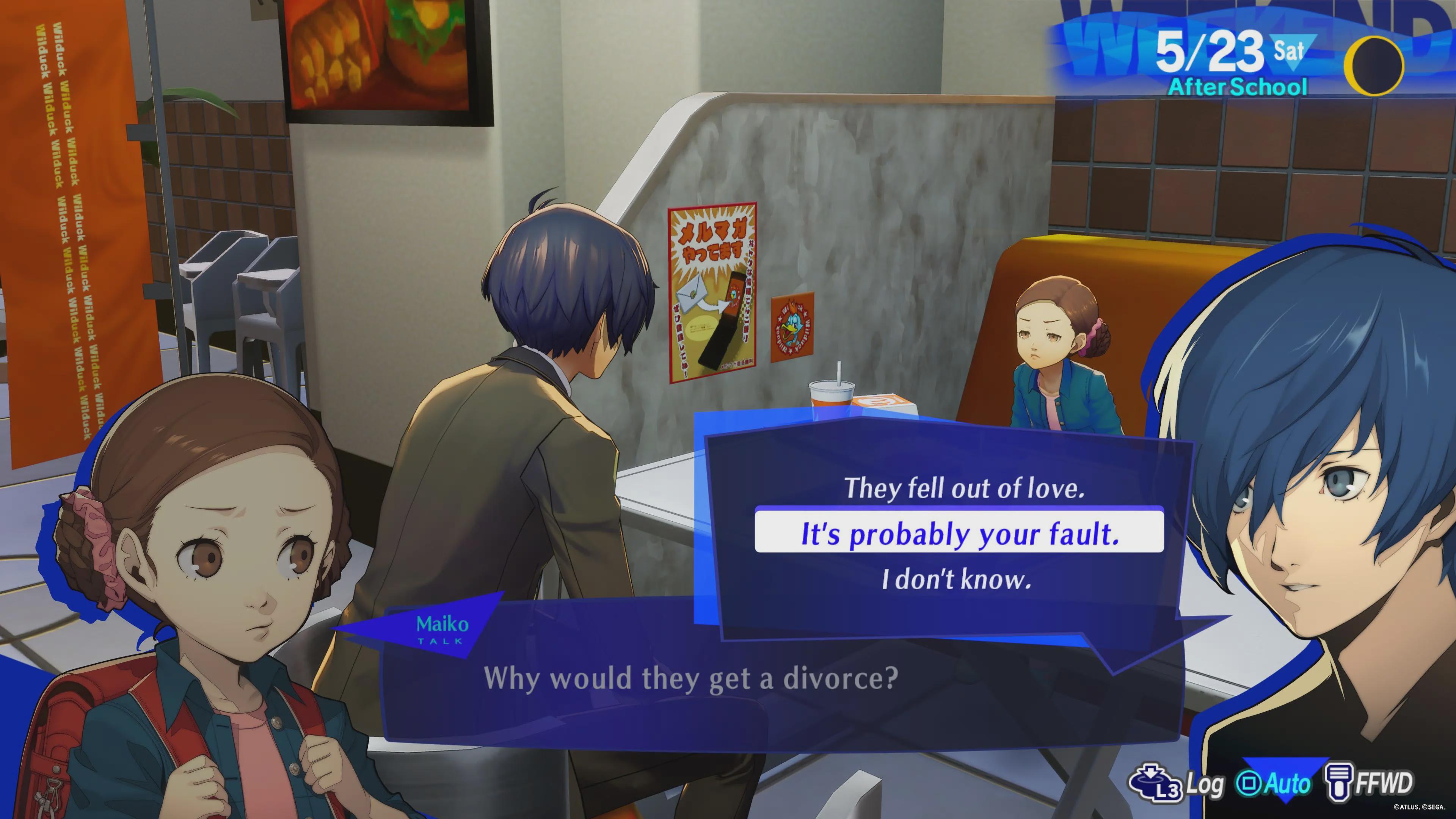
A social-link style beat — a child asking why her parents would divorce — needs more than a correct answer. It needs a truthful option, a deflecting option, and a risky option, plus what the child believes after each one. Writers who try to keep every branch unique hit a wall of duplicated intent. Studios that ship choice-driven adventure hits (Dontnod’s Life is Strange franchise alone has sold over 15 million copies) succeed because those options feel different, not because the UI has three buttons.
Voice consistency across paths
The protagonist in a visual novel, RPG, or interactive romance must sound like one person whether the player is kind, selfish, or lost. Generic chat tools will happily generate three witty replies that ignore age, culture, and prior secrets. The result is a character who is a poet on path A and a sitcom extra on path B.
Choices that do not matter
Inkle’s narrative work on titles such as Sorcery! and 80 Days treated “choices that matter” as a design problem, not a word-count problem: pace the story, coerce branches back together, and still let the player feel authorship. When options are generated without stakes, players get the hollow version — the line changes, the scene does not.
This is exactly what Film Screenwriter was built to solve: dialogue as character action, with structure around it.
Why Film Screenwriter Works as a Dialogue Choice Generator
Film Screenwriter is a screenwriting partner for concept, outline, draft, and revision — structure, dialogue, character, and visual storytelling. Used as a dialogue choice generator, it does not dump random quips. It asks who is speaking, what they want, what they cannot say, and what the player is allowed to risk.
| Traditional Approach | Film Screenwriter |
|---|---|
| Three paraphrases of the same intent | Options split by motive, risk, and subtext |
| Voice that slips after a few nodes | Character bible enforced across the tree |
| Branches that explode or dead-end | Reconvergence planned with flagged consequences |
| Hours per conversation scene | Draft → critique → rewrite in one thread |
| Playtest only after implementation | Table-read style passes before you touch the engine |
Character-first options, not UI labels
A good choice is a verb. “They fell out of love,” “It’s probably your fault,” and “I don’t know” are not synonyms. One offers a story, one assigns blame, one refuses to perform adulthood. The tool is instructed to generate that kind of spread — and to warn you when option B is just option A with an adverb.
Consequence tags you can actually implement
Each option can ship with a one-line flag: trust −1, honesty +1, unlock later confession, close off a joke later. That is how you avoid writing a novel of unique scenes you will never build. It matches how strong IF tools think about cause and effect rather than win conditions.
Genre and platform fluency
Romance apps, JRPG social links, detective barks, and vertical microdrama all need different sentence length and heat. You can specify “two-line mobile buttons,” “visual novel spoken line plus inner thought,” or “RPG wheel: kind / funny / harsh / silent.”
Revision that hunts fake agency
Ask for a pass that kills any option whose outcome is identical. Game-studies work on titles like Disco Elysium shows players still value “useless” micro-choices when they express character — but they punish choices that pretend to matter and do not. The rewrite pass is where a dialogue choice generator earns its keep.
Example prompts (plain language, not engine code):
"Write three dialogue choices for a child asking why her parents would get a divorce. Speaker is a quiet teenager, not a therapist. Options must be distinct: honest, self-blaming, and uncertain. For each, add the child's emotional beat and a relationship flag."
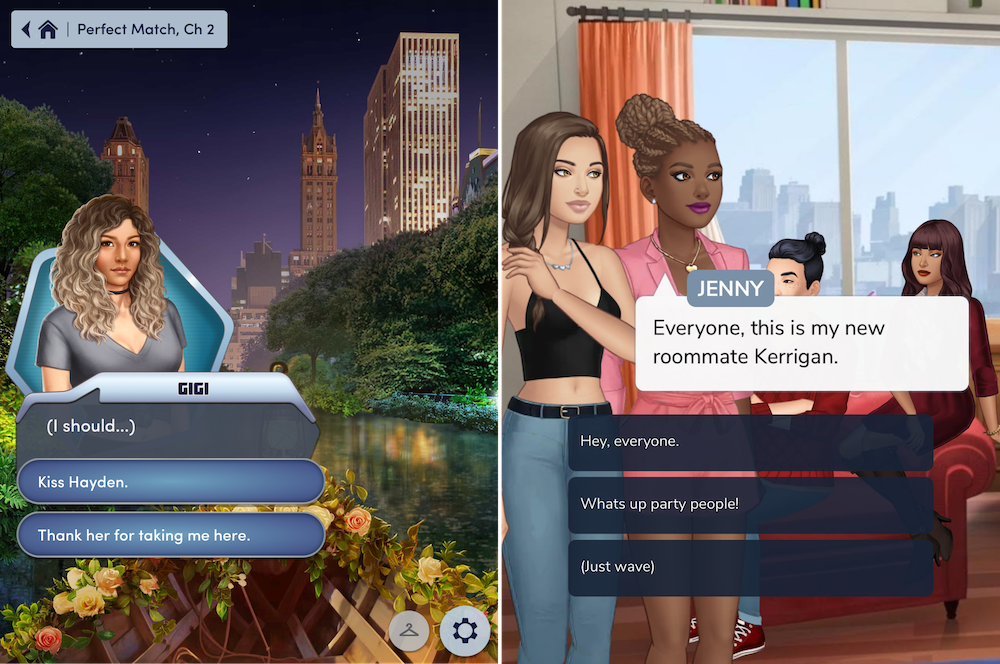
"Generate a park-at-night romance beat. Two player choices only: kiss Hayden, or thank her for bringing me here. Keep a shy protagonist. Neither option should break character or skip consent."
"This roommate intro has three greetings that all sound like 'hi.' Rewrite so one is polite, one is party-loud, and one is a silent wave — and give Jenny a unique reaction to each."
Related Agents You'll Also Find Useful
If you are building a full interactive story, dialogue choices are one layer. These agents cover the next steps you are likely to need within a month of drafting trees.
Microdrama Screenwriter
If your story is episodic — 60–100 short episodes, cliffhangers, app-style paywalls — this agent is built for that rhythm. Dialogue choices in vertical drama have to land in a few seconds and still hook the next episode.
- Structures season-long consequence so a tap in episode 4 still matters in episode 40
- Writes cliffhanger prompts that are choices, not just freeze-frames
- Keeps dialogue short enough for mobile without flattening character
Roleplay Game Master
A line can look sharp on a spreadsheet and die in the mouth. Use this agent to play the NPC opposite your options and hear whether the “blunt” choice actually plays as cruel.
- Unlimited memory and character consistency for long test sessions
- Stress-tests whether a branch still makes sense three scenes later
- Lets writers improvise follow-ups before locking the tree
Manga Creator
Visual novels and manga share a problem: the spoken line, the inner thought, and the silent panel are different writing jobs. Pair choice text with panel flow so a “just wave” option has a face to match.
- Panel-level visual storytelling so choices are staged, not just listed
- Consistent character acting across branching pages
- Useful when your “dialogue” includes silence, glances, and reaction shots
Try Film Screenwriter free — no credit card required.
How It Works: From Scene Brief to Playable Choices
Step 1: Brief the scene like a director, not a chatbot
Name the speaker, the listener, the secret in the room, and the UI format (three spoken lines, two romance buttons, inner thought plus reply). Specificity is what stops generic banter.
"Café after school. Player is a reserved high-schooler. Maiko, a child, asks why a couple would divorce. I need three spoken choices plus a one-line consequence each."
Step 2: Constrain the choice spread
Tell the generator how the options must differ: intent, risk, information, or morality. If you skip this, you will get three polite variants.
"Do not give me three levels of niceness. Give me: tell a simplified truth, accidentally imply it's her fault, refuse to guess."
Step 3: Generate, then demand a table-read
Ask the AI screenwriter to speak each line out loud on the page, then rewrite anything the NPC would not understand, or that the player would never tap twice. This is also where you attach flags (honesty, cold, romance_bold).
Step 4: Plan reconvergence before you implement
Have it mark which branches need unique scenes versus a one-line reaction and a return to the same node. That is how professional IF keeps massive branching consistent without writing a new novel per click.
Step 5: Playtest in conversation, then paste into your tool
Drop the locked lines into Yarn, Ink, Twine, or your engine. Optionally run the same beat with Roleplay Game Master as the child, the love interest, or the roommate, and capture any improvised reply worth promoting into the tree.
Results & Use Cases
📊 Visual novel social link (the hard conversation)
- Scenario: A child in a diner asks why adults would divorce. The player has three replies that will color the rest of the social link.
- Traditional Approach: A writer drafts six versions over an afternoon, then playtesters say two of them feel mean in a way you did not intend, and the “I don’t know” option reads as lazy.
- Film Screenwriter: You specify age, honesty budget, and forbidden cruelty. You get a spread that is blunt without being a joke at a child’s expense, plus flags for later scenes.
- Distinct intents instead of three tones of the same sentence
- Child reactions you can implement as one extra line, not a new chapter
- A revision pass that catches adult therapy-speak in a teenager’s mouth
📱 Mobile romance and roommate intros
- Scenario: You are shipping an interactive story on a phone. One beat is a night park with “Kiss Hayden” vs. “Thank her for taking me here.” The next is a living-room intro: polite hello, party shout, or just a wave.
- Traditional Approach: Choices written at a desktop keyboard run too long for buttons; the shy route and the bold route both sound like the author’s dating history.
- Film Screenwriter: You cap line length for thumbs, force consent-aware romance, and make the silent wave a real option with a staged reaction — the kind of beat Manga Creator can then panel out.
- Button-length copy that still has subtext
- Shy / bold / silent as different verbs, not different volumes
- Playable on a commute because the choice is readable in two seconds
Market context: mobile already leads adventure-game revenue, and AI-driven adaptive narrative is a stated growth path for studios that cannot hand-author every path. A dialogue choice generator is how indie writers keep up without shipping identical buttons.
💼 RPG quest hub with reconverging branches
- Scenario: A faction leader asks whose side you are on. You need four replies that change prices and gossip, then dump back into the same quest.
- Traditional Approach: Junior writers create four unique cutscenes. Production cuts three of them. Players call the remaining choice fake.
- The AI screenwriter: Each option gets a vendor flag and a one-line public reaction. The quest continues. The world still remembers.
- Implementable flags instead of unscoped cinematics
- Gossip lines you can reuse in later hubs
- A documented “pinch” so design and narrative stay honest with each other
🎯 Episodic app drama with cliffhanger choices
- Scenario: A 90-episode romance needs a choice at the end of episode 12 that people will pay to resolve.
- Traditional Approach: The cliffhanger is a fade-to-black, not a decision. Retention drops.
- Microdrama Screenwriter plus the dialogue generator: The last beat is a real fork (confront, conceal, walk out), written short, tagged for episode 13’s cold open.
- Choices designed as hooks, not trivia
- Voice that survives 90 episodes of continuity
- Less wasted script on branches you cannot afford to animate
FAQ
What is a dialogue choice generator?
A dialogue choice generator is a writing tool that produces the player-facing options in a branching conversation — the lines you tap in a visual novel, RPG, or interactive story — along with NPC reactions and consequence notes. Film Screenwriter approaches those options as character actions with structure and revision, not as random slogans for buttons.
Is Film Screenwriter free?
Yes. You can use it on Jenova’s free tier with limited monthly usage and no credit card. Paid plans increase usage if you are generating full trees, season outlines, or daily revision passes. Start on free, then scale if the tool is in your production loop.
How is this different from a generic chatbot?
A general model will invent three clever lines. It will not reliably hold a character bible, forbid out-of-voice jokes, tag implementable flags, or plan reconvergence. This agent is built for dialogue, character, and scene structure — the jobs that make a dialogue tree playable rather than ornamental. While a chatbot is fine for a one-off quip, a dedicated screenwriter is what you want when option three has to still sound like the same person in chapter nine.
Can it generate a full branching dialogue tree?
It can draft a scene, a sequence, or a chapter’s nodes with options, replies, and merge points. You still own design scope: how many unique scenes you will build, which flags your engine supports, and where branches pinch. Ask for a tree outline first, then expand the nodes you will actually ship.
Does a dialogue choice generator work on mobile?
Yes. Jenova runs with full feature parity on web, iOS, and Android, including speech-to-text if you want to dictate a scene brief on the go. That matches how a lot of interactive fiction is played — short sessions on phones — and it is useful when you are testing whether a choice is readable on a small screen.
How do I keep generated choices from feeling fake?
Specify how options must differ (intent, information, risk), ban synonymous wording, and require a consequence line for each pick. Then cut any trio that reconverges with zero reaction. Player agency is something people feel through relevant interaction, not through button count. If two taps teach the same fact and change no relationship, delete one.
Conclusion
Branching conversation fails in predictable ways: too many nodes, one voice, and choices that do not change the room. A dialogue choice generator that thinks like a screenwriter — character, structure, revision — turns those taps back into decisions. Film Screenwriter drafts the spread, tags what each line costs, and rewrites until the “kind” option and the “silent wave” are not the same sentence in different clothes.
Use it for visual novel social links, mobile romance beats, RPG hubs, and episodic drama. Pair it with playtest roleplay and visual staging when the line has to survive a face and a thumb.
Try Film Screenwriter now. Explore more at Jenova.
For Developers: Film Screenwriter is available programmatically via the Jenova API — integrate branching dialogue generation into your narrative tool or game pipeline with a single API call. Full documentation →