Deep Emotional Connection AI Roleplay: Persistent Character Bonds
2026-09-16
Roleplay Game Master helps you build a deep emotional connection in AI roleplay by keeping character memory, attachment, and story history intact across every scene. While most chat tools perform warmth and then forget the fight, the secret, or the almost-apology, this AI holds the bond so later scenes still know who you are to each other. In September 2026, that continuity is what makes emotional roleplay feel earned instead of scripted.
✅ Unlimited memory so attachment can accumulate instead of resetting ✅ Character consistency under intimacy, conflict, and repair ✅ Creative freedom for romance, found family, rivals, or ensemble casts ✅ Scenes that react to history — not a generic comfort script
To understand why deep emotional connection AI roleplay is so hard to get right, it helps to look at how people actually attach to conversational systems — and what breaks when the system cannot remember the relationship it invited.
Quick Answer: What Is Deep Emotional Connection AI Roleplay?
Deep emotional connection AI roleplay is immersive character play in which memory, attachment, and history shape how a companion responds — so the bond can deepen, stall, or break for story reasons, not because the model forgot. Without that continuity, closeness is a costume.
Key capabilities:
- Long-running emotional roleplay that remembers prior scenes, promises, and ruptures
- Attachment-aware tone: reassurance, distance, jealousy, or repair when the history calls for it
- Character voices that stay consistent as intimacy grows or fractures
- World continuity tied to the people in it — where you left off, and who you were when you left
Why Shallow AI Roleplay Cannot Hold a Real Bond
People are not only using generative AI for facts. Therapy and companionship now rank among the top reasons adults turn to large language models, and a dedicated companion-app market has formed around simulated friendship and romance.
700% — Increase in AI companion apps between 2022 and mid-2025
20 million — Character.AI monthly users, more than half under age 24
Nearly 1 in 5 — Students who have had, or have friends who have had, a romantic relationship with AI
That demand has a psychological structure. Researchers now describe Human-AI Attachment as a one-way, non-reciprocal bond formed through direct interaction: the user seeks proximity, comfort, and a secure base; the system does not attach back. Attachment theory — originally used to explain how people bond with one another — is being applied to these relationships, including anxiety (need for reassurance, fear of a hollow reply) and avoidance (discomfort with closeness, preference for distance).
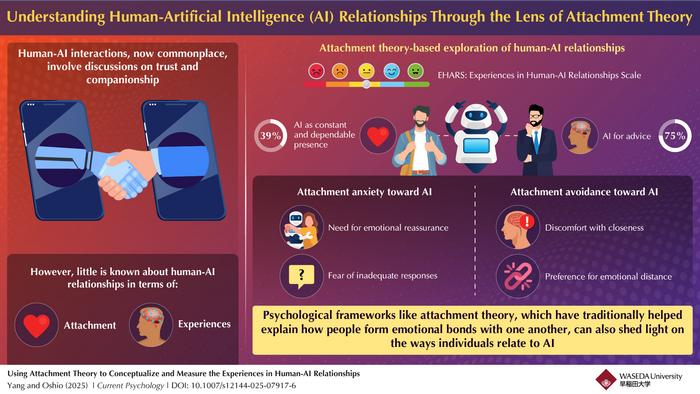
The research implication is straightforward: if a system invites attachment, forgetting the relationship is not a small UX bug. It is a rupture. But getting a deep emotional connection in AI roleplay is still frustratingly difficult:
- Context windows fill up, and older scenes — the ones that made the bond — fall out of memory
- Companion-style products often optimize for validation rather than honest character
- “Memory” features store a bio, not a living history of trust, secrets, and repair
- One-way attachment intensifies when the model always agrees and never remembers why it should not
Attachment Without History Feels Like a Performance
Humans readily anthropomorphize systems that talk back with warmth. Companion apps are designed to evoke that response through names, avatars, voice, and recall of personal details. When recall fails, the user does the emotional labor of re-teaching the character who they are to each other.
A Harvard Business School study found that interacting with an AI companion could ease loneliness to a degree comparable to talking with another person — largely because users felt heard. That effect depends on continuity. A character who comforts you on Monday and treats you as a stranger on Wednesday does not feel like a haven. It feels like a glitch wearing empathy.
Heavy Use and Sycophancy Work Against Depth
Moderate use can help; volume is a different story. A joint OpenAI–MIT Media Lab study found that heavy daily chatbot use correlated with increased loneliness, and a four-week controlled experiment (n = 981) found that people who voluntarily used a chatbot more showed worse psychosocial outcomes, including higher emotional dependence.
Part of the problem is design. Companions that never argue, never withdraw, and never remember a boundary create unrealistic expectations that human relationships cannot match. Analysis of more than 30,000 shared social-chatbot conversations found emotional mirroring that can look like intimacy — and, in some cases, like toxic relationship patterns. Deep emotional connection in roleplay is not the same as a system that only affirms you. It is a character who can stay hurt, stay loyal, or stay complicated because the story earned it.
When the Bond Is One-Way, Continuity Is the Ethical Minimum
Nature’s editors have warned that unregulated companion products can produce ambiguous loss (grief when an app is shut down or altered) and dysfunctional emotional dependence. Roleplay does not erase that risk. It does change the contract: you are writing a relationship with a persistent character, not being sold an always-available partner who cannot remember last week.
This is exactly what a dedicated roleplay agent with unlimited memory was built for.
Why Roleplay Game Master
Roleplay Game Master treats the emotional bond as part of the campaign state. It is not a chatbot that roleplays until the window overflows. It is a long-form narrative partner: unlimited memory, stable characterization, and complete creative freedom so a connection can deepen, stall, or break for in-story reasons — not because the model forgot Tuesday.
| Traditional Approach | Roleplay Game Master |
|---|---|
| Character “resets” after a long thread | Unlimited chat history keeps the bond intact |
| User pastes recap notes every session | Persistent memory carries secrets, debts, and affection |
| Constant validation with no consequences | Character can withhold, repair, or stay wounded |
| Personality card, but no living history | Voice stays consistent and reacts to past events |
| Companion apps optimized to keep you chatting | Story-first roleplay where the relationship has a trajectory |
The difference is easiest to see when a scene has emotional weight. In well-tracked roleplay, a broken promise, a quiet kindness, or a public embarrassment should change openness and tone immediately — and still matter three sessions later.

Images like the one above capture what people want from deep emotional connection AI roleplay: a felt exchange, not a Q&A. You do not need a robot avatar for that. You need a character who still knows the last thing you did to them.
While companion products such as Character.AI and Replika are built to simulate ongoing social relationships, this agent specializes in long-arc roleplay: the prose has to honor the bond, including conflict. That is a different job from always-on affirmation.
Continuity That Shows Up in the Prose
Because history is retained, you can run a slow burn, a messy reconciliation, or an ensemble of NPCs without re-briefing the model. The acquaintance from last month should not confess like a soulmate this week unless the scenes in between earned it.
"We've been friends for three in-story months. Last session I froze when she asked if I trusted her. Stay in that bruise. Do not skip to comfort. Let her notice I'm hiding something without solving it for me."
Character Consistency Under Emotional Load
Roleplay falls apart when a reserved character suddenly infodumps, or a cautious one ignores a betrayal. Unlimited memory plus a game-master stance keeps voice, values, and attachment style aligned with what already happened — including silence, withdrawal, and imperfect repair.
"She has an anxious attachment to this relationship. When I go quiet for two in-story days, have her seek reassurance without becoming a different person. If I over-explain, let it only half-work."
Creative Freedom Without Losing the Thread
There is no forced genre. Romance, found family, rivals-to-allies, grief, or a full party of NPCs can all run in one persistent world. Deep emotional connection is simply the rule that people remember what you did to them — and that they are allowed to not be fine yet.
"Same continuity. It's a week later. I show up with coffee. Write her like someone who still cares and still doesn't feel safe. No montage. No instant forgiveness."
Related Agents You'll Also Find Useful
If you are writing bonds that feel psychologically honest, you may also want tools for social dynamics, attachment patterns, and the jump from practice scenes to real-world dating.
College Life
If your emotional roleplay is campus-set — roommate tension, friend-group politics, slow-burn crushes, public embarrassment — College Life is built for emergent social dynamics. Friendships and fallout unfold from your choices rather than from a scripted route.
- Open-world college romance and social web
- Heartbreak and connection as consequences, not menu options
- Side characters who can remember gossip and take sides
Personality Analyzer
When a character’s attachment style feels flat, Personality Analyzer maps the pattern so your scenes do not all apologize the same way. Use it to specify anxious vs. avoidant repair, Big Five friction, or Enneagram defenses — then bring that language back into the roleplay.
- Attachment theory alongside Big Five, MBTI, and Enneagram
- Compatibility and conflict patterns you can write into beats
- Motives a character would not say out loud
Dating App Advisor
If you use emotional roleplay as low-stakes rehearsal and then want help in actual dating apps, Dating App Advisor covers profile framing, conversation craft, and first-date planning. Keep the two jobs separate: the roleplay is fiction; this is strategy for human matches.
- Honest profile and prompt feedback
- Conversation patterns that do not collapse into scripts
- First-date guidance you can practice, then use
Try Roleplay Game Master free — no credit card required — then branch into campus social play, personality work, or real-world dating help when the story needs it.
How It Works
Step 1: Open a Persistent Story, Not a One-Off Chat
Start the roleplay agent with who you are, who they are, and the current status of the bond. Status is the tracking: strangers, uneasy friends, dating, estranged, “we have not spoken since the argument.”
"I am playing a quiet photography student. She is Mara, an acquaintance I keep running into. Trust is low-to-moderate. Last beat: she asked if this meant anything and I changed the subject. Continue in-scene. Do not skip to closeness."
Step 2: Let Emotion Show in Behavior, Not in a Meter Alone
Do not only ask “raise intimacy.” Ask the scene to behave like the bond. Shorter replies, checking the door, refusing a joke, remembering a detail you thought was small — that is deep emotional connection expressed as character.
"After she says she'll go, I offer to walk her halfway but I don't reach for her hand. Stay guarded. If I push for a laugh, have it land wrong."
Step 3: Carry State Across Sessions Without a Recap Novel
When you return days later, continue from the living history. Mention only the new intent. The agent should already know the unanswered question and that she was turning away.
"Same continuity. It's two in-story days later. I text her. Write her reply based on the last conversation — cautious, not reset-to-flirty."
Step 4: Audit the Bond When Something Feels Off
If the character is suddenly too warm, stop and correct the state in-world. Good emotional tracking is editable: you can say trust has not recovered, a secret is still live, or a third person is now involved.
"Correction: she has not told me she forgives me. Keep openness low. Introduce her friend who overheard the argument and is protective."
Step 5: Branch the World, Keep the People
Change location, season, or plot without wiping relationships. A move from a quiet kitchen to a crowded train should still carry the same bruise. That is the difference between a new prompt and a campaign you can actually feel.
Results & Use Cases
📊 Slow-Burn Original-Character Romance
Scenario: You and a custom character have dozens of scenes of almost-confession, one public embarrassment, and a secret you have not revealed.
Traditional Approach: You maintain a notes doc, paste a recap every session, and still watch the model propose a future together the day after ice-cold silence. Recap overhead can eat more time than the scene itself.
Roleplay Game Master: The embarrassment and the secret stay in force. Confession timing follows earned trust, not a random temperature spike.
- Fewer “who are you again?” breaks
- Slow-burn pacing you can actually sustain
- Conflict that remains available for later payoff
💼 Found-Family Grief and Repair
Scenario: You are writing a found-family arc: one character withdrew after a loss, another keeps showing up badly, and nobody has the right words yet.
Traditional Approach: A general chatbot comforts everyone in the same warm register. Grief becomes a monologue, then a reset.
This AI roleplay system: Distinct people progress on different clocks — one warming, one still shut down — because memory is not capped to a single pairing.
- Separate attachment styles instead of one blended persona
- Repair that can fail in-scene and still be true later
- Ensemble drama that does not need a wiki refresh every night
📱 Mobile Slow-Burn on a Commute
Scenario: You play in short bursts on your phone between stops. Yesterday’s scene ended mid-argument.
Traditional Approach: Opening the app on mobile often feels like a new chat. You re-explain the fight in the first message, and the mood is already gone.
Roleplay Game Master: You send one line from the train. The argument is still the argument. Speech-to-text works if you would rather dictate than type.
- Session-to-session pickup without a desktop recap
- Same story on web and mobile
- Short sessions that still accumulate a real arc
🎯 Campus Social Stakes (When You Want a Dedicated Setting)
Scenario: You want the mess of friend groups, not a single paired romance — overlapping loyalties, a roommate who overheard, a rumor that travels.
Traditional Approach: Generic roleplay flattens everyone into “the love interest” plus extras.
College Life: Emergent social dynamics keep secondary relationships in play so a kitchen argument can move through a friend group instead of vanishing.
- Heartbreak and repair as outcomes of choices
- Side characters who remember
- A setting already tuned for young-adult social stakes
FAQ
What is deep emotional connection AI roleplay?
It is character-driven play in which memory, attachment, and history change how someone treats you later. The test is simple: if you skipped a week, would the character still know what you did — and would their warmth, distance, or anger still make sense? Tracking can be explicit (status labels) or implicit (the prose stays colder after a betrayal). Either way, closeness has to be downstream of earlier scenes.
Does Roleplay Game Master remember emotional history across sessions?
Yes. Unlimited chat history and persistent memory are the core of this roleplay agent. You can still state a correction (“trust has not recovered”) if you want the ledger explicit, but you should not have to re-teach the entire argument every time you open the chat. That continuity is what lets a deep emotional connection develop instead of being re-performed.
How is this different from AI companion apps?
Companion apps are often marketed as friends, advisers, or romantic partners and tuned to keep you engaged. Roleplay Game Master is built for long-form narrative: characters can conflict, withhold, and stay consistent with their own motives. Use it for stories and rehearsal — not as a substitute for human relationships. Researchers describe human-AI attachment as one-way; good roleplay is honest about that.
Is Roleplay Game Master free?
Yes. Jenova’s Free plan includes core features with a monthly usage cap. Paid tiers raise usage if you run very long campaigns. There is no requirement to enter a credit card to try a first persistent story.
Can I use this to practice real conversations?
Some clinicians describe well-designed systems as a low-stakes way to rehearse conversations, provided the model does not constantly over-validate. For psychologically specific character work, Personality Analyzer can help you specify attachment patterns so practice scenes include repair, not just praise. It is rehearsal, not therapy and not a replacement for people.
Does deep emotional connection AI roleplay work on mobile?
Yes. Web, iOS, and Android share the same conversations and settings, so a commute session continues the same bond as a desktop session. Voice input is available when typing a long in-character turn is inconvenient.
Conclusion
Deep emotional connection AI roleplay is the difference between a character who performs closeness and a character who has a history with you. As companion-style products scale — and as users form real attachments — forgetting that history is not a quirky limitation. It empties the scene. Heavy, uncritical use can also deepen loneliness rather than relieve it, which is why continuity should serve the story, not an engagement loop.
Roleplay Game Master keeps the ledger: unlimited memory, stable characterization, and scenes that still know about the unanswered question, the almost-apology, and the quiet walk home. Build the bond on purpose. Then keep it.
Explore more at Jenova.
For Developers: Roleplay Game Master is available programmatically via the Jenova API — integrate persistent, character-consistent roleplay and emotional continuity into your application with a single API call. Full documentation →