Dating Show Simulator: AI Roleplay for Reality Romance Drama
2026-09-01
A dating show simulator lets you step into the villa, pick a partner, survive recoupling, and write the confessionals yourself — without a fixed episode list. Jenova turns that fantasy into live AI roleplay: specialized agents handle chemistry, style, conversation, and plot while the story remembers what happened last night.
In September 2026, fans want more than tap-to-kiss mobile scenes. They want characters who hold grudges, outfits that match the theme party, and storylines that actually branch when you take a risk.
✅ Persistent memory so villa drama carries across sessions ✅ In-character roleplay with multi-model support ✅ Style, dating, psychology, and writing agents in one workflow ✅ Full feature parity on web, iOS, and Android
To understand why this format keeps growing — and why most apps still feel thin — it helps to look at what players are actually asking a dating show simulator to do.

Quick Answer: What Is a Dating Show Simulator?
A dating show simulator is an interactive romance experience that puts you in a reality-dating format — as contestant, host, or writer — where your choices change chemistry, alliances, and who goes home. On Jenova, that experience runs through specialized AI agents rather than a single scripted game.
Key capabilities:
- Persistent villa memory so arguments, kisses, and recouplings carry forward
- Character, style, and “who’s your type” customization before the first fire pit
- Branching romance, challenges, and confessional writing with a Creative Fiction Writer
- Optional coaching from a Date Planner if you want the practice to transfer off-screen
Why Most Dating Show Simulators Feel Scripted
Dating sims — interactive games built around romantic scenarios and choice-driven outcomes — have moved from niche PC titles into a mainstream entertainment format. Reality-TV crossovers (villa recouplings, challenge nights, “kiss him or kiss her” prompts) now sit beside classic visual novels.
The appetite is measurable. Research on the broader dating-simulator category estimates a large, fast-growing market:
USD 1.2 billion — Estimated global dating simulators market size in 2024
15.2% CAGR — Projected growth rate, with the category estimated to reach USD 3.8 billion by 2032
Narrative-driven games more broadly show the same pull. One industry report put the global narrative adventure games market at USD 4.2 billion in 2024. Interactive stories work because the player is not a spectator. As interactive storytelling research has long noted, the storyline is not fully predetermined — setting and characters are designed so your decisions reshape what happens next.
That is the promise. Getting it on a phone, for free, with characters who feel alive, is still frustratingly difficult:
- Choices collapse into two buttons that do not change the week
- Energy, gems, and paywalls gate the kiss you already earned
- Casts recycle one “type,” with thin LGBTQ+ or cultural range
- Episodes reset tone; nobody remembers yesterday’s fight
- You cannot restage the format (villa vs. retreat vs. city dating)
Shallow Choices That Do Not Branch
Most mobile dating show games sell the feeling of a decision. You tap “Kiss him” or “Kiss her,” a short animation plays, and the next morning the plot is almost identical. Interactive narratives are supposed to let you influence the storyline in real time. When every path reconverges, the simulator stops being a simulator and becomes a slideshow with hearts on it.
Paywalls Between You and the Scene You Came For
Free-to-play dominates this category because it is easy to download. The same reports that describe market growth also note that F2P titles lean on in-app purchases and ads to monetize. For players, that often means waiting, grinding, or paying to see the recoupling they already set up. The drama is paced by the shop, not by the story.
One Cast, One Fantasy, Limited Range
Dating-sim research keeps returning to parasocial attachment — the sense of a real bond with a fictional partner. A Trinity College Dublin dissertation on dating sims describes players courting virtual characters and asks what that does to expectations of human relationships. When the only available “types” are a handful of archetypes, that bond stays generic. Market analysts also flag rising demand for LGBTQ+ inclusive storylines and diverse character options — demand many apps still treat as a toggle, not a design principle.
No Memory, No Aftermath
A villa only works if last night matters. Scripted games rarely keep a durable model of who you coupled with, who you snubbed, and what you promised in the hideaway. Academic work on female-oriented dating sims and parasocial relationships points to emotional investment as the product. Without memory, investment has nowhere to go.
This is exactly what Jenova was built for.
The Jenova Solution
Jenova is not another episode pack. It is a platform of expert agents you can drop into a dating show simulator session: some play the villa, some style the cast, some write the recap, and some coach you if you want the conversation skills to work on a real date.
| Traditional dating show game | Jenova |
|---|---|
| Fixed scenes and two-button choices | Open roleplay that follows the consequence you actually chose |
| Gem gates and energy timers | Free tier to start; usage scales if you go long |
| One locked art style and cast | Custom looks, types, and formats you define |
| Episode amnesia | Persistent memory across chats and sessions |
| Entertainment only | Optional transfer to real dating, style, and speaking practice |
Romance, Dates, and Villa Conversation
Start with people who understand courtship as a craft, not a tap. The Date Planner builds intent-driven plans — venue psychology, timing, and backup moves — that you can drop into a challenge night or a real Saturday. The Dating App Advisor is blunt about openers, profile signals, and first-date pacing, which makes it a sharp “producer in your ear” when a contestant goes quiet at the fire pit.
Together they cover the two clocks every dating show runs: the on-screen clock (who do you couple with tonight?) and the off-screen clock (would this line actually work?).
Look, Type, and On-Camera Presence
Reality romance is visual. A Fashion Consultant will argue about the unbuttoned shirt, the theme-party risk, and whether that necklace reads “final recoupling” or “going home.” Pair it with a Beauty Consultant for hair, makeup, and grooming notes that match the setting — candlelit dinner versus pool day.
If you want the walk, the posture, and the still that looks like a promo, the Modeling Coach and Fitness & Workout Coach treat “camera body language” as a skill, not a filter. A Photo Editor can then clean a villa photo dump or a couple portrait so the recap looks produced.
Psychology, Compatibility, and Cast Chemistry
Shows live or die on who clashes. The Personality Analyzer synthesizes Big Five, MBTI, Enneagram, and attachment patterns so you can cast a slow-burn skeptic against an anxious charmer and know why the hideaway will go sideways. The MBTI Personality Guide is useful when you want a faster compatibility pass or a mistype check on a character you have been playing for a week.
This is the layer scripted games skip. They give you a bio card. You get a working model of how two people will fight.
Story Architecture, Confessionals, and Recaps
Someone has to write the hour. The Creative Fiction Writer builds original fiction with research-backed worlds and editorial control — villa rules, house politics, and the speech you give when you steal a partner. The Writing Assistant polishes confessionals, host voiceover, and social recaps so they sound like a show, not a diary. For the moment you have to speak it out loud — dumping someone, winning a challenge, hosting a reunion — the Public Speaking Coach will run the room, the nerves, and the Q&A.
While a title like Love Island: The Game or Too Hot To Handle gives you a licensed set, this stack lets you keep the format and change the fantasy: different city, different rules, different “type,” same dramatic engine.
Specialized AI Agents for Dating Show Simulator Play
If you already know the villa loop — arrive, couple, clash, recouple — these agents map onto the jobs a production actually needs.
Date Planner — the night, not just the spark
If you are staging a date-for-two after a challenge win, the Date Planner treats the evening as a designed experience: intent, venue, pacing, language, and a plan B when the rooftop is booked.
- Intent-driven itineraries instead of generic “dinner and a walk”
- Local research and contingency thinking
- Works for in-villa roleplay and a real-world date you might book later
Dating App Advisor — producer notes for real chemistry
The Dating App Advisor is the honest voice after a messy recoupling: your opener was needy, your profile photo is doing the wrong job, the first date ran too long.
- Profile and photo feedback you can reuse as “cast cards”
- Conversation patterns that do not sound like a script
- First-date guidance when the simulator is practice, not the point
Creative Fiction Writer — the writers’ room
Use the Creative Fiction Writer when you want a full season bible: house rules, twist recouplings, a betrayal that was seeded in episode two.
- Original fiction across romance and drama
- Editorial passes from draft to finished recap
- Research for settings that feel specific, not stock
Fashion Consultant — wardrobe as plot
A Fashion Consultant makes clothes do narrative work: the black floral dress at a dinner, the risk look at a pool party, the understated choice that signals you are done performing.
- Outfit evaluation against a brief (theme night, finale, casual breakfast)
- Wardrobe building across a multi-day arc
- Cultural fluency so “glam” is not one default aesthetic
Personality Analyzer — why they chose you (or did not)
The Personality Analyzer is how you stop writing villains as “mean” and start writing them as avoidant, status-seeking, or anxiously loyal.
- Multi-framework reads (not a single quiz result)
- Compatibility and conflict maps for a whole cast
- Language for confessionals that sounds psychologically sharp
Try Jenova free — no credit card required.
How to Play a Dating Show Simulator on Jenova
Step 1: Name the format and the stakes
Decide what you are simulating before you cast anyone. A beach villa with public recouplings plays differently from a city show with one-on-one dates. Tell the platform the rules, the tone (playful, ruthless, slow-burn), and whether you are the contestant, the host, or the writer.
"Run a dating show simulator set in a shared villa. I am a contestant. Recoupling is public. Keep last night’s argument in continuity. Do not railroad me into a single love interest."
Step 2: Lock look, type, and boundaries
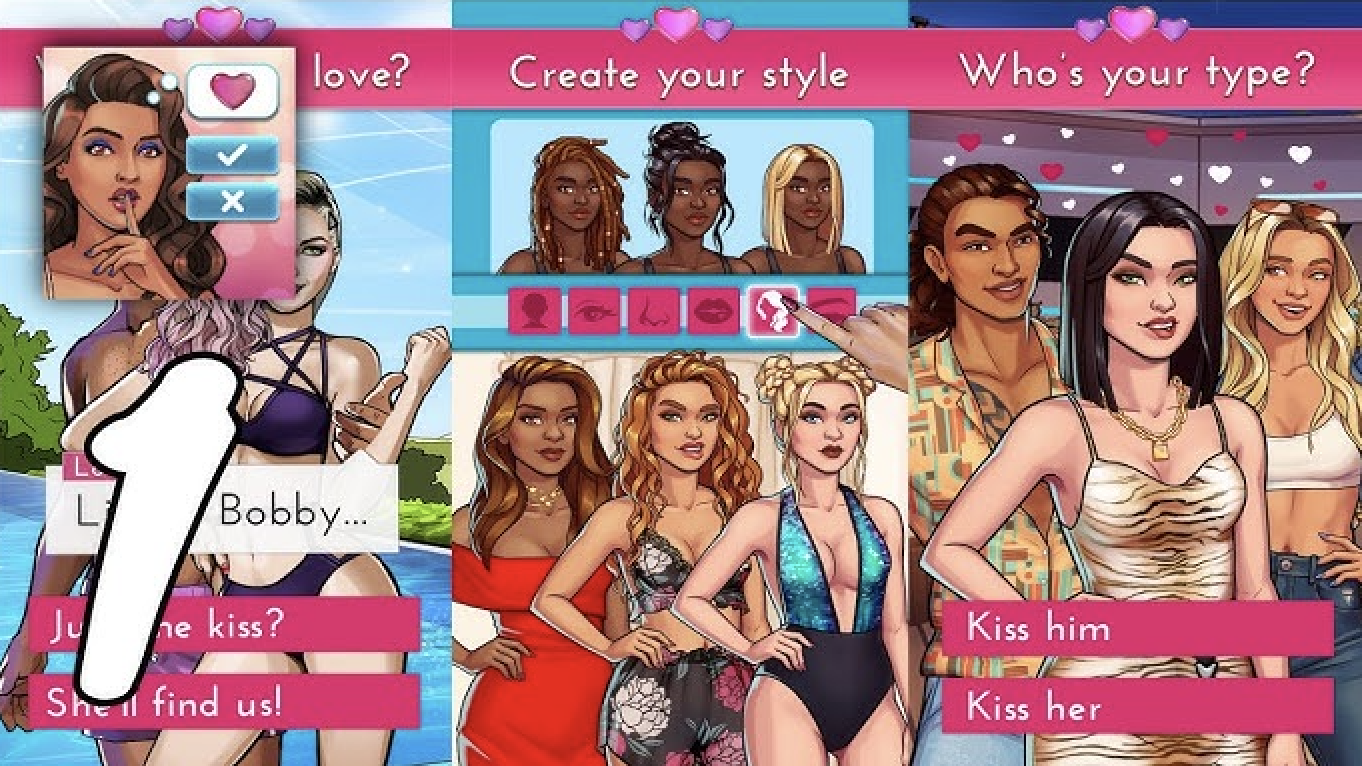
Describe your avatar and who you are open to. This is the “Create your style” / “Who’s your type?” beat mobile games already understand — except you can be specific about gender, vibe, and what is off-limits. Bring in fashion or beauty notes if the outfit is part of the plot.
"Cast me as a blonde contestant in a black floral slip dress for a dinner date. I am open to him or her. No jealousy-as-comedy. If I shut someone down, they remember."
Step 3: Play the night in character
Stay in the scene: fire pit, challenge, hideaway, kitchen confession. Push for consequences. If you kiss someone, the next morning should be awkward with the person you did not kiss. Use a fiction or writing agent when you want a produced recap instead of raw chat.
"We just won a private dinner. I almost tell him I coupled for strategy, not feelings. Play his reaction, then cut to my confessional."
Step 4: Debrief like a producer — or like a person
After the scene, switch jobs. Ask the personality agent why the other contestant froze. Ask the dating advisor whether that speech would work off the show. Ask the speaking coach to tighten the dumping line so it is kind and final.
"Break down that recoupling: attachment styles at the table, what I signaled, and one better line if I want to be honest without performing."
Step 5: Carry the arc across sessions
Come back tomorrow. Memory is the difference between a dating show simulator and a random chat. Continue the same villa, the same grudges, the same unfinished almost-kiss. That is how a week of television becomes a season.
Results and Use Cases
📺 Play the villa as a contestant
Scenario: You want a Love Island-style week: couple up, survive a challenge, get pulled for a private chat, decide whether to recouple in public.
Traditional approach: Download a licensed game, tap through 12 gated scenes, wait for energy, pay to skip. The kiss you wanted sits behind a timer.
Jenova: You set the house rules once, play in character, and the story tracks who you betrayed. Pair romance play with the Date Planner when the prize is an actual date-for-two, not a stock montage.
- Continuity without waiting on lives
- Choices that change the next morning
- Optional style notes so the dinner looks like a produced beat
✍️ Run a writers’ room for an original show
Scenario: You are drafting a web series or interactive story and need a season of recouplings that do not feel copied.
Traditional approach: Outline in a doc, lose the character voices, rewrite the same fire-pit speech four times.
Jenova: The Creative Fiction Writer holds the bible; the Writing Assistant polishes confessionals; the Personality Analyzer stops every conflict from sounding identical.
- Branching plot without a custom game engine
- Distinct voices for a full cast
- Recaps you can publish or keep private
💼 Practice real dating without burning a match
Scenario: The simulator is fun, but you also have a first date on Friday and your openers are collapsing.
Traditional approach: Reread old texts, ask friends who will be nice, guess.
Jenova: Run the awkward pause in the villa, then hand the same transcript to the Dating App Advisor. Game-theory writing on online dating is a reminder that real courtship has structure — signaling, timing, exit options — not just vibes. Use the fiction for reps; use the advisor for the truth.
- Low-stakes rehearsal of high-stakes lines
- Feedback on profile and pacing
- A date plan you can actually execute
📱 Recouple on the commute
Scenario: You have twelve minutes on your phone. A full episode of a mobile dating show is a loading screen and a gem prompt.
Traditional approach: Open the game, spend a life, close it annoyed.
Jenova: Continue the same villa on iOS or Android, play one conversation, lock a decision, stop. Speech-to-text works if you would rather talk the confessional than type it. Settings sync, so the web session you started at home is the same story in your pocket.
- Short sessions that still count
- No energy gate on the kiss
- Same memory on phone and desktop
Interactive fiction is not a fringe habit. A survey of gamebooks found that about 24% of Americans have read a choose-your-path story at some point — a mass audience for “your choice matters,” even before smartphones. Dating show simulators are that instinct with better lighting.
FAQ: Dating Show Simulator Questions
What is a dating show simulator?
A dating show simulator is an interactive romance format modeled on reality dating series: shared housing or staged dates, public choices, challenges, and recoupling. Unlike a linear episode, your decisions are supposed to change who stays, who leaves, and how characters treat you the next day. On Jenova, that loop is roleplay plus specialized agents for story, style, and optional real-world dating practice — not a single canned script.
Is Jenova free to use as a dating show simulator?
Yes. There is a free tier with core features and limited usage, which is enough to test a villa night. Paid plans start at $20/month (Plus) and scale usage if you run long seasons or heavier models. Usage resets monthly on your billing date, with no daily caps. You do not need a credit card to try the free tier.
How is this different from a mobile dating sim like a villa game?
Licensed mobile games give you art, music, and a closed set of taps. They are good at looking like the show. They are weaker at letting you invent rules, remember a week of grudges, or step out of entertainment into coaching. Jenova is the opposite trade: you bring the fantasy and the constraints; agents play, write, style, and debrief. You will not get a specific TV show’s licensed faces — you get a format you can restage.
Can I create my own cast, style, and “type”?
Yes. Describe appearance, orientation, boundaries, and house rules in the first message, then keep them consistent. Fashion and beauty agents help when the outfit is part of the plot; personality agents help when you need six distinct contestants, not six adjectives. Inclusive pairings and LGBTQ+ storylines are something you specify, not a hidden route you have to unlock.
Does a dating show simulator on Jenova work on mobile?
Yes. Web, iOS, and Android have the same core experience, including memory and agent access. That matters for this genre: the “kiss him / kiss her” decision is often a phone decision. You can play a scene on mobile and write the recap later on desktop without losing continuity.
Is this only entertainment, or can it help with real dating?
It can be either, and you should keep the line clear. Roleplay is not a relationship. If you want transfer, use dating and speaking agents as coaches, not as partners: they will critique the line, the pacing, and the plan. If you only want the villa, stay in character and skip the debrief. Accuracy in a story sense means consistency and consequence — not a promise that a simulated recoupling predicts a real one.
Conclusion
A good dating show simulator is not a gallery of kisses. It is a pressure cooker: public choice, private motive, a house that remembers, and a look that tells the story before anyone speaks. Scripted apps sell the lighting. They rarely sell the aftermath.
Jenova puts the jobs of a production in one place — romance and dates, style and presence, psychology, and the writers’ room — so you can play the villa, write the season, or rehearse the conversation you actually have to have. Start with the format you want, keep the continuity, and let specialized agents do the work a two-button prompt cannot.
Explore the full agent library at Jenova and run your first recoupling without a gem gate.
For Developers: Dating show simulator roleplay, romance coaching, and character-driven storytelling are available programmatically via the Jenova API — integrate interactive romance narratives into your application with a single API call. Full documentation →